
Chengdu
Chengdu (成都) rewards travelers who leave breathing room. Its most satisfying first trip is not a race through every “ancient street.” It combines one early wildlife morning, two or three compact urban clusters, a deliberate Sichuan meal, and—if you have enough days—one full excursion to either Sanxingdui Museum or the Dujiangyan Irrigation System.
The city joined UNESCO's Creative Cities Network as a City of Gastronomy in 2010. That title is useful because Chengdu food is about a broad grammar of sweet, sour, bitter, spicy and salty flavors—not simply maximum chili heat.
Choose the Right Route
- Choose the half-day walk only when you have a long layover or one free afternoon.
- Choose the three-day route for central history, pandas and a complete Sanxingdui day.
- Choose the four-day route for a balanced first visit with a full Dujiangyan day. Mount Qingcheng needs a separate day or a substitution.
- Choose the rebuilt five-day route for a slower first visit: central tea culture, pandas, Sanxingdui, a focused Dujiangyan day, and a final Three Kingdoms–to–Du Fu sequence.
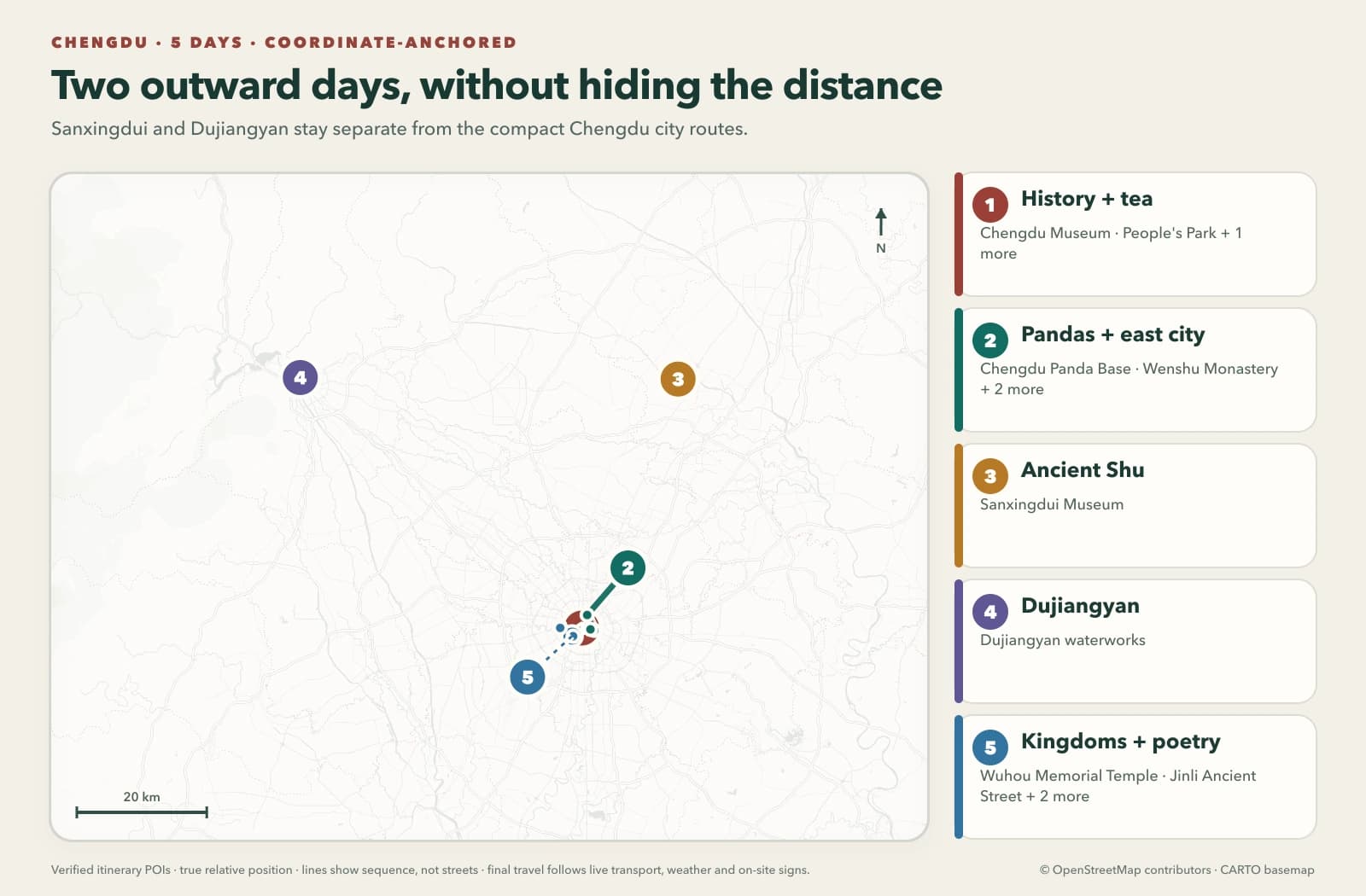
The diagram is a sequence guide, not a geographic map. It deliberately keeps Sanxingdui and Dujiangyan as outward days and uses one central hotel instead of creating unnecessary luggage moves.
The Five Planning Clusters
1. Central history and living tea culture
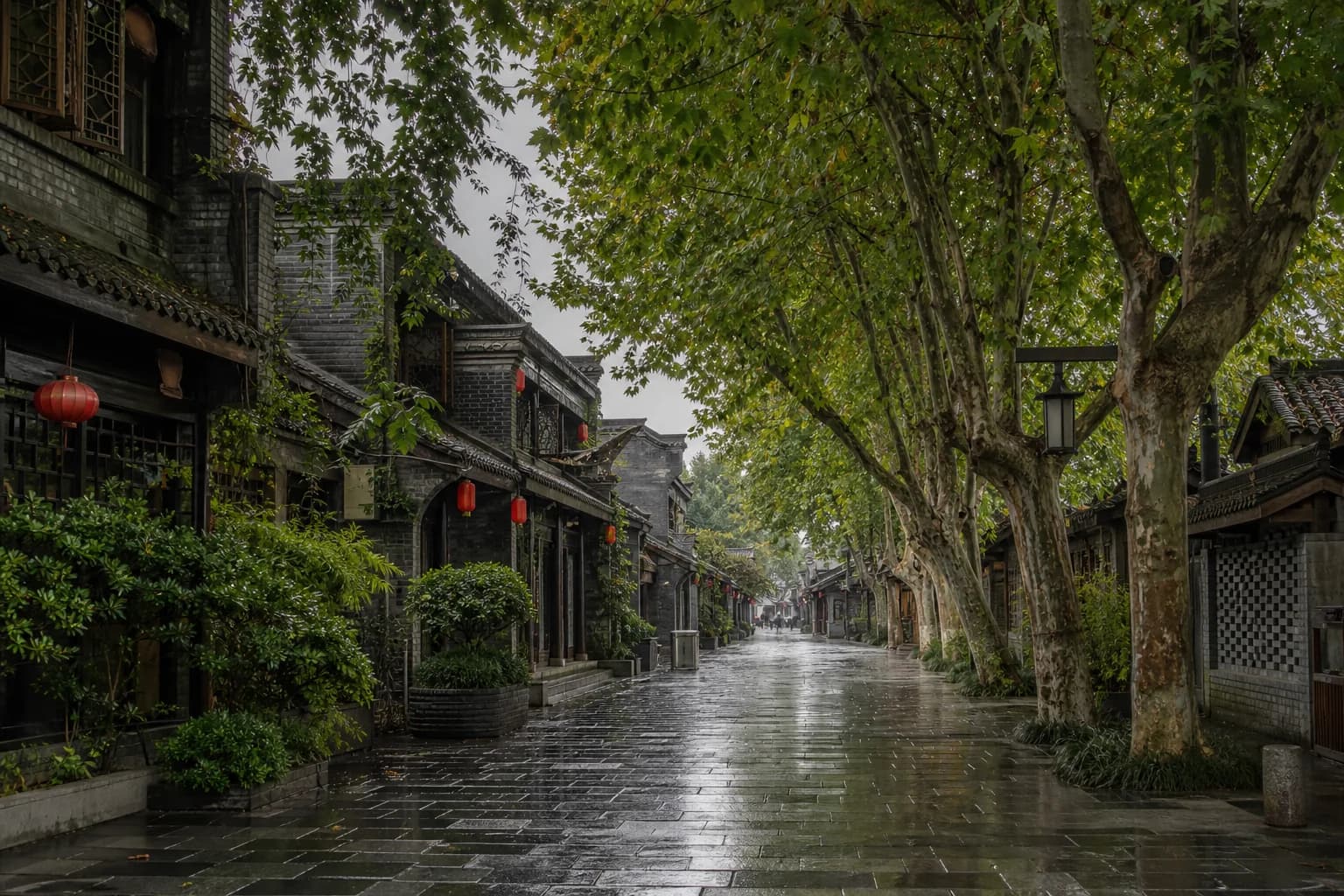
Begin at Chengdu Museum, then walk to People's Park and Wide and Narrow Alleys. The museum gives the city a chronological frame; the park shifts the day from objects to lived public space. At Kuanzhai, read courtyard walls, roofs and lane widths while expecting a polished commercial district rather than an untouched neighborhood.
Order a simple gaiwan tea (盖碗茶) and let the break take as long as it feels useful. Tea houses are social spaces, not staged attractions. Ear-cleaning services are optional personal-care businesses, not an essential “authentic Chengdu” ritual; inspect hygiene and prices before agreeing.
2. Pandas first, then the east city
Reserve the Chengdu Research Base of Giant Panda Breeding for the earliest practical entry. Animals are often more active in cooler morning conditions, but behavior, nursery viewing and enclosure access are never guaranteed. Confirm the gate printed on the booking, use the current official map and do not plan to see every enclosure.
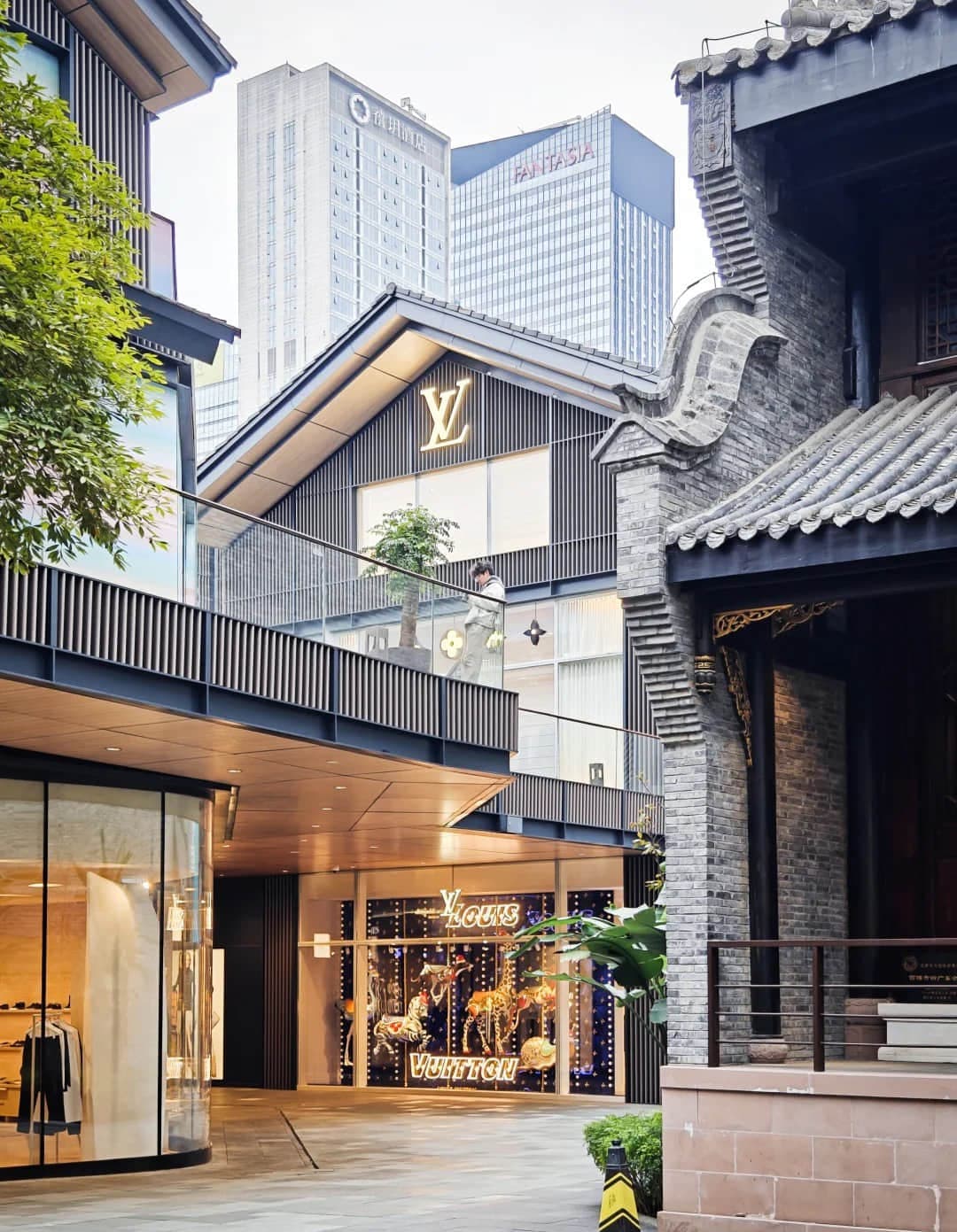
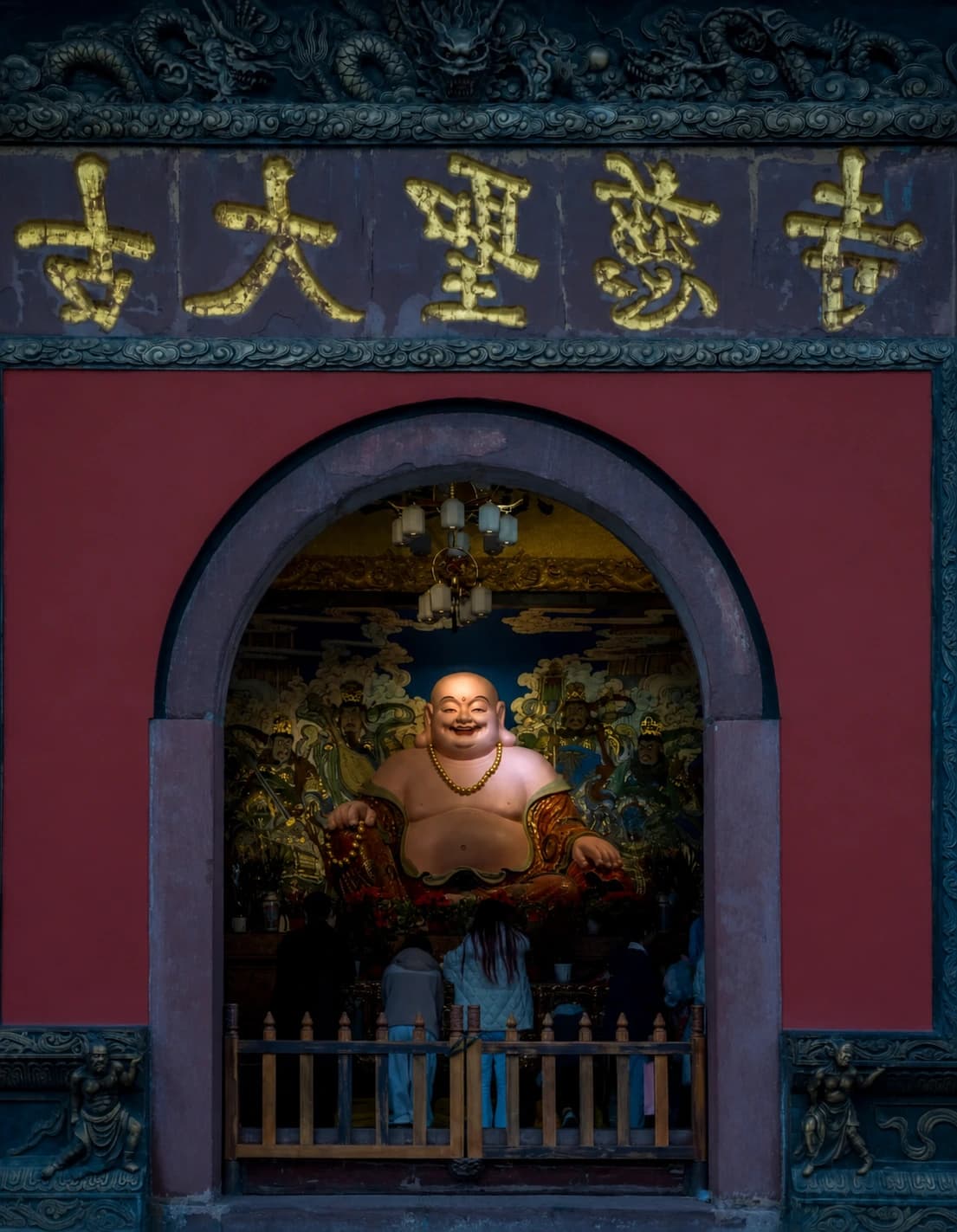
Afterward, move to Wenshu Monastery for a quieter reset, then continue to Daci Temple and Chunxi Road. The day's most interesting contrast is not another shopping list: it is the transition from working Buddhist courtyards to Taikoo Li's open contemporary lanes.
3. Sanxingdui deserves its own day
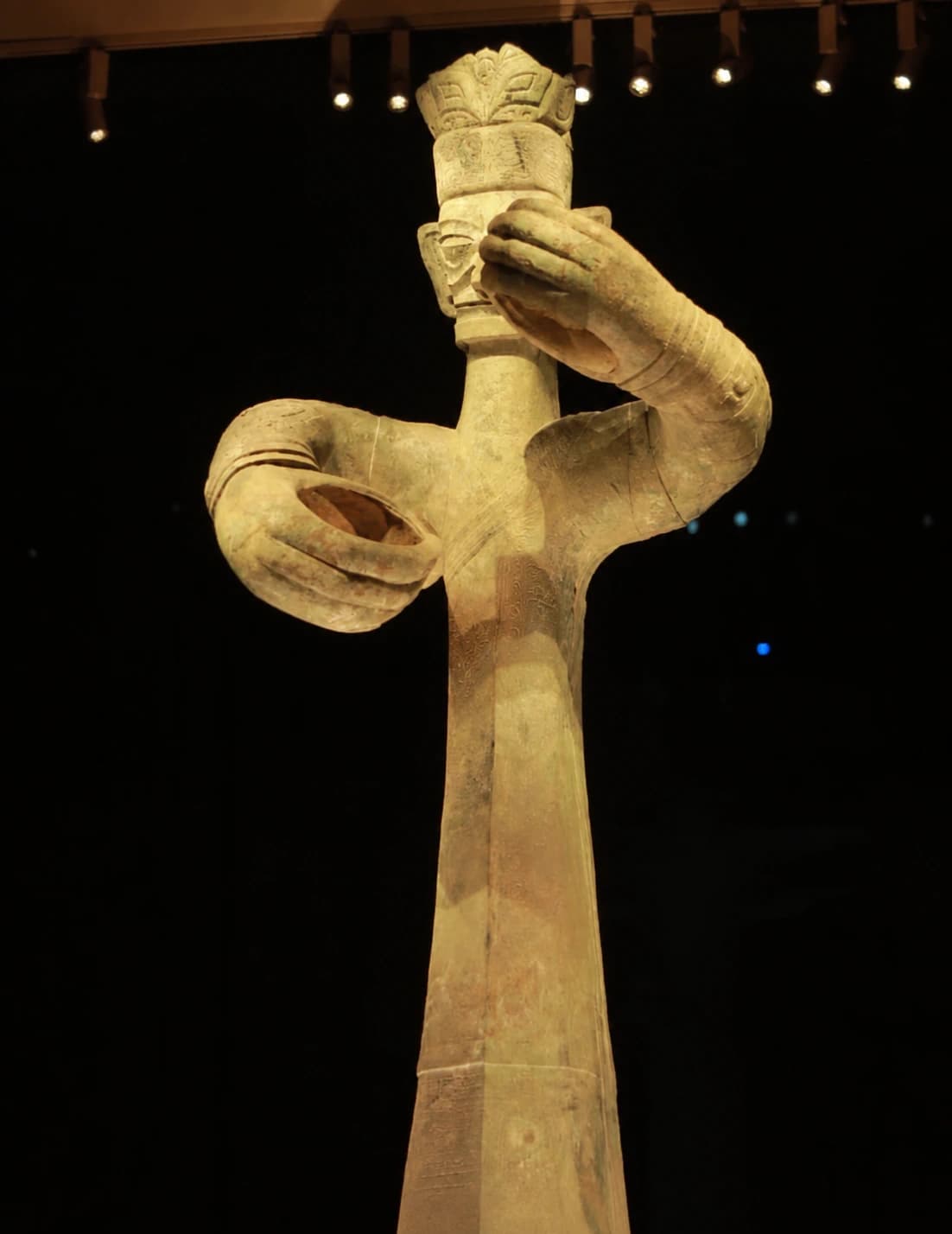
Sanxingdui is in Guanghan, outside the urban core. Give it a full day and keep the return evening flexible. Inside, follow the museum's broad one-stroke sequence and track how bronze, gold, jade and ivory work as connected material systems. The giant masks matter, but the visit becomes much richer when it is not framed as an “alien mystery.”
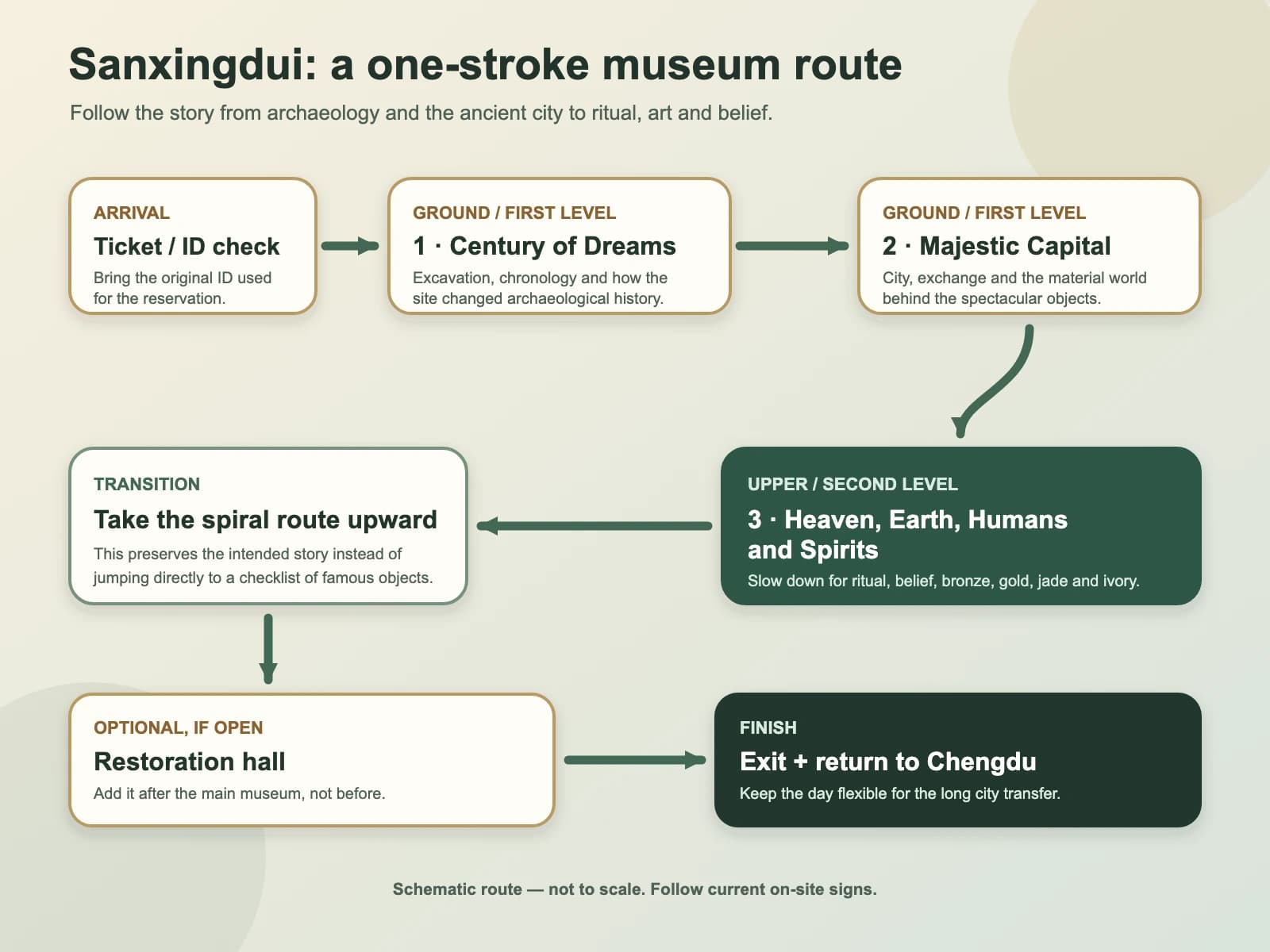
Do not combine the Panda Base and Sanxingdui merely because both sit north of central Chengdu. Each is large, reservation-sensitive and mentally tiring; a forced combination produces more vehicle time and less interpretation.
4. Dujiangyan is an engineering day, not a blue-light photo stop
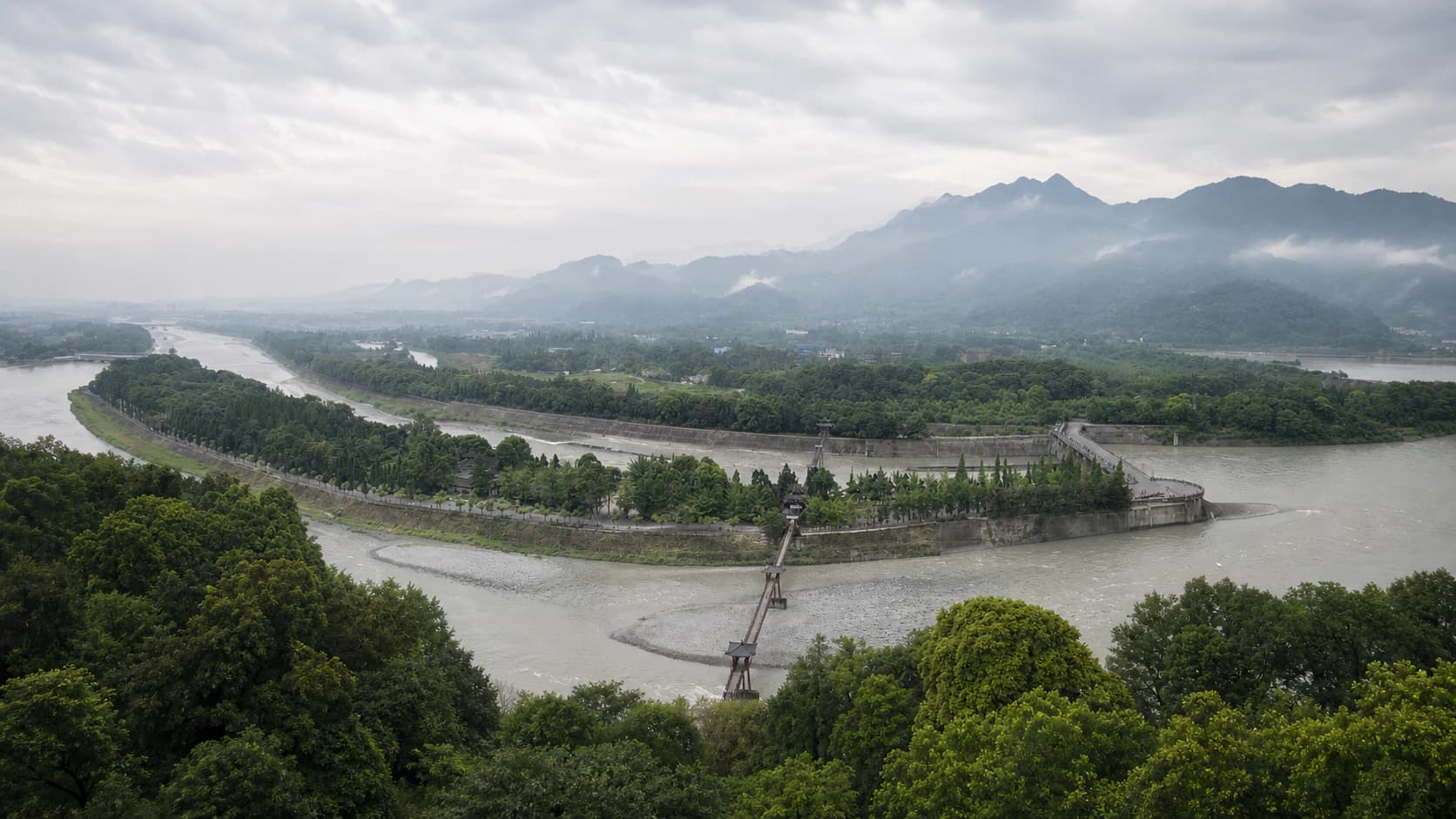
UNESCO describes the Dujiangyan system as a water-management landmark that still controls and distributes Minjiang River water. Read Fish Mouth, Flying Sand Weir and Bottle-Neck Channel as one functioning system: division, sediment management and controlled flow. Current scenic transport and entrance rules determine the exact route.
After the irrigation-system circuit, the adjacent South Bridge area can be an unhurried finish. Decorative river lighting is weather- and operation-dependent; never build the day around a guaranteed “blue tears” effect. Use live rail inventory or a road transfer, and do not copy an old train timetable.
5. Three Kingdoms and poetry belong in a west-city sequence
Visit Wuhou Memorial Temple before adjacent Jinli Ancient Street. The temple provides the Three Kingdoms interpretation; Jinli is better treated as a short connector and meal decision than as the historical core.
Then make the short cross-city transfer to Du Fu Thatched Cottage and finish in Huanhua Stream Park. Read the reconstructed cottage and gardens through Du Fu's poetry, displacement and social observation rather than claiming every building is an untouched Tang residence.
Food: Choose Flavor, Format and Tolerance
Sichuan cuisine uses layered aromatics and contrasting textures. Mala (麻辣) combines numbing Sichuan pepper with chili heat, but not every Chengdu dish should taste the same.
Hotpot without ordering mistakes
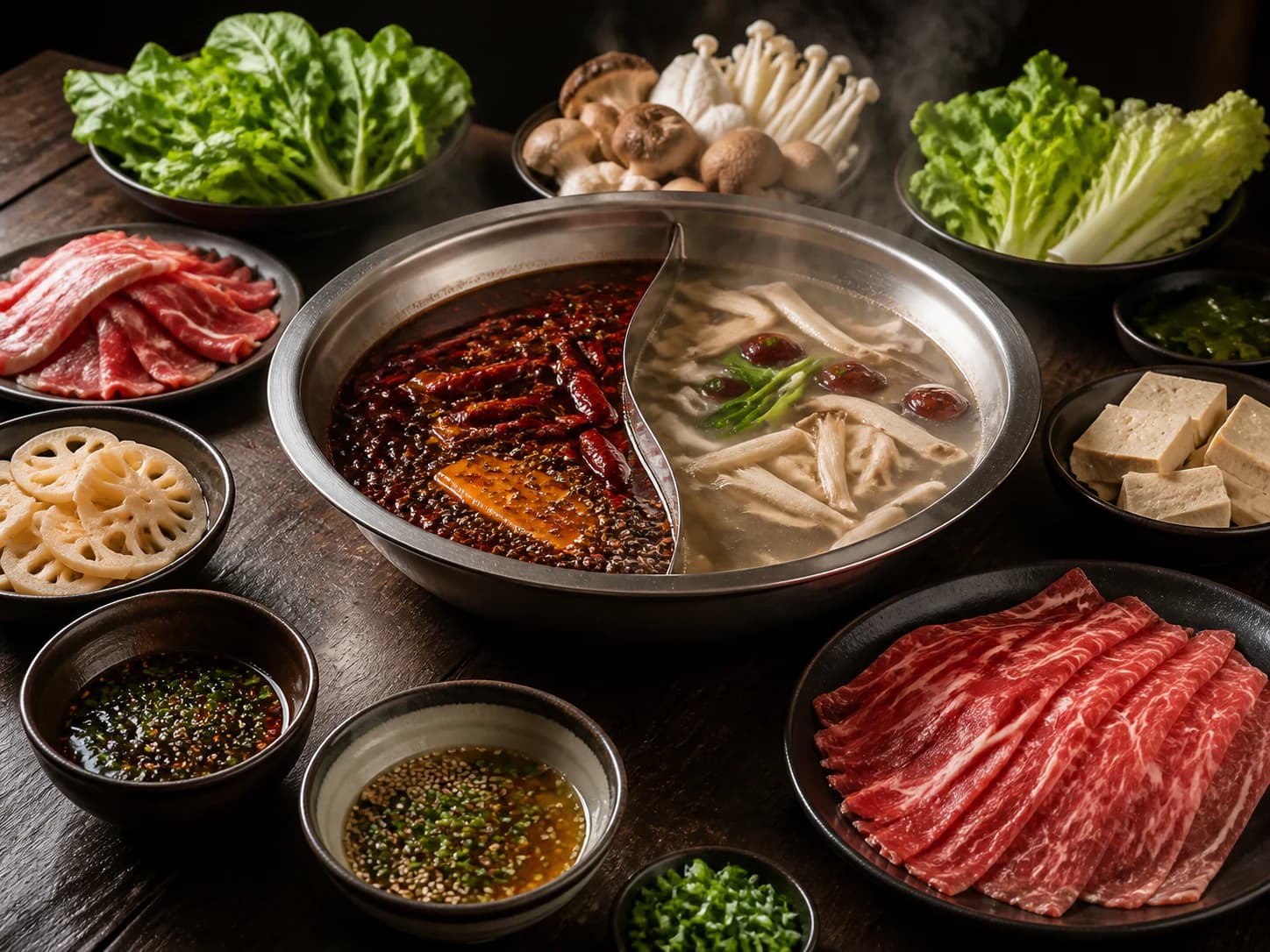
Ask for a yuan-yang pot (鸳鸯锅) or another divided broth when your table has mixed spice tolerance. Confirm whether the red broth uses beef tallow, whether the stated charge covers the whole pot, and whether dipping sauce is separate. Order a small first round; tripe, goose intestine and very thin meat cook quickly, while root vegetables need longer.
Better small-meal choices
- Dan dan noodles (担担面): a small bowl is ideal for tasting; expect sesame, preserved vegetables, chili and minced topping to vary.
- Zhong dumplings (钟水饺): usually sweeter and red-oil dressed than northern dumplings.
- Long chaoshou (龙抄手): Chengdu-style wontons, useful when the group wants a milder meal.
- Chuanchuan (串串): skewered ingredients priced by stick or weight; ask how the total is calculated before filling the basket.
- Mapo tofu (麻婆豆腐): judge the balance of fermented bean paste, peppercorn, heat and soft tofu—not only the chili color.
Choose busy, clean businesses with visible turnover and posted prices. A restaurant near your hotel or final attraction is usually better than a long detour to a viral branch whose queue consumes the evening.
Beyond Face-Changing: Read the Craft
Sichuan opera contains singing, percussion, movement, comedy and regional performance conventions; face-changing (变脸) is only one famous technique. Compare the ticket's full program, language support, seat location and refund rules rather than buying solely from a short promotional clip.
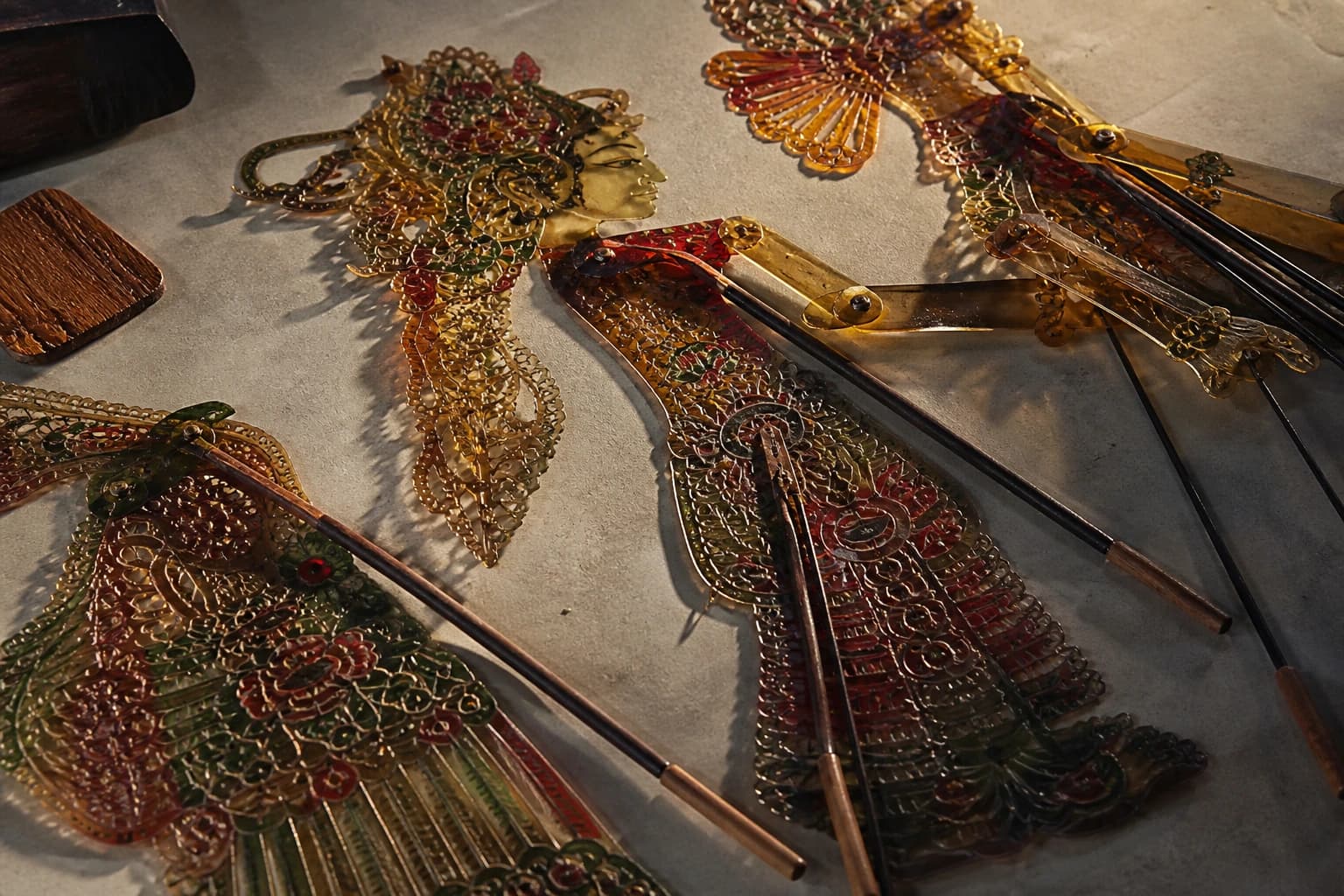
At Chengdu Museum, shadow puppets offer another way into performance craft: translucent hide, cut edges, painted color, articulated joints and control rods work together with backlight and the performer's movement.
Where to Stay
Chunxi Road / Daci Temple
Best for a first visit centered on restaurants, shopping and easy evenings. Check the hotel's actual entrance and nearest usable metro exit; large commercial blocks can make a “five-minute walk” misleading.
Tianfu Square / People's Park
Best for museums, the central tea-culture day and balanced access to east and west clusters. It is calmer at night than Chunxi Road but still practical for most routes.
Wenshu Monastery
Good for a quieter base with noodle, dumpling and vegetarian options nearby. It works well when the Panda Base morning matters more than late-night retail.
Chengdu East Railway Station
Choose this only when several onward high-speed trains dominate the trip. It saves a departure transfer but is less atmospheric for a first city stay.
Dujiangyan overnight
Optional when you want a slower irrigation-system visit or an early Mount Qingcheng start the next day. It is unnecessary for the focused five-day route and creates a hotel move, so compare the benefit with your live train schedule.
Compare live inventory on Trip.com hotels, prioritizing the exact entrance and next morning's route over a neighborhood label.
Booking Order
- Reserve the Panda Base product and confirm the entry gate, passport handling and included transport.
- Reserve Sanxingdui through the current official channel or compare the exact Trip.com Sanxingdui product, checking whether admission, guide and transfer are included.
- Reserve Chengdu Museum and other capacity-controlled museums through their current official interfaces.
- For Day 4, compare the exact Dujiangyan Scenic Area listing and current scenic-transport inclusions.
- Use Trip.com trains only for live inventory; stations and departure times must come from the issued ticket.
Arrival and Transport Decisions
Chengdu has two major airports and several large rail stations. Search your exact flight or train terminal before choosing a hotel transfer; “Chengdu airport” or “Chengdu station” is not precise enough.
- Tianfu International Airport is far from the historic center. Compare live metro, airport coach and road time against your arrival hour.
- Shuangliu International Airport is closer to established urban districts, but the correct terminal still matters.
- Chengdu East Railway Station handles many high-speed services; do not assume every Dujiangyan or regional train departs there.
- Within central Chengdu, use the metro for predictable cross-city movement and walk inside compact clusters. Use a legal taxi or ride-hailing car when a museum day would otherwise require multiple transfers.
Weather, Etiquette and Realistic Expectations
- Summers can be hot and humid; place the Panda Base and exposed walks early, carry water and protect animal welfare by keeping quiet.
- Winter can feel damp even when the temperature looks moderate. Pack layers instead of relying on one climate average.
- Rain improves the garden atmosphere but makes Dujiangyan and temple paving slippery.
- Keep voices low in active religious spaces, follow current photography signs and do not interrupt worship.
- Do not touch, call to or feed animals. Nursery access, individual pandas and viewing conditions can change without notice.
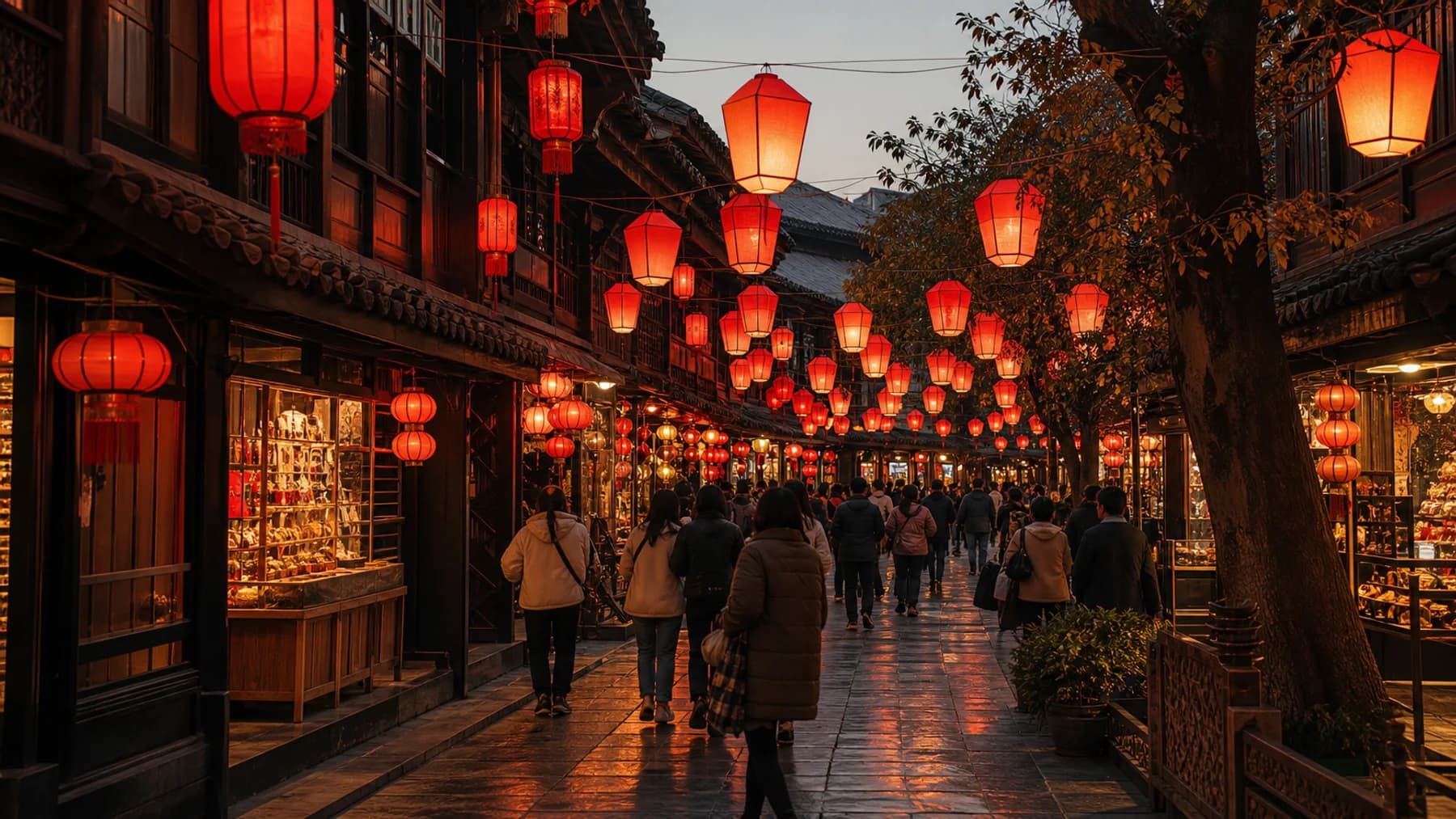
- Treat commercial streets as optional evening connectors. Chengdu's character is stronger in the relationship between food, public parks, temples, craft and ordinary pauses than in souvenir counts.
Major Sights to Compare

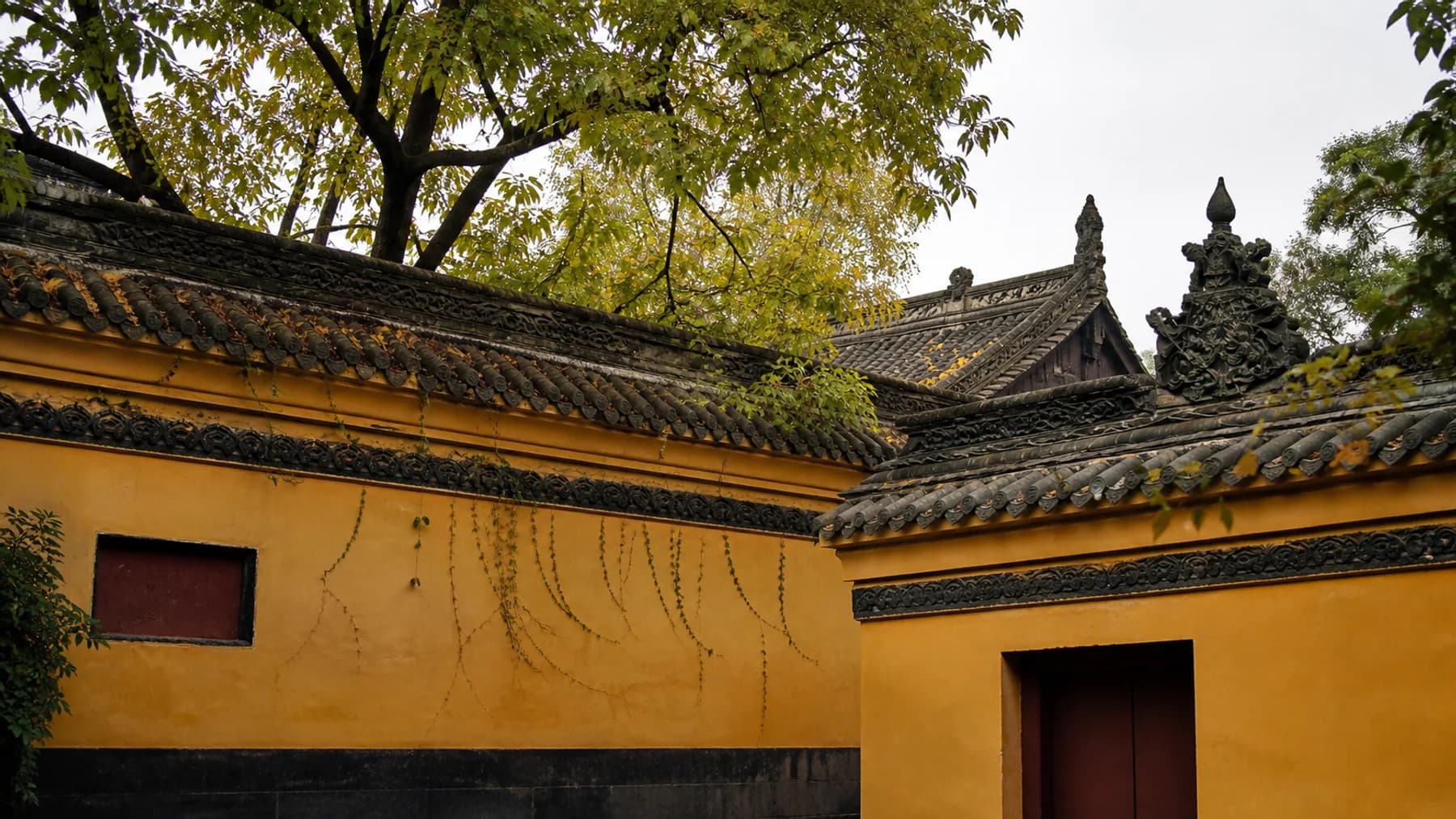
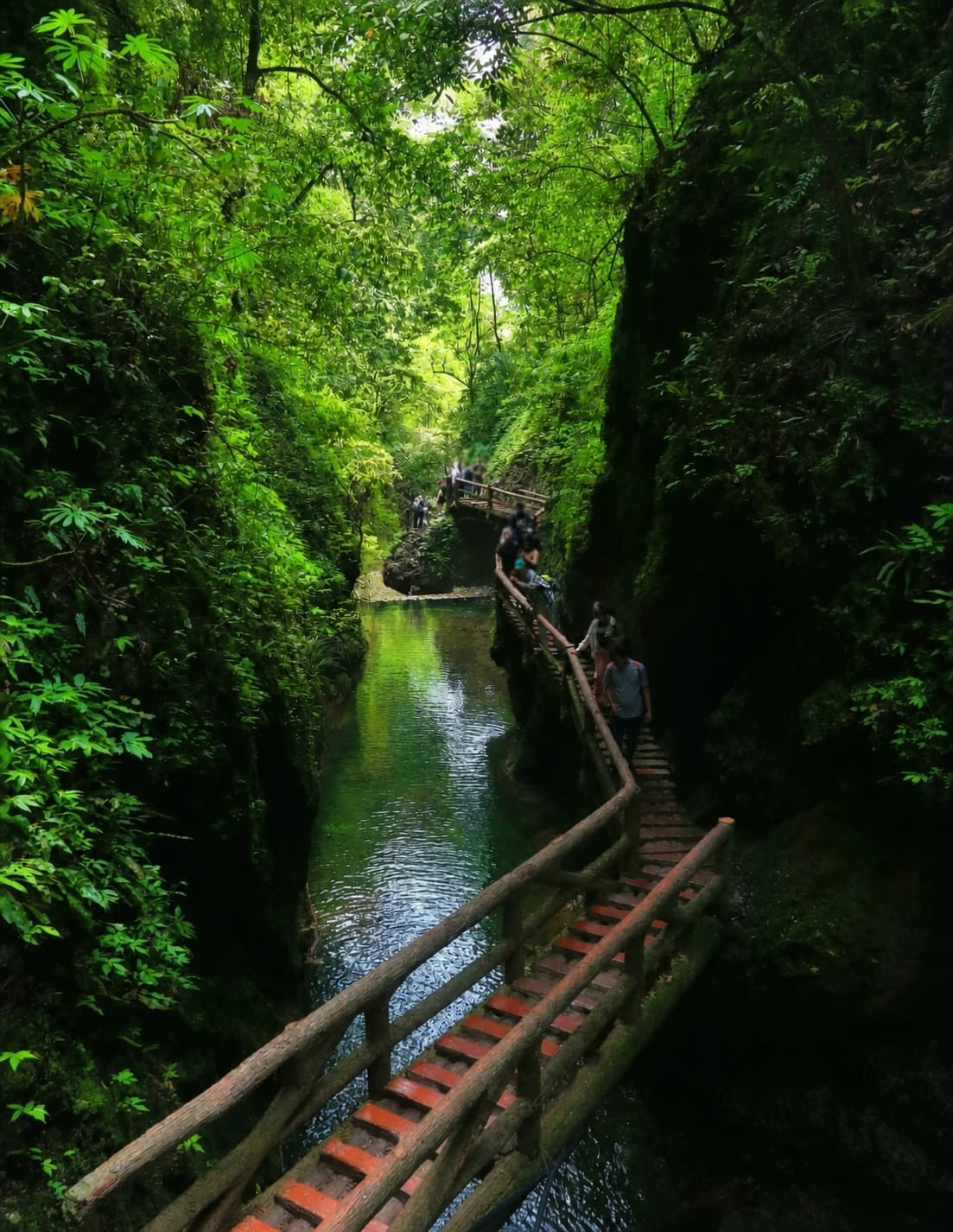
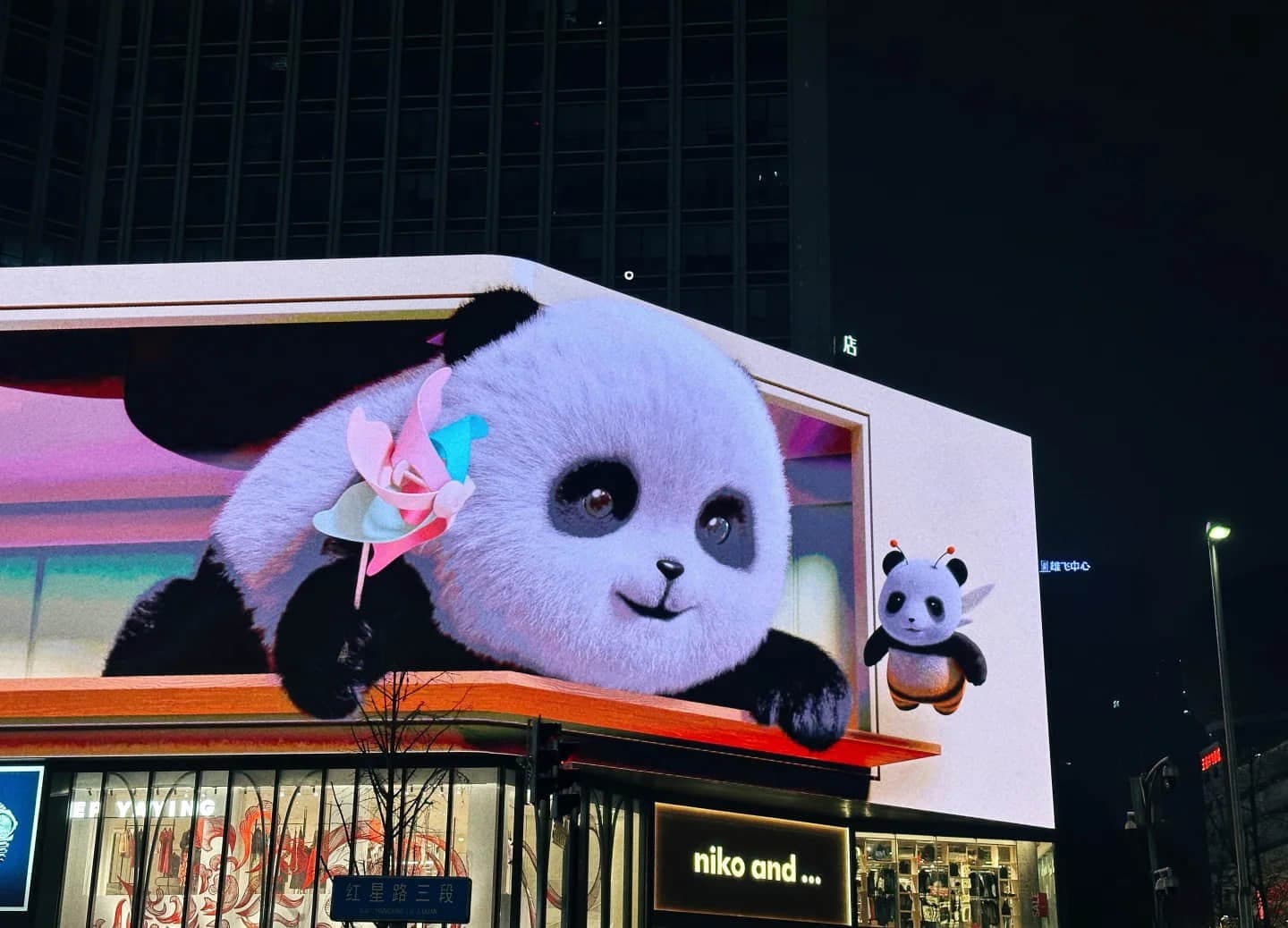
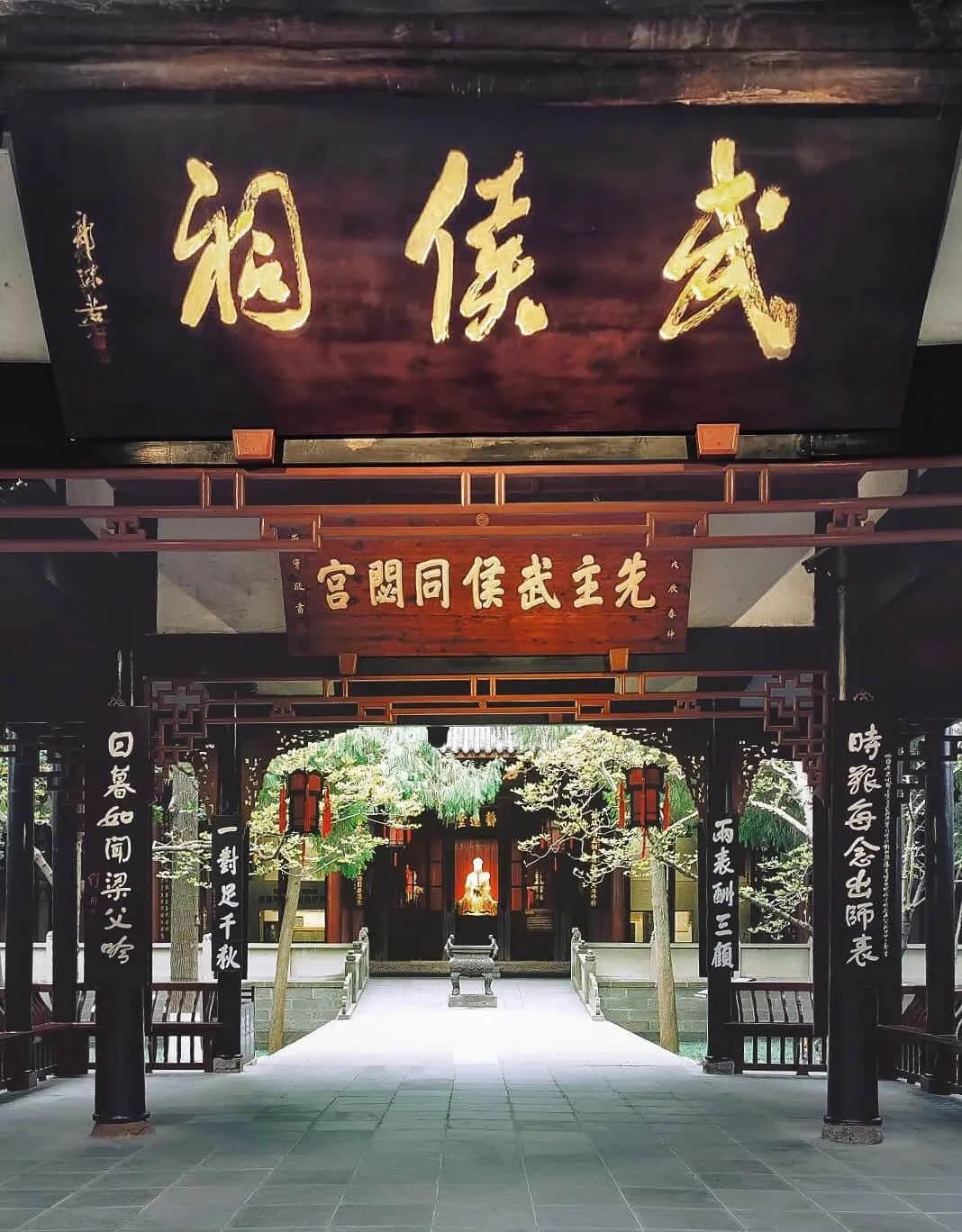
Choose by role: pandas for wildlife, Chengdu Museum for the city's story, Sanxingdui for Ancient Shu, Dujiangyan for water engineering, Wuhou for Three Kingdoms history, and Du Fu for literary memory.