Which Chengdu panda base should you visit?
If the city itself is still undecided, compare Chongqing and Chengdu first: Chengdu supports a panda-led trip, while Chongqing can fit one efficient zoo morning inside a terrain-and-night-view city break.
Choose Chengdu Research Base of Giant Panda Breeding for a first visit. It has the easiest transport from central Chengdu, the broadest visitor facilities and the most workable half-day plan. Choose Panda Valley when you are already spending a night in Dujiangyan and prefer a smaller, greener setting. Choose Wolong/Shenshuping only when the mountain journey and conservation context are worth a full day to you. Choose Bifengxia when Ya'an is already part of your trip, or when you can give it a dedicated long day or an overnight.
Do not currently plan around the place commonly sold as Dujiangyan Panda Base, China Giant Panda Garden or Panda Ark. That China Conservation and Research Center for the Giant Panda facility has been closed for upgrading since April 23, 2026, according to the operator announcement republished by Beijing Daily. No official reopening date had been announced when this guide was checked on September 20, 2026.
The names are confusing because two different panda sites sit near Dujiangyan. Panda Valley remains a separate visitor option. The closed Dujiangyan Panda Base belongs to a different organization and lies south of central Dujiangyan near Qingchengshan. A ticket, review or tour labelled only “Dujiangyan panda” is therefore incomplete information.
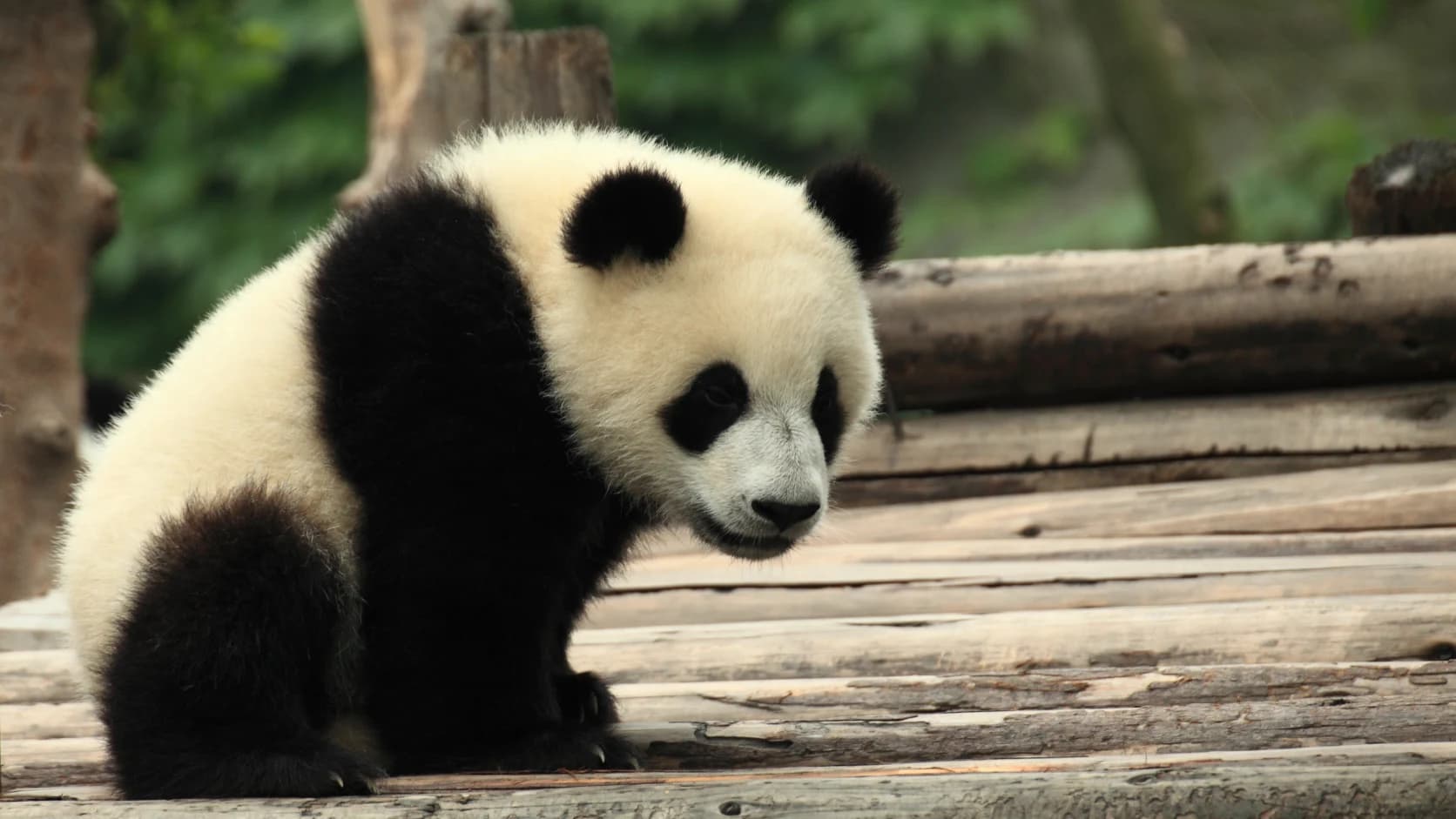
Giant panda at Chengdu Research Base. Photo by George Lu, cropped from the original, licensed under CC BY 2.0;

source
. An animal visible in a past photograph is never a promise of today's enclosure access or activity.
The decision in one table
| Place | Best for | From central Chengdu | Public visit shape | Main compromise | Current status |
|---|---|---|---|---|---|
| Chengdu Research Base | First visit, short stays, families needing facilities | About half a day; allow 45–90 minutes each way by metro/shuttle or road | Large, polished campus with old South zone and newer West expansion | The easiest option is also the busiest | Open; timed reservation |
| Panda Valley | Dujiangyan overnight, smaller-scale visit, greener setting | Long half day or full day from Chengdu; about 10–20 minutes by car from central Dujiangyan | Compact public circuit in a foothill setting | Fewer visitor facilities and less shelter; forest paths are not effortless for everyone | Open; separate timed ticket |
| Dujiangyan Panda Base / Panda Ark | Nobody until a formal reopening | Normally a full Dujiangyan-area day | CCRCGP facility distinct from Panda Valley | Currently unavailable | Closed for upgrade since April 23, 2026 |
| Wolong / Shenshuping | Conservation interest, mountain scenery, crowd-sensitive travelers | Full day; budget roughly 2–2.5 hours each way by road | Higher-elevation visitor area within a major CCRCGP complex | Long, weather-sensitive mountain transfer | Open; verify dated ticket and transport |
| Bifengxia | Ya'an stay, repeat panda visitor, travelers also wanting the gorge | Long day from Chengdu; much easier from Ya'an | Panda reserve inside the wider Bifengxia scenic area | Ticket components and internal transfers need checking; Chengdu day trip is tiring | Open; verify dated scenic-area bundle |
No base can promise an “active panda” or a particular animal. Pandas choose whether to eat, sleep, remain indoors or move out of sight. Feeding schedules, welfare decisions, weather and temporary enclosure work all affect a visit. An early, cool morning improves the odds of seeing more movement, especially in warm months; it does not create a guarantee.
First, separate the five names
Chengdu Research Base: the urban flagship
The Chengdu Research Base of Giant Panda Breeding is the famous site in northeast Chengdu. Its address is 1375 Panda Avenue. This is the place most first-time visitors mean by “Chengdu Panda Base,” and it is the only option in this comparison that fits comfortably into an ordinary Chengdu sightseeing day.
It is a large visitor campus rather than one viewing yard. The older South zone contains the familiar core experience and museum; the West expansion spreads across a newer, more open landscape. The official sightseeing bus links the two sides, but vehicles operate within daily capacity and can have queues. Walking every path is not necessary.
Read our full Chengdu Research Base visitor guide after choosing it. The practical goal is a coherent two-to-four-hour visit, not completing the map.
Panda Valley: a Chengdu Research Base affiliate near Dujiangyan
Panda Valley, officially the Dujiangyan Field Research Center for Giant Pandas, is affiliated with Chengdu Research Base. Its setting and mission emphasize field research, nature education and work connected with training and reintroduction. Ordinary visitors see the public area. They do not enter operational research, wild-training or staff-only zones.
Panda Valley sits about 6 kilometres by road from Lidui Park railway station. An AMap query returned about 13 minutes by car; allow 20–30 minutes for pickup, traffic and the correct gate. A local tourist bus may operate, but routes and frequency are less robust than taking a taxi or Didi, especially for a family or an older traveler.
The public circuit feels greener and smaller than the urban base. That can mean less visual pressure and fewer huge tour waves on a weekday. It does not mean empty paths, guaranteed close views or a completely flat walk. Weather can close parts of the site, including outdoor or red-panda areas.
Dujiangyan Panda Base: a different operator, currently closed
The Dujiangyan China Giant Panda Garden, also marketed historically as Dujiangyan Panda Base or Panda Ark, is operated under the China Conservation and Research Center for the Giant Panda, usually shortened to CCRCGP. It is not Panda Valley.
The facility suspended public opening on April 23, 2026 to prepare for an upgrade. Current map and booking pages also mark it unavailable. Construction documents show that work is underway, but a construction deadline is not an opening date. Ignore undated blogs, old “keeper program” pages and marketplaces that let you select a city without showing a live dated admission slot.
If it reopens, assess the new visitor route, ticket system and transport from scratch. Do not assume that pre-closure maps, animal areas, volunteer products or opening hours will return unchanged.
Wolong/Shenshuping: a mountain base that earns a full day
Wolong China Giant Panda Garden at Shenshuping is another CCRCGP facility, in the Wolong area of Wenchuan County. It sits at roughly 1,700 metres in a mountain environment. The setting and institutional context make it the strongest choice in this list for a traveler whose interest goes beyond a convenient city encounter.
That choice has a real cost. A same-day AMap road query from Tianfu Square returned 104 kilometres and 1 hour 34 minutes in one traffic snapshot. Do not build a trip around that minimum. Allow roughly 2–2.5 hours each way, plus pickup, breaks and extra time for mountain-road congestion or weather. There is no simple urban public-transport chain to recommend. Use a private car with a Chinese-speaking driver or a current join-in coach whose exact base, admission and return point are written into the booking.
The name “research base” does not grant access to laboratories, animal hospital areas, breeding operations or wild-training areas. Normal admission is a public observation visit.
Bifengxia: a Ya'an decision, not a casual Chengdu add-on
The Bifengxia Giant Panda Base is a CCRCGP facility within the broader Bifengxia Scenic Area outside Ya'an. It suits travelers already staying in Ya'an, repeat visitors who want a different base, or people who actively want both pandas and the gorge landscape.
From Ya'an railway station, an AMap road query returned 24.5 kilometres and about 39 minutes. Allow an hour including pickup and gate logistics, and prearrange the return rather than assuming that a vehicle will be waiting. Public-bus results involved slow transfers and excessive walking, so they are a poor default for an international visitor on a timed day.
From central Chengdu, the intercity travel and final road transfer make Bifengxia a long dedicated day. A night in Ya'an creates a calmer plan. Visit the panda section first; starting with the gorge can consume enough time that you reach the panda area near or after its earlier closing time.
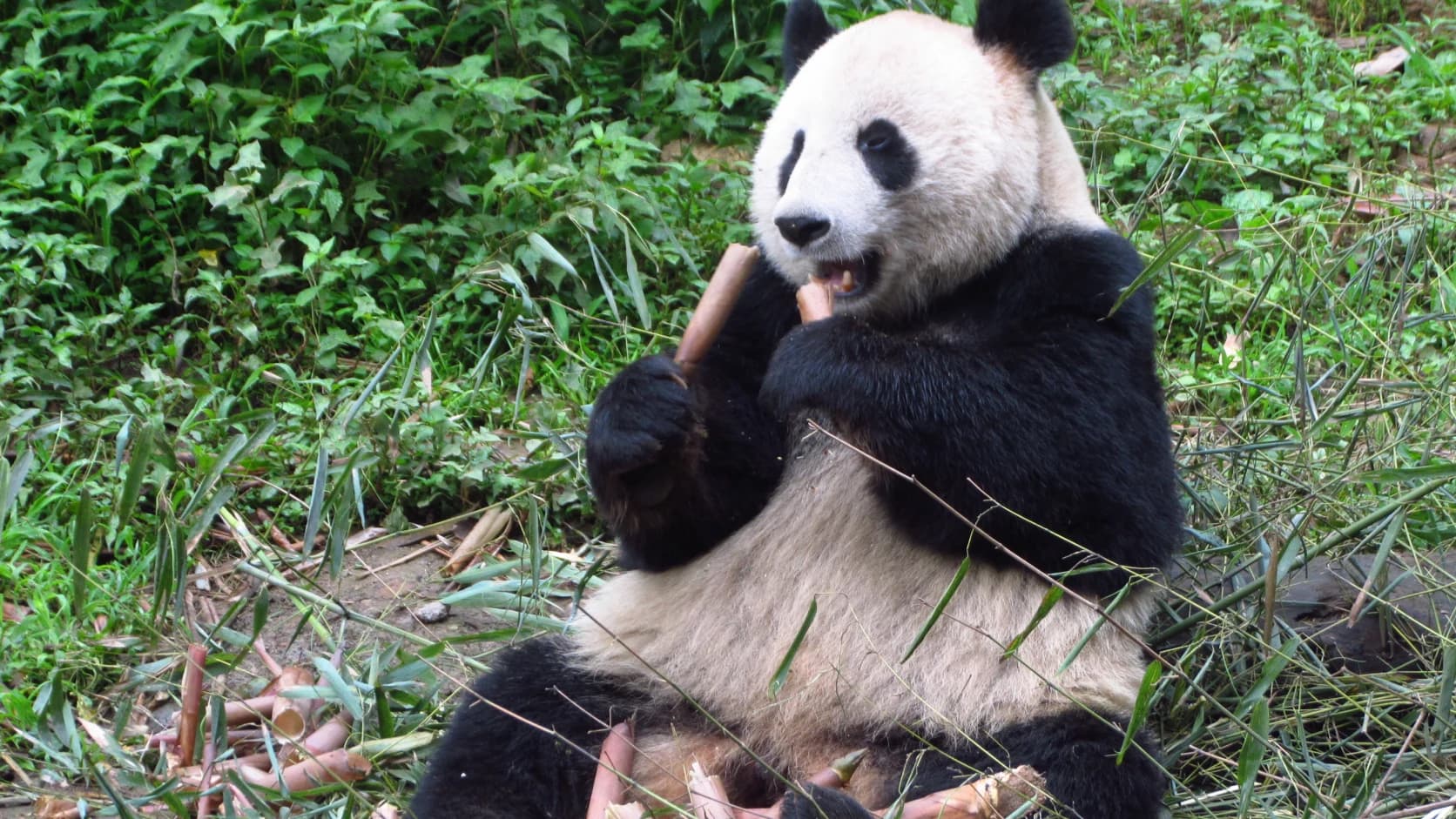
Giant panda at Bifengxia. Photo by NoGhost, cropped from the original, licensed under CC BY-SA 4.0;

source
. The photograph documents the site, not current animal visibility.
Pick by traveler type
Your first panda visit
Choose Chengdu Research Base. It offers the strongest combination of transport, interpretation, indoor breaks, toilets, food and a large public circuit. A first-time visitor with two to four hours can see a meaningful selection without needing a mountain transfer. Its popularity creates crowds, but the site is popular for practical reasons.
Reserve the earliest session you can realistically reach. Enter, visit your top-priority giant-panda area before the largest groups build, then use the museum or another indoor space when outdoor viewing slows. Treat named celebrity pandas as a possible bonus. Following a viral post across the campus can waste the best cool hour.
Families with children
Choose Chengdu Research Base if reliable facilities, a museum, food and a simple return to the city matter. The West side gives more breathing room, and the sightseeing bus can reduce some walking. A stroller does not remove all slopes, queues or transitions; take a compact model that can be folded.
Panda Valley works well for a family already based in Dujiangyan whose children can manage a forested outdoor circuit. It is a weaker choice in heavy rain, intense heat or when the group needs frequent indoor rest. Do not add Panda Valley to the irrigation system and Mount Qingcheng merely because all three are near the same city. With young children, that becomes an exhausting checklist.
Wolong and Bifengxia impose long vehicle time before and after the visit. They make sense for a panda-focused child who handles winding roads well, not as a universal “better for kids” upgrade.
Older travelers or limited walking capacity
Start with Chengdu Research Base and use the West visitor side if a more open, generally flatter route matters. The exact West visitor center pin helps a driver avoid dropping you at the wrong end. Recent visitor reports describe the newer zone as easier underfoot than the older core, though no large outdoor site is step-free everywhere.
Ask the official service point about wheelchair or mobility support on arrival, and use the sightseeing bus to reduce distance. Do not design a tight connection around a specific bus departure; queues and capacity vary. If the classic older enclosures and museum matter more, enter on the South side and accept a denser, sometimes narrower route.
Panda Valley can feel calmer but should not automatically be called easier. Natural gradients, longer outdoor exposure and weather-sensitive paths matter. Shenshuping adds a four-to-five-hour road round trip, altitude and variable mountain weather. Bifengxia adds scenic-area transfers. Choose those only after checking mobility arrangements directly for your date.
You dislike crowds
Panda Valley on a non-holiday weekday is the best near-Dujiangyan compromise. Go at opening, avoid weekends and Chinese public-holiday peaks, and accept that a small site can still feel crowded around any visible animal.
At Chengdu Research Base, the solution is route discipline rather than expecting solitude. Enter early, choose two or three priority areas and move away when a viewing rail becomes packed. The West side distributes people more widely. The South side contains more of the familiar older experience and can compress tour groups onto narrower paths.
Shenshuping can offer a less urban atmosphere, but do not spend five hours in a car solely to avoid one queue. The mountain site can also receive coaches. Bifengxia is quieter only in comparison with the city flagship and only on some days; its gorge entrance and internal vehicles have their own peaks.
You care most about conservation and research
Choose Shenshuping if you can commit a full day and read the interpretation critically. The value is the mountain context and connection to CCRCGP's broader conservation work, not privileged access behind the scenes.
Panda Valley is a good second choice when paired with a Dujiangyan stay. Its field-research and reintroduction purpose is clearer in the landscape than at a purely urban attraction. Stay within the public route. A fence beyond a visitor path is not an invitation to seek a wild-training area.
Chengdu Research Base remains useful for interpretation, especially when you make time for the museum instead of racing between enclosures. The institution conducts research, but a visitor ticket still buys a public visit.
South Gate or West Gate at Chengdu Research Base?
This choice changes the day more than most travelers expect.
Use the South side for the established core, museum and a compact first visit. The official route commonly identifies this visitor entrance as South Gate; some map services label the nearby vehicle access as southwest. Use the South visitor-center pin rather than relying on an English gate name in a ride-hailing app.
Use the West side for newer landscapes, more open paths and a route that recent visitors often find easier with a stroller or older family member. It is a bigger area. “Flatter” does not mean short, and reaching the old core on foot can consume time.
The official sightseeing-bus page currently links the zones. The published South-to-West sequence includes the South Gate, Panda Villa, Sun nursery area, Panda Reception Hall, Bamboo Tower, Star nursery area, Panda Creek Valley and West Gate; the reverse sequence differs. A CNY30 ticket is listed, but route details, stops and capacity can change. Check the board after entry.
A useful two-to-three-hour plan is one zone plus the museum or one cross-campus bus leg. A four-hour plan can connect selected highlights on both sides. Avoid a route that repeatedly crosses the campus for individual animals reported in yesterday's social post.
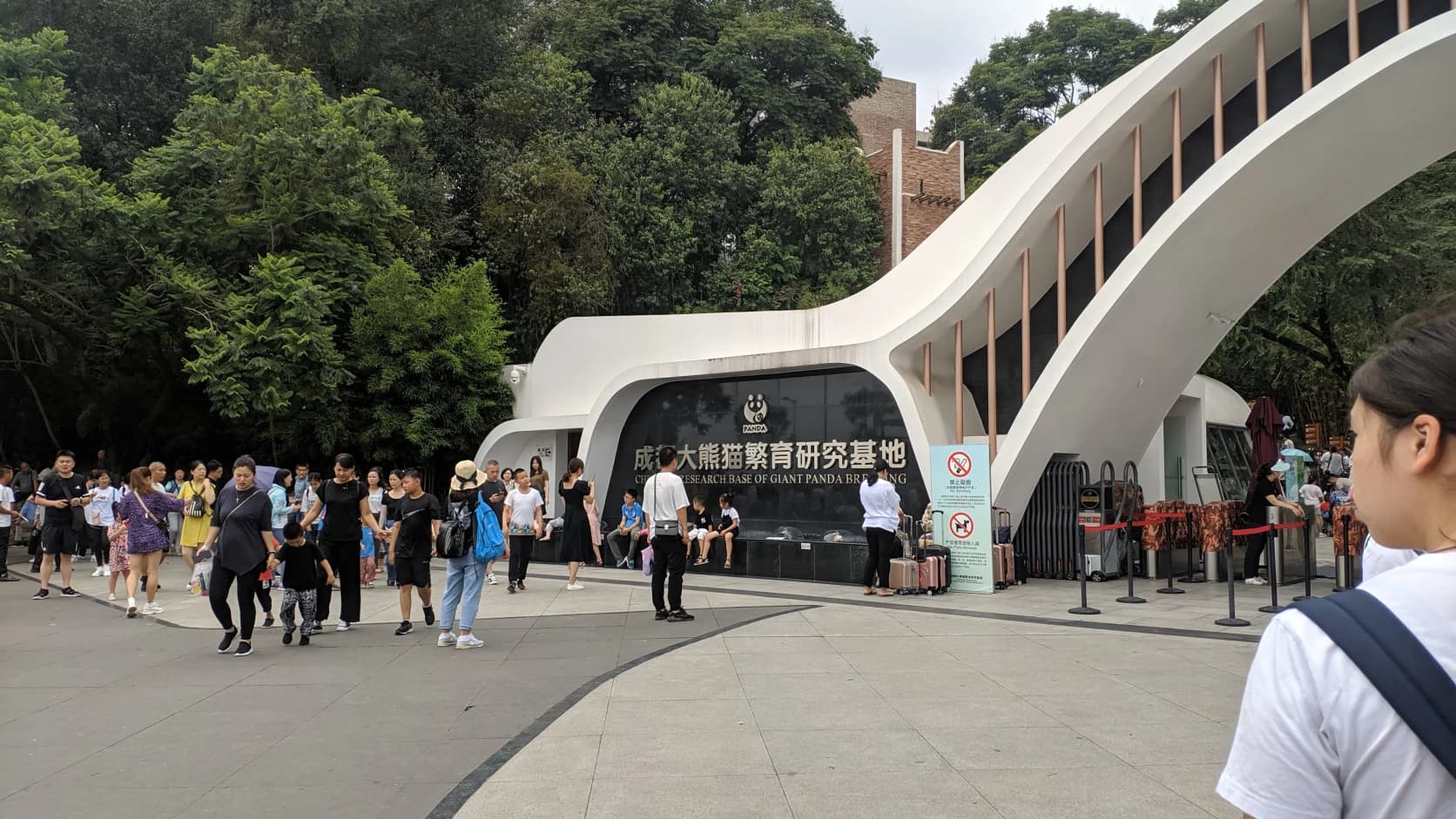
Entrance at Chengdu Research Base. Photo by Jimmyshjj, cropped from the original, licensed under CC BY-SA 4.0;

source
. This archival scene does not represent today's crowd level.
Tickets, reservations and what the price includes
Chengdu Research Base
The official ticket page currently lists an adult ticket at CNY55 and a student concession at CNY27, with real-name reservations available up to 14 days ahead. March through October uses morning entry from 07:30–12:00 and afternoon entry from 12:00–17:00, with clearing by 18:00. November through February shifts to 08:00 opening, afternoon entry until 16:30 and clearing by 17:30.
Visitors aged 60 and above and young children can qualify for free admission under the published conditions, but must carry the original identity document. Passport and other accepted-document lanes are provided. Recheck the official page before payment because holiday controls can change.
Trip.com is listed by the base as an authorized channel. Our Trip.com Chengdu Research Base listing can help when an international card or English checkout is useful. Compare the exact date, entry period, cancellation rule and whether the option is admission only. A marketplace label does not override the base's identity and entry rules.
Ignore sellers claiming paid “fast entry,” special animal access or a guaranteed shortcut around official security. The base explicitly warns visitors about unauthorized services.
Panda Valley
Panda Valley has a separate ticket; a Chengdu Base ticket does not cover it. Its official ticket page currently lists CNY55 full price and CNY27 half price, with online booking during the most recent seven-day window. All visitors, including people who qualify for free admission, must reserve. The page says there is no offline ticket window.
May through October currently uses 07:50–17:30 hours, with booking and entry ending at 17:00. November through April uses 08:10–17:00, with the cutoff at 16:30. Passport booking is supported. The current policy allows an unused ticket to be refunded but not rescheduled; always read the rule attached to your dated order.
Pets and drones are prohibited. Weather, animal management or maintenance can close part of the route without closing the entire site.
Shenshuping and Bifengxia
English-language ticket presentation is less consistent for these distant sites. Current marketplace listings for Shenshuping showed roughly CNY85–90 for ordinary adult admission, with separate prices for transport or paid experiences. Current Bifengxia products often showed about CNY95–100, but the inclusion can combine or separate scenic admission, internal transport, elevator and panda reserve access.
Treat those figures as planning ranges, not permanent tariffs. Before checkout, confirm the exact Chinese venue name, dated entry time, passport acceptance, internal vehicle, refund cutoff and every included area. If a coach is involved, save the Chengdu pickup point and the latest return time in Chinese.
Do not buy a Dujiangyan Panda Base ticket until the facility publishes an official reopening notice and a live dated reservation appears through a recognized channel.
“Panda volunteer” can mean three very different things
Old travel articles often suggest that a visitor can book a keeper day, prepare food, clean an enclosure and hold or touch a panda. That is not a safe assumption in 2026.
At Chengdu Research Base and Panda Valley, the institution's official volunteer recruitment is for science-popularization service. Applicants go through selection, interview, training and supervised service commitments. The current recruitment notice explicitly says the posts do not involve close contact with animals. This is volunteering in the ordinary civic sense, not a tourist upgrade bought with an admission ticket.
The same institution offers reservable education activities. A class, talk or workshop can add substance to a visit, but it is not permission to enter a veterinary, breeding or staff area.
At Wolong/Shenshuping, current travel marketplaces sell paid visitor products using labels such as “volunteer,” “love experience” or “keeper experience.” A live product may include interpretation, observing staff processes, preparing panda food, cleaning a non-occupied work area or receiving a certificate. The exact tasks, age limits, health declaration, clothing rules, passport deadline and language support can change. Buy only after those elements appear in the dated option. Do not infer touching, holding, feeding by hand or direct enclosure access unless the operator states it explicitly and lawfully for that date. Chengdu Research Base's official volunteer recruitment, for comparison, describes selection, training and service rather than close animal contact.
The closed Dujiangyan CCRCGP base was historically associated with these products, which is why stale pages continue to appear in search. Its old package is not evidence of current availability. Ordinary admission at Bifengxia should likewise be treated as observation only unless a current official product says otherwise.
If your real goal is conservation learning, a good guided interpretation session and museum visit may provide more substance than a staged certificate. Ask where the fee goes, who delivers the program, how animal welfare is protected and which tasks are guaranteed.
Transport plans that work
Central Chengdu to Chengdu Research Base
From a central hotel, allow 45–90 minutes each way, depending on your starting point and gate. A road snapshot from Tianfu Square was 15.5 kilometres and 28 minutes, but traffic and morning ride-hailing demand can double the useful planning time.
The most predictable public route is Metro Line 3 toward Panda Avenue or Chengdu Junqu General Hospital, followed by the current official/local shuttle arrangement or a short taxi. Verify the shuttle stop on the day. A taxi directly to the correct gate is easier for three or four people, but show the driver the exact AMap pin.
Do not type only “panda base” into a car app. Confirm whether you booked the South or West side before departure.
Chengdu to Panda Valley
The rail trip to Dujiangyan is only one part of the journey. Choose a service that arrives at Lidui Park or another Dujiangyan station appropriate to your hotel, then take a taxi/Didi to Panda Valley. From Lidui Park, allow 20–30 minutes door to gate even though the clear-road drive can be shorter.
For a day from Chengdu, reserve both rail directions before building the attraction plan. Leave a generous buffer for the return; station names around Dujiangyan are not interchangeable. Panda Valley pairs most naturally with a night in central Dujiangyan. The next day can cover the Dujiangyan Irrigation System or Mount Qingcheng at a humane pace.
Chengdu to Shenshuping
Use a current join-in coach or private vehicle. The product must say Wolong China Giant Panda Garden / Shenshuping in Chinese or provide the matching pin. Ask whether admission is included, whether the coach waits at the attraction, where lunch happens and what occurs if the mountain road delays the return.
Bring motion-sickness medication if you normally need it, plus water, a layer for cooler weather and your passport. Avoid booking a same-evening flight, train or expensive performance. Mountain traffic does not respect a tight city itinerary.
Chengdu or Ya'an to Bifengxia
From Chengdu, use intercity rail to Ya'an plus a prearranged taxi/transfer, or a direct vehicle if the price and road time suit your group. Confirm which Bifengxia entrance your ticket requires. From Ya'an Station, budget about an hour to the correct entrance and another buffer for ticket exchange or internal transport.
If returning by train, agree on a pickup time before entering and allow a large station buffer. An overnight in Ya'an is the better plan if you also want the gorge.
Season, weather and the meaning of “go early”
In hot months, aim to be at the gate for opening. Giant pandas can become less visible or spend more time indoors as temperatures rise. The early plan also reduces time in exposed queues. Carry water, sun protection and a breathable layer; respect rules about food near animal areas.
Chengdu Research Base has the strongest indoor fallback through its museum and selected indoor viewing areas. That makes it the safest choice in summer heat or unstable weather. Panda Valley has more of a foothill and forest character, but outdoor paths and sections can close during severe weather. Shenshuping is higher and often cooler, yet rain, fog, landslide precautions and road conditions carry more weight. Bifengxia's gorge paths become slippery after rain.
Winter mornings can offer crisp viewing conditions, but opening is later and shaded paths are cold. Wear layers and shoes with grip. In any season, an indoor animal room may have condensation, glare or a queue. Do not tap glass, use flash where prohibited, shout, feed animals or hold a place at the rail after you have finished looking.
“Go early” should be a complete plan: ticket in the early session, hotel departure calculated backward, correct gate pin saved, breakfast arranged and transport booked. Arriving in the district at opening while searching for the entrance loses the advantage.
A realistic schedule for each choice
Chengdu Base half day
- 06:30–07:00: leave a central hotel, adjusted for season and gate.
- Opening to 10:00: priority outdoor areas in one zone; move on from packed rails.
- 10:00–11:30: museum, indoor viewing or one sightseeing-bus leg.
- By noon or early afternoon: return to central Chengdu for a relaxed meal.
This fits cleanly into our five-day Chengdu itinerary. Keep the afternoon flexible rather than stacking another timed major attraction immediately after the base.
Panda Valley with a Dujiangyan night
- Previous evening: sleep in central Dujiangyan and confirm the morning car.
- Opening to roughly 10:30 or 11:00: public Panda Valley circuit at an unhurried pace.
- Lunch and rest in Dujiangyan.
- Afternoon: choose one compact urban activity. Save Mount Qingcheng for its own half or full day.
Travelers making a Chengdu day trip should leave the afternoon less ambitious and protect the booked return train.
Shenshuping full day
- Around 06:30–07:30: depart Chengdu according to the driver or coach.
- Late morning through early afternoon: visitor circuit, interpretation and booked activity if applicable.
- Mid to late afternoon: leave before mountain traffic becomes a risk.
- Evening: return to Chengdu with no fixed event attached.
The journey is part of the commitment. If the itinerary gives the site only 90 minutes between road legs, the trade is poor.
Bifengxia from Ya'an
- Early morning: car from Ya'an to the correct Bifengxia entrance.
- Morning first: panda reserve while it is open and before the day warms.
- Lunch and optional gorge section based on energy, weather and closing times.
- Late afternoon: prearranged return to Ya'an.
From Chengdu, add the intercity legs and accept that the day has little slack.
Common mistakes
Booking the wrong Dujiangyan site. Match the Chinese name, operator and AMap pin. Panda Valley is open and affiliated with Chengdu Research Base; the CCRCGP Dujiangyan Panda Base is closed.
Choosing by claimed panda count. Published counts can include animals off display, temporary residents, cubs not currently viewable or old numbers. Public visibility changes daily.
Assuming a rural base means no crowd. Tour coaches can concentrate at one enclosure anywhere. Date, opening time and group behavior matter more than a broad label.
Treating a research institution as a backstage pass. Public tickets cover public paths. Laboratories, veterinary areas, breeding rooms and wild-training zones remain operational spaces.
Buying an old volunteer package. Verify the exact facility and date. A cached page for the closed Dujiangyan base or a vague “Chengdu” product is insufficient.
Combining too much. Panda Valley, Dujiangyan Irrigation System and Mount Qingcheng look close on a regional map, but each has entry, transfer and walking time. Two deliberate experiences beat three rushed arrivals.
Ignoring the return. A remote outbound car is easy to book; an evening pickup can be harder. Save the driver's contact, pin the meeting point and keep a buffer for the last train.
Final choice
Choose Chengdu Research Base if you have never seen giant pandas in Sichuan, have fewer than four days in Chengdu, or need the most dependable facilities. Enter early and choose South or West intentionally.
Choose Panda Valley if you are staying in Dujiangyan, prefer a smaller public circuit and accept more outdoor walking with fewer indoor fallbacks.
Choose Wolong/Shenshuping if conservation context and a mountain setting justify a full road day. Book transport and admission as one checked plan, then verify any paid experience line by line.
Choose Bifengxia if Ya'an is already on your route or you can stay overnight. Put the pandas before the gorge.
Leave Dujiangyan Panda Base / China Giant Panda Garden off the itinerary until a dated official reopening notice appears. The correct response to an uncertain closure is to choose an open site, not to hope an old booking page still works.
Whichever base you choose, build the day around what you can control: correct place, valid reservation, early arrival, realistic walking, a return buffer and respectful viewing. The animal decides the rest. Once the fixed panda visit is set, choose an easy urban evening from the Chengdu relaxed-neighbourhood walk chooser.