Wenshu Monastery Chengdu
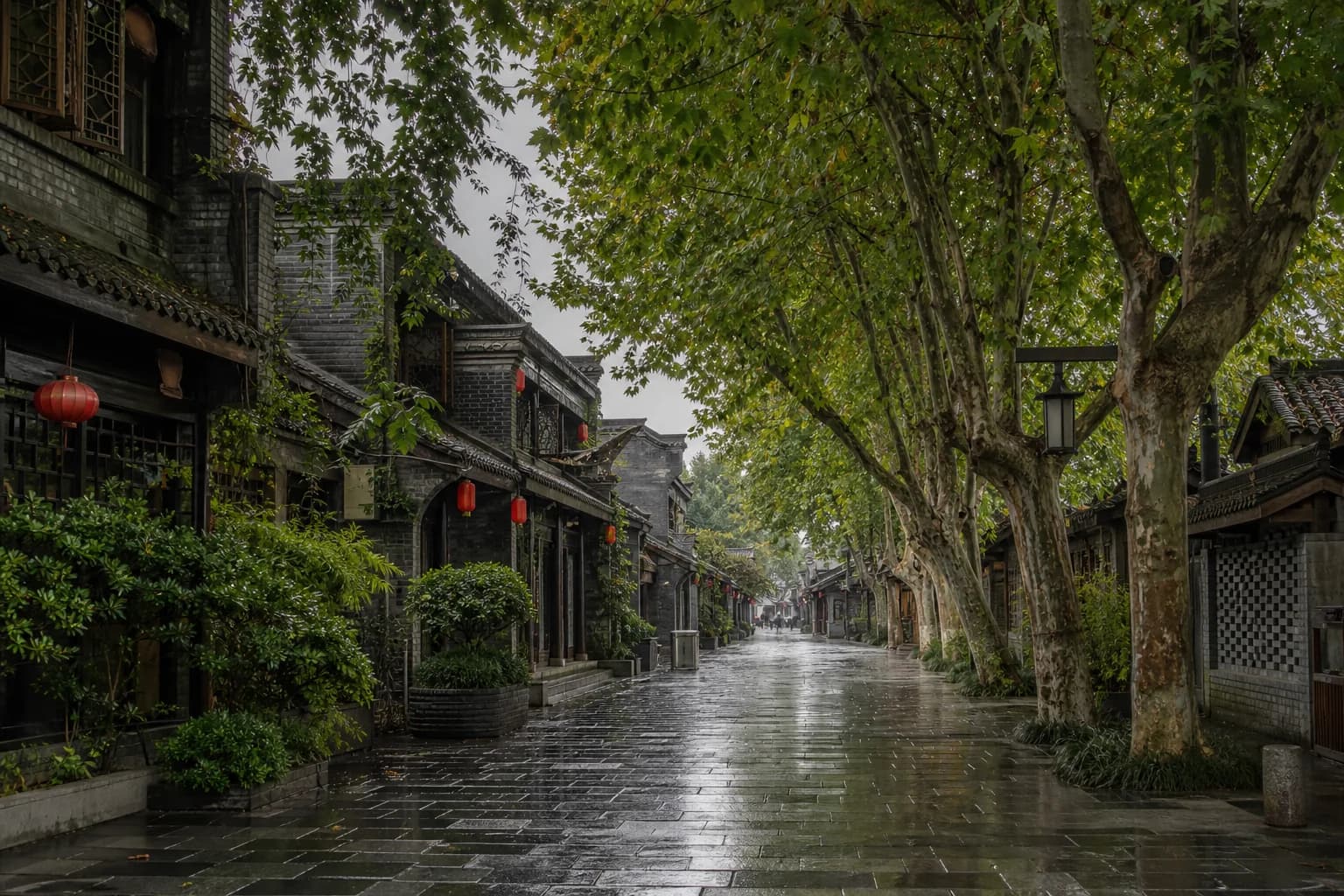
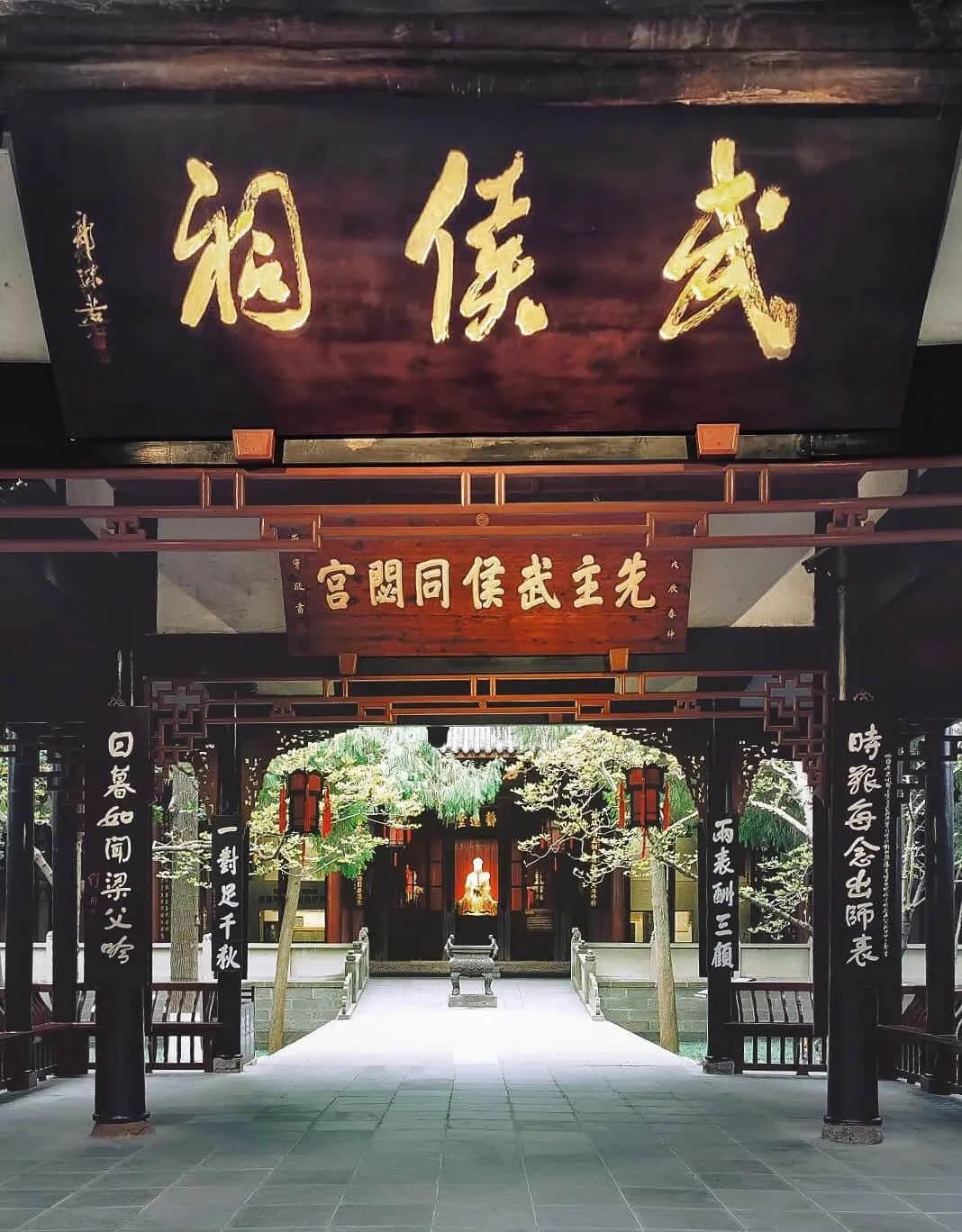
Wenshu Monastery (文殊院, Wénshū Yuàn) is the best place in central Chengdu to slow the trip down. It is an active Buddhist monastery first and a historic sight second. Around it, Wenshufang is a rebuilt, commercial neighborhood of lanes, snack counters and teahouses. Treating those as two different experiences makes both better.
Allow 60–90 minutes inside the monastery, then another 60–90 minutes for Wenshufang and food. Follow the six halls on the central axis instead of hunting for isolated “photo spots.” The architecture becomes more legible as a sequence, and you avoid cutting across worshippers or doubling back through narrow courtyards.
Wenshu Monastery essentials
| Plan | Practical answer |
|---|---|
| Admission | Normally free; no general sightseeing ticket |
| Normal opening hours | 08:00–17:00; religious events and temporary controls can change access |
| Sensible arrival | Before 16:00, rather than testing the final-entry boundary |
| Time inside | 60–90 minutes |
| Time with food | 2–3 hours total |
| Address | 66 Wenshuyuan Street, Qingyang District |
| Best metro | Line 1 to Wenshu Monastery Station, Exit K; AMap verifies about 0.4 km / 6 minutes to the monastery map location |
| Chinese for maps | 成都文殊院 / 文殊院街66号 |
The latest accessible monastery notice still gives 08:00–17:00, and current map and travel listings agree. Because this is a functioning religious site, a ceremony, major Buddhist festival or onsite management decision can close a hall without closing the entire complex. Confirm the day's notice at the gate and do not plan an arrival at 16:55.
Why it is more than “another Chengdu temple”
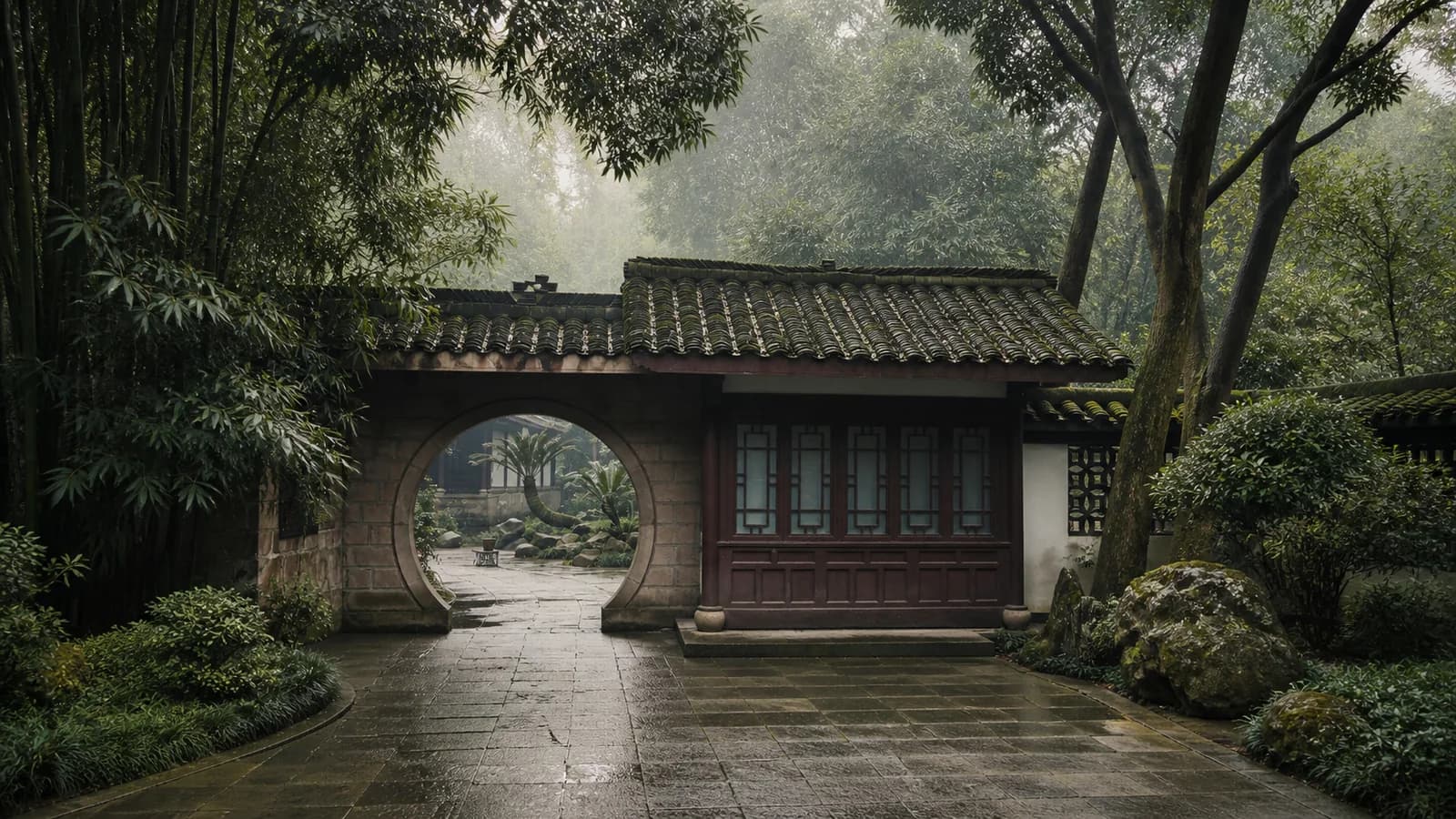
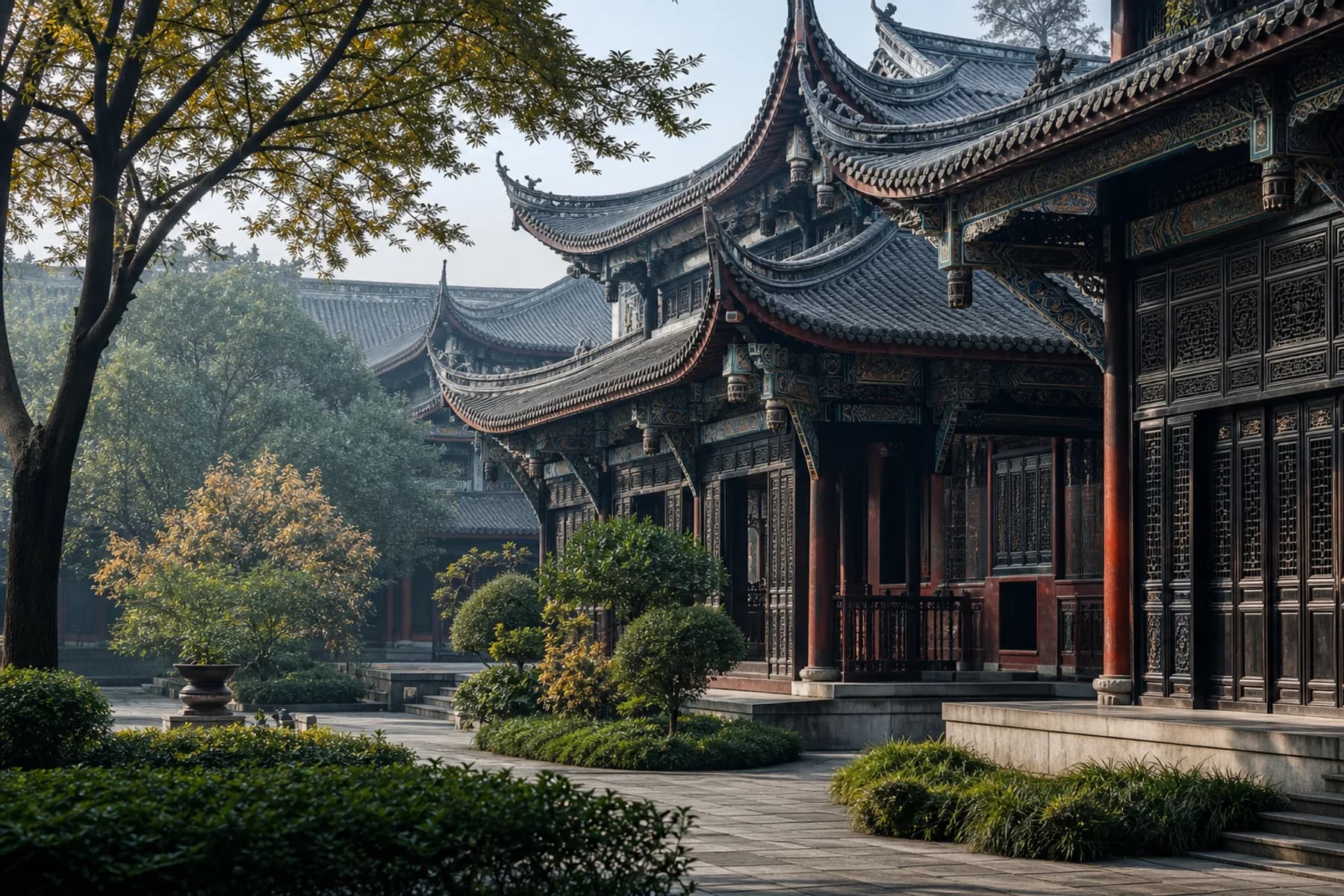
The Chengdu Buddhist Association traces the monastery to the Sui dynasty's Daye era, 605–617, and describes it as Chengdu's most completely preserved Buddhist temple complex. The present experience is shaped largely by Qing-style architecture: grey tiles, timber halls, stone details, courtyards and a disciplined north–south axis.
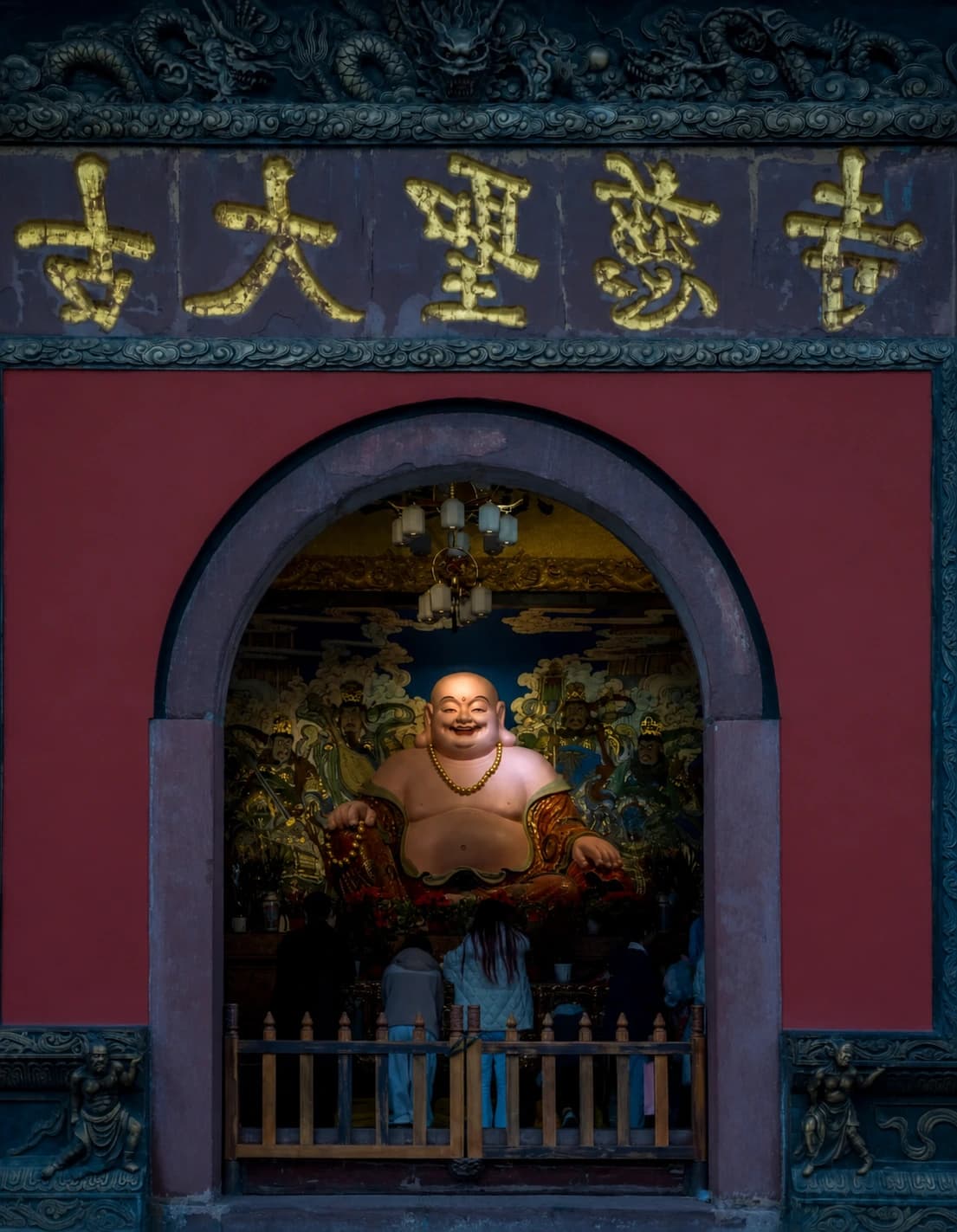
That axis is the feature to notice. Six principal buildings progress through the site: Tianwang Hall, Three Great Bodhisattvas Hall, Mahavira Hall, Dharma Hall, Sutra Library and Manjusri Pavilion. Bell, dining and supporting buildings sit to the sides. Instead of treating every hall as a separate attraction, watch how roof height, courtyard width and the density of decoration change as you move inward.
The route inside: six halls without backtracking
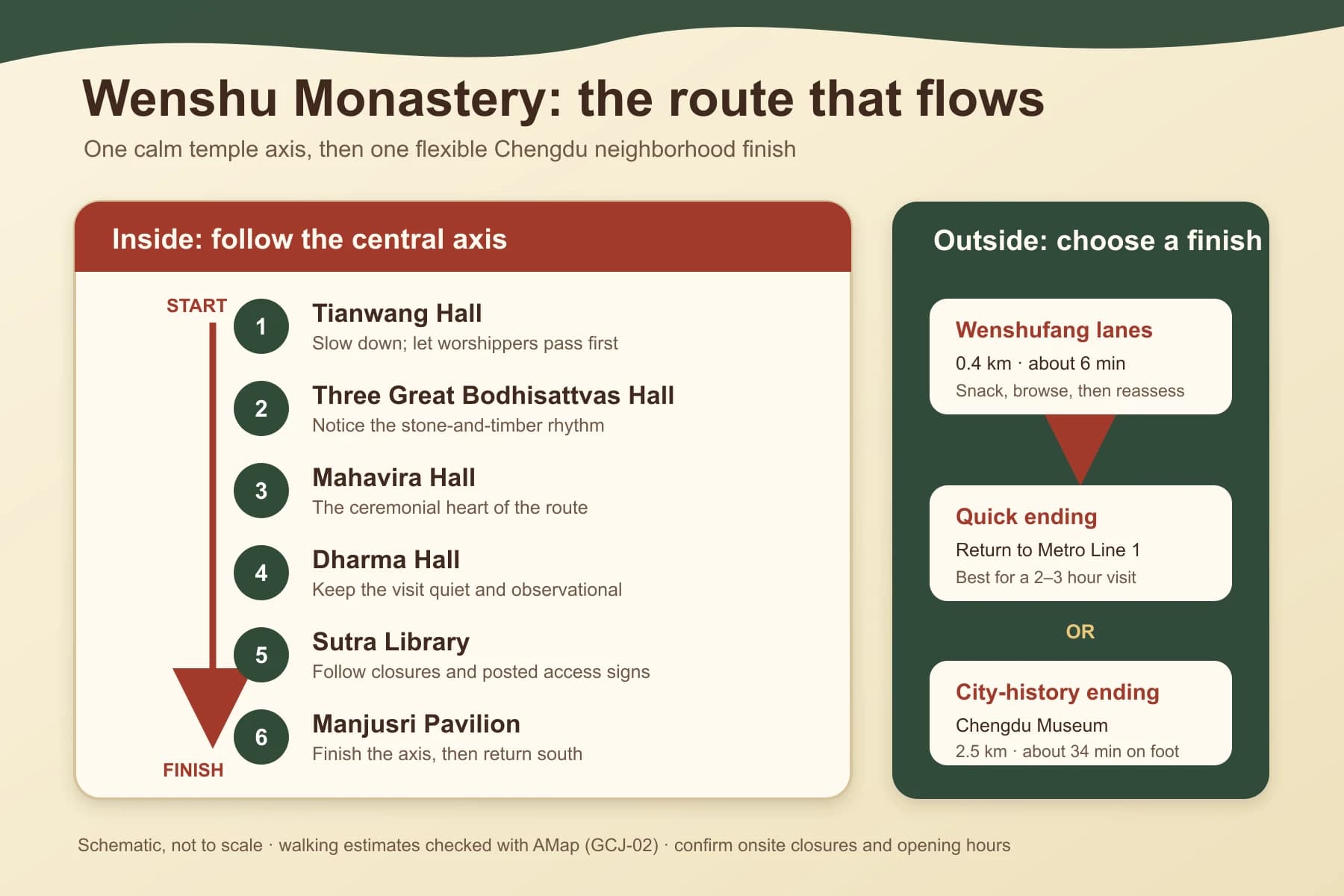
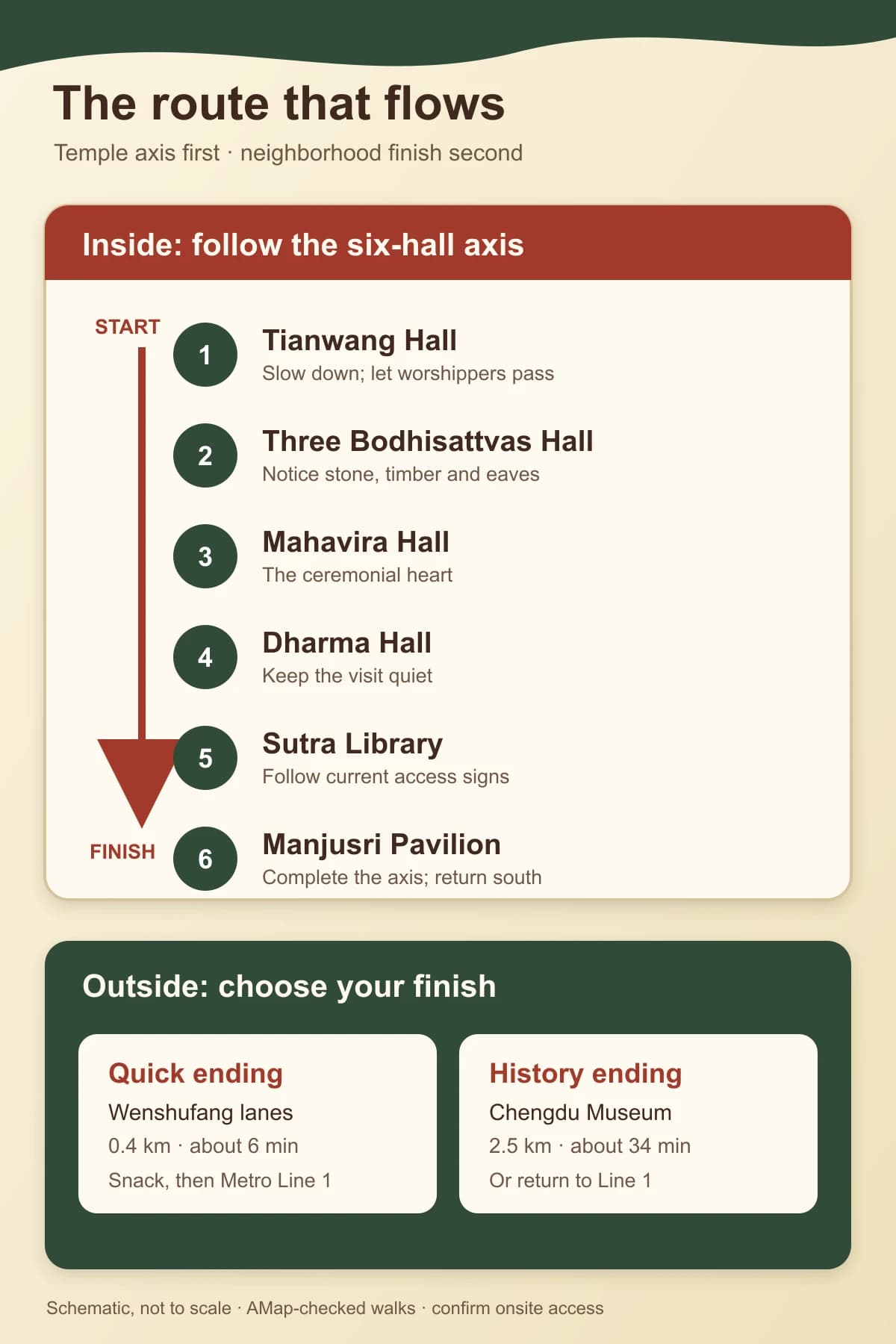
Original schematic, not to scale. Hall sequence comes from the Chengdu Buddhist Association; external walking estimates were checked with AMap in GCJ-02 coordinates.
1. Tianwang Hall: change your pace
The first hall is where the city should drop away. Put the phone down for a minute, stand to one side and understand how people are using the space. Some are sightseeing; others are praying. Let worshippers approach first and avoid blocking the central doorway for a photograph.
2. Three Great Bodhisattvas Hall: look at structure
This is a good point to stop reading labels and study the building itself. Compare stone supports, dark timber, painted brackets and the layered eaves. Details matter more here than a wide camera view. If a doorway is busy, move into the courtyard rather than forming a queue across it.
3. Mahavira Hall: the ceremonial center
Expect the atmosphere to feel more devotional. Do not assume photography is permitted because another visitor is using a phone. Follow the current sign and staff instruction for each hall; restrictions can differ between interior worship space and outdoor architecture.
4. Dharma Hall: keep the route observational
Move through without trying to turn ritual activity into a performance. If chanting or a ceremony is underway, remain at the edge or continue quietly. A functioning monastery does not owe every interior to a sightseeing itinerary.
5. Sutra Library: access may be limited
The building belongs to the official six-hall sequence, but that does not mean every floor or collection is open to casual visitors. Treat the exterior and its place in the axis as the dependable experience. Follow any barrier or temporary closure without looking for a side entrance.
6. Manjusri Pavilion: finish, then return south
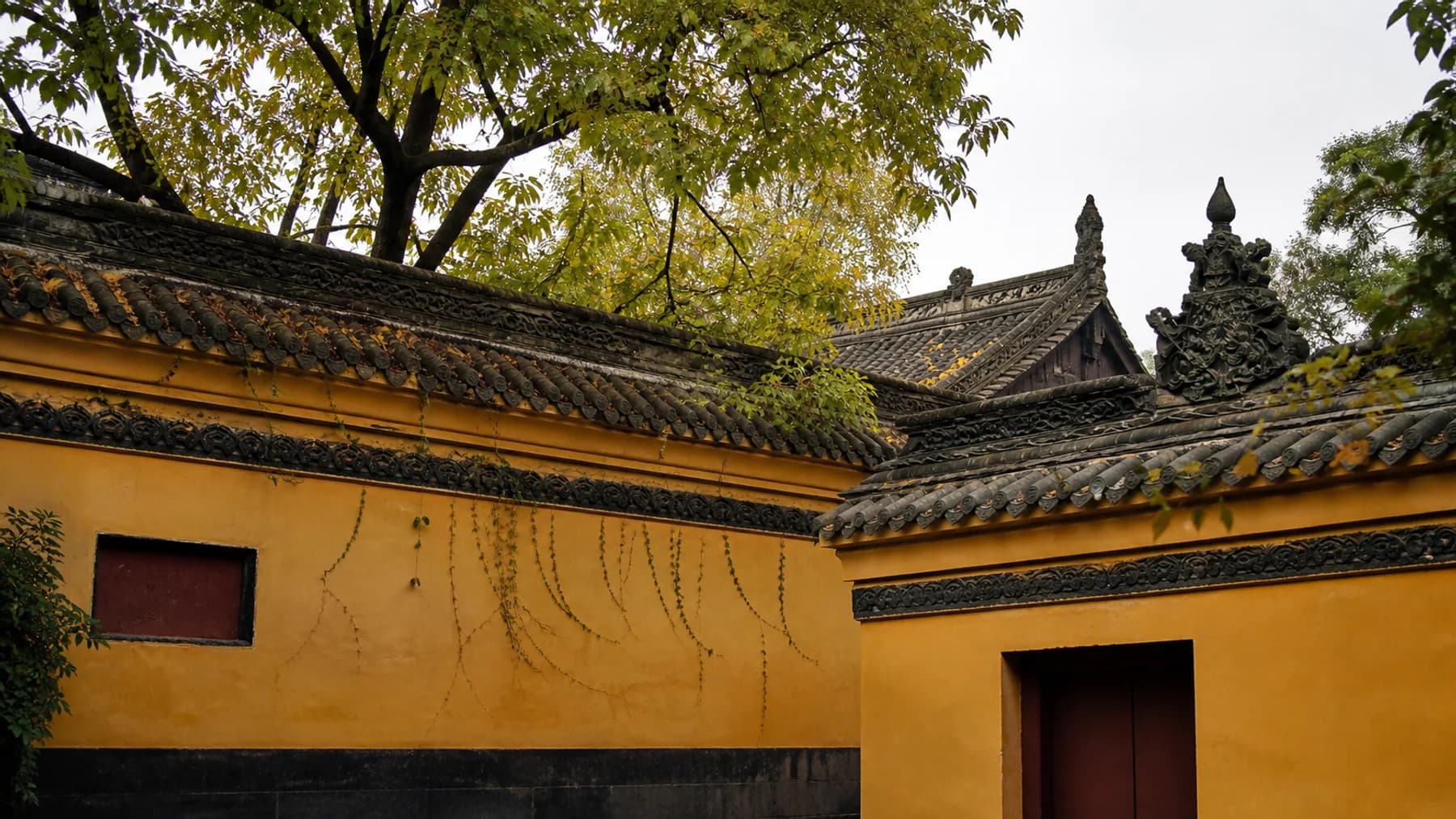
Complete the axis before deciding whether to spend more time in side courtyards. On the return, notice what you missed while moving inward: roof-end ornaments, paving, old trees and the contrast between warm wall color and grey tile.
This is not a physically complex attraction, so it does not need turn-by-turn GPS inside. The route graphic solves the real problem: keeping the six-hall order clear while showing where the neighborhood portion begins.
What to photograph—and when not to
The strongest visual story is texture, not worshippers. Look for worn wall surfaces, repeating roof tiles, carved stone, timber screens, tree shadows and the compressed layers of multiple eaves. Overcast Chengdu light often works better than harsh midday sun because it holds detail in both dark timber and bright walls.
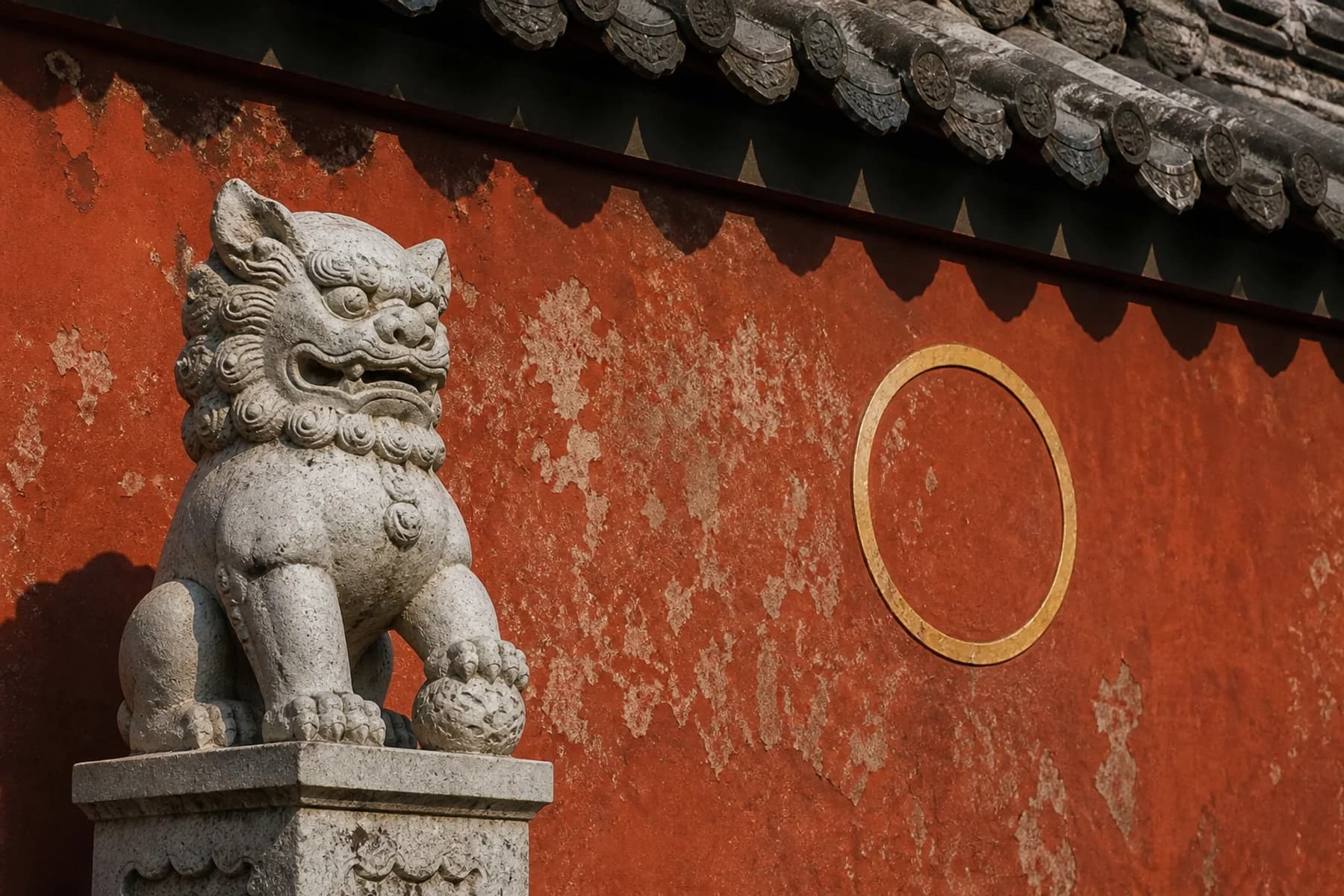
Keep these boundaries:
- Read the sign for each hall; do not publish a blanket “photography allowed” rule.
- Do not photograph ceremonies, monks or worshippers as identifiable subjects without permission.
- Avoid flash, drones, tripods in circulation space and staged poses in front of active worship.
- Keep doorways and the central approach clear even when the composition looks perfect.
- Do not touch carvings, painted surfaces, offerings or ritual objects for a close-up.
Wenshufang after the temple: what is actually distinctive
Wenshufang (文殊坊) begins just outside the religious core. AMap gives about 0.4 km / 6 minutes from the monastery map location to the Wenshufang map location, although in practice the two experiences visually blend at the edges.
The neighborhood is useful, but frame it honestly: it is a historic-style commercial district rather than an untouched old quarter. Its value is convenience and contrast. You can move from quiet courtyards into tea, snacks, pastries and everyday street energy without crossing the city.
Use a dish-first strategy instead of queueing for one changing social-media shop:
- Sweet-water noodles (甜水面): thick, chewy noodles with a sweet, nutty and chili-rich coating. The texture is the point.
- Liangfen (凉粉): cool bean-jelly noodles with chili oil, vinegar and aromatics. Good for a small snack, but ask about spice level.
- Guokui (锅盔): crisp baked or griddled flatbread with savory or sweet fillings. Eat it fresh; the contrast disappears as it sits.
- Vegetarian meal: the temple area is a logical place to seek one, but confirm whether the venue is open to the public and whether service is running that day. Do not build the itinerary around old reports of temple dining.
- Tea: choose a place by visible seating, current menu and atmosphere. A commercial teahouse outside the monastery is more dependable than assuming a particular temple tea or sutra-copying program is operating.
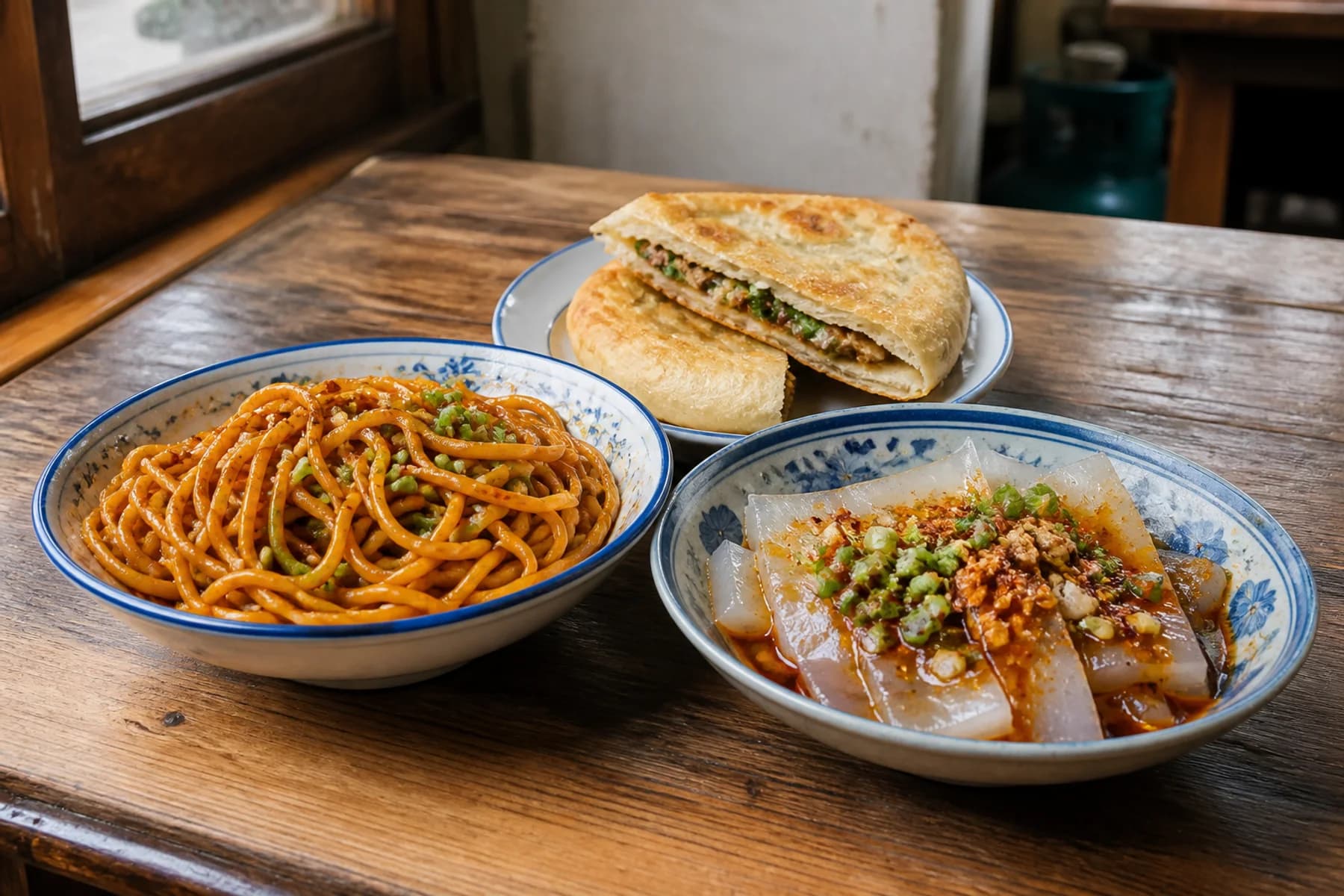
If you have allergies or dietary restrictions, show the ingredient in Chinese. Chili oil can contain sesame or peanuts; apparently vegetarian noodles may use lard or meat stock; guokui fillings may be minced meat even when the English label is vague.
Three ways to place Wenshu in a Chengdu day
Quiet half-day: monastery → Wenshufang → Metro Line 1
Arrive around 08:30–09:00, complete the central axis, then eat in Wenshufang. Return to Wenshu Monastery Station when energy or weather says stop. This is the best version for jet lag, rain or a slower first morning.
City-history half-day: monastery → Wenshufang → Chengdu Museum
After food, either walk about 2.5 km / 34 minutes from Wenshufang to Chengdu Museum, or return toward Wenshu Monastery Station and take Line 1 south. AMap estimates the transit continuation at roughly 23 minutes including substantial access walking; the direct walk is better only in comfortable weather.
Check the museum's current reservation, opening and last-entry rules before choosing this ending. The pairing works because the monastery gives you living religious space while the museum supplies broader city history.
Contrast day: pandas → Wenshu → evening center
Wenshu is an effective reset after a crowded morning at the panda base. Keep lunch light around Wenshufang, then continue toward Chunxi Road or Taikoo Li for modern Chengdu. Do not add Daci Temple merely to collect another temple; choose Daci for its downtown-commercial contrast and Wenshu for the more complete central-axis monastery experience.
Where to stay for this part of Chengdu
- Wenshu / Gulou: best for a quieter local base, early temple access and Line 1. Check whether the room faces a main road, lane or internal courtyard; “near Wenshu” does not guarantee calm.
- Tianfu Square: strongest first-time compromise for Chengdu Museum, multiple central sights and straightforward Line 1 access north to Wenshu.
- Chunxi Road / Taikoo Li: best for restaurants, shopping and evening energy. It is less contemplative but more convenient if Wenshu is only one morning stop.
- Wide and Narrow Alleys area: choose for atmospheric lanes and western-center sights, accepting a less direct metro connection to Wenshu. Read our Wide and Narrow Alleys guide before paying a premium for the address.
Compare Chengdu hotels on Trip.com after selecting the district. Prioritize recent reviews about smoke, street noise, air-conditioning control and the real walk to a metro entrance—not the straight-line distance shown in a listing.
Respectful practical advice
- Dress as you would for an active place of worship: ordinary travel clothes are fine, but avoid deliberately provocative or costume-like styling.
- Step around people who are praying and do not join a ritual you do not understand simply for a video.
- Keep voices and calls low. Courtyard acoustics carry sound.
- Do not promise yourself “free incense.” Follow the monastery's current onsite system and burn nothing outside designated practice.
- Carry the Chinese address and AMap marker for Wenshu Monastery.
- Exit K is currently the clearest metro approach: AMap verifies roughly 398 m / 6 minutes. Check station signs in case an exit is temporarily closed.
- Rain improves wall color but makes stone paving slick. Slow down under eaves and avoid crowding sheltered thresholds.
Is Wenshu Monastery worth visiting?
Yes, if you want one central Chengdu sight where the city's famous “slow life” has substance rather than branding. The monastery is free, easy to reach and compact enough to fit around weather or a museum day. Its distinctive feature is not a single statue or viral snack; it is the progression from an active six-hall Buddhist axis to the everyday food streets outside.
Give the sacred space the first hour. Give Wenshufang the second. That simple separation produces a richer visit than rushing between named shops, copying old photography rules or treating every courtyard as a backdrop.