Chengdu Museum
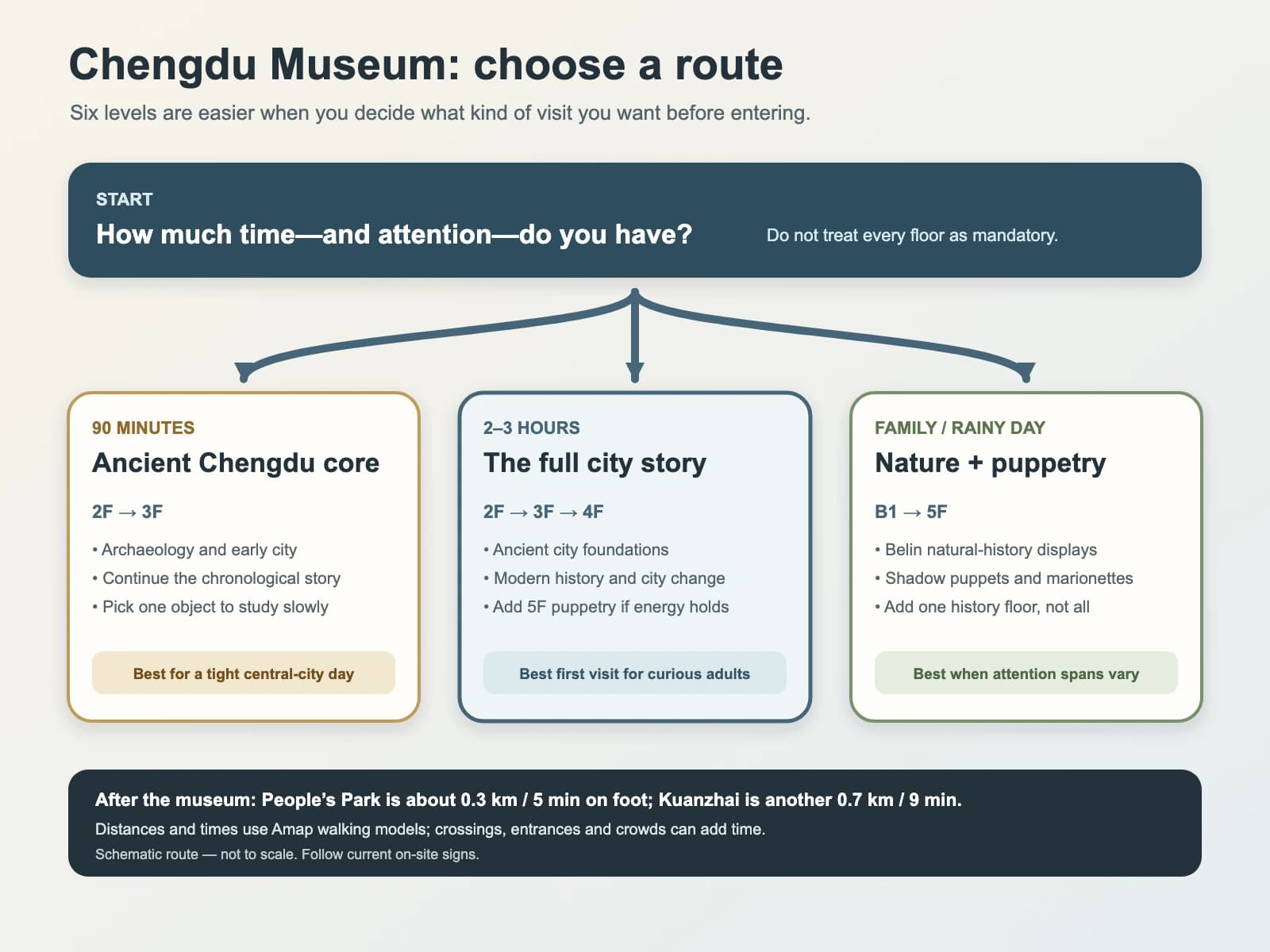
Chengdu Museum occupies a prime position beside Tianfu Square, but its six levels can overwhelm a visitor who tries to see everything. The better strategy is to choose a route: 90 minutes for ancient Chengdu, two to three hours for the city's long story, or a family and rainy-day combination built around natural history and puppetry.
Admission is free, and the museum is one of the strongest introductions to Chengdu before you visit individual temples, parks and historic districts. It explains how the city grew, traded, managed water, entertained itself and maintained a recognizable local culture across long periods of change.
Opening hours and reservation
The museum currently publishes these regular hours:
- Tuesday–Thursday and Sunday: 09:00–17:00; last admission 16:30.
- Friday and Saturday: 09:00–20:30; last admission 20:00.
- Monday: closed, except when a statutory-holiday notice says otherwise.
The official guide says the daily capacity is 20,000 and identifies 10:00–12:00 and 14:00–16:00 as common peak periods. A Friday or Saturday evening can therefore be useful for adults who want more space, but temporary exhibitions and holiday arrangements can alter demand.
Use the museum's current online reservation interface and bring the original identity document connected to the booking. The museum has previously released reservations on a rolling 14-day schedule, but release rules can change. Passport and Hong Kong/Macau document holders should bring the original document and use the first-floor consultation service if the online process or entry gate needs manual verification.
Getting there and what to carry
The address is 1 Xiaohe Street, immediately west of Tianfu Square. Take Metro Line 1 or 2 to Tianfu Square and follow the current signs for West 1 North or West 1 South exits. Entrances and crowd-control barriers may change the final approach, so allow a few minutes beyond the metro estimate.
Package storage is available in the South Building, while consultation is on the first floor. The museum does not allow food, sticky foods, colored liquids or pets inside the galleries. Many galleries are intentionally dim to protect objects. Do not use flash, a tripod or a selfie stick where photography is permitted, and obey gallery-specific signs.
Pick one of three routes
Route A: 90-minute ancient Chengdu core
Go directly to 2F, then continue chronologically through 3F. These floors cover ancient Chengdu from its early foundations through later imperial periods. Do not stop at every label. Choose one city-building theme—water, trade, burial customs or everyday life—and use it to connect the objects.
This route suits a tight central-city day because it leaves time to walk to People's Park and Kuanzhai Alleys without turning the museum into a race.
Route B: two-to-three-hour city story
Follow 2F → 3F → 4F. The first two levels establish ancient and imperial Chengdu; the fourth adds modern history and folk customs. If your attention is still good, finish with 5F puppetry. Skip the basement natural-history collection unless it is a personal priority.
This is the best first visit for curious adults. It shows why Chengdu feels historically continuous while still being a modern metropolis.
Route C: family or rainy-day visit
Combine B1 natural history with 5F shadow puppets and marionettes, then add only one history floor. The contrast of animal specimens, translucent puppet figures and articulated performance objects holds attention better than marching through four consecutive history galleries.
Family groups should agree on a meeting point before separating; the building's vertical layout makes “the next floor” an imprecise instruction.
The distinctive layer: how a shadow puppet works
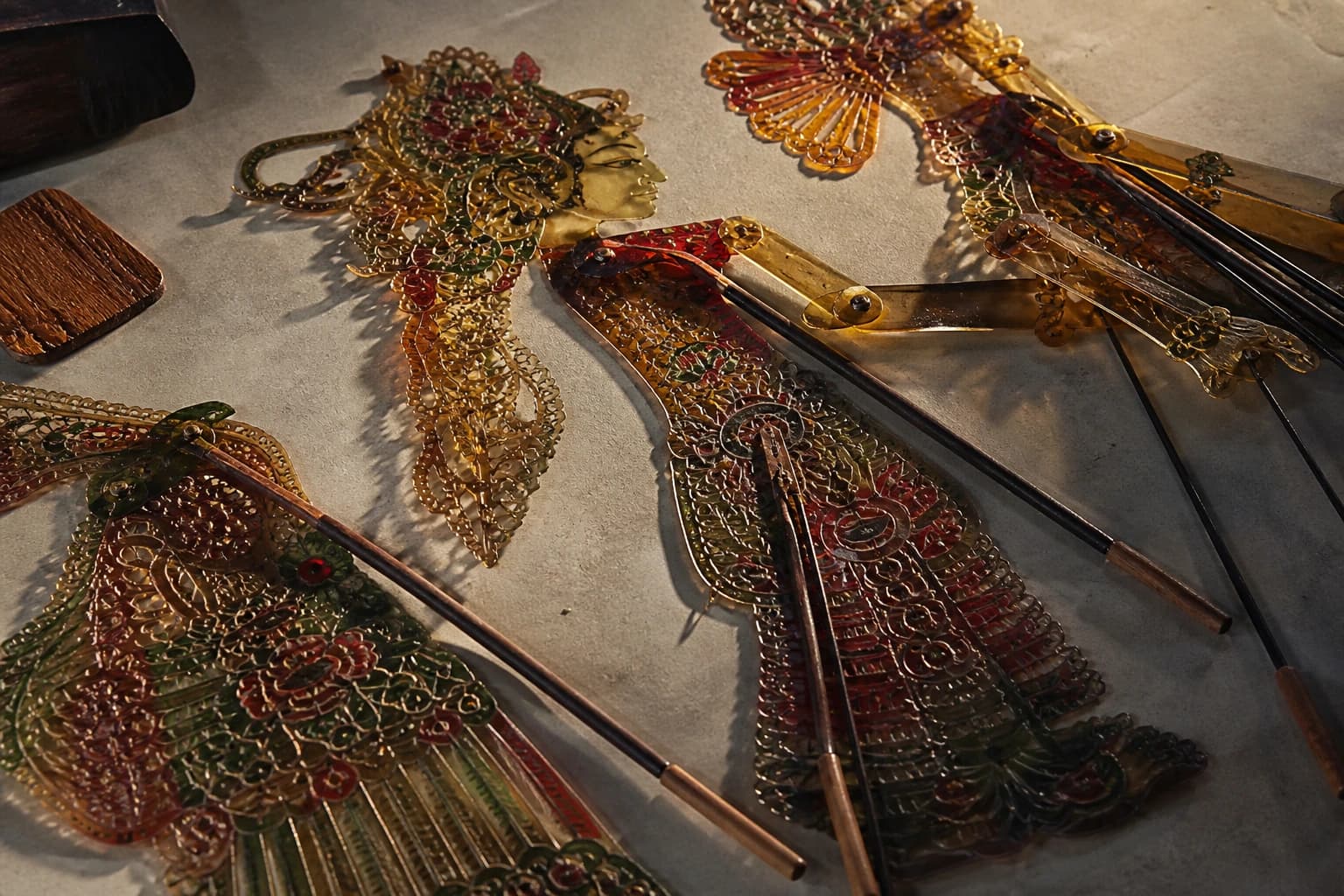
On 5F, look past the puppet's painted face and study the engineering. Traditional shadow figures are cut from thin translucent hide, pierced with patterns, colored, joined at moving points and controlled by rods. Backlight turns the material into saturated color while the cutwork creates the drawing. A performer coordinates several joints while also timing speech, music and movement.
Use three questions to make this floor memorable:
- Which parts are rigid, and which joints must move for the character to walk or gesture?
- Where does the maker use transparent color, opaque line or empty cutwork?
- How would the figure read differently as an object on a wall versus a moving silhouette on a lit screen?
This turns the puppetry collection from decorative folk art into a lesson in material, light and performance technology.
Read the city through faces and daily life
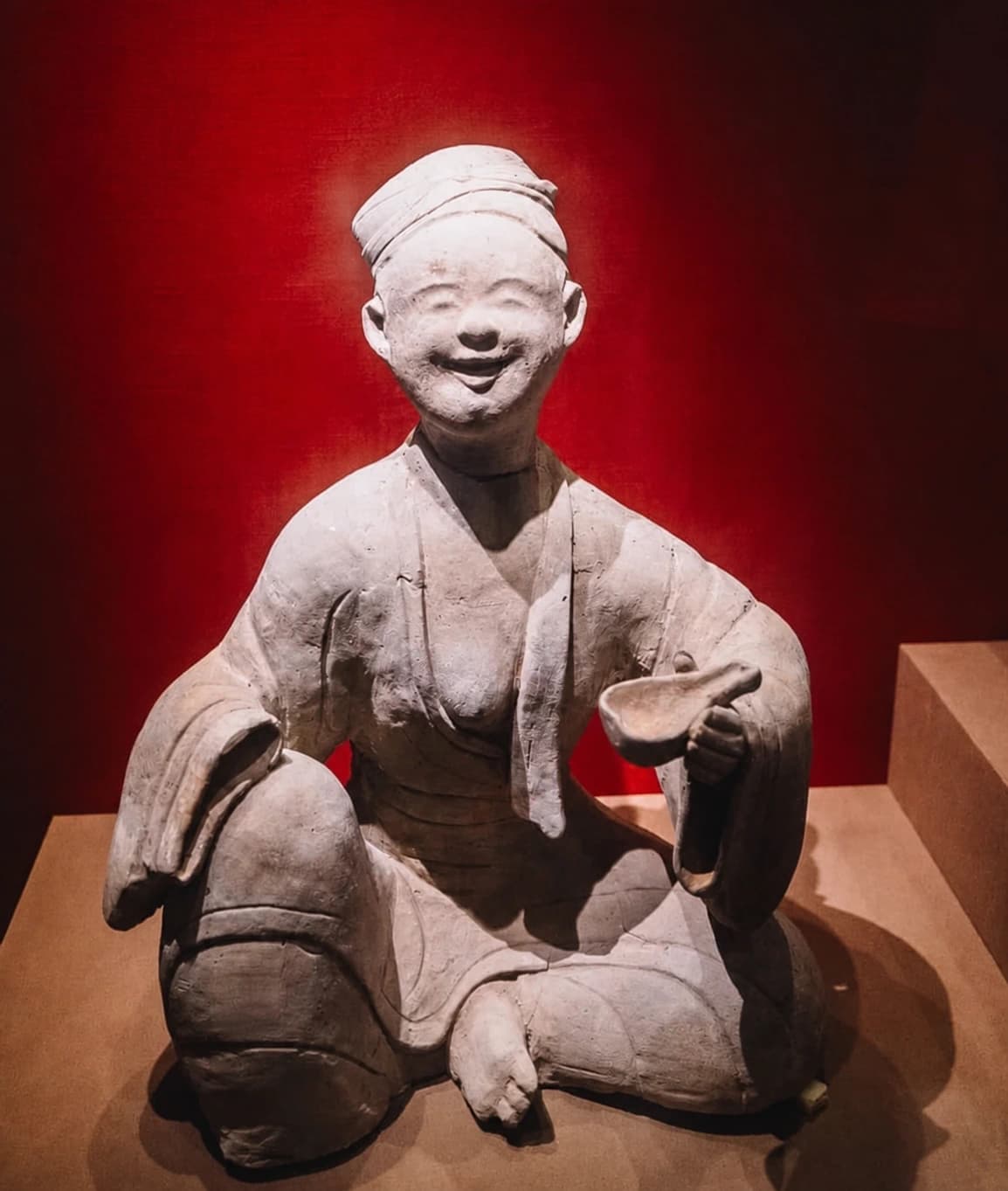
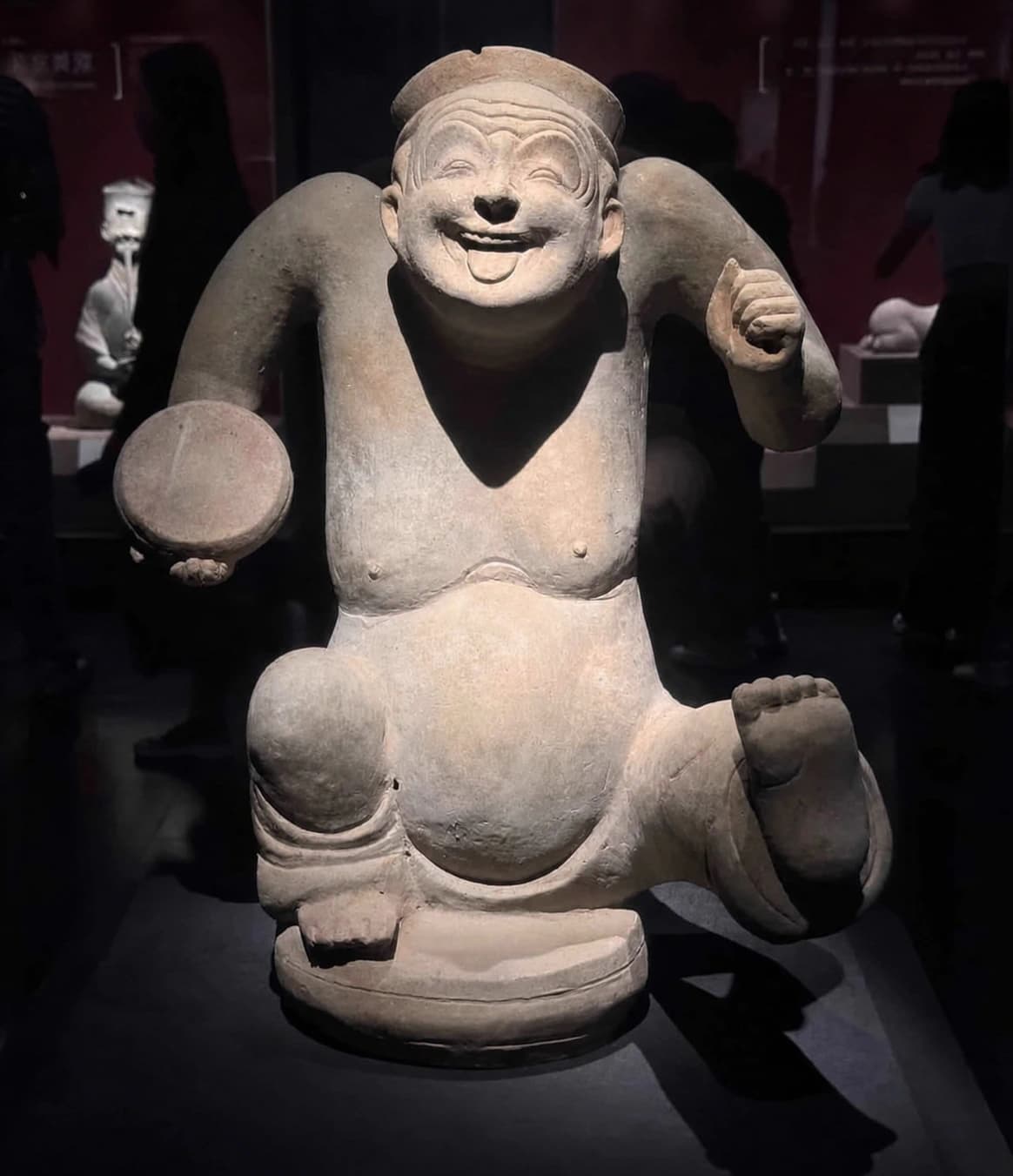
The expressive clay figures are useful counterpoints to monumental histories. Notice posture, clothing, gesture and humor: small human details can reveal how people imagined entertainment and social roles. On 4F, connect those older figures to Chengdu's continuing teahouse, food and neighborhood culture—but distinguish reconstructed interpretation from an untouched historical street.
Temporary exhibitions rotate, and individual objects may move. Build your visit around floor themes rather than promising yourself one exact treasure. The current gallery signs and official exhibition page are the authority on what is actually on view.
Continue on foot: park, tea and old lanes
After the museum, Amap models the walk to People's Park at about 0.3 km / 5 minutes. Continue through the park slowly: a tea break is more characteristic of Chengdu than squeezing in another indoor attraction. From People's Park, Kuanzhai Alleys are roughly 0.7 km / 9 minutes on foot by the same model.
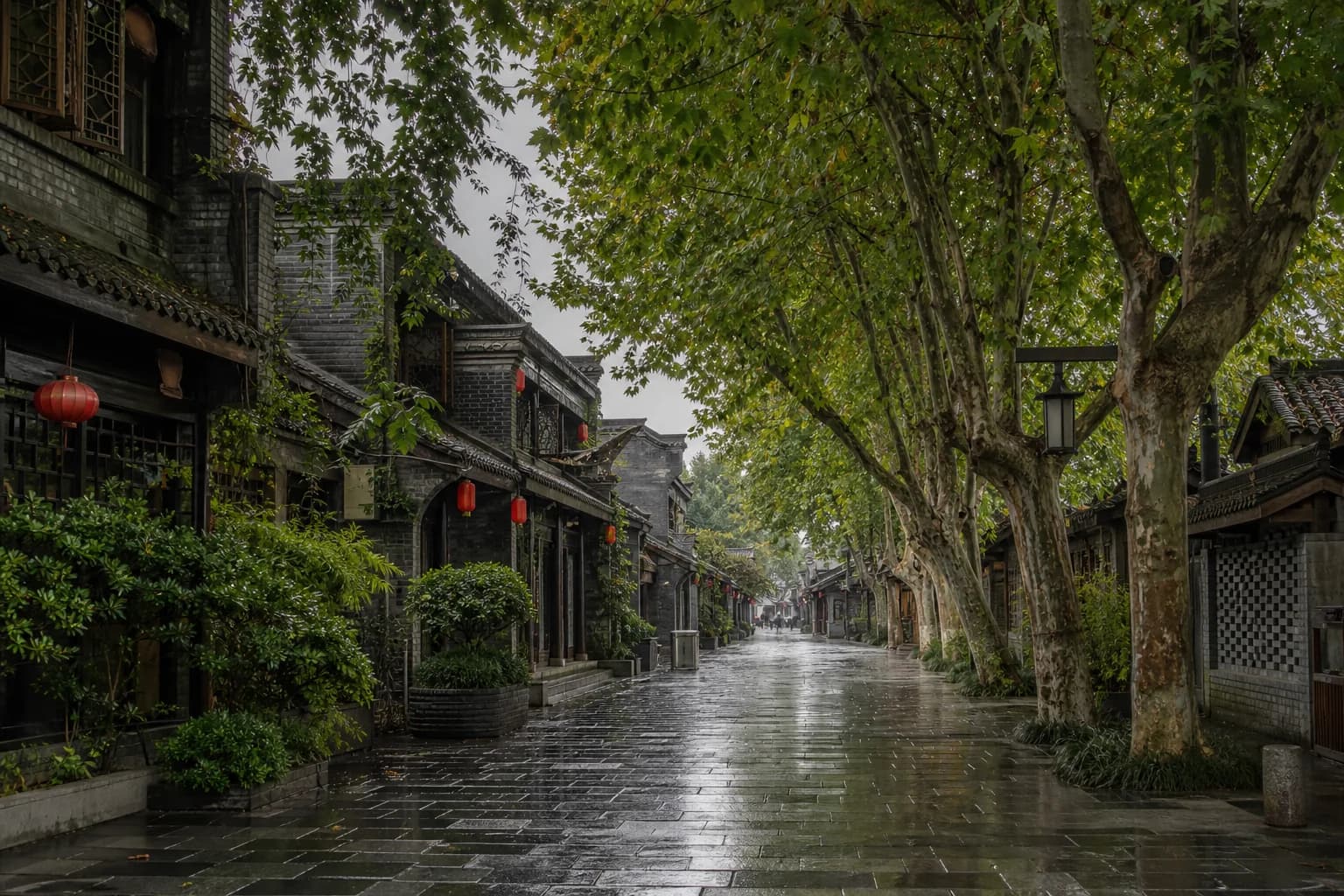
Kuanzhai is polished and commercial, so use it for architecture, lanes and convenient snacks rather than expecting a preserved everyday neighborhood. For food, choose one focused stop: sweet-water noodles, dumplings in chili oil, wontons, cold noodles or a small plate of Sichuan snacks. Busy shops with visible turnover are a more maintainable recommendation than a single viral storefront whose queue or ownership may change.
Where to stay
The museum does not require a special hotel plan. Tianfu Square is best for a first-time visitor who wants central metro access; Chunxi Road adds late shopping and dining; the Wenshu Monastery area feels calmer and provides easy northern-city access. Stay near the museum only if a central location already fits the rest of your itinerary.
Compare Chengdu hotels on Trip.com
Quick planning checklist
- Confirm the current reservation and holiday notice before arrival.
- Bring the original passport or identity document used to book.
- Choose your floor route before entering; six levels are not mandatory.
- Use package storage for bulky bags and keep food outside galleries.
- Avoid flash, tripods and selfie sticks; follow room-specific photography signs.
- Pair the museum with People's Park and Kuanzhai, not a cross-city transfer.
Chengdu Museum is most rewarding when it acts as a map for the city outside. Once you understand the ancient city, modern transformation and performance traditions, the teahouses, lanes and rituals of everyday Chengdu become much easier to read.