Wuhou Memorial Temple
Updated August 1, 2026
The Wuhou Memorial Temple Museum in Chengdu is the best-known site in China linked to the Three Kingdoms period. It is unusual because it honours a ruler and his minister together: Liu Bei, emperor of Shu Han, and his chancellor Zhuge Liang, known by his title Wuhou ("Marquis Wu").
See the paid heritage core first (about two hours), take a seated break, then add at most one neighbouring zone: the western gardens or Jinli Ancient Street. The whole district is much bigger than it looks.
Historical Background
Liu Bei was buried in 223 AD in the Huiling Mausoleum in what is now southern Chengdu, and a temple to him, the Han Zhaolie Temple, was built beside the tomb. A shrine to Zhuge Liang appeared nearby by around the 4th century. Over time the tomb and the two temples merged into one complex, commonly called Wuhou Temple.
In the early Ming dynasty, Prince Zhu Chun combined the worship of Liu Bei and Zhuge Liang in one temple. It was destroyed in the wars at the end of the Ming and rebuilt in 1672 under Song Kefa, the imperial inspector of Sichuan. That reconstruction set the layout you see today.
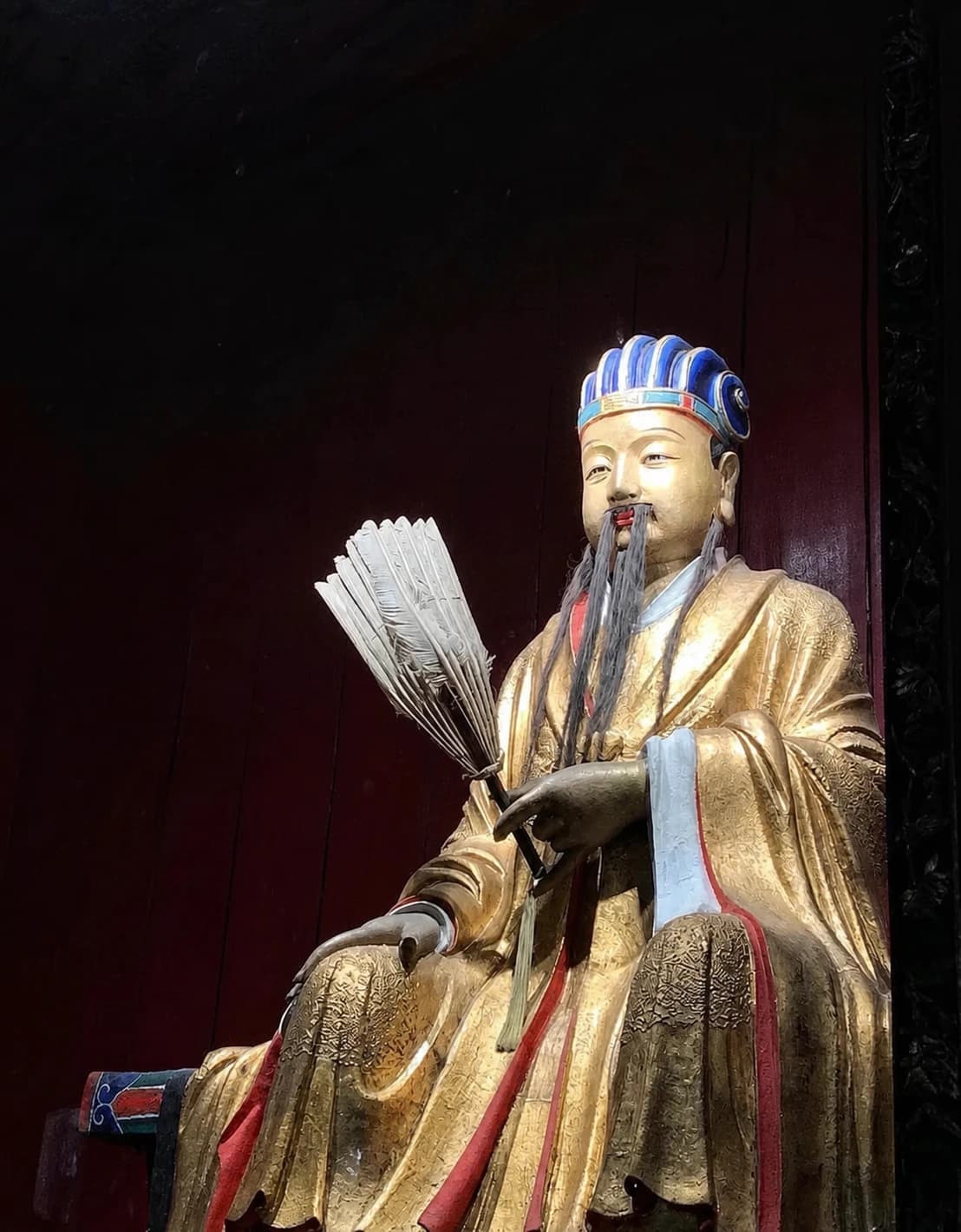
Ruler, minister and tomb in one place
A quick frame helps, especially with children:
- The ruler: Liu Bei, who founded the Shu Han state.
- The minister: Zhuge Liang, his chancellor, remembered as the model of a loyal, wise official. His fame is why the whole site carries his title.
- The tomb: Liu Bei's burial mound, Huiling, is at the back of the complex.
Notice that the minister's hall sits behind the emperor's, and yet the temple is named after the minister. That tension is the story of the place.
Architectural Features
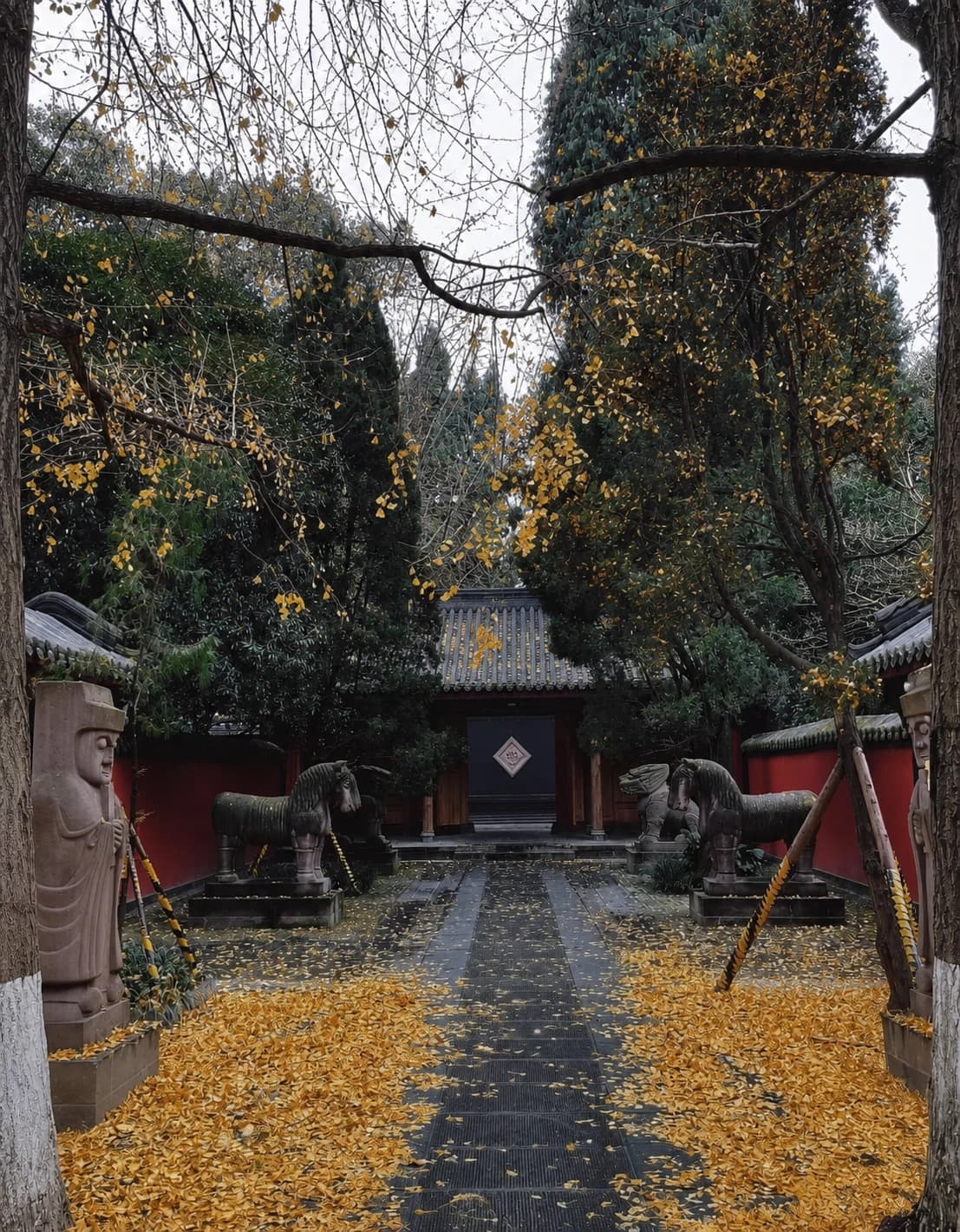
The complex follows a traditional north–south axis:
- Main Gate: the formal entrance
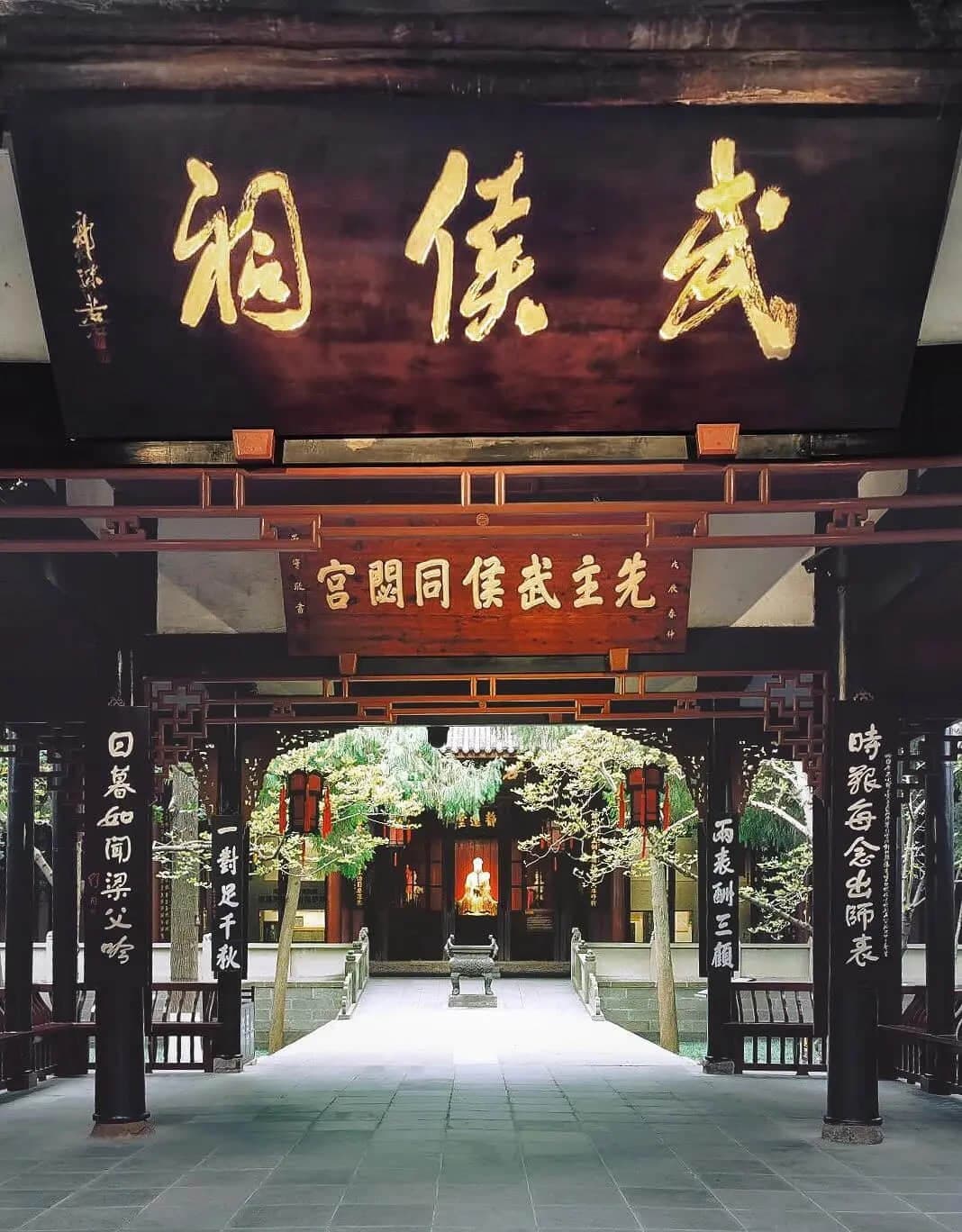
- Second Gate: with calligraphy and couplets
- Liu Bei Hall: the statue of Liu Bei with his generals
- Corridors of ministers and generals: statues of 28 Shu Han officials and generals
- Zhuge Liang Hall: the statue of the strategist
- Huiling Mausoleum: the tomb of Liu Bei
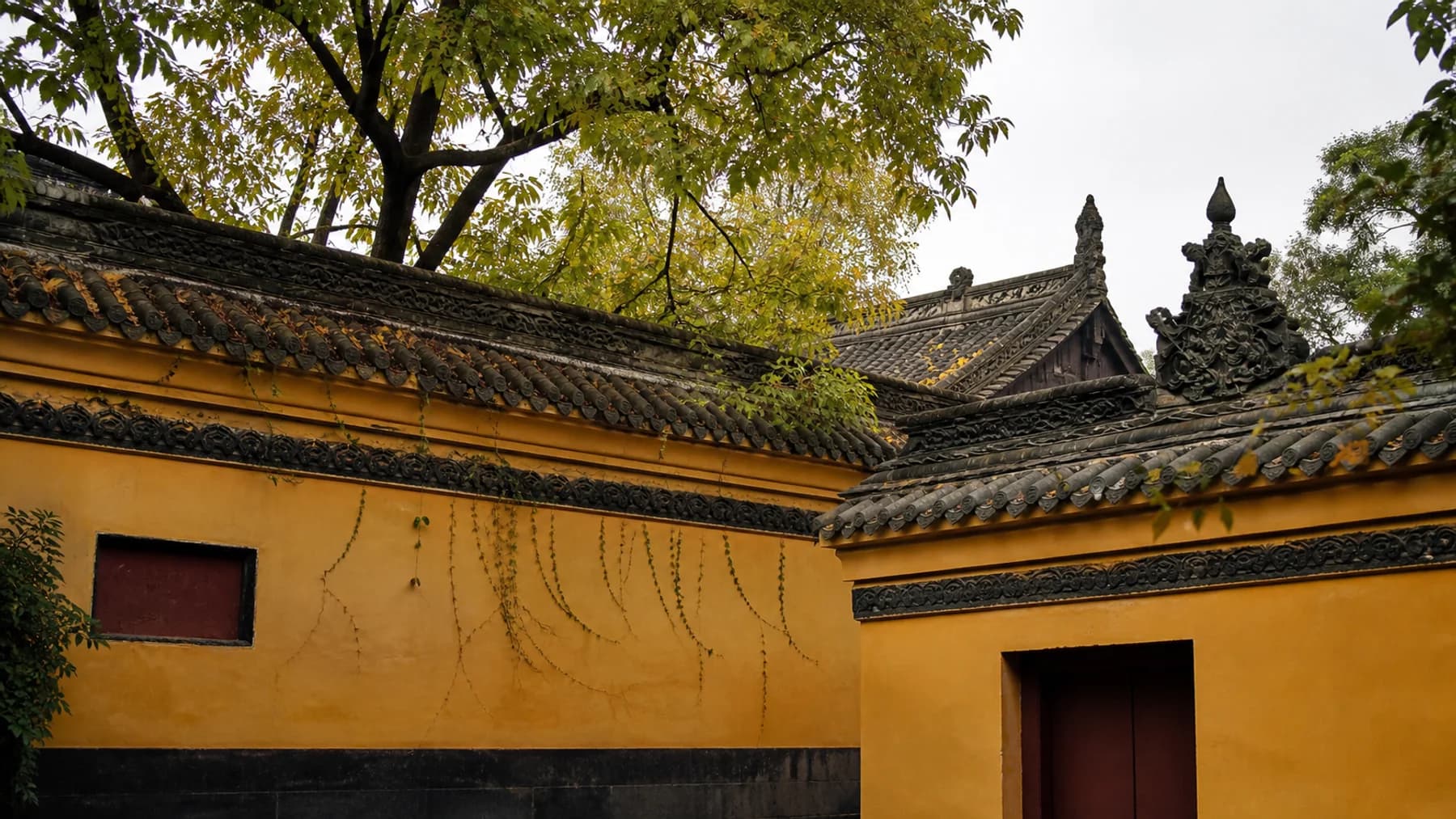
- Red Wall Corridor: a photogenic lane of red walls and bamboo
Visitor Information
Admission
- Adult admission has been listed at about ¥50; check the current price
- Usual hours have been about 9:00–18:00 with last entry at 17:00, with longer summer hours in some years
- Book through the official website or WeChat account; check how far ahead booking opens and the passport process
Guided Tours
-
In-person guide
- Guides have been available in Chinese and some foreign languages, for a fee
- Ask at the visitor desk which languages are available that day, the price and the duration
-
Audio guide
- Audio guides in several languages have been offered for rent, usually with a deposit; check current languages and terms
Even with a strong interest in Three Kingdoms history, a child's questions can be hard to answer on the spot. A guide or audio guide can add more to the visit than another photo stop.
Must-See Highlights
-
Liu Bei Hall
- The main shrine to Liu Bei
- Statues of Liu Bei and his sworn brothers
- Look for the inscribed plaques above the altar
-
Zhuge Liang Hall
- The statue of the strategist
- A carved text of his famous Memorial on Sending Out the Troops
- The well-known "Attack the Heart" couplet about governing by winning people over
-
Red Wall Corridor
- The most photographed spot
- Red walls against green bamboo
- Best in morning or late-afternoon light, and before the crowds
-
Huiling Mausoleum
- Liu Bei's burial mound
- Surrounded by old cypress trees
- Commemorative stone tablets
Plan the wider district
The paid heritage core is only one part of the area. Covering the heritage core, Jinli and the western memorial area adds up to about 20,000 steps. Do the core first, eat or rest, and then choose one extra zone.
Nearby Dining
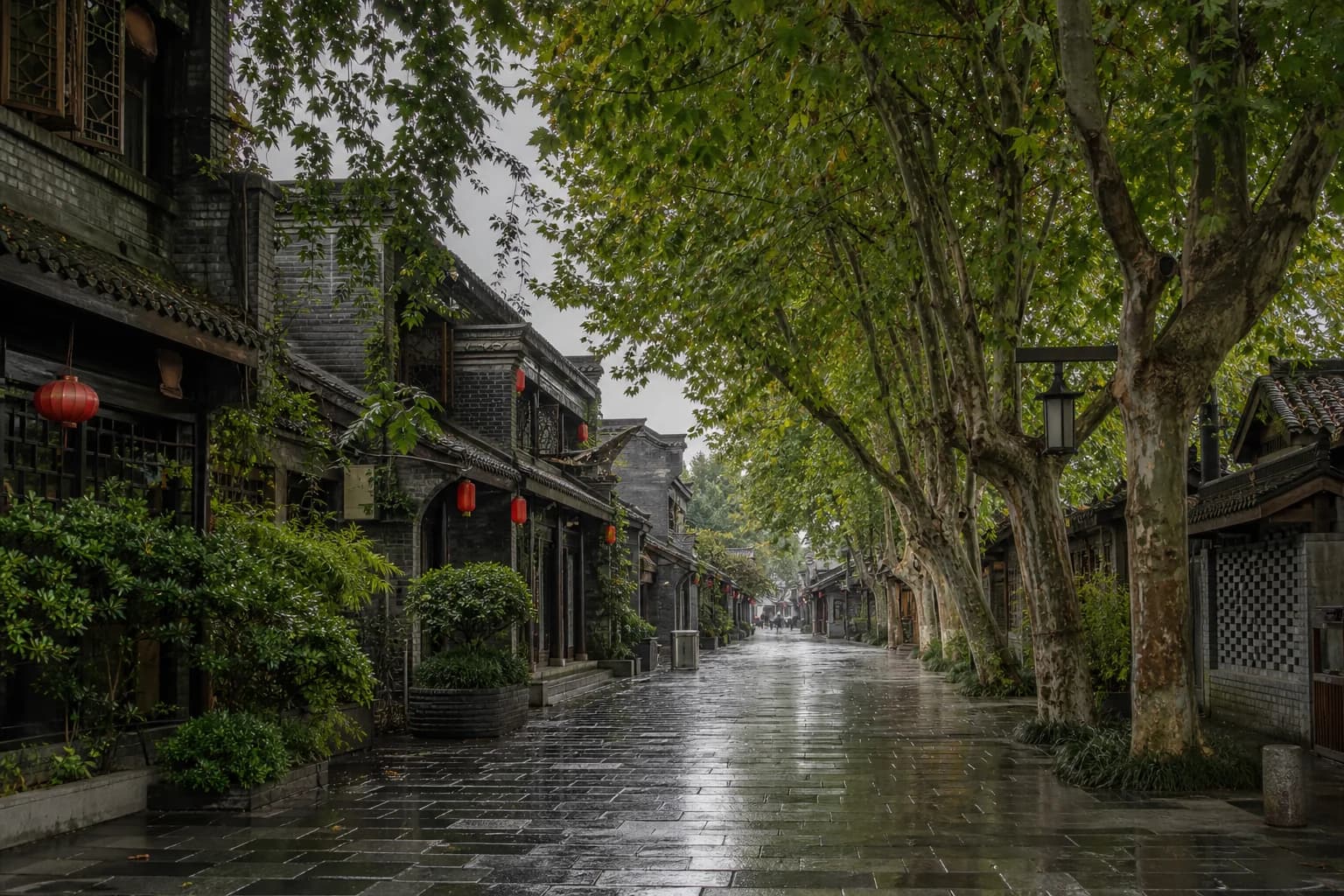
Chengdu snacks to look for nearby, including in Jinli:
- Husband-and-wife beef slices (夫妻肺片)
- Dan dan noodles (担担面)
- Tea-smoked duck (樟茶鸭)
- Long chaoshou wontons (龙抄手)
- Zhong dumplings (钟水饺)
Accommodation Options
Luxury
- International hotels in central Jinjiang District, a short taxi ride away
Mid-Range
- Hotels around Gaoshengqiao and the Wuhou Temple and Jinli area, many within walking distance
Budget
- Hostels and serviced apartments around Wuhou District
Check the exact walk to the temple gate and the nearest metro exit rather than trusting "near Wuhou Temple" in a hotel name.
Travel Tips
-
Advance booking
- Reserve through the official website or WeChat account
- Check the booking window and passport rules for your date
-
Best times to visit
- Avoid weekends and holidays if you can
- Early morning or late afternoon for photos
- Spring and autumn for comfortable weather
-
Photography
- No flash inside the halls
- Be patient at the Red Wall Corridor and do not block the path
-
Etiquette
- Keep your voice down in the halls
- Do not touch statues or climb on structures
- Dress modestly
Wuhou Memorial Temple brings the Three Kingdoms story into one walkable sequence of halls and a tomb. See the core with some context, rest, and add one neighbouring zone rather than the whole district.