Qingyang Palace Chengdu
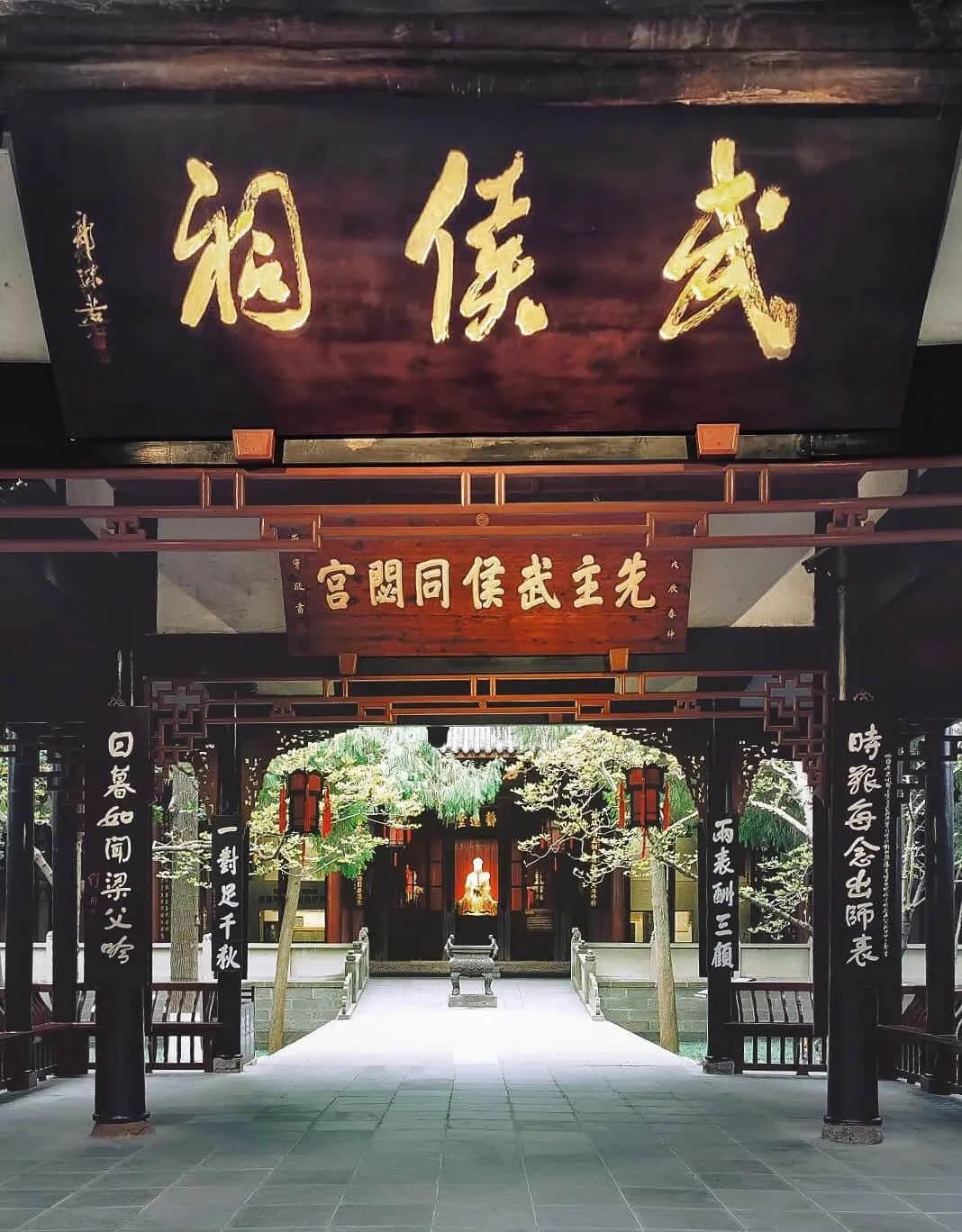
Qingyang Palace (青羊宫, Qīngyáng Gōng) is often translated online as “Qingyang Temple.” Palace is the better name: this is a functioning Taoist complex, not a Buddhist temple, and its value lies in reading architecture, cosmology and living religious practice together.
It is also far easier to use than many Chengdu sights. Qingyang Palace Metro Station sits beside the compound, Culture Park shares its edge, and three major cultural stops continue west on foot. Come for 60–90 quiet minutes if Taoism is your focus, or make it the opening chapter of the full route below.
Is Qingyang Palace worth visiting?
Yes, if you want: a central Taoist site, quiet courtyards, layered timber architecture, symbolic design and an efficient pairing with Sichuan Museum or Du Fu Thatched Cottage.
Probably not as a standalone priority, if you want: a vast mountain-temple experience, a polished English museum, continuous performances or a large collection of labelled objects. For monumental Taoist landscape, Mount Qingcheng is the stronger full-day choice. Qingyang Palace is the more convenient city introduction.
The palace is compact, but it should not be reduced to one bronze animal. Its most useful story is how a working religious institution, Qing-dynasty reconstruction and popular local beliefs occupy the same courtyards.
First, correct the history
Traditional accounts connect the site with Laozi and place its origins deep in antiquity. Treat those as religious and local traditions, not as proof that the present buildings survive from the Zhou dynasty.
The safer historical frame is this: Qingyang Palace has a long Taoist association, but much of the standing complex was rebuilt during the Qing dynasty, particularly in the early Kangxi era. That distinction makes the visit more interesting. You are not looking at a frozen ancient relic; you are seeing how later Chengdu rebuilt and continued an older sacred identity.
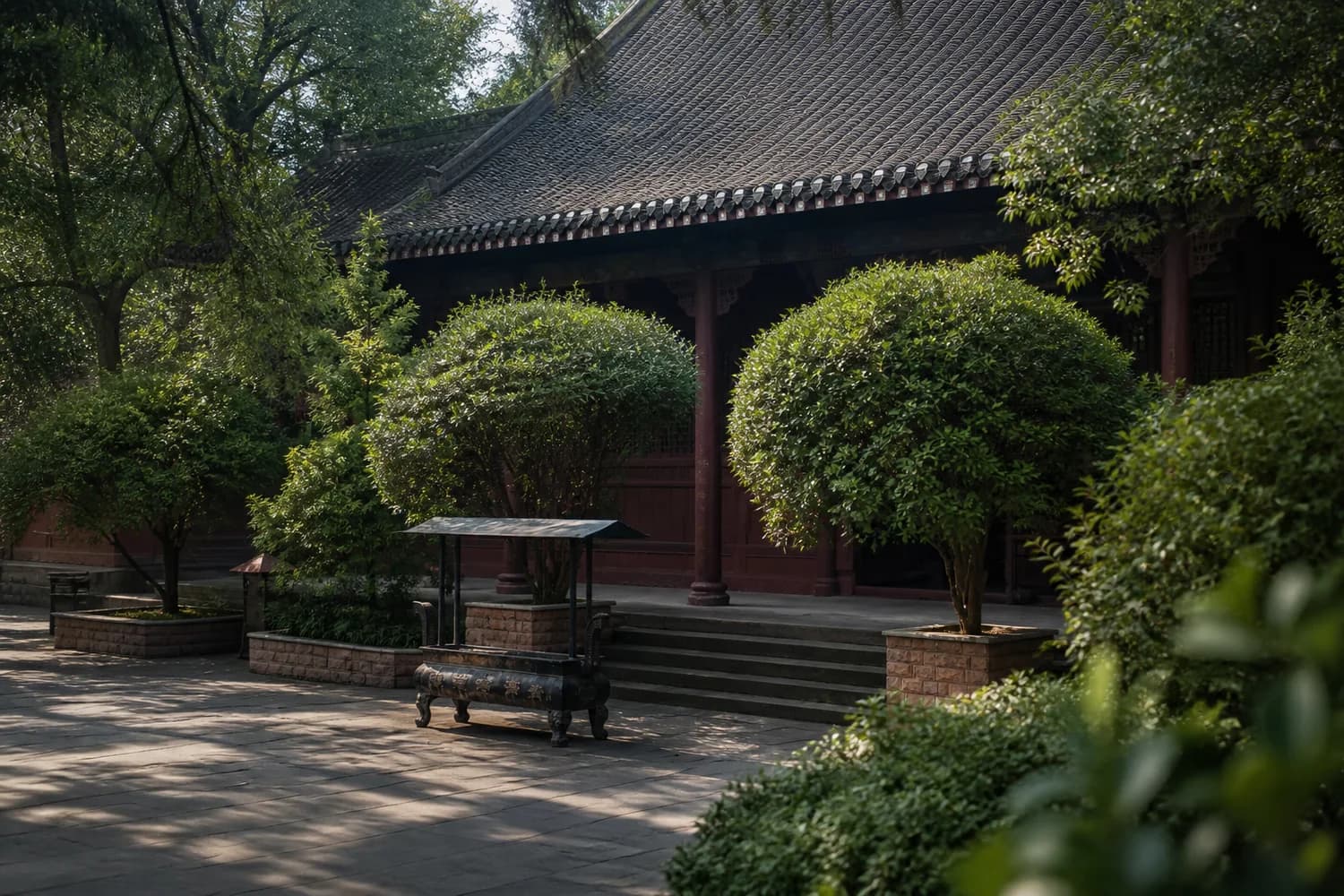
A focused route inside the palace
The grounds do not require a complex map. Keep to the main sequence, then use open side courtyards only where current signs permit.
1. Gate and Hunyuan Hall: lower the volume
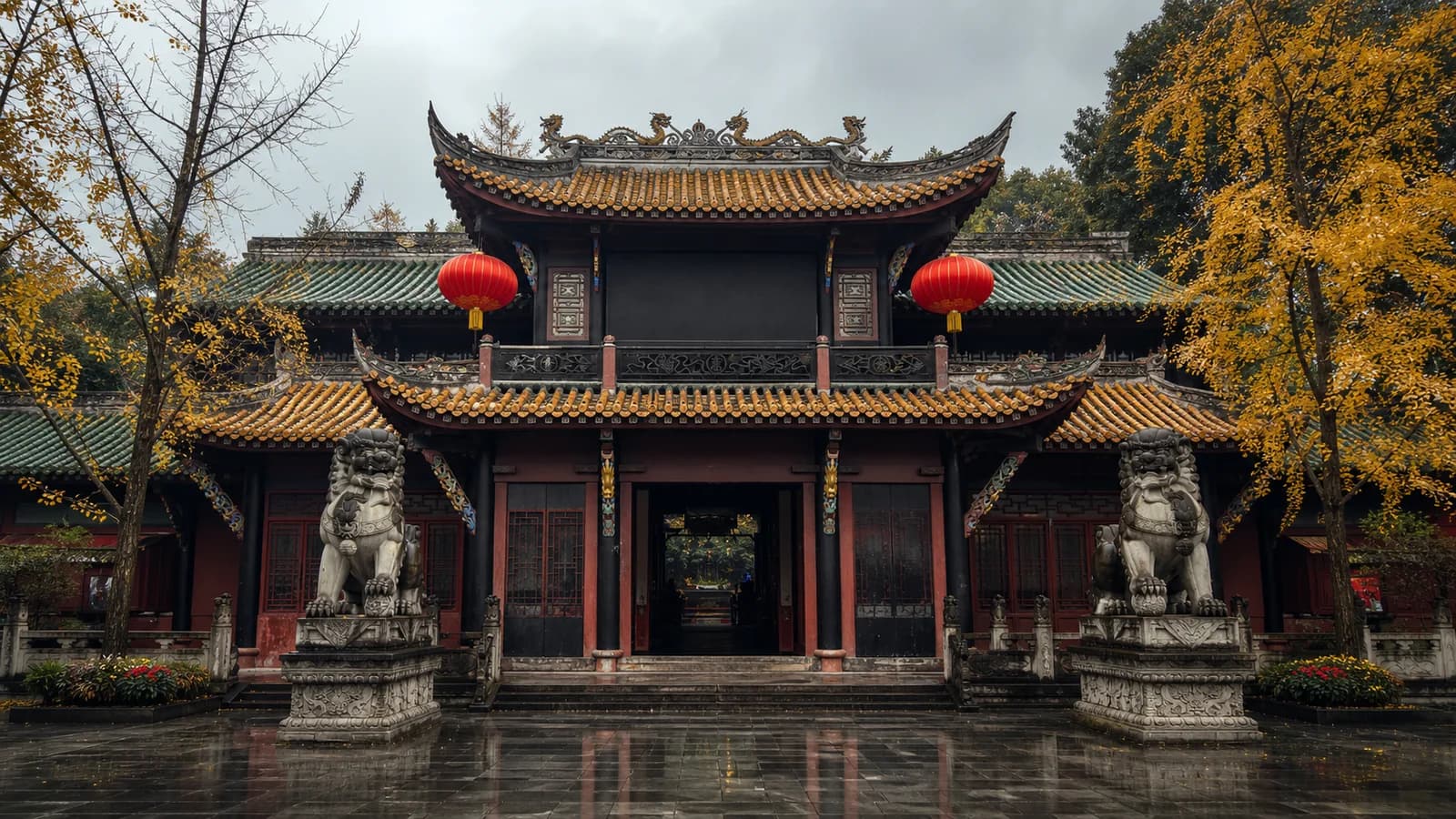
Pause after entering instead of walking straight into the first phone shot. This is an active religious site. Keep the central doorway clear, let worshippers approach first and read temporary signs before photographing an interior.
2. Eight Trigrams Pavilion: read the shape
The Eight Trigrams Pavilion is the architectural reason to visit. Look for the transition between square, octagonal and circular ideas rather than memorizing a list of numbers. In traditional Chinese cosmological language, those geometries can evoke earth, the trigrams and heaven. Walk around it once; the roof layers, carved supports and changing silhouette make more sense in motion.
3. Three Purities Hall: observe, do not stage
This is a principal devotional space. Stand to one side and watch how the hall is actually used. Photography rules can differ between courtyard, doorway and interior, so current signs and staff instructions override any online claim that “photos are allowed everywhere.”
4. The bronze goats: object, legend and etiquette
Two bronze goats stand before the hall. The single-horned example is the distinctive one: its hybrid body is traditionally described as combining features associated with the twelve zodiac animals. Inscriptions and later accounts connect the pair with Qing-period donations.
Local belief says touching the corresponding part of the goat may relieve an ailment. That is folklore, not medical advice. Do not climb, lean or reach across barriers, and do not assume touching is permitted simply because older photos show polished surfaces.
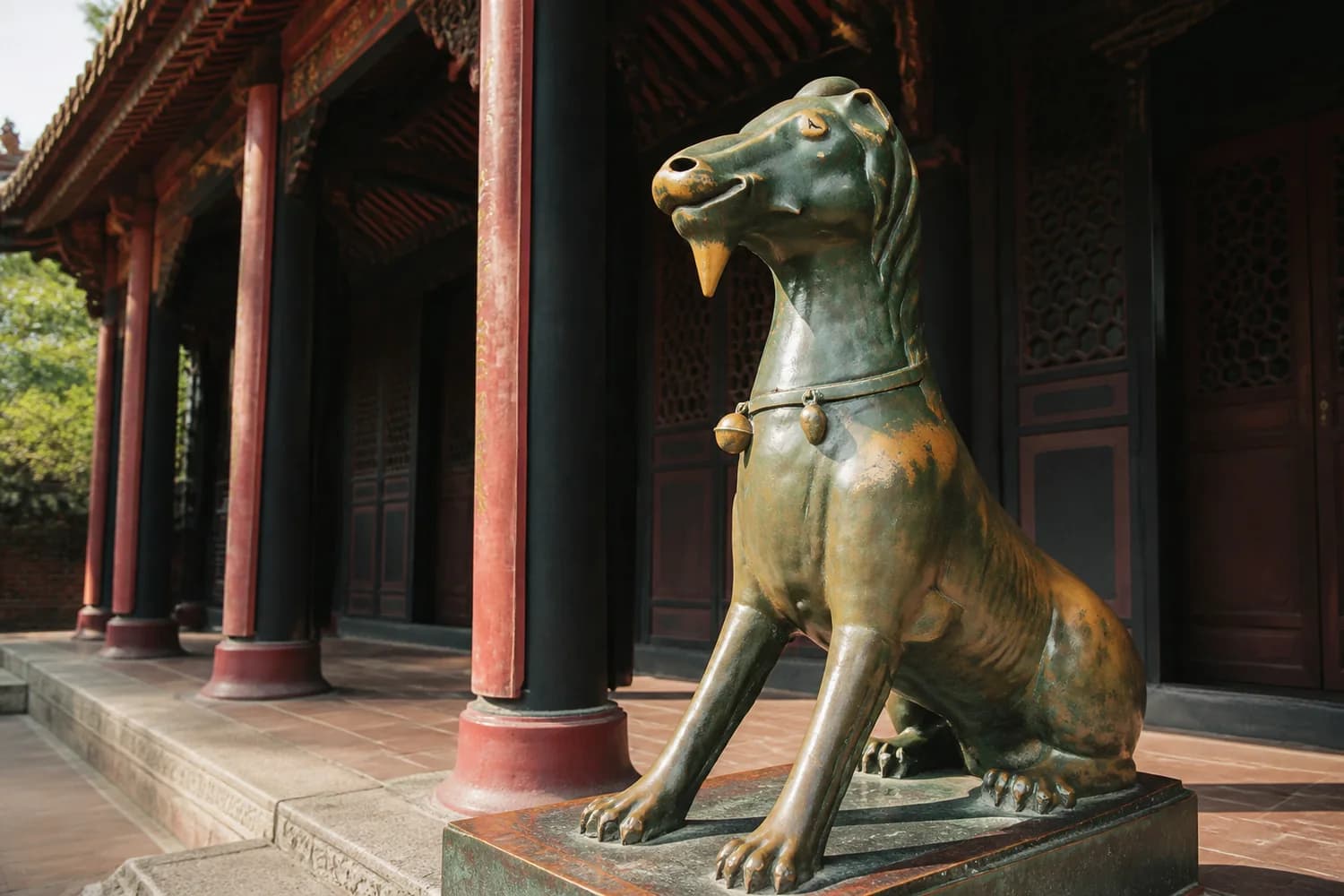
5. Rear halls and courtyards: finish quietly
Continue only through areas open on the day. Doumu Hall and other rear spaces add devotional context, but names, access and ceremonial use matter less than respectful behavior. If chanting or a rite is underway, remain at the edge or move on. A functioning palace is not a performance scheduled for visitors.
Practical information
- Chinese name: 青羊宫
- Address: 9 West Section 2, First Ring Road, Qingyang District (成都市青羊区一环路西二段9号)
- AMap pin: Qingyang Palace
- Time needed: 60–90 minutes; allow two hours if you sit, read and observe a ceremony from a respectful distance
- Admission: commonly listed at about ¥10; verify the current price and concession rules at the entrance
- Hours: public listings change and disagree. Check the palace's current notice or AMap listing on the day and arrive in the morning rather than planning a late entry
- Best time: near opening for quieter courtyards; overcast or light rain can suit the dark timber, but stone paving may be slippery
- Accessibility: the main courtyards are relatively compact, but expect thresholds and uneven heritage surfaces; ask staff about the least-stepped route
Metro: use the station beside the palace
Take Line 5 or Line 13 to Qingyang Palace Station (青羊宫站). AMap currently places Exit C close to the Culture Park side and Exit D close to the palace side; exits can close temporarily, so follow live station signs. This is more reliable than the older advice to use Provincial People's Hospital Station and walk farther.
The distinctive extension: west Chengdu in one line
Qingyang Palace becomes much more valuable when it frames a west-Chengdu culture day. The route is geographically coherent rather than a list joined by taxis:
- Qingyang Palace — Taoist architecture and living practice
- Culture Park — tea or an early lunch reset
- Sichuan Museum — regional history and art
- Du Fu Thatched Cottage — poetry, displacement and a later memorial landscape
- Huanhua Stream Park — a free green finish
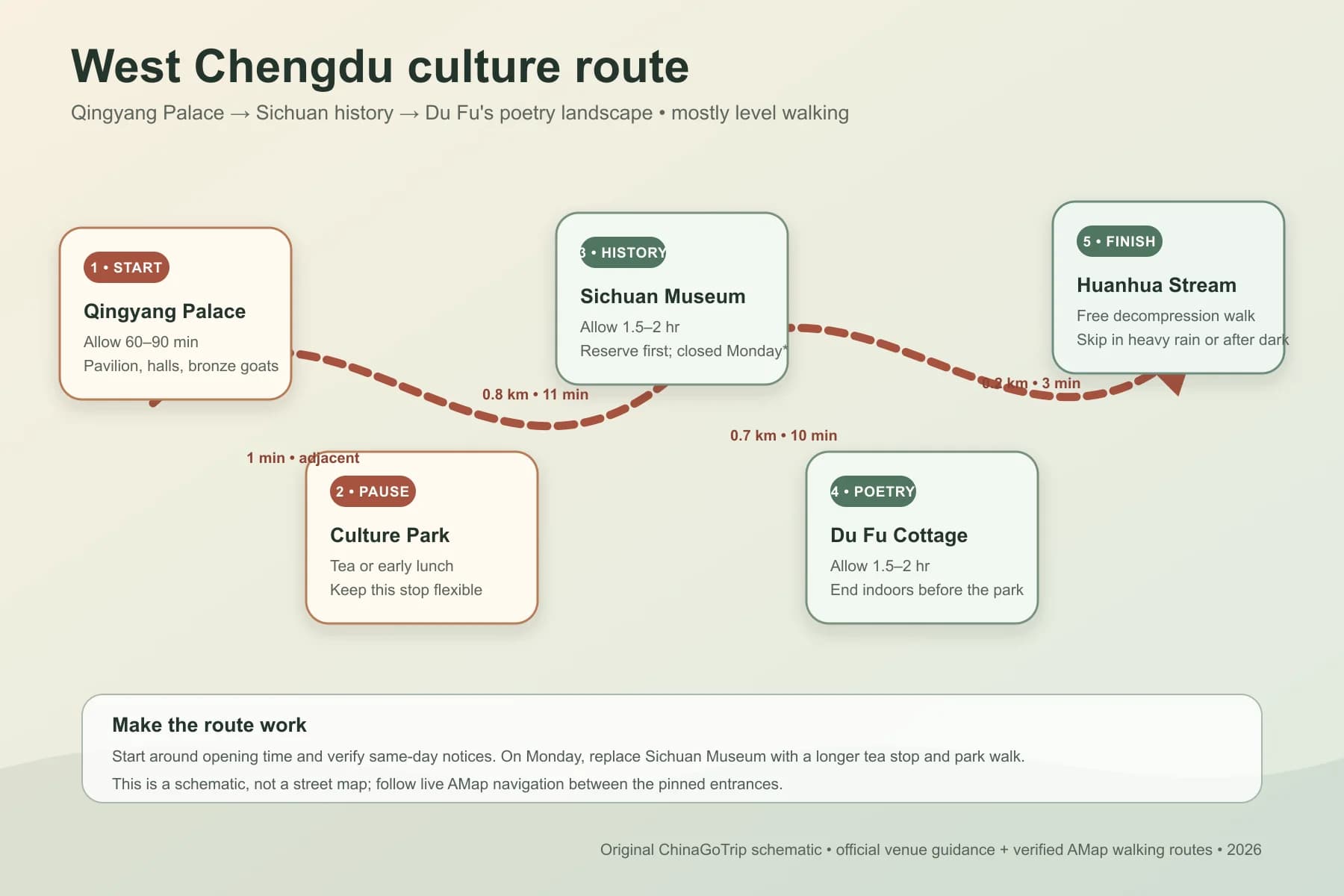
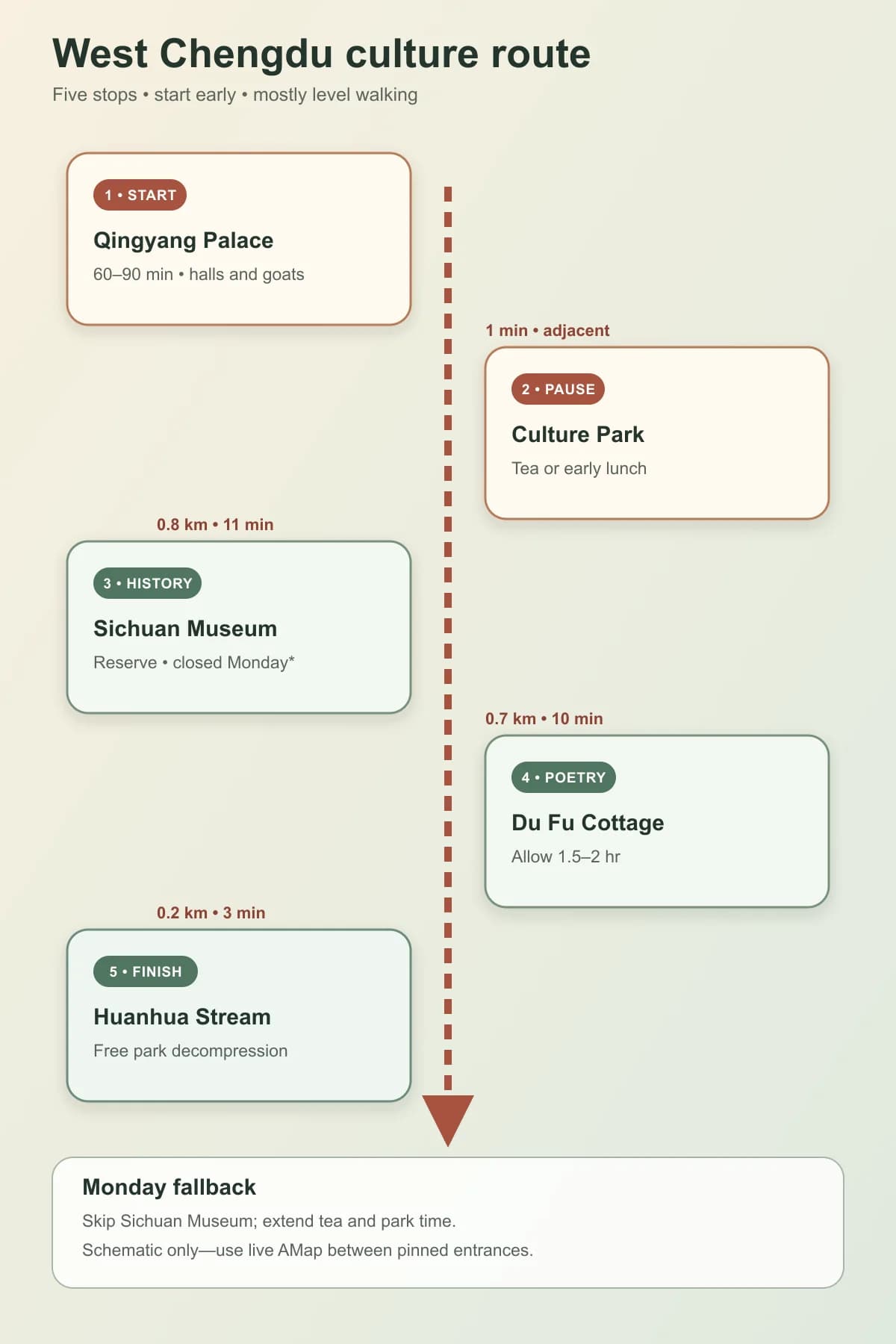
Original ChinaGoTrip schematic, not a street map. Walking estimates use verified AMap GCJ-02 map locations: palace → Culture Park 0.1 km/1 min; park → Sichuan Museum 0.8 km/11 min; museum → Du Fu Cottage 0.7 km/10 min; cottage → Huanhua Stream 0.2 km/3 min.
Timing that actually works
- 08:30–10:00: Qingyang Palace, adjusted to the current opening notice
- 10:00–10:45: tea or an early snack in/around Culture Park
- 11:00–13:00: Sichuan Museum; reserve before committing to the route
- 13:00–14:00: lunch or buffer
- 14:00–16:00: Du Fu Thatched Cottage
- 16:00 onward: Huanhua Stream Park, weather and daylight permitting
Sichuan Museum normally opens Tuesday–Sunday and closes Monday except for some holiday adjustments. On Monday, do not replace it with another distant attraction: extend the palace, tea and park portions, or finish early at Du Fu Cottage. Always check special exhibitions and reservation access before departure.
What to eat nearby
This is a better dish-first area than a famous-shop chase. Culture Park and the streets toward Qintai Road give you flexible choices without breaking the route.
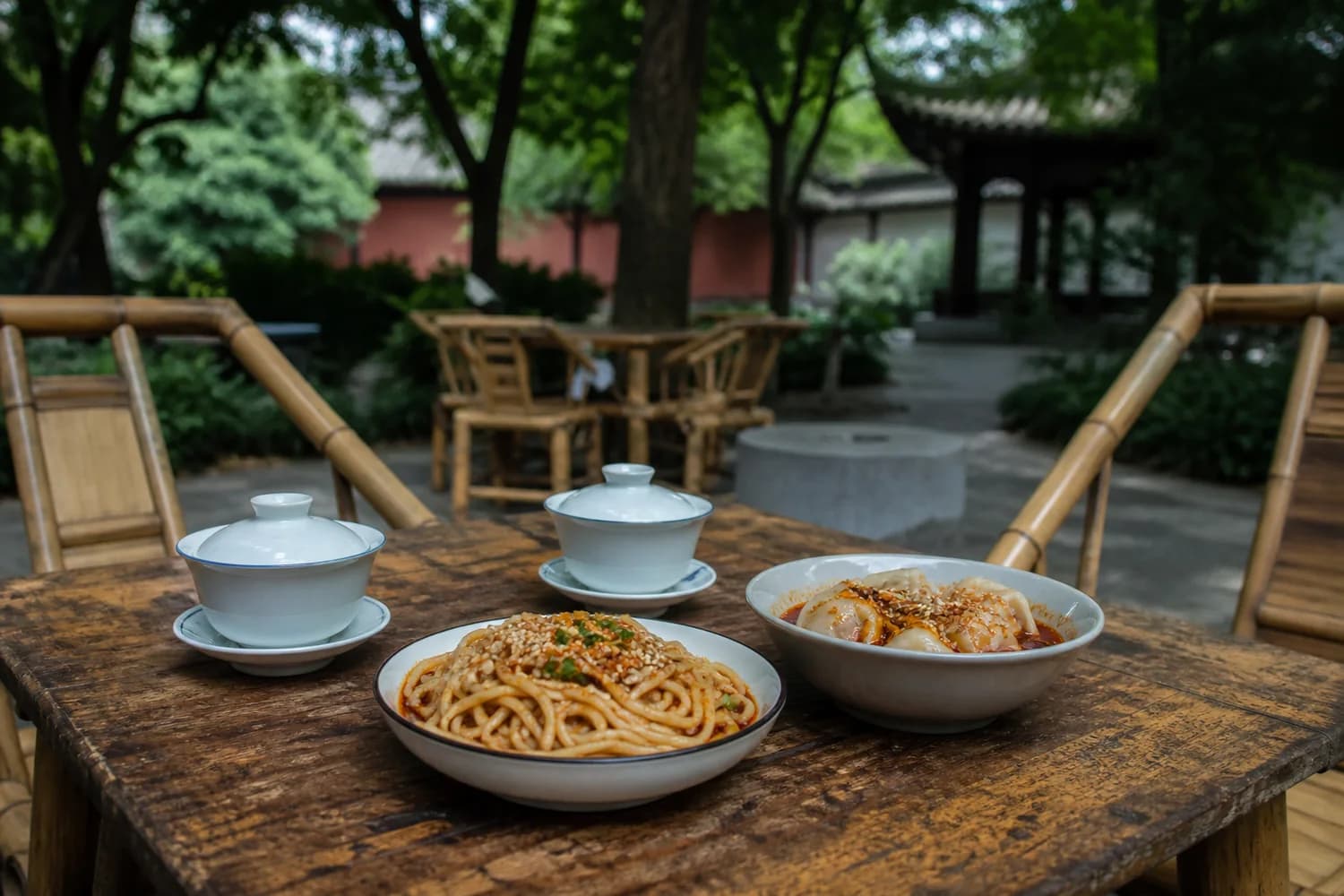
- Sweet-water noodles (甜水面): thick, chewy noodles with a sweet, spicy and sesame-forward sauce
- Zhong dumplings (钟水饺): small pork dumplings with seasoned soy and red oil
- Red-oil wontons (红油抄手): warming and easy to order in a modest portion
- Tofu pudding (豆花): savory or sweet styles vary; ask before ordering
- Gaiwan tea: choose it when you want a real pause, not another drink carried while walking
Look for a clean, busy counter with visible turnover and posted prices. Order one noodle or dumpling dish first; spice and sweetness vary, and the full route already involves several hours on foot.
Where to stay for this route
Choose an area according to the rest of the trip, not just the palace:
- Qingyang Palace / Provincial People's Hospital: best for this west-city route, quieter evenings and Line 5 access; fewer late-night shopping options
- People's Park / Tianfu Square: the most balanced first-visit base, with straightforward access to museums, Kuanzhai and both east and west city sights
- Chunxi Road / Taikoo Li: strongest for shopping, nightlife and airport-transfer familiarity, but expect a metro or taxi ride to begin this route
Compare current inventory on Trip.com hotels in Chengdu, then check the nearest metro entrance, not just the district name. A cheap room on the wrong side of a large road can add friction every morning.
Etiquette and small mistakes to avoid
- Dress and speak as you would in an active place of worship.
- Do not photograph worshippers, divination activity or ceremonies without clear permission.
- Do not assume incense, fortune-telling, vegetarian meals or tea service are included or continuously available.
- Never treat the bronze-goat belief as medical guidance, and respect barriers around heritage objects.
- Keep food outside devotional halls.
- Avoid turning the full route into a race. If Sichuan Museum has no reservation, simplify the day rather than substituting a distant “must-see.”
Check the day's opening and pairing
Confirm Qingyang Temple's current opening and last-entry time before leaving; third-party seasonal schedules conflict. For a wider cultural day, use the official Du Fu Cottage visitor page and Sichuan Museum visitor information for their own current hours and reservation rules. Use live navigation for the working temple gate and the walking connection between venues.