Xi'an
Updated October 4, 2026
Xi'an is the capital of Shaanxi Province and was China's capital for many dynasties, including the Tang. It is easiest to plan as three separate areas:
- the compact, walkable centre inside the Ming city wall
- the museum-and-pagoda axis south of the wall
- the Terracotta Warriors, far to the east in Lintong
These are not neighbouring map pins. Treat them as one and you get rushed transfers and shallow visits.
Secure those hard-to-get reservations before you plan food streets or night views. Each one can shape a whole half day. The Bell Tower, the Huifang lanes and Grand Tang Mall are flexible and can fill the gaps.
Choose the Right Xi'an Route


- Choose the 2-day classic route for an intensive first visit. It keeps one Lintong morning, one evening in the centre and one full day in the southern cultural area.
- Choose the 3-day route when you want the major highlights with less pressure after the Terracotta Warriors.
- Choose the 4-day route for a slower museum, city-wall and Qujiang rhythm.
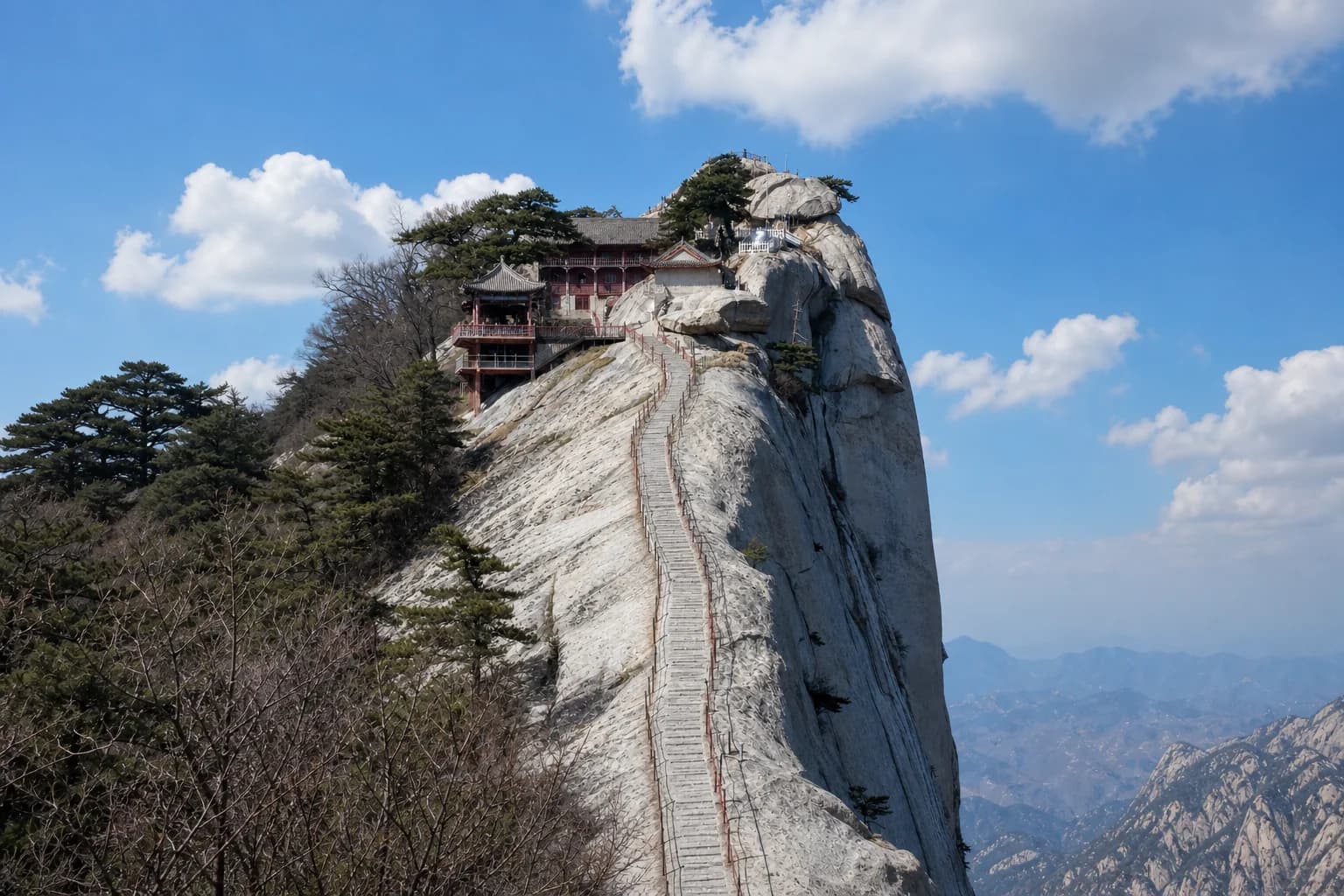
- Choose the 5-day route when you want food-and-faith lanes plus a separate, weather-dependent Mount Hua day.
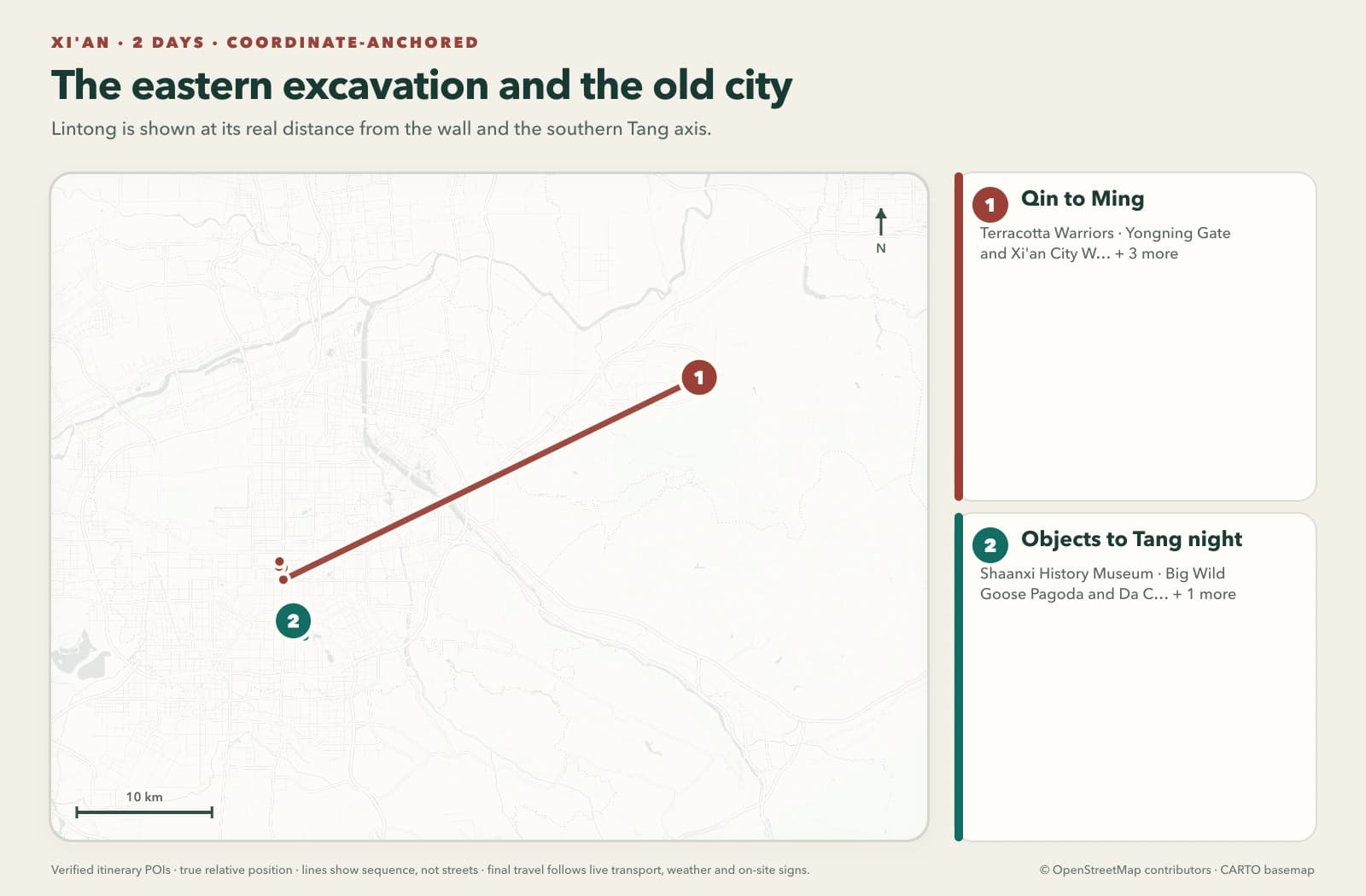
The diagram is not to scale. The 44.3 km transfer from the Terracotta Warriors to Yongning Gate was planned at about 51 minutes by car. That is not live traffic. Allow more time at weekends, on holidays and at rush hour.
The Booking Order That Prevents a Broken Trip
1. Terracotta Warriors
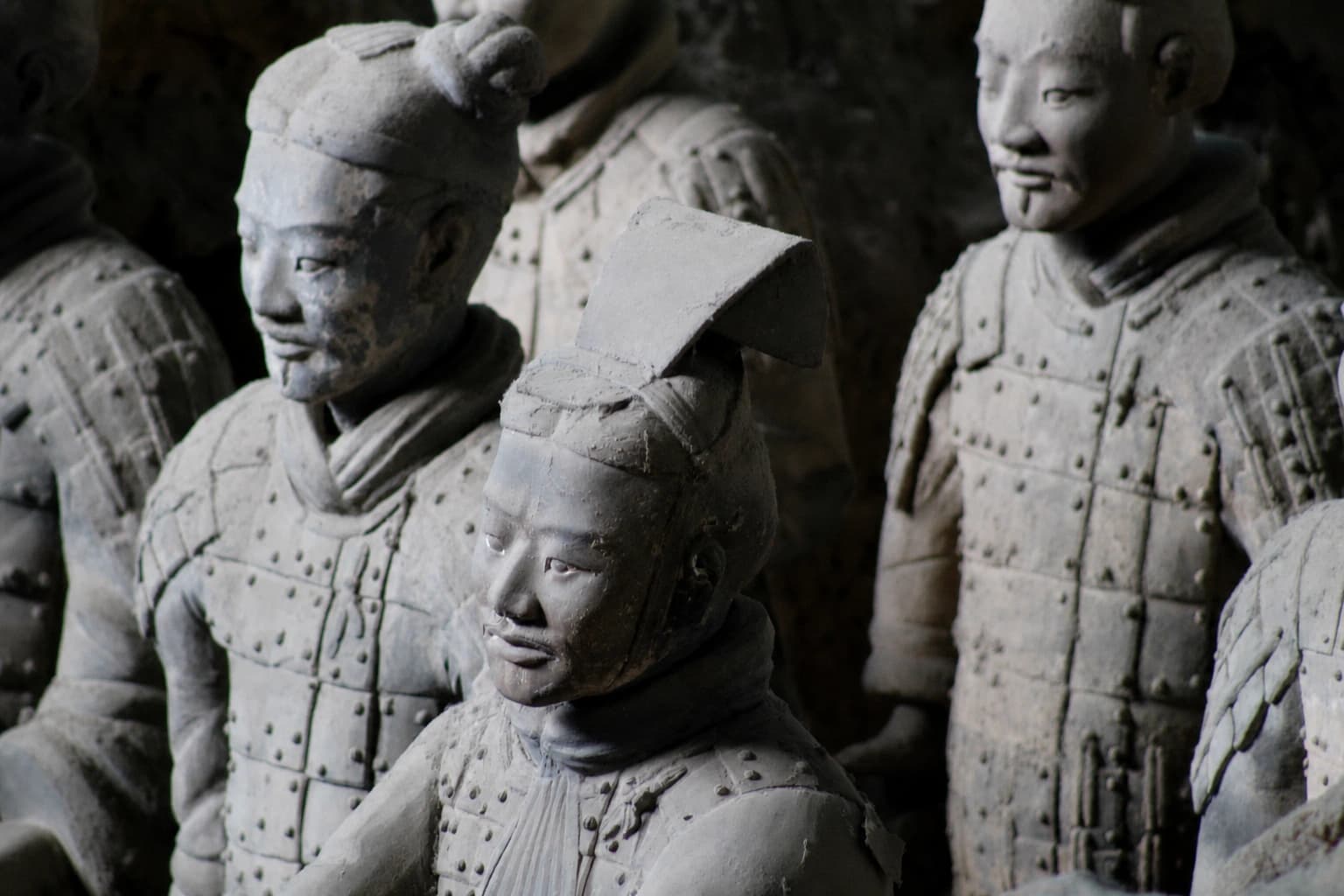
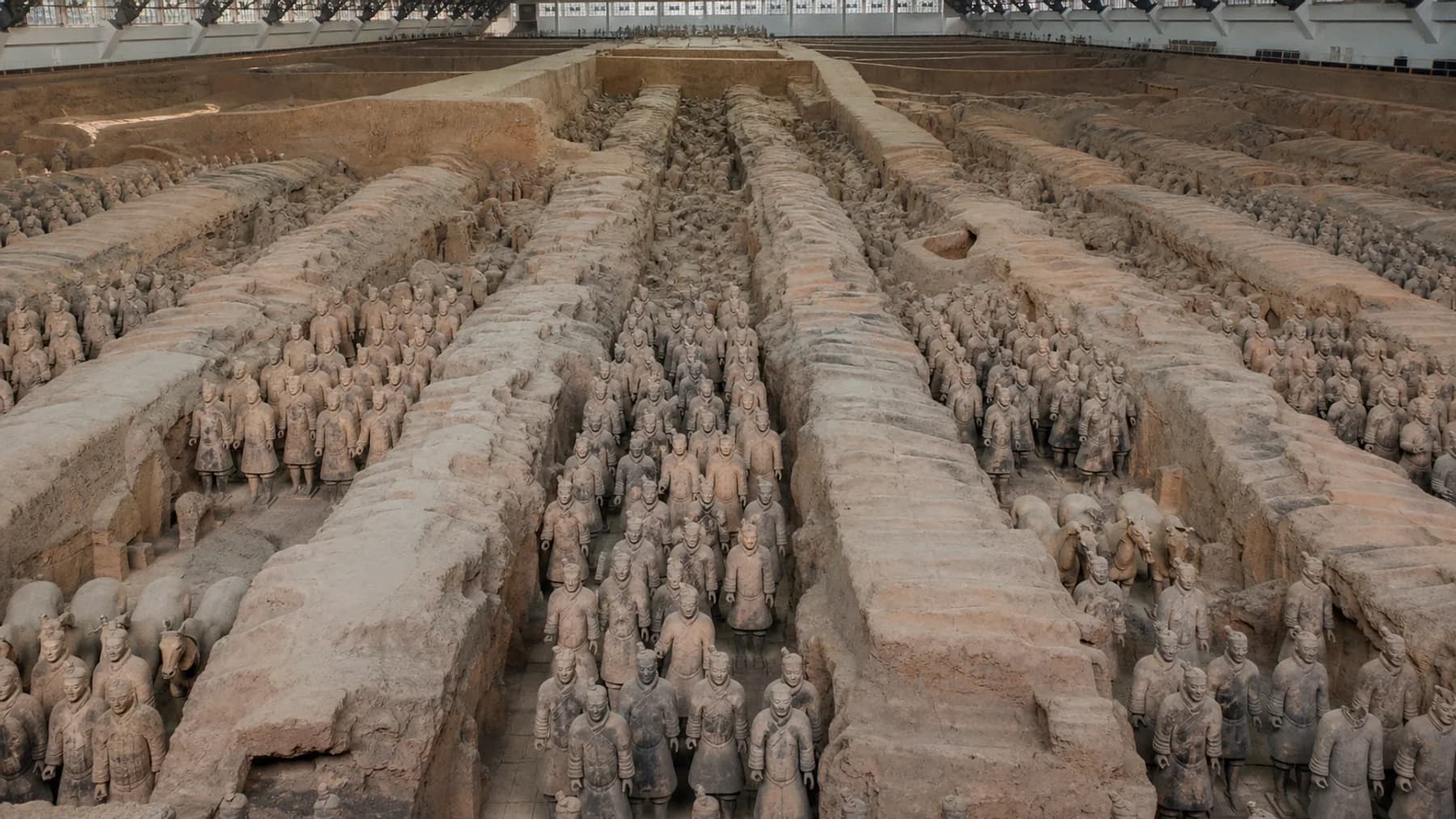
The official Qinshihuang Mausoleum Site Museum guide says the museum uses real-name reservations and accepts passport information. Carry the original document you used to book. The ticket covers two separate parts, the excavation museum and Lishan Garden, linked by a shuttle. Decide whether you have time for both. The famous pits are not the whole site.
On your own, focus on understanding rather than photo stops. Learn how the army in Pit 1 is arranged. Then use Pits 2 and 3 to compare the specialist units and the command post. Check current Terracotta Warriors products on Trip.com, but let the official ticket record and live museum notice control entry.
2. Shaanxi History Museum
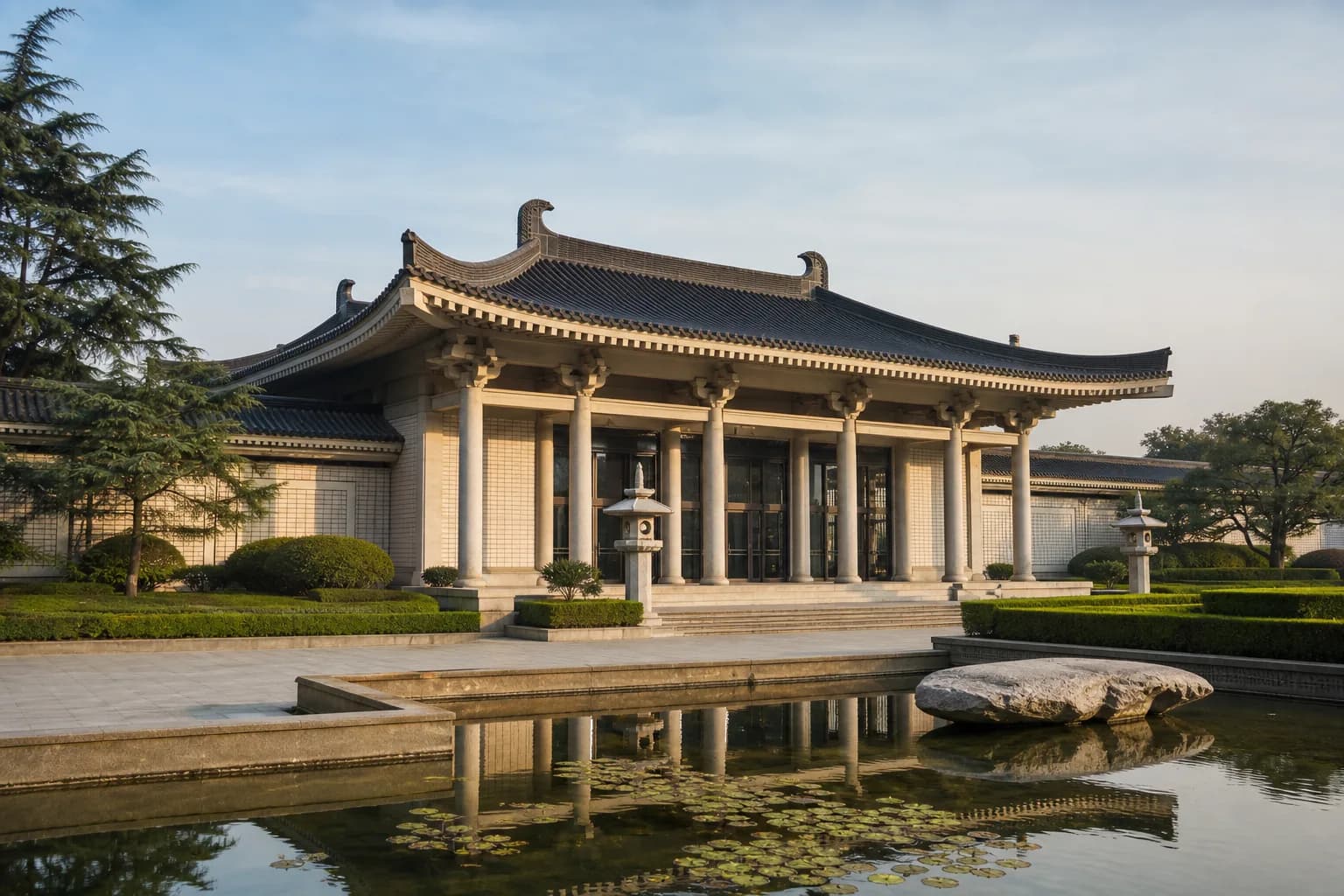
The main building is not the same place as the Qin-Han branch. The current official visitor guide gives three points. Main-building tickets are released five days ahead at 17:00. Visitors from outside the mainland can use a passport. You need a completed order; saved visitor details alone are not enough. Bring the original document.
If the free tickets are gone, check the museum's live rules for paid exhibitions, or skip it. Do not buy an unofficial bundle that hints at special access.
3. Shows, Mount Hua and optional climbs
Book these only after the two museums. The Everlasting Sorrow outdoor show is seasonal and depends on the weather. Mount Hua needs a separate full day, confirmed transport and a same-day choice between cableway and trail. Pagoda climbs, bikes on the wall and night shows are optional extras. Do not build the city plan around them.
Read Xi'an as Layers, Not a List of Dynasties
- At the Terracotta Warriors, compare manufacturing variation, military organization and active conservation rather than looking only for different faces.
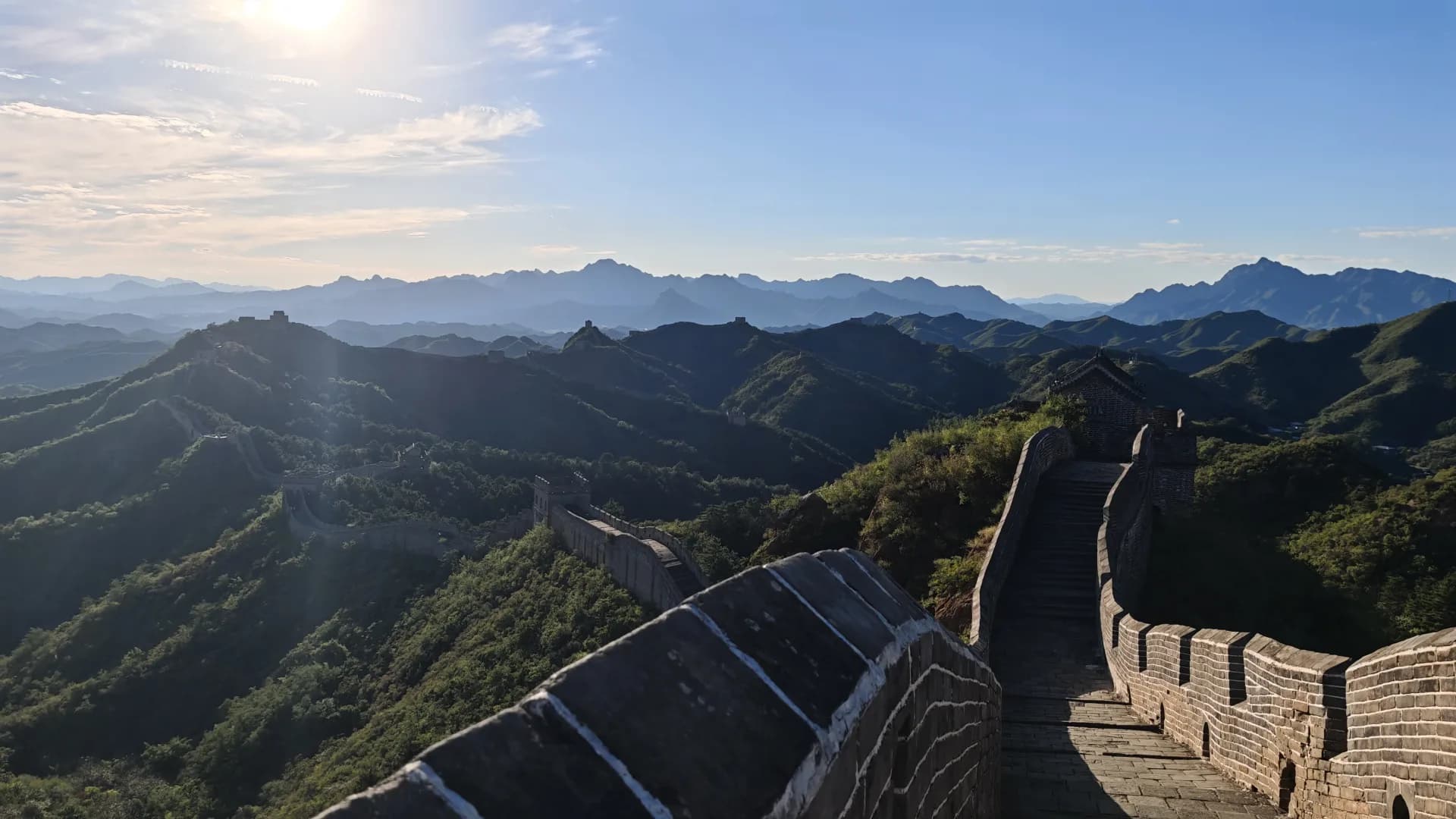
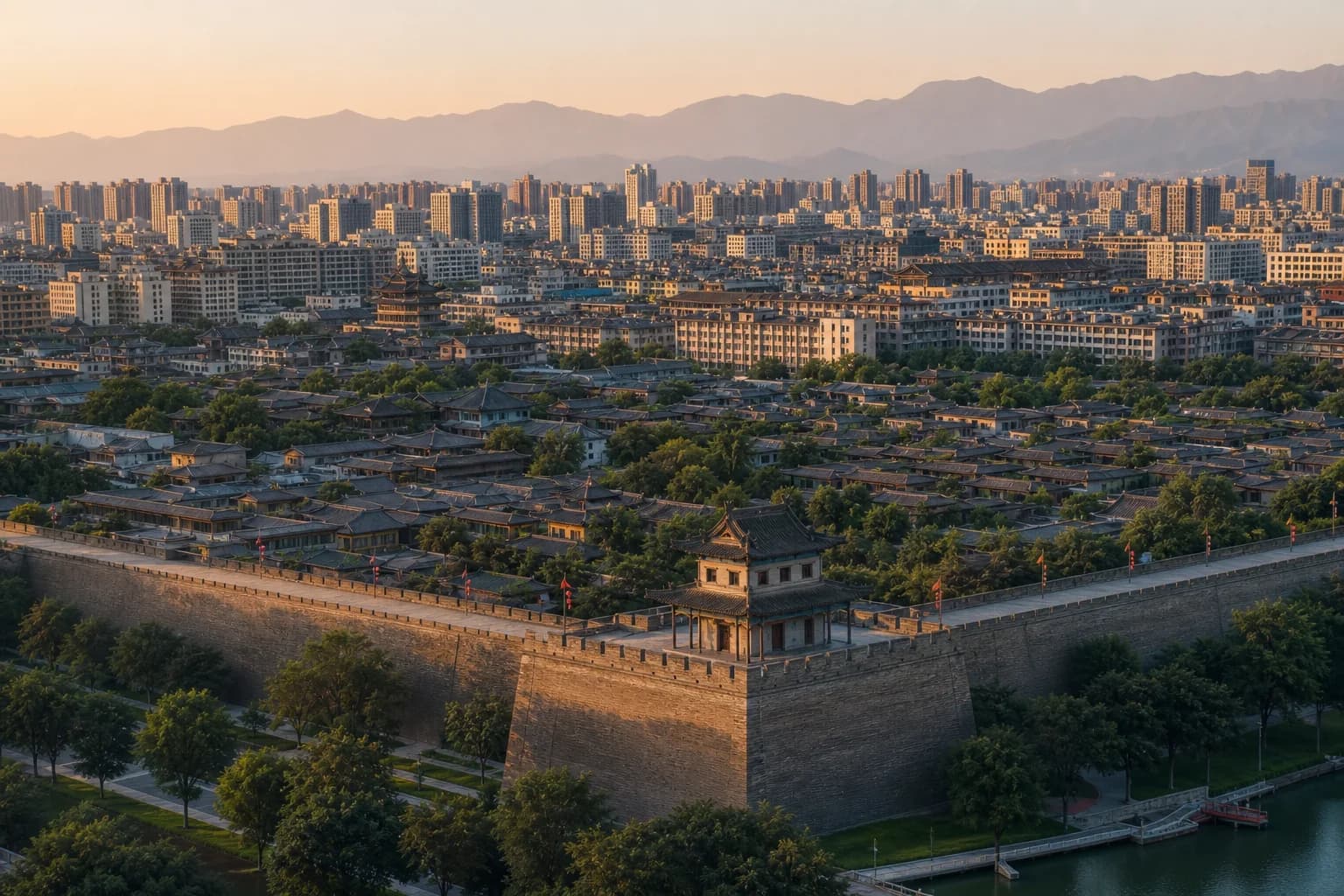
- At the City Wall, see the gates, barbicans and ramparts as one defensive system. A short visit at Yongning Gate can teach you more than a tired full lap.
- At the Bell and Drum Towers, use the buildings to orient the cardinal street grid and the transition into Huifang.
- At Shaanxi History Museum, follow the story from early bronzes of power, through Han-era trade, to cosmopolitan Tang life. Do not try to read every label.
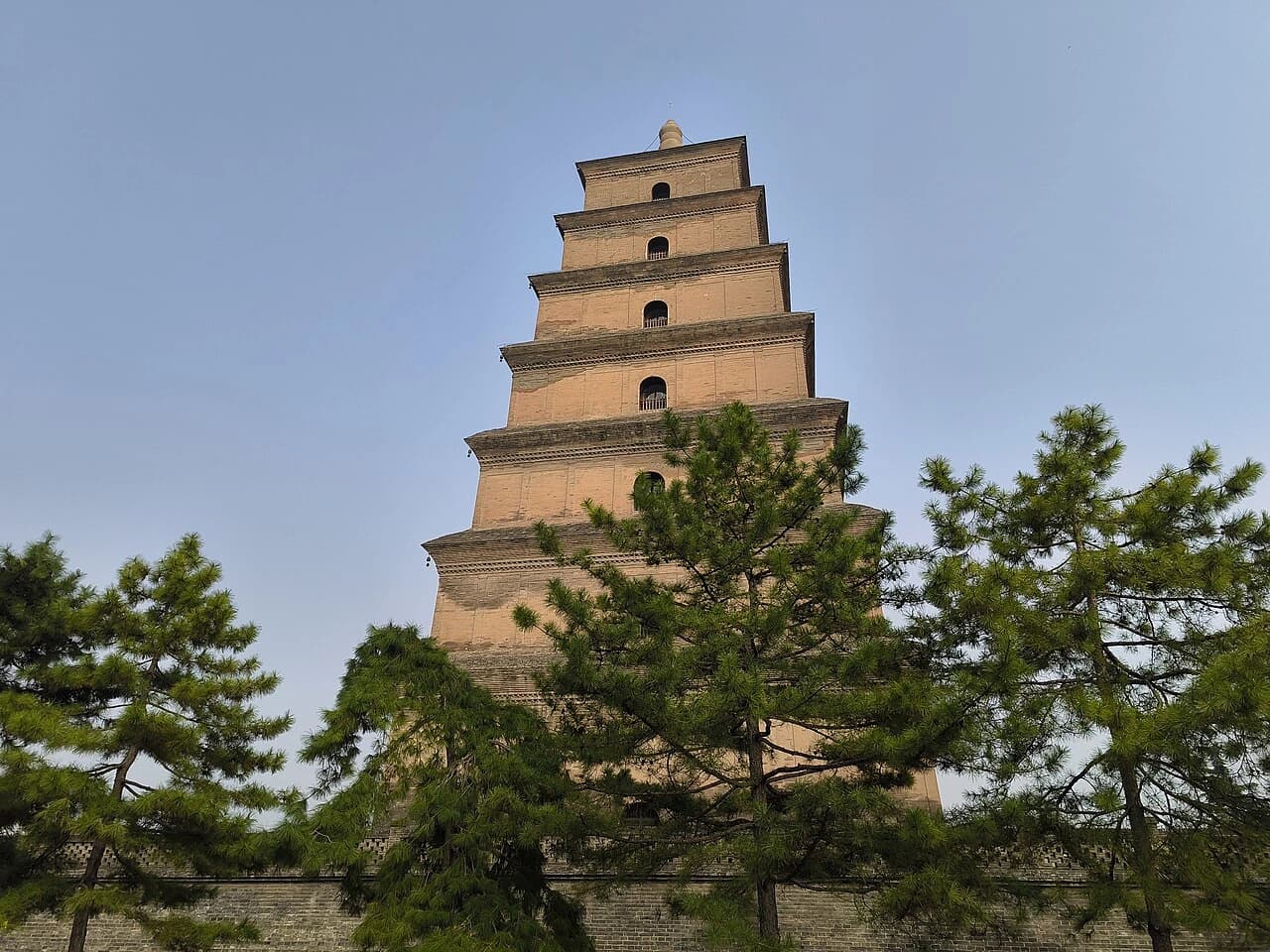
- At Big Wild Goose Pagoda, the public square, the working Da Ci'en Temple and the pagoda climb are three separate experiences. Each has its own access decision.
If you want to walk on top of the wall rather than past a gate, check the current Xi'an City Wall product on Trip.com. Then confirm the usable gate, bike rental and any live notice with the attraction before you set off. For the free surface-level alternative, use the Xi'an wall-root walk from Yongning Gate through Shuyuanmen, Beilin and Wenchang Gate.
The Best South-City Sequence
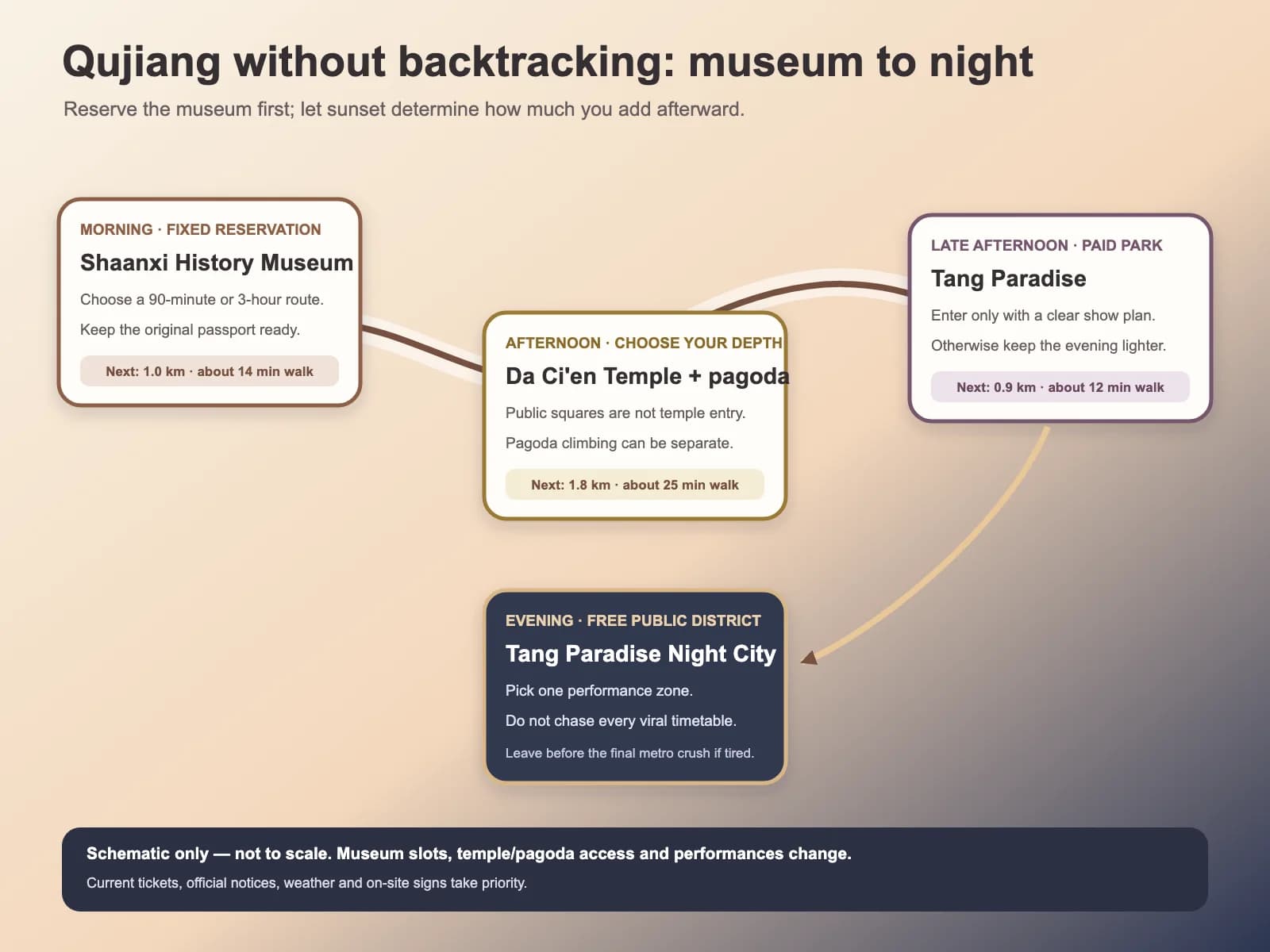
The short version for first-timers is Shaanxi History Museum → Big Wild Goose Pagoda and Da Ci'en Temple → Grand Tang Mall after dark. Tang Paradise is a separate paid theme park. Add it on a longer trip. Do not squeeze it into two days.
Do not plan this day around an old fountain or street-show timetable. Public shows, crowd controls and weather cancellations change. The architecture, the temple history and the pedestrian avenue are worth seeing without any named show. If you want to turn the pagoda and Grand Tang Mall evening into a booked or DIY portrait session, use the Xi'an Tang-style transformation and night-photo guide for styling, route and return-time decisions.
What to Eat—and How to Choose Well
Roujiamo
Roujiamo is Xi'an's chopped-meat sandwich. A good one has crisp, freshly heated bread and a moist filling. Choose a shop that sells little else and has steady turnover. If the bread sits stacked for a long time or the filling is uncovered, a famous name is no reason to queue.
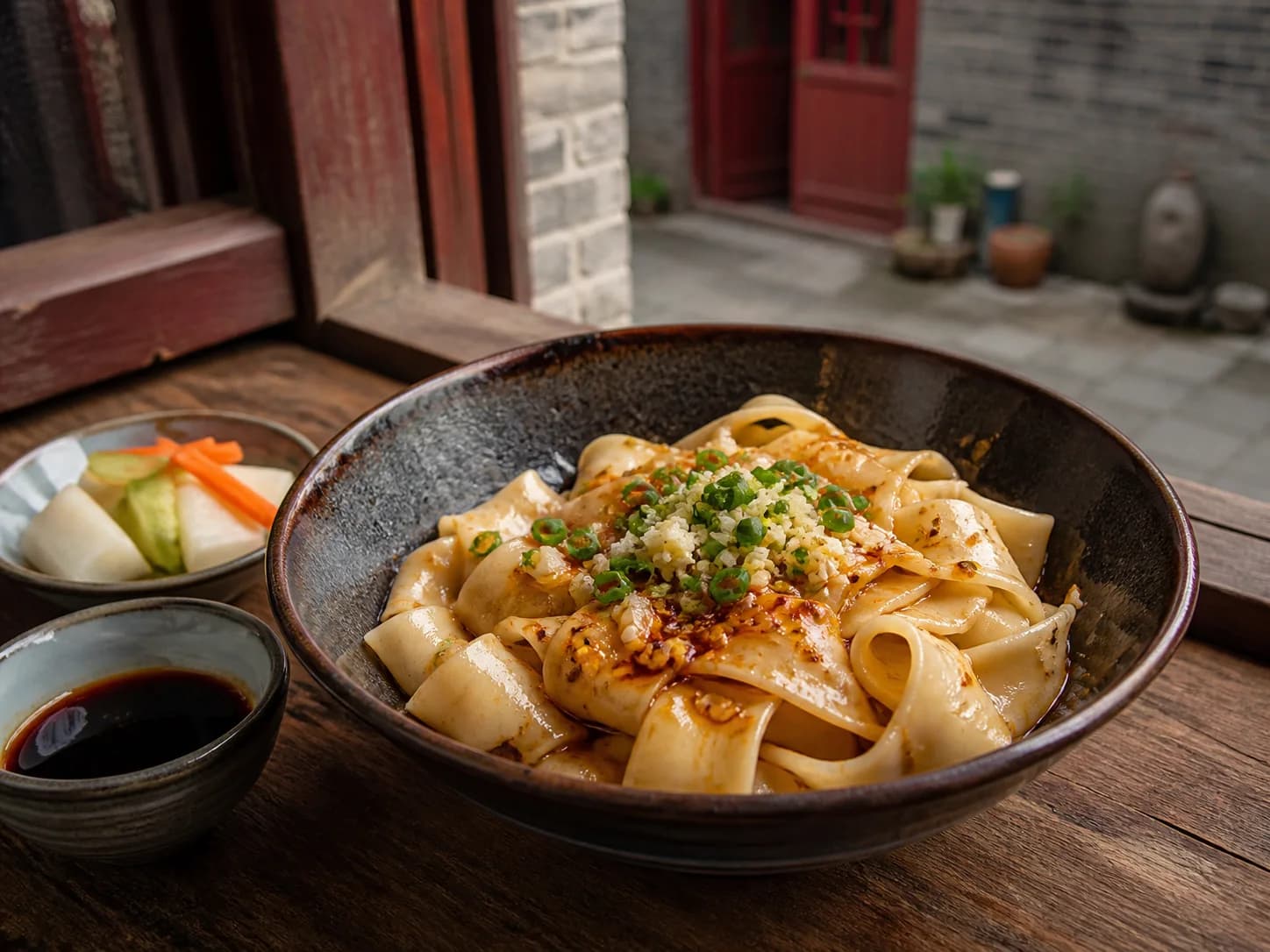
Biangbiang noodles
These wide noodles are best when pulled and dressed to order. Ask for less chili if needed, then taste before adding more oil. A smaller neighborhood noodle shop near your hotel often makes more sense than crossing the city for one social-media branch.
Yangrou paomo
This mutton soup with torn bread is a sit-down meal. Breaking the bread is part of the texture. Smaller pieces soak up the broth more evenly. Ask whether the kitchen expects you to break the bread yourself. Leave enough time to eat without rushing to a timed booking.
Huifang beyond one main street
The Muslim Quarter is a living Hui neighbourhood, not just a snack market. Walk from Beiyuanmen into the smaller lanes and respect mosque boundaries. Choose kitchens with fresh turnover, short menus and clean counters. Order one main dish and one snack. You do not need to try every stall. Muslim travelers can use the Muslim-friendly China guide for halal verification phrases, mosque etiquette and long travel-day food planning.
The China food city chooser compares Xi'an's solo-friendly wheat and mutton formats with Chengdu, Guangzhou, Shanghai and specialist regional food stops before you add another city.
For a full meal plan, neighborhood choices and the important distinction between Hui beef/lamb food and Han Shaanxi wheat dishes, use the Xi'an food guide.
Where to Stay
Bell Tower and Drum Tower: best for a first visit
This is the handiest base for short stays, evening food and metro lines in several directions. It is also busy, noisy and touristy. Before booking an airport pickup, check whether the hotel entrance is on a pedestrian street or a road cars can reach.
South Gate: best for atmosphere and walking
Stay near Yongning Gate if you want the wall, Beilin and calmer lanes within an easy walk. It works especially well for travelers who prefer morning streets and evening architecture over shopping malls. The airport and Lintong still require transfers.
Xiaozhai or Big Wild Goose Pagoda: best for museums and families
This southern base shortens the museum, temple and Grand Tang Mall day. It also has more modern malls and indoor options for bad weather. Old-city evenings feel less atmospheric from here. Use the metro rather than taking taxis across the city again and again.
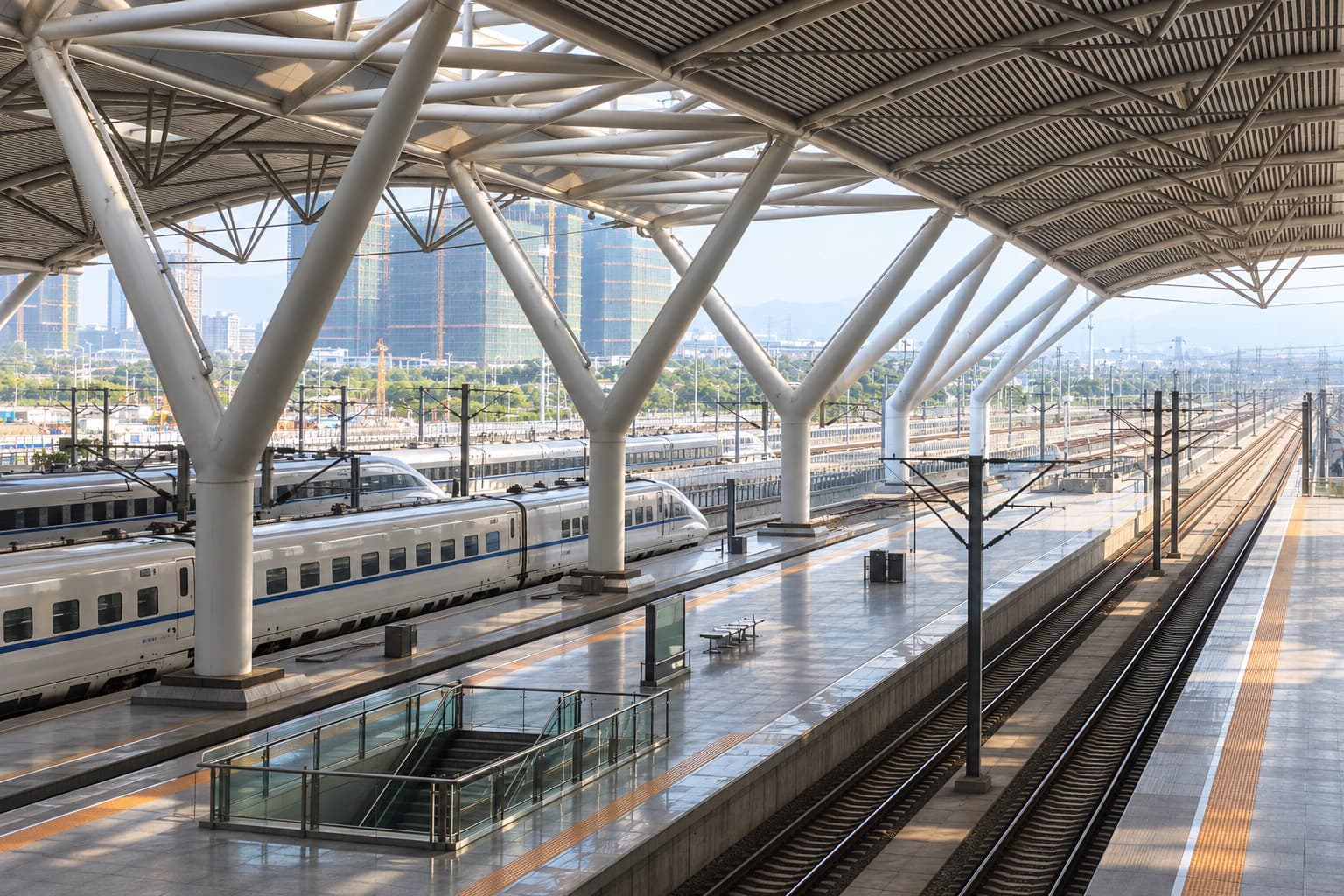
Xi'an North station: only for an early high-speed train
The station area solves a departure problem, not a sightseeing one. Use it for a very early train or a late arrival. Otherwise, stay where you will spend your evenings. Compare current Xi'an hotels on Trip.com, checking the exact branch and nearest usable metro exit.
The full where to stay in Xi'an guide compares Bell Tower, Yongningmen, Dachaishi and Qujiang with commute and noise trade-offs.
Getting Around
- Use the metro within the central and southern city, but treat Lintong as a separate transfer job.
- For the two-day route, a pre-arranged car or confirmed same-day transport from the Terracotta Warriors back to Yongning Gate protects the evening sequence.
- Keep Chinese destination names and exact map locations. “City Wall” can send a driver to the wrong gate; use 西安城墙永宁门 for this route.
- Allow extra screening and navigation time at major museums and railway stations.
- Do not quote a fixed citywide metro closing time: check the specific line and station on the travel date.
- On the wall and at Grand Tang Mall, keep a rain, heat and wind fallback rather than assuming exposed public space is always comfortable.
Add One Distinctive Chapter on a Longer Visit
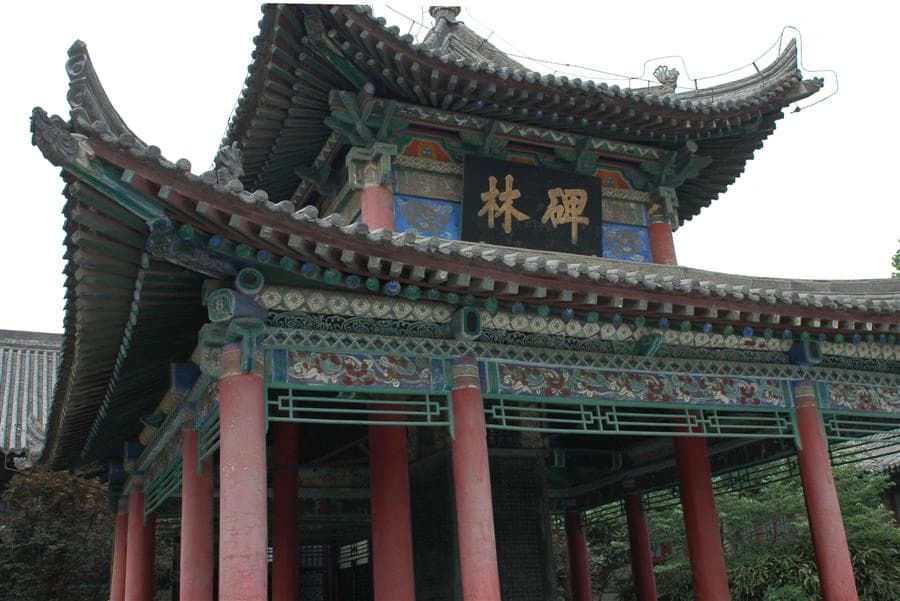
- Calligraphy and stone: Beilin Museum → Shuyuanmen → a short wall section. Focus on script, carving and the physical transfer of texts.
- Food and faith: Guangren Temple → Sajinqiao → Great Mosque → Gao Courtyard. This route reveals religious and community layers beyond imperial monuments.
- Lintong archaeology: Terracotta Warriors → Lishan Garden; add Huaqing Palace only when time and ticket interest justify a second major site.
- Qujiang after dark: Big Wild Goose Pagoda → Grand Tang Mall, treating modern spectacle as interpretation rather than preserved Tang urban fabric.
- Mountain day: Mount Hua only with a full day, suitable weather and a confirmed ascent/descent plan.
Trending Attractions in Xi'an




Final Planning Rules
- Reserve the Terracotta Warriors and Shaanxi History Museum first.
- Give Lintong its own half-day; do not pretend it is beside the City Wall.
- Choose one tower interior, one substantial Huifang meal and one south-city evening rather than collecting duplicates.
- Keep original passports, reservation confirmations and Chinese addresses available offline.
- Check live weather, museum notices, performances and wall operations the day before departure.