Chengdu Wide and Narrow Alleys
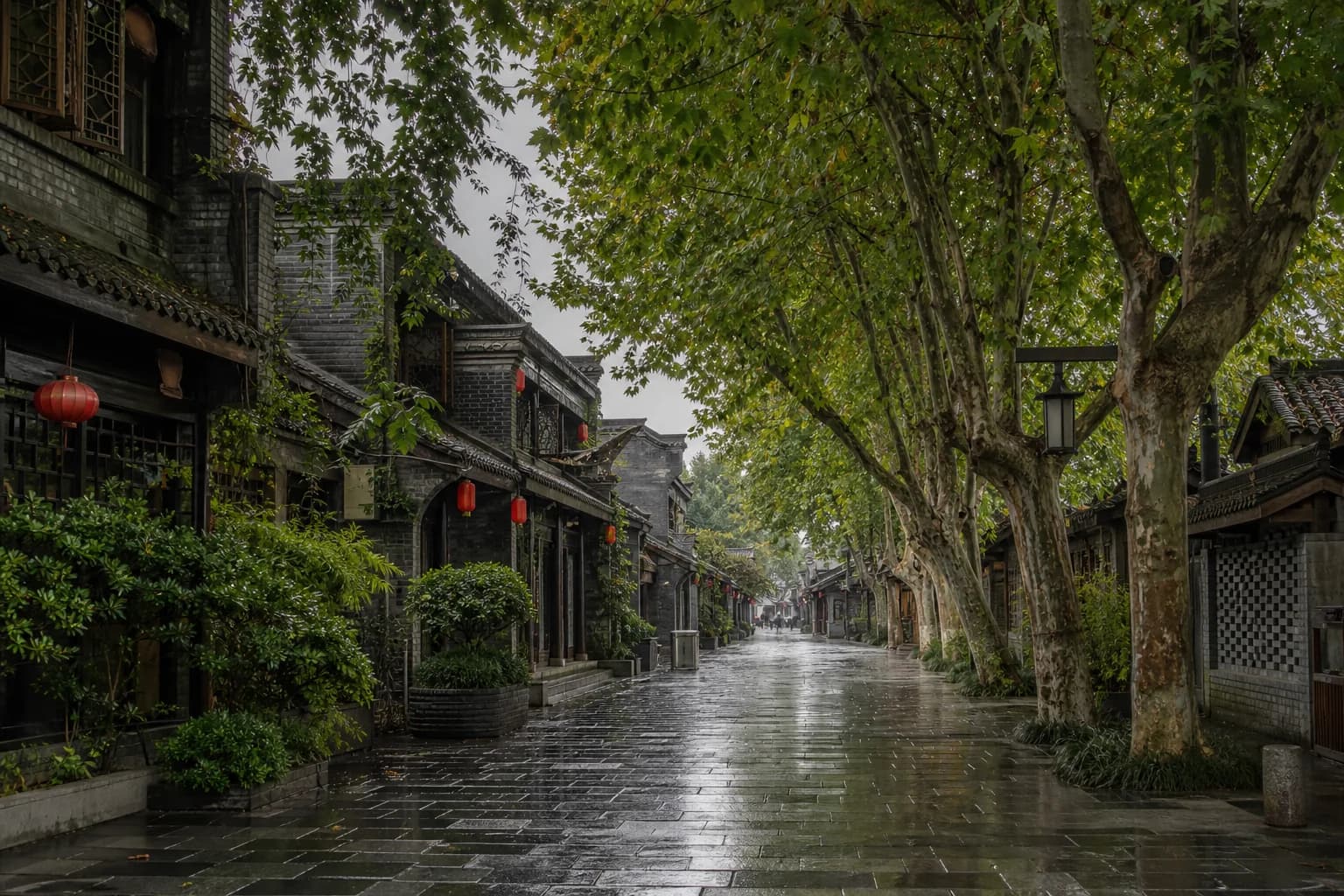
Wide and Narrow Alleys—Kuanzhai Xiangzi (宽窄巷子)—is not one photogenic street. Its core is three roughly parallel east–west lanes: Kuan Alley, Zhai Alley and Jing Alley. Together they preserve the scale of Chengdu's former Shaocheng district through grey-brick walls, tiled roofs, gateways and courtyard plots. They also form one of the city's busiest commercial visitor districts.
That second fact matters. Kuanzhai is valuable when you read the architecture, compare the three lanes and connect the core to the smaller streets around it. It is disappointing when treated as an untouched old neighbourhood or a checklist of souvenir shops. The best first visit takes 60–90 minutes inside the core, then continues to People's Park for tea or Kuixinglou Street for food.
The public lanes are free. Individual courtyards, exhibitions, restaurants and performances set their own hours and prices, so there is no useful single promise that everything is “open 24 hours.”
Choose the Right Version of the Visit
| Time | Route | Best for |
|---|---|---|
| 45–60 minutes | One pass through Kuan, Zhai and Jing | Architecture overview before another attraction |
| 90 minutes | Full three-lane weave with courtyard pauses | Best first visit |
| 2–3 hours | Three lanes plus People's Park or Kuixinglou | Tea culture or a more local food finish |
| Half-day | Kuanzhai, People's Park and Kuixinglou/Paotongshu | Travellers who prefer neighbourhood texture to another major sight |
Arrive before about 9:30am for emptier paving and clearer building views, but expect many businesses to open later. Late afternoon brings more atmosphere and warm interior light, along with much heavier foot traffic. On national holidays, the lanes can become a slow-moving crowd corridor; visit early or move this stop to a weekday.
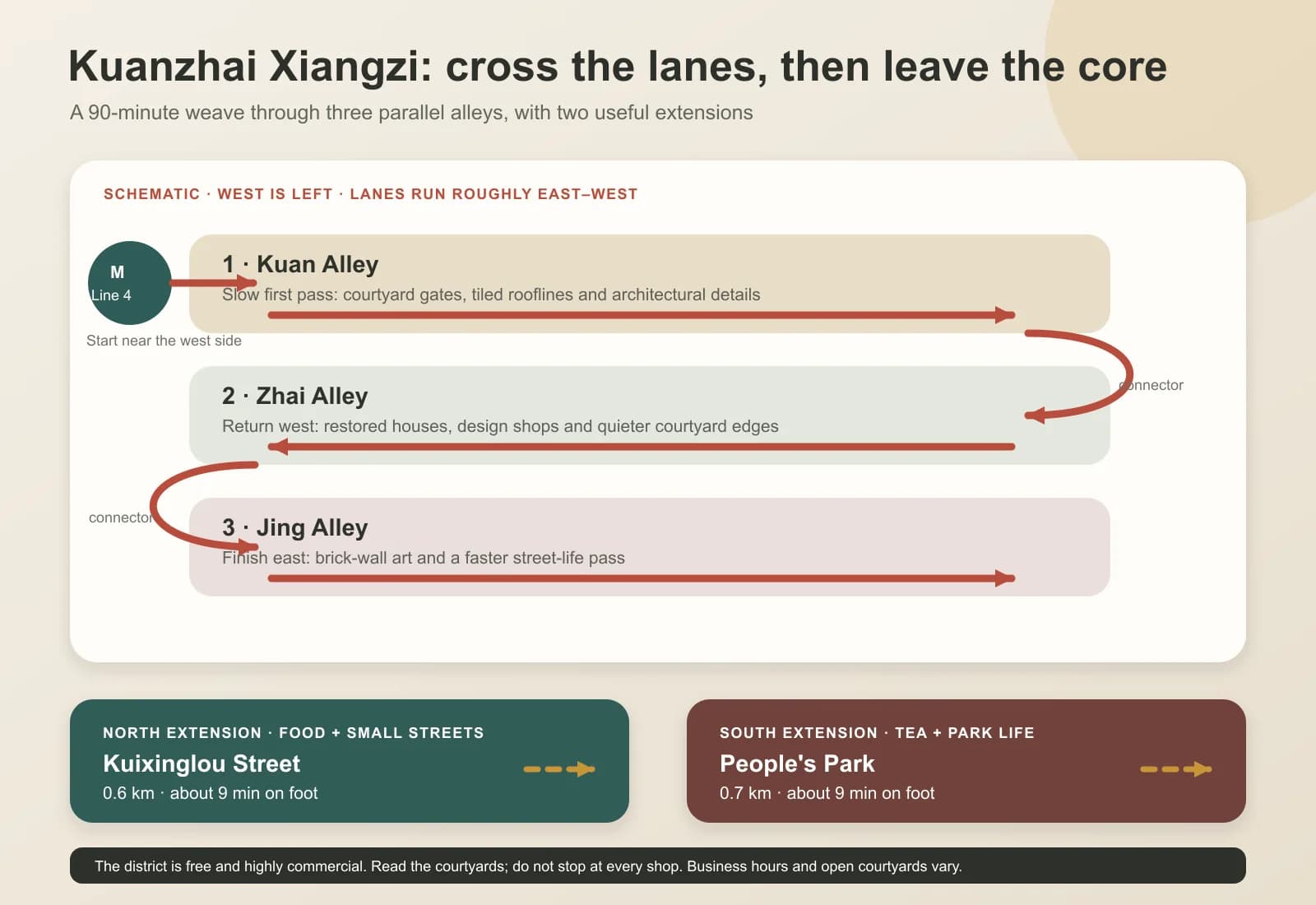
This is a schematic visit flow, not a surveyed street map. The lanes have several connectors, and temporary controls can redirect pedestrians. Start from the west side near Kuanzhaixiangzi metro station, follow the lanes in alternating directions, and use the connectors instead of repeatedly returning along the same commercial frontage.
The Three-Lane Route
1. Kuan Alley: slow down for the courtyard grammar
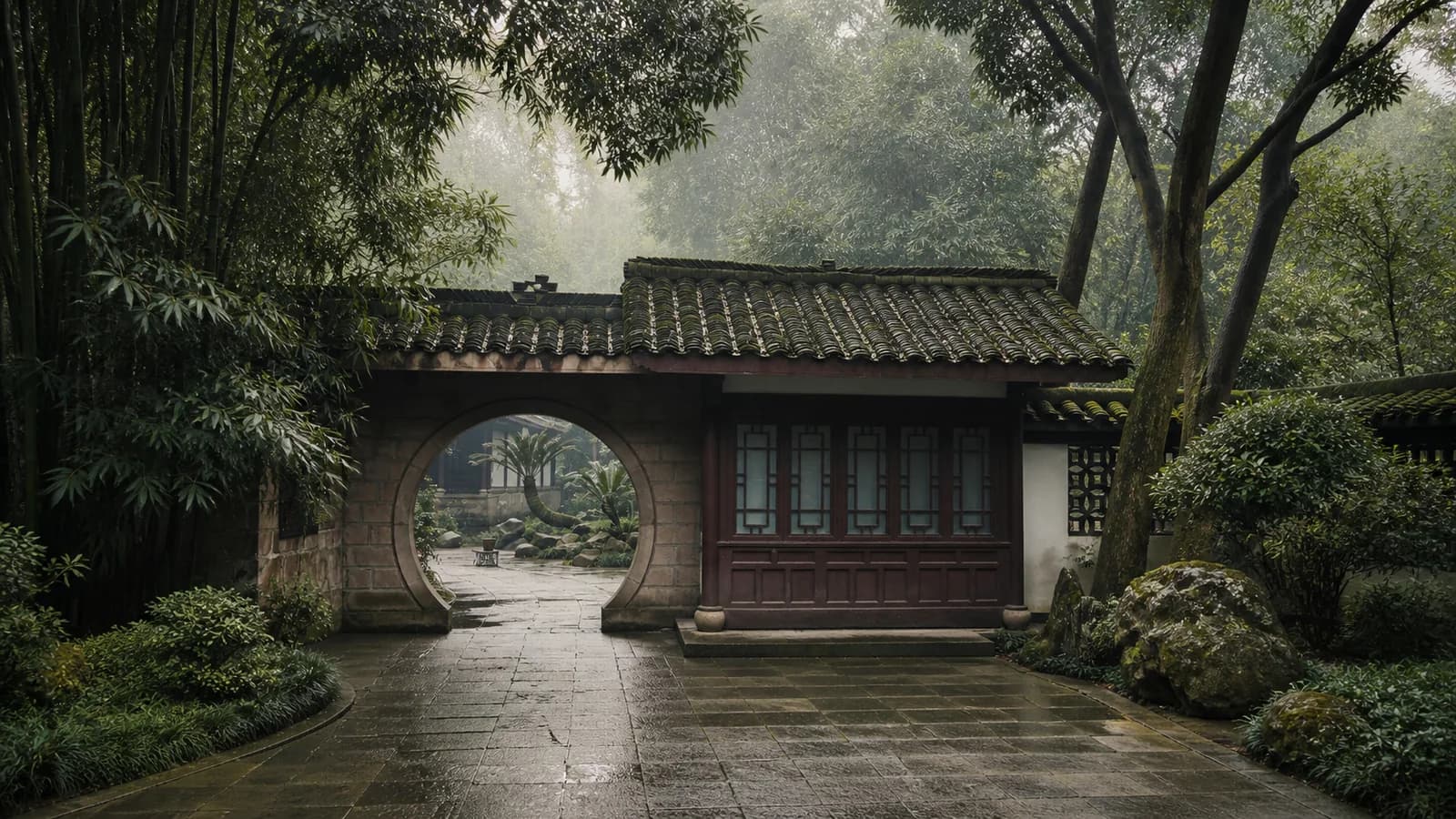
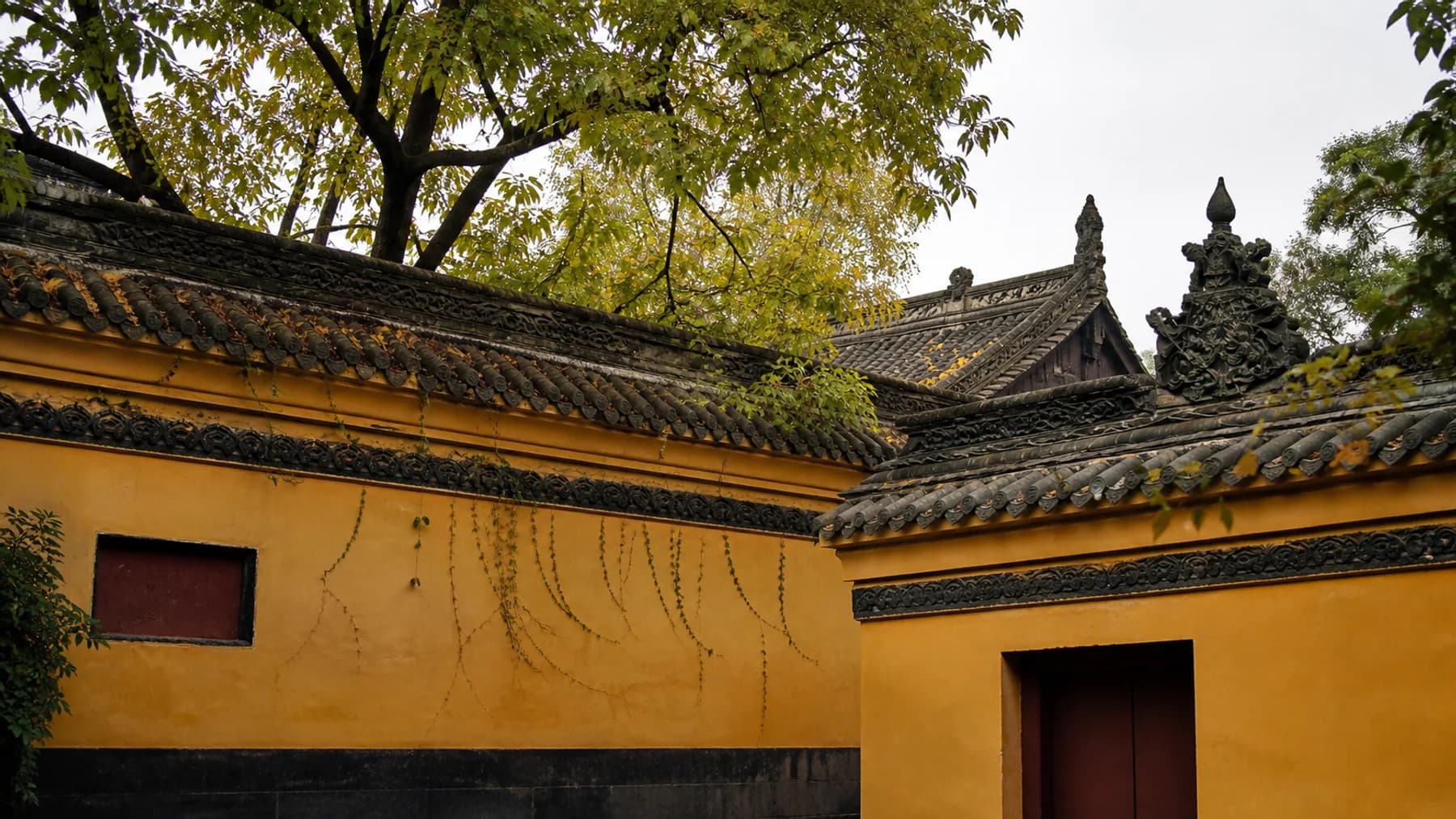
Begin with Kuan Alley while your attention is fresh. It contains the strongest concentration of restored courtyard architecture and is the place to look past the storefronts. Notice how a narrow gateway hides a deeper sequence: threshold, entrance screen, small court and rooms arranged around shared open space. Roof ridges, carved timber screens and grey-brick patterns signal status and craft even when a courtyard is closed.
Kuanzhai's history reaches back to the Qing-era garrison settlement established in the early eighteenth century. The surviving district was substantially repaired and reprogrammed in the 2000s; it reopened as a visitor area in 2008. Some fabric is historic, some is heavily restored, and some commercial interiors are new. “Preserved urban pattern” is a more honest description than “unchanged Qing street.”
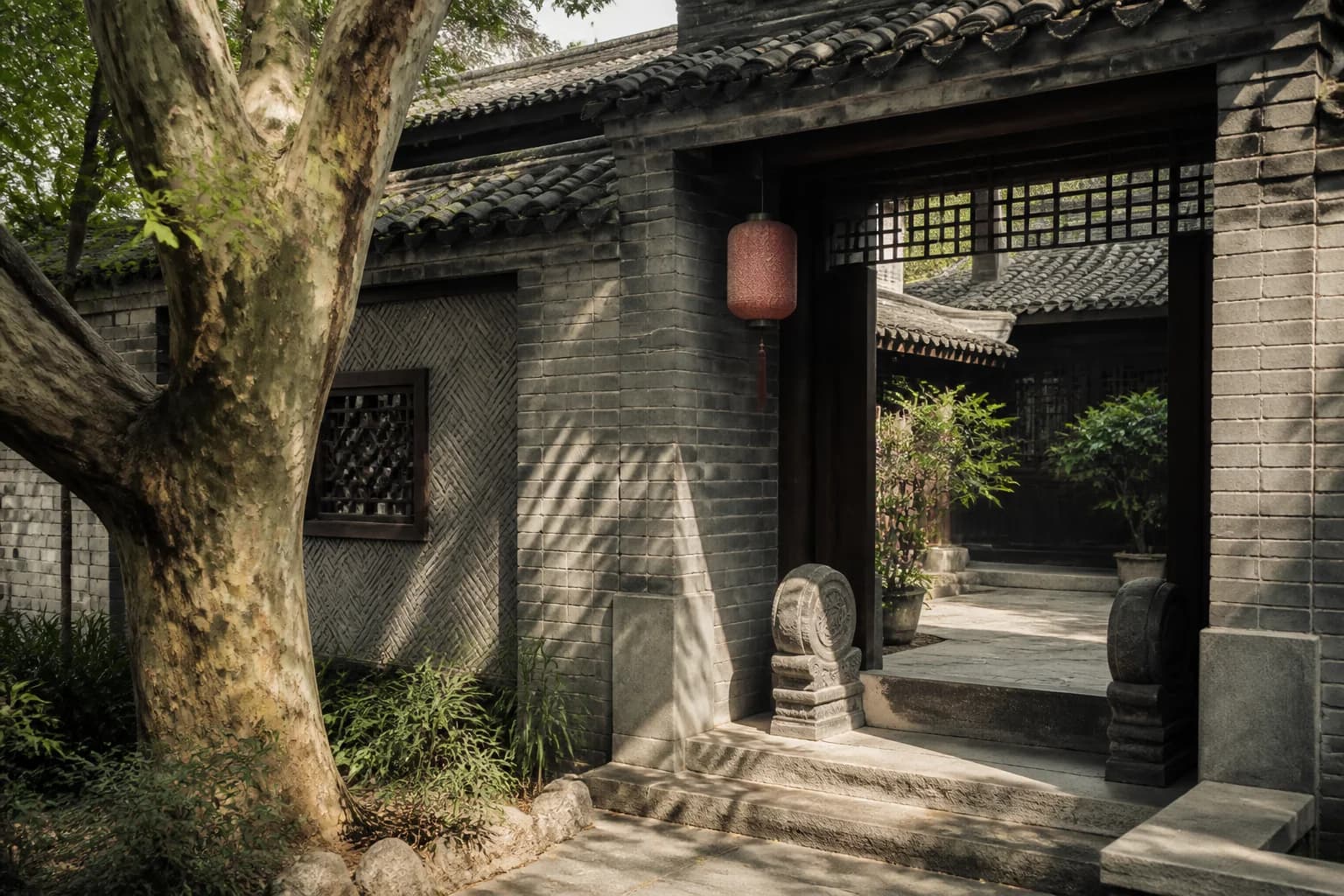
An official Chengdu account describes a broader fishbone network of six connected pedestrian streets and more than 60 courtyards, while an English Chengdu tourism overview describes the three-lane core and 45 courtyards. The figures refer to different boundaries; they are a reminder that Kuanzhai is a district, not three isolated strips. The modern labels—Kuan for “leisure life,” Zhai for “quality life” and Jing for “street life”—describe current curation rather than fixed ancient functions.
2. Zhai Alley: restored houses and design details
Use an eastern connector and return west through Zhai Alley. This lane often feels more intimate, with restored residences adapted as boutiques, dining rooms and design-led spaces. Look for combinations of Chinese courtyard planning and later decorative influences rather than assuming every facade belongs to the same date.
The useful question is not “Which famous shop must I enter?” but “Which doorway reveals something beyond retail?” Choose one open courtyard where you can see the relationship between gate, court and interior. Skip repeated souvenir stock. If a seller describes an object as bamboo craft, Sichuan brocade, lacquer or handmade tea ware, ask what material it uses, where it was produced and whether the craftsperson is present. A demonstration is more meaningful than a generic “local-style” trinket.
3. Jing Alley: a faster street-life finish
Cross down to Jing Alley and finish east. Jing is the quickest pass and is associated with brick-wall displays, public art and a more informal “street life” theme. It is also where staged photo objects and snack counters can overpower the history. Use it as contrast: the architecture and commercial programming are doing different jobs in each lane.
If the core feels saturated after Jing, leave it. Kuanzhai improves when it becomes the beginning of a neighbourhood walk rather than the only destination.
Tea: Buy Time, Not a Performance Checklist
Chengdu tea culture is about duration as much as flavour. A gaiwan uses a saucer, bowl and lid; the lid can hold back leaves while you sip. Order a straightforward local green or jasmine tea, watch how water is replenished, and give yourself at least 30–45 minutes. The point is to sit, talk and observe the courtyard rhythm—not to rush through a ceremonial tasting designed for a tour group.
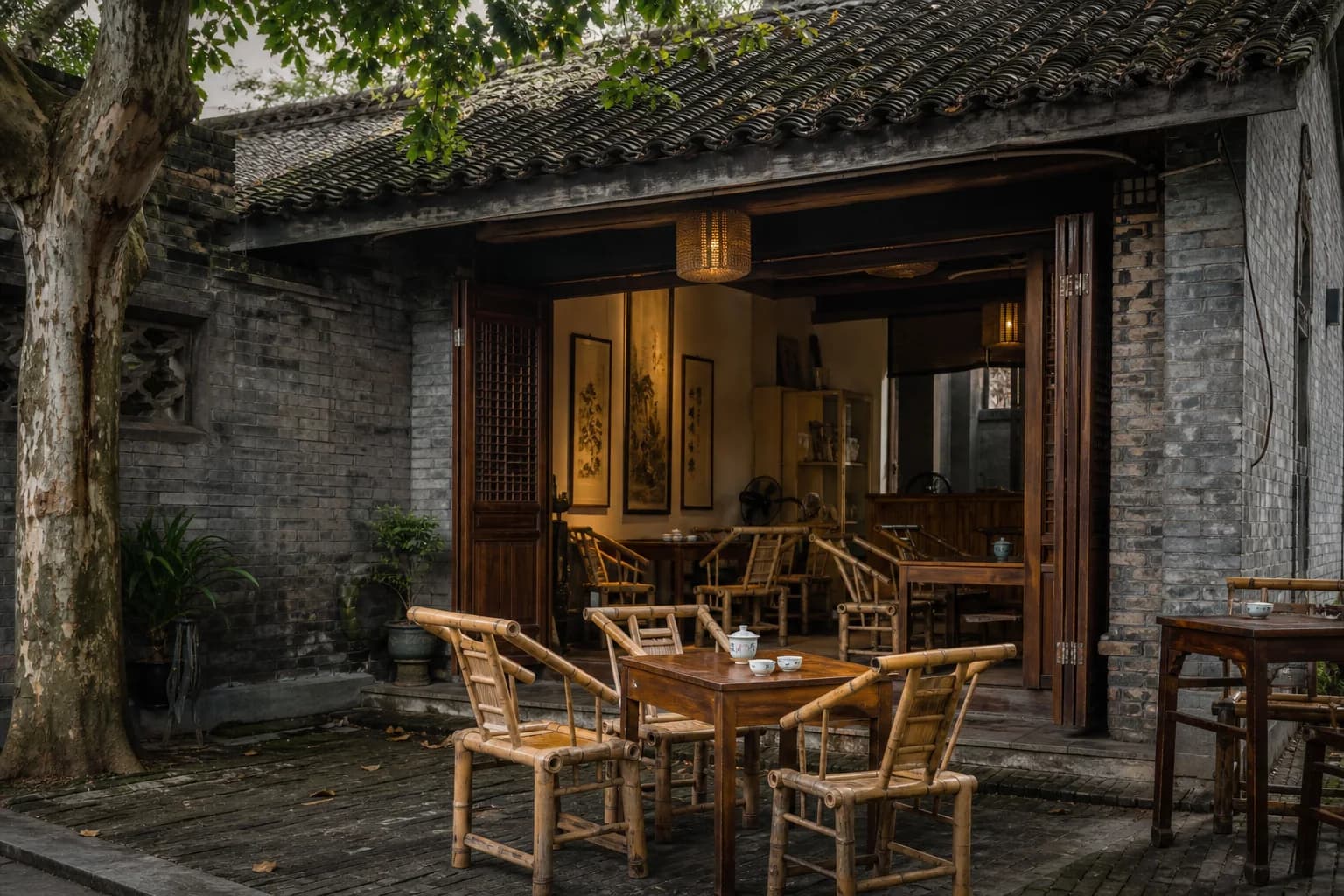
A teahouse inside Kuanzhai is convenient and atmospheric, but you pay for the setting. For a broader slice of city life, walk to People's Park and compare the lively public park environment. AMap measures the surface route from Kuanzhai's main scenic-area map location to People's Park at about 0.7 km / 9 minutes. Housed within the park, Heming Teahouse is famous and can also be busy; the park itself—not one specific table—is the real extension.
Ear cleaning is visible around tourist teahouses, but it is optional entertainment, not a required Chengdu ritual. Hygiene, practitioner standards and individual medical risk are difficult for a visitor to assess. Skip it if tools are not visibly handled safely, if you have any ear condition, or if you simply feel uncertain. Tea alone is a complete experience.
Food: Taste the City, Then Walk North
The three lanes make it easy to sample snacks, but location premiums and visitor-oriented versions are common. Buy one or two items only after checking turnover and visible preparation. Good Chengdu snack categories include:
- Sweet-water noodles (甜水面): thick, chewy noodles with a sweet-savory sesame and chilli coating.
- Zhong dumplings (钟水饺): pork dumplings dressed with aromatic chilli oil and a lightly sweet soy profile.
- Long chaoshou (龙抄手): thin-skinned Sichuan wontons, served in broth or a spicy dressing.
- Ice jelly (冰粉): a cooling translucent dessert with brown sugar syrup; useful after a spicy meal.
- Dan dan noodles (担担面): a small, intense bowl rather than a giant main course.
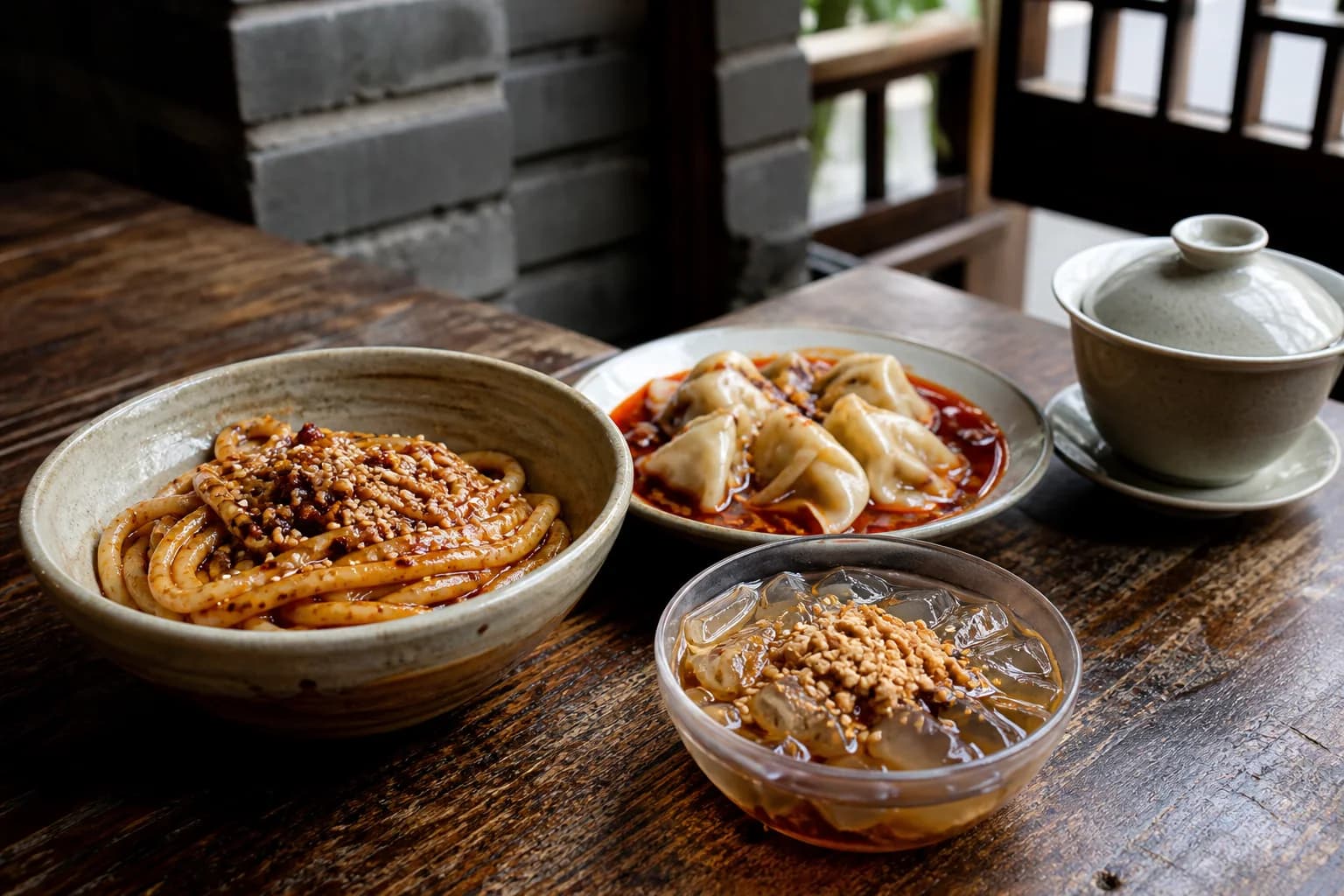
For a denser food finish, walk north to Kuixinglou Street and the lanes around Paotongshu Street. AMap measures the route from Kuanzhai's main map location to Kuixinglou Street at about 0.6 km / 9 minutes. This is still a popular dining area, not a secret, but the surrounding blocks make it easier to compare menus, choose a busy specialist and see more ordinary neighbourhood life.
Avoid building a meal around one viral shop. Look for a short menu, steady local turnover and a kitchen producing one category well. If you have allergies, show the ingredient in written Chinese; sesame, peanuts, soy, wheat, pork and chilli oil appear widely.
Where to Stay
- Kuanzhai / People's Park: best for a quieter central base, morning walks and easy tea breaks. Choose a room away from street-facing bars or courtyards if sleep matters.
- Tianfu Square: best for metro connections and a balanced first-trip location between Kuanzhai, museums and the shopping core.
- Chunxi Road / Taikoo Li: best for shopping, restaurants and later evenings; expect a denser, brighter commercial environment.
- Wenshu Monastery: best for temple atmosphere, traditional snacks and a slower northern-centre neighbourhood.
- Jiuyanqiao / Yulin: better for nightlife or contemporary local dining, but less convenient for an early Kuanzhai start.
Compare live availability through Trip.com hotels. Do not pay a premium simply for a property with “Kuanzhai” in its name; check the actual walking route, nearest metro entrance and recent noise reviews.
Practical Information
Getting there
Take Chengdu Metro Line 4 to Kuanzhaixiangzi station and follow live station signs toward the district. Exit letters can change with construction or access controls, so the station name is more durable than an old blog's exit instruction. The main scenic-area map location is also available on AMap.
Weather and accessibility
The route is short, but stone paving can be slick after rain. Summer humidity makes the tree canopy welcome; winter damp can feel colder than the temperature suggests. Carry water, sun or rain protection, and shoes with grip.
The public lanes are broadly level, while individual courtyards may have raised thresholds, steps or narrow entrances. Wheelchair users and travellers with strollers should treat courtyard access separately from street access and ask staff for the least-stepped connector. Crowding can be a larger barrier than distance, making an early weekday visit especially useful.
Good nearby pairings
- People's Park: tea, gardens and public city life; about 9 minutes by AMap's surface walking route.
- Kuixinglou and Paotongshu streets: food, small shops and a less monumental street scale; about 9 minutes to Kuixinglou.
- Chengdu Museum and Tianfu Square: a stronger historical follow-up when weather turns poor.
- Qingyang Palace: a quieter architectural contrast for travellers continuing west.
Do not pair Kuanzhai with the Panda Base in the same casual half-day: the panda visit works best early and involves a separate cross-city transfer. Kuanzhai belongs in a central Chengdu walking day.
The district's real value is not a claim that it is perfectly authentic. It is the chance to read how an old courtyard pattern has been conserved, reconstructed and commercialised—and then step beyond the polished core into the tea, food and small-street life that still makes central Chengdu distinctive.