China with kids: choose fewer bases and better days
China can be an excellent family trip, but the successful version is rarely the route with the most famous cities. It is the route where each child gets one clear reason to care, the adults can move the luggage without a crisis, and every third or fourth day has enough slack for sleep, laundry or weather.
For a first family visit, think in city roles rather than a national checklist:
- Beijing supplies the strongest imperial-history and Great Wall days, with the heaviest walking burden.
- Shanghai is the easiest large-city base for indoor alternatives, a theme-park day and a gentler arrival or departure.
- Chengdu adds pandas, food and a slower neighbourhood rhythm.
- Xi'an gives history a visible shape through the Terracotta Warriors and City Wall, but its main excursion still consumes a real day.
- Hong Kong can work as a compact theme-park or coastal endpoint, though it creates a separate border, ticketing and hotel-room calculation.
Two cities in eight or nine nights often produce a better family holiday than four cities in the same period. A three-hour train is not a three-hour family transfer: it includes packing, checkout, the trip to the exact station, security, waiting, boarding, the ride, station exit and the next hotel check-in.
The quick city chooser
| Base | Strongest family reason | Physical reality | Useful stay | Best fit | Cut it when… |
|---|---|---|---|---|---|
| Beijing | Forbidden City, Great Wall, major museums | Long compounds, exposed plazas, stone, stairs and security queues | 4–5 nights | School-age children and teens who enjoy history | The child needs a daily hotel nap and the adults still want three headline sights per day |
| Shanghai | Easy urban recovery, museums, skyline and Shanghai Disneyland | Long metro interchanges and a full theme-park day, but many indoor resets | 4–5 nights | First arrival, mixed ages, theme-park families | Nobody wants a theme park or modern-city time and the trip is already short |
| Chengdu | Giant pandas plus relaxed food and park time | Panda sites are large; heat and rain can change animal activity and stamina | 3–4 nights | Preschool and primary-school ages, animal interest | The route already makes a large westward detour for one morning |
| Xi'an | Terracotta Warriors and a legible ancient-capital story | One outward excursion, hot exposed areas and uneven historic surfaces | 3 nights | Curious children who can focus on one major history day | It would create a one-night stop between two long transfers |
| Hong Kong | Theme park, harbour, short urban excursions | Compact rooms, hills, humidity and separate mainland-border logistics | 3–4 nights | A distinct final chapter with flights home | It is being added only because it looks close on a map |
The number of nights assumes the city is part of a wider China trip. Add a night when an international arrival, late flight or long cross-country leg would otherwise erase the first useful day.
Choose the route by the youngest child's rhythm
Baby or toddler: one base is a complete trip
With a child who needs a cot, milk routine, midday sleep and frequent changes, choose one city for five to seven nights. Shanghai is the simplest all-weather candidate. Chengdu works when pandas are the clear family goal and the group is comfortable using taxis for door-to-door trips. Beijing can work, but only if the adults accept one major outing per day and treat the hotel return as part of the itinerary.
A second base is reasonable when the transfer is direct and solves a clear goal. Shanghai plus nearby Suzhou or Hangzhou can be easier than Shanghai plus Beijing. If Beijing is essential, fly into one city and home from the other rather than backtracking.
The stroller does not replace a carrier. It is useful in airports, railway concourses, malls, broad promenades and some museums. It becomes awkward on old thresholds, hutong paving, City Wall access, heritage stairs, security barriers and crowded attraction approaches. A light stroller that folds quickly plus a carrier for short difficult sections is more adaptable than a heavy travel system.
Ages 4–7: animals, play and one story at a time
At this age, Shanghai + Chengdu is a strong eight-to-ten-night pairing if the adults accept a flight or long transfer between them. Shanghai provides one theme-park day, one museum-and-park day and flexible city time. Chengdu provides a panda morning and slow afternoons.
Chengdu + Xi'an is more compact geographically and gives two clear stories: living pandas and an ancient army. Use three or four nights in Chengdu and three in Xi'an. Do not add Beijing unless the trip reaches roughly 12 nights and the child can handle another major transfer.
Ages 8–12: the classic first-trip triangle starts to work
Beijing → Xi'an → Shanghai works well in 10–12 nights when each city has one protected highlight and one lower-pressure day. Four nights in Beijing, three in Xi'an and four in Shanghai is a sound starting shape. Open-jaw international flights prevent a return across the country.
Children old enough to understand chronology often connect the Forbidden City, Terracotta Warriors and Shanghai's modern skyline into one visible story. They still need recovery. Put a museum, park, neighbourhood or pool block after the Great Wall and after the Warriors rather than scheduling another ticketed evening.
For a campus visit, summer school or organized educational group, use the China university visits and study-tour guide to check age eligibility, supervision, accommodation, access and refunds instead of treating every “study tour” as a sightseeing add-on.
Teenagers: let one interest change the standard route
Teenagers may prefer contemporary Shanghai, street photography, fashion, technology, food or a major theme park over a second imperial site. Give them one route decision. Beijing → Xi'an → Shanghai remains coherent, but Chengdu can replace Xi'an for wildlife and food, while Hong Kong can replace a fourth mainland city for a contrasting finish.
The longer classic five-city route is suitable only when the family has enough days to make every base meaningful. Do not compress its geography into a school-holiday race.
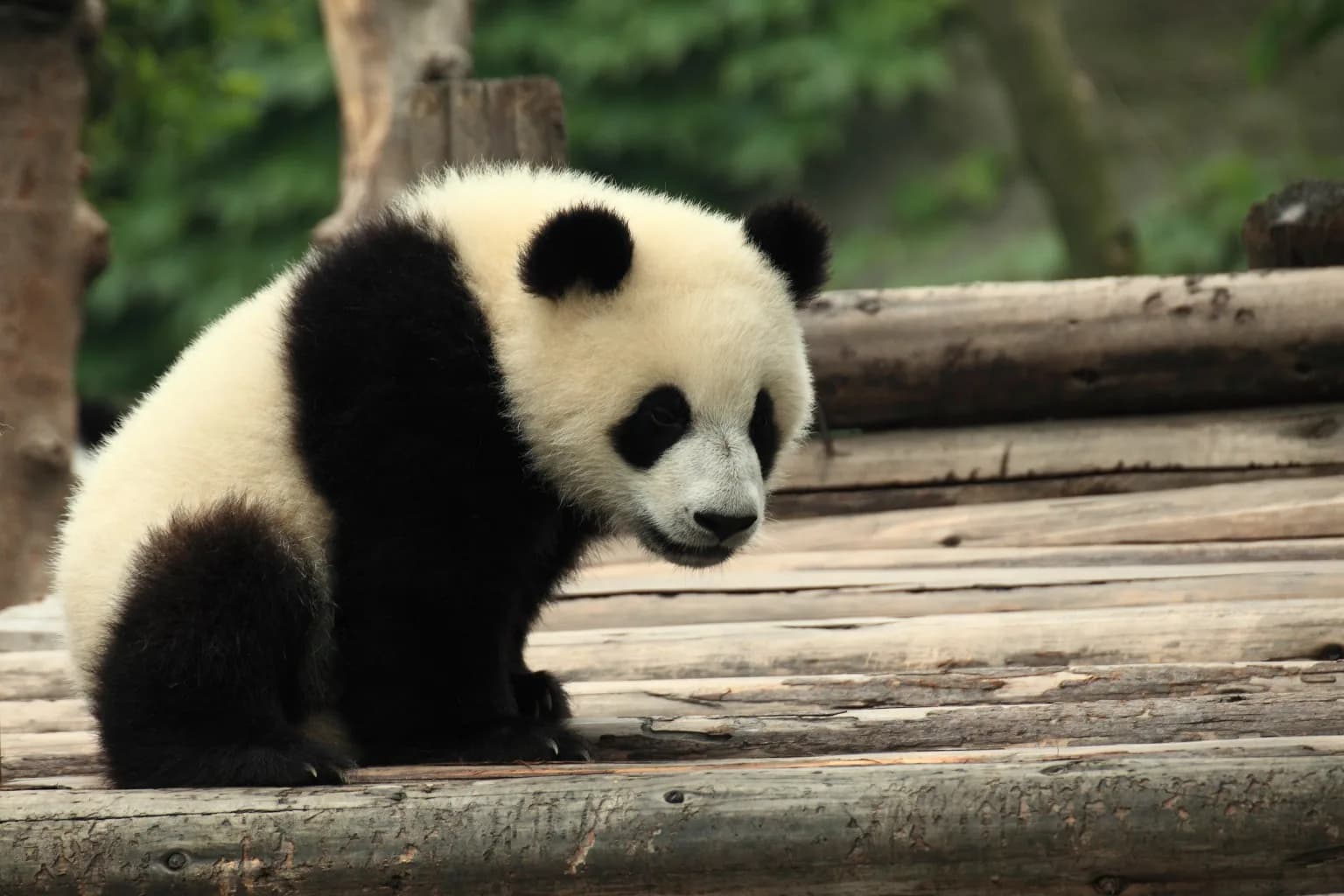
Pandas give younger travellers an immediate reason to care about Chengdu, but the visit still needs an early start, walking and weather flexibility. Photo by George Lu, CC BY 2.0.
What each city asks from a family
Beijing: highest historical return, highest energy cost
Beijing is the strongest choice when the Great Wall and imperial history define the trip. It is also where adults most often underestimate distance. The Forbidden City is not one palace room; it is a long, mostly one-direction passage through gates, courtyards and halls. A Great Wall day includes a substantial suburban transfer before the first step on the wall.
Give Beijing four or five nights. Plan one central imperial day, one Great Wall day, one museum or palace day and one flexible day. The four-day Beijing itinerary offers a usable structure, but a family may still remove one stop from each day. The Great Wall section chooser is more useful than assuming every section offers the same family experience. Mutianyu can reduce the walking commitment through current lift options; Badaling can offer more predictable rail access. Neither is automatically effortless, stroller-friendly or queue-free.
Choose a hotel for the daily route, not for a vague “central Beijing” label. A short walk to a useful metro station helps independent families, but a family of four with a stroller may find a confirmed legal taxi or ride-hailing pickup more practical at the beginning or end of a demanding day.
Shanghai: the best recovery city
Shanghai's family advantage is optionality. A riverside walk can shrink when the weather turns. A museum or mall can absorb rain or midday heat. One adult can return to the hotel with a tired child without destroying a distant group excursion.
Give the centre two days before adding a full attraction day. The four-day Shanghai family itinerary separates Disneyland, central museums, Pudong and Lingang rather than pretending they belong to one district. That separation matters: Shanghai Disneyland is a dedicated day in Pudong, while Lingang's science and family venues sit much farther southeast than the Bund.
Summer can be very hot and humid, with a rainy period and potential severe-weather disruption. Winter is damp rather than reliably snowy. Use the live forecast and official warnings to decide which day becomes the outdoor day. A pre-paid plan does not make an outdoor attraction immune to lightning, wind, extreme heat or temporary suspension.
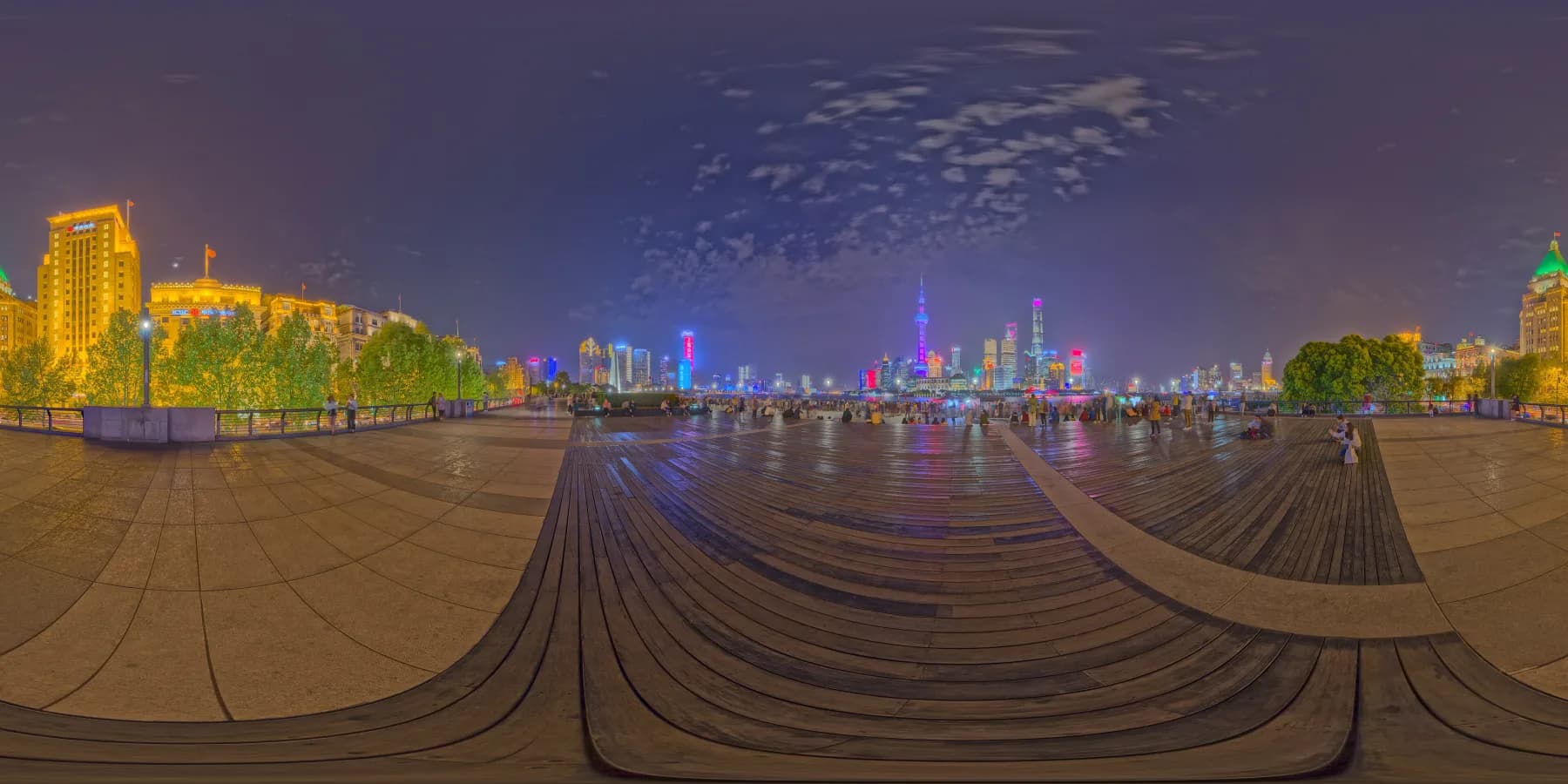
Shanghai can support a short evening outing after a quiet afternoon; the city does not require every day to be a full excursion. Panorama by Greg Zaal, CC0.
Chengdu: pandas need a morning, not a crowded checklist
Chengdu works because one high-interest animal morning can be followed by a park, tea-house area or early dinner. It fails when a family tries to combine Chengdu Research Base, an old street, a museum and a late Sichuan meal in one day.
The panda-base chooser compares the city base with Panda Valley and more distant reserves. For most first-time families, Chengdu Research Base provides the simplest facilities and return to the city. It is still a large outdoor site with slopes, internal transport decisions and possible crowding. Animal visibility and behaviour vary with temperature, season and the animals themselves; no ticket guarantees an active panda at a particular enclosure.
Book the panda morning as the fixed anchor. Keep the afternoon close to the hotel. The following day can take a serious museum, a neighbourhood walk or Sanxingdui if the children want more archaeology. Avoid combining multiple outward attractions simply because each appears under “Chengdu.”
Xi'an: make the ancient-capital story concrete
Xi'an deserves three nights when the Terracotta Warriors matter to the family. The outward day needs transport, entry, the museum visit and a return buffer. In the old city, the City Wall and Bell Tower area can supply a shorter second chapter, but the wall's height, access stairs, exposure and long distances are real constraints.
Use the three-day Xi'an itinerary as a menu. A younger child may prefer the Warriors plus a compact wall segment and a food-focused evening. An older child may add the Shaanxi History Museum or a more detailed archaeological visit. Do not schedule the Warriors on a rail-arrival afternoon.
Hong Kong: a separate ending, not a casual add-on
Hong Kong can be an excellent three- or four-night finale with Disneyland, the harbour and compact outings. It has a separate border and transport system, different ticketing details and often smaller hotel rooms. Moving between the mainland and Hong Kong also consumes more attention than an ordinary domestic arrival.
Use it when the family wants that contrast and the onward flight geometry is good. If Disneyland is the purpose, compare the current dated product and entry terms on the Trip.com Hong Kong Disneyland listing. Keep one non-park day before flying home.
Three route shapes that protect family energy
7 nights: one city, one optional day trip
Choose Shanghai for theme park plus city flexibility, Beijing for history, or Chengdu for pandas and a slower pace. Stay in one hotel. Alternate a major day with a lighter day. A day trip should be optional and removable after poor sleep or bad weather.
10–12 nights: two or three bases
Two bases are best with preschoolers: Shanghai + Beijing, Shanghai + Chengdu, or Chengdu + Xi'an. Three bases begin to work for school-age children: Beijing 4 nights → Xi'an 3 nights → Shanghai 4 nights. The transfer days count inside those totals.
14 nights: three strong bases, or four only for older children
A balanced first route is Beijing 4–5 nights → Xi'an 3 nights → Shanghai 5 nights, with open-jaw flights. Chengdu can replace Xi'an or take four nights if the family has 15–16 nights. Adding all four cities to 14 nights creates three hotel changes and at least one long diagonal transfer; it is realistic only for energetic older children who actively want every city.
If the adults want a broader national framework, use the 10-, 14- and 21-day itinerary chooser, then slow its city count to match the youngest traveller.
Treat a transfer as the day's main event
China's high-speed rail is efficient, but large stations change the family calculation. Write the complete station name beside every train. Beijing South and Beijing West are different trips; Shanghai Hongqiao and Shanghai Station are not interchangeable; Xi'an North sits away from the old-city core.
The current national passenger rules use age, not height, for ordinary child railway tickets. Children aged 6 to under 14 normally qualify for a child discount ticket. One child under 6 can travel free without a separate seat with each ticketed adult; another under-six child or any under-six child needing a seat requires a child ticket. Age is calculated on the travel date. China Railway's current guidance also says the child ticket or free-child declaration must use the child's own valid identity document; for foreign families, that means each child needs the passport used for the booking. Recheck the current 12306 passenger rules before purchase.
For execution:
- Pack the night before and keep passports in one adult-controlled pouch.
- Aim to reach an unfamiliar major station about 60 minutes before departure, with more margin on peak dates or when document verification is unresolved.
- Use lifts when available, but expect queues and a long walk between vehicle drop-off, security, waiting area and platform.
- Put snacks, wipes, medicines and one activity in a small bag that stays at the seats.
- On arrival, let one adult handle navigation while the other keeps the children and bags together.
The high-speed rail planning guide covers station choice, passport booking, luggage and missed trains. If a multilingual checkout helps, compare exact live services through Trip.com train booking. The railway's own inventory and real-name rules still control the trip.
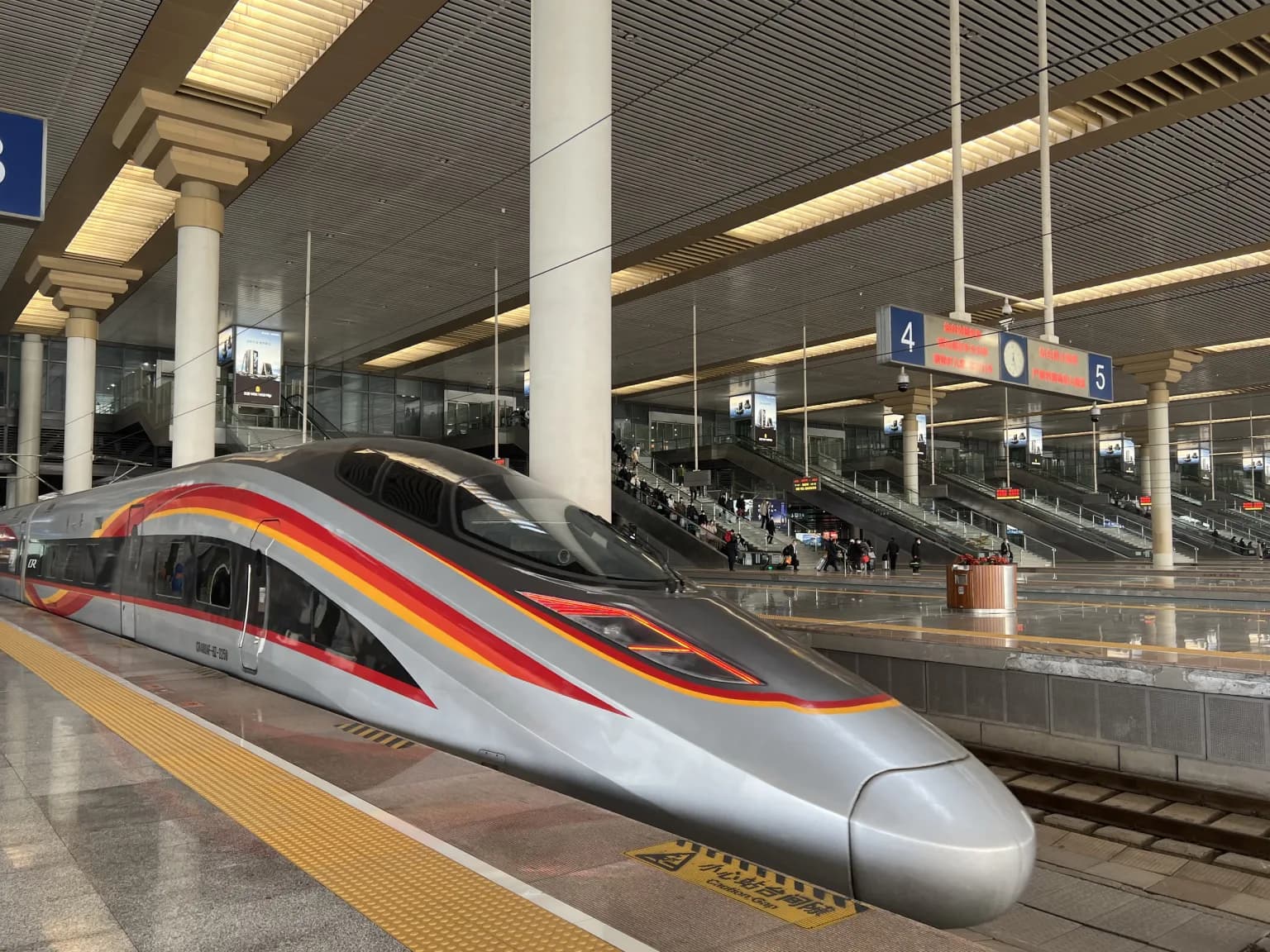
A station transfer includes vertical circulation, security, waiting and boarding as well as the train ride. Photo by 颐园居, CC BY-SA 4.0.
The hotel decision matters more with children
Do not accept “family room” as a complete description. Before the free-cancellation deadline, ask the property to confirm:
- the legal occupancy for the exact room and every child's age;
- the number and dimensions of beds, not only “king,” “twin” or “extra bed” labels;
- whether a cot or rollaway is actually confirmed, its fee and where it fits;
- whether connecting rooms are guaranteed or merely requested;
- lift access from the street and breakfast room;
- shower versus bathtub, refrigerator access, laundry and breakfast hours;
- the quietest room orientation and whether the child can sleep while adults remain awake;
- the exact Chinese address, nearest useful entrance and normal car pickup point.
Apartment-style space can help with laundry and simple meals, but confirm legal guest registration, reception hours and foreign-passport check-in. A large room far from the day's sights can still be a poor trade if every nap requires a long return.
Search Trip.com hotels only after choosing the district and room specification. Filter results, then message the property about the exact child occupancy and bed setup. A search-page icon is not a guarantee.
Build each day around one anchor, one recovery block
A practical family day has five parts:
- Breakfast and departure before the main crowd or heat.
- One ticketed or high-interest anchor.
- A proper seated meal before everyone is exhausted.
- Nap, pool, quiet museum, café or hotel reset.
- One optional evening close to the hotel.
This rhythm protects both adults and children. A toddler may sleep in a stroller, but that is not a reliable plan in summer heat, crowded security lines or a loud museum. A school-age child may not nap, yet still benefits from an hour without instructions, interpretation or queues.
Plan meals by tolerance rather than by a restaurant list. Save a photo of dietary needs in Chinese, carry one familiar emergency snack, and identify a simple meal near each anchor. Hotpot, tasting menus and late night markets can be enjoyable family experiences when the child is rested; they are poor rescue plans after a ten-hour attraction day.
Family toilets, changing and stroller reality
Newer airports, major stations, malls and large attractions often have mother-and-baby rooms or family facilities. Availability, opening hours, cleanliness and exact equipment still vary. On signs or map apps, look for 母婴室 (mǔyīngshì, mother-and-baby room) and 第三卫生间 (dì-sān wèishēngjiān, family/assisted toilet). Do not wait for an emergency before locating the next facility.
At major rail stations, ask staff for the mother-and-baby waiting area or the staffed lane when moving with a small child. Some high-speed trains have a changing table in the accessible toilet, but train type and equipment can vary. Carry a compact changing mat, disposal bags and enough supplies for the full door-to-door transfer.
“Stroller-friendly” should be broken into separate questions:
- Can the stroller reach the entrance without stairs?
- Is there a lift after security or inside the station?
- Must it be folded for a shuttle, sightseeing vehicle or queue?
- Are the attraction paths smooth, or only the main approach?
- Is there a reliable car pickup point at the exit?
A broad plaza may be easy for wheels while the historic interior has high thresholds. A modern metro station may have a lift, but not beside the exit closest to the hotel. Treat every major outing as its own access plan.
Theme parks: measure first, promise nothing
Do not choose a theme-park day from the child's age alone. Measure every child in shoes before buying and open the current official attraction list. Height limits, required supervising-companion ranges, health restrictions, maintenance and weather closures are attraction-specific and can change.
Shanghai Disneyland's current rules say entry guests under 16 must be accompanied by a guest aged 16 or older, and children under 7 must be accompanied by a person aged 16 or older to board attractions. The official attraction directory separates “any height” experiences from rides with minimum heights and shows rider-switch availability on selected attractions. Carry the original physical passport used for each foreign guest's dated ticket; the resort says digital copies are not accepted. Recheck the official park rules and current attraction filters before the date.
Universal Beijing publishes an official rider safety and accessibility guide with individual attraction requirements. Use the live operator page, not a social post or an old height chart. A child who reaches one ride's minimum may still need a supervising companion; another ride may have a different rule. Build a short list of shared experiences before buying, and decide how adults will split if siblings qualify for different attractions.
For Shanghai Disneyland, the exact Trip.com search shelf is available at Trip.com Shanghai Disneyland. Compare dated admission, passport-name entry, cancellation and what the option actually includes. Paid priority access is separate from admission and does not override height, safety, weather or operating rules.
Tickets and passports: every child is a real passenger
Carry every traveller's original passport on rail and on any attraction day whose ticket is tied to that document. Enter names and passport numbers exactly as required. Do not assume a child can be attached informally to an adult booking.
Create a private family booking sheet with:
- traveller name exactly as used for each booking;
- passport number and expiry date;
- attraction date and entry window;
- exact train number, station and carriage;
- hotel Chinese name, address and phone;
- cancellation deadline and booking-channel contact.
Keep encrypted digital backups accessible to the adults, but understand that a scan does not replace an original document where the operator requires the original. Recheck child concessions rather than assuming “free” means no reservation. Many attractions require a free-admission child to hold a reservation or appear in the adult's order.
Weather changes the route, not only the packing
Beijing has hot, rainy summers and cold, dry winters. Shanghai summers are hot and humid, with heavy rain and possible tropical-weather disruption; its winters can feel damp. Xi'an's exposed heritage sites can be punishing in summer heat. Chengdu's rain and humidity can make a long panda circuit harder and may change animal activity.
Use three checks:
- Seven days before: move the most weather-sensitive day to the strongest forecast window.
- The night before: read the city's official warning and the attraction's operating notice.
- That morning: decide the minimum successful version of the day.
In heat, begin early, use the midday reset and shorten exposed wall or plaza time. In heavy rain, do not force mountain, wall or outdoor-ride plans because the tickets are paid. In severe cold, shorten outdoor blocks and warm up before anyone becomes numb or distressed.
Medical contingency: prepare a usable plan
Before arrival, identify one suitable hospital or clinic near each hotel, including a paediatric option when that matters. Save the Chinese address and phone number. Ask the travel insurer how direct billing, reimbursement and pre-authorisation work in China; a familiar international brand name does not guarantee cashless treatment at every facility.
Carry essential prescription medicines in original labelled packaging, plus the prescription or doctor's letter when appropriate. Do not rely on finding an exact foreign brand. Keep one day's critical medication in the adult's day bag during transfers.
The national pre-hospital medical emergency number is 120. Shanghai's official emergency guide advises callers to give a detailed address, describe the condition, provide contact details and send someone to guide the ambulance. Save the hotel's Chinese address before an emergency occurs. For a non-urgent problem, ask the hotel or insurer which facility can provide the required service and language support.
A booking order that prevents expensive mistakes
- Choose the route and open-jaw airports. Remove any city that survives only because it is famous.
- Fix the number of hotel bases. Two bases for a short trip; three for most 10–14-night family routes.
- Choose cancellable hotels by room fit and daily geography. Confirm beds and occupancy in writing.
- Book the longest transport legs. Use each child's own passport details and confirm exact stations.
- Book date-sensitive anchors. Theme park, Forbidden City, pandas or major museum only after transport and hotel nights are stable.
- Leave ordinary neighbourhoods, parks and meals flexible. They are the pressure-release system.
- Recheck volatile rules shortly before travel. Height limits, entry documents, closures, weather and special-event crowd controls belong in the final check, not in a six-month-old screenshot.
The best China family route is the one that still works after a poor night's sleep. Choose one defining experience per city, make transfers visible in the day count, and let the hotel return, simple dinner or cancelled optional stop count as good planning rather than failure.