Choose a Chinese food city by the meals you want—not by a ranking
There is no single “best food city in China.” A traveler who wants two-hour morning tea, steamed seafood and gentle seasoning should not follow the same route as someone who wants numbing chili, late-night noodles and hotpot. A solo traveler benefits from cities full of bowls, dumplings and small plates; a group can unlock whole fish, roast duck, banquet dishes and more ambitious shared meals.
For a first food-led trip, choose Guangzhou for the broadest accessible Cantonese sequence, Chengdu for the most instructive range of Sichuan flavors, or Xi'an for wheat, mutton and Hui food traditions. Choose Shanghai when food matters but international transport, museums and an easy first urban base matter equally. Add Shunde, Chaozhou, Chongqing, Lanzhou or Guiyang when one regional food culture is strong enough to organize the route.
The decision is less about how many famous dishes a city has and more about five practical questions:
- Do you want shared feasts or solo meals?
- How much chili, numbing spice, sourness, sweetness or offal do you actually enjoy?
- Will food drive the day, or must it fit around major sights?
- How many transfers will you accept for one specialized region?
- Do allergies, halal practice, vegetarianism or texture limits require a wider backup network?
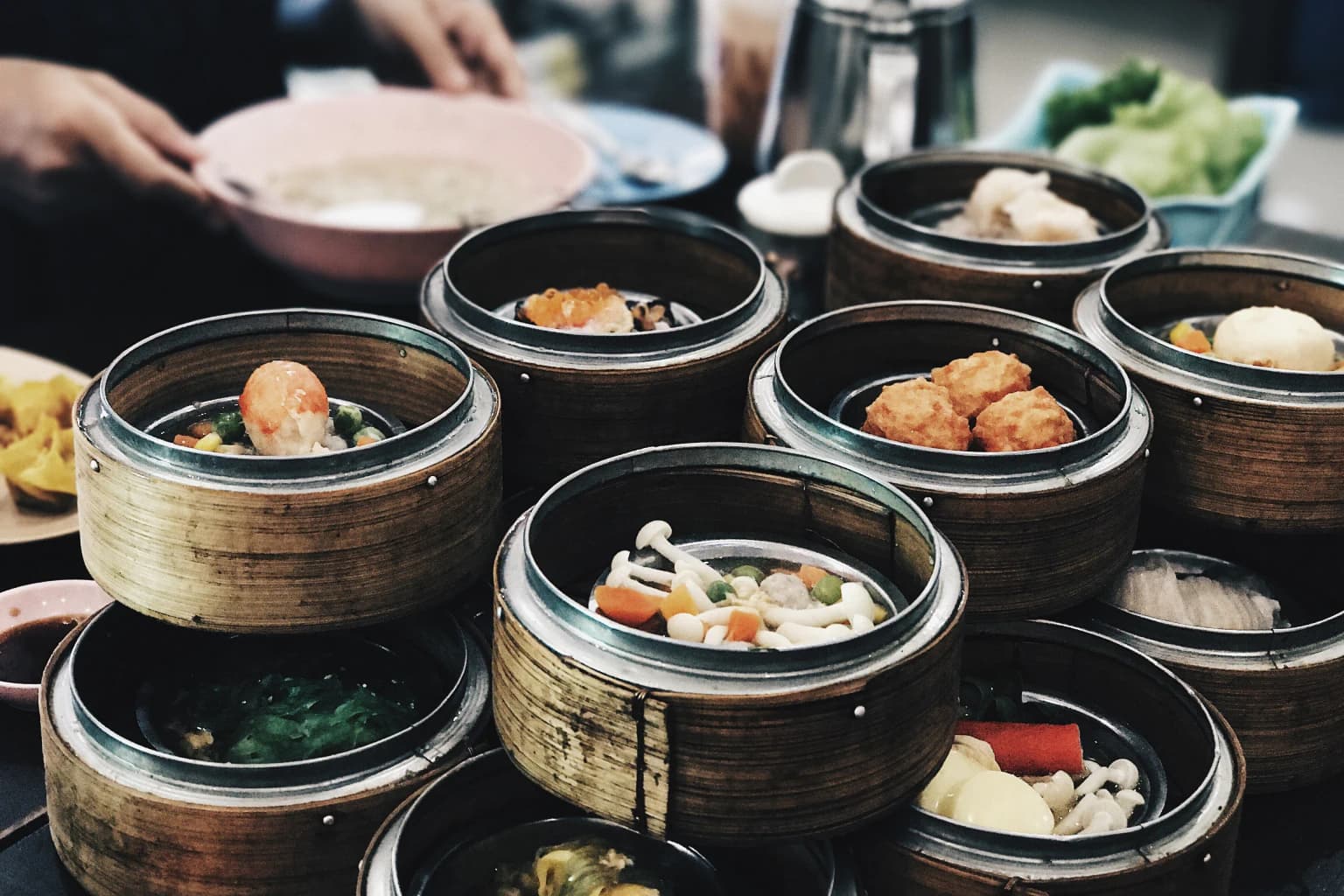
Morning tea rewards a shared table and an unhurried start; it is a meal format, not a box to tick between sights. Photo by afterdog, released under CC0 1.0.
The two-minute city chooser
| Choose | Go for | Best group | Main trade-off | Minimum useful stay |
|---|---|---|---|---|
| Guangzhou | Morning tea, roast meats, soups, claypot rice, desserts | Two to four people | The city is large; one famous branch can cost half a day | 3 nights |
| Chengdu | Sichuan flavor range, small dishes, noodles, skewers, hotpot | Solo works; two to four is better | “Mild” remains relative, and rich meals accumulate | 3–4 nights |
| Xi'an | Wheat foods, mutton, beef, dumplings, flatbreads, Hui food | Excellent solo or pair | Tourist snack streets can flatten a much broader cuisine | 3 nights |
| Shanghai | Dumplings, noodles, braises, seasonal Jiangnan food | Solo-friendly with one shared dinner | Famous central dining can be expensive and queue-heavy | 3 nights |
| Beijing | Roast duck, copper-pot lamb, noodles, northern snacks | Best with two to four | Sightseeing distances compete with meal detours | 3–4 nights |
| Chongqing | Xiaomian, red-oil snacks, hotpot, bold late meals | Pair or group for hotpot | Heat, oil and hills make over-scheduling punishing | 2–3 nights |
| Shunde | Fish, poultry, double-skin milk and technique-led Cantonese cooking | Three to six people | Daliang and specialist restaurants require deliberate logistics | 1–2 nights |
| Chaozhou / Shantou | Beef, seafood, braises, congee, rice-noodle dishes, gongfu tea | Two to four | The high-speed station and the two urban centers are not one walkable zone | 2–3 nights |
| Lanzhou | Beef noodles, mutton and northwest breakfast rhythm | Excellent solo | A focused stop, not the widest all-day dining portfolio | 1–2 nights |
| Guiyang | Sour broths, chili dips, rice noodles and Guizhou flavors | Pair or small group | Less useful if sour-fermented flavors are the problem, not the attraction | 2–3 nights |
| Kunming | Yunnan noodles, herbs, grilled foods and province-wide diversity | Solo or pair | Wild-mushroom meals need specialist cooking and seasonal judgment | 2–3 nights |
| Nanjing / Yangzhou | Duck, noodles, breakfast snacks and Huaiyang technique | Pair or small group | Better as a Lower Yangtze route than a rushed national detour | 2 nights each |
These are planning profiles, not quality scores. Chengdu, Shunde and Chaozhou are members of UNESCO's Creative Cities Network for gastronomy, but the designation is cultural context rather than a promise that every restaurant is exceptional. It also does not make an undesignated city less delicious.
The four strongest first choices
Guangzhou: choose it for range and a gentler learning curve
Guangzhou is the safest first answer for travelers who want food to lead without making every meal confrontational. Morning tea teaches shared ordering through steamed, baked and fried small dishes. Later meals can move through roast goose or char siu, white-cut chicken, clear soup, claypot rice, wok-fried noodles and restrained seafood. Dessert can be a separate stop rather than another heavy course.
The practical advantage is range within one major transport hub. One person can begin with familiar shrimp dumplings and roast meat while another explores offal, steamed fish or seasonal ingredients. Chili is available but does not dominate the local grammar. The drawback is geography: Liwan, Yuexiu, Tianhe and Pazhou are different urban days. Crossing the city for a social-media branch is rarely worth losing the meal window.
Use the Guangzhou guide for a neighborhood route and the correct morning-tea sequence. Stay three nights if food shares the trip with heritage and the Pearl River; add a fourth when breakfast, lunch and dessert are all core activities. A traveler eating alone should ask for 小份 (xiǎo fèn, small portion) and order one or two dim-sum baskets at a time. A pair can sample well. Four people unlock the format.
Chengdu: choose it to understand flavor, not to maximize heat
Chengdu is the best first western food city because Sichuan cooking offers a system of flavors rather than one chili level. Numbing-spicy málà, fragrant chili oil, pickled chili, sesame, sweet-sour balance, garlic, fermented beans and clear broths produce very different meals. UNESCO has listed Chengdu as a City of Gastronomy since 2010 and describes the cuisine through that breadth.
Build the day around contrast: noodles or dumplings for breakfast or lunch, a vegetable and a cold dish with a shared dinner, then hotpot only once during a short stay. The Chengdu destination guide explains useful formats and bases. The separate teahouse guide gives the afternoon a non-eating pause, which matters when dinner is substantial.
Chengdu works for a solo traveler because bowls and snack portions are common. It improves with two or three diners because you can compare a main dish, vegetable and cold plate. The city is a poor choice for someone who expects “not spicy” to remove chili oil, Sichuan pepper and spicy garnishes automatically; each must be asked about separately.
Xi'an: choose it for wheat, mutton and satisfying solo meals
Xi'an is the easiest food city to underestimate. It is often reduced to one tourist lane, roujiamo and a very wide bowl of noodles. The stronger reason to go is a complete northern meal architecture: flatbreads, hand-pulled or hand-torn noodles, dumplings, mutton soup, beef, sesame, vinegar, chili and Hui culinary traditions. Many formats suit one person, portions are filling, and breakfast can be as meaningful as dinner.
Use the Xi'an guide to distinguish roujiamo (肉夹馍), biangbiang noodles (油泼扯面 / biángbiáng miàn) and yangrou paomo (羊肉泡馍), then leave room for ordinary neighborhood meals. Near the Muslim Quarter, one crowded main street is a useful orientation, not proof that every stall is the best version. Side streets and the wider city matter.
Xi'an is particularly useful when a food route must also carry major history. Three nights support the old city, a Terracotta Warriors day and several meal formats without turning lunch into a sprint. Travelers requiring halal food should use the Muslim-friendly China guide: a Hui neighborhood can improve options, but a familiar dish name does not prove every branch, broth or kitchen meets the same standard.
Shanghai: choose it when the trip needs operational ease
Shanghai is not the automatic winner for a traveler seeking maximum regional intensity. It is the best low-friction base for a first China trip that needs excellent international links, diverse price points and recovery options. Breakfast can be shengjian buns or noodles; lunch can be a small specialist meal; dinner can explore Shanghai braises, seasonal river food or a wider Jiangnan menu. The city also offers strong vegetarian, international and allergy-conversation backups.
The Shanghai guide owns the local dish and neighborhood details. For this decision, choose Shanghai if companions disagree about food, if a strict diet requires alternatives, or if museums and architecture must remain equal to eating. Skip it as a dedicated food stop when the route already includes Hangzhou, Suzhou and Nanjing but you have only a week; those cities share some Lower Yangtze ingredients and meal rhythms, and repetition may outweigh another transfer.
Choose the specialist city only when its specialty is the point
Chongqing: hotpot energy with a recovery plan
Chongqing and Chengdu are complementary, not interchangeable. Chongqing gives the food trip a sharper evening identity: breakfast xiaomian, red-oil or sour-spicy small dishes, and hotpot after the day's steep walking is finished. Chengdu makes it easier to alternate flavors and formats across several days.
The mistake is scheduling Chongqing as twelve “must-eat” stops. Heat, oil, late meals and stair-heavy movement compound quickly. Use the Chongqing guide to keep breakfast, one sampler and one proper dinner in the correct order. Two nights are enough beside Chengdu; three suit travelers who also want the city's visual and transport layers.
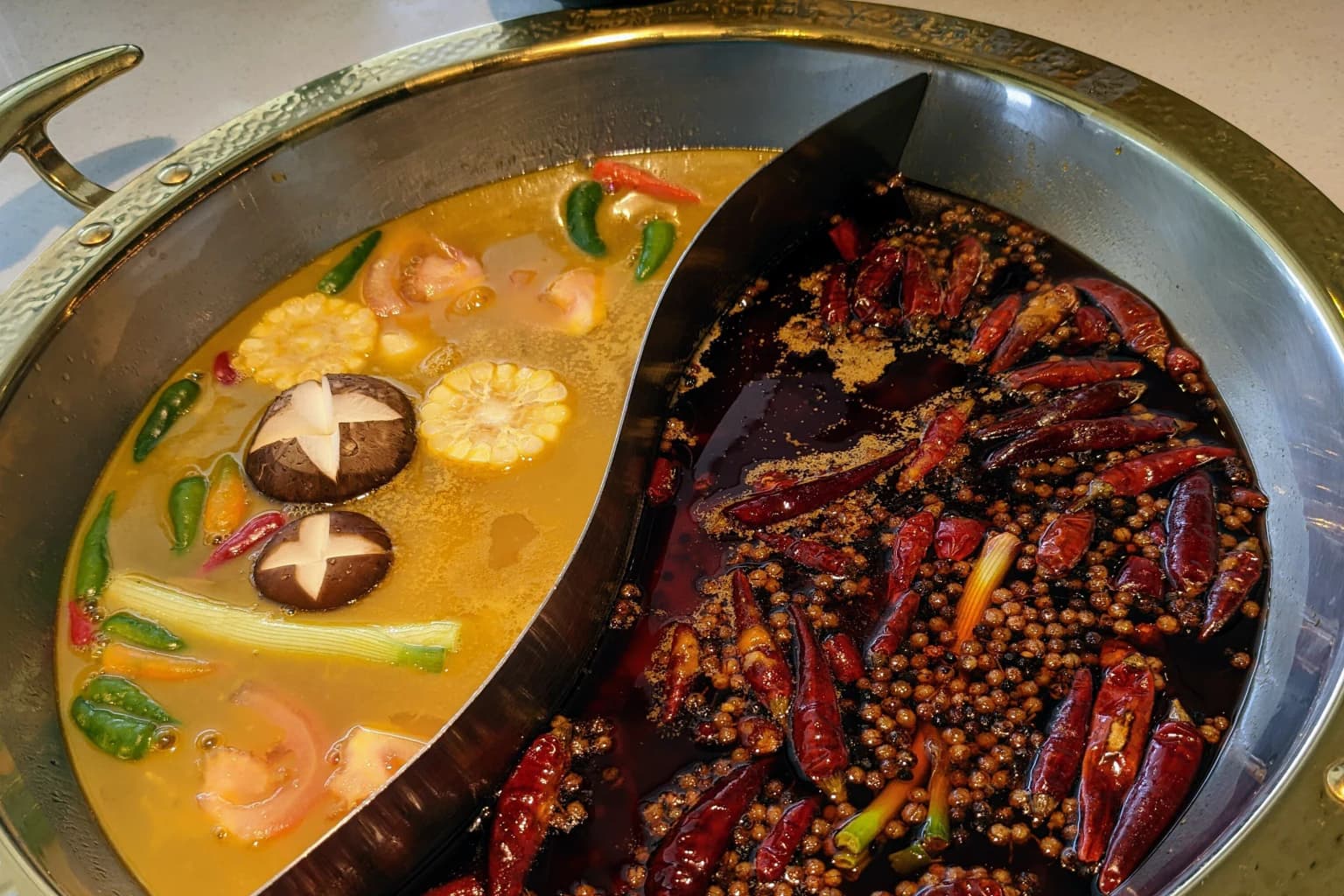
A divided pot helps groups compare broths, but it does not remove shared-utensil or cross-contact risk. Photo by Jpatokal, CC BY-SA 4.0.
Shunde: technique and group dining over landmark density
Shunde is the right addition when precise cooking, fish, poultry and ingredient texture matter more than a dense attraction list. It is also where a group gains much more than a solo diner: whole fish, multi-part chicken preparations and shared dishes become realistic. UNESCO's gastronomy network has included Shunde since 2014, but the travel decision is operational. Daliang is the useful food-and-garden base; a station carrying “Shunde” in its name may not be the place you mean.
Protect a full Daliang day or stay overnight. The Shunde food-and-garden route combines Qinghui Garden, one proper meal and selective desserts without pretending every specialist restaurant lies on one pedestrian street. A rushed half-day from central Guangzhou often produces more vehicle time than tasting time.
Chaozhou and Shantou: a regional leg, not a Guangzhou snack stop
Choose Chaozhou or Shantou when seafood, braised goose, beef hotpot, congee, rice-noodle products and gongfu tea can justify two or three nights. Chaozhou entered UNESCO's gastronomy network in 2023, and its city guide shows how food fits the old-city walk. Shantou adds a different urban base and wider access to Chaoshan food culture.
The logistics matter: Chaoshan Railway Station is outside both central Chaozhou and central Shantou. A ticket to the region does not place you at either dinner table. Choose one base, save its Chinese address and confirm the road transfer. Add the second city only if another transfer is worth more than a repeated meal in the first.
Lanzhou: a focused northwest stop with an excellent morning
Lanzhou is for travelers who care enough about beef noodles to watch a city wake around them. A bowl can specify noodle width, chili, coriander and garlic; the meal is fast, inexpensive relative to banquet dining and naturally suited to one person. Mutton and other northwest foods extend the day, but the strongest reason to stop remains the breakfast-and-noodle culture rather than an enormous portfolio of unrelated dishes.
One night can work between rail legs; two nights allow a calmer city day. Use the halal guide before assuming every “Lanzhou beef noodle” shop elsewhere, or every Lanzhou restaurant, follows identical sourcing and kitchen practice.
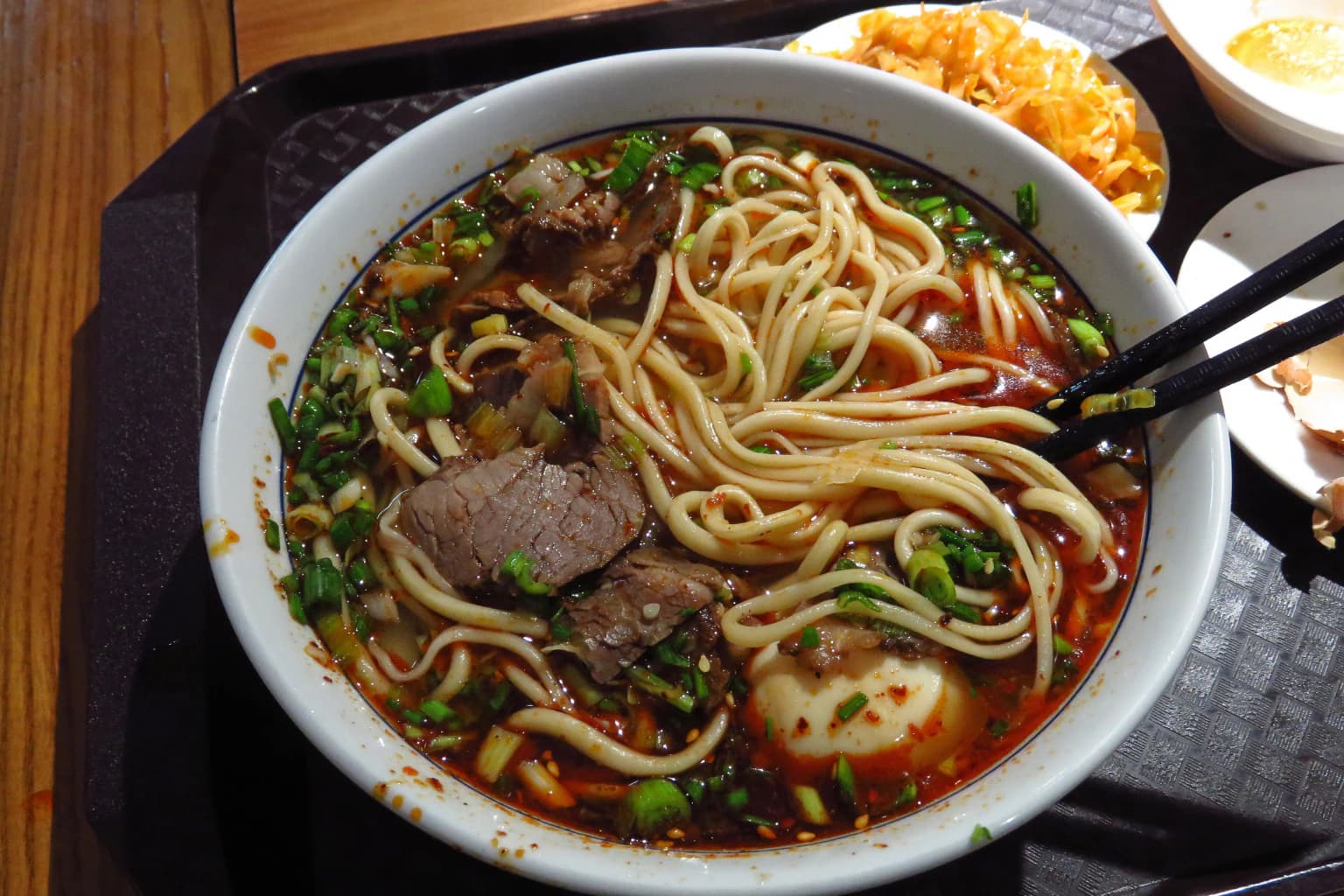
A noodle bowl makes Lanzhou unusually easy for a solo food traveler; customize chili and noodle width before searching for another stop. Photo by N509FZ, CC BY-SA 4.0.
Guiyang: sour, chili and a smaller-city payoff
Guiyang is the specialist answer for travelers who already know they enjoy Guizhou's sour broths, fermented flavors, chili dips and rice noodles. It appeared repeatedly in recent traveler discussions because it can feel less ceremonial and more everyday than a famous megacity. That popularity is a discovery signal, not a universal ranking.
Give it two or three nights rather than squeezing it between flights. The food vocabulary needs repetition: a noodle breakfast, one sour-broth meal, one grill or snack session and time to learn the dipping sauces. If sour-fermented flavor is tiring, Guiyang should not replace a broad first choice such as Guangzhou or Chengdu.
Beijing, Kunming and the Lower Yangtze: choose the wider trip first
Beijing earns a food layer when imperial history is already fixed. Roast duck and copper-pot lamb are group meals; zhajiangmian, dumplings and Hui food around Niujie make the other days easier. Do not cross the city twice for food on a Forbidden City or Great Wall day. The Beijing guide keeps meals near the day's geography.
Kunming is the gateway choice for Yunnan diversity: rice noodles, herbs, grilled dishes and ingredients from across the province. Wild mushrooms are not a casual ordering challenge. Eat them only at a specialist operation that fully controls cooking; never sample undercooked mushrooms or treat a social-media photo as identification. Choose Kunming when it begins a longer Yunnan route, rather than flying in for one market.
Nanjing, Yangzhou and Hangzhou fit a Lower Yangtze trip. Nanjing is especially useful for duck and breakfast-scale meals; Yangzhou rewards travelers interested in Huaiyang technique; Hangzhou combines tea, lake scenery and a cuisine whose subtlety is sometimes unfairly dismissed online. Do not add all three to “collect” food cities. Pick one based on the non-food route, then give it two nights.
Match the city to the way you eat
Solo traveler
Prioritize Xi'an, Chengdu, Shanghai, Lanzhou and Nanjing. Bowls, dumplings, buns and small plates make portion control easier. In Guangzhou, morning tea works alone if you accept fewer varieties. Shunde seafood, Beijing duck and full hotpot become more economical and informative with companions.
Ask:
- 有一人份吗? (Yǒu yí rén fèn ma?) — Is there a portion for one?
- 可以点半份吗? (Kěyǐ diǎn bàn fèn ma?) — Can I order a half portion?
- 这个菜多大份? (Zhège cài duō dà fèn?) — How large is this dish?
Group that likes shared meals
Choose Guangzhou–Shunde, Chengdu–Chongqing, Beijing or Chaozhou/Shantou. Four diners can compare more cooking methods without wasting food. Agree on offal, spice and seafood budget before ordering. For fish, crab or shellfish sold by weight, ask for the unit, weight and estimated total before cooking.
Traveler who avoids strong spice
Start with Guangzhou, Shunde, Beijing, Shanghai, Nanjing or Yangzhou. “Cantonese” does not mean every dish is plain, and “Sichuan” does not mean every dish is fiery, but the default negotiation burden differs. In Chengdu or Chongqing, say both:
- 不要辣椒,也不要花椒。 (Bú yào làjiāo, yě bú yào huājiāo.) — No chili and no Sichuan pepper.
That is a preference request, not an allergy guarantee. Chili oil, seasoned stock or a pre-mixed base may make modification impossible.
Vegetarian, vegan, halal or severe-allergy traveler
Choose cities with backup density, not a reputation for one adaptable dish. Shanghai, Beijing, Guangzhou and Chengdu offer more alternatives, but no city makes verification automatic. A vegetable filling can contain lard; a “clear” noodle soup can use meat stock; hotpot can share broth, oil, ladles and preparation surfaces; sesame, peanuts, soy and wheat are common across many formats.
For vegetarian or vegan planning, use the ingredient cards and meal tactics. For halal food, prayer logistics and the difference between 清真 (qīngzhēn) and “no pork,” use the Muslim-friendly China guide. A halal sign does not make a kitchen free from your separate allergen, and a vegan restaurant does not prove it can prevent cross-contact.
With a severe allergy, name the ingredient and the consequence, carry the Chinese text offline, and ask about oil, broth, sauce, utensils and shared equipment. If the restaurant cannot answer clearly, choose a packaged item with a readable label or a pre-vetted alternative. Visible popularity and a long queue are not evidence of allergen control.
Order a useful meal before chasing a famous one
A food trip fails when every meal becomes a ten-item audition. Use this sequence:
- Choose one anchor format. Morning tea, noodles, roast meat, hotpot, seafood or a full regional dinner.
- Add contrast. Pair a rich main with greens, soup, vinegar, pickles or a cold dish instead of another rich main.
- Start below capacity. Add one dish only after the first plates arrive. Photos disguise portion size.
- Confirm charges. Tea, condiments, private rooms and seafood by weight can create legitimate extra charges; understand them before service.
- Judge the current operation. Look for posted prices, clean tables, visible turnover and food cooked or held appropriately. China's market regulator sampled more than 200 heavily promoted online restaurants in 2025; virality is a reason to check, not a substitute for checking.
Do not build the route around one branch name saved months earlier. Branch ownership, quality, queues and opening hours change. Save the dish category and neighborhood, then use a live map near the day's final sight. A ten-minute local alternative often produces a better trip than a ninety-minute pilgrimage.
Three realistic food routes
Seven days: choose one region
Sichuan pair — Chengdu 4 nights + Chongqing 3 nights. Begin in Chengdu, where a wider range of small meals teaches the flavor vocabulary. Transfer after breakfast, keep the first Chongqing dinner moderate, and schedule hotpot on the second evening. This route suits spice-curious travelers who also want pandas, teahouses and dramatic urban scenery.
Cantonese core — Guangzhou 4 nights + Shunde 2 nights + one flexible night. Use Guangzhou for morning tea, Liwan and one modern-city day. Move to Daliang rather than forcing a late return after a group dinner. Keep the spare night in Guangzhou for the airport or in Shunde when food is the true priority. Do not add Chaozhou unless you can extend the trip.
Lower Yangtze — Shanghai 3 nights + Hangzhou 2 nights + Nanjing 2 nights. This is the gentlest mix of food, museums and scenery. It favors dumplings, noodles, duck, braises, tea and breakfast culture over maximum chili. Cut one city if arrival and departure consume significant parts of two days.
Ten days: western triangle or southern depth
Xi'an 3 nights → Chengdu 4 nights → Chongqing 3 nights gives the clearest contrast: wheat and mutton, then varied Sichuan cooking, then Chongqing's hotpot-and-noodle finish. The route is efficient enough by rail, but station transfers still occupy real time. Keep one dinner near the hotel after each move.
Guangzhou 3 nights → Shunde 2 nights → Chaozhou or Shantou 3 nights → 2 transit/flex nights works for travelers who prefer seafood, poultry, rice products, tea and technique. The flex nights absorb airport, rail and Chaoshan road transfers. Choosing both Chaozhou and Shantou reduces repetition only when you have a specific reason for each.
Fourteen days: a national sampler without daily packing
Use Shanghai 3 nights → Xi'an 3 nights → Chengdu 4 nights → Chongqing 3 nights, leaving one day for the longest transfer or departure. This route changes ingredients and meal formats at every stop. It also pairs each food chapter with a distinct non-food reason to travel.
If Guangzhou matters more than spicy food, replace Chengdu–Chongqing with Guangzhou 4 + Shunde 2, then add those saved nights to Shanghai or Chaozhou rather than creating a five-city sprint. A national food trip needs repeated meals in each place; it should not become a station tour.
Compare current rail options through Trip.com only after fixing the city order. Check the exact station names, arrival time and hotel transfer—not just the shortest train duration. Xi'an North, Guangzhou South, Daliang, Chaoshan and central-city destinations create very different last-mile journeys.
Final decision rules
- Pick Guangzhou when variety, shared morning tea and lower spice pressure matter most.
- Pick Chengdu when you want to learn a broad flavor system and can manage ingredient-level spice questions.
- Pick Xi'an for solo-friendly wheat, mutton and Hui food beside major history.
- Pick Shanghai when operational ease and dietary backups matter as much as regional intensity.
- Add Chongqing after Chengdu for contrast, not because the two are duplicates.
- Add Shunde only with a protected day or overnight and enough diners for shared dishes.
- Add Chaozhou/Shantou, Lanzhou or Guiyang when their specific food culture can justify the transport.
- Keep one ordinary meal and one flexible evening in every city. Appetite, weather, queues and digestion are part of route design.
The best food route is the one where the fifth meal is still interesting. Choose fewer cities, learn how each one eats, and leave enough time for a second bowl instead of another check-in.