Xi'an Beilin Museum
Xi'an Beilin Museum (西安碑林博物馆), often translated as the Forest of Stone Steles, is not a conventional museum where one masterpiece follows another in a simple line. Its historic Confucian Temple, seven stele rooms, sculpture galleries and expanded north section contain several different museums at once: a library cut into stone, a history of Chinese handwriting, an archive of religion and government, and a collection of monumental sculpture.
That richness creates the main visitor problem. Without a question or route, hundreds of dark slabs quickly become “more stones.” The best first visit is selective: understand why texts were carved, compare two scripts, study a few named steles and finish with sculpture. You do not need to read classical Chinese to see the movement of a brush, the authority of a layout or the biography of a damaged object.
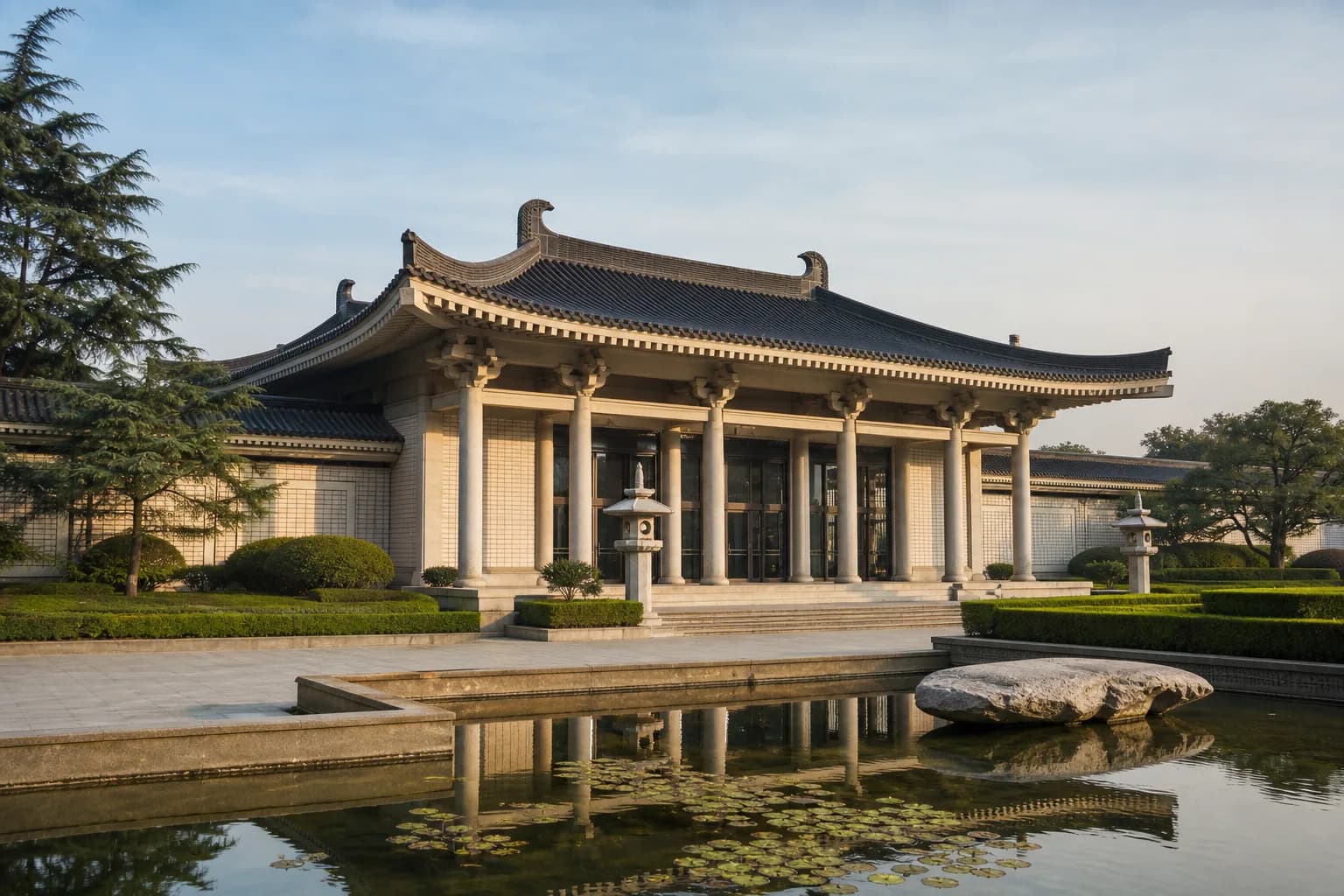
Entrance photograph by Zhang Qi, released to the public domain via Wikimedia Commons.
First: The Museum Is Fully Open Again
Old travel pages still describe a ¥10 partial opening during the long renovation. That is obsolete. The expanded museum opened in May 2025, combining the historic south complex with new north galleries; a Shaanxi government source reported more than 2,000 objects on display. In May 2026, the museum's new permanent exhibition, A Treasury of Metal and Stone, a Bridge of Ink, received a national top-ten exhibition award.
The museum's own website is currently inconsistent, however. Its visitor guide displays 08:30–19:00 with last ticketing at 17:30, while its May 2025 full-opening notice states 09:00–18:30 with last entry at 17:00. An older ¥10 popup also remains visible on the homepage. Treat the time printed on your live reservation and any same-day official notice as controlling.
The May 2025 notice set full admission at ¥85 and half-price admission at ¥42 for a two-year implementation period beginning May 12, 2025. Verify the live product before paying. Real-name timed booking is available through the museum's official WeChat service account, website and Alipay channel; the current guide says reservations can be made up to five days ahead. Bring the original passport or identity document used for booking.
The Trip.com Xi'an Beilin Museum page is useful for checking current commercial inventory and traveller-facing details, but it does not override the museum's reservation, document or entry rules.
Choose a Route Before Entering
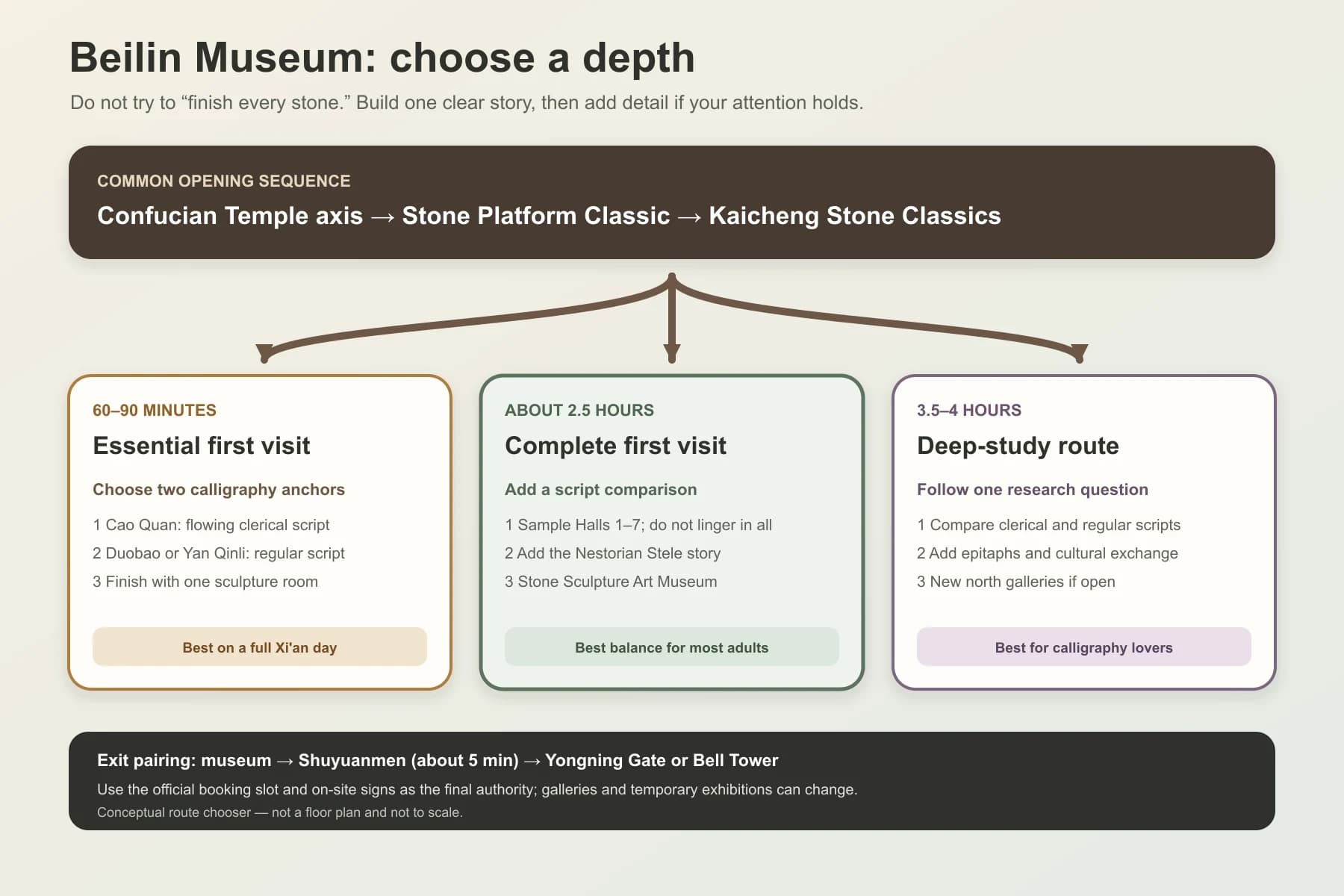
This is a conceptual route, not a floor plan. Temporary exhibitions and gallery access change; follow the on-site signs for the actual sequence.
60–90 minutes: the essential story
Begin with the Confucian Temple axis, then see the Stone Platform Classic of Filial Piety and the Kaicheng Stone Classics. After that, choose only two calligraphy anchors: the Cao Quan Stele for clerical script and either the Duobao Pagoda Stele or Yan Qinli Stele for regular script. Finish with one sculpture room.
This route is enough to answer three questions: why a state put texts into stone, how handwriting styles differ, and how sculpture changes the emotional rhythm of the museum. It pairs well with Xi'an City Wall on a busy sightseeing day.
About 2.5 hours: the best first visit
Follow the same opening, then sample Rooms 1–7 rather than giving each equal time. Add the Nestorian Stele for Tang-era Church of the East history and cross-cultural exchange, then continue to the Stone Sculpture Art Museum. Pause between the old courtyards and the new galleries; the architectural transition is part of the visit.
This is the strongest balance for most adults. It gives enough time to compare scripts and subjects without allowing the dense inscriptions to flatten into visual noise.
3.5–4 hours: a deep-study route
Choose one research question. You might trace clerical to regular script, compare official classics with private epitaphs, follow Buddhist and Christian material across Chang'an, or examine how rubbings circulated writing beyond the original stone. Add the north permanent exhibition and temporary galleries only if the live layout supports that question.
Four hours is not automatically “better.” It works for calligraphy, epigraphy and religious-history enthusiasts; everyone else will usually remember more from a selective 2.5-hour visit.
Six Objects That Make the Collection Coherent
1. Stone Platform Classic of Filial Piety
This monumental Tang work combines text associated with Emperor Xuanzong's commentary and calligraphy with an architectural stele form. Step back first. Its towering scale, cap and base announce imperial authority before you inspect a single line.
2. Kaicheng Stone Classics
The museum describes this Tang canon as 114 stones with 228 inscribed faces. Think of it as a state-backed stone library: texts were made public, durable and resistant to casual alteration. Its importance lies less in one beautiful character than in the ambition to stabilise knowledge.
3. Cao Quan Stele
Use this Han stele to recognise clerical script. Characters often feel broad and horizontal, with controlled flaring strokes. Do not hunt for a perfect translation first; compare the rhythm of repeated forms and the balance between open space and dense writing.
4. Duobao Pagoda and Yan Qinli Steles
Both are associated with Yan Zhenqing, but they allow a useful comparison between an earlier and a more mature regular-script language. Look for upright structure, weight and the way a stroke turns. Even without reading, the calligraphy feels engineered yet alive.
5. Nestorian Stele
The Stele on the Propagation of the Luminous Religion of Daqin in China documents the history of the Church of the East in Tang China and includes Syriac names. It is powerful evidence of religious and linguistic exchange in cosmopolitan Chang'an. It should not be reduced to the simplistic claim that one stone records “the arrival of Christianity in China.”
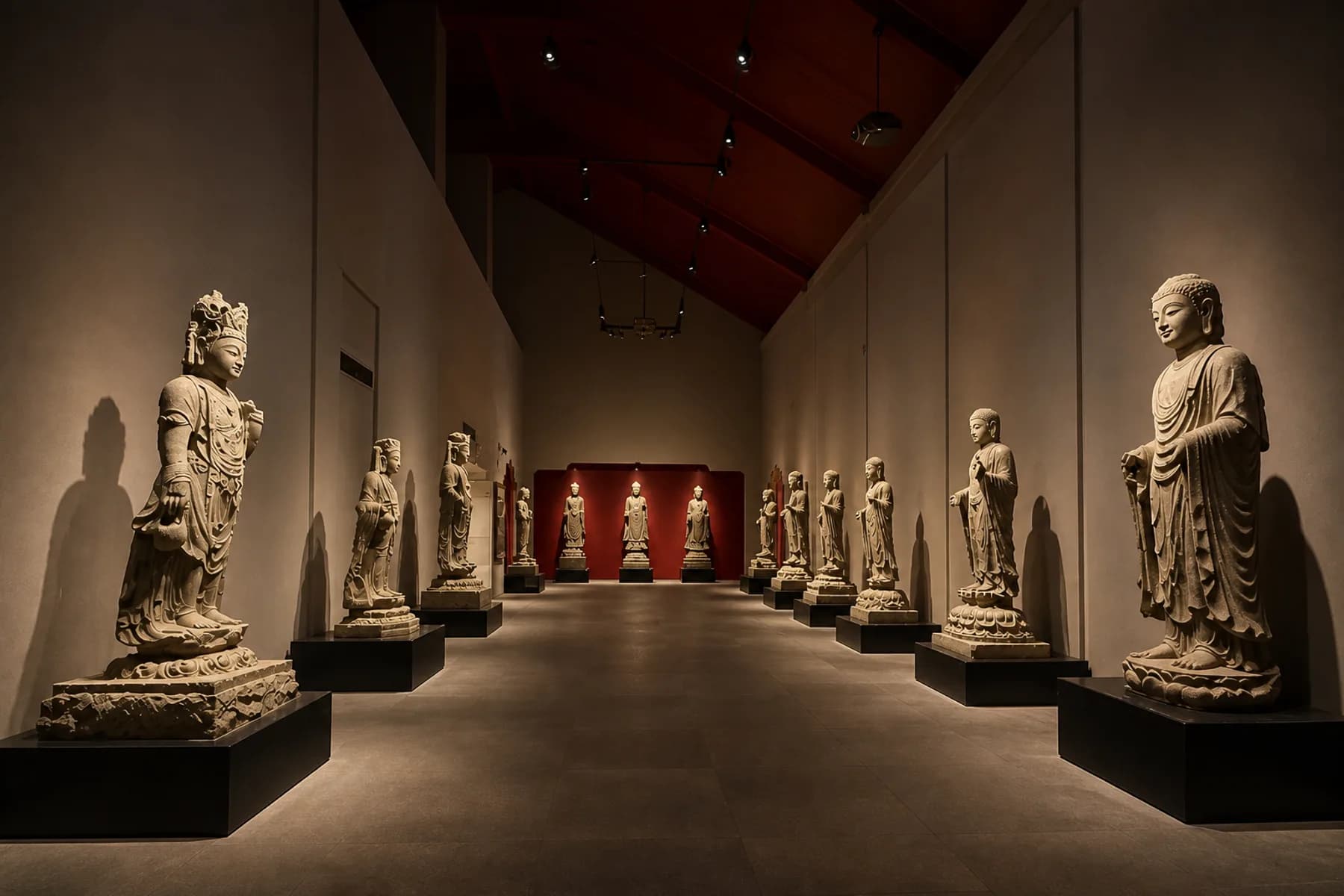
6. Zhaoling Six Steeds and stone sculpture
Four original reliefs from the famous six warhorses associated with Emperor Taizong are in Xi'an; two are at the University of Pennsylvania Museum. Nearby Buddhist figures, tomb sculpture and the Daxia stone horse shift attention from written authority to bodies, movement, devotion and imperial memory.
How to Look When You Cannot Read the Text
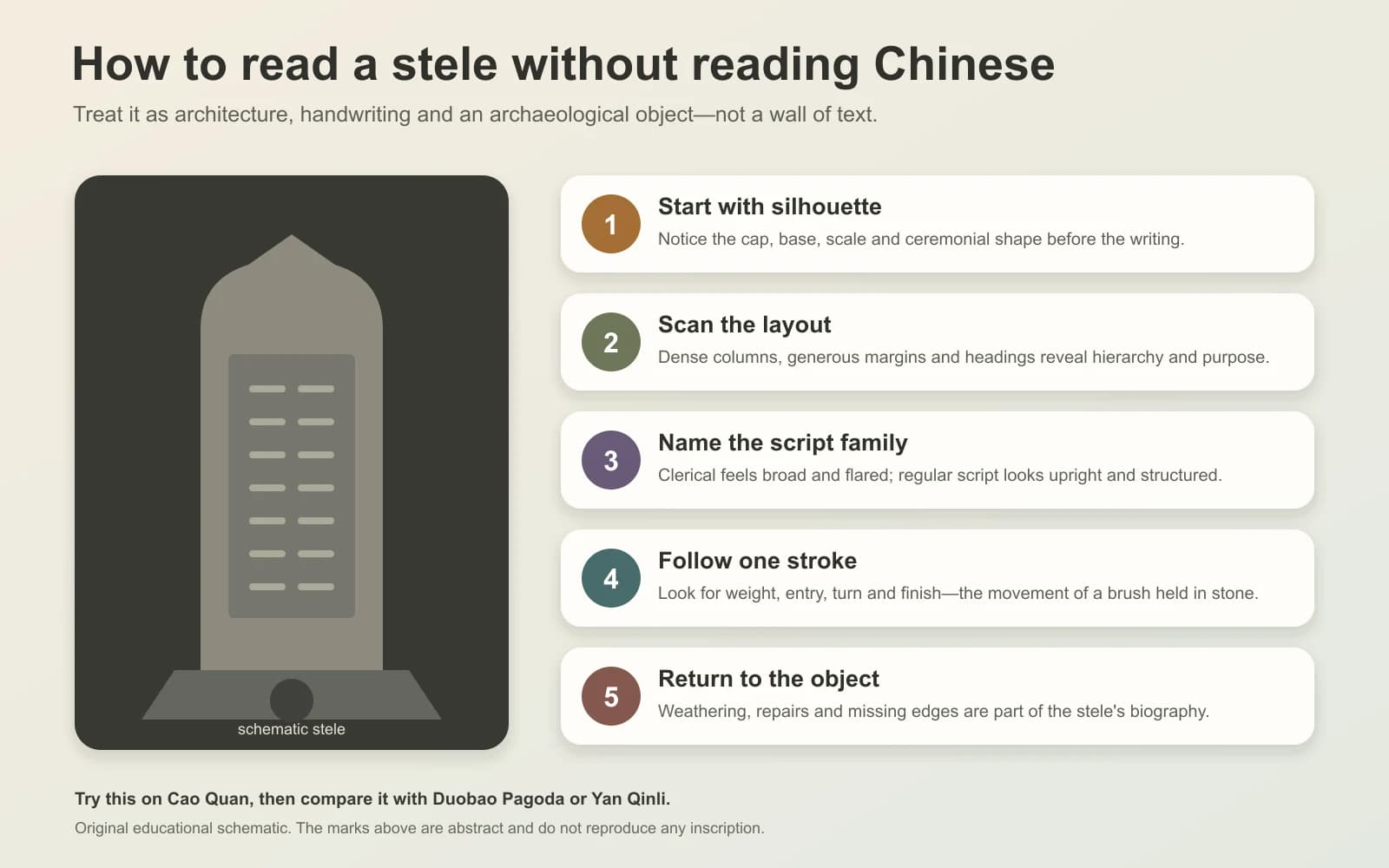
Start with the whole silhouette: cap, body, base and scale. Then scan the layout. Are the columns dense? Is there a large heading? Does the composition feel like a public proclamation, a sacred text or a private memorial?
Next identify a script family. Clerical script tends to look broader and more flared; regular script is more upright and structured. Pick one character shape and follow the weight of a stroke—its entry, turn and finish. Finally, return to the physical stone. Chips, weathering, old repairs and missing edges are not distractions; they are part of the object's long biography.
A rubbing reverses the visual logic: dark ink surrounds pale characters and makes details portable. Museum-shop reproductions can be useful learning tools, but never touch an original stone, attempt a rubbing or buy material represented as an illicit “old rubbing.” Ask what is modern, authorised and reproducible.
Getting There and Building a Walk Around It
The museum is at 15 Sanxue Street, near Wenchang Gate. Use the verified AMap marker rather than searching only for “Beilin,” which is also the district name.
- From Yongningmen metro station: AMap calculates about 0.9 km / 13 minutes on foot.
- To Shuyuanmen pedestrian street: about 0.3 km / 5 minutes on foot.
- To the Bell Tower: about 1.0 km / 14 minutes on foot.
The cleanest cultural sequence is Yongning Gate or the south wall → Beilin Museum → Shuyuanmen. If you visit the museum first, exit into Shuyuanmen for calligraphy brushes, paper, seals and contemporary craft, then continue west toward Xiangzi Temple or north to the Bell Tower. Shops are most meaningful when you can distinguish a modern artisan object from a mass-produced antique fantasy.
If you combine the museum with Xi'an City Wall, use Wenchang Gate for the geographic connection, but verify the wall access point that day. The museum and wall have separate tickets and independent closing times.
Food That Fits This Part of Xi'an
Do not force a giant food crawl immediately after a dense museum. Shuyuanmen is better for tea and a quiet break than for chasing a viral queue. For lunch, continue toward South Gate for biangbiang noodles, youpo mian (hot-oil noodles) or a freshly baked roujiamo. These dishes are quick enough to preserve the day's route and distinctive enough to feel rooted in Shaanxi.
For a longer dinner, walk toward the Bell and Drum Tower area. The Hui quarter deserves attention for lamb paomo, grilled meat, persimmon cakes and other Muslim culinary traditions, but it is a separate neighbourhood experience—not the automatic ending to every attraction. Choose one meal with a clear appetite rather than collecting bites after museum fatigue.
Avoid carrying aromatic takeaway food through the galleries. Water and bag restrictions can change, so check the museum's current prohibited-items notice before packing.
Where to Stay
- South Gate / Yongningmen: the best base for Beilin, the City Wall, Shuyuanmen and metro Line 2. Choose this for a first trip built around history and evening walks.
- Bell and Drum Tower: better for central connections, night atmosphere and access to multiple food districts; expect heavier pedestrian traffic.
- Hepingmen / eastern old city: a calmer alternative for the museum and east wall, though it is less convenient for travellers who want the classic South Gate view every evening.
- Qujiang / Big Wild Goose Pagoda: better for families prioritising the southern museum-and-pagoda corridor, but it turns Beilin into a metro or taxi trip rather than a neighbourhood walk.
Compare live inventory through Trip.com hotels. The useful question is not “which hotel is closest to the museum?” but “which side of the old city connects the museum to the rest of my itinerary?”
Practical Comfort and Photography
Morning entry gives the historic courtyards their quietest atmosphere, but a reserved time is more important than an idealised “secret hour.” Stone rooms can feel cool and subdued even in summer; the open courtyards can be hot, wet or icy. Wear shoes suitable for old paving and bring a light layer if you are sensitive to air conditioning.
Flash, tripods, touching and close obstruction are inappropriate around the collection; individual galleries may apply stricter photography rules. Photograph the full stele and its label before taking details so you can identify the object later. If a guided explanation is available, choose a short focused tour over a loud race through every room.
Travellers with limited mobility should ask the visitor centre about the current accessible connection between the historic south courtyards and new north galleries. The expanded museum is larger than old guides imply, and a route that looks short on a diagram may include thresholds, paving changes and substantial indoor walking.
Beilin becomes memorable when it stops being a room full of unreadable writing. Choose a depth, compare a few stones carefully, let sculpture reset your attention and then carry the calligraphy story into Shuyuanmen outside.