Xi'an City Wall
Xi'an City Wall (西安城墙) is a 13.74-kilometre rectangle around the old city, not a single gate or viewpoint. That scale creates the attraction's most common planning mistake: visitors enter at the grand South Gate, start walking without an exit plan, then discover that the next useful descent is farther away than expected.
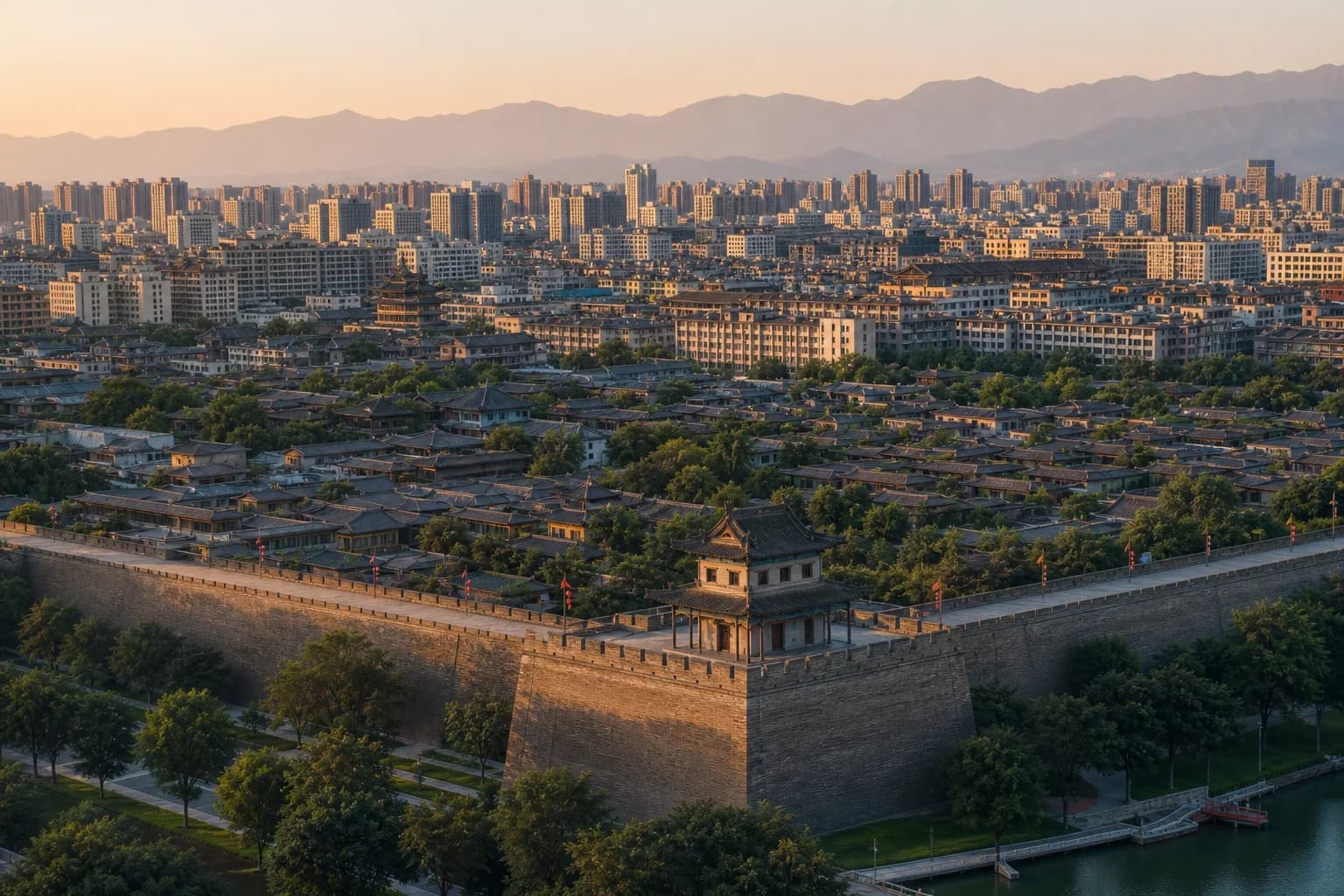
The wall's lineage reaches back to the Sui and Tang imperial city, while the fortification visitors see today was substantially built and expanded in the early Ming dynasty, then repaired many times. It stands roughly 12 metres high and is broad enough for walking and rental bicycles. The width is impressive, but the old brick surface is uneven, exposed and much slower than a modern cycle path.
The right visit begins with three choices: which gate to enter, where to descend, and whether bicycle service is actually operating. Decide those before scanning a ticket.
Which City Wall Experience Fits Your Day?
| Time | Best route | Best for |
|---|---|---|
| 60–90 minutes | Yongning Gate to Wenchang Gate, then descend | First-time architecture, Shuyuanmen and Stele Forest pairing |
| 2–3 hours | Yongning Gate west to Hanguang Gate | Quieter south-wall texture, Small South Gate and ruins context |
| 2.5–3 hours | Full 13.74 km bicycle circuit with stops | Active travellers after confirming rental and return rules |
| 4–5+ hours | Full circuit on foot | Dedicated walkers in mild weather—not a casual add-on |
The South Gate is the easiest default, but it is not automatically the best entrance for every route. A 2026 Qujiang New District notice listed 17 open access points, making more one-way walks possible. Individual gates, ticket windows and services can still change, so treat that number as evidence of flexibility rather than a promise that every point will be open at your chosen hour.
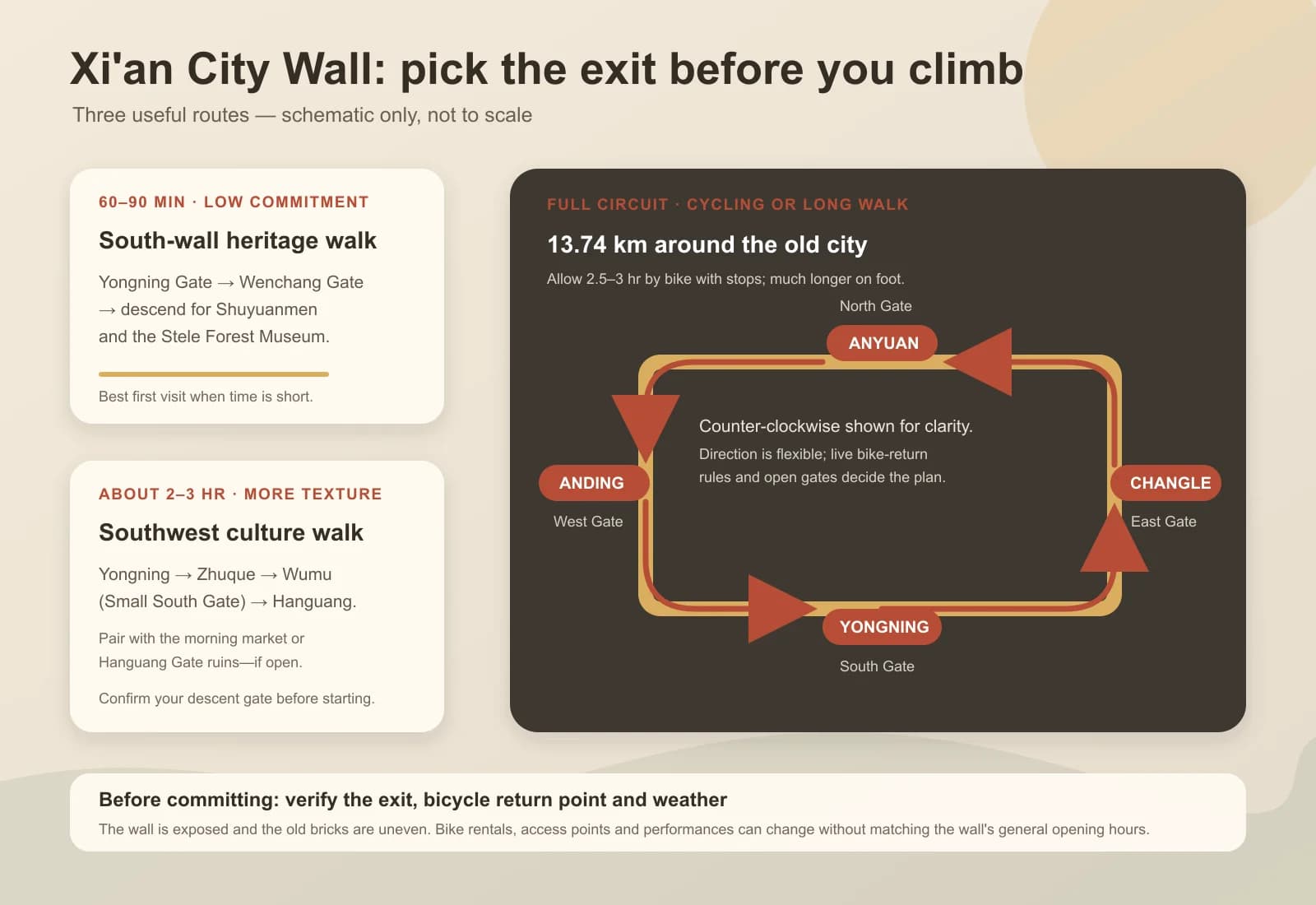
This is a route chooser, not a surveyed map. Confirm the live descent gate, bicycle-return point and weather before committing to a long section.
Route 1: South-Wall Heritage Walk
- Enter: Yongning Gate (South Gate)
- Walk: east toward Wenchang Gate
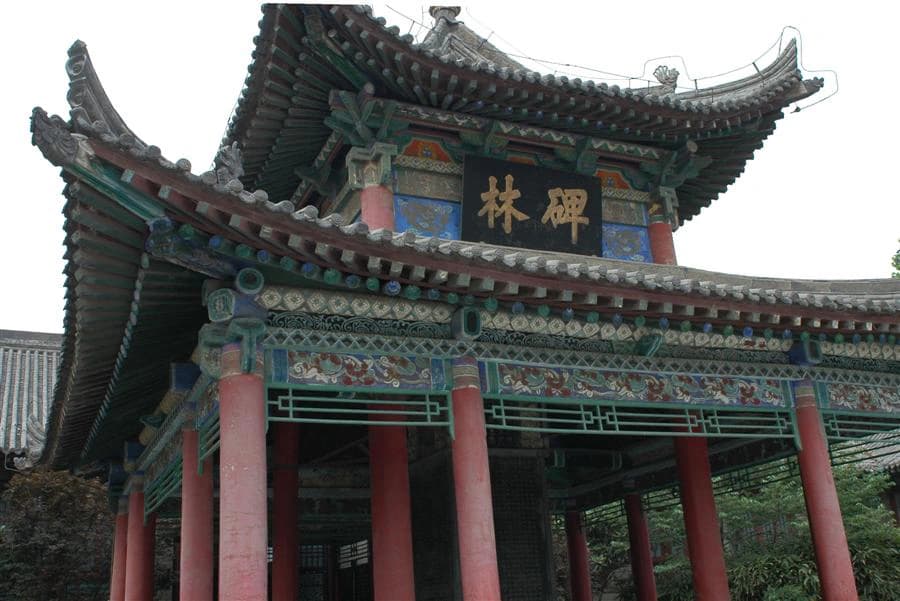
- Descend for: Shuyuanmen and the Xi'an Stele Forest Museum
- Allow: 60–90 minutes on the wall, longer with the museum
Yongning Gate is Xi'an's ceremonial entrance and the strongest first look at the wall's defensive design. Do not rush directly to the rampart. Read the gate as a sequence: outer approach, archery tower, enclosed barbican and main gate tower. The layers forced an attacker into a controlled space rather than allowing a straight passage into the city.
Once on top, turn east. This short section gives enough distance to understand the wall's width, crenellations and repeating watchtowers without making the attraction an endurance exercise. Descending near Wenchang Gate places you close to the calligraphy shops and shaded lanes of Shuyuanmen, with the Stele Forest Museum beyond.
AMap places Yongning Gate and the Stele Forest Museum about 1.2 km / 16 minutes apart on surface streets. That is a planning comparison, not the distance along the rampart. It shows why this pairing is geographically sensible after you descend.
Choose this route if the wall is one part of a history day. It leaves enough attention for inscriptions, stone sculpture and the living craft shops below instead of using all your energy on identical kilometres of brick.
Route 2: Southwest Culture Walk
- Enter: Yongning Gate
- Walk: west past Zhuque Gate and Wumu Gate toward Hanguang Gate
- Descend for: Hanguang Gate ruins or the Small South Gate neighbourhood
- Allow: about 2–3 hours with pauses
The southwest wall feels less like a single monumental set piece and more like a cross-section of Xi'an. Zhuque Gate recalls the axial planning of Sui-Tang Chang'an. Wumu Gate—often called Small South Gate—connects to ordinary neighbourhood life and a popular morning market. Hanguang Gate preserves archaeological evidence from earlier city walls and helps explain how the Ming fortification inherited, narrowed and rebuilt older urban boundaries.
This route works best in one direction. Confirm that your intended descent point is open before leaving Yongning Gate; otherwise you may need to backtrack. If Hanguang's indoor ruins display is important, verify its separate operating status rather than assuming it follows the wall's general hours.
For breakfast-first travellers, visit the Small South Gate morning market before climbing. AMap measures the surface walk from Yongning Gate to the market at about 1.5 km / 20 minutes. The market is an early-day experience, while sunset on the wall is a different itinerary. Trying to combine both without a midday break produces a long, exposed day.
Route 3: The Full 13.74 km Circuit
The classic circuit links the four historic main gates: Yongning in the south, Anding in the west, Anyuan in the north and Changle in the east. The names express Ming-era wishes for lasting peace, stability and joy. Between them are later openings, corner towers and long straight ramparts that reveal the old city's rectangular logic.
Official provincial guidance estimates about two hours of moving time by bicycle at a moderate pace. For a real visit, allow 2.5–3 hours so you can stop, photograph the corner towers, adjust the bike and take water breaks. Walking the full circuit is a serious half-day and can take four to five hours or more.
The direction is flexible. A counter-clockwise circuit from South Gate goes toward Changle Gate, Anyuan Gate, Anding Gate and back to Yongning. Reverse it if wind, sun angle or the live return rules make the western side more sensible. What matters is not the direction but the return plan.
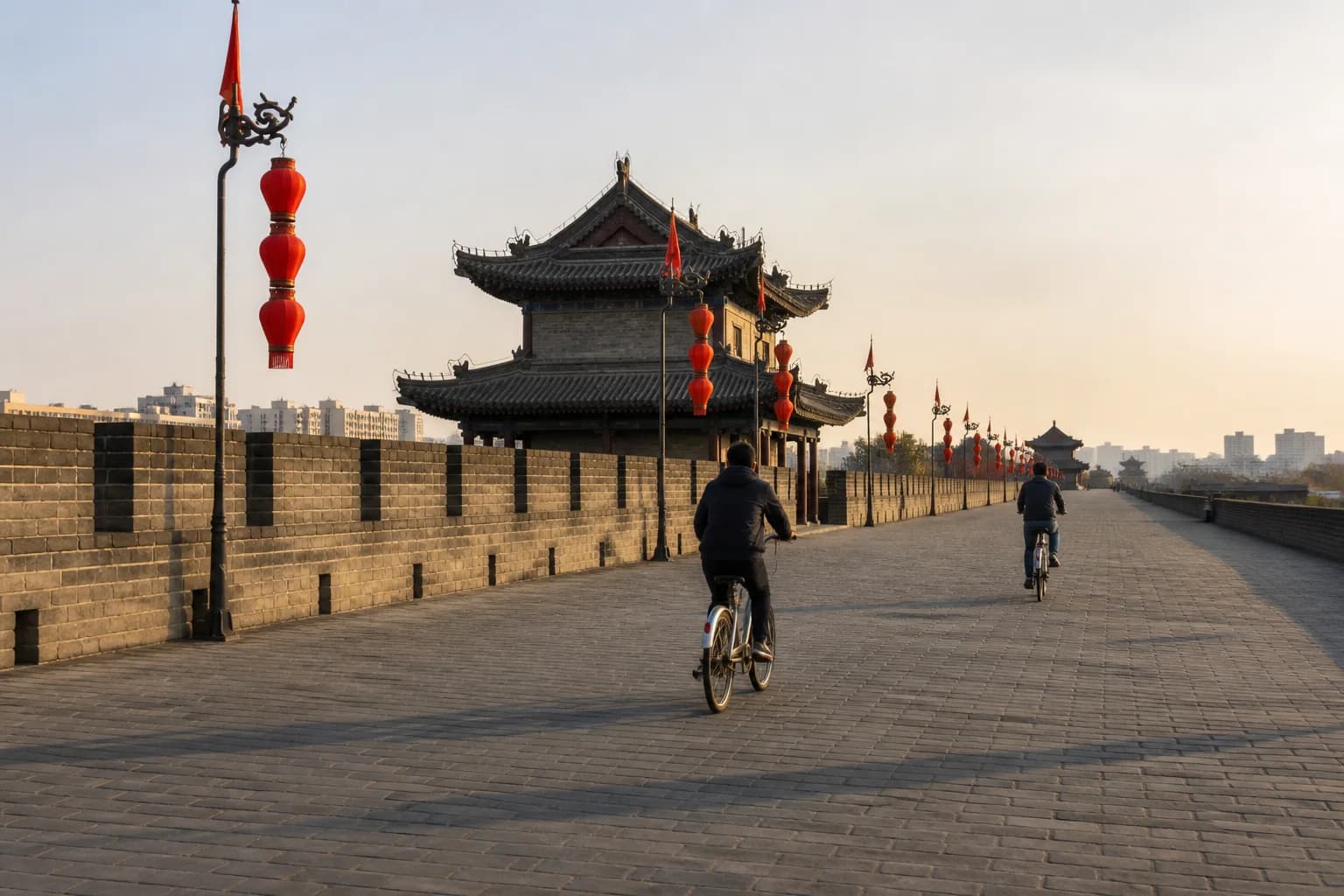
Bicycle checklist before you pay
- Ask where the bicycle must be returned and the actual closing time of that return point.
- Confirm whether another gate will accept the bicycle; do not rely on an old blog or map.
- Inspect both brakes, tyre pressure, saddle clamp and chain before leaving the booth.
- Photograph the bike number and the rental terms shown that day.
- Ask about age, height, identification and deposit requirements for every rider.
- Do not assume electric bicycles are available or permitted.
- Skip cycling in rain, ice, strong wind, extreme heat or heavy festival crowds.
Bicycle service can stop before the wall closes, and temporary events can relocate or suspend a booth. The Trip.com Xi'an City Wall listing is useful for comparing current commercial ticket inventory, but the scenic area's live notice and staff control access, rentals and closures.
Best Gate for Different Travellers
Yongning Gate: best first impression
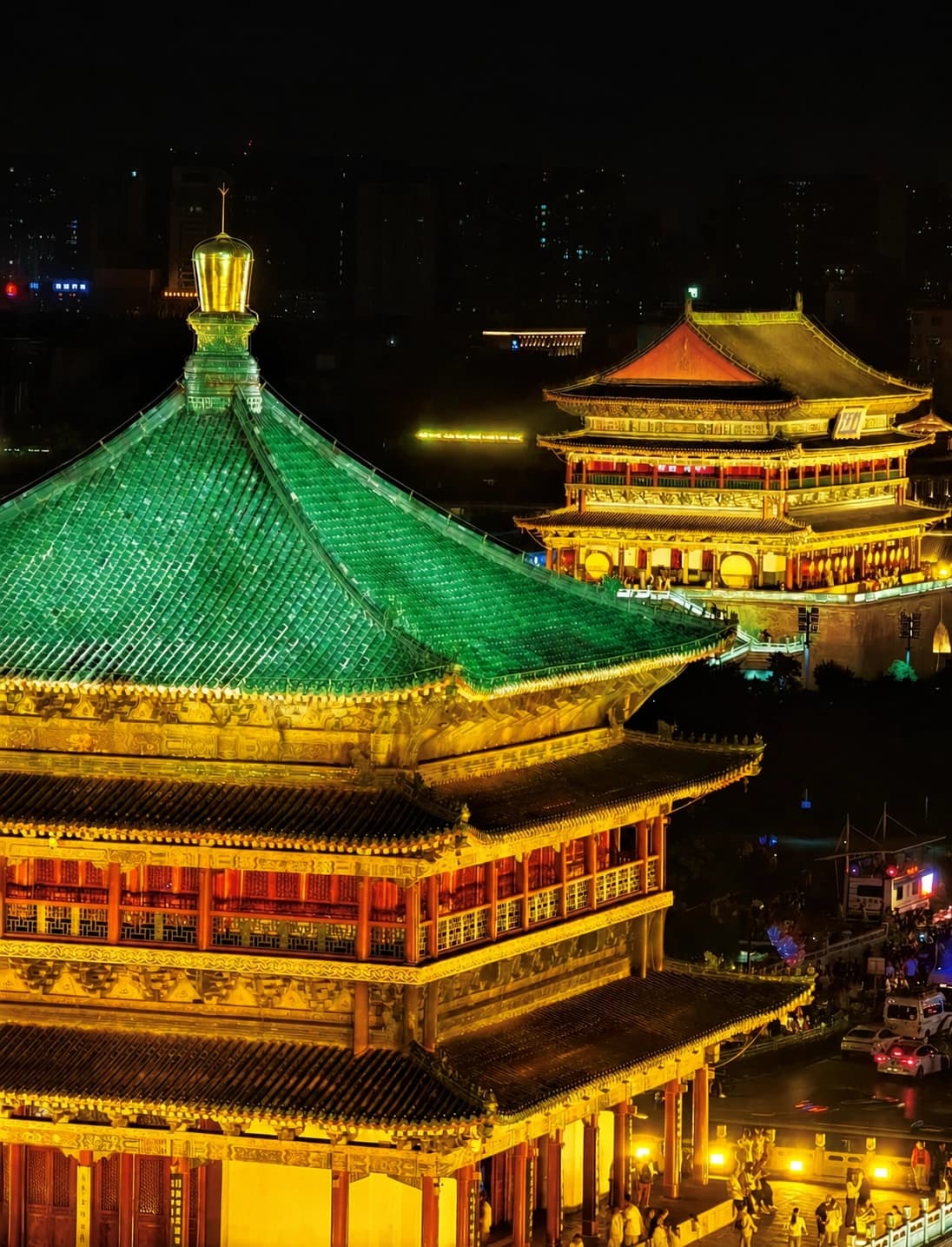
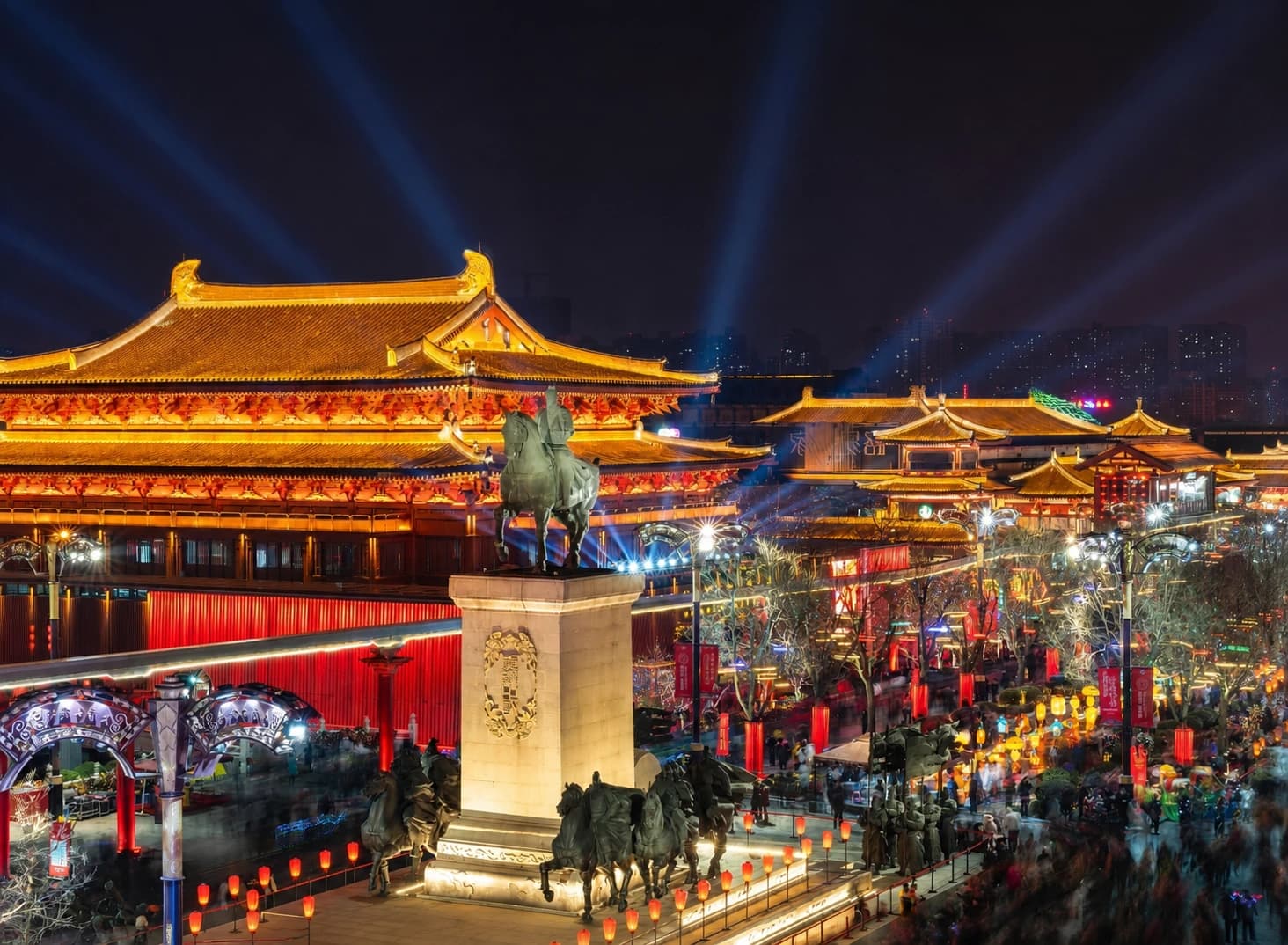
Use South Gate for the most complete ceremonial architecture, evening illumination and easy metro access. It is also the busiest choice and can feel congested during holidays, performances and lantern events. Enter here when the gate complex itself is central to your visit.
Wenchang Gate: best for inscriptions and calligraphy
This is the practical exit—or alternative entrance—for Shuyuanmen and the Stele Forest Museum. It turns the wall into part of a coherent cultural route rather than an isolated photo stop.
Hanguang Gate: best for archaeology
Hanguang Gate makes sense for travellers interested in the wall's construction layers, Tang imperial-city archaeology and the southwest neighbourhood. Check the museum and gate status separately.
Anyuan or Changle Gate: best for a different start
North and East Gates can reduce backtracking when your hotel or railway connection is on that side of the old city. They are also logical full-circuit starting points if South Gate rental service is crowded or unavailable—but only after confirming live bicycle operations.
Sunset and Night Without the Usual Trap
Sunset brings warm light across the brick and a clear contrast between tiled roofs inside the wall and modern towers outside it. Arrive early enough to walk a section in daylight. If you wait until the exact sunset time to enter, ticketing, stairs and the gate complex can consume the best light.
For a simple evening, enter at Yongning Gate, explore the gate complex, walk one direction for 30–45 minutes, then descend at a confirmed gate or return before the night crowd grows. Do not begin a full bicycle circuit near the rental cutoff simply because the wall itself remains open later.
The rampart is exposed. Summer heat remains in the bricks after sunset; winter wind can be stronger on top than at street level. Thunderstorms, snow and strong winds are reasons to shorten the route, not challenges to push through.
What the Architecture Is Actually Showing You
The wall is more interesting when you stop treating every tower as decoration. The outward-facing crenellations protected defenders while allowing observation and fire. Projecting ramparts created overlapping fields of defence along the wall face. Gate towers, archery towers and barbicans turned each entrance into a layered trap.
Look down as well as outward. The road surface is not smooth: generations of repair, drainage and heavy use produce vibration that matters on a rental bike. From the parapet, compare the dense lanes and courtyards inside the old city with the moat, ring road and newer skyline outside. That urban contrast is the wall's most distinctive visual story.
Eat by Neighbourhood, Not by Viral Queue
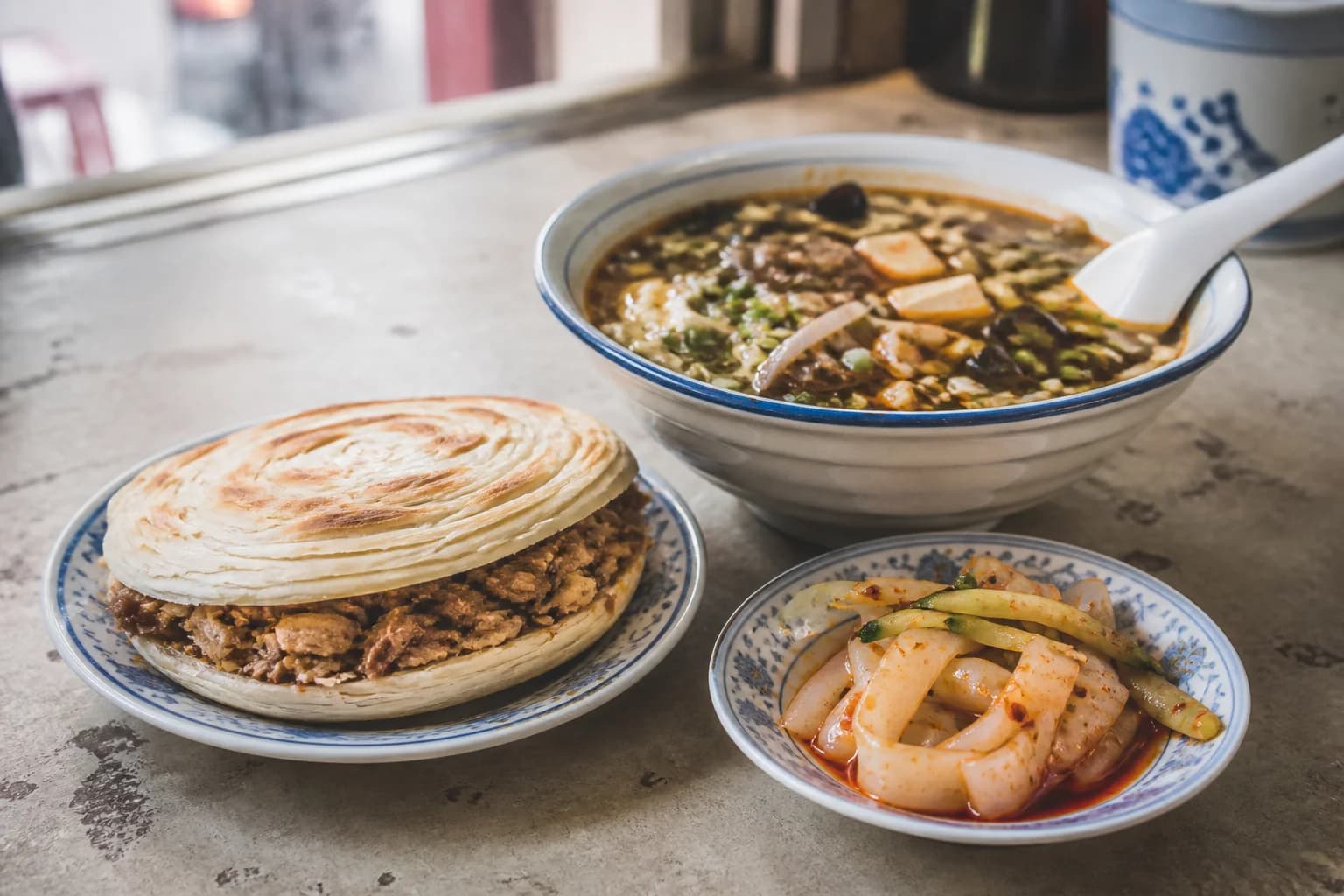
The Small South Gate area is strongest in the morning. Look for a freshly griddled roujiamo, a peppery breakfast soup and cool liangpi rather than one internet-famous stall. The combination gives you crisp bread, warming broth and the sesame-chilli tang of cold noodles without turning breakfast into an hour-long queue.
After a south-wall walk, Shuyuanmen is better for tea, calligraphy shops and a slower cultural break than for a giant snack checklist. For a full dinner, continue toward the Bell Tower or choose a restaurant near your hotel. The Muslim Quarter is valuable for Hui food traditions, but it deserves its own deliberate food walk; it should not be treated as the automatic ending to every City Wall visit.
Where to Stay for the Wall
- South Gate / Yongning Gate: best overall base for a first trip, evening wall access, Shuyuanmen and metro Line 2.
- Bell and Drum Tower area: best for central transport and night atmosphere; expect more crowds and a walk or short metro ride to the wall entrance.
- Hanguang Gate / Small South Gate: best for neighbourhood breakfast, the southwest wall and a less polished local texture.
- East Gate / Changle Gate: useful for travellers prioritising the eastern old city or beginning a circuit away from South Gate crowds.
Compare live hotel inventory through Trip.com hotels. Staying immediately beside a gate is less important than choosing the side of the old city that matches the rest of your itinerary.
Practical Information Without Brittle Promises
Published ticket prices, gate hours, free performances and bicycle terms change independently. Before leaving your hotel, verify:
- your chosen entry and exit gates;
- last admission at both points;
- bicycle availability and return cutoff;
- temporary closures for weather, maintenance or events;
- whether a performance affects access rather than assuming it adds value.
Bring a passport or the identification required by your booking channel, water, sun protection and shoes with grip. The wall has stairs and long distances between useful exits, so travellers with limited mobility should ask about the nearest accessible route and avoid committing to a one-way section without confirmation.
Xi'an City Wall becomes far more useful when it is treated as urban infrastructure with multiple gates, not a single attraction entrance. Pick the exit first, choose the section that connects to your next neighbourhood, and save the full circuit for a day when weather and bicycle operations genuinely support it.