China high-speed rail itinerary planning: build the route around stations, not a rail map
China's high-speed rail is easiest when each train advances the trip in one direction and the arrival station serves the next hotel. It becomes tiring when a traveller chooses cities first, then discovers that every “two-hour train” requires a distant station, an early checkout and a second cross-city transfer.
Use this decision order:
- Draw one geographic line. Avoid returning through a city simply because it has a famous station.
- Choose the exact station pair. “Shanghai” or “Chongqing” is not enough.
- Calculate hotel door to hotel door. Add checkout, local transport, security, waiting, the ride and the destination transfer.
- Choose daytime high-speed rail, sleeper or flight. Train speed alone does not decide this.
- Book with the same passport you will carry. Names and document numbers must match.
- Protect every connection. Separate tickets and station changes need real buffers.
For most first trips, high-speed rail is the default for direct rides of roughly one to six hours. A sleeper can make sense when it replaces both a long waking journey and a hotel night. A nonstop flight begins to win when rail takes most of a day, provided airport transfers and check-in do not erase the saving.
This guide explains that transport layer. Use the 10-, 14- and 21-day China itinerary guide to choose city nights, the China scenic train guide to decide which transfers deserve daylight and window priority, and the China transport guide for the wider mix of metro, taxi, coach and domestic flight.
The rail test: compare complete journeys, not departure boards
A timetable shows platform-to-platform time. Your holiday experiences a longer chain:
hotel checkout → station transfer → entrance and security → waiting → train → exit → destination transfer → hotel check-in
A 34-minute Shanghai–Hangzhou train can still consume half a day if the Shanghai hotel is far from Hongqiao, the chosen service arrives at a less useful Hangzhou station, and the next hotel sits across the city near West Lake. Conversely, a four-hour Beijing–Shanghai train can be highly efficient when both hotels connect cleanly to Beijing South and Shanghai Hongqiao.
Use this practical rule before booking:
| Timetabled rail time | Usually means | Planning default |
|---|---|---|
| Under 2 hours | Still a half-day move after packing and station access | Rail; choose the station by the hotel |
| 2–4 hours | Strong high-speed-rail territory | Rail unless the station pair is badly placed |
| 4–6 hours | Often still better than flying | Compare exact departure, arrival and baggage needs |
| 6–8 hours | A real mode decision | Compare daytime rail, sleeper and nonstop flight |
| Over 8 hours | Usually consumes the useful day | Fly, use a genuine overnight sleeper, or add an intermediate stop |
These are planning ranges, not railway rules. A central-to-central five-hour service may beat a flight. A remote-station three-hour service with a 06:30 departure may not.
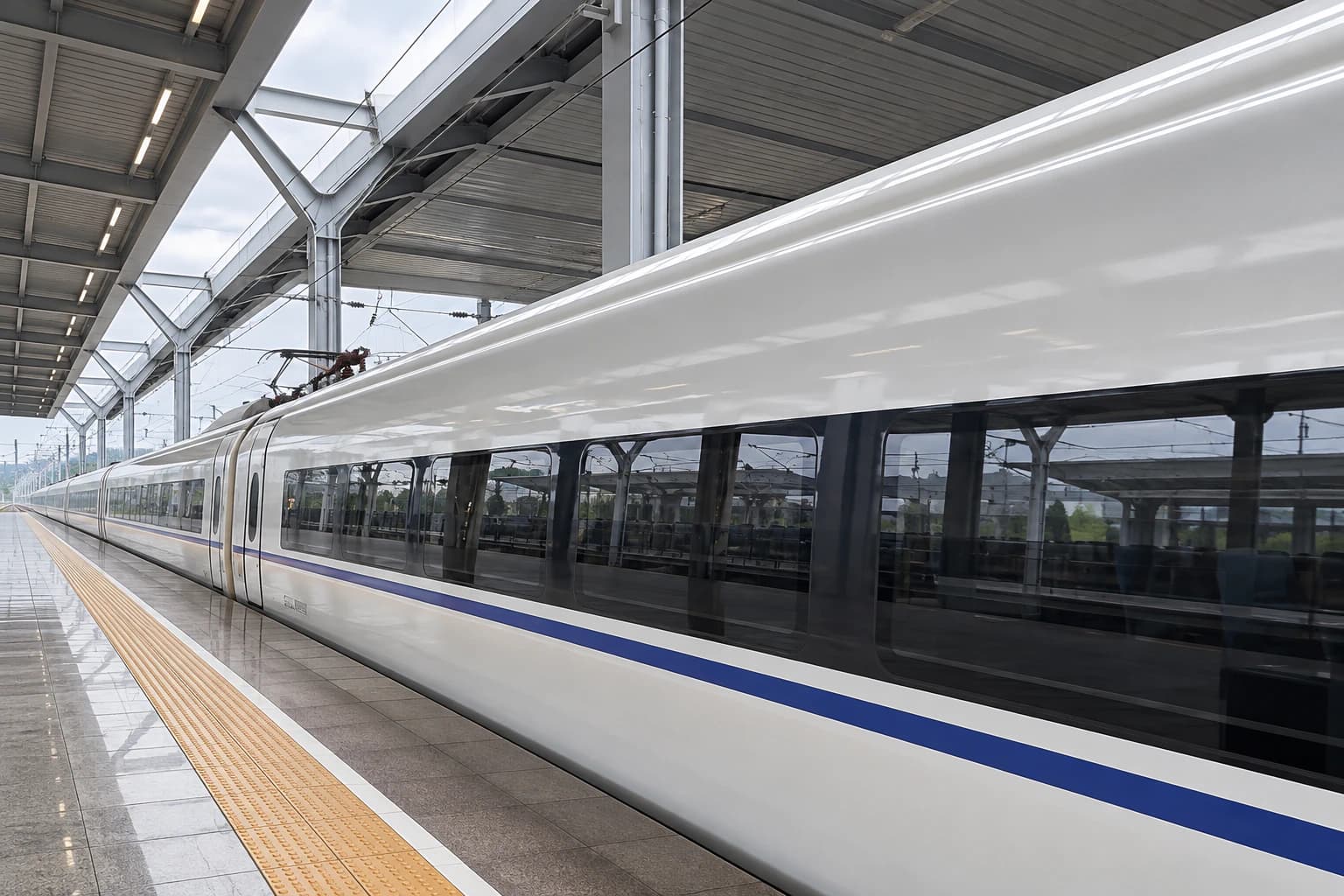
Route geometry: use corridors and stopovers
The network rewards linear routes. If Beijing, Xi'an and Shanghai are the priorities, the clean structure is Beijing → Xi'an → Shanghai or its reverse. If Chengdu is also included, Beijing → Xi'an → Chengdu follows a strong rail corridor; Chengdu → Shanghai is the long diagonal where a flight may protect a day.
Stopovers should solve a distance problem or add a distinct reason to stay. Suzhou or Hangzhou can extend a Shanghai-area route because frequent short trains connect the region. They should not be inserted merely to increase the city count. Every additional base creates another checkout, another luggage movement and another ticket dependency.
Three geometry mistakes cause most overpacked rail trips:
- Zigzagging: Beijing → Shanghai → Xi'an crosses the country twice. Beijing → Xi'an → Shanghai is cleaner.
- Treating day trips as free: a 40-minute train does not make an attraction beside the arrival station. Include both urban transfers and the return margin.
- Using a major city as a mandatory hub: a direct service may bypass the city you assumed was necessary. Search the actual origin and destination before adding a night purely for a connection.
For each leg, write the station pair beside the city names. Only then decide the hotel area. That one habit prevents a surprising number of dawn taxis and cross-city rush-hour transfers.
Station selection: the fastest train can be the slower journey
Large cities have several stations, often on different sides of the urban area. The suffix matters: South, West, North, East, Hongqiao, Futian, Shapingba and West Kowloon identify different places, not alternate labels for one building.
Consider these common examples:
- Beijing: many Shanghai services use Beijing South; many Xi'an services use Beijing West. A hotel convenient for one is not automatically convenient for the other. Start with the Beijing destination guide before fixing an early departure.
- Shanghai: Shanghai Hongqiao is integrated with Hongqiao Airport and serves many high-speed services; Shanghai Station is closer to some central districts; Shanghai South is another terminal. The Shanghai destination guide explains the useful visitor zones.
- Xi'an: the fastest long-distance services commonly use Xi'an North, well away from the old-city sights. Do not book an old-city attraction until the arrival transfer is allowed for. See the Xi'an destination guide.
- Chengdu and Chongqing: Chengdu East is a major HSR node, while Chongqing services may use North, West, Shapingba or another currently listed station. A train that is ten minutes faster can lose that advantage on the final metro or taxi. Compare the Chengdu and Chongqing city layouts.
- Kunming: Kunming and Kunming South are separate terminals. The South station is useful for many high-speed services but sits in Chenggong, away from parts of central Kunming.
Before payment, copy the complete English and Chinese station name into your day plan. Save the hotel address in Chinese too. On departure morning, navigate to the station printed on the booking, not the first map result containing the city name.
Buying a ticket with a foreign passport
China Railway uses real-name tickets. The passport details on the reservation identify the passenger, and the original document used for purchase is needed for station entry, boarding checks and exit.
As checked on 21 September 2026, the normal China Railway advance sale period is 15 days including the travel date. The operator can announce adjustments. A third-party “reservation” months ahead may record a request, but it cannot make railway inventory exist before the railway releases it.
Prepare in this order:
- Choose one passport for the whole trip. If a passport will be renewed, avoid creating later tickets with the old number.
- Enter the name exactly as the booking channel requests from the passport. Do not improvise spacing, shorten the surname or substitute a nickname.
- Complete identity verification early. Current government guidance says foreign travellers can verify through 12306 by entering passport information, uploading the information page for manual review, or visiting a station ticket office.
- Set a release reminder for important legs. Holiday dates, Friday evenings and the fastest daytime trains can sell first.
- Check every field before payment: date, city, exact station, train number, class, passenger and passport number.
The official booking platform is China Railway 12306. If you prefer a multilingual third-party interface and its customer support, compare and book live China train inventory on Trip.com. Trip.com is a ticket agent, not the railway operator. Whichever channel you use, the same underlying railway inventory and real-name passenger details control the journey.
Do not print an “itinerary sheet” and treat it as a boarding ticket. China Railway says the sheet and reimbursement receipt are not tickets. The valid passport is the critical travel document.
What happens at the station
Plan to arrive at the correct station with enough time for the building's scale and that day's queues. China Railway does not promise one universal gate-closing minute in the English FAQ; station announcements control. A safe personal target for a first journey is commonly 45–60 minutes before departure, with more time during national holidays, at very large stations, with children, or when identity verification is unresolved. This is planning advice, not a guaranteed check-in rule.
The normal sequence is:
- Station entrance and identity check. Try the passport-compatible gate indicated by staff; use the staffed/manual lane when the document does not scan.
- Baggage security. Every passenger and bag is screened. Liquids and daily-use aerosols are governed by railway restrictions that differ from airport assumptions.
- Find the waiting area and gate. Screens show train number, destination, waiting room or gate and status. Match the train number, not only the city.
- Board when checking opens. Keep the passport reachable. The platform may be a long walk or escalator ride from the gate.
- Match carriage and seat. The ticket record gives both. Cars may be arranged in either direction, so follow platform signs rather than guessing from the locomotive.
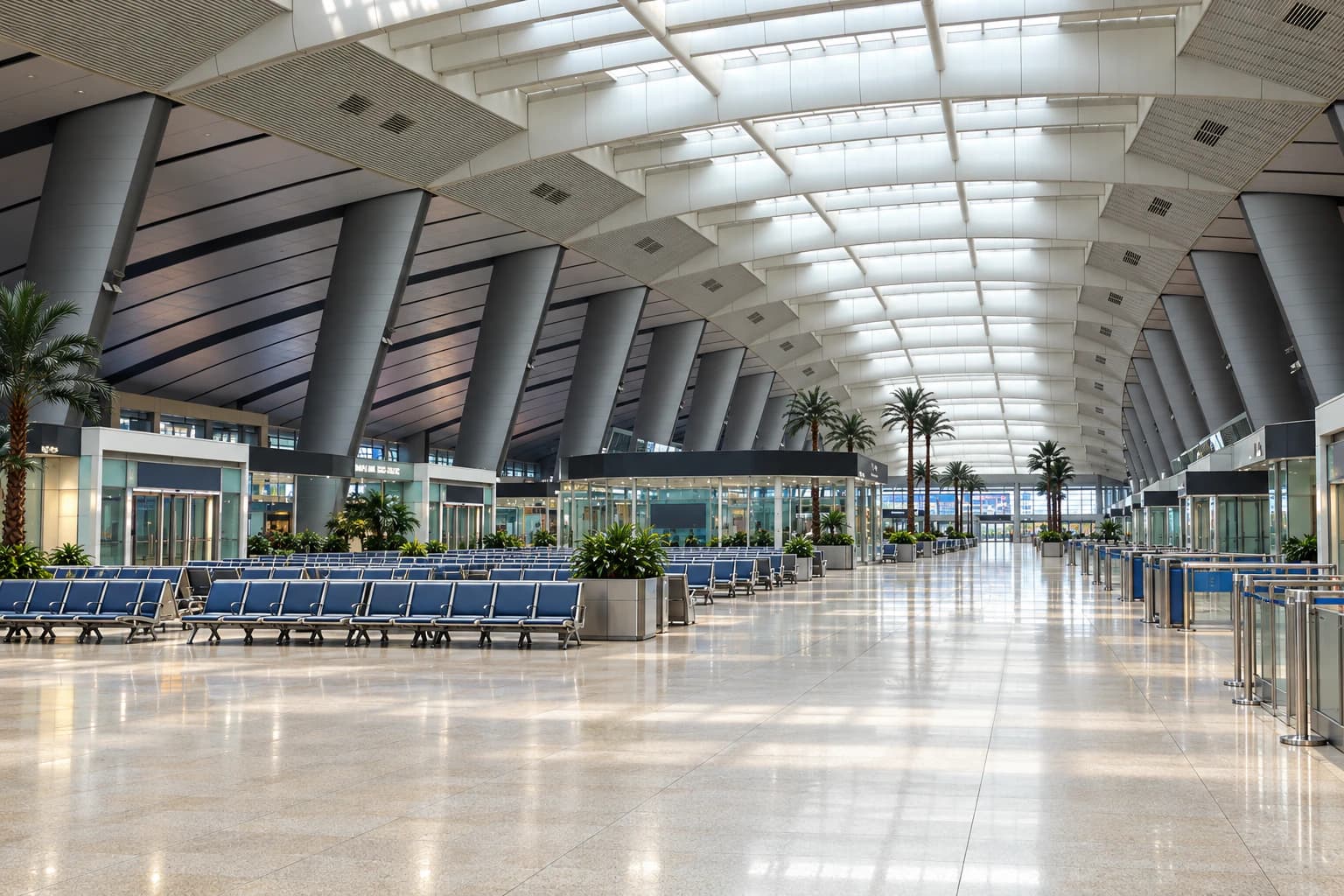
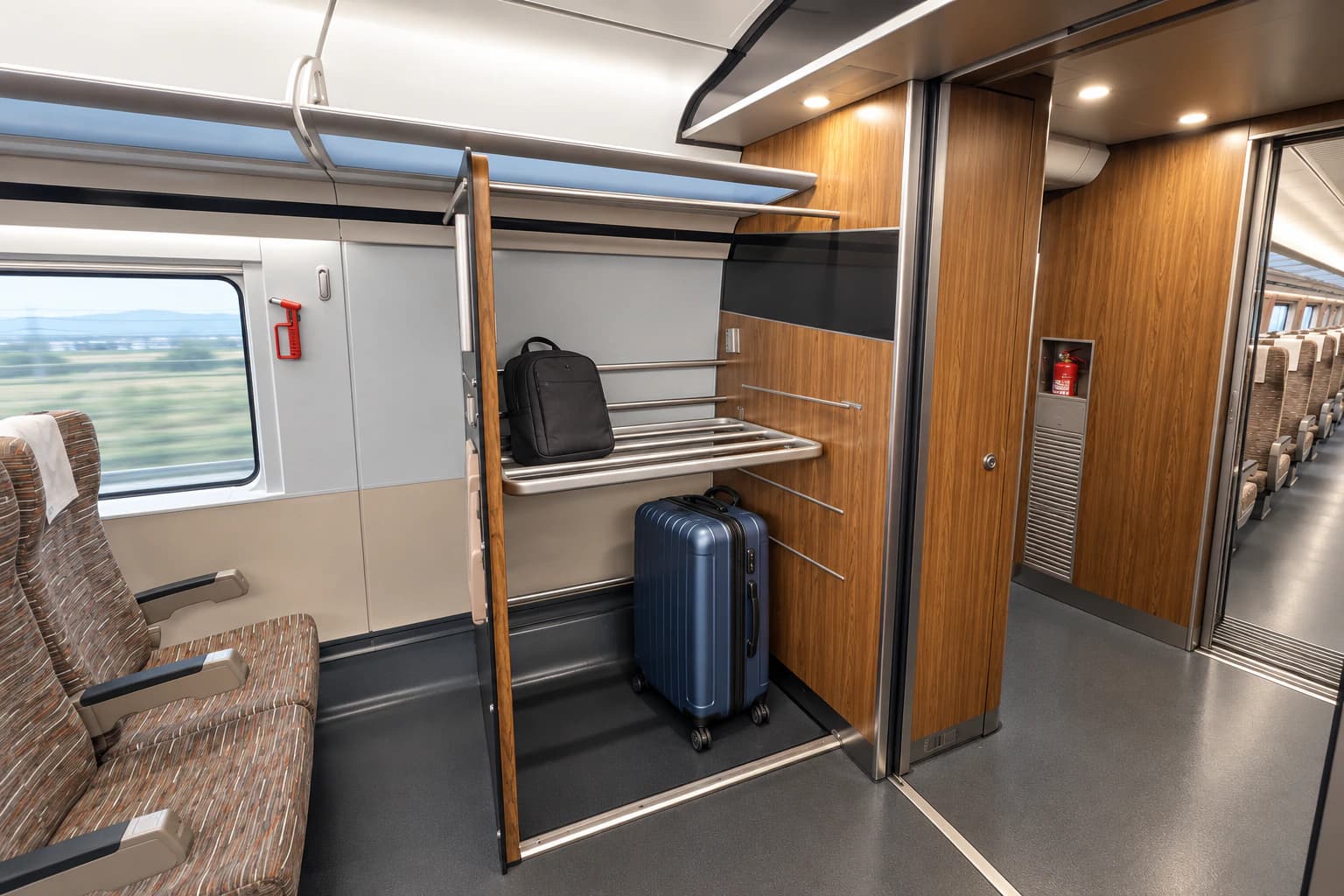
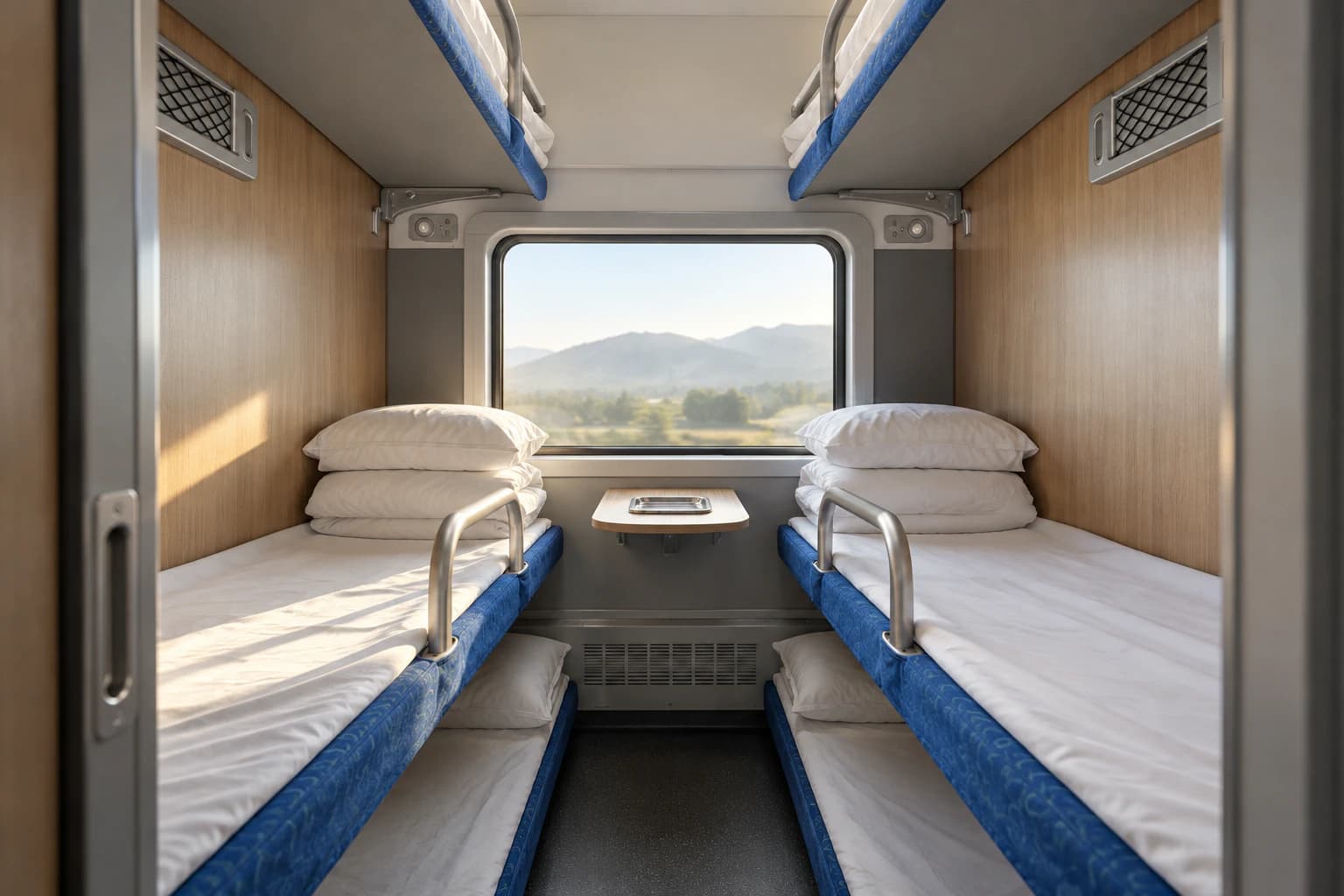
The pictures illustrate possible station and train layouts. Check your actual train and station: gates, luggage racks and sleeper berths vary by service.
Keep a screenshot of the booking that shows the train number, station names, departure time, carriage and seat. It helps communication, but it does not replace the passport or the live status board.
Luggage: pack for stairs, racks and fast boarding
On an EMU/high-speed train, the current 12306 English FAQ gives ordinary adult passengers a free cabin-luggage limit of 20 kg. Each item is limited to 20 kg, and the sum of length, width and height for an item is limited to 130 cm. Restrictions and special services can change, so verify the current rule for unusual or oversized items.
The practical constraint often arrives before the numeric one: you must move the bag through security, lifts, gates and a busy carriage. Smaller cases fit overhead; larger cases use limited luggage spaces near carriage ends or designated racks where provided. Space is not reserved merely because the ticket exists.
For a multi-city route:
- Prefer one case you can lift or control yourself plus one compact day bag.
- Keep passport, phone, medicine, power bank and valuables with you rather than in an unattended end rack.
- Do not block the aisle while reorganising after boarding. Put the day's essentials in the small bag before reaching the platform.
- Avoid a tight self-transfer with heavy luggage. Fifteen minutes saved on the timetable disappears when lifts are crowded.
- Check restricted-item rules before packing aerosols, blades, camping fuel, strong chemicals or unusually large batteries. Railway security is not simply a copy of airline rules.
If the holiday requires large sports equipment, many shopping bags or several full-size cases, reduce the number of rail bases. Door-to-door luggage delivery or a current railway consignment service may exist on selected routes, but confirm eligibility and timing directly instead of assuming every station offers it.
Transfers: direct beats theoretically faster
A direct train is usually worth a modest time or fare difference. A transfer adds two failure points: the first train can be late, and the second boarding gate can close while you are still finding the correct level.
When a transfer is unavoidable, classify it correctly:
- Same train number: you remain on the service unless staff or the booking states otherwise.
- Same-station transfer on separate trains: you may be able to follow transfer signs without leaving the controlled area, but passport handling and station design vary. Keep a generous interval.
- Different stations in one city: this is a cross-city journey. Collect the real metro or road route and allow for traffic, security and a new entrance check.
- Rail to international flight: collect luggage, reach the airport and satisfy the airline's check-in cutoff. Do not treat the train arrival as protected by the airline.
For an unfamiliar same-station connection, 60–90 minutes is a sensible planning floor; use more at a large hub, with children or luggage, or when the onward train is the last useful service. For a station change, calculate the map route and add disruption margin. These buffers are editorial advice, not official minimum-connection guarantees.
Separate tickets usually do not form a protected through journey in the way an airline itinerary may. If the first leg is late, the onward seat does not automatically wait. A direct train that arrives forty minutes later may therefore be the safer and faster choice overall.
If you miss the train or need to change it
A China railway ticket is valid for the date and train number shown. Missing the departure does not authorize you to board the next service.
Act immediately in the booking channel or at a staffed ticket office. Under the current rules checked in September 2026, and subject to available seats:
- a ticket can normally be changed only once;
- after departure, a passenger can request a change before 24:00 on the ticket date;
- changing after departure to another train on the same date can be free of a change fee;
- changing after departure to a later date within the sale window incurs a change fee currently set at 40% of the lower of the original and new ticket fares under China Railway's published rule;
- a refund normally must be requested before departure, so missing the train is not equivalent to cancelling it.
Price differences still apply, and cross-boundary services can have distinct rules. If all suitable trains are full, the change rule does not create a seat. You may need a new plan, another class, a later departure or an additional night.
If China Railway cancels or materially disrupts the train, follow the official notice and staff instructions for the offered change or refund process. Do not buy a replacement first and assume both transactions will reconcile automatically.
Second class, first class and business class
For most travellers, second class is the correct default. On many G/D/C trains it uses a 3+2 seating layout and gives a reserved seat, tray and overhead luggage area. Exact equipment, sockets and storage vary by train set.
Choose first class when the longer ride, wider 2+2 layout and quieter cabin justify the fare. It can be worthwhile on a four-to-six-hour leg, especially for a traveller who needs more shoulder room or expects to work.
Choose business class only after seeing the actual price and train. Its small cabin and highly adjustable seat can be excellent, but the fare may approach or exceed a flight. Lounge, meal and equipment details are service-specific; never buy it based on a generic photo.
If two people want to sit together, book them in one order when possible. Seat requests are preferences rather than permission to displace another passenger. Ask staff if the issued seats are separate.
Daytime HSR, overnight sleeper or flight?
Choose daytime high-speed rail when
- the service is direct and roughly six hours or less;
- both stations connect cleanly to the chosen hotels;
- the departure avoids a pre-dawn hotel exit;
- the arrival leaves enough time for check-in and dinner;
- carrying luggage through the station is manageable.
Beijing South → Shanghai Hongqiao is the classic test. Current inventory shows a fastest run of about 4 hours 18 minutes, with many services taking longer. Once airport transfers and check-in are counted, rail is often competitive. Yet the best train is the one whose stations and time suit the trip, not automatically the fastest G-number.
Choose an overnight sleeper when
- the timetable genuinely replaces a hotel night;
- a suitable berth is available, rather than only a hard seat;
- arrival time works for hotel luggage storage or check-in;
- you can tolerate shared space and variable sleep;
- the route would otherwise consume most of a waking day.
Confirm the actual product. A conventional soft sleeper, hard sleeper and selected overnight D-train sleeper are different experiences. “Sleeper available” on a route summary does not mean every train has berths. Bring food and water suitable for the journey, secure valuables, and treat sleep quality as uncertain on the first night.
Use the China overnight sleeper guide to compare berth levels, compartment types, luggage placement, washing, noise and the early-morning station transfer before choosing that option.
Choose a flight when
- a direct train takes eight to ten waking hours;
- a nonstop flight saves several hours after both ground transfers;
- the rail route requires a risky connection;
- the destination airport is convenient for the next stay;
- checked-baggage terms still make the comparison worthwhile.
Rail and air should be compared by arrival at the next hotel, not by vehicle speed. A five-hour train can beat a two-hour flight. A ten-hour train usually cannot unless it is an overnight service you actively want.
Five useful corridor patterns
These examples show how to apply the method. Current shortest times are snapshots checked on 21 September 2026; always search the actual travel date.
1. Beijing → Xi'an: a clean first long leg
Current inventory lists a shortest ride around 4 hours 10 minutes, usually Beijing West → Xi'an North on the fastest services. Treat the move as most of a day after hotel access. It works well because it advances a historical north-to-inland route and avoids an airport. Keep the Terracotta Warriors for a separate day after reading the Xi'an destination guide.
2. Beijing → Shanghai: rail competes strongly with air
The fastest current services are around 4 hours 18 minutes, commonly Beijing South → Shanghai Hongqiao or Shanghai. Choose by the arrival station, not just the number of stops. If the Shanghai hotel is central and a service arrives at Shanghai Station, a slightly longer train may still deliver you sooner.
3. Shanghai → Hangzhou or Suzhou: short rail, real station work
Shanghai–Hangzhou can be as short as about 34 minutes, with very frequent service. That makes Hangzhou a natural onward stop, but it does not make West Lake 34 minutes from a Shanghai hotel. Suzhou works by the same principle: first decide whether the arrival station serves the old city, gardens or industrial-park hotel.
4. Chengdu → Chongqing: choose the arrival side of the city
The shortest current ride is about 1 hour 02 minutes, but services use several stations. Read the Chongqing hotel location and vertical-city geography before selecting the train. A Shapingba arrival may suit one plan; North or West may suit another. This is the clearest example of station choice outweighing headline speed.
5. Guangzhou → Shenzhen → Hong Kong: treat the border separately
Guangzhou to Shenzhen can take as little as about 29 minutes, but the corridor uses Guangzhou South, Guangzhou East, Guangzhou, Shenzhen North, Shenzhen and Futian in different combinations. For Hong Kong, cross-boundary high-speed rail adds immigration, security and boarding cutoffs. MTR's current West Kowloon advice says passport holders and travellers using staffed immigration counters may need more than its normal 30-minute process estimate, with extra time needed in busy periods. Do not apply a mainland domestic-station buffer to West Kowloon.
A regional variant: Kunming → Dali
Current services can take about 1 hour 55 minutes, using Kunming or Kunming South depending on the train. This creates an easy Yunnan progression from Kunming to Dali, provided the first hotel-to-station leg and Dali station-to-old-town transfer are both included.
A booking workflow that survives timetable changes
Build a small transport sheet with one row per leg and these columns:
| Field | What to record |
|---|---|
| Date | Local calendar date, checked against hotel nights |
| Origin | Exact station in English and Chinese |
| Destination | Exact station in English and Chinese |
| Preferred window | A two- or three-hour departure range, not one train only |
| Fallback | Later direct train, another class, sleeper or flight |
| Hotel transfer | Expected method and realistic time at both ends |
| Passenger document | Passport number ending only; avoid sharing full copies casually |
| Status | Planned, released, booked, changed or cancelled |
First lock international arrival and departure. Then choose city nights. Then research the station pairs. When the railway sale window opens, book the least flexible or highest-demand leg first. Keep at least two acceptable train numbers so one sold-out departure does not force a route rewrite.
Recheck 48 hours before travel: station, departure time, live status, passport, luggage and destination transfer. Recheck again before leaving the hotel. Timetables and platforms can change; a saved plan is not the live railway display.
The final rail-planning checklist
- Does every train move the route forward?
- Is each city worth the checkout and luggage transfer it creates?
- Have you written the exact station name, including its suffix?
- Is the door-to-door journey still better than a flight?
- Does an overnight service provide the berth you actually want?
- Is the booking name and passport number exact?
- Has identity verification completed before the release day?
- Are important legs being booked inside the current 15-day window?
- Can you carry the luggage through security and onto the train?
- Does every self-transfer have a generous, station-specific buffer?
- Is there a fallback if the preferred train sells out?
- Are you carrying the original passport used for booking?
High-speed rail works best as the spine of a route, not as a promise that every pair of cities belongs in one trip. Choose fewer bases, exact stations and comfortable departure times. The result is more useful time in China—and far less of it spent crossing cities simply to catch the fastest train on the screen.