Terracotta Warriors Xi'an
The Terracotta Warriors are not a single hall that you can check off in 45 minutes. Your admission covers two separate sites: the Terracotta Warriors Museum, where Pits 1, 2 and 3 stand under vast protective roofs, and Lishan Garden, the wider mausoleum landscape of Qin Shi Huang. The museum says to allow about 1.5 hours at each site; after queues, walking, exhibitions and the inter-site transfer, a thoughtful visit normally needs 3.5–5 hours.
That distinction is the key to planning well. If you have only half a day, see the three warrior pits properly and skip Lishan rather than racing through both. If you are interested in archaeology—not just the famous ranks—add Lishan for the bronze chariots, satellite pits and the still-unexcavated burial-mound landscape.
The essentials before you leave Xi'an
The official museum guide requires real-name advance reservations, including for international visitors and people eligible for free admission. Book through the museum's official website or official WeChat channel, enter your passport details exactly, and carry the original passport used for the reservation. Do not rely on a screenshot of somebody else's booking.
The museum's published standard admission is CNY 120, but the official booking page controls the live price, date and remaining inventory. The normal daily capacity is listed as 65,000; major holidays can have different hours or capacity, so check the museum's latest notice again the evening before you travel.
| Season | Entry/checking window | Site closes |
|---|---|---|
| March 16–November 15 | 08:30–17:00 | 18:30 |
| November 16–March 15 | 08:30–16:30 | 18:00 |
These are the museum's regular seasonal hours, not a promise for every holiday. Arriving by 08:15–08:30 usually gives you the cleanest start, but it does not guarantee an empty Pit 1. A late-afternoon slot can feel calmer on some ordinary weekdays, yet it leaves less time for Lishan and is risky if transport or security lines run late.
The Trip.com museum listing is useful for live reviews, location context and bookable products, but confirm admission and passport rules through the official museum channel before paying for any third-party tour.
The best route inside the Terracotta Warriors Museum
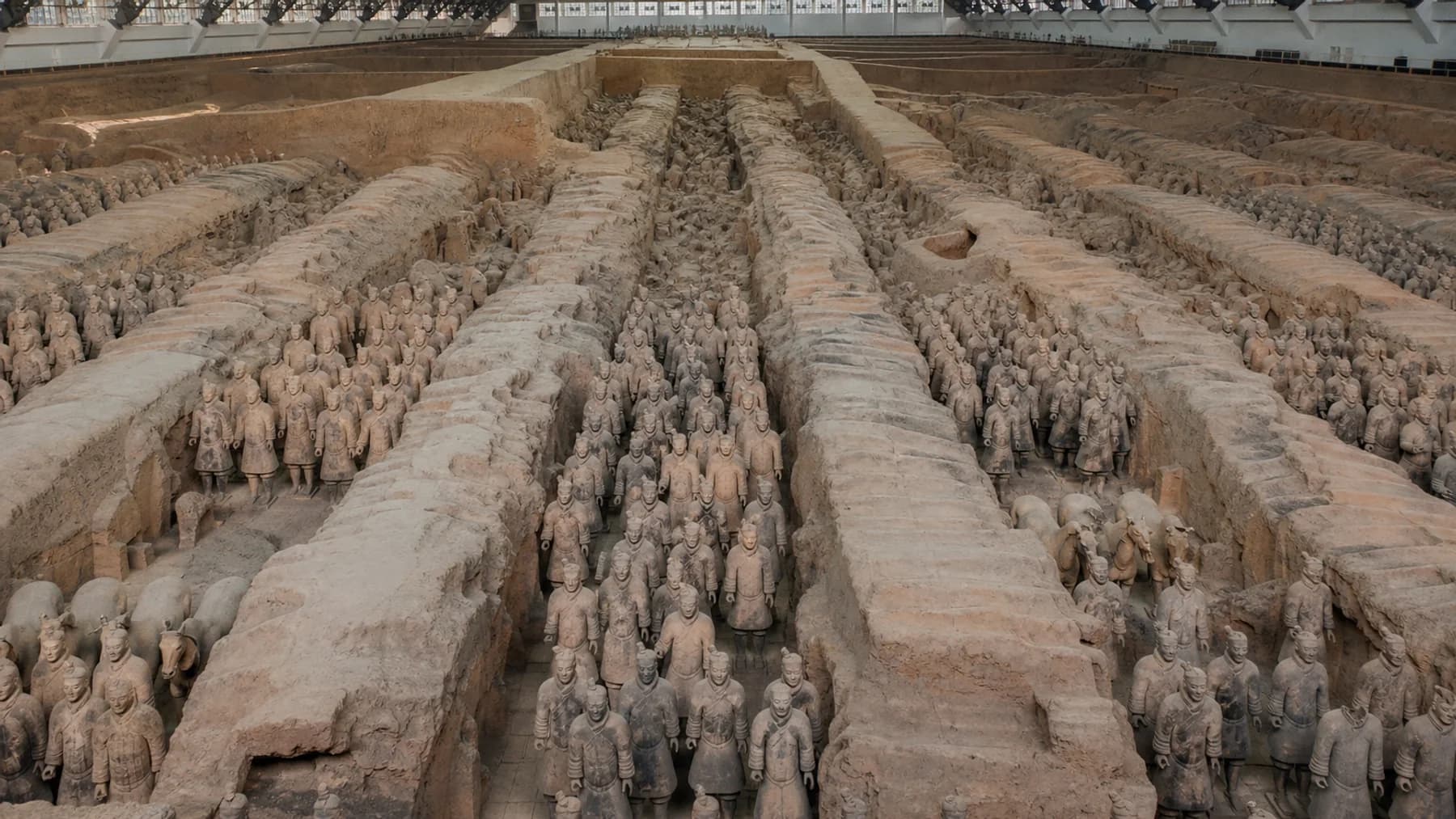
Use Pit 1 → Pit 3 → Pit 2 → the currently open exhibition halls as a clear first-visit sequence. It is compact—AMap places Pit 1 to Pit 3 at roughly a four-minute walk and Pit 3 to Pit 2 at roughly three minutes—and it gives the visit a useful rhythm:
- Pit 1 for scale. The official museum describes a chamber 230 metres long and 62 metres wide, with an estimated 6,000 warriors and horses. Begin along the front rail, then continue around rather than fighting for one photo position. The rear restoration area is often as revealing as the front ranks.
- Pit 3 for contrast. This much smaller space is commonly interpreted as a command unit. After Pit 1's mass formation, its compact layout helps you see that the pits served different military functions.
- Pit 2 for variety and close looking. The official description estimates about 1,300 warriors and horses in a more varied formation of archers, cavalry and chariots. Displays and sightlines can change during conservation or exhibition work, so follow the current barriers.
- Exhibition halls for context. Check which bronze-chariot and temporary galleries are open that day. Do not assume an old blog's hall order still matches the current visitor flow.
What makes the warriors more interesting than “different faces”
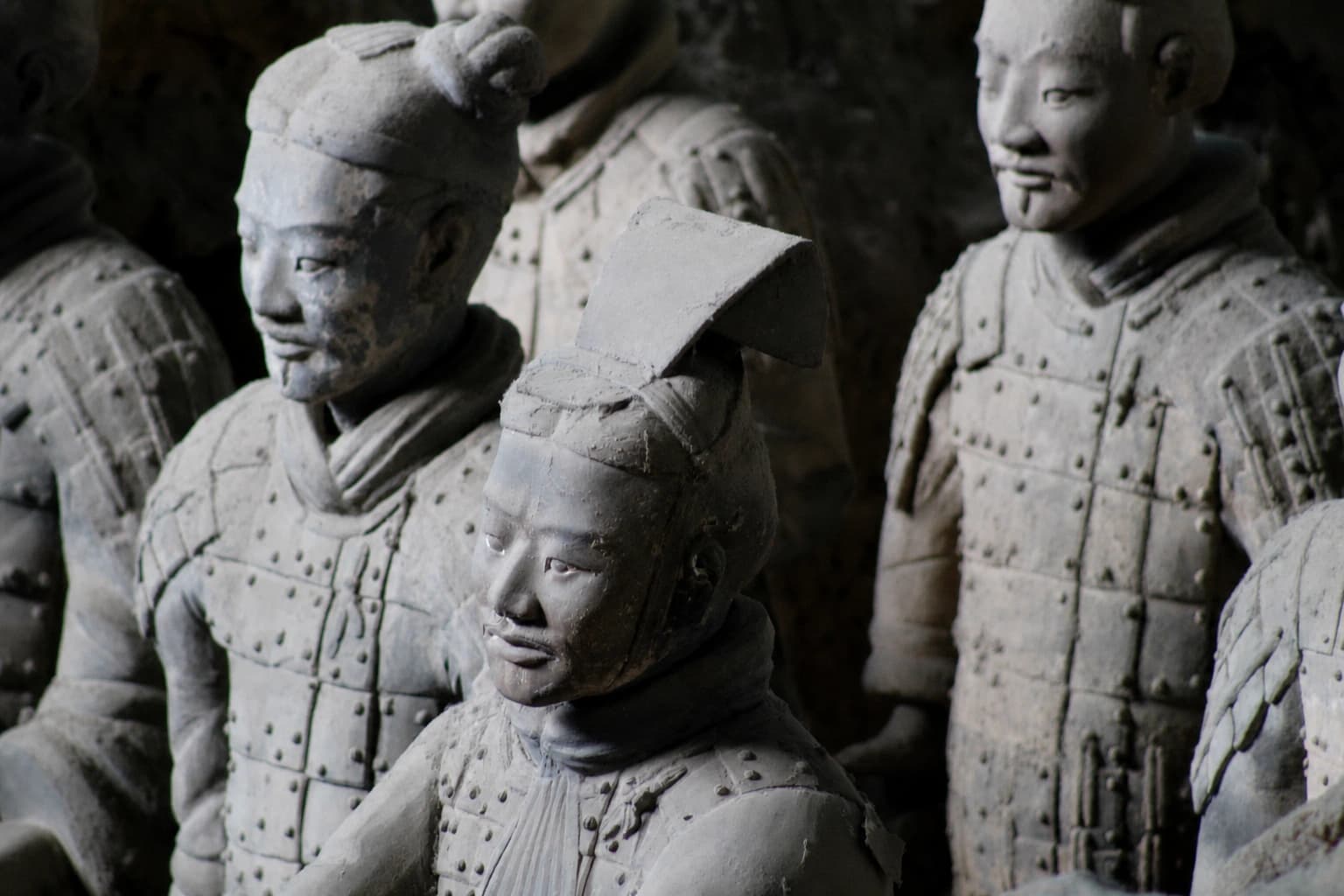
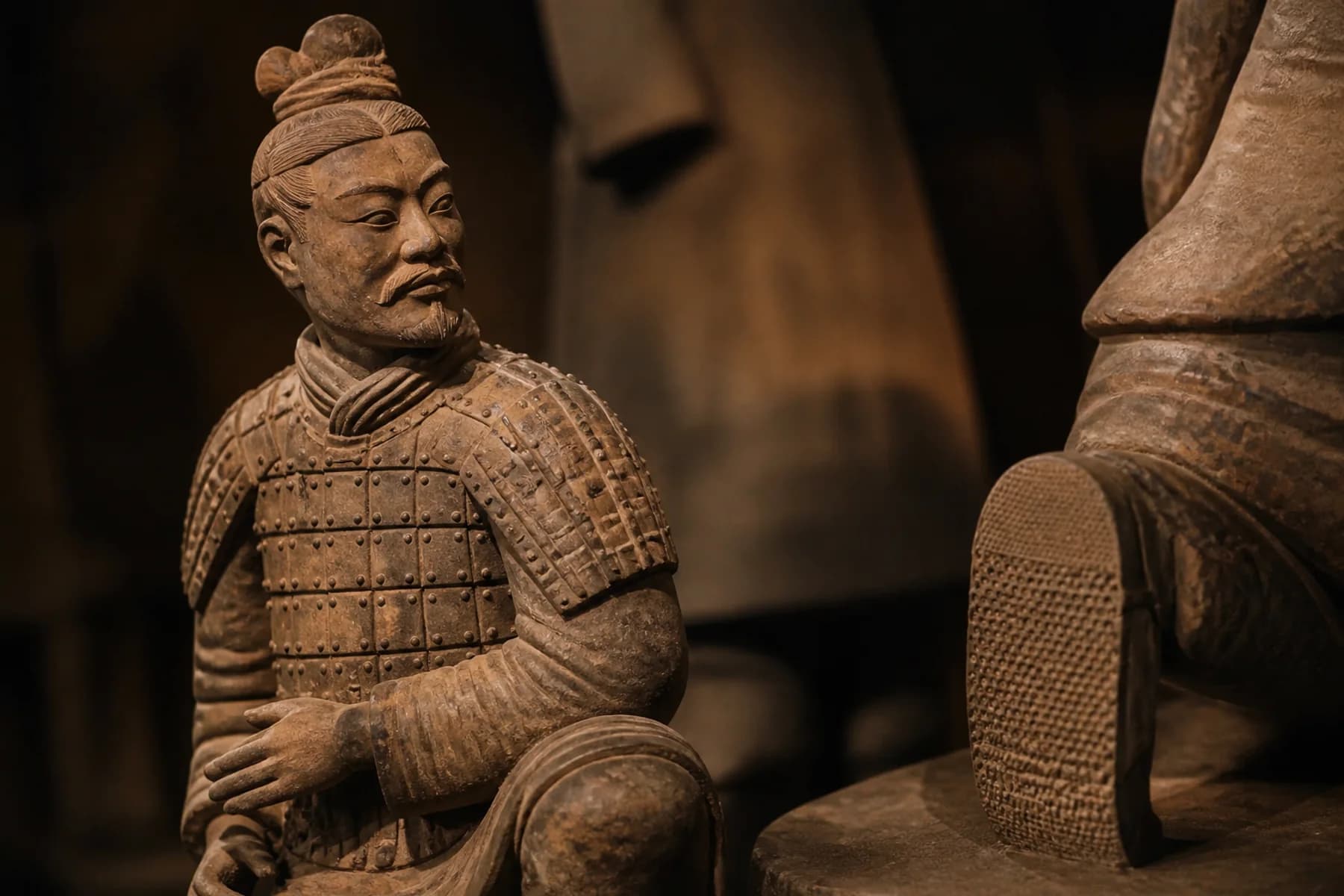
The familiar claim that every warrior has a completely unique face is too simple. Craftspeople appear to have combined repeated production methods with hand finishing, changes in hair, headgear, moustaches, armor and expression. Look for the system behind the variation:
- armor tiles and knots that signal different equipment or status;
- hairstyles and headgear that become easier to compare in profile;
- hands originally shaped to hold weapons, many of which are now absent;
- the patterned sole on a kneeling archer, an extraordinary detail placed where few viewers would normally see it;
- faint pigment traces and conservation information explaining that the army was once colored, not uniformly earth-brown;
- broken figures and restoration work, which reveal archaeology as an ongoing process rather than a finished spectacle.
Photography rules can change by gallery. Keep flash off, do not use a tripod where prohibited, and never lean over rails for a closer angle.
The route diagram: museum, free shuttle and Lishan
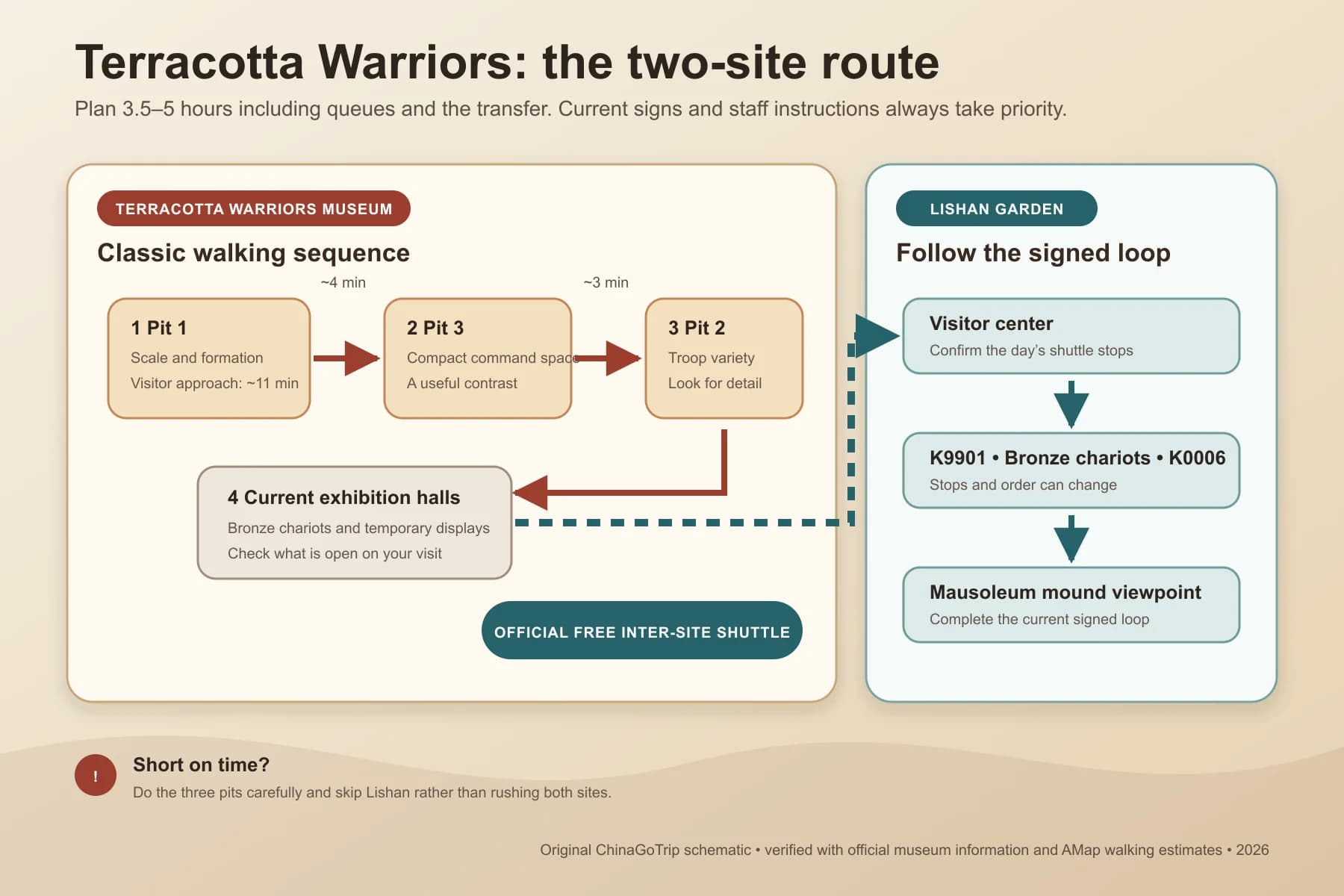
This is an original planning schematic, not a scale map. It is based on the museum's current two-site guidance and verified AMap walking estimates; current signs, closures and staff instructions always take priority.
The museum provides a free shuttle between the Terracotta Warriors Museum and Lishan Garden. Ignore older guides that describe a separate fixed-price inter-site bus. Keep your passport and reservation record accessible because checks can occur during the two-site visit.
Inside Lishan Garden, confirm the signed shuttle loop and open stops at the visitor center. The main archaeological nodes can include:
- K9901, associated with acrobat or entertainment figures rather than soldiers;
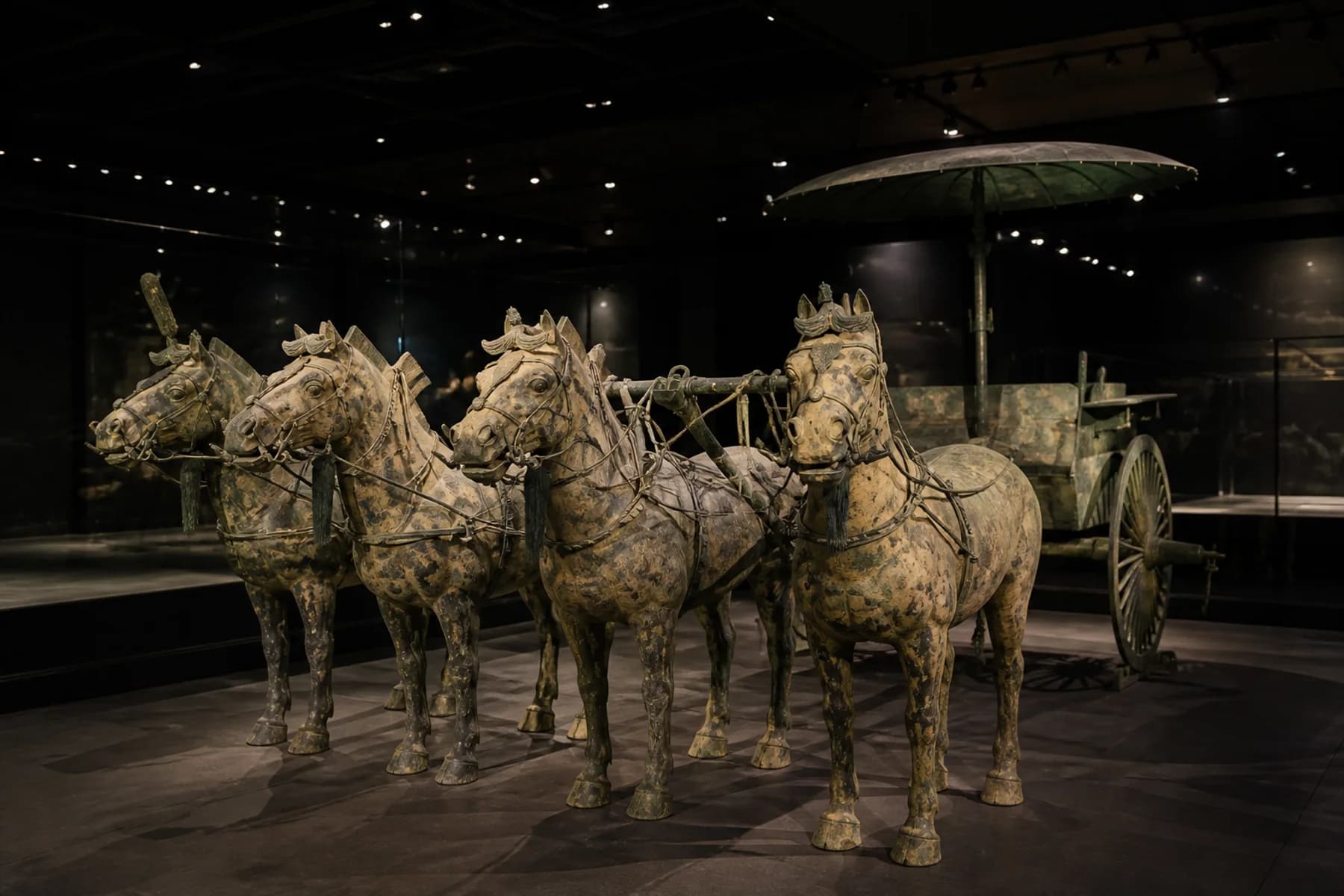
- the Bronze Chariot and Horse Museum;
- K0006, often interpreted through civil-administration finds;
- the viewpoint for the emperor's mausoleum mound.
Do not treat the diagram's list as a guaranteed stop order. Lishan is dispersed: AMap estimates about 15 minutes on foot from the visitor center to K9901, another 14 minutes from K9901 to the bronze-chariot museum, and roughly five minutes from there to K0006. The current internal shuttle loop saves energy and is the sensible default.
How to get there without following an outdated bus post
From central Xi'an, take the metro to Huaqingchi Station on Line 9 and leave via Exit C, then use the current signed tourist-bus stop or a licensed ride-hailing car. In the AMap snapshot checked for this guide, the recommended public-transport option was Lintong Tourist Line 613, about 9.8 km and 35 minutes including roughly 730 metres of access walking, with a CNY 5 estimate. A car was about 9.3 km and 28 minutes, with a CNY 21 estimate.
Those line numbers, fares and traffic times are live transport snapshots, not permanent facts. Check AMap on the morning of travel and ignore people steering you toward an unofficial “museum,” replica workshop or compulsory shopping stop. Save the main museum map location as Emperor Qinshihuang's Mausoleum Site Museum.
For a one-way car from downtown, allow at least an hour in ordinary conditions and more during holidays. Going directly by car is easier for a family or three to four travelers, while metro plus the final bus/car avoids much of central traffic uncertainty.
Food that makes the day feel like Xi'an
The attraction zone has convenient restaurants, but you do not need to make the tourist plaza your main food experience. Carry water and a light snack, then eat either in Lintong or back in central Xi'an:
- Lintong pomegranate is the local seasonal specialty; look for fresh fruit or juice in autumn, but compare prices before buying gift boxes.
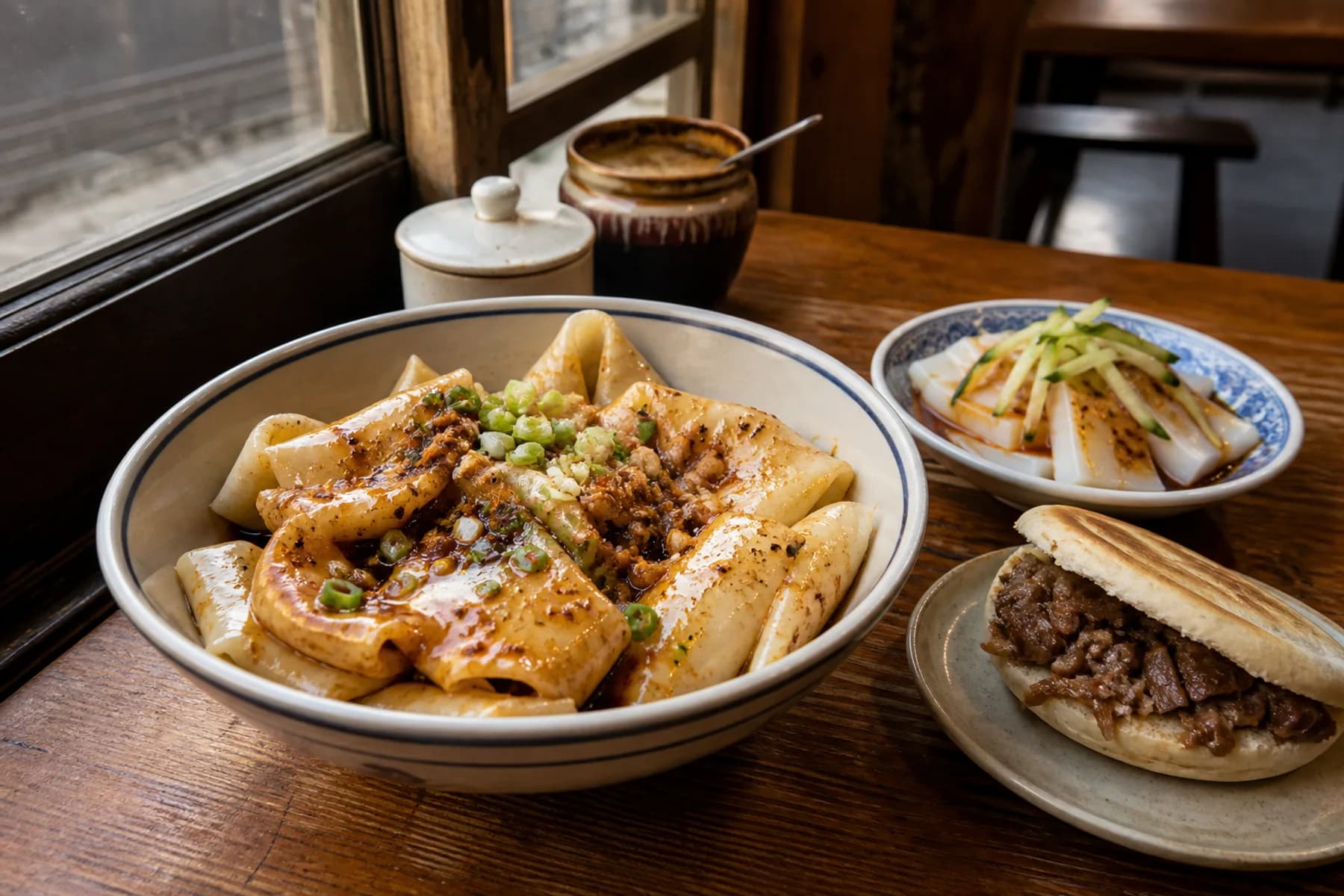
- Biangbiang noodles are broad, chewy ribbons built for chili, garlic and dark vinegar. They are a satisfying post-museum meal.
- Roujiamo works well when you need something fast; choose a busy shop where the flatbread is reheated to order.
- Liangpi gives you a cool, tangy contrast in hot weather.
For better choice and evening atmosphere, wait until you return to the city. The streets around the Bell Tower are convenient but tourist-heavy; lanes beyond the most photographed Muslim Quarter entrances and neighborhoods near Yongning Gate usually reward a slower search. Use recent reviews to check hygiene, opening times and whether a shop still occupies the listed address.
Where to stay for this day trip
Choose your hotel for the rest of your Xi'an itinerary, not solely for the warriors:
- Bell Tower / old city: best for a first visit, late dinners and easy access to the City Wall and Muslim Quarter.
- Yongning Gate: a calmer old-city edge with good metro access and an evening walk on the Xi'an City Wall.
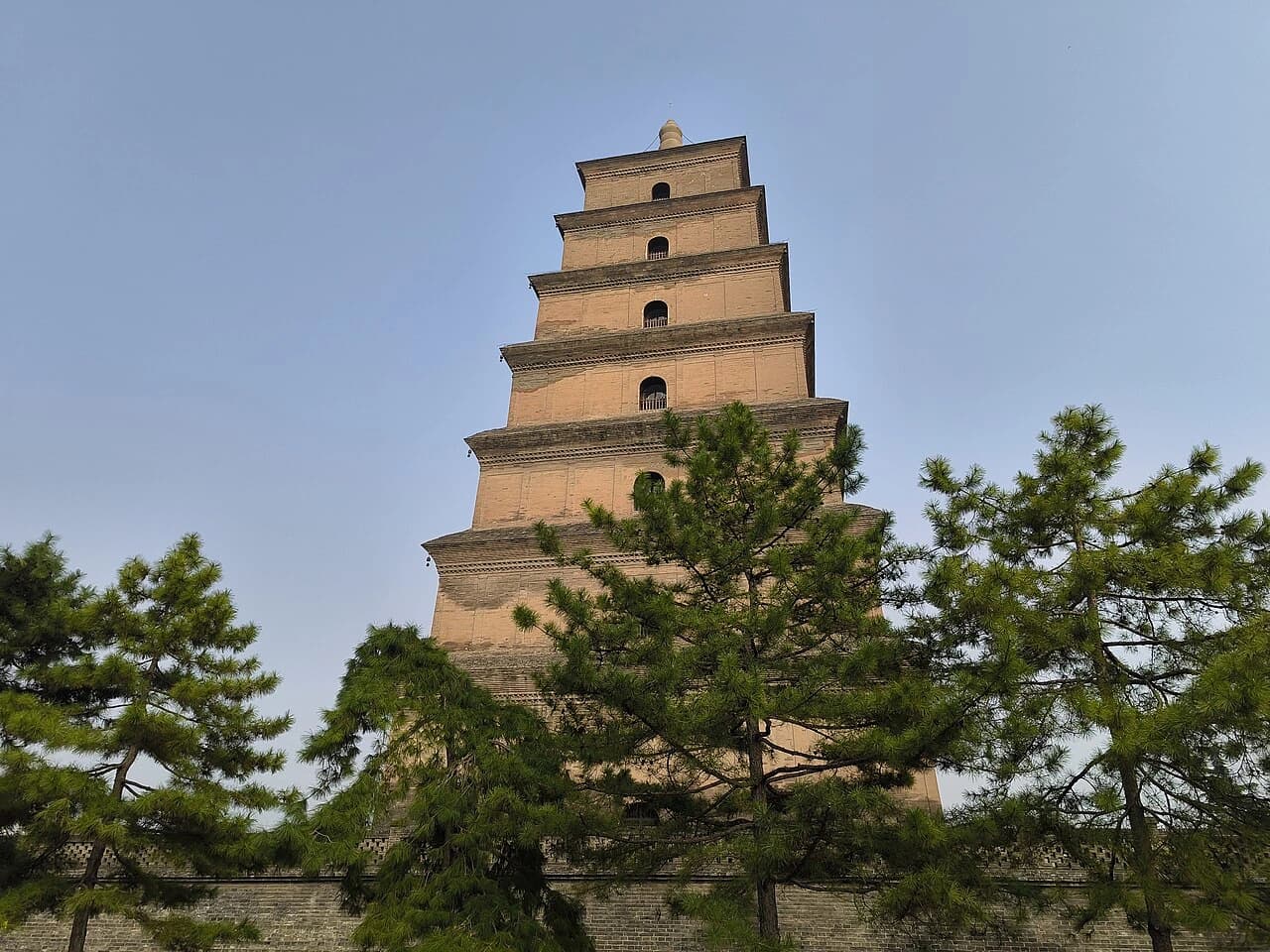
- Big Wild Goose Pagoda / Qujiang: better for modern hotels, museums and the southern cultural district near the Big Wild Goose Pagoda.
- Xi'an North Railway Station: practical only for an early high-speed train or a very short transit stay; it is less atmospheric.
- Lintong: worthwhile if you want hot springs, a slower archaeological day or the evening Everlasting Sorrow Show. Otherwise, changing hotels for one attraction adds friction.
Compare Xi'an hotels on Trip.com, prioritizing a metro station within an easy walk and recent comments about soundproofing and non-smoking rooms.
Three realistic ways to fit it into an itinerary
Focused half-day: early arrival, Pits 1–3–2, one exhibition hall, then return to Xi'an for a late lunch. This is the strongest plan when your schedule is tight.
Full archaeological day: three pits in the morning, official free shuttle to Lishan, follow the current internal loop, then return to central Xi'an for noodles. Allow buffer time rather than adding another distant sight.
Lintong day and evening: museum plus Lishan, an early dinner or rest in Lintong, then the Everlasting Sorrow Show if you already have a separately confirmed ticket. This pairing works best when staying locally or using reliable return transport; do not assume the show schedule aligns with museum closing every day.
Final checklist
- Reserve through the official museum channel and enter your passport details exactly.
- Carry the original passport; arrive before your booked checking window ends.
- Recheck the official notice for holiday hours, capacity and temporary closures.
- Budget 1.5–2 hours for the pits and another 1.5–2 hours for Lishan if you include it.
- Use Pit 1 → Pit 3 → Pit 2 as a simple first-visit route, but obey current barriers.
- Take the official free inter-site shuttle; verify the Lishan loop at the visitor center.
- Treat live AMap bus numbers and fares as a same-day check, not permanent advice.
- Skip Lishan if time is short—understanding the pits is better than collecting two rushed check-ins.