Big Wild Goose Pagoda
The famous skyline view, the working Buddhist temple and the stairs inside the pagoda are related but not interchangeable. Most planning mistakes come from treating the whole Qujiang district as one attraction with one opening time.
The seven-storey pagoda was first built in 652 to preserve scriptures associated with Xuanzang's journey and translation work. Its importance is not just its silhouette: it connects Tang Chang'an with Buddhist learning and long-distance exchange.
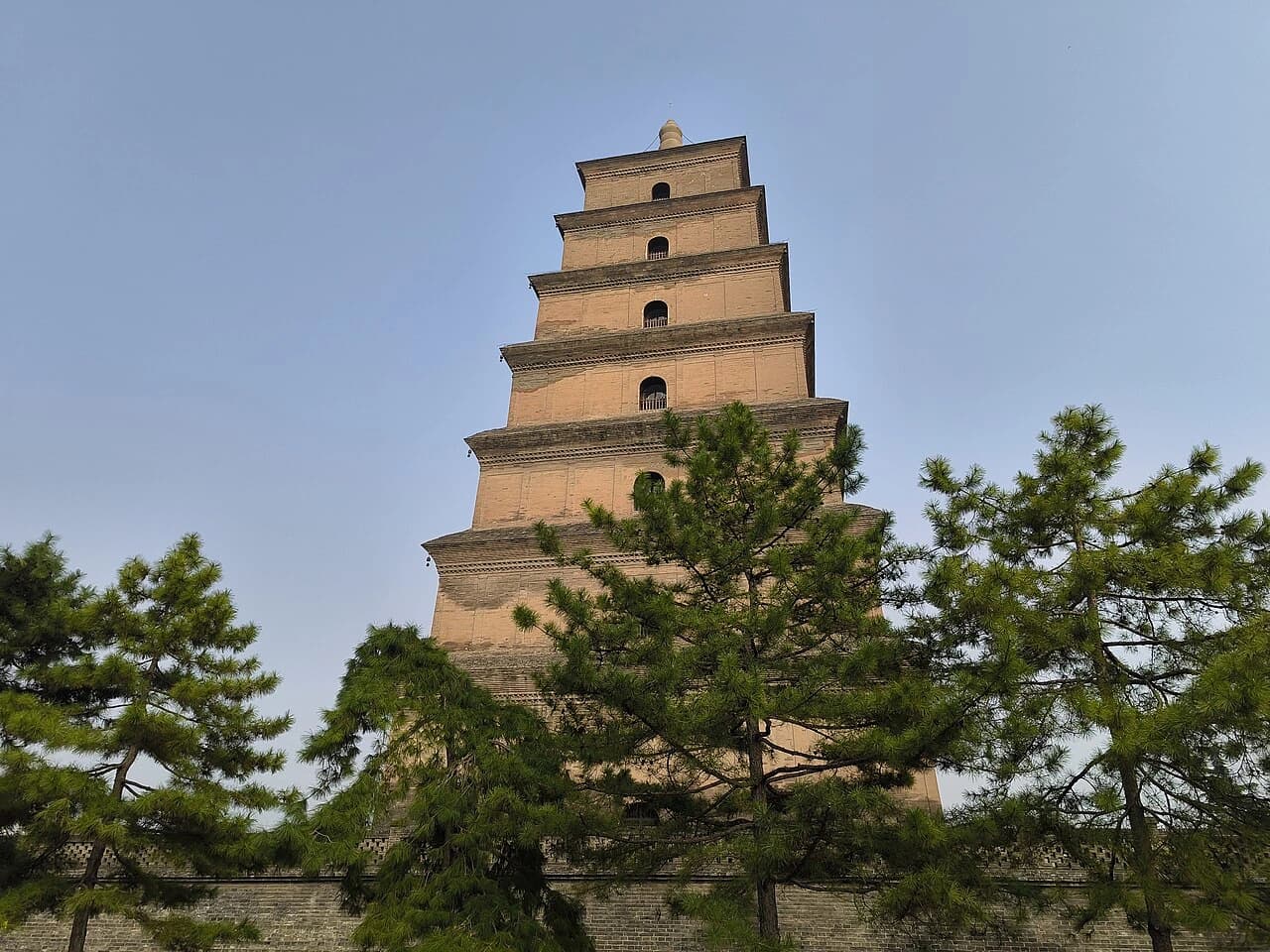
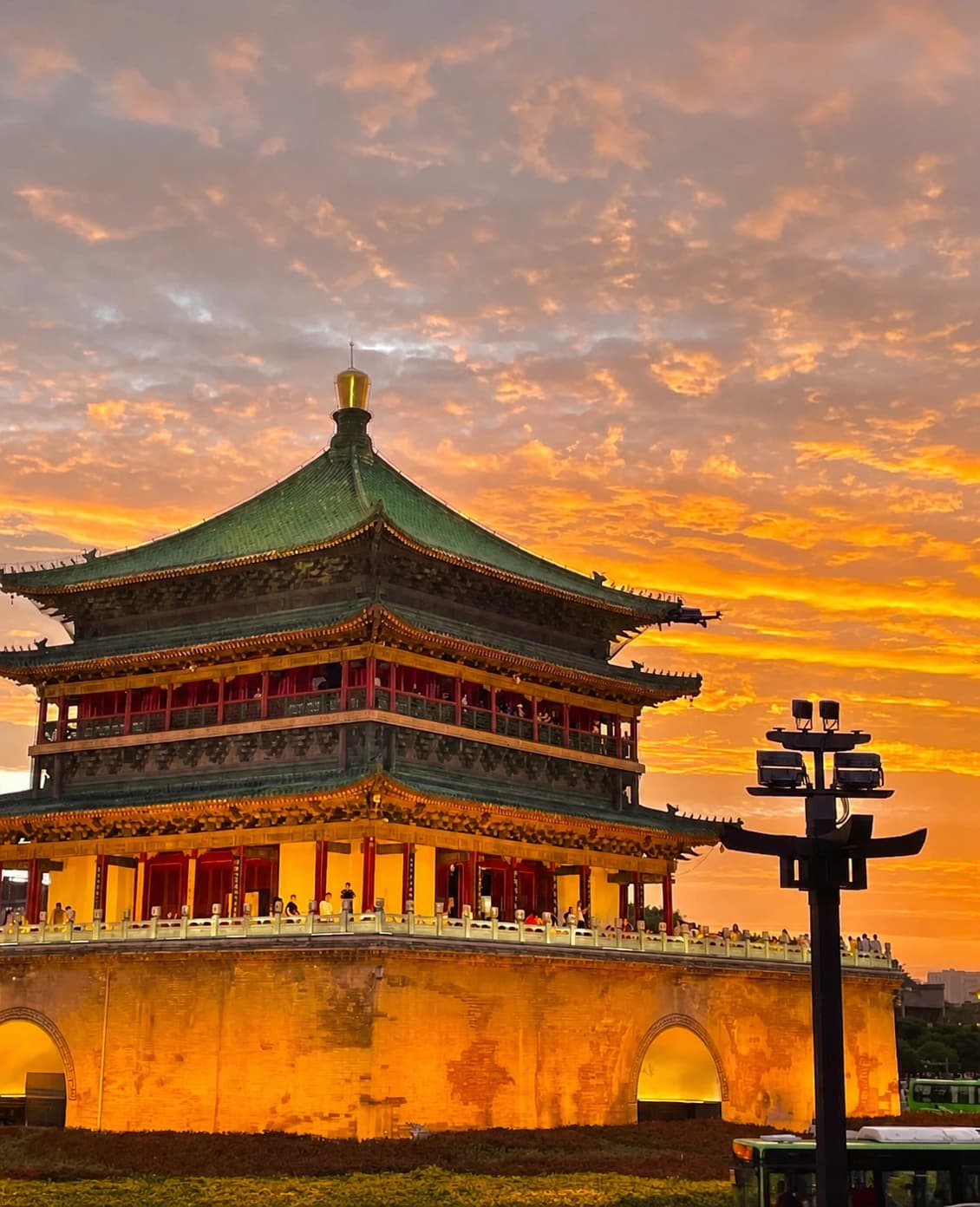
Day photograph by 源義信, licensed CC BY-SA 4.0 via Wikimedia Commons.
Decide Which Layer You Actually Want
1. The public precinct
The north and south squares, landscaped approaches and the Tang-style pedestrian district provide the broad skyline views. This is the right choice for an evening walk, photography or a low-cost visit. Public access does not mean every performance, fountain or neighbouring venue runs continuously.
2. Da Ci'en Temple
Enter for the religious setting, courtyards and Xuanzang context. This is an active Buddhist space: speak quietly, do not block worshippers, and ask before photographing devotional activity.
3. The pagoda climb
The climb may be a separate product from temple admission. It involves enclosed stairs and limited space; the city view is a bonus, not the main reason to visit. Anyone with mobility, heat or crowd concerns can understand the monument well from ground level.
Operations and product combinations change. Check the named inclusions on the live Big Wild Goose Pagoda listing on Trip.com and confirm against on-site or official notices before paying.
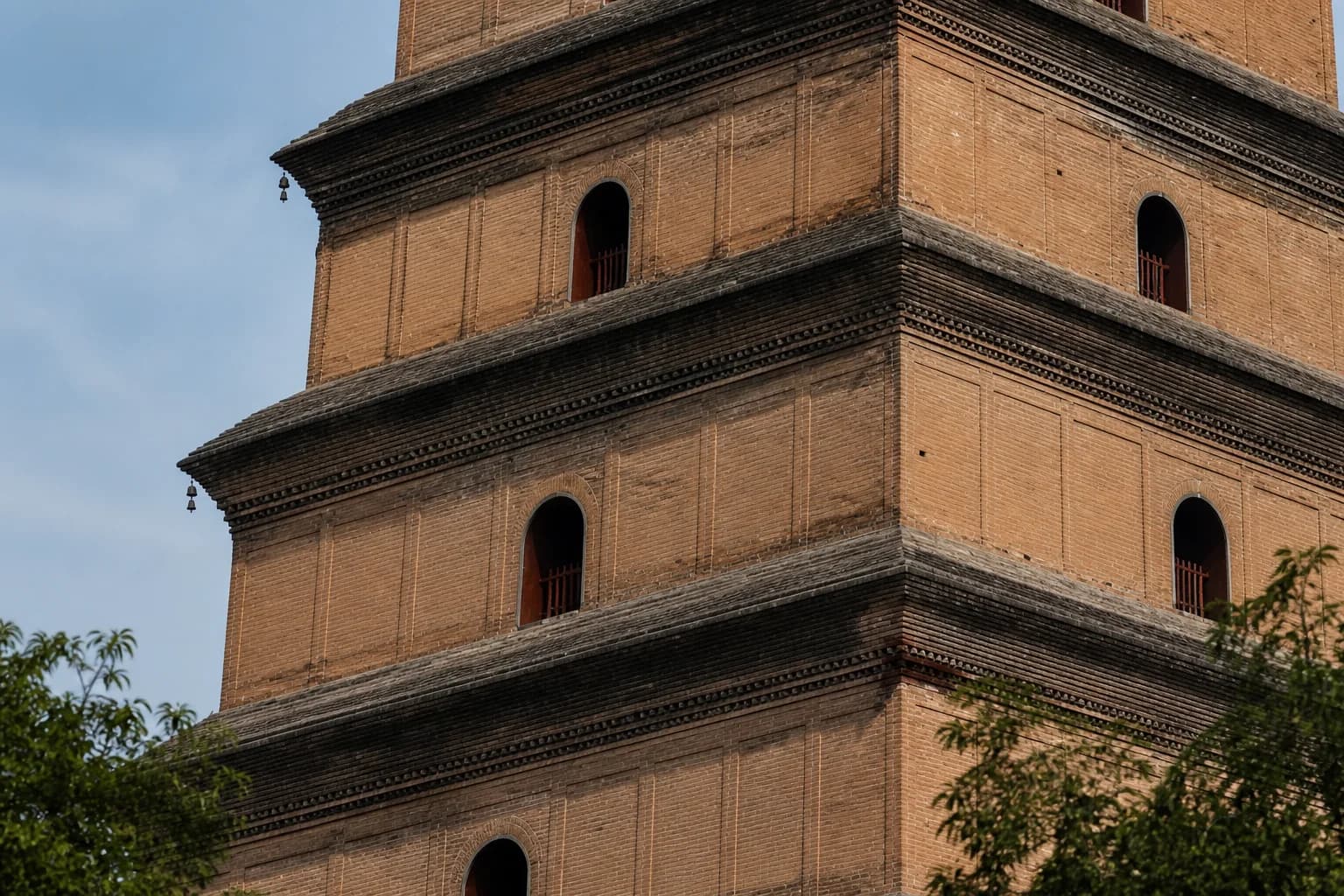
A Better Way to Look at the Architecture
Stand far enough away to see the square plan and the way each tier narrows. Then move closer and compare the heavy brick mass with the timber halls around it. The contrast explains why the pagoda reads as both a practical scripture tower and a landmark.
Inside the temple, pay attention to the sequence of thresholds. Courtyards slow the approach from city noise to devotional space. The most useful Xuanzang question is not “Did he build everything here?” but “How did a translation project require texts, teachers, patrons and a place to work?”
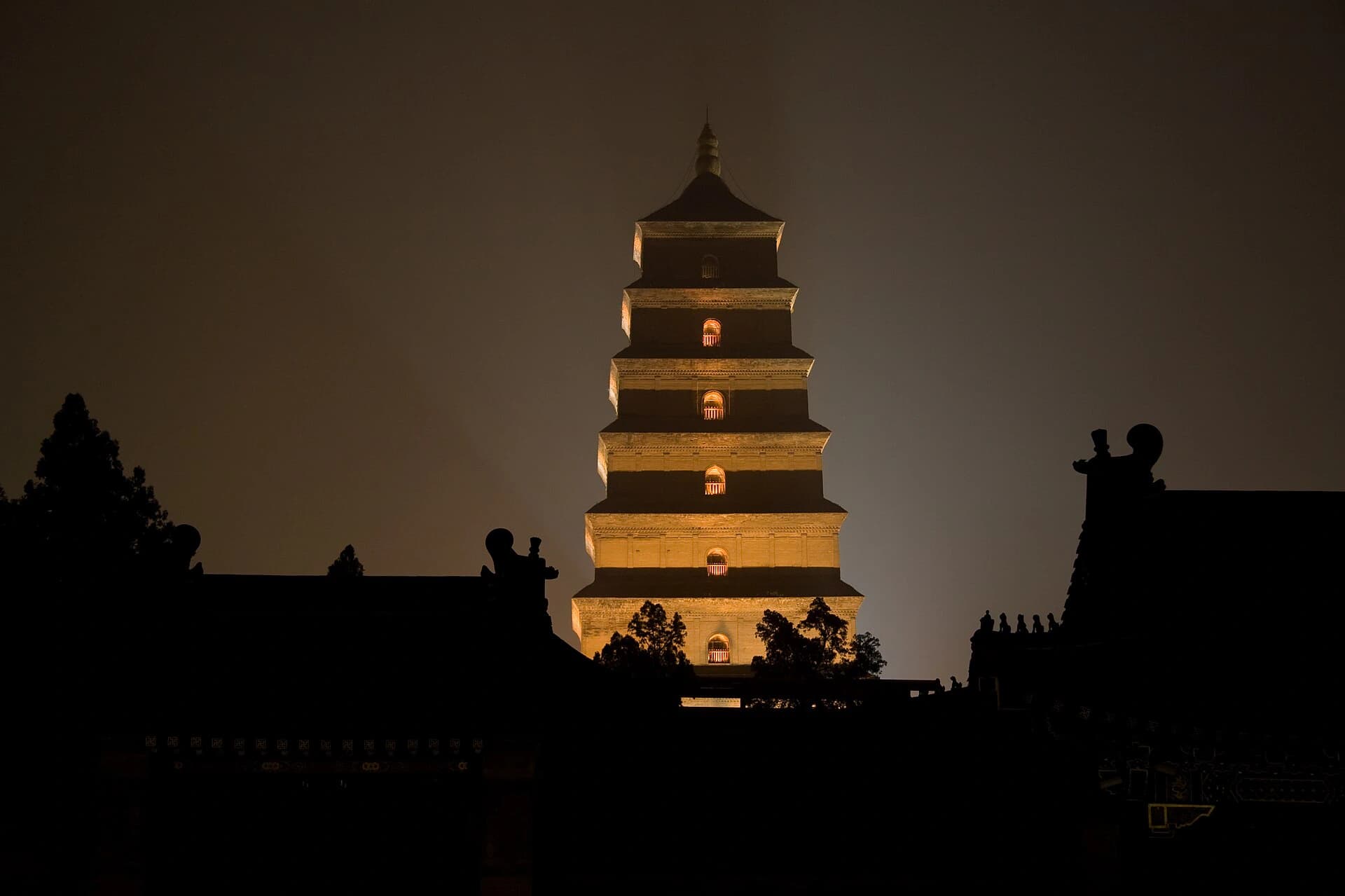
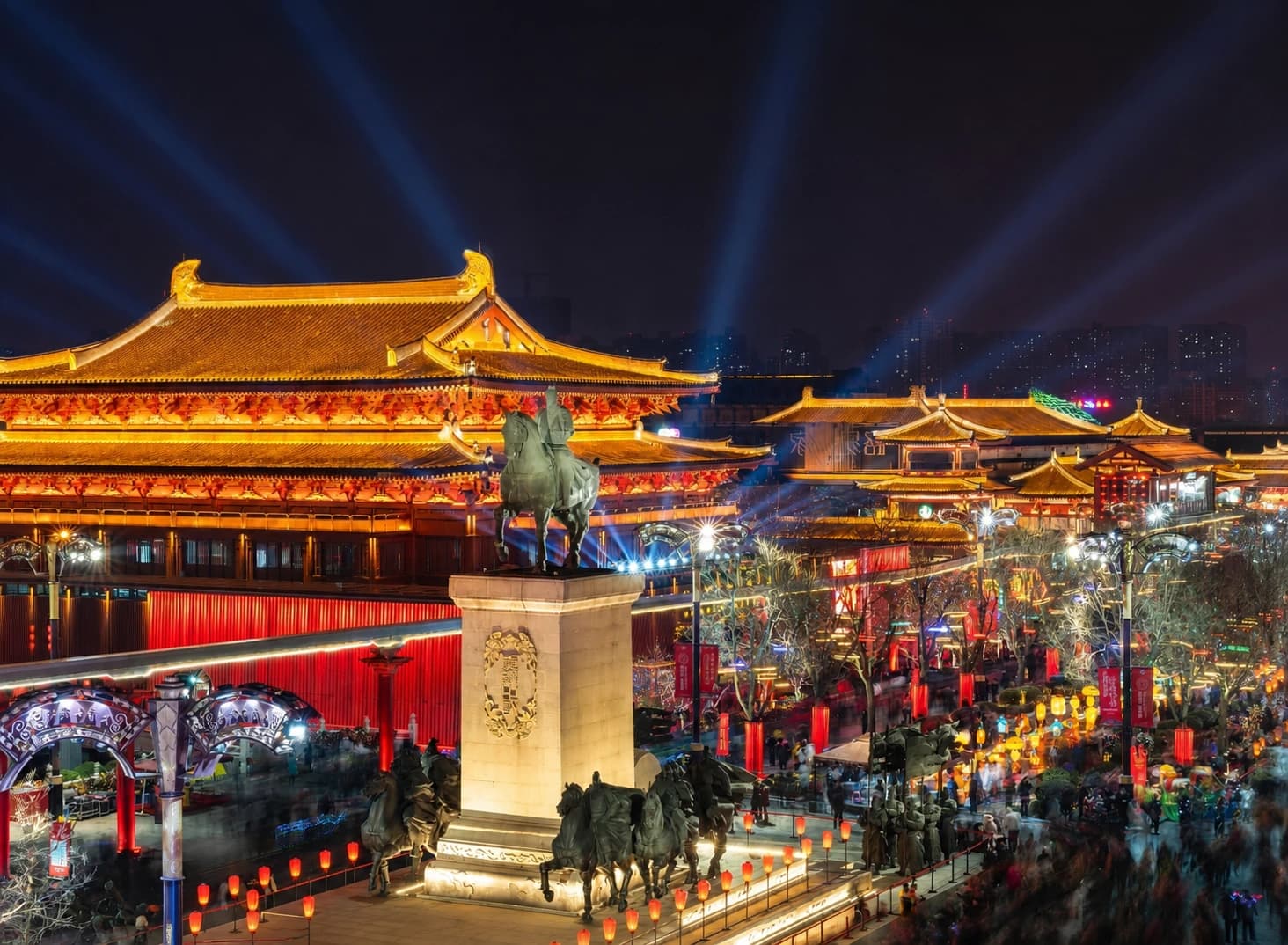
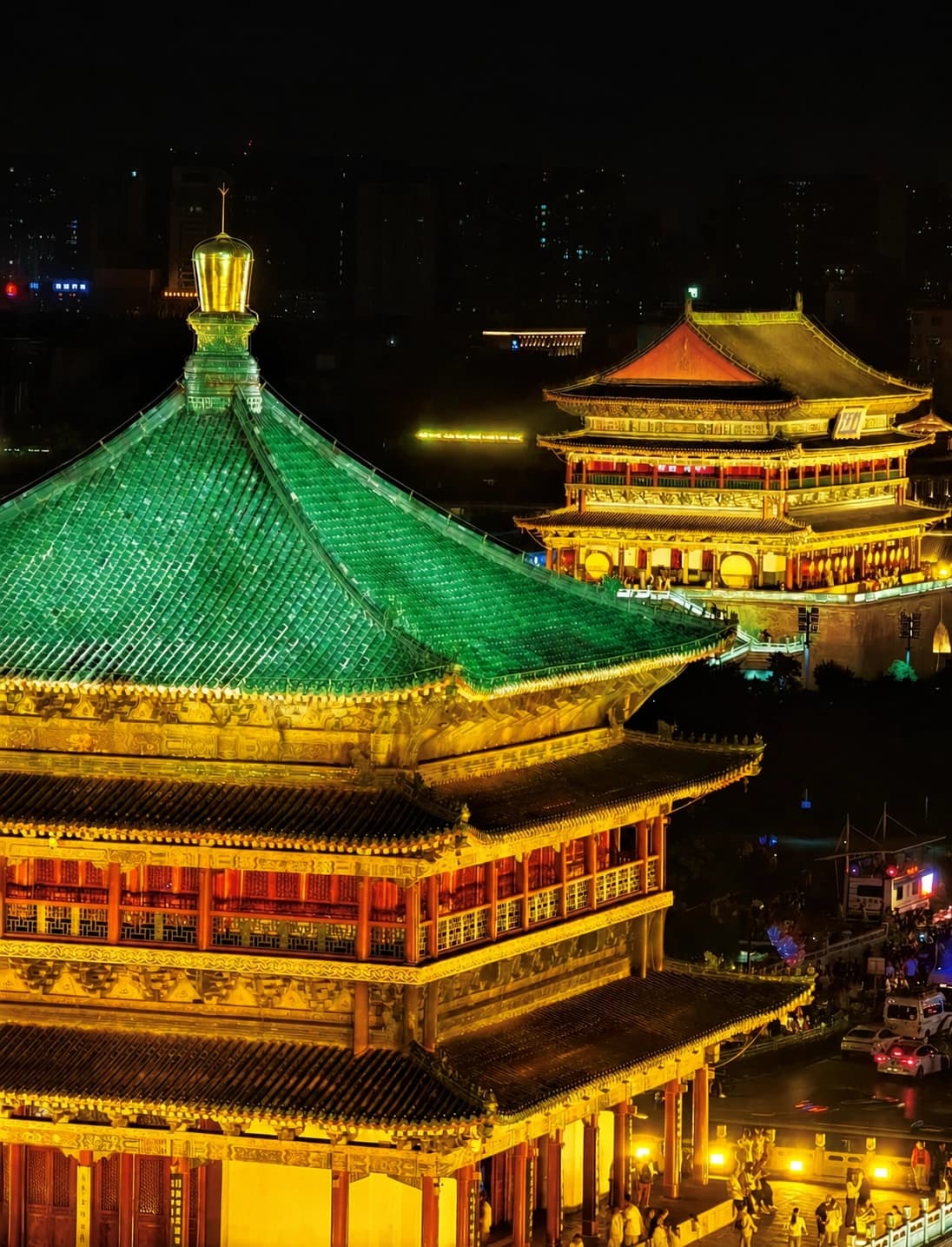
Night photograph by Maros Mraz, licensed CC BY-SA 3.0 via Wikimedia Commons.
The Day-to-Night Qujiang Route
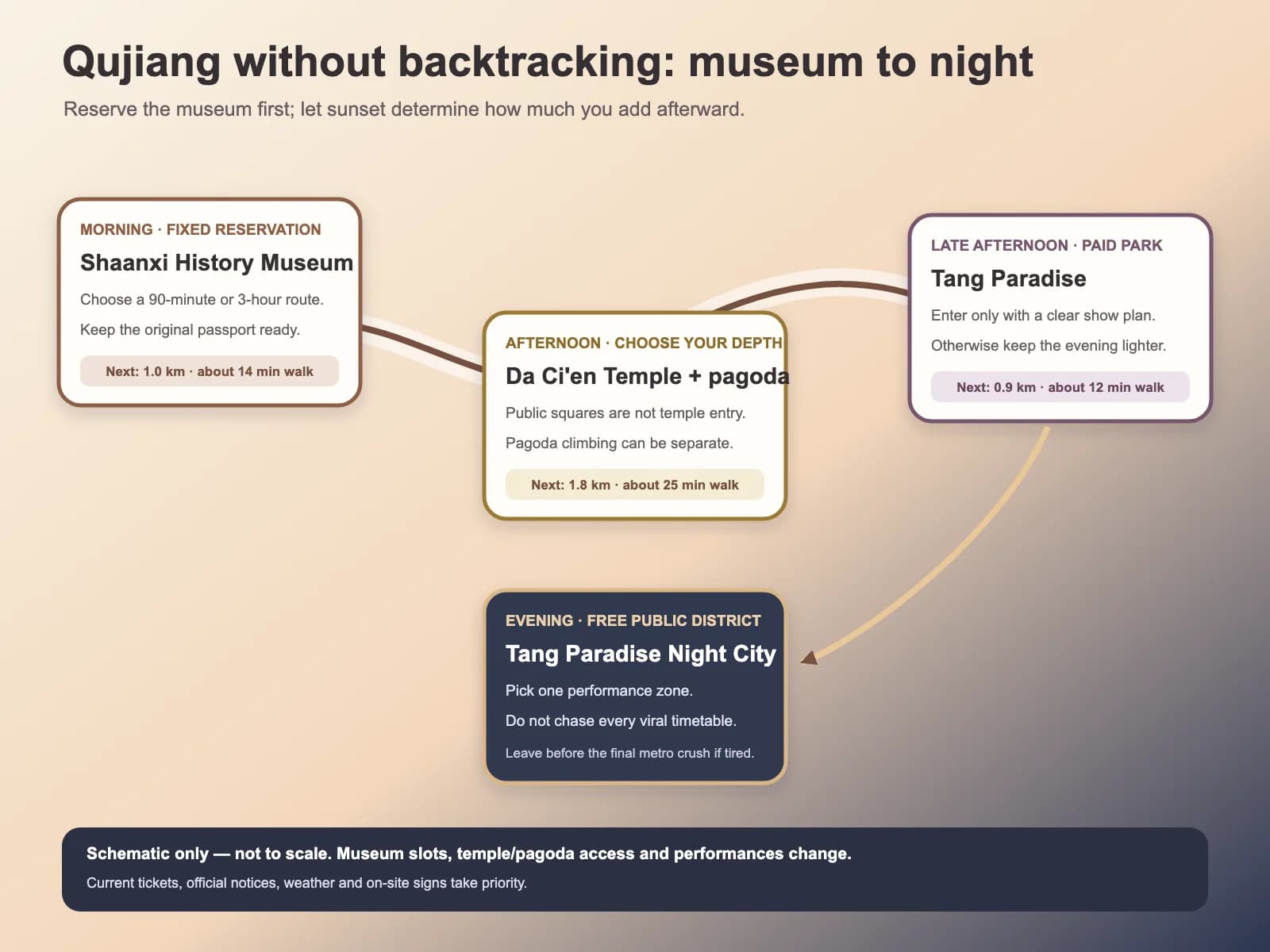
Use the route as a sequence, not a command to buy every ticket:
- Shaanxi History Museum: only with a confirmed slot.
- Big Wild Goose Pagoda / Da Ci'en Temple: choose public precinct, temple or temple plus climb.
- Tang Paradise: add it when the gardens or a specific live product justify several more hours.
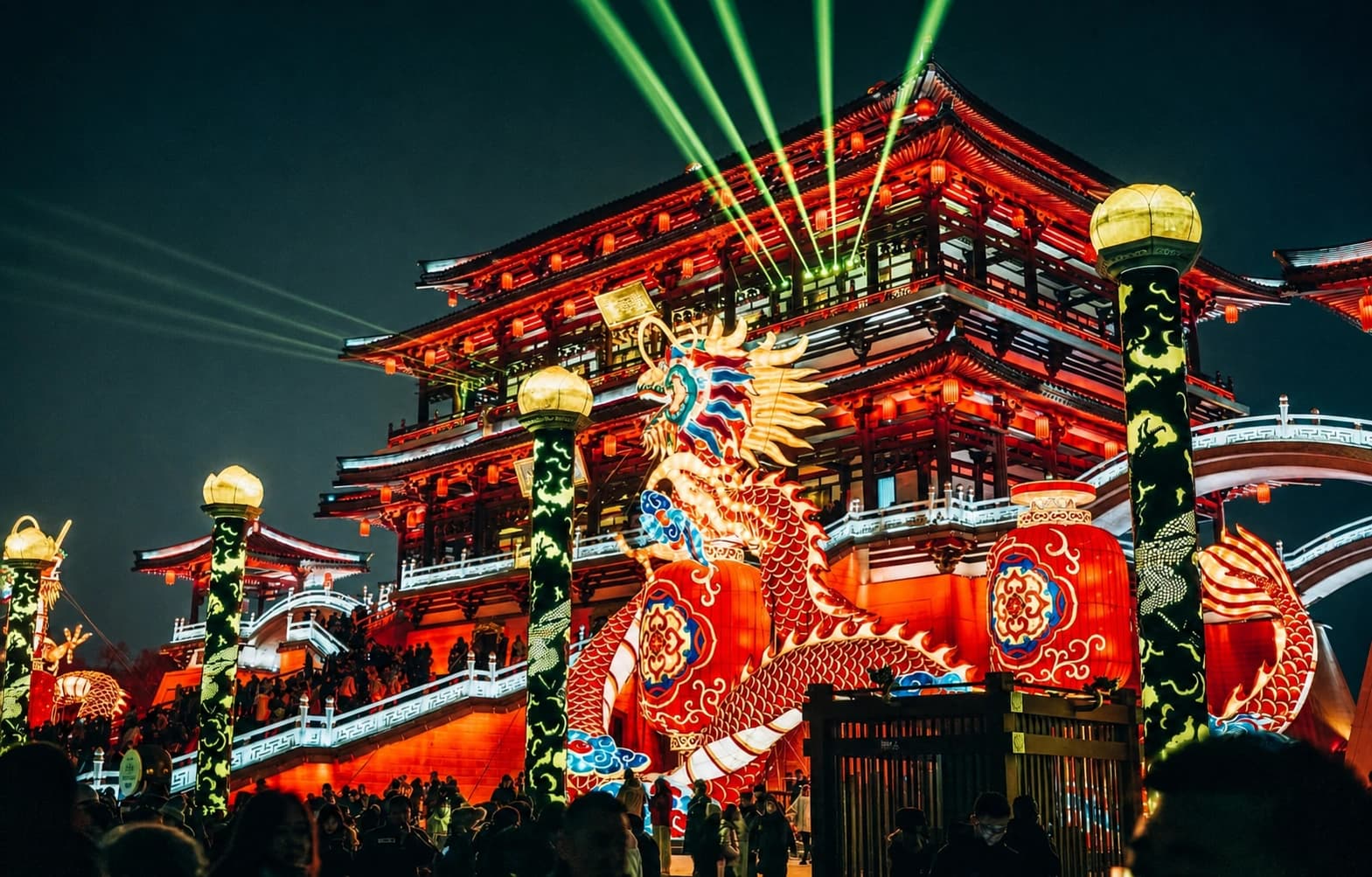
- Tang Paradise Night City: finish after dark for the atmosphere, but do not build the day around an unverified viral performance timetable.
Amap planning estimates put the museum about 1.0 km / 14 minutes' walk from the pagoda, the pagoda about 1.8 km / 25 minutes from Tang Paradise, and Tang Paradise about 0.9 km / 12 minutes from Night City. Crossing delays, heat and crowds can make every leg longer. Taxis may save energy for the middle leg.
For a calm half-day, visit only the temple/pagoda and public precinct. For a full day, pair the museum and pagoda, take a proper rest, then choose either Tang Paradise or a long evening promenade.
Eat One Xi'an Classic Well
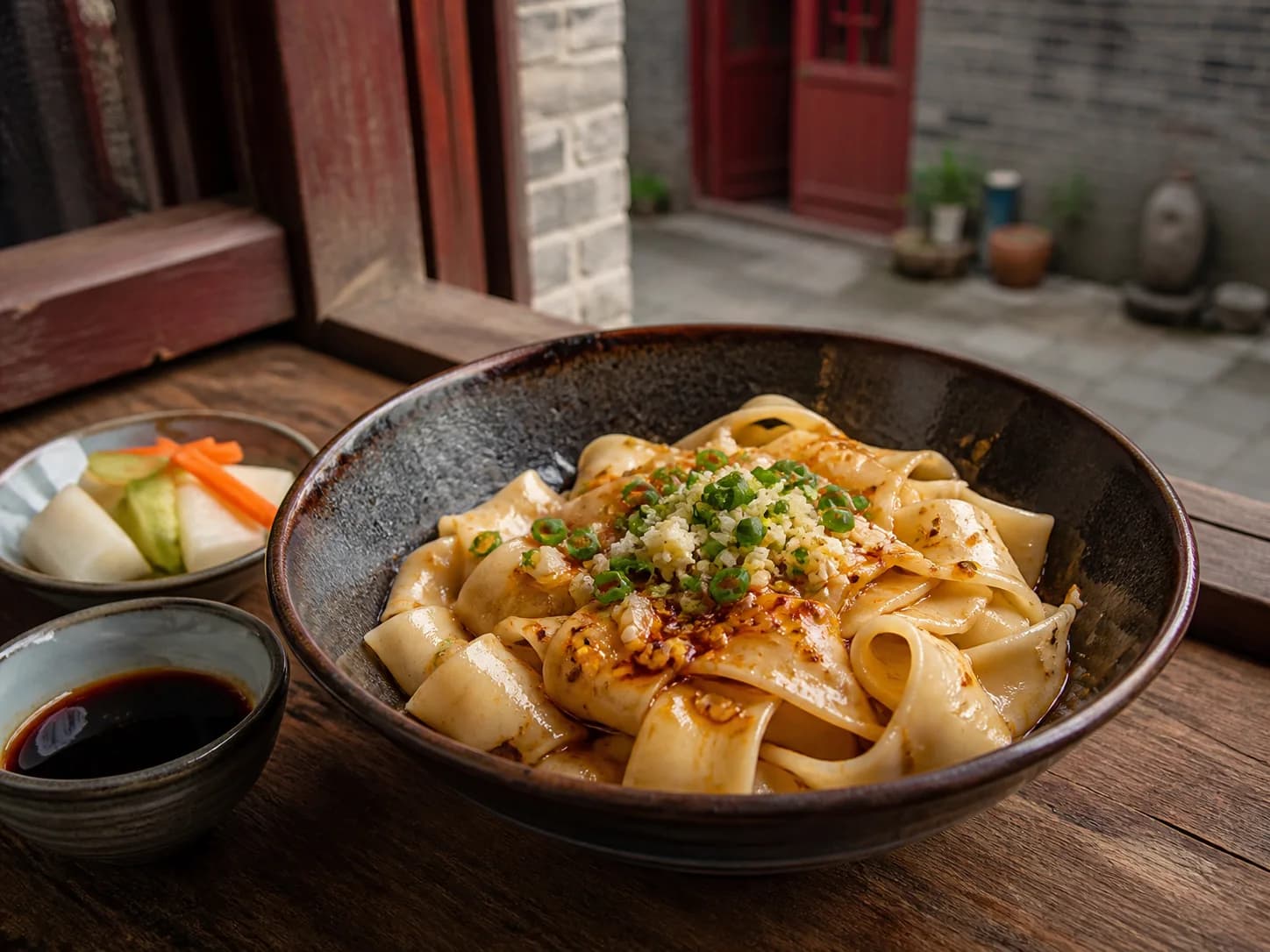
Wide biangbiang noodles make a good break between the daylight monument and evening lights. Look for a shop pulling or cutting noodles to order, a short menu and steady local turnover. Ask for less chilli if needed; the aromatic oil and vinegar balance matter more than maximum heat.
For a faster meal, choose freshly re-crisped roujiamo. Save lamb pao mo for a day without a tight timed entry—it is filling and meant to be eaten slowly. The pedestrian district has convenience and presentation; Xiaozhai usually offers more everyday choices. Verify the exact branch and current hours on a live map.
When to Come
- Early morning: best for temple calm and architectural detail.
- Late afternoon: good compromise if you want temple time followed by blue hour.
- After dark: best for the public precinct, not for assuming the temple or climb remains open.
- Rain or extreme heat: shorten the outdoor circuit and use the museum only if you already hold a reservation.
Do not publish a fixed fountain or street-performance schedule into your plan. Programs, weather stops and crowd controls change too quickly; consult same-day official signage.
Where to Stay
- Qujiang / pagoda area: best for families, evening walks and a slower pace; you trade away some old-city convenience.
- Xiaozhai: best balance for the museum, pagoda and metro; lively and practical rather than atmospheric.
- South Gate / Bell Tower: best for a first Xi'an trip combining the City Wall, Beilin and central food; commute to Qujiang by metro.
Compare Xi'an hotels on Trip.com, checking walking access to a specific metro entrance and recent noise reviews.
Practical Checklist
- Confirm whether you are buying the temple, pagoda climb or a combined product.
- Carry the original passport used for any reservation.
- Dress respectfully for the active temple and keep voices low.
- Skip the climb if narrow stairs, heat or crowds are a concern.
- Use the public precinct as a flexible evening finish, not a timed-show promise.
- Treat all walking times as estimates and keep one optional stop removable.