China itinerary for 10, 14 or 21 days: choose the route before the sights
For a first trip, the best route is the one that protects full days in places, not the one with the longest city list. Use these three starting points:
| Time in China | Best first-trip structure | Nights | Transfers | What it gives you |
|---|---|---|---|---|
| 10 days | Beijing → Xi'an → Shanghai | 4 + 2 + 3 | Two | China's strongest historical arc and one modern-city finish, at a brisk pace |
| 14 days | Beijing → Xi'an → Chengdu → Shanghai | 4 + 3 + 3 + 3 | Three | The classic route plus a slower food-and-neighbourhood city |
| 21 days | Beijing → Xi'an → Chengdu → Chongqing → Zhangjiajie → Shanghai | 4 + 3 + 3 + 3 + 4 + 3 | Five | A complete north-to-southwest rail arc, one major landscape and an east-coast exit |
Count Day 1 as arrival and the final day as departure. Count every intercity move as a partial travel day, even when the train itself is short. A one-hour Chengdu–Chongqing train still requires checkout, station access, security, boarding, arrival and another hotel transfer.
If the view from the carriage is part of the experience, use the China scenic train routes guide before locking the departure time. It distinguishes journeys worth protecting in daylight from ordinary transfers where schedule and hotel access should win.
The 10-day route is the minimum version that still feels like a journey rather than a connection exercise. Fourteen days is the strongest default for most first-time visitors. Twenty-one days lets you add southwest China and Zhangjiajie without turning every morning into a checkout.
This guide decides city order, night allocation and transport mode. It deliberately sends you to the detailed city pages for daily sightseeing. That keeps a national itinerary from becoming a shallow duplicate of six better local guides.
First, confirm that your entry permission fits the route
Do this before buying domestic tickets. China's entry rules depend on nationality, passport type, purpose, dates and, for transit policies, the international path.
As checked on 21 September 2026, the Ministry of Foreign Affairs lists ordinary-passport holders from 50 countries as eligible for unilateral visa-free entry for tourism and certain other purposes for stays of up to 30 days. The published end date for many of those countries is 31 December 2026, while Brunei and Russia have different terms. Read the current MFA visa-free FAQ for your passport and recheck it before payment.
The 240-hour transit policy is a different product. The National Immigration Administration says eligible nationals must transit to a third country or region, use a designated port, hold a confirmed onward ticket and remain within the permitted area for no more than 10 days. A return journey such as London → Beijing → London is not transit to a third place. Even a 10-day itinerary can exceed 240 hours depending on the official clock. Verify the port, permitted provinces and exact international routing on the current NIA policy page; do not use this article as entry clearance.
Eligible travellers may fill the Arrival Card through official NIA channels before travel, while airport completion remains available in the published process. Keep the passport used for every domestic train and hotel booking. The spelling, document number and nationality must match across reservations.
Why all three routes start in Beijing and end in Shanghai
These are open-jaw plans: fly into one city and out of another. Beijing sits at the north end of a strong high-speed rail line to Xi'an. Xi'an then opens the southbound corridor to Chengdu; Chengdu connects naturally to Chongqing; Chongqing connects toward Zhangjiajie; Shanghai gives the long route a major international finish.
Returning to Beijing simply to catch a flight spends a day reversing your trip. If airfare makes Shanghai-first much cheaper, reverse the entire structure instead of zigzagging: Shanghai → Xi'an → Beijing for 10 days, or Shanghai → Chengdu → Xi'an → Beijing for 14. The attractions do not require one direction. The geography does.
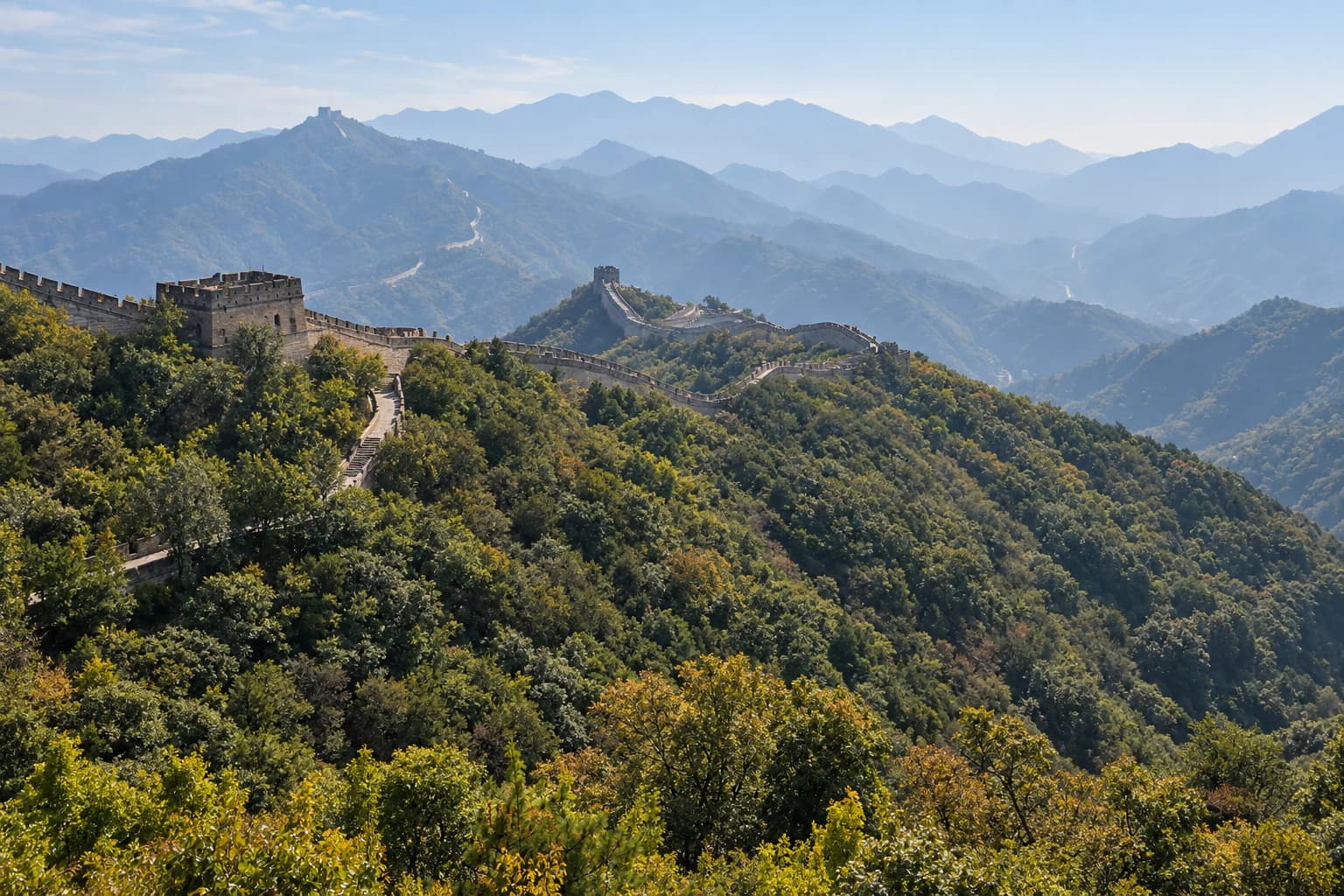
Beijing receives four nights because the Great Wall is a separate outward day and arrival recovery matters. Shanghai receives three nights because it works as a flexible final base: neighbourhood walks can expand or contract around weather, shopping and the outbound flight. Xi'an, Chengdu, Chongqing and Zhangjiajie are inserted only when the available days support their real travel jobs.
The 10-day route: Beijing, Xi'an and Shanghai
Use this route if: this is your first visit, history matters, you accept one compressed Xi'an stay and you want the simplest national route that still includes three distinct places.
Book 4 nights in Beijing, 2 in Xi'an and 3 in Shanghai. Do not add Chengdu, Guilin or Zhangjiajie. A fourth city would give you four hotel bases in nine nights and remove the time that makes the existing three worthwhile.
Days 1–4: Beijing, with one outward day
Day 1 is for immigration, airport transfer, check-in and a gentle local walk. Do not put a timed Forbidden City entry on an international-arrival day. Delays, document checks, baggage and the long airport-to-hotel journey can consume the useful afternoon.
Use Days 2–4 for three different jobs: one central imperial axis day, one Great Wall day, and one temple, park or palace day according to weather. The Beijing four-day itinerary gives these jobs a practical order. If you land early and sleep well, borrow more from the full Beijing destination guide; if jet lag wins, protect the Great Wall and cut a secondary urban stop.
Day 5: high-speed train to Xi'an
Current schedules show fast Beijing–Xi'an journeys at about 4 hours 10 minutes, usually Beijing West → Xi'an North, but many services take longer. Book by exact station and train number. A departure around late morning or midday preserves sleep, avoids a pre-dawn cross-city taxi and still leaves time for a Xi'an evening.
The useful unit is hotel door to hotel door: allow roughly seven hours once checkout, Beijing station access, security, boarding, arrival and Xi'an metro or taxi are included. After check-in, use the City Wall area or a food-focused central walk; do not attach the Terracotta Warriors to the same day.
Day 6: Xi'an's non-negotiable outward day
Give the Terracotta Warriors a dedicated half-to-full day with transport margin. Return for one compact evening around the historic centre. The Xi'an destination guide explains the city's main geographic clusters, while the Xi'an three-day itinerary contains more than this two-night stay can hold. Use it to choose priorities, not as a checklist.
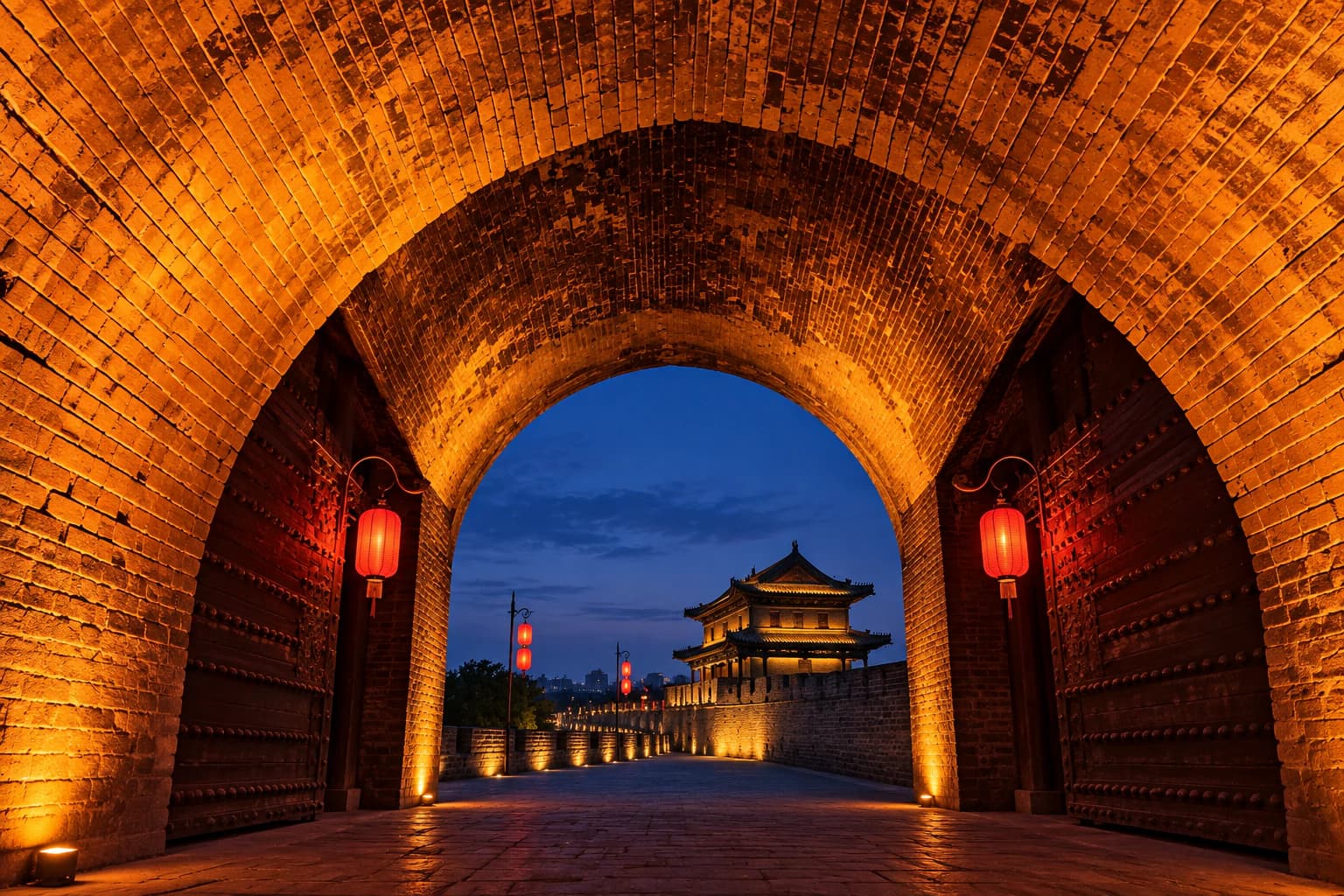
Day 7: Xi'an to Shanghai—choose time, not prestige
This is the 10-day route's hardest decision. Direct high-speed trains can take roughly six hours before station transfers. A flight is much shorter in the air, but airport access, security and baggage make the real door-to-door saving smaller.
Choose rail when the best train is direct, the departure fits your morning and you value a predictable city-centre arrival. Choose air when a well-timed nonstop preserves a useful Shanghai evening or when the available trains leave you with an awkward arrival. Do not schedule a fragile one-hour connection from an attraction tour into either station or airport.
Days 8–10: Shanghai and departure
Use Day 8 for the Bund and one adjacent historic or commercial district. Use Day 9 for a contrasting neighbourhood such as the former French Concession, Suzhou Creek or a museum-and-design day. Start with the Shanghai destination guide, then use the Shanghai three-day itinerary to separate these clusters.
Day 10 is departure. If the flight leaves late, keep the final morning near the hotel and on the correct side of the city. Pudong Airport is not a quick extension of a central walk. Store bags, leave a wide rail or road margin, and do not risk the international flight for one last viewpoint.
The 14-day route: add Chengdu, not two more cities
Use this route if: you want a deeper first trip with a slower social-and-food city between the imperial north and Shanghai.
Book 4 nights in Beijing, 3 in Xi'an, 3 in Chengdu and 3 in Shanghai. The extra four days support one extra base plus a less compressed Xi'an stay. They do not support Chengdu, Chongqing and Zhangjiajie together.
Days 1–4: Beijing
Follow the same four-night structure as the 10-day plan. The difference is psychological: there is no need to steal time from Beijing to “save” a day for the southwest. Keep the Great Wall on the best weather day and use the remaining full days for coherent geographic clusters.
Days 5–7: Xi'an
Travel by high-speed rail on Day 5, then give Xi'an two complete sightseeing days. One belongs to the Terracotta Warriors corridor. The other can combine the City Wall, museum or central mosque-and-market streets according to interest. Three nights also make a poor-weather arrival less damaging.
Days 8–10: Chengdu
Current fast Xi'an North–Chengdu East services take about 3 hours 05 minutes at the fastest, with many departures. Move on Day 8 and use the first evening to settle into one neighbourhood rather than chasing a distant attraction.
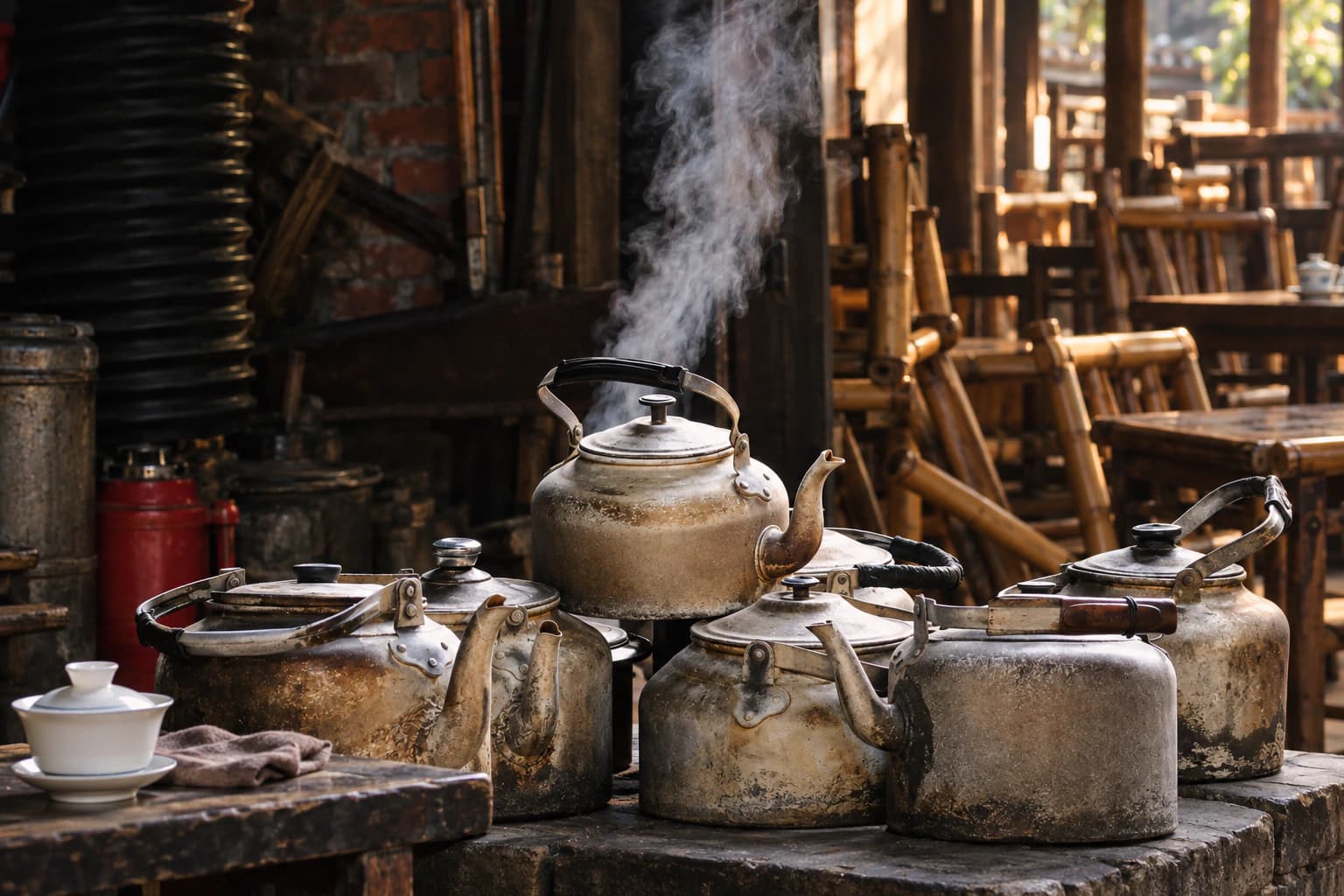
Give one early morning to the panda base or another prebooked wildlife product, then keep the afternoon deliberately light. Use the second full day for a Chengdu job that suits you: tea-house and neighbourhood life, cuisine, Sanxingdui Museum, or the Dujiangyan Irrigation System. Do not combine two outward excursions because both appear under “Chengdu.” Read the Chengdu destination guide first; the Chengdu three-day itinerary then gives the city and one excursion enough space.
Day 11: Chengdu to Shanghai by air
This is the deliberate diagonal jump. Current direct rail options take about 10 hours 06 minutes at the fastest, before station access. In a 14-day itinerary, a well-timed nonstop flight is normally the better trade because it preserves more of Day 11 and avoids an entire waking day in transit.
Compare the true schedule: hotel departure, airport, check-in cutoff, flight, baggage and Shanghai transfer. A 07:00 flight may be worse than a comfortable morning checkout and lunchtime departure. If you strongly prefer rail, treat Day 11 as a full travel day and do not promise yourself a Bund sunset.
Days 12–14: Shanghai and departure
Use two full days for the city, then depart on Day 14. Shanghai works well at the end because it absorbs changes: rain can move a museum forward; clear weather can move the riverfront later; shopping can be concentrated without breaking the national route.
The 21-day route: a continuous southwest arc plus Zhangjiajie
Use this route if: you want the strongest contrast, can manage five intercity moves, and are willing to protect four nights around Zhangjiajie's weather and gate system.
Book 4 nights in Beijing, 3 in Xi'an, 3 in Chengdu, 3 in Chongqing, 4 in Zhangjiajie and 3 in Shanghai. This is 20 nights. It is a chain, not a hub-and-spoke holiday: each city advances the route.
Days 1–7: Beijing and Xi'an
Use the same 4-night Beijing and 3-night Xi'an blocks as the 14-day plan. Familiarity with rail procedures gained on Beijing West–Xi'an North makes the later station days easier. Keep the original passport accessible and save every hotel name in Chinese before arrival.
Days 8–10: Chengdu
Travel Xi'an–Chengdu on Day 8, then use the same city-plus-one-excursion logic. Three nights are enough for Chengdu's role in this itinerary. Adding Leshan, Jiuzhaigou or a second long excursion changes the geometry and requires nights taken from another base.
Days 11–13: Chongqing
Chengdu–Chongqing is the easiest transfer in the route. Current schedules list many services and a fastest ride around 1 hour 02 minutes, but the two cities use multiple stations. Choose the arrival station by hotel access, not by the shortest number in the search result.
Chongqing needs one vertical-city day and one outward or neighbourhood day. The Chongqing destination guide defines the useful city zones, and the Chongqing three-day itinerary explains how river crossings, steep elevation changes and station exits shape the plan. Do not measure the city by straight-line distance. A viewpoint and a riverside street that look adjacent can be separated by twenty floors, a bridge approach or a long descent.
Days 14–17: Zhangjiajie
Move from Chongqing toward Zhangjiajie on Day 14 and treat it as a transfer, not a full mountain day. Current fastest rail journeys can be close to two hours on the new corridor, but hotel geography still matters: Zhangjiajie West, the Tianmen cableway base in the city and Wulingyuan are separate travel zones.
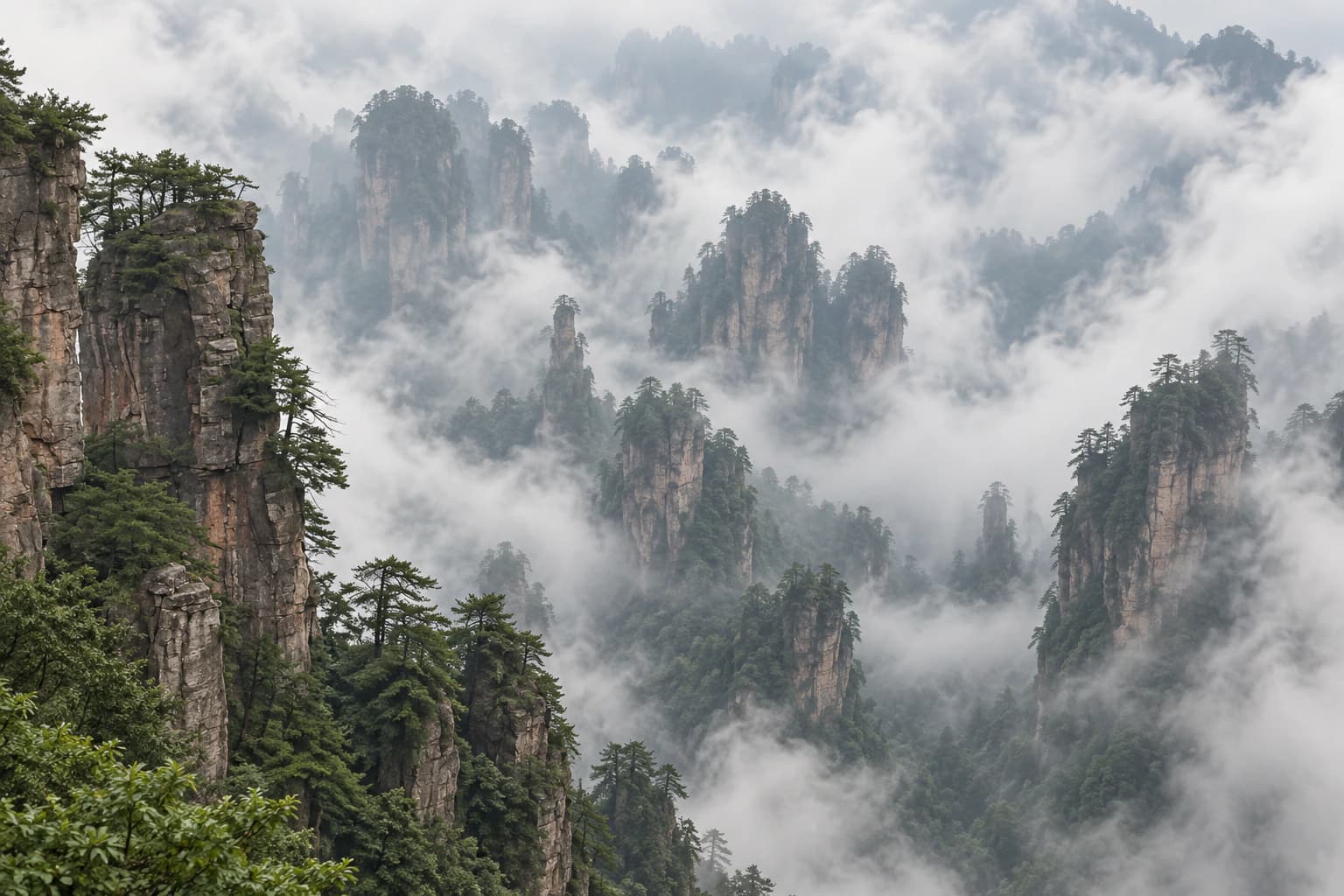
Four nights support one Tianmen Mountain day, two Wulingyuan days and one arrival/transfer structure. Read the Zhangjiajie destination guide before choosing a base, then use the Zhangjiajie four-day itinerary for gates, cableways and weather order. If the forecast is unstable, move the most exposed plateau loop to the clearer day. Low cloud may hide distant pillars while improving forest and valley atmosphere.
Do not compress Zhangjiajie to two nights simply to add Furong and Fenghuang. Those towns work best as an onward rail route with their own nights. If you want that extension, add at least two more nights and follow the Chongqing–Zhangjiajie–Furong–Fenghuang route instead of borrowing time from the mountain days.
Day 18: Zhangjiajie to Shanghai
Current direct trains can take about 7 hours 18 minutes at the fastest, with limited departures. A nonstop flight may be faster, but it can be less frequent and more sensitive to seasonal schedules. Compare the actual date and accept that Day 18 is mostly transport whichever mode wins.
Choose rail when a direct daytime service is available, the arrival station suits your Shanghai hotel and you prefer a continuous journey. Choose air when the nonstop operates at a useful time and the complete door-to-door schedule clearly saves several hours. Avoid self-connecting through another city merely to claim a shorter headline duration.
Days 19–21: Shanghai and departure
Use Days 19 and 20 for two contrasting city clusters and leave Day 21 for departure. This last three-night block also absorbs a delayed southwest flight or train better than a same-day international connection. Do not book Zhangjiajie → Shanghai → international departure as one unprotected sequence.
Transfer table: what the timetable does not show
| Leg | Fastest current headline | Real planning role | Default choice |
|---|---|---|---|
| Beijing → Xi'an | About 4h10 by fast train | Half to most of a day after hotel transfers | High-speed rail |
| Xi'an → Chengdu | About 3h05 by fast train | A manageable half-day move | High-speed rail |
| Chengdu → Chongqing | About 1h02 at the fastest | Still a checkout-and-check-in day | High-speed rail, station chosen by hotel |
| Chengdu → Shanghai | About 10h06 at the fastest by rail | Full waking day by rail | Nonstop flight in the 14-day route |
| Chongqing → Zhangjiajie | About 2h at the fastest | Half-day after station and base transfers | High-speed rail |
| Zhangjiajie → Shanghai | About 7h18 at the fastest direct train | Mostly a travel day | Compare direct train and nonstop flight |
These durations were checked against current route inventory in September 2026. They are not permanent timetables. Compare live China train inventory on Trip.com once your nights are fixed, then confirm the exact station, date, passenger document and train number. China Railway ticket sales normally open close to departure rather than months ahead; current route guidance uses a roughly 15-day sale window, and release timing can change.
For the long diagonal legs, compare live nonstop flights on Trip.com by total elapsed time and baggage terms. A cheap flight to an inconvenient airport at midnight can cost more useful time than a daytime train.
How to choose hotels without rebuilding the route
Pick neighbourhoods after the intercity structure is stable. For every base, check four things:
- The exact arrival station or airport. “Chongqing station” and “Shanghai airport” are not sufficiently precise.
- Passport acceptance and front-desk hours. Confirm directly when arriving late.
- Walking reality. A straight-line 500 metres can hide a Beijing ring-road crossing, a Chongqing elevation change or old-town stairs.
- One useful morning connection. Stay near the metro or pickup that serves the first fixed attraction, not simply the city's most famous landmark.
Use the destination guides above to choose districts, then compare current China hotel inventory on Trip.com by exact map pin, recent access reviews, cancellation terms and guest-document policy. Change hotels within a city only when geography requires it, as in Zhangjiajie city versus Wulingyuan. Otherwise, repeated checkouts destroy the time you added by choosing a longer trip.
Seasonal adjustments that preserve the route
Spring: protect flexible weather days
Spring suits all three structures, but northern wind, southern rain and mountain cloud can occur on the same trip. Keep the Great Wall, Zhangjiajie plateau and skyline evenings movable within their city blocks. Carry a packable rain shell rather than building a new city into the itinerary after one poor forecast.
Summer: reduce midday exposure
Beijing, Xi'an, Chengdu, Chongqing and Shanghai can all be hot and humid. Start exposed walls, archaeological sites and mountain queues early. Use museums, tea houses and rest during the hottest hours. In the 21-day route, do not add more lowland cities simply because daylight is long; heat makes each transfer heavier.
Autumn: book the structure first
Autumn often gives comfortable city walking and clearer mountain days, but popular dates and the National Day holiday period can tighten transport and raise crowd pressure. Avoid building short connections. Book refundable hotels early, then secure domestic transport as its sale window opens.
Winter: decide whether Zhangjiajie still earns four nights
Winter can bring beautiful mountain atmosphere, shorter operating hours, ice and closures. Keep Zhangjiajie when the landscape is a main goal and you can tolerate uncertainty. If you want a warmer, city-led route, replace the southwest mountain block with Guangzhou and Hong Kong—but remember that Hong Kong has separate immigration and border formalities. Do not treat it as a domestic station change.
Interest-based swaps that keep the same number of bases
For gardens and water towns: use the east, not the southwest
On a 14-day trip, replace Chengdu with Hangzhou and Suzhou only if you are willing to treat them as a connected east-China segment. A practical order is Beijing → Xi'an → Shanghai, with Shanghai as the luggage base for one short rail excursion or with one carefully chosen overnight. Do not add both as extra pins between Chengdu and Shanghai.
For karst rivers: replace one block with Guilin and Yangshuo
Guilin and Yangshuo suit travellers who prefer river-and-countryside scenery to Chengdu's urban rhythm. In a 14-day structure, the replacement normally requires a flight from Xi'an and another flight toward Shanghai. Use the Guilin four-day itinerary and keep at least three nights in the region; a one-night photo stop is not worth two airport days.
For food and urban photography: keep Chengdu and Chongqing
The 21-day route already provides the strongest pairing. They are close by train but visually and socially distinct. Chengdu rewards slow neighbourhood time; Chongqing rewards deliberate movement through elevation, rivers and night views. Keep three nights in each rather than commuting between them.
For fewer moves: deepen Beijing, Xi'an and Shanghai
A slower 14-day first trip can remain in only three cities: 5 nights Beijing, 4 nights Xi'an and 4 nights Shanghai. Use the extra days for a second Beijing outward trip, a deeper museum-and-neighbourhood day in Xi'an, and Hangzhou or Suzhou from Shanghai. This version is often better for families, travellers carrying substantial luggage and anyone who dislikes repeated hotel changes.
The booking order that prevents expensive rewrites
- Verify entry permission and passport validity. A domestic itinerary cannot repair the wrong international route.
- Choose the international open jaw. Beijing in / Shanghai out is the default; reverse the whole route if airfare strongly favours it.
- Fix the number of nights in each base. Use 4-2-3, 4-3-3-3 or 4-3-3-3-4-3.
- Reserve cancellable hotels. Confirm exact pins and late arrival before chasing a deal.
- Reserve scarce timed attractions. Availability rules vary; consult the city guide and official product for the live release window.
- Buy trains when the live sale window opens. Enter passenger details exactly as in the passport and inspect the station name character by character.
- Buy the long domestic flight only after the surrounding nights are fixed. Include baggage and airport access in the comparison.
- Save Chinese names, addresses and confirmations offline. Screenshots are useful when mobile data fails, but use the live booking record for changed times.
Common route mistakes
- Counting nights as full days. Nine nights does not produce ten full sightseeing days when arrival and departure are included.
- Adding a city because the train is fast. Short rail time does not remove hotel and station work.
- Using a city name instead of a station. Beijing, Shanghai, Chengdu and Chongqing each have multiple major terminals.
- Flying every long leg. Airports help on diagonals such as Chengdu–Shanghai; rail is easier on the Beijing–Xi'an–Chengdu–Chongqing spine.
- Booking a separate domestic leg before an international departure. Protect the final Shanghai nights so a delay does not threaten the flight home.
- Treating Zhangjiajie as one gate. The city, Tianmen Mountain and Wulingyuan require distinct bases and transport choices.
- Confusing 240-hour transit with ordinary visa-free tourism. The third-country route and permitted-area rules are fundamental.
Which duration should you choose?
Choose 10 days when leave is limited and you can accept a quick Xi'an stay. It gives the cleanest first-trip story: imperial Beijing, ancient-capital Xi'an and contemporary Shanghai.
Choose 14 days when you want the best balance. The extra city is meaningful, Xi'an is no longer compressed, and the route still has only three intercity moves.
Choose 21 days when Zhangjiajie and the southwest are central goals. The longer trip is not a stretched 14-day checklist. Its value comes from keeping three- and four-night bases while the rail line carries you in one direction.
If you are tempted to add “just one more place,” calculate what you will remove: a full city day, a weather alternative or the final international-flight buffer. That trade is the real cost of the extra pin.
Open the complete day-by-day routes
This guide explains how to choose. The structured itineraries show the actual order, intercity transfer and cut logic for each day: