Badaling Great Wall
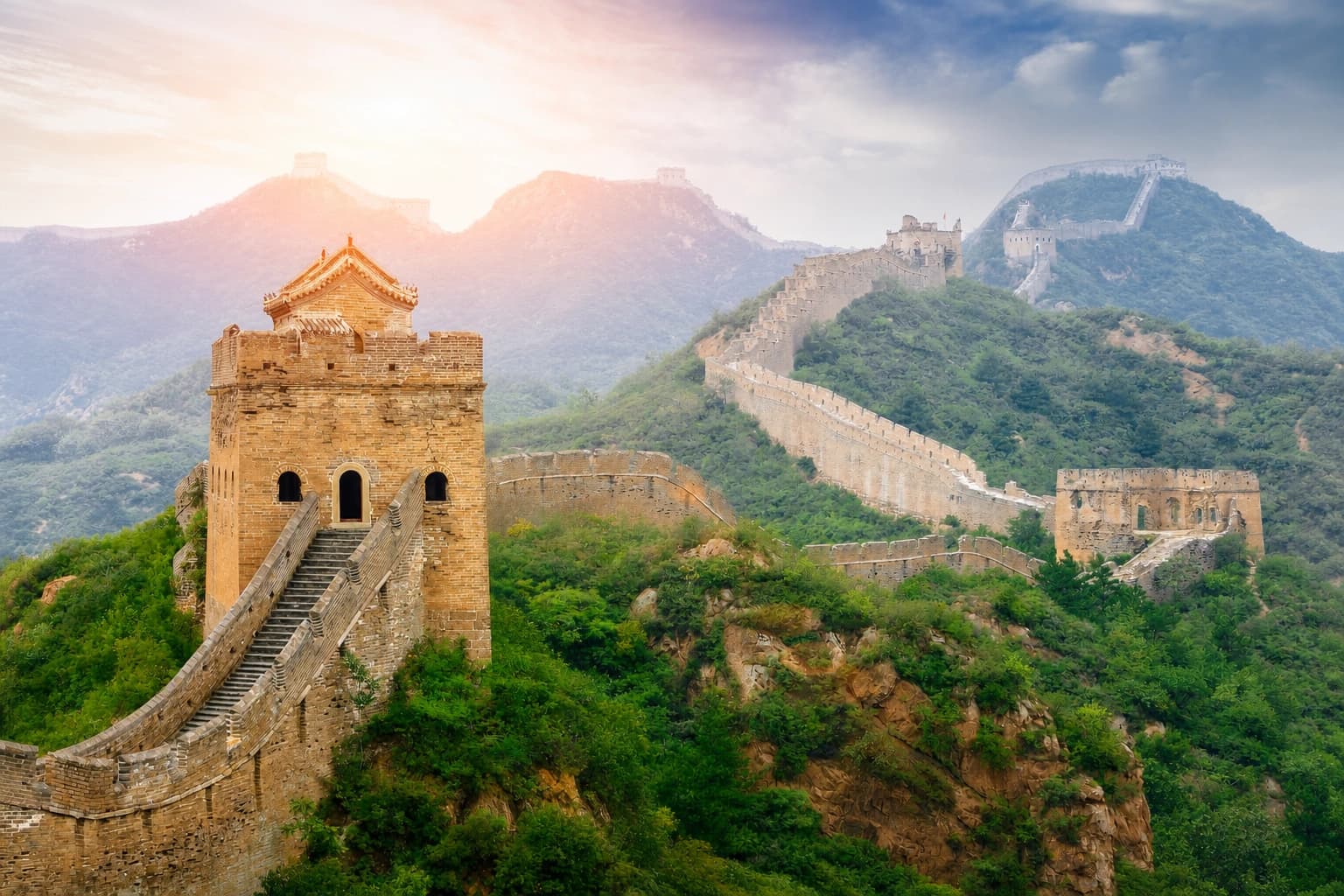
The Badaling Great Wall is the most renowned and best-preserved section of the Great Wall of China, standing as a monumental testament to ancient Chinese architecture and strategic engineering. First fortified in the Ming Dynasty (around 1505) to guard the strategic Juyongguan pass protecting the capital, Badaling anchors the world-famous mountain fortress network stretching across northern China.
Why Visit Badaling Great Wall
- Most Well-Preserved & Accessible: Restored with high-quality pathways, handrails, and excellent visitor infrastructure.
- Iconic "Hero Slope": Home to the legendary stone tablet inscribed with the famous saying: "He who has not climbed the Great Wall is not a true hero."
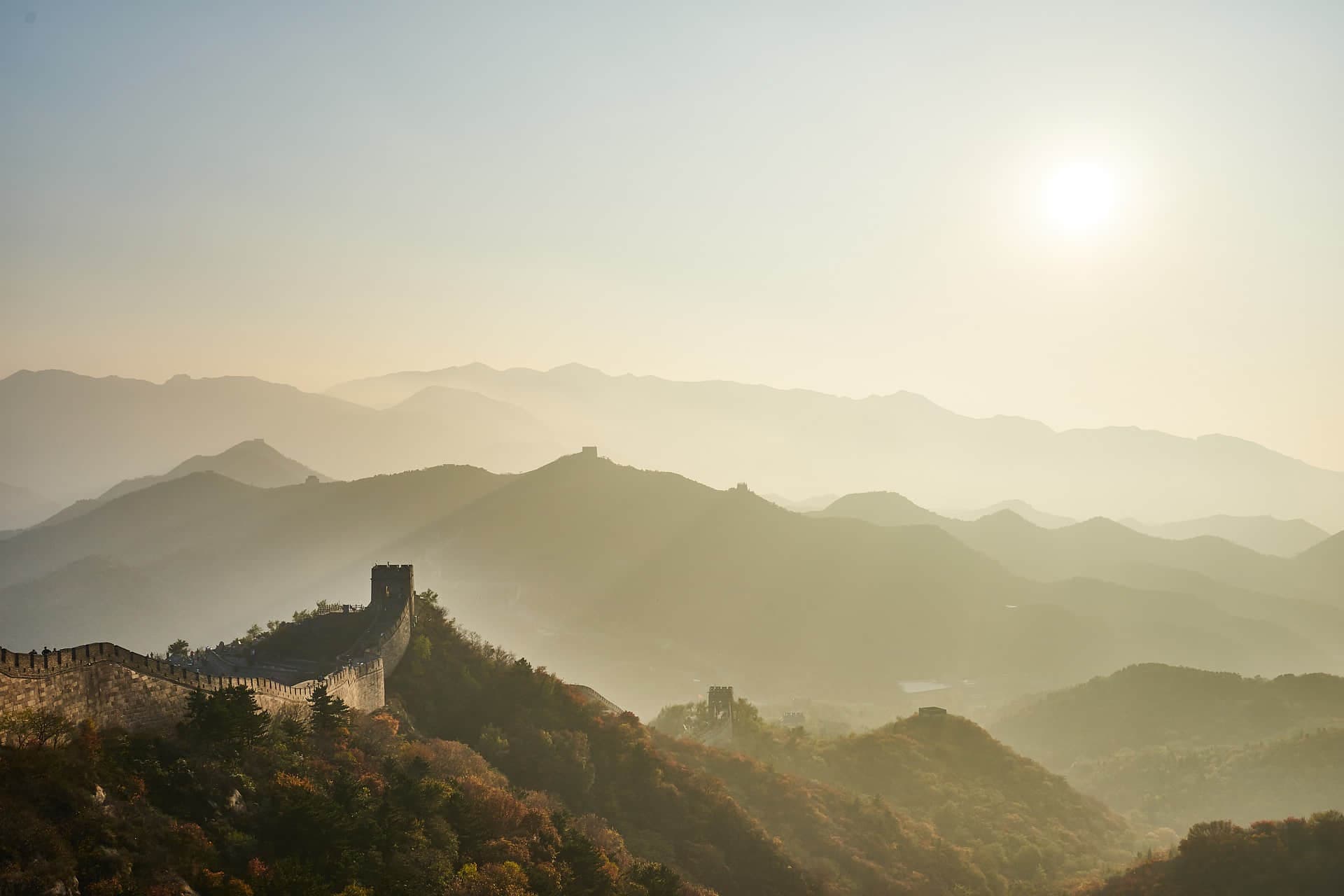
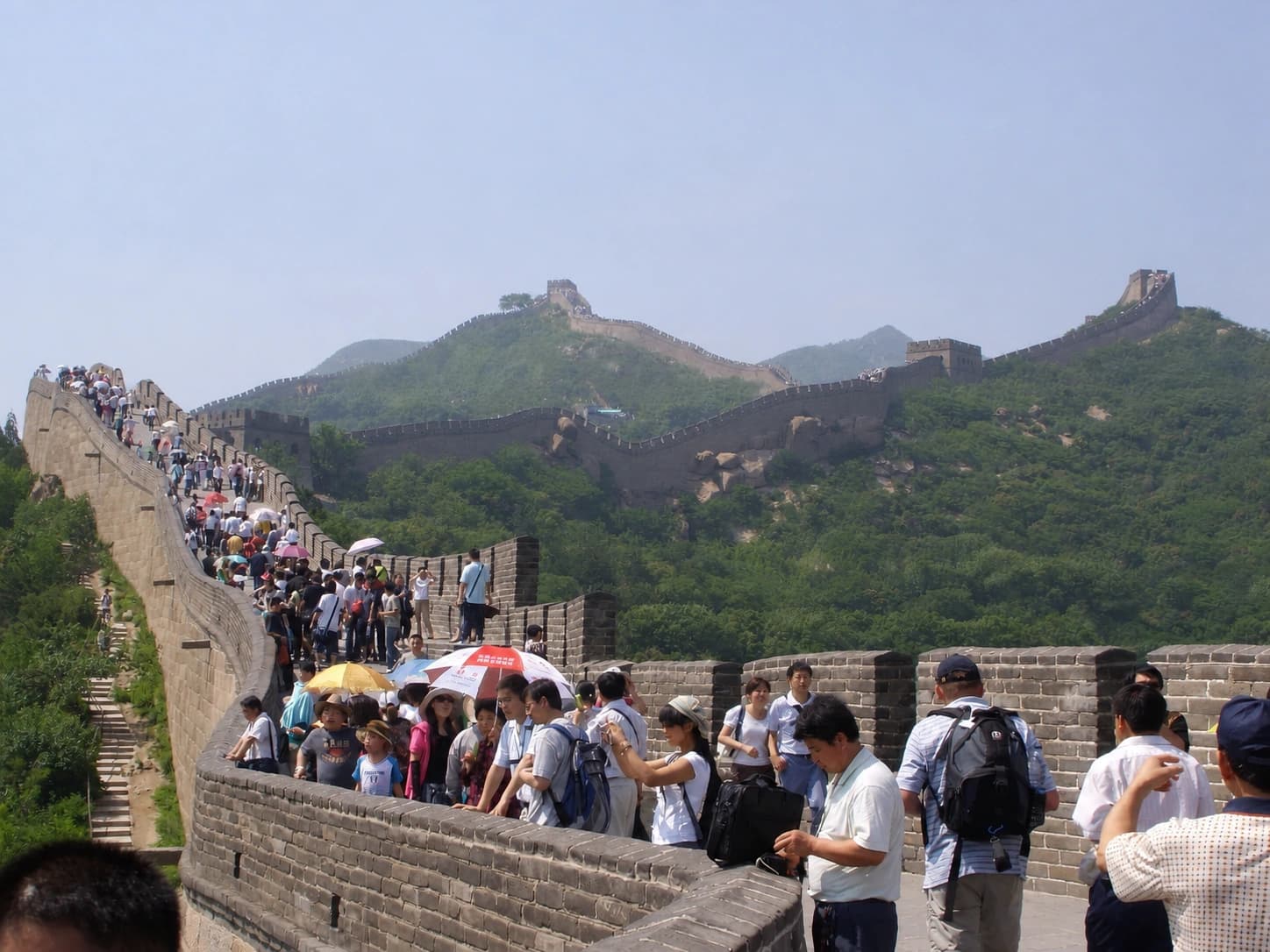
- Spectacular Mountain Vistas: Delivers dramatic panoramic views of ancient stone watchtowers undulating across rugged ridges.
- Fast Rail Option: The train segment from Beijing North or Qinghe can take roughly 20–35 minutes, but station access, security, and the walk to the scenic entrance add time.
Best Photo Spots
- Hero's Slope (Haohan Po): The iconic stone stele landmark celebrating every climber's achievement.
- North Tower 8 (Beibalu): The highest elevation point in Badaling, offering awe-inspiring 360-degree panoramas of the snaking wall.
- South Tower 4 (Nansilu): A serene vantage point looking back onto the dramatic landscape with fewer crowds.
Detailed Hiking Routes
For a shorter walk, use the three-stage choice below: 1. Start at the main pass; 2. choose either the North or South Wall toward Towers 1–4; 3. retrace the open, signed route to the pass. Turn earlier if needed. Check any one-way controls before climbing; combining both sides adds a second climb.
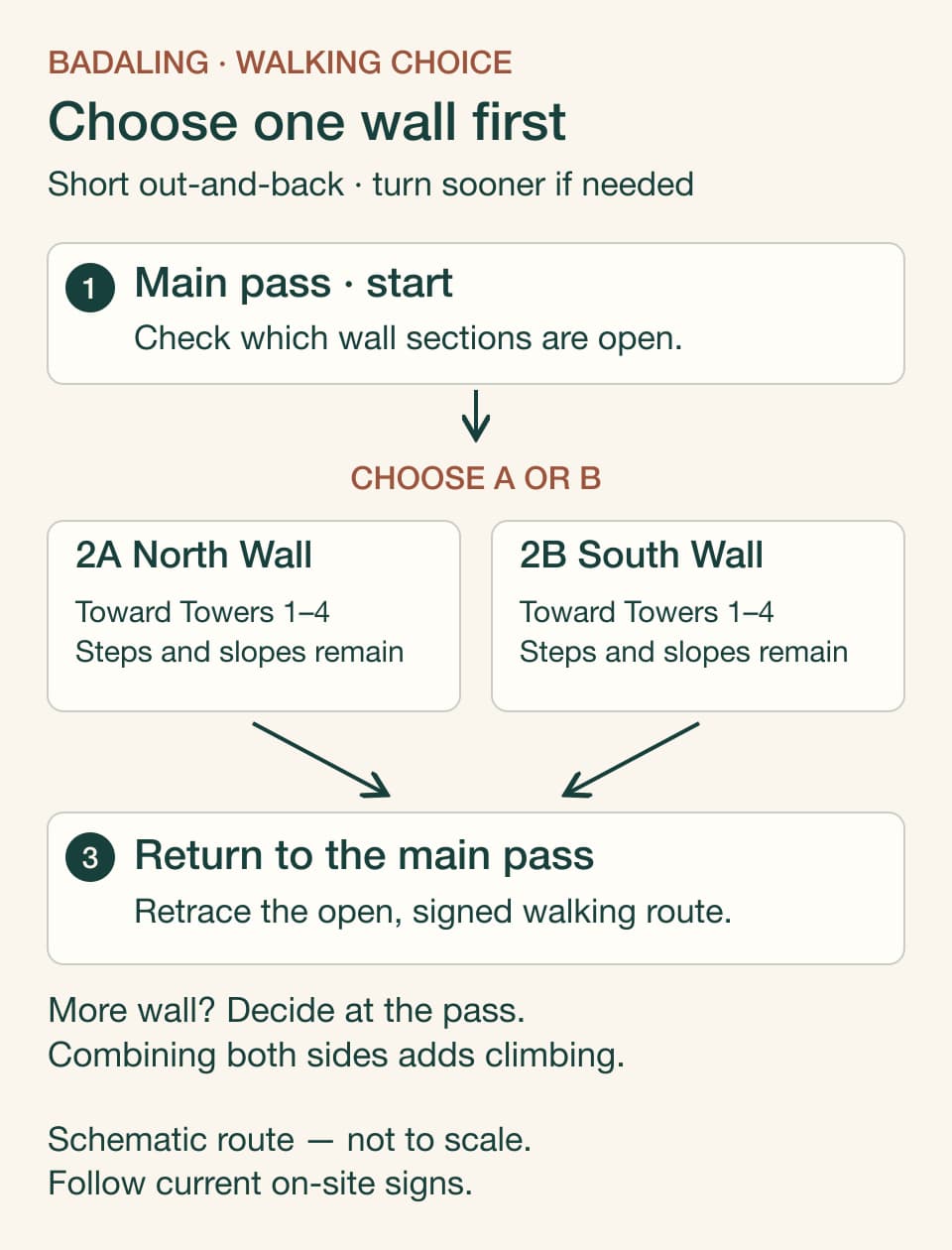
North Great Wall Route
-
Lower Section (North Towers 1–4)
- A shorter walking objective from the main pass, with inclines and stone steps.
- Choose a turnaround point while you still have energy for the descent; this is not a step-free route.
- The liveliest and most frequented part of the wall.
-
Moderate Section (North Towers 5–7)
- Features the famous steep climb up "Hero Slope."
- Aerial cable car station located near North Tower 7.
-
Challenging Section (North Towers 8–12)
- Far fewer tour groups, perfect for adventurous hikers seeking quieter trails.
- Steeper inclines, rugged steps, and sweeping scenery.
- Do not rely on a cable car or slide exit at the far end; confirm the currently open route and be prepared to retrace your steps.
South Great Wall Route
- South Towers 1–7
- Often quieter than the North Wall, but stairs and gradients still require care.
- The south-side ground funicular serves South Tower 4. It is separate from the North Wall aerial cable car; confirm the selected product and return service before boarding.
Transportation Options
-
High-Speed Rail (Fastest & Highly Recommended)
- From: Beijing North Railway Station (Beijingbei) or Qinghe Station
- To: Badaling Great Wall Station, followed by the signed walk to the visitor and cable-car areas
- Duration: 20–35 minutes
- Cost: ~¥20–25
- Book tickets in advance on Trip.com
-
Public Bus
- Bus 877: The 2026 city terminus is the Ditie Beitucheng Zhan (地铁北土城站) bus stop beside Beitucheng Metro (Lines 8 and 10), not the old Deshengmen/Jishuitan departure repeated in older guides. Beijing's current 877 route notice and AMap both list 877 at this stop.
- Duration: Allow roughly 90 minutes plus waiting and road delays; holiday traffic can make rail the more predictable choice.
- Check the live stop board, final return and payment method on the day instead of relying on an archived fare or timetable.
-
Tourist Coach / Shuttle
- Use a coach when its pickup point and fixed return suit your hotel better than the railway.
- Compare the live boarding point, return time and final city drop-off before paying; these are operator-specific rather than permanent Badaling services.
Admission & Facilities
- Day opening: Peak season (April 1–October 31) entry is 06:30–16:30; off-season entry is 07:30–16:00. Closing is later than last entry.
- Day admission: Adult admission is ¥40 in peak season and ¥35 off-season. Beijing's current international ticket directory says advance reservation is not required and onsite purchase is available; the official Badaling site still supports real-name advance purchase. Foreign visitors can also inspect the dated Badaling ticket shelf on Trip.com. Bring the original passport entered at checkout or used onsite.
- Choose the mechanical product by name: the North Wall aerial cable car serves the North Tower 7 area; the north-side ground slide/pulley service reaches a different lower northern point; the South Wall ground funicular serves South Tower 4. A commonly published cable/funicular headline is ¥100 one way or ¥140 return, but do not assume one ticket covers a different machine, admission or the night programme. Check the exact endpoints, direction, last descent, weather operation and inclusions before payment.
- Facilities & Services:
- Toilets, food, information and shops are concentrated around the approach and entrance areas; use the facilities before climbing.
- Step-free services exist around the visitor area, but the wall itself still has steep slopes, steps and uneven stone. Ask staff which accessible viewing area is operating before buying a lift product.
Essential Tips
-
Best Visiting Times
- Spring (April–May) and Autumn (September–October) offer mild temperatures, crisp air, and stunning foliage.
- Arrive early (before 08:30) to experience the wall in relative tranquility before large tour buses arrive.
- Night admission is a separate dated product with a smaller open wall section. The published 2026 season runs April 30–October 6, with verification 18:30–21:00, lights 19:20–22:00 and the core area from North Tower 4 to South Tower 4. The south ground funicular is uphill only from 17:30–19:30 at night, so it is not a guaranteed ride down. Check the official 2026 notice and live booking calendar for the selected date.
-
What to Bring
- Supportive, non-slip hiking or athletic shoes (the ancient stone paving can be smooth and steep).
- Bottled water and quick energy snacks (chocolate, jerky, trail mix, fruit).
- A portable power bank (photos and navigation drain phone batteries quickly).
- Weather protection: sunscreen and sunglasses in summer; windproof layers in autumn/winter.
-
Accessibility & Pacing
- For a shorter outing, choose one wall and turn back before the group tires. The South Wall also has steps and gradients; age alone does not determine which route is manageable.
- Use the cable cars or funicular to bypass the steep lower stairs and head straight to high viewpoints.
- Rest before the steeper sections and carry enough water; shade, seating and sales are not continuous on the wall.
Food Options
- Sample classic Beijing snacks along the promenade, including Zhajiangmian (fried sauce noodles), fresh dumplings, and candied hawthorn skewers (Tanghulu).
- Diverse restaurants serving hearty northern Chinese home cooking alongside casual fast-food outlets.
- Convenience stores and beverage kiosks situated throughout the entrance plaza for pre-hike essentials.
- Tourist-area prices vary; check an itemized menu before ordering.
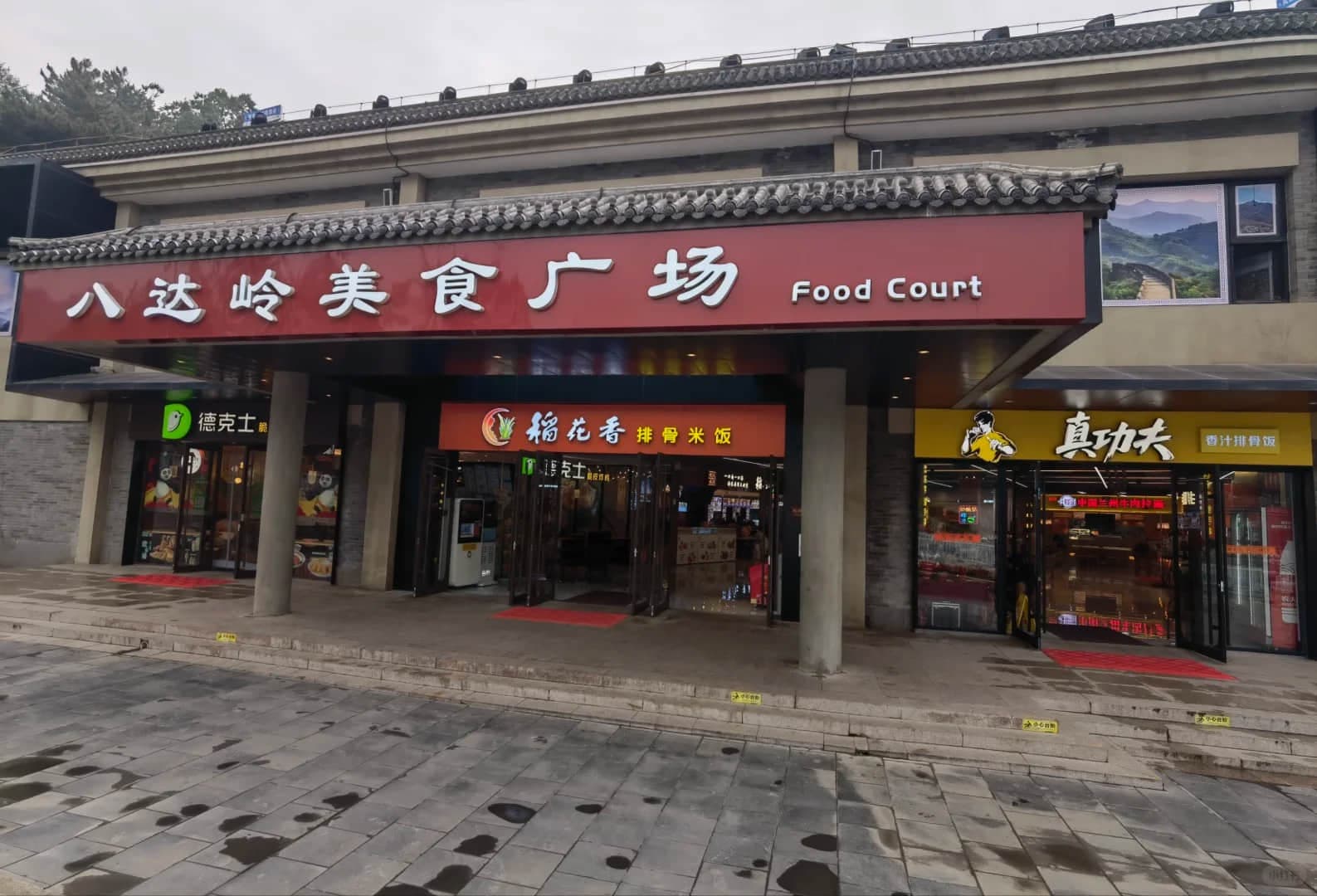
Badaling Great Wall Restaurant Guide
Compare practical dining options around the Badaling Great Wall, from food courts and snack stalls to northern Chinese restaurants.
Decide whether to combine the South and North Walls
The conventional sightseeing sections extend toward North Tower 12 and South Tower 7, with North Tower 8 the main northern high viewpoint. These are route references, not a promise that every tower is open. A separate southern extension beyond the usual circuit has used small-group reservations; do not treat it as an automatic continuation. See the official description of the southern extension and funicular.
Choose one side for a normal half-day visit. Add the second side only if everyone still has energy after returning to the central pass and your return transport leaves enough margin. A South Tower 4 plus North Tower 8 plan contains two distinct climbs even when lifts operate; it should not be marketed as an effortless three-hour circuit for every family.
For a strong walker, North Towers 1–8 provide the classic climb and clear turnaround objective. Continuing toward North Tower 12 adds more steep, exposed walking; do it for the hike rather than from fear of missing a unique landmark. The quieter South Wall is the better primary choice when space matters more than reaching the northern high point.
Less climbing with the North cable car
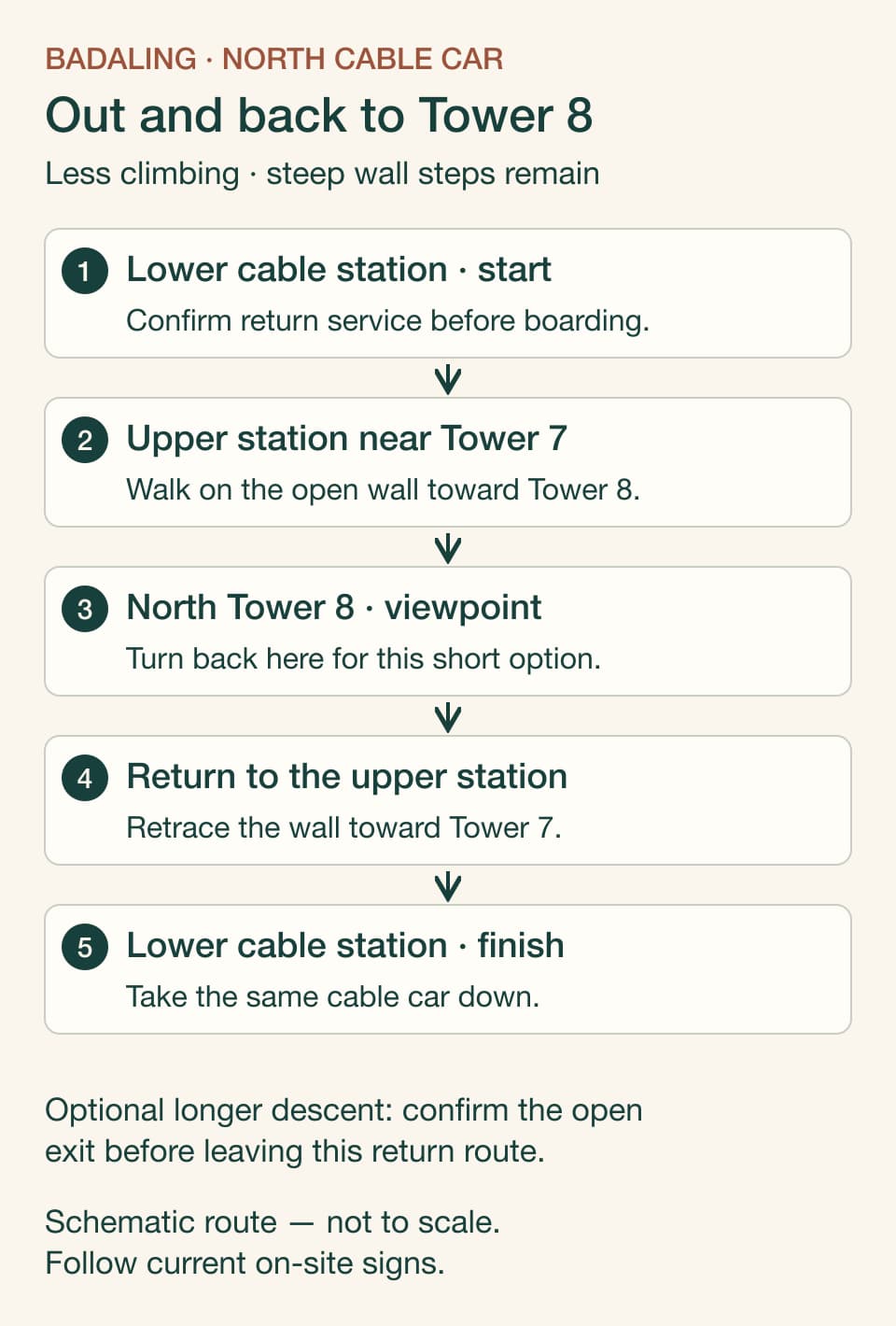
Use the North Wall cable car for an out-and-back between its upper station and North Tower 8. This reduces climbing but is not step-free: steep and uneven wall surfaces remain, and cable operation depends on weather, maintenance, and crowd controls.
The numbered sequence is 1. board at the lower North cable station; 2. reach the upper station in the North Tower 7–8 area; 3. follow current signs to North Tower 8; 4. retrace the wall to the upper station; 5. take the same cable car down. Confirm the actual upper-station exit and return operating time before going up. A descent toward the lower North Wall is a different, longer choice; verify its open exit before leaving this return route.
Strong-walker one-way option
Recent full-walk reports support a North Tower 1–11 continuation and descent toward the Bear Park side, but that is a different exit from the central-pass return. Choose it only after staff confirm North Tower 12-side access and the open descent on the day. Do not leave the North Tower 7–8 cable-return route expecting the same lower station to appear ahead.
If returning by high-speed rail, protect at least 30 minutes from reaching the station entrance to departure. The station is deep underground and the long escalator plus security and ticket checks are part of the transfer; use the live 12306/Trip.com train record for the actual gate cutoff.