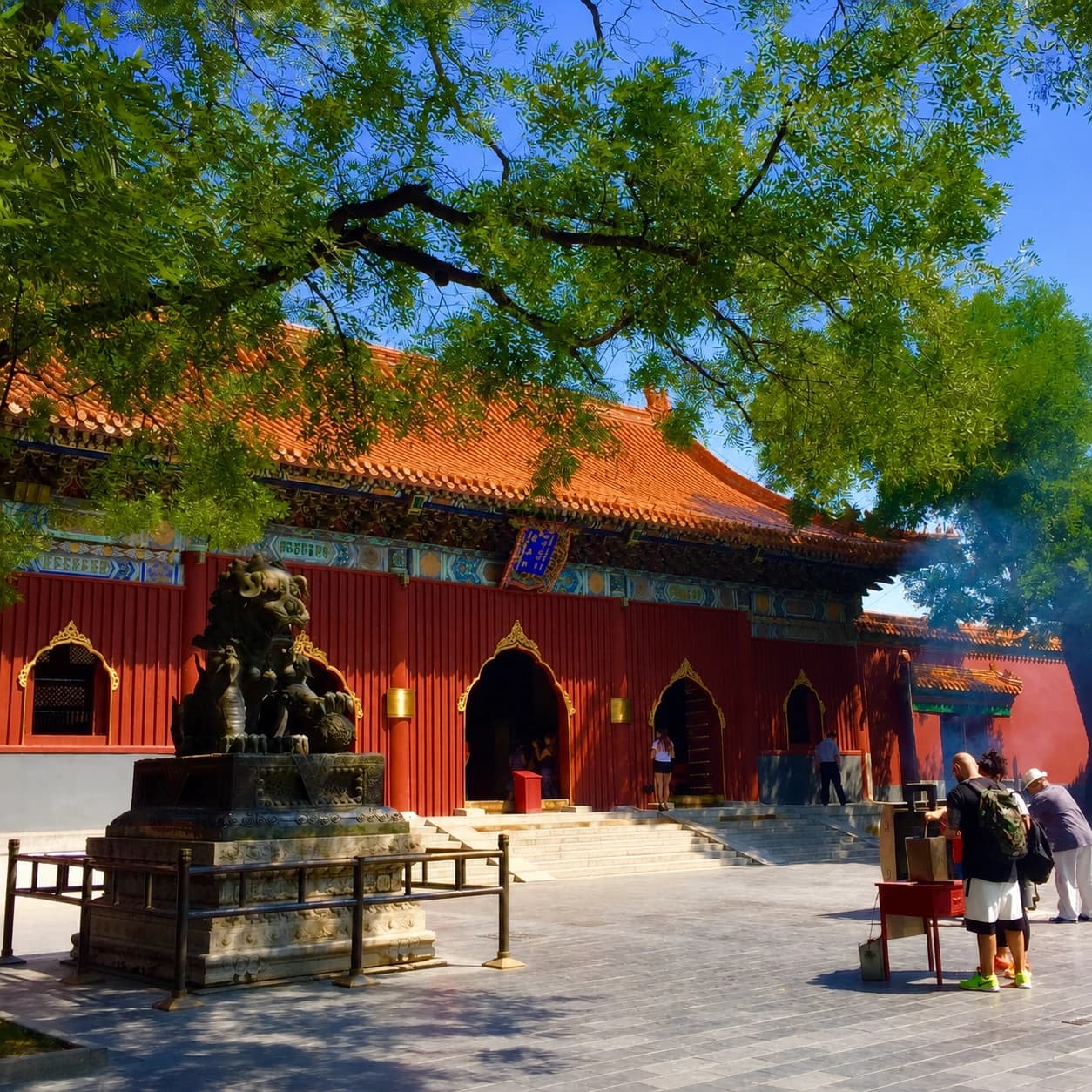
Lama Temple (Yonghe Palace) Beijing
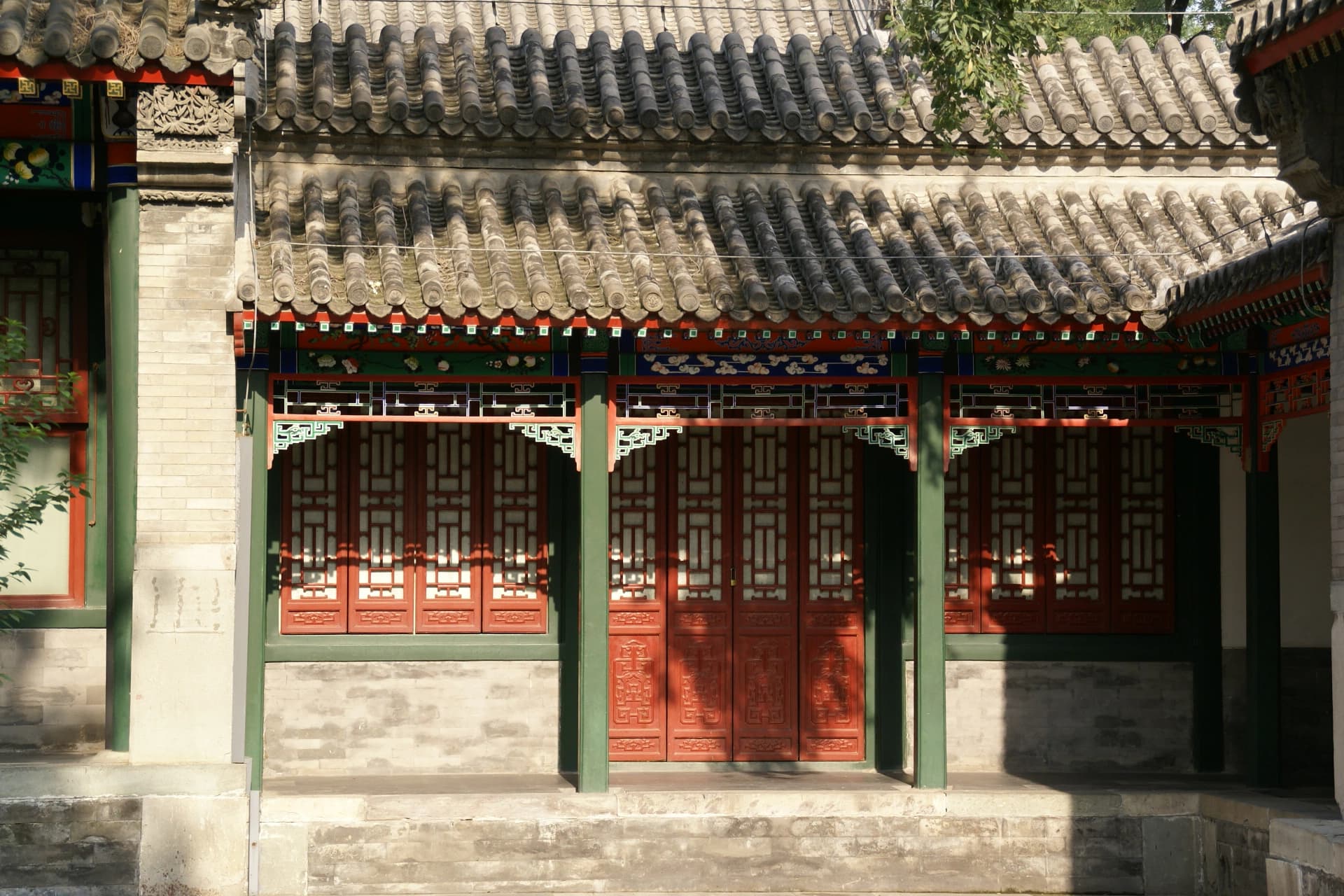
The Yonghe Temple (雍和宫, Yónghégōng), commonly known as the Lama Temple, is one of Beijing's most important Tibetan Buddhist sites. Originally built as the princely mansion of the future Yongzheng Emperor and later converted into an imperial lamasery, the complex combines Han, Manchu, Mongolian, and Tibetan architectural traditions. Today, it remains an active place of worship as well as a major historic site.
Why Visit Yonghe Temple
- One of Beijing's best-known Tibetan Buddhist temple complexes
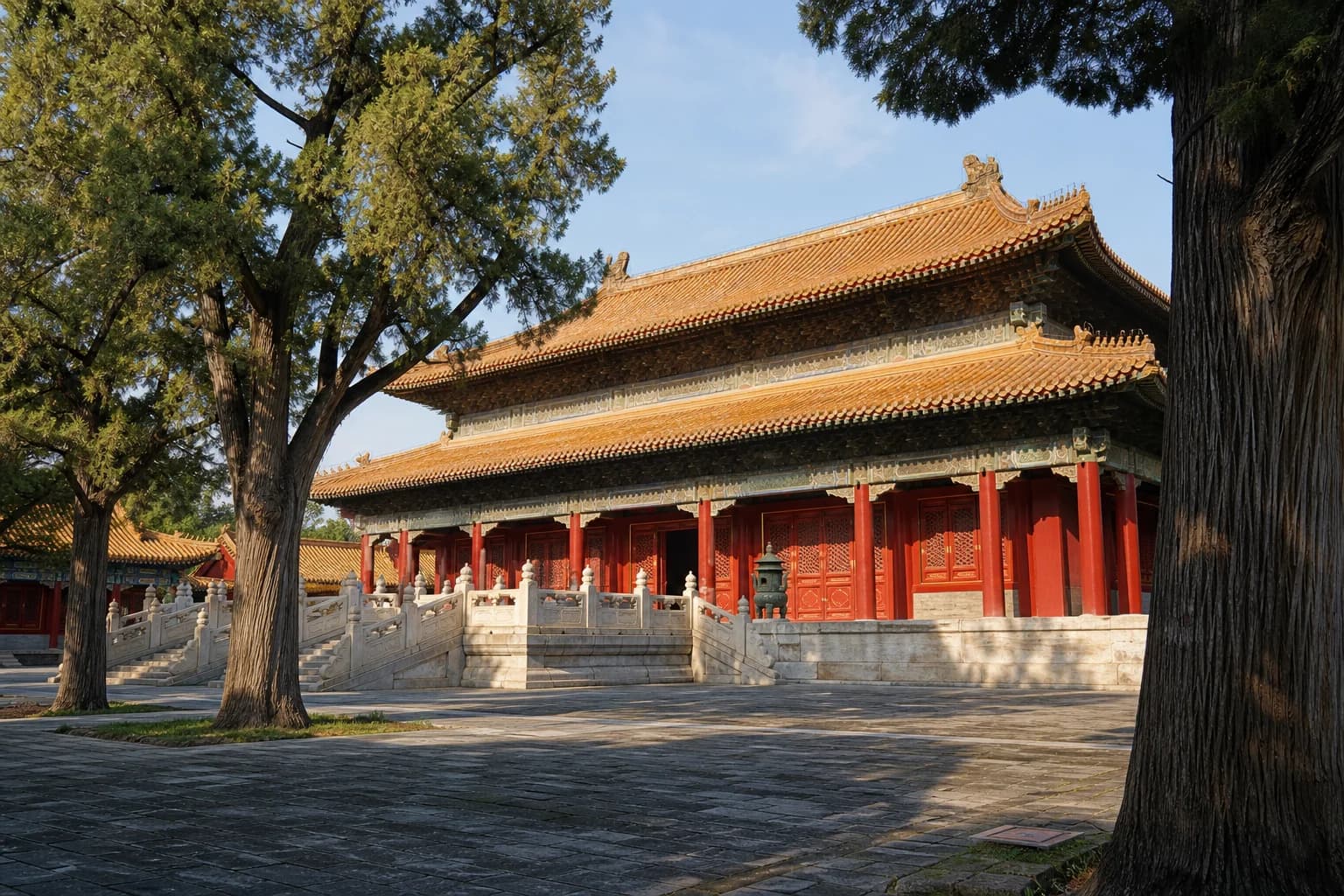
- Magnificent royal-turned-monastic architectural complex featuring yellow imperial roof tiles
- A revered, vibrant spiritual atmosphere steeped in centuries of continuous devotion
- Home to a Guinness-record 26-meter Maitreya Buddha statue carved from a single trunk of white sandalwood (18 meters above ground, 8 meters below)
- A harmonious cultural synthesis of Han, Manchu, Mongolian, and Tibetan artistic traditions
Follow the Main Hall Sequence
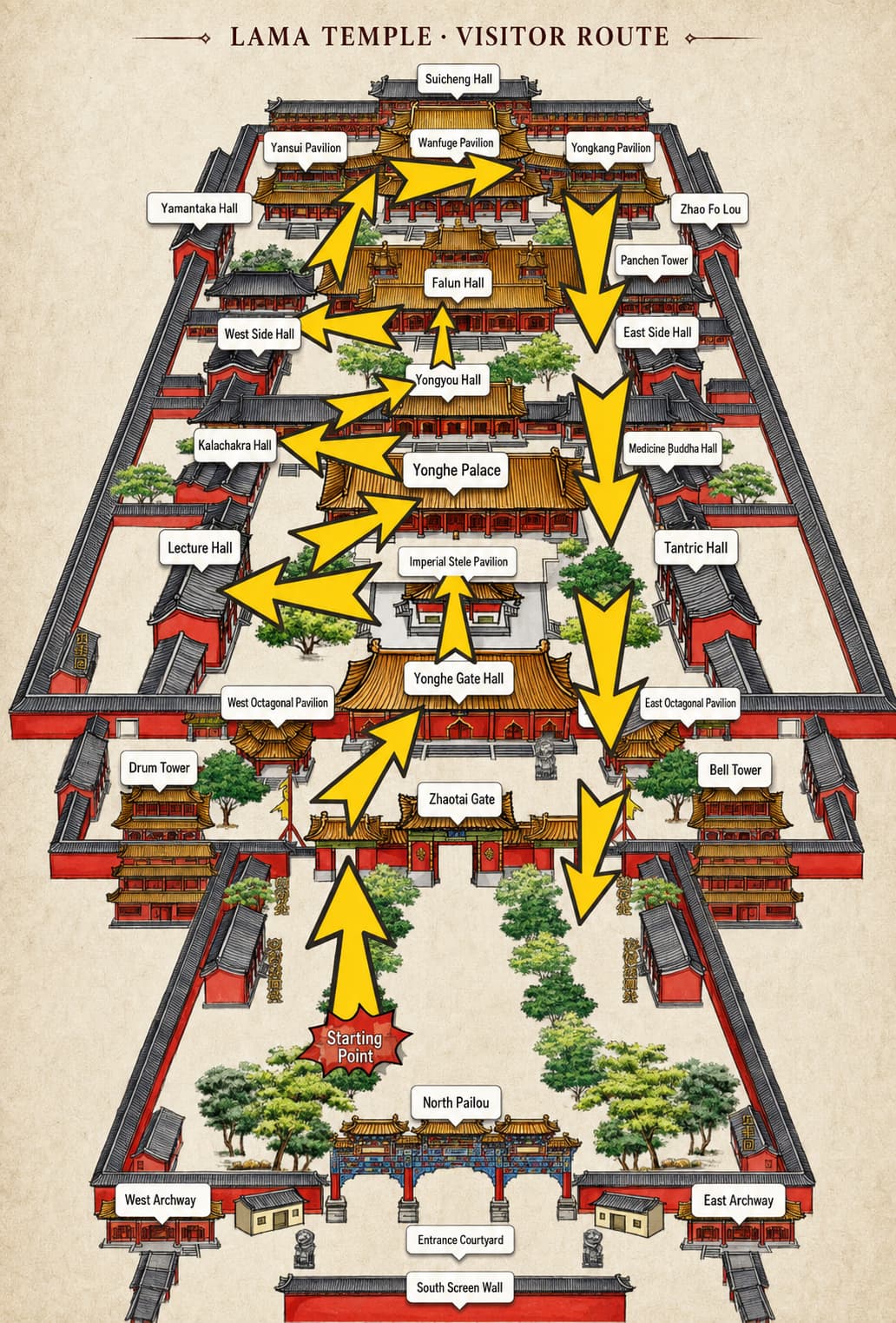
The complex is easiest to understand from south to north. Use the bilingual on-site labels to identify the statues and functions currently open rather than treating each hall as a place assigned to a particular wish.
Main Visiting Sequence
-
Yonghe Gate Hall (雍和门殿)
- The formal gateway into the main monastic axis.
-
Yonghe Temple Hall (雍和宫殿)
- The principal hall at the center of active worship.
-
Yongyou Hall (永佑殿)
- A quieter transition between the front courts and teaching spaces.
-
Falun Hall (法轮殿)
- A major Tibetan Buddhist teaching hall; pause for its architecture and interpretation.
-
Wanfu Pavilion (万福阁)
- The visual climax of the route, containing the monumental Maitreya statue.
-
Suicheng Hall (绥成殿)
- The final hall on the main axis; follow current access signs before entering side spaces.
Visitor Information
Opening Hours & Admission
- April 1–October 31: 9:00–17:00, with last admission at 16:30
- November 1–March 31: 9:00–16:30, with last admission at 16:00
- Admission: ¥25 per person
- Use the official real-name WeChat or Yonghe Temple ticket page as the primary booking route. Same-day paper tickets are sometimes reported at the visitor centre, but availability is not guaranteed; reserve before travelling rather than building the day around a walk-up purchase.
- Incense arrangements can change; use only the incense provided or permitted on site and follow staff instructions.
The seasonal hours above distinguish closing time from last admission and match the current Beijing municipal visitor listing. For a third-party dated product, compare the exact Yonghe Temple listing on Trip.com, then verify the passport, entry and cancellation terms against the official channel before payment.
Prayer Etiquette
-
Dress Code
- Modest attire is required out of respect for an active place of worship
- Avoid short shorts, revealing garments, or wearing hats inside the halls
- Remove sunglasses when entering prayer halls
-
Incense and Worship
- Visitors are welcome to observe quietly, but do not copy a ritual from an online checklist.
- Use only designated burners and follow the instructions posted in each courtyard.
- Keep clear of worshippers and never block the route to a hall for photographs.
-
Hall Entry
- Do not step or stand on raised wooden thresholds.
- Follow staff directions and posted entry routes rather than assuming every doorway is open to visitors.
- Photography and video restrictions vary by space; obey the signs at each hall.
On-Site Shops
The temple's religious-article circulation shop entered refurbishment on February 24, 2026, and late-August and September visitors still reported it closed. Treat any bracelet, souvenir or blessing-related purchase as optional; follow the current on-site notice and do not organize the visit around an online promise of a particular item or service.
Transportation
By Subway (Recommended)
- Line 2 or Line 5 to Yonghegong (Lama Temple) Station
- Take Exit F (Southeast)
- AMap's checked route from Exit F to the visitor centre is about 0.5 km / 8 minutes on foot. Keep the visitor-centre pin open because the station exit is not the ticket gate.
By Bus
- Routes: 13, 84, 116, 117, Night 6
- Stop: Yonghegong Station
- Alternative routes: Special 2, 18, 62
- Stop: Yonghegong Bridge East
Essential Tips
-
Best Visiting Times
- Early morning (right at opening) to avoid crowds and long queues
- Weekday mornings offer the quietest, most contemplative experience
- Allow 2–3 hours for a complete, unhurried visit
-
Respectful Conduct
- Keep conversations quiet and phones silent near active worship.
- Give worshippers priority and do not pose directly in front of altars or burners.
- Follow the south-to-north visitor flow and any temporary barriers.
-
Practical Advice
- No food vendors operate inside the temple grounds
- Bring a refillable water bottle
- Wear comfortable walking shoes for stone courtyards
- Bring a small notebook if you like collecting commemorative heritage stamps
- Keep a small amount of cash on hand for donations or traditional offerings
Nearby Attractions
- Confucius Temple
- Imperial College (Guozijian)
- Ditan Park (Temple of Earth)
- Wudaoying Hutong
- Guozijian Street