Jingshan Park
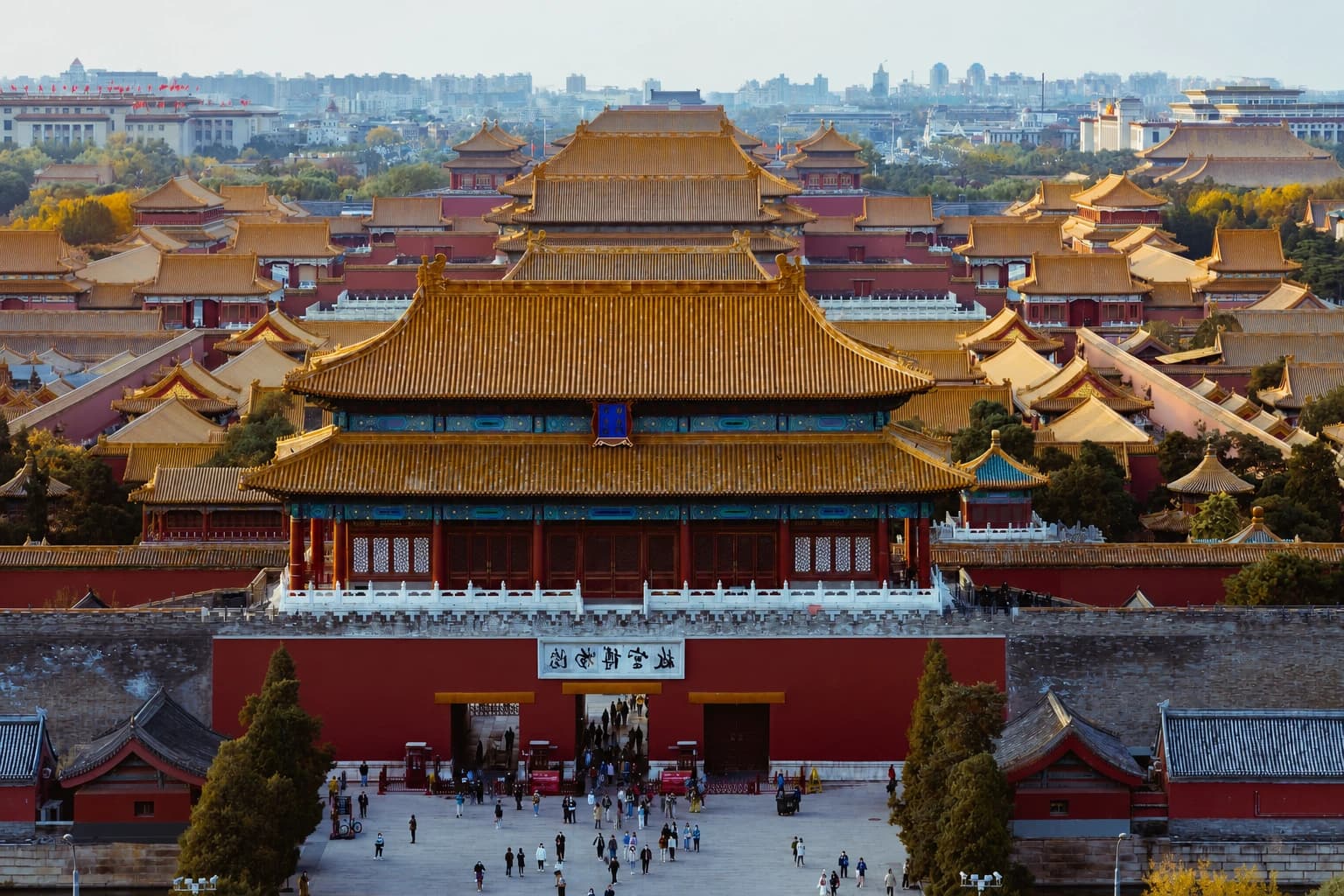
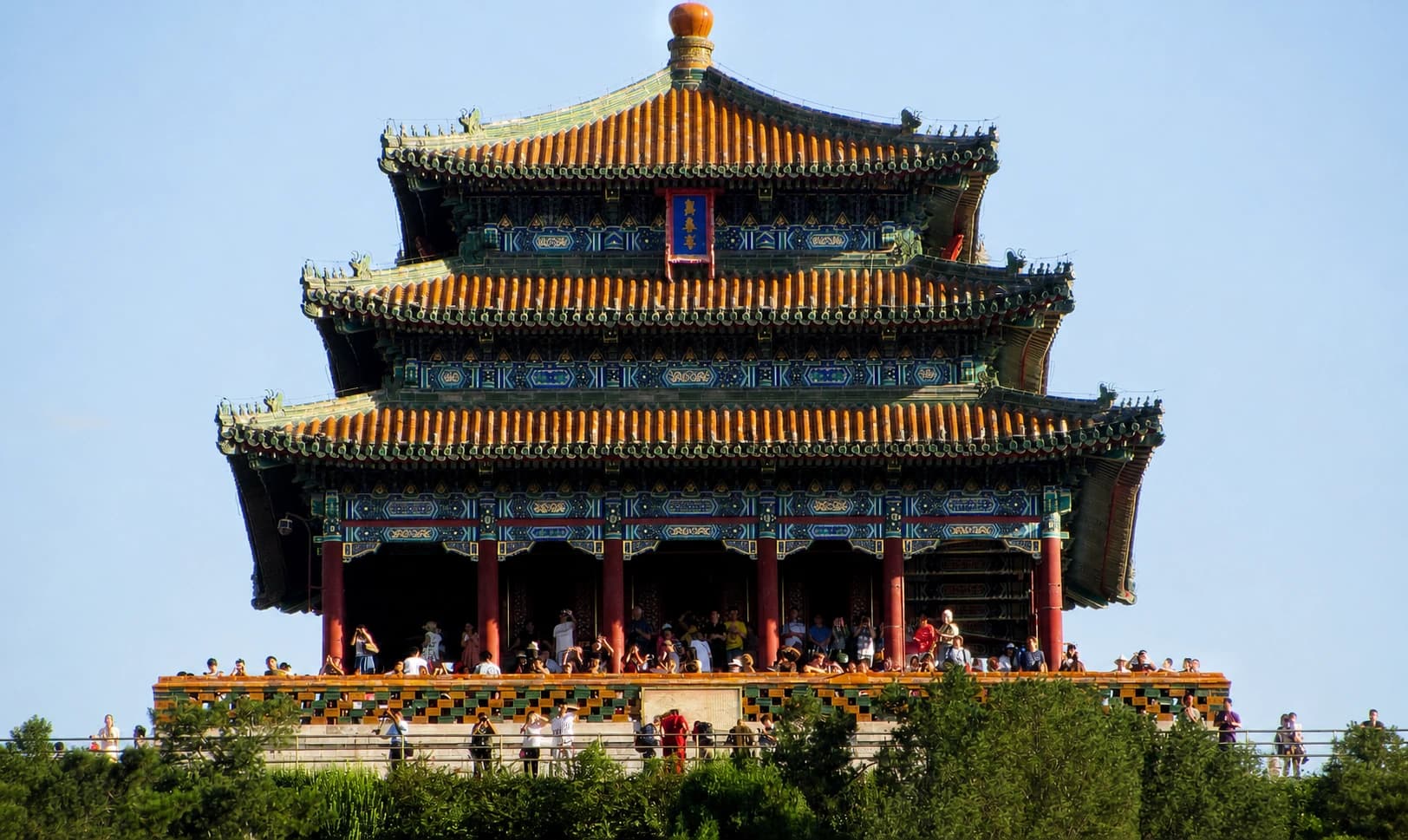
Jingshan Park (景山公园), an imperial garden with over 800 years of history, offers the clearest elevated overview of the Forbidden City and Beijing's historic central axis. Located directly north of the Palace Museum, this 23-hectare park rises over an artificial hill formed with earth from the imperial city's moat works and is crowned by five hilltop pavilions.
Why Visit Jingshan Park
- Unmatched 360-degree panoramic views over the Forbidden City and Beijing's central axis
- Rich imperial heritage spanning the Liao, Jin, Yuan, Ming, and Qing dynasties
- Five classic Chinese pavilions perched along the ridge of the scenic artificial hill
- Strong late-afternoon and sunset views when visibility and park opening hours align
- Historic site marking the poignant location where the last Ming emperor (Chongzhen) died in 1644
Best Viewing Spots
Wanchun Pavilion (万春亭)
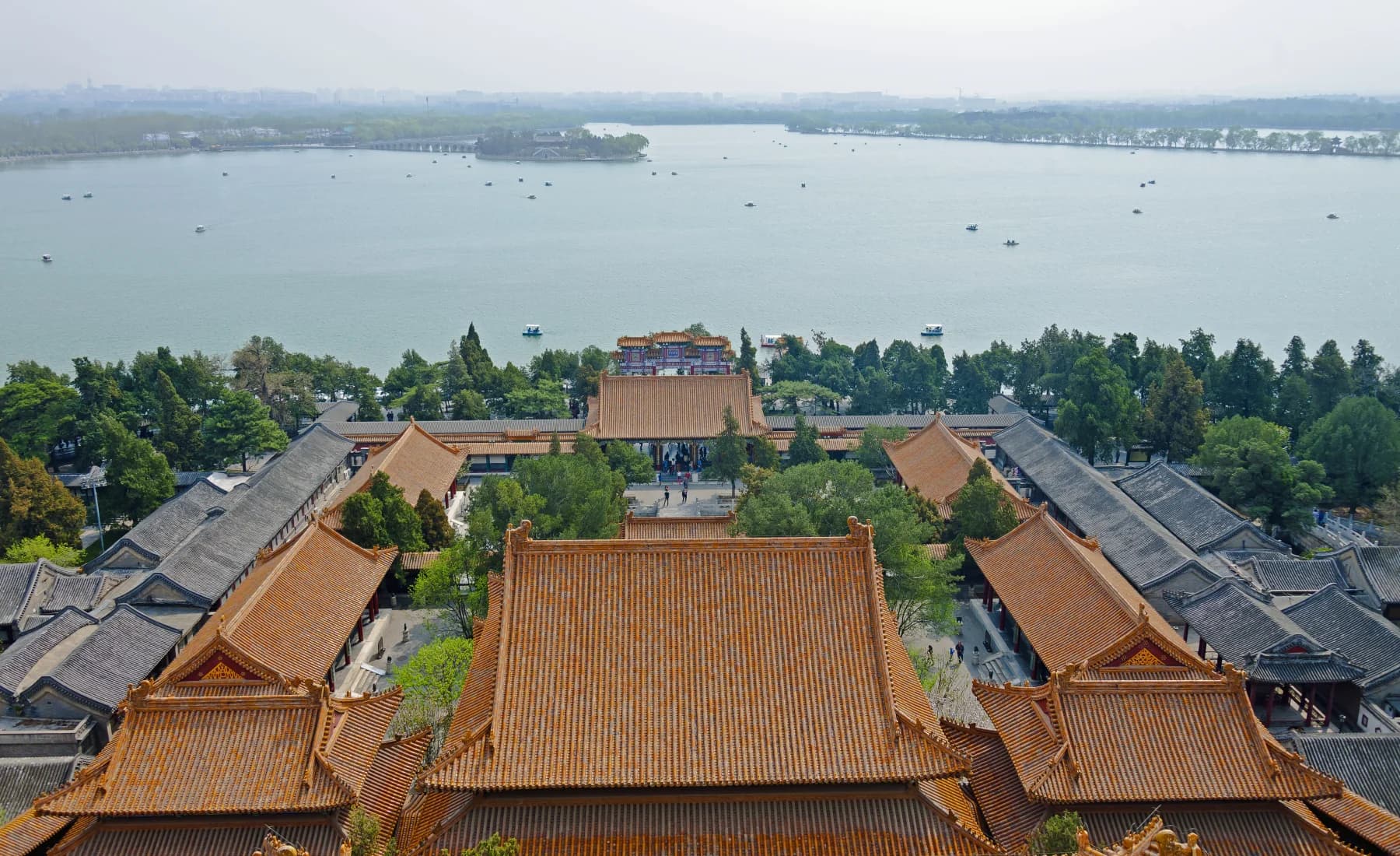
Perched atop the middle peak—the highest historical vantage point in central Beijing—Wanchun Pavilion offers an unforgettable 360-degree vista:
- South: The vast, unbroken expanse of the Forbidden City's golden glazed tile roofs
- North: The continuing Central Axis leading toward the Drum and Bell Towers and the Olympic Tower
- West: The gleaming lake and Tibetan White Dagoba of Beihai Park
- East: The modern CBD skyline and landmark skyscrapers
Recommended Routes
Route 1: South Gate to Wanchun Pavilion and West Gate
- Enter through the South Gate (directly across from the Forbidden City exit)
- View the historic Emperor Chongzhen memorial site
- Ascend via the eastern stone steps
- Reach Wanchun Pavilion at the summit
- Descend via the western pathway
- Exit through the West Gate to finish the short route
Optional heritage extension: after descending, continue to Shouhuang Hall and Guande Hall when their visiting areas are open, then leave through the East Gate. The Beijing government’s published walking route includes these northern halls; their earlier closing times matter if you also want sunset at the summit.
Route 2: West Gate to East Gate Across the Hill
- Enter through the West Gate (ideal when arriving from Beihai Park)
- Follow the signed western steps up the hill
- Visit Wanchun Pavilion
- Continue down the eastern side on the signed paths
- Exit through the East Gate
If you need to return toward Beihai, descend back toward the West Gate instead. Follow any temporary path closures on the day.
Decide before climbing after the Forbidden City
The hill is short, but it arrives after several hours of palace walking. If the group is already tired, make Wanchun Pavilion the only objective and leave by the gate closest to dinner or transport. Add the northern halls only when they are still open and everyone has energy; they are a separate heritage visit, not part of the summit shortcut.
Opening Hours & Admission
Peak Season (April 1 – October 31)
- Park Grounds: 6:00 – 21:00 (Last entry at 20:30)
- Historic Sites: 8:00 – 18:00 (Last entry at 17:30)
- Shouhuang Temple
- Guande Hall
- Huguo Zhongyi Temple
- Closed on Mondays (except statutory holidays)
Off-Peak Season (November 1 – March 31)
- Park Grounds: 6:30 – 20:00 (Last entry at 19:30)
- Historic Sites: 8:30 – 17:00 (Last entry at 16:30; closed Mondays)
Admission Fees
- Standard park admission: ¥2
- Designated activity periods, such as the spring peony festival: ¥10. A ¥10 report does not establish the normal ticket price; the selected date and official notice control. Bring proof for any concession or free-admission category.
The park grounds remain open on Mondays. As of September 1, 2026, the summer exception ended and Shouhuang Hall, Guande Hall, Huguo Zhongyi Temple and the northwest science hut resumed their normal Monday closure, except on statutory holidays. If those interiors matter, avoid Monday; if the summit view is the goal, Monday still works.
Transportation Guide
From the Forbidden City
- AMap measures the signed crossing from Shenwu Gate to Jingshan's South Gate at about 0.2 km / 3 minutes on foot. Cross only at the controlled pedestrian route on Jingshan Front Street.
- 15-minute walk around the moat perimeter to the East Gate
Public Transportation
Jingshan has no metro entrance at its gate. Use a live map for the South, East or West Gate and confirm the bus stop in service that day. A taxi may be dropped away from the gate during old-city traffic controls, so use the exact gate name in Chinese.
Visitor Services
Tourist Service Center
Ask at the South Gate service point for the current accessible viewing option, first aid and any loan equipment. Do not assume a wheelchair or stroller can reach the summit: the final hill paths and pavilion approaches include steep steps.
Choose the light, not camera equipment
- Best Times to Shoot
- Late afternoon golden hour into sunset for glowing warm light across the Forbidden City roofs
- Clear mornings following a cold front or rain for crisp, haze-free visibility
- Blue hour immediately after sunset to capture illuminating city lights
At sunset, Wanchun Pavilion can become the most crowded part of the park. Arrive before the final color if you want time to identify the Central Axis and choose a safe position. A clear morning after rain or a cold front may give a sharper palace view with less waiting than sunset.
Essential Tips
-
Best Visiting Time
- Pair immediately after your Forbidden City tour in late afternoon
- Visit in early morning to experience local garden culture, singing, and morning exercises
- Check the forecast and visibility before making the summit view your main objective
-
Accessibility
- Climbing to Wanchun Pavilion requires navigating steep stone stairs (approx. 10–15 minutes)
- Mountain paths are not stroller or wheelchair accessible, though ground-level gardens and courtyards are level
- Rest before the last ascent and keep the group together on crowded steps; seating is not guaranteed where the best view is concentrated
-
Combined Visits
- The most logical continuation after exiting the Forbidden City via the North Gate
- Easily combined with Beihai Park (a 3-minute walk from Jingshan's West Gate)
- Consider timing your ascent for late afternoon to capture the sunset before dinner