Where to Eat at Badaling Great Wall
Food at Badaling is mainly a timing tool: eat enough to climb safely, then protect the train or coach you must catch back to Beijing. The entrance area has food-court counters, small restaurants, convenience shops and snack stalls, but tenants and menus change. Do not make a separate taxi trip for an old restaurant recommendation unless a current map listing and recent reviews confirm it.
The simplest plan for most visitors
- Eat breakfast in Beijing. A proper meal before departure saves time after arrival and avoids starting the climb with only sweets or coffee.
- Buy water near the entrance. Carry enough for your chosen route, especially in hot or windy weather. Toilets, shade and sales are not continuous on the wall.
- Climb first, eat after descending. This keeps the cooler or quieter early hours for the wall and prevents a heavy lunch from sitting before steep steps.
- Set a departure alarm before ordering. For rail, include the walk to Badaling Great Wall Station and security. For a coach, use the operator's stated boarding cutoff.
Fastest: the entrance-area food court
Search for 八达岭美食广场 or follow current food signs through the entrance-commercial corridor. AMap places the food court about 0.8 km / 12 minutes on foot from Badaling Great Wall Railway Station; the long station escalators are additional. It is the most practical choice when the group wants different things or has less than an hour.
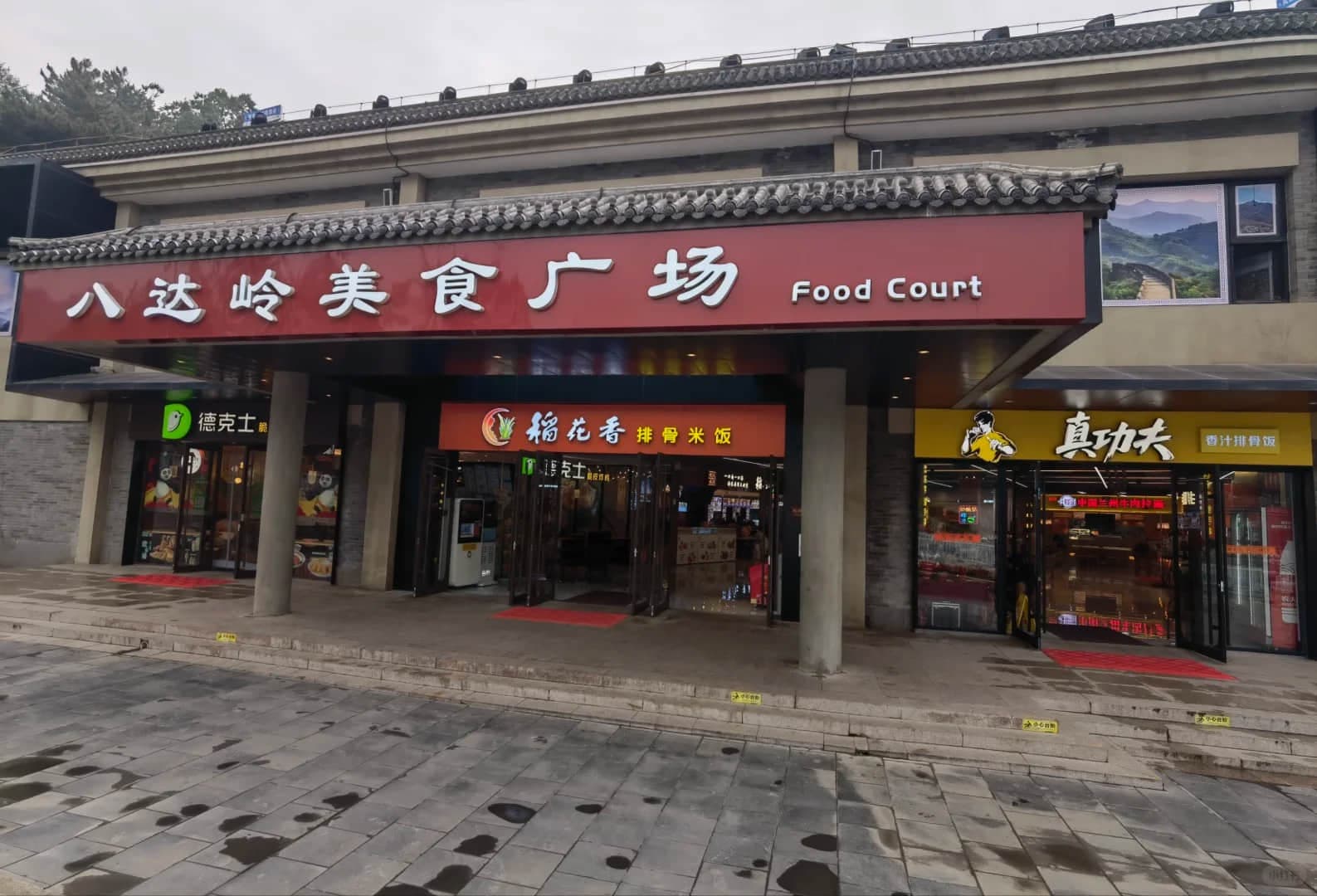
September 2026 visitor reports still describe a changing mix of chain drinks, quick-service outlets, noodles and rice counters in this corridor, but they also disagree sharply about value and portion size. Treat that as evidence that food is available—not a permanent tenant list or a quality guarantee. Use the displayed menu rather than an old online photo. Before paying, confirm the dish, portion, price and whether the counter accepts your available payment method. If you have allergies or avoid meat, show the ingredient names in Chinese; a vegetable-looking broth may still contain meat stock.
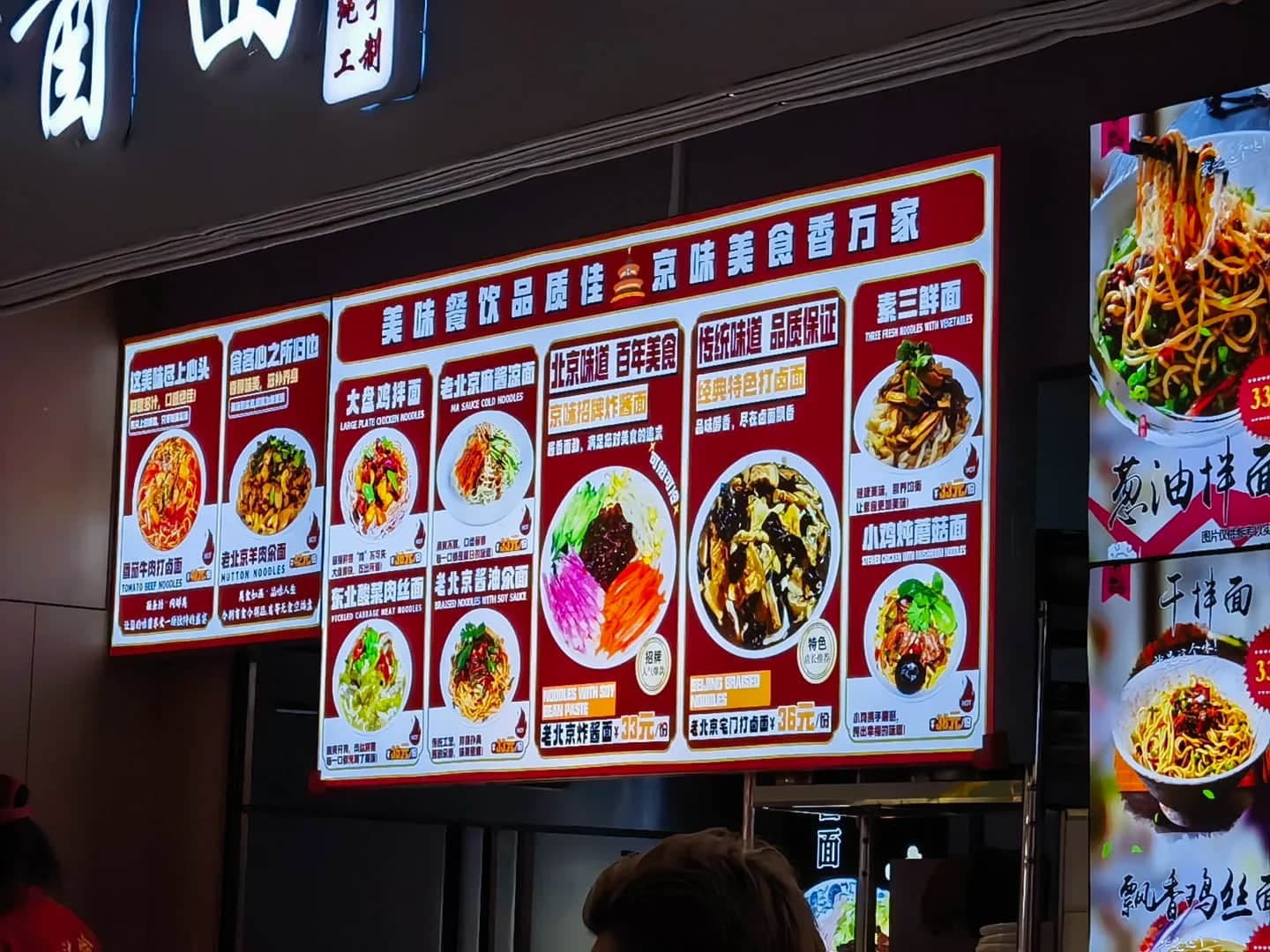
Quick supplies: shops and the pedestrian approach
Convenience shops and stalls are useful for water, sports drinks, fruit and sealed snacks. Buy supplies before the climb instead of assuming a tower kiosk will be open. The pedestrian commercial area also sells souvenirs and packaged foods, but vacuum-packed roast duck or generic gift snacks should not be confused with a full Beijing dining experience.
If your return is soon, choose a sealed snack for the journey and eat a proper meal after reaching central Beijing. This is usually better than rushing through a sit-down order or risking a missed train.
Sit-down meal: only when the schedule allows
A northern Chinese family-style restaurant can work for a private-driver group or travelers staying near Badaling. Search AMap on the day and favor a place that is open, lies on the actual return route and shows a current itemized menu. Ask how many people a set serves before adding dishes; portions can be designed for sharing.
Useful, widely understood choices include tomato-and-egg dishes, dumplings, noodles, vegetable plates and lamb or pork dishes for a group. Choose by the current menu rather than a frozen list of “signature” items. If the restaurant requires another taxi in the opposite direction, it rarely earns the detour on a normal day trip.
Match food to your transport
- High-speed rail: finish paying and leave for the station early enough to protect at least 30 minutes inside the station approach. Its deep platforms and long escalators make a short map distance misleading; verify the actual gate cutoff in 12306/Trip.com.
- Bus 877 or a fixed coach: return to the stated pickup area first, then choose food within an easy walk of it.
- Private car or overnight stay: a sit-down meal is more realistic, but confirm the exact location with the driver before leaving the scenic area.
For most first visits, breakfast in Beijing, water before climbing and a quick post-hike meal at the entrance is the most reliable plan.