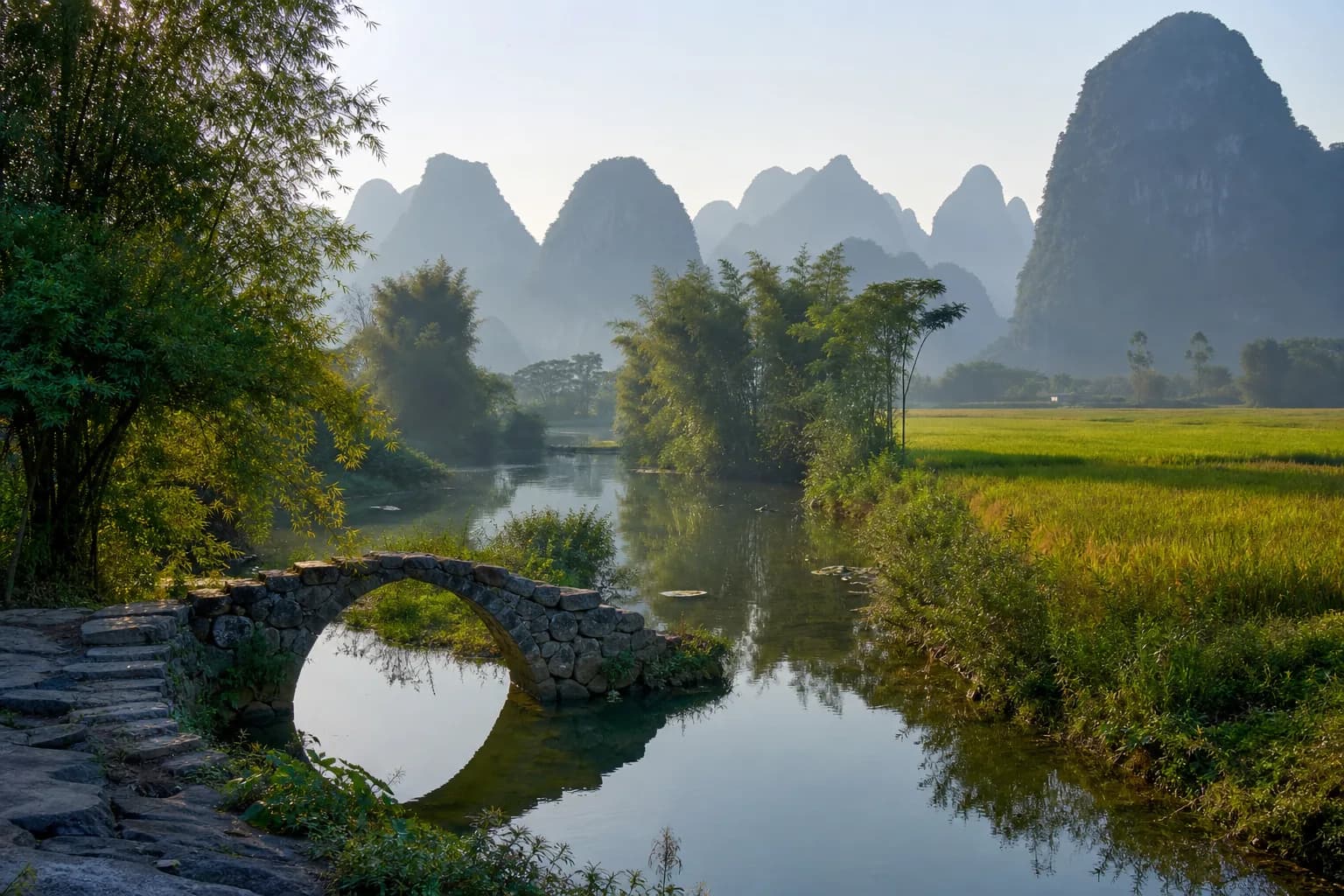
Guilin
Guilin (桂林) is best understood as three different bases rather than one city of scattered sights: Guilin city for arrival and a compact lakeside walk, Yangshuo (阳朔) for the Li River endpoint and countryside, and Longji Rice Terraces (龙脊梯田) for a separate mountain extension. The classic mistake is to book all nights in Guilin, then discover that the most useful Li River cruise is a one-way journey to Yangshuo.
Build the trip in this order: choose the river product, read its exact wharf and endpoint, decide where the luggage goes, then reserve the corresponding hotel nights.
Choose the Right Route
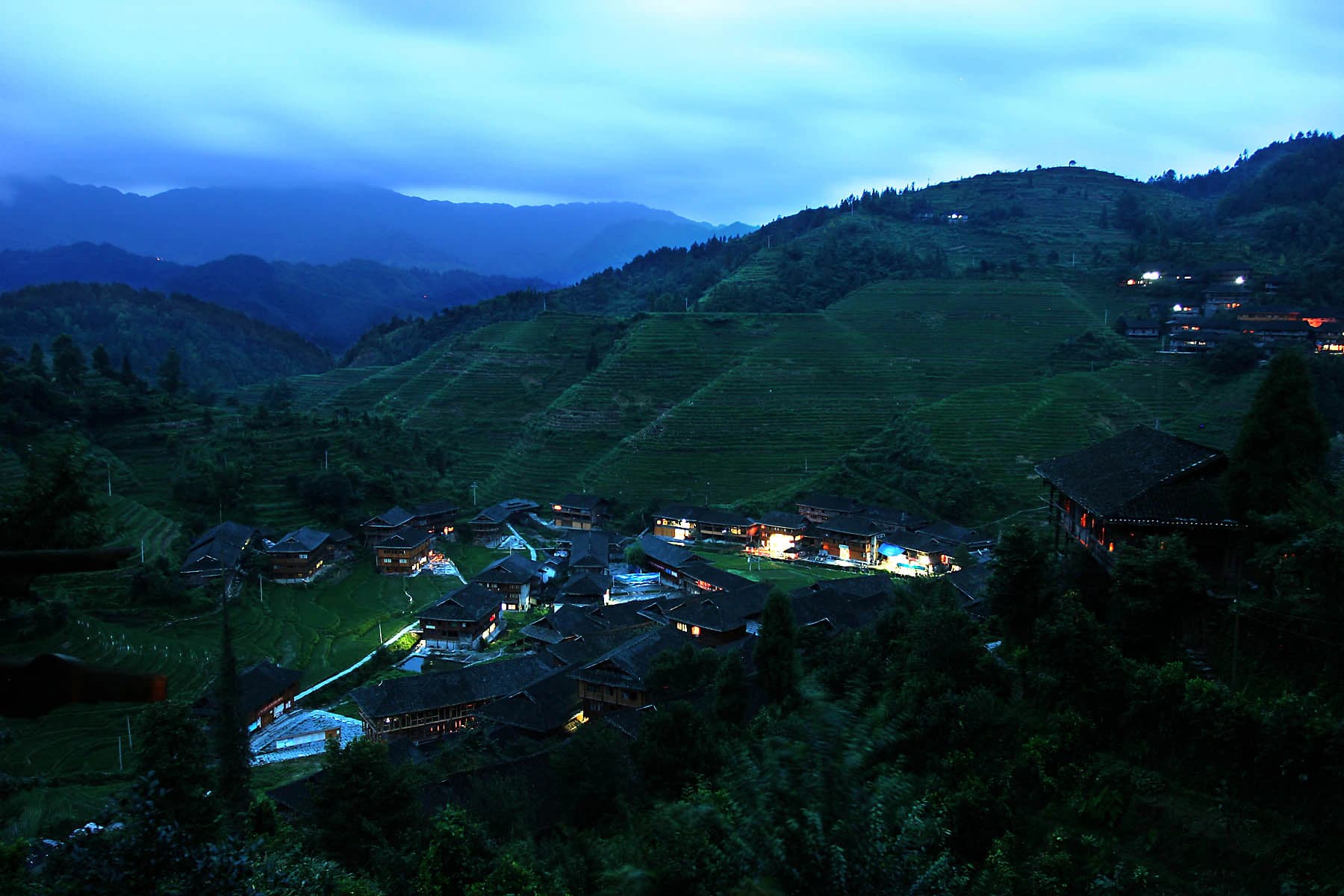
- Choose the three-day route for a first trip focused on Guilin city, a one-way Li River cruise and one Yangshuo countryside day.
- Choose the four-day route when Longji is a genuine priority and you can commit to one terrace zone.
- With only two days, keep Day 1 compact and use Day 2 for the river transfer. Do not add Longji or a rushed return cruise.
- With five days, add a second Yangshuo day, not a second Longji base. Use it for Xingping, a slower countryside walk or a weather fallback.
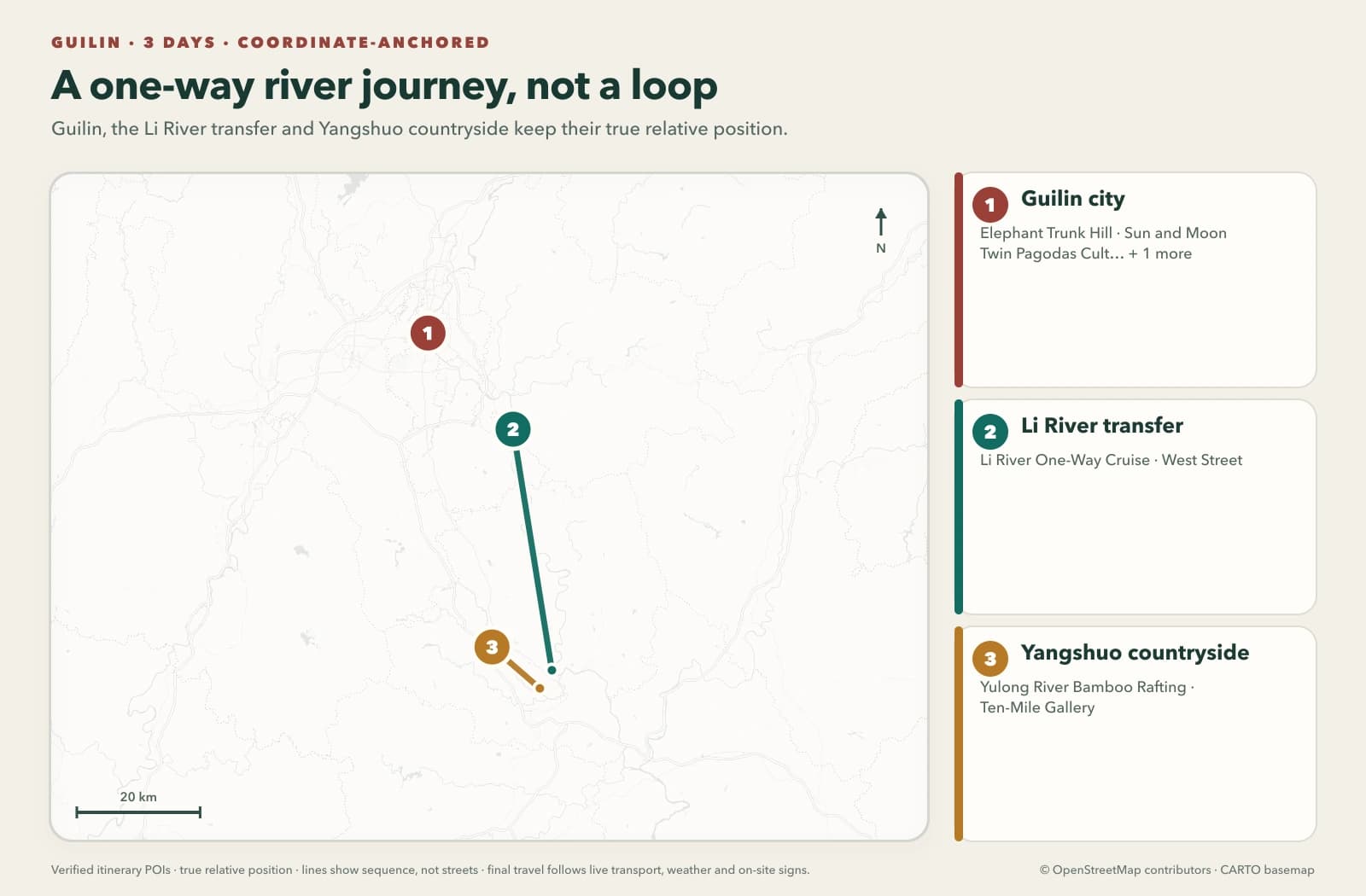
This sequence diagram is not a geographic map. It explains the hotel move and decision points; the current tickets and on-site signs control the actual wharf, endpoint and road access.
Day 1: Keep Guilin City Compact
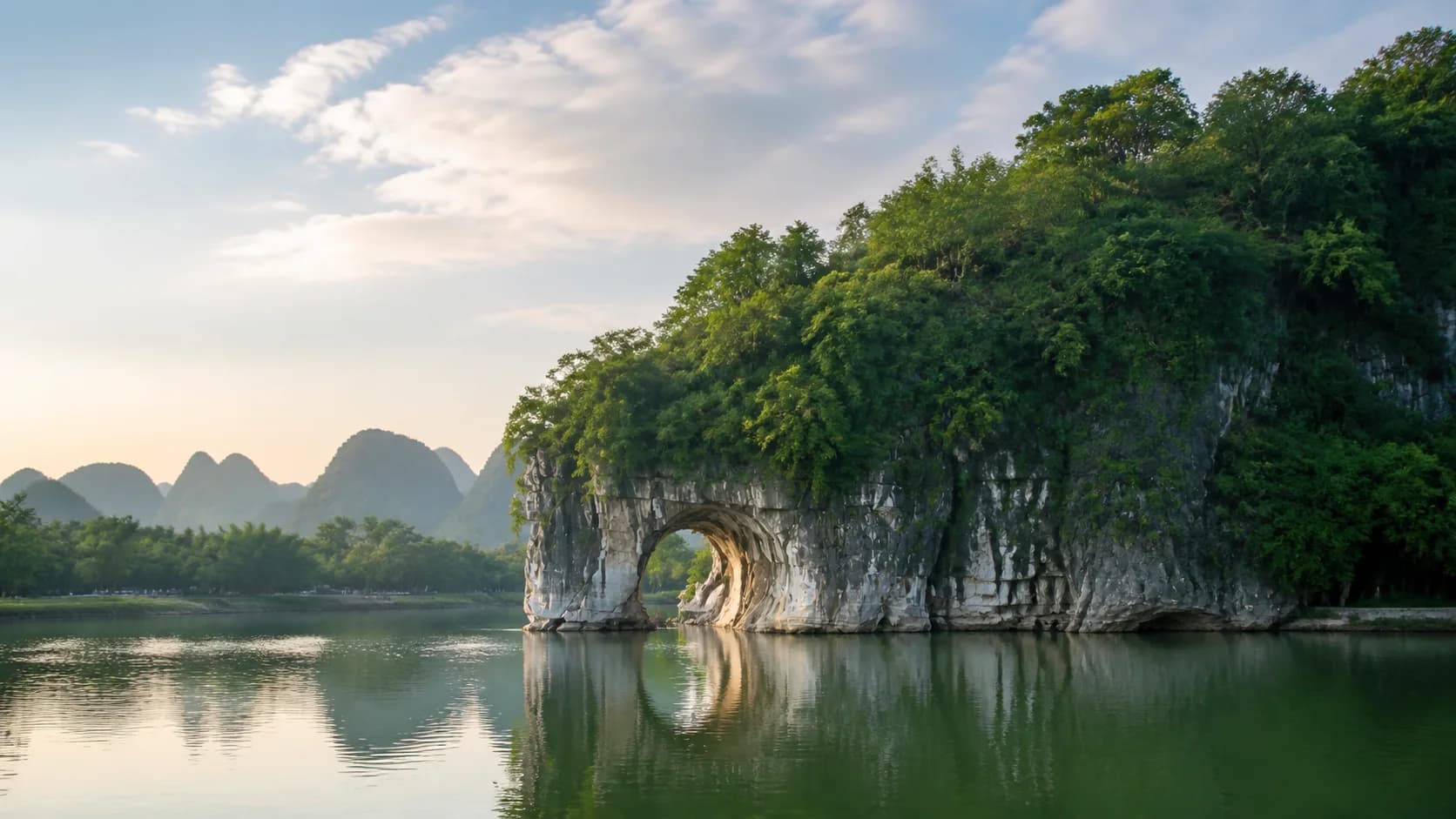
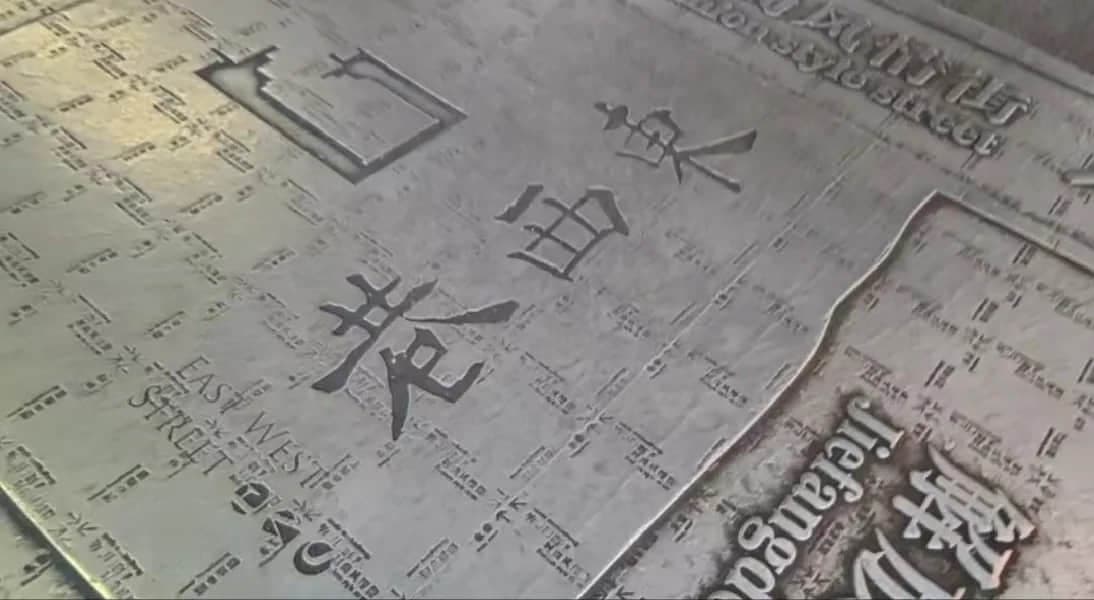
Start at Elephant Trunk Hill, then use the Two Rivers and Four Lakes waterfront as the connective walk toward the Sun and Moon Twin Pagodas and East–West Lane. This sequence is useful because it orients you without consuming the energy needed for the river and countryside days.
Treat Elephant Trunk Hill as a short river-landform stop, not a full-day theme park. At the lakes, the outdoor shoreline is the main experience; paid interiors, boat products and decorative lighting are optional and operation-dependent. East–West Lane works best as a dinner decision after the walk rather than proof of an untouched old quarter.
If you prefer history to another landscape viewpoint, substitute Jingjiang Princes City. Do not force both it and every lakeside attraction into the same afternoon.
Day 2: The Li River Is Transport and Sightseeing
The phrase “Li River cruise” can mean incompatible products. Separate them before paying:
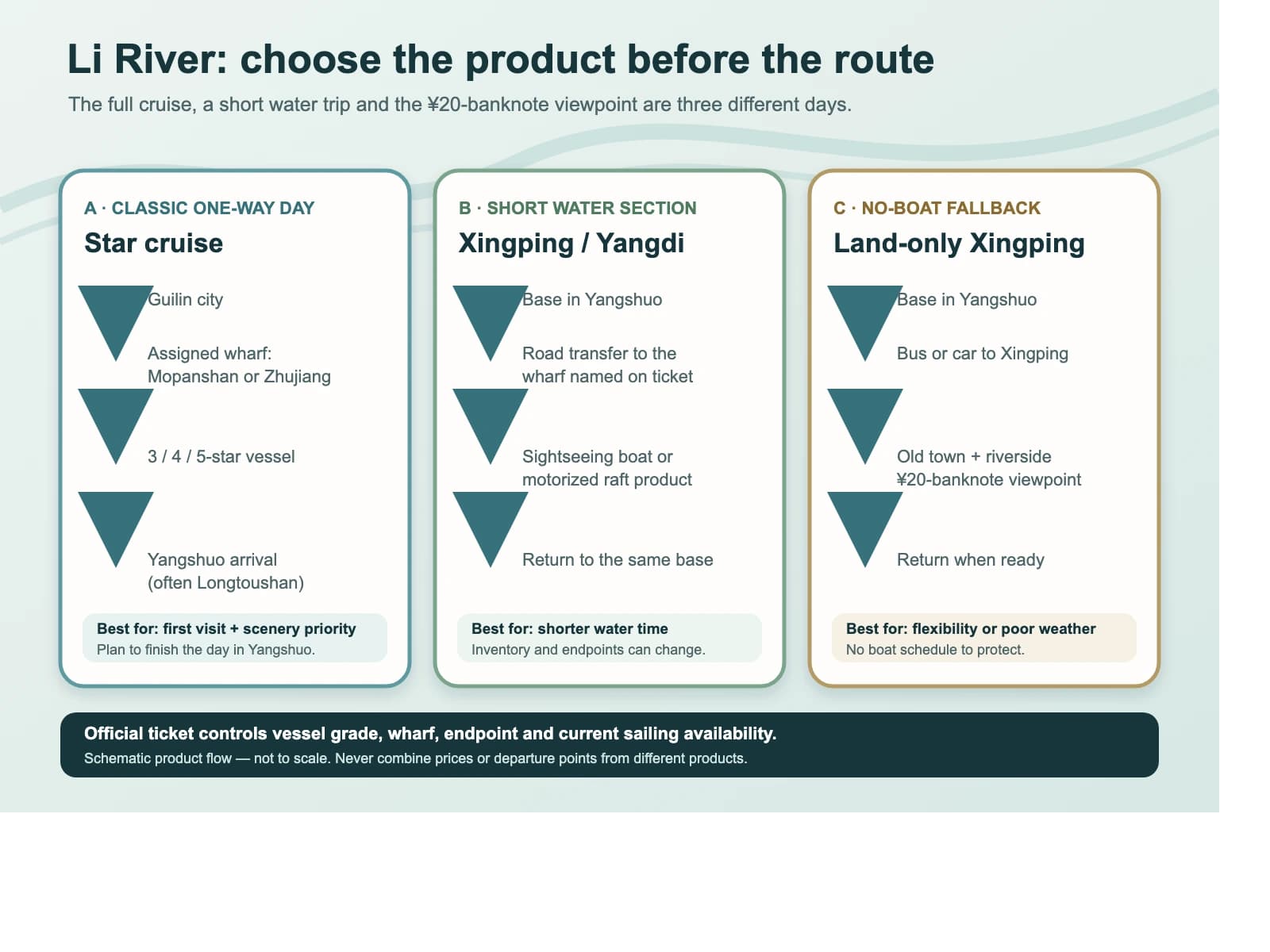
Full one-way Guilin–Yangshuo cruise
This is the classic first-trip choice. The current ticket controls whether boarding is at Mopanshan or Zhujiang, the vessel grade, meal inclusion, sailing time and Yangshuo endpoint. Follow the printed ticket rather than a saved blog post.
Treat the cruise as a hotel transfer:
- Sleep in Guilin the night before.
- Arrange how the main luggage reaches the Yangshuo hotel; confirm whether the booked product includes pickup or baggage handling.
- Carry passport, valuables, medication, rain layer and power bank in a day bag.
- Check in after landing, then use West Street only as a flexible evening walk.
Short water product around Yangdi or Xingping
Choose this only when you deliberately want to keep the same hotel base or combine the water segment with a land day. It is not interchangeable with the full star-rated cruise. The wharf, endpoint, vessel and return transport must all match one live product.
Land-only Xingping day
Useful when river services are suspended, a traveler dislikes boats or a short product does not fit the group. It can include the riverside viewpoint associated with the ¥20 banknote, but do not promise an identical view in every water level, season or light condition.
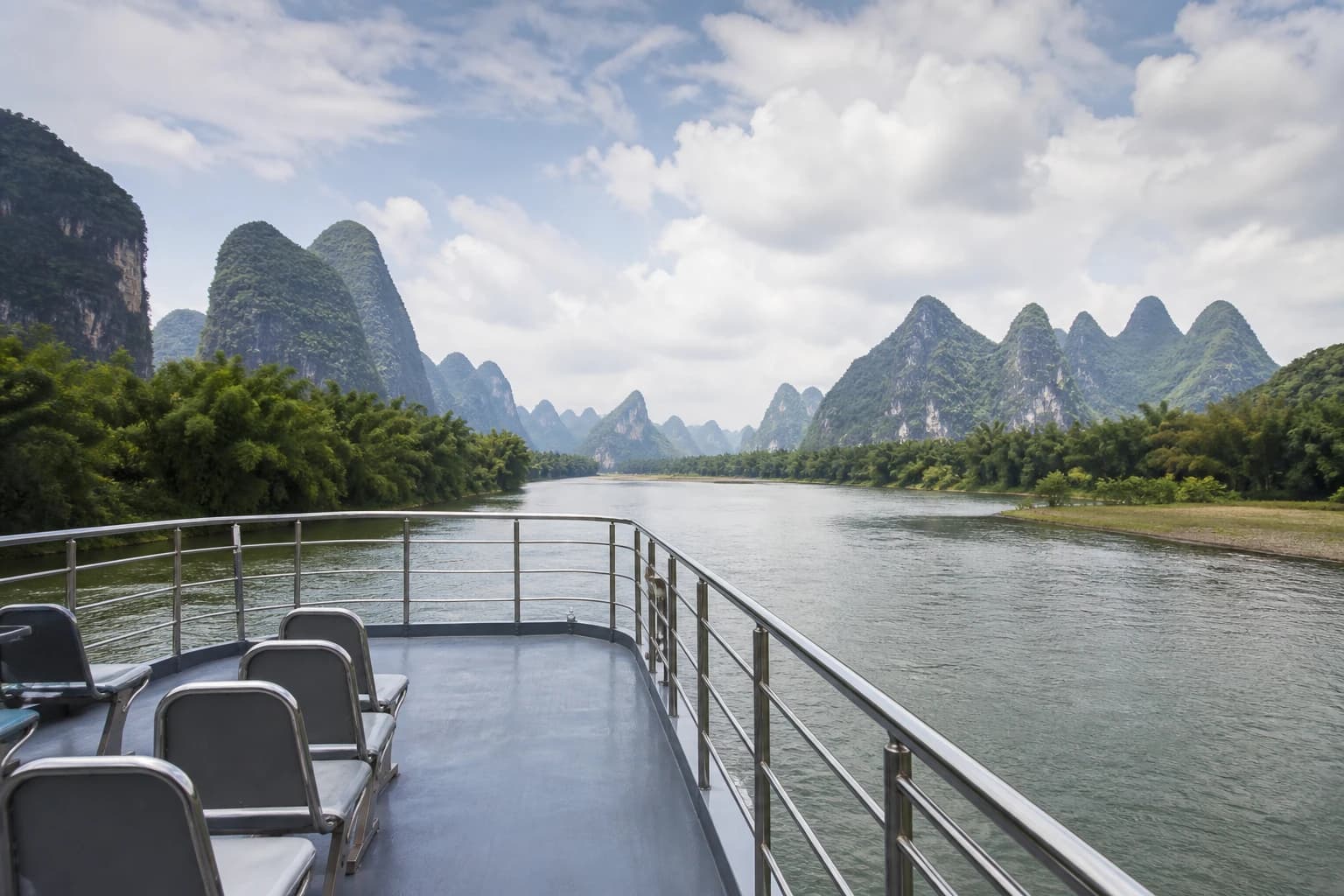
On any river product, stay behind rails, follow crew instructions and protect electronics from rain and spray. Fog can create atmospheric layers but remove distant peaks; low or high water can change the usable experience.
Day 3: Book the Yulong Wharf Before Planning the Road
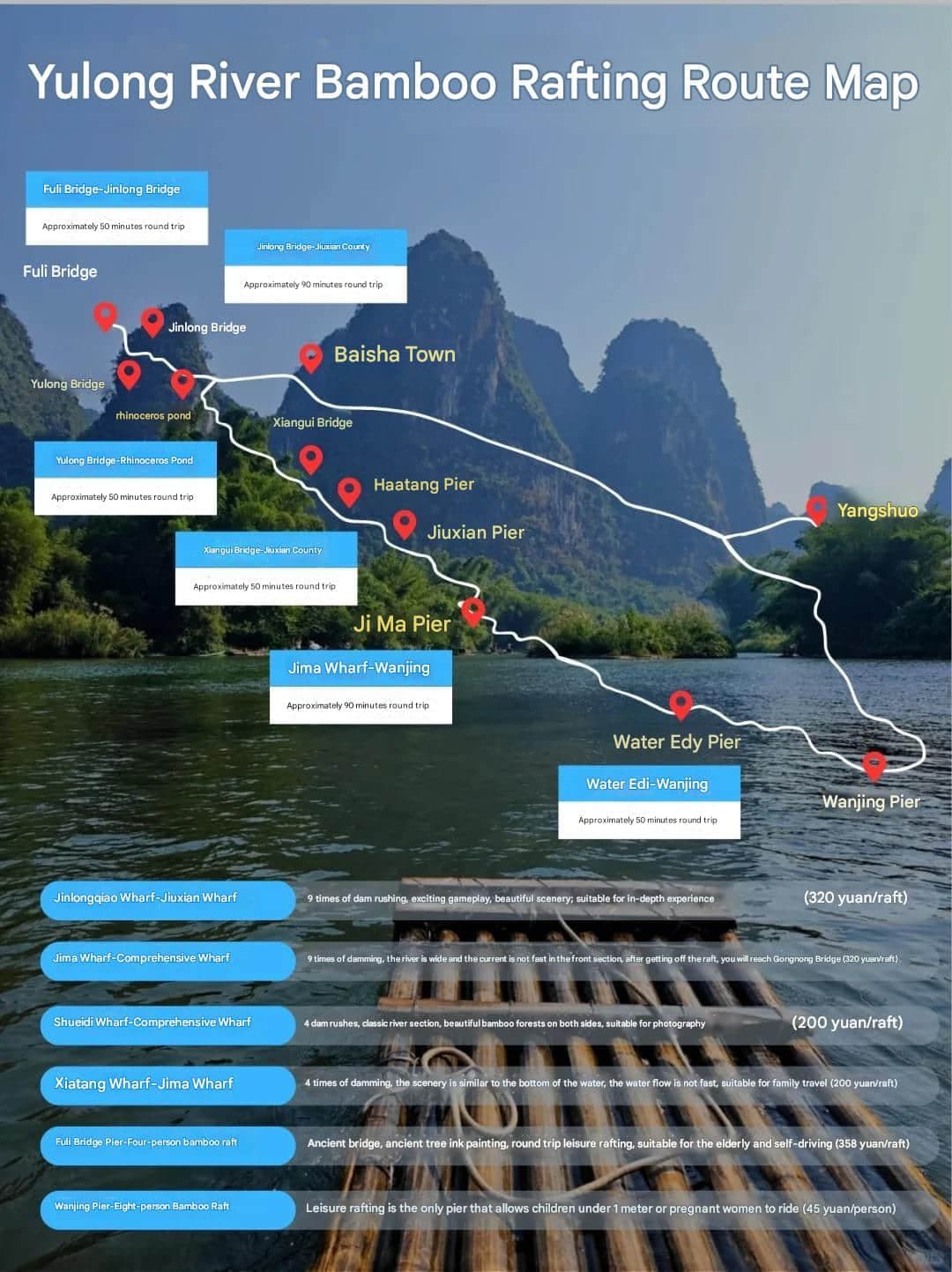
Yulong River bamboo rafting is not one generic ride. Products use named wharfs and different endpoints. Confirm the exact route, passenger capacity, age, height, weight, luggage and weather rules before building the afternoon.
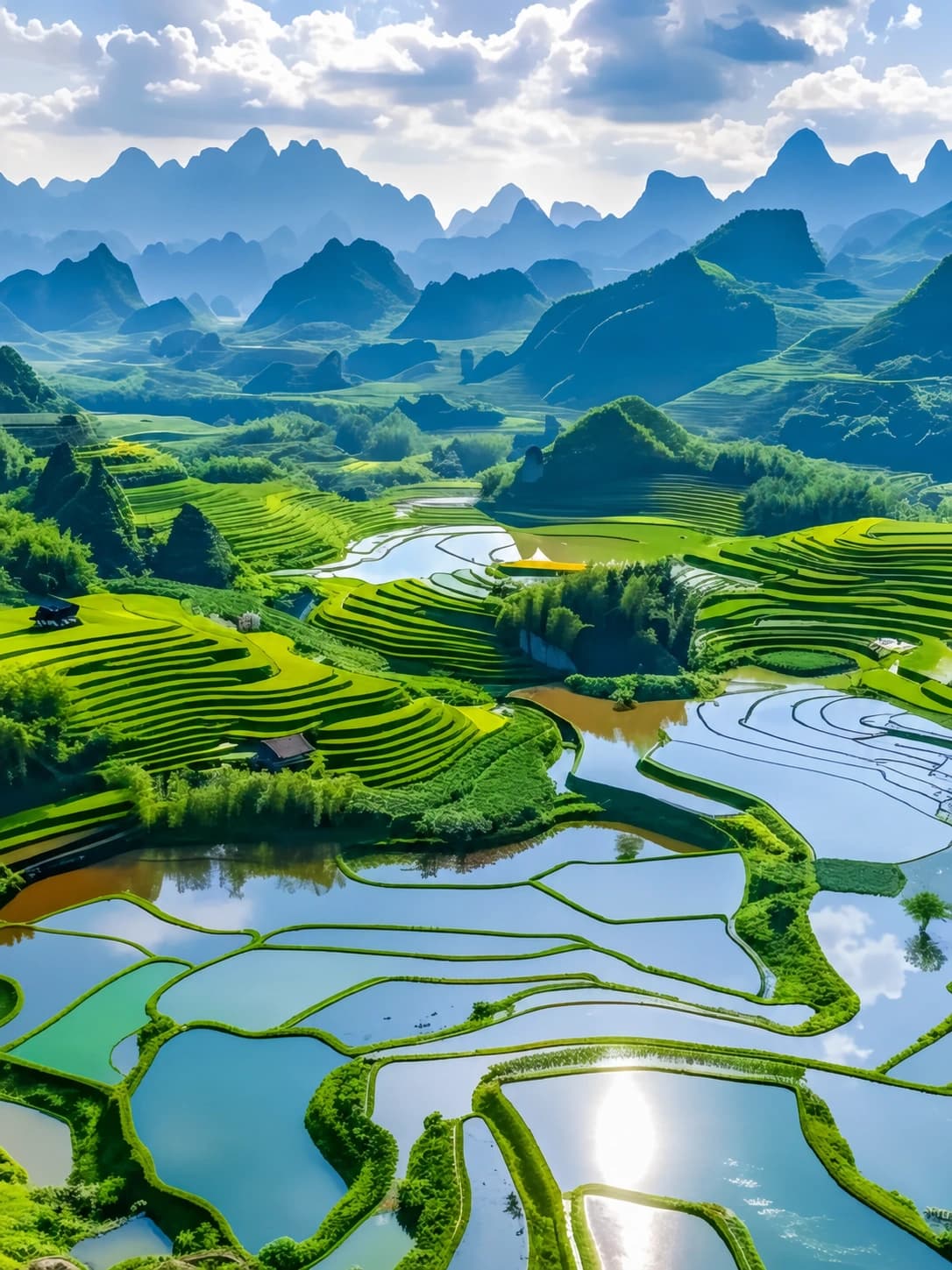
The endpoint determines whether the next step is a walk, bike ride, e-bike ride or car transfer. Continue into one segment of Ten-Mile Gallery; do not pay for every roadside attraction. The goal is countryside movement through karst fields, village edges and river corridors, not another attraction count.
Practical choices:
- Use a bike only when traffic confidence, heat and rain make it sensible.
- Use a legal e-bike with a proper helmet and confirm battery, brakes and return rules.
- Use a car when children, luggage, weather or an awkward raft endpoint make cycling unsafe.
- Preserve enough daylight to return to Yangshuo; rural lighting and shoulders vary.
Day 4 Option: Longji Means Choosing One Base
Longji is a separate mountain day with entrance transfers, village paths, steps and possible cableway use. Choose one zone:
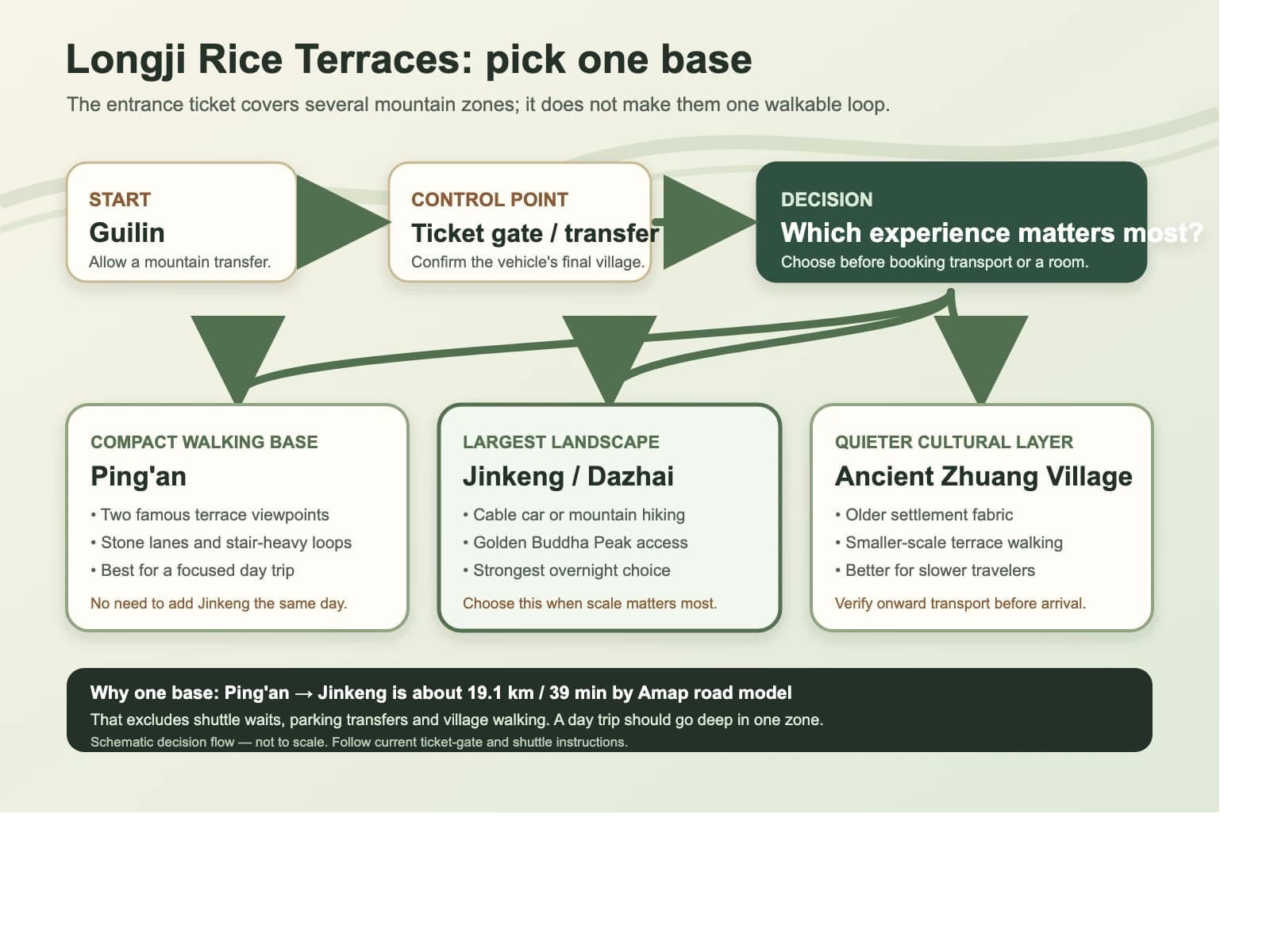
- Ping'an: more compact for a stair-based day loop and traditional village setting.
- Jinkeng/Dazhai: broader landscape and Golden Buddha Peak access; useful when current cableway operation supports your mobility needs.
- Ancient Zhuang Village: a quieter cultural choice when the current access plan is confirmed.
Do not combine Ping'an and Jinkeng in a day trip. Road distance is only part of the cost; parking transfers, shuttles, queues, elevation and village walking consume the schedule. Field appearance depends on planting, water, harvest and weather—no month guarantees a mirror, green or gold landscape.
Food: Learn the Ordering Logic
Guilin rice noodles
Guilin rice noodles (桂林米粉) are an everyday meal, not only a tourist specialty. The bowl may arrive dry-mixed or with broth, depending on the shop and style. Ask what the base includes before adding pickles, sour bamboo shoots, chili, peanuts or extra meat.
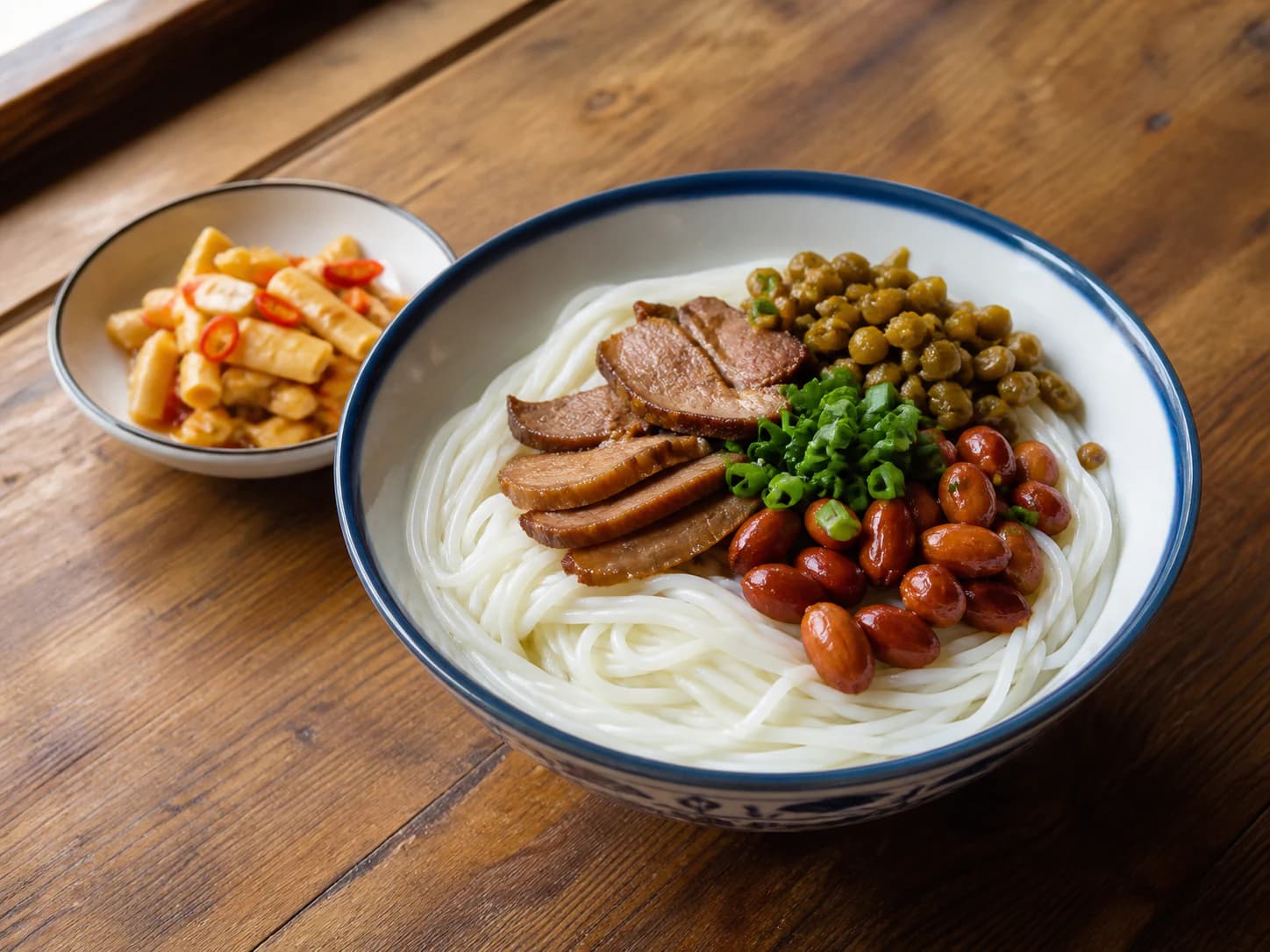
Choose a clean, busy noodle shop with visible turnover and posted portion sizes. Start with the standard bowl; heavy self-service toppings can hide the brine and roasted-meat balance that distinguishes the dish.
Yangshuo beer fish
Beer fish (啤酒鱼) is usually priced by fish type and weight. Before ordering, confirm the species, price per unit, live or prepared weight, minimum size and whether side ingredients cost extra. A menu photo without the weighing rule is not enough.
Other useful choices
- Lipu taro dishes (荔浦芋): soft, starchy and often paired with pork; order a smaller portion alongside vegetables.
- Stuffed tofu or vegetables (酿菜): a wider Guangxi technique that combines a wrapper or vegetable with a seasoned filling.
- Oil tea (油茶): associated especially with northern Guangxi communities; ask about bitterness, salt and accompanying snacks before ordering a full set.
- At Longji, simple bamboo-tube rice and seasonal vegetables are more reliable expectations than a named “ethnic feast.”
Where to Stay
Guilin city: lakes / Elephant Trunk Hill
Best for arrival night, a compact city walk and morning cruise pickup. Check the hotel's actual entrance and vehicle access; waterfront distance can be misleading when bridges or pedestrian zones intervene.
Yangshuo near West Street
Best for first-time convenience, restaurants and a simple post-cruise evening. It can be noisy; ask whether the room faces the street, bar area or an internal courtyard.
Yangshuo countryside / Yulong River
Best for quiet mornings, rural views and a slower stay. Confirm the exact road access, late check-in, meal options and whether the hotel can arrange a legal transfer to your booked wharf. A property using “Yulong River” in its name may still be far from the relevant endpoint.
Xingping
Choose it for a land-focused Li River morning or a deliberate photography stay, not because it is automatically on every full-cruise endpoint.
Longji village overnight
Worth it for early or late light and a slower mountain rhythm. Before booking, ask where the car or shuttle stops, how many stairs remain, and whether luggage assistance is available. Village hotels are not necessarily accessible by road.
Compare live inventory through Trip.com hotels, prioritizing the next day's wharf or trailhead over a broad destination label.
Booking Order
- Choose the correct Li River product and verify wharf, endpoint, vessel grade, passport details, meal and transfer inclusions.
- Reserve Guilin and Yangshuo hotels around that one-way movement.
- Book the exact Yulong River rafting listing only after comparing named wharf routes and passenger restrictions.
- If adding Day 4, use the current official Longji ticket and transport information before reserving a village or cableway-dependent plan.
- Use Trip.com trains for live inventory; Guilin has multiple rail stations, so follow the station printed on the issued ticket.
Arrival and Ground Transport
- Guilin Liangjiang International Airport: confirm the live transfer to the exact city hotel; do not assume a fixed airport-bus route or fare.
- Guilin North, Guilin and Guilin West stations: they are not interchangeable. Search the station name in Chinese and preserve enough transfer time.
- Guilin to a cruise wharf: use the pickup included in the booked product or a legal prearranged transfer to the printed wharf. Do not navigate to a generic “Li River” pin.
- Yangshuo arrivals: confirm whether the vessel ends at a wharf, a bus transfer point or another ticket-defined endpoint before arranging the hotel pickup.
- Longji: public-road transport ends before some village paths. Treat shuttle, cableway and walking as separate layers.
Weather, Water and Safety
- Rain and mist are part of the karst landscape but can reduce visibility, suspend rafting and alter river operations.
- Wear shoes with wet-stone grip and carry a compact rain layer; umbrellas are awkward on crowded decks and narrow paths.
- Do not ride an e-bike in conditions beyond your experience. Inspect the helmet and vehicle before leaving.
- Follow life-jacket and crew instructions; never stand or lean outside a raft or boat for a photograph.
- Ask before photographing village residents, especially in Longji and Huangluo. A community is not a costume backdrop.
- Build one flexible half-day into longer trips. Weather may make a cave, museum, café or city walk more useful than forcing a river product.
Major Sights to Compare
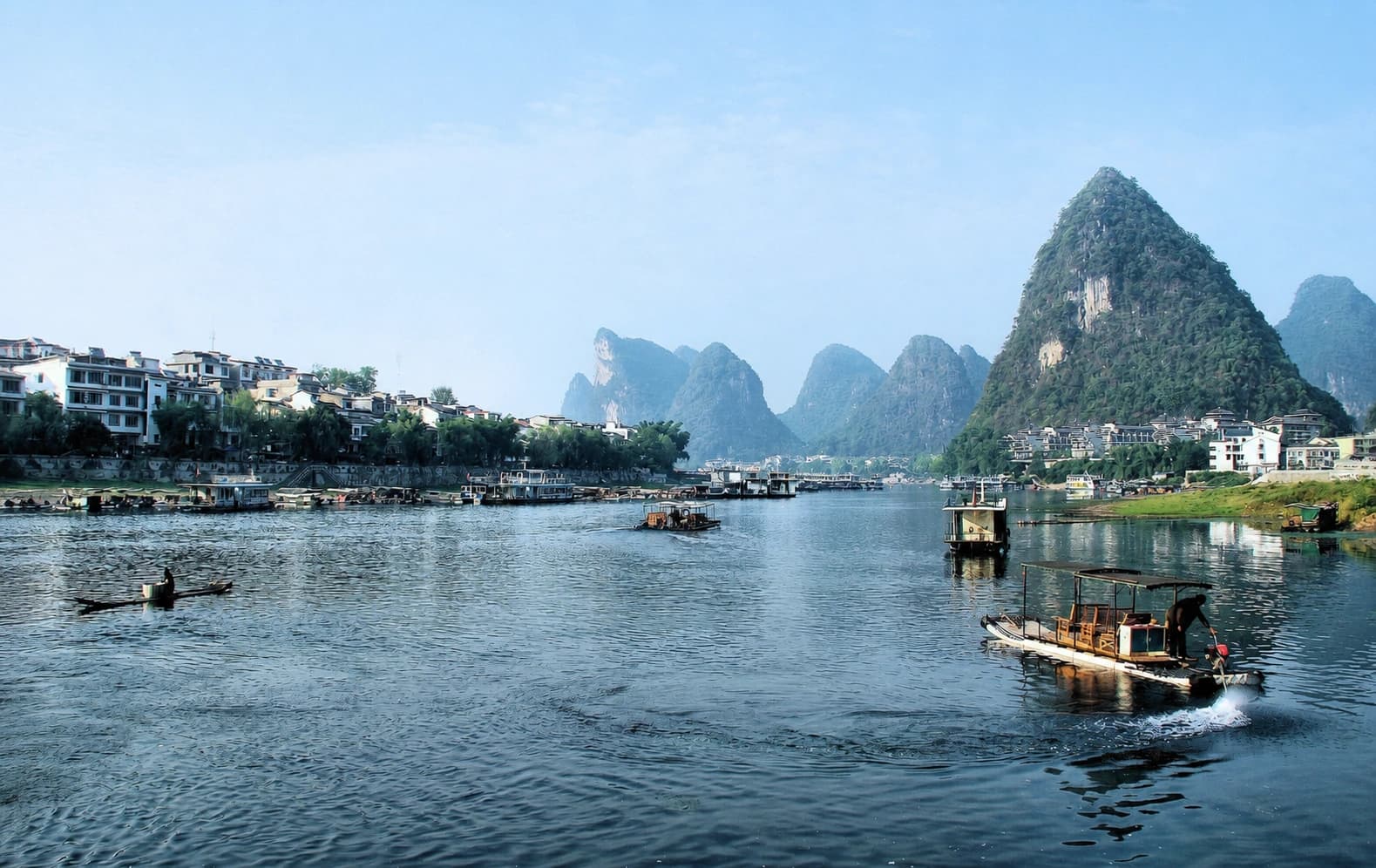
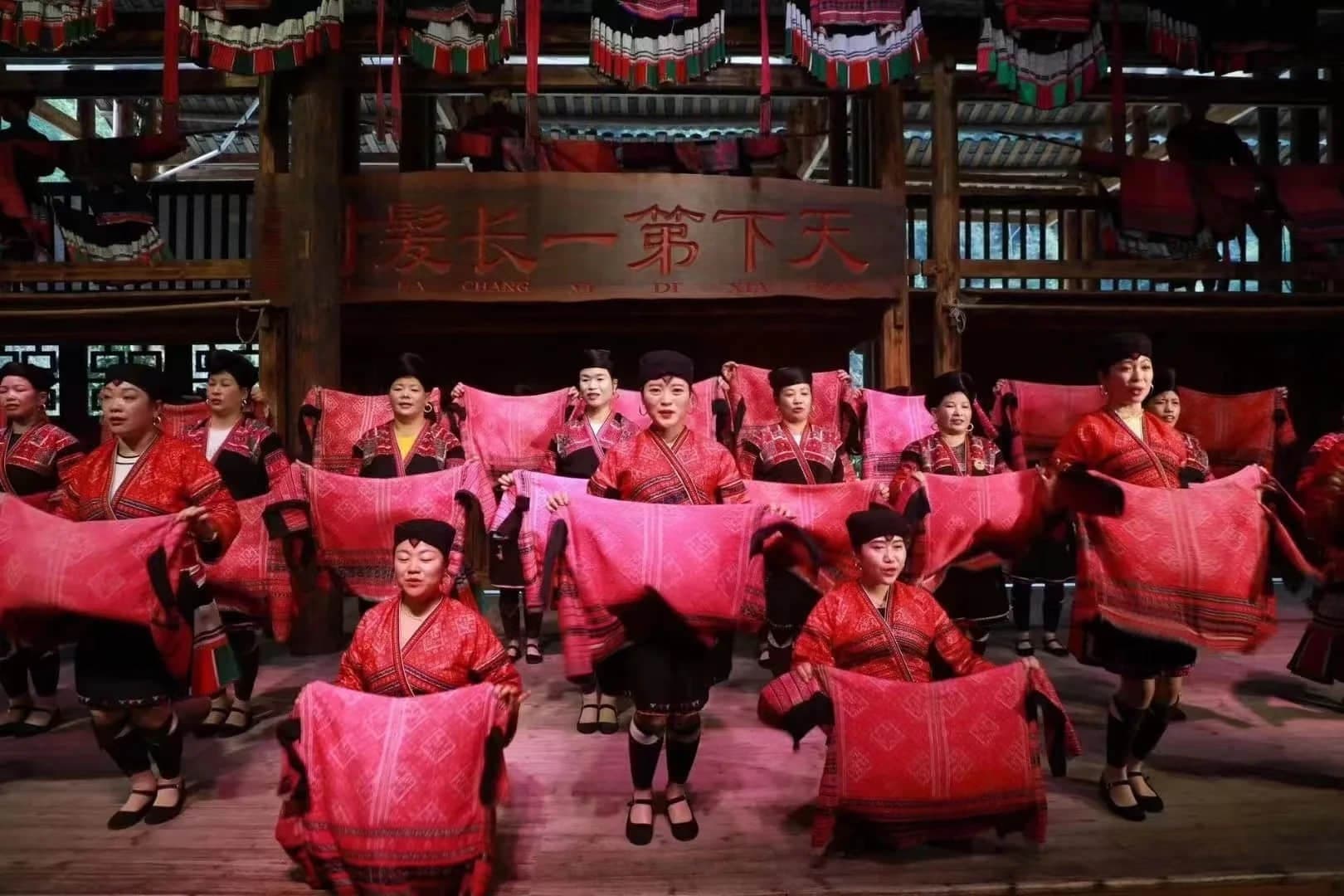
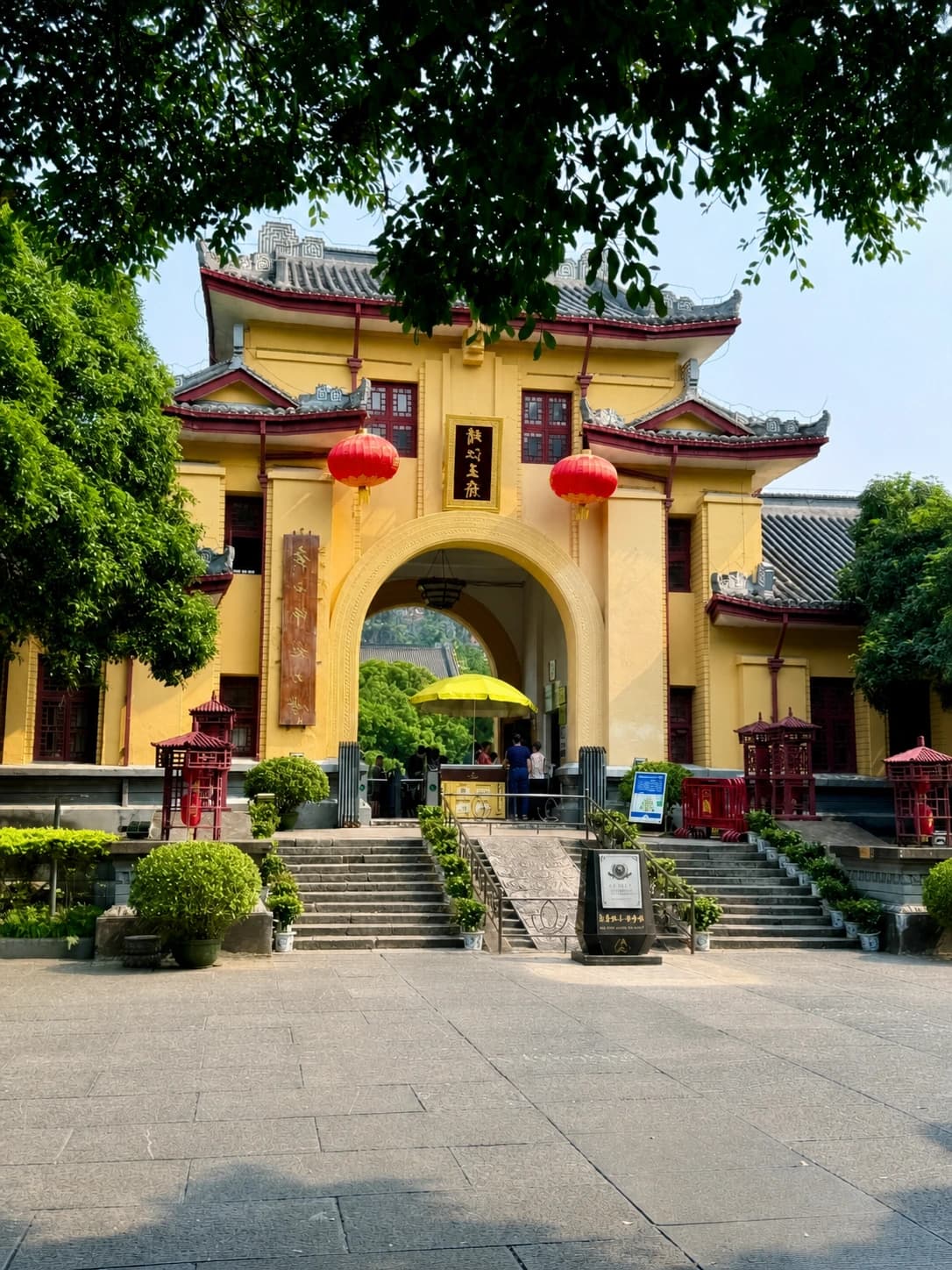
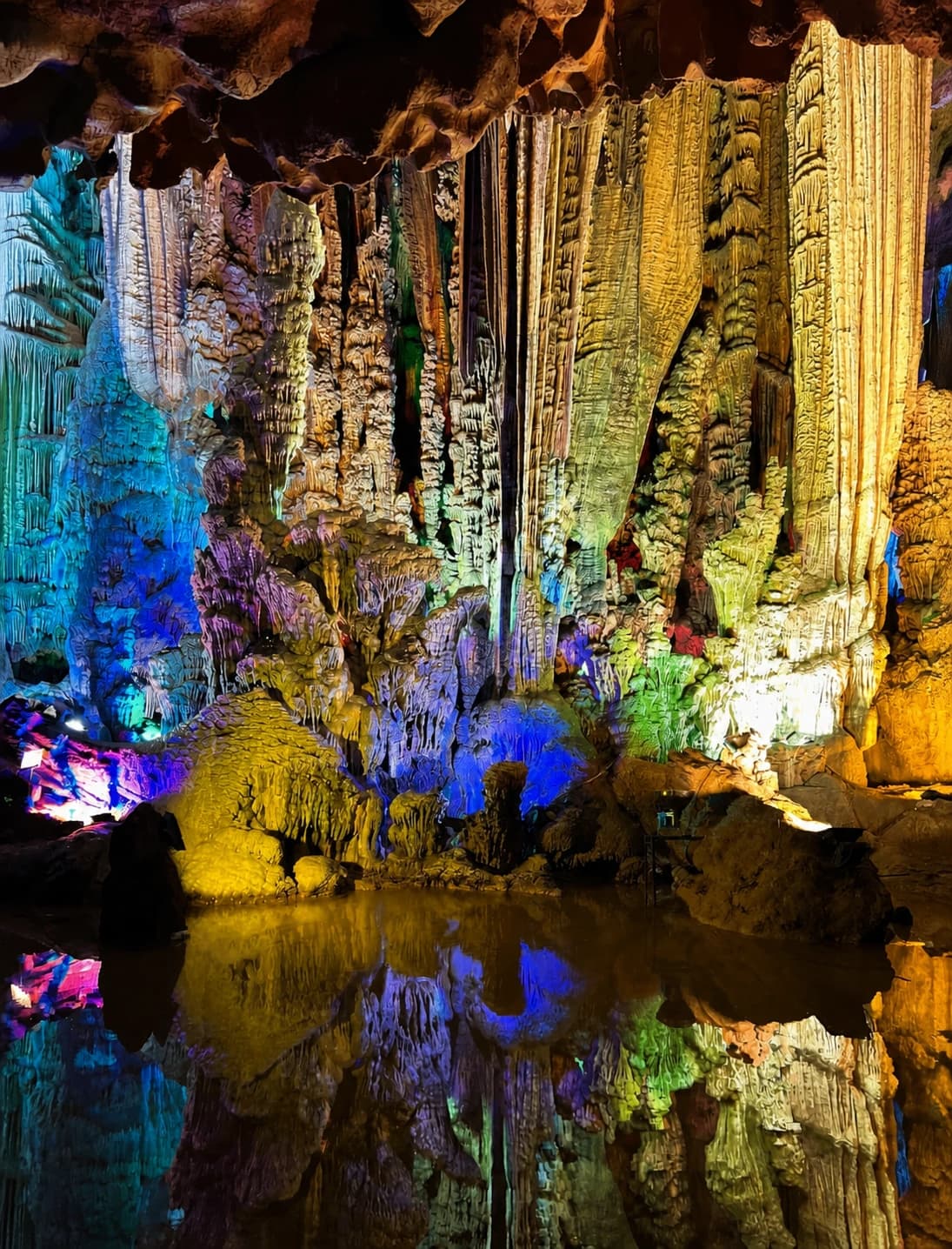
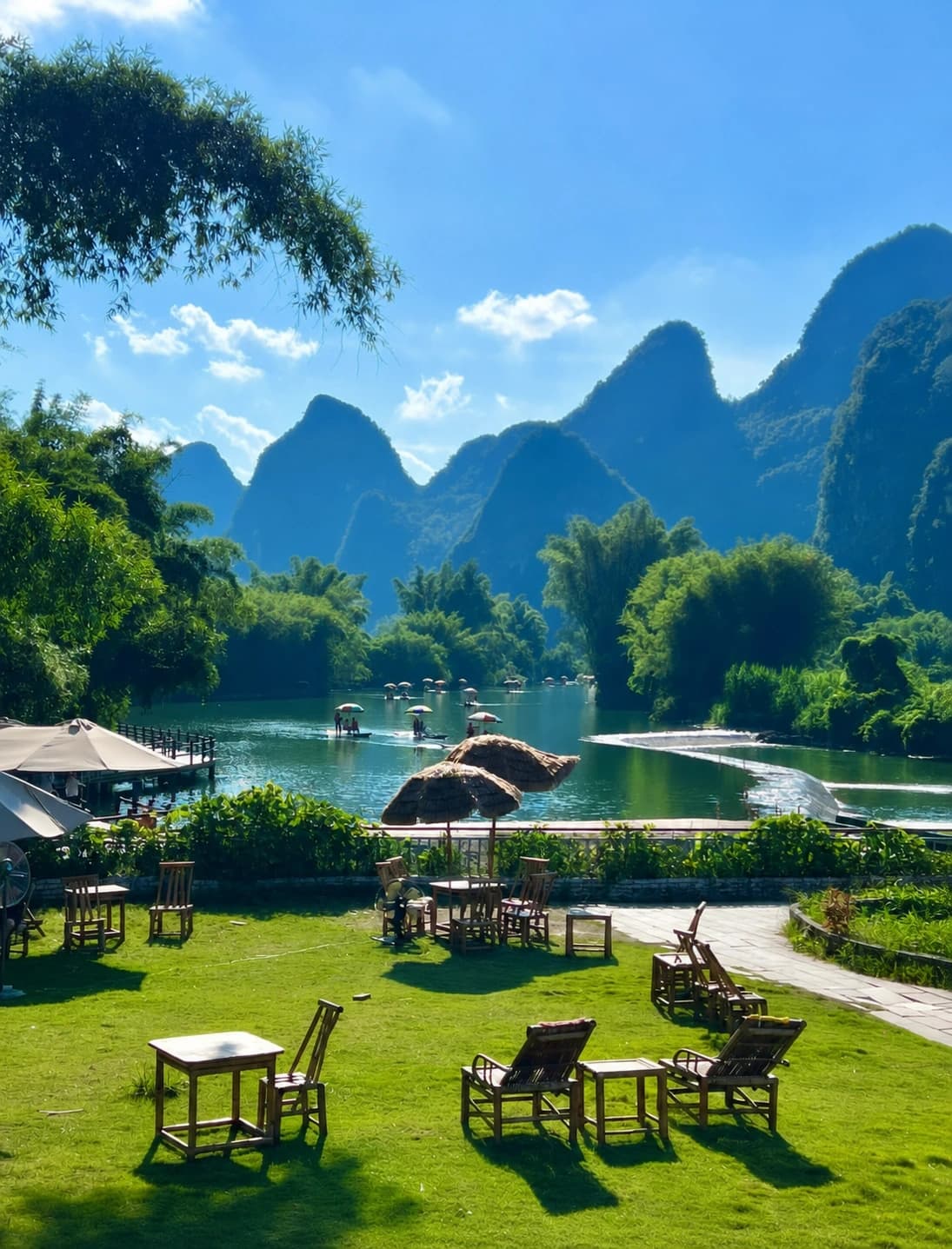
Choose by route role: Guilin city for orientation, the Li River for a one-way transfer, Yangshuo for countryside movement, and Longji for one carefully selected mountain base.