Guangzhou–Shenzhen–Hong Kong route: three cities, one southbound journey
Guangzhou, Shenzhen and Hong Kong sit close enough to connect by frequent rail, yet they reward very different kinds of attention. Guangzhou is the route's Cantonese food, craft and historic-neighbourhood anchor. Shenzhen explains electronics, design, planned civic space and a fast-changing waterfront. Hong Kong adds a separate border, harbour geography and dense street-to-hillside transitions.
The best first trip moves in one direction: Guangzhou → Shenzhen → Hong Kong, then flies home from Hong Kong International Airport. This avoids returning through a border and a city simply to catch the departure flight. Reverse the route when airfare or international arrival time is materially better, but preserve the same city-night proportions.
Choose the length before choosing attractions:
| Trip length | Nights | Best for | Main compromise |
|---|---|---|---|
| 5 days | Guangzhou 2 / Shenzhen 1 / Hong Kong 2 | A fast first look attached to a longer China trip | Three hotels and a border in five days; no distant side trips |
| 7 days | Guangzhou 2 / Shenzhen 2 / Hong Kong 3 | The strongest first-trip balance | Still requires disciplined city clusters |
| 9 days | Guangzhou 3 / Shenzhen 2 / Hong Kong 4 | Food, museums, shopping and slower neighbourhood time | Higher Hong Kong hotel cost and more temptation to overfill the route |
If you have only four days, choose two cities. Guangzhou and Hong Kong create the strongest historical contrast; Shenzhen and Hong Kong create the easiest technology-and-design pairing. Three cities in four days becomes mostly checkout, security and immigration.
The route decision that matters most
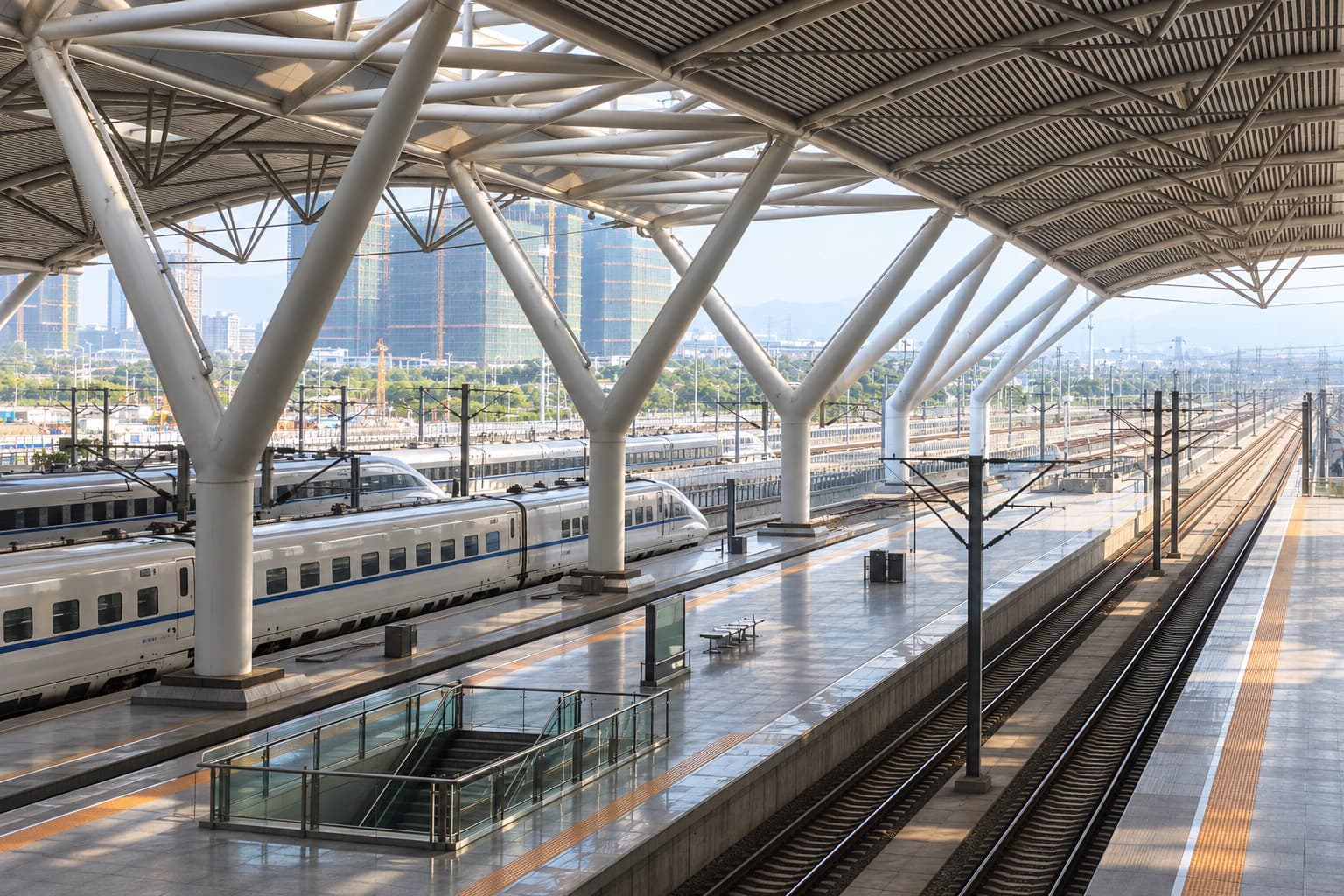
Do not let a “29-minute train” decide the hotel. Guangzhou and Shenzhen each have several stations, and the fastest station pair may sit far from both rooms.
- Guangzhou South → Shenzhen North usually offers the fastest headline journey and the broadest high-speed choice. It works well when the Guangzhou stay ends near a useful metro line and the Shenzhen hotel is in northern or central Shenzhen. Guangzhou South is in Panyu, away from Liwan and much of central Guangzhou.
- Guangzhou East → Futian or Shenzhen can be slower on the train but more efficient from Tianhe or Zhujiang New Town. Futian Railway Station is beneath Shenzhen's central business district, which can save a second long transfer.
- Futian or Shenzhen North → Hong Kong West Kowloon is the clean high-speed option when the luggage is manageable and the Hong Kong hotel suits Kowloon or an easy MTR connection. The rail segment is short; immigration and station access are the real journey.
- Futian Port → Lok Ma Chau Spur Line is useful when the Shenzhen hotel is near Futian and the Hong Kong destination lies conveniently on or beyond the East Rail Line. Futian Railway Station and Futian Port are different places.
- Shenzhen Bay Port can fit western Shenzhen, Hong Kong International Airport or parts of the New Territories when a current cross-boundary bus aligns with the final destination. It is not automatically faster for central Kowloon or Hong Kong Island.
Write the full station or port in the day plan before booking the hotel. The same city name can hide an hour of urban travel.
Entry rules: check two jurisdictions, not one “China visa”
Hong Kong maintains its own visitor entry arrangements. A traveller who can enter Chinese Mainland is not automatically cleared for Hong Kong, and the reverse is also true. Before buying a non-refundable train or open-jaw flight:
- Check Chinese Mainland entry or transit eligibility against the current rule for the passport, route and exact entry port.
- Check the Hong Kong Immigration Department's current visit and transit requirements.
- If relying on China's 240-hour visa-free transit policy, test the exact sequence against the National Immigration Administration's current rule: eligible passport, confirmed onward travel to a third country or region, designated entry port and permitted travel area all matter.
- Carry the original passport used to buy the rail ticket, plus any required visa or entry permit and proof of onward travel.
Do this before treating Hong Kong as a spontaneous day trip. A viral route or another traveller's successful crossing does not establish your eligibility.
The five-day route: the fast version that still works
Day 1 — Guangzhou's Liwan story
Stay around Beijing Road/Gongyuanqian for broad transport access or Liwan/Huangsha for immediate old-city texture. Start at Chen Clan Ancestral Hall, where wood, stone, brick, ceramic and plaster decoration make Guangdong craft tangible. Continue toward Enning Road and Yongqing Fang, then finish on Shamian Island.
The sequence matters. It moves from lineage craft to Xiguan lanes and then to the former concession landscape instead of treating the west side as three unrelated photo stops. Reserve two hours for yum cha or a Cantonese lunch; morning tea is part of the city's social rhythm, not fuel between attractions.
Day 2 — Yuexiu history or the modern riverfront
Choose one branch. For history, pair the Museum of the Nanyue King with one living religious site and Beijing Road. For the modern city, reserve Guangdong Museum, walk Flower City Square and see Canton Tower from the riverfront. A paid tower deck only makes sense when visibility is good and the selected level justifies the ticket.
Do not combine the full Liwan route, Guangdong Museum and Canton Tower in one day. Guangzhou's metro is extensive, but exits, interchanges and river crossings consume real time.
Day 3 — Transfer to Shenzhen, then components to skyline
Choose the Guangzhou departure station from the hotel, not from the shortest rail time. A midday arrival protects the morning from rush-hour luggage stress and leaves a usable afternoon.
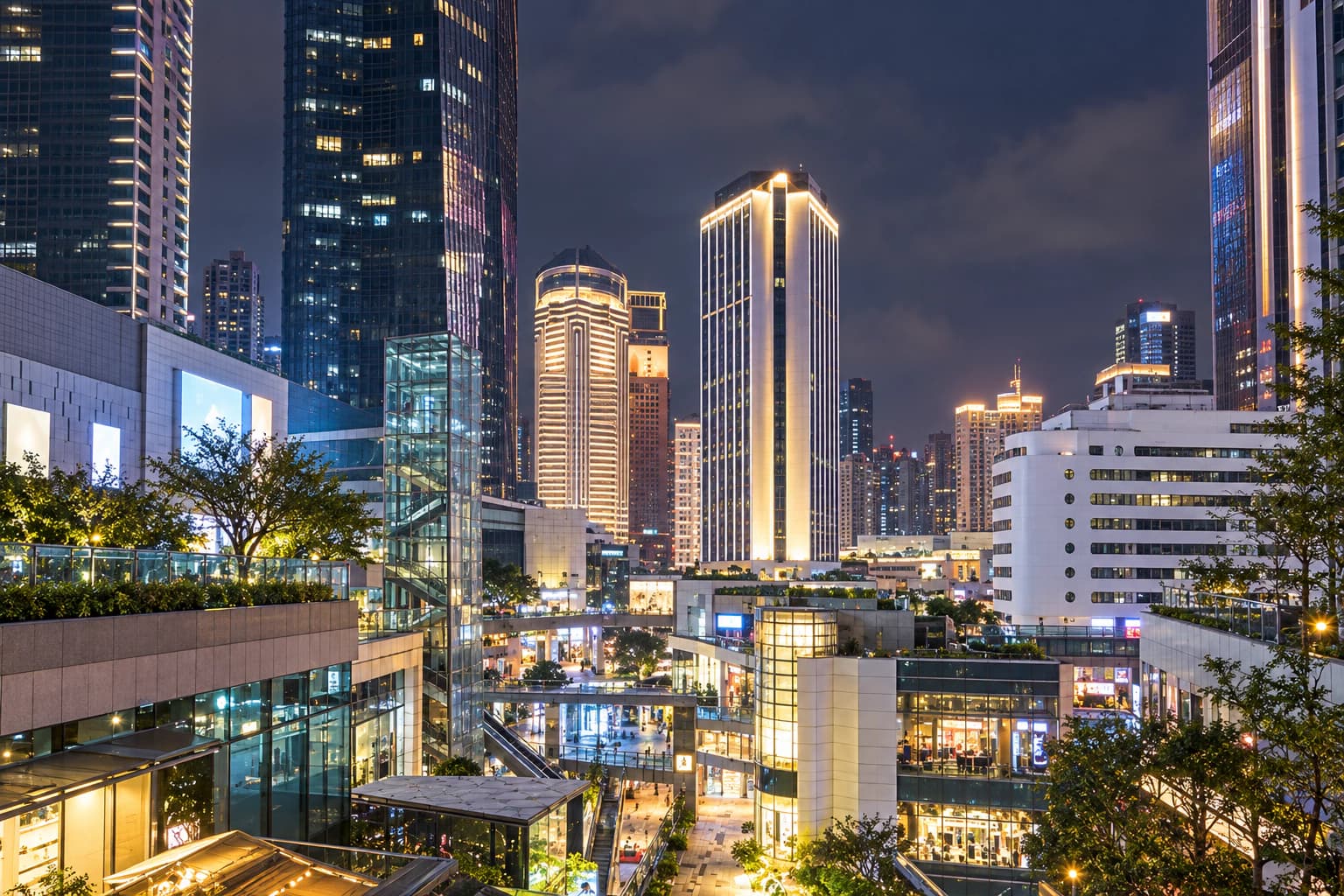
Base in Futian for the one-night version. Explore Huaqiangbei with a specific purpose: components and repair culture, not indiscriminate “cheap electronics.” The Huaqiangbei electronics guide explains how to test the exact unit, ask about regional compatibility, distinguish retail from wholesale counters and leave high-value purchases when warranty terms are unclear.
Continue to Lianhuashan Park or Shenzhen Civic Center for the change from counter scale to planned-city scale. In heat or heavy rain, shorten the park and keep the technology district plus an indoor cultural venue.
Day 4 — Cross to Hong Kong and keep the arrival day compact
For high-speed rail, Futian–West Kowloon can have a very short scheduled ride, but the useful planning block is hotel checkout → Shenzhen station → security → train → two jurisdictions' immigration at West Kowloon → Hong Kong hotel. Keep the original passport accessible and do not bury entry documents in a locked suitcase.
After leaving West Kowloon, store luggage at the hotel before sightseeing. Walk the West Kowloon culture route if museum reservations and energy align, or move to Tsim Sha Tsui for the waterfront and Victoria Harbour. Do not add Victoria Peak to a delayed border afternoon.
Day 5 — Hong Kong Island, then departure or final night
Use the Central heritage and harbour walk as the stable spine. It links harbour transport, older commercial streets and the vertical city more coherently than a cross-city checklist. Add Victoria Peak only when cloud and queues cooperate; keep street markets or a harbour ferry as the weather fallback.
If flying that evening, cut the Peak first and leave a proper airport margin. An open-jaw itinerary saves a return border only when the final sightseeing day respects flight check-in.
The seven-day route: the recommended first trip
The seven-day version keeps the first two Guangzhou days, then slows the middle and gives Hong Kong a complete third day.
Days 1–2 — Guangzhou in two coherent halves
Use Liwan and Yuexiu as one heritage-and-food day, then make Zhujiang New Town and the Pearl River the second day. The split allows a proper dim-sum meal, one museum with attention and a riverfront evening without repeated west-east travel. Read the full Guangzhou guide for hotel-area and food-ordering choices.
Day 3 — Guangzhou to Shenzhen, Huaqiangbei and Futian
Travel after breakfast, leave luggage, then follow the Day 3 sequence above. Stay in Futian when technology, the civic centre and a later Futian departure to Hong Kong matter most. Stay in Nanshan when the second Shenzhen day is primarily Nantou, Shekou and the western waterfront.
Day 4 — Shenzhen's older layers and waterfront
Begin at Nantou Ancient City, reading it as surviving fabric plus contemporary reuse rather than an untouched old town. Continue to one western cluster: Sea World Culture and Arts Center with Shekou, or one section of Shenzhen Bay Park. Tide, humidity, rain and distance decide how long the waterfront deserves.
This day prevents Shenzhen from becoming a mall beside the border. It also balances the previous day's electronics with urban history, design and public space. The complete Shenzhen city guide gives the wider district choices; resist adding a distant beach or mountain to this corridor itinerary.
Day 5 — Shenzhen to Hong Kong, West Kowloon and the harbour
Cross before lunch but avoid a brittle early appointment in Hong Kong. High-speed rail is best for West Kowloon/Kowloon access and controlled luggage handling. Futian Port/Lok Ma Chau can be better when the hotel and planned first stop fit the East Rail Line. On either route, the border is a separate operational block.
Use the afternoon for West Kowloon, Tsim Sha Tsui and a harbour crossing. The route remains satisfying if a museum is sold out because promenade, ferry and street layers still work.
Day 6 — Central, Sheung Wan and Victoria Peak
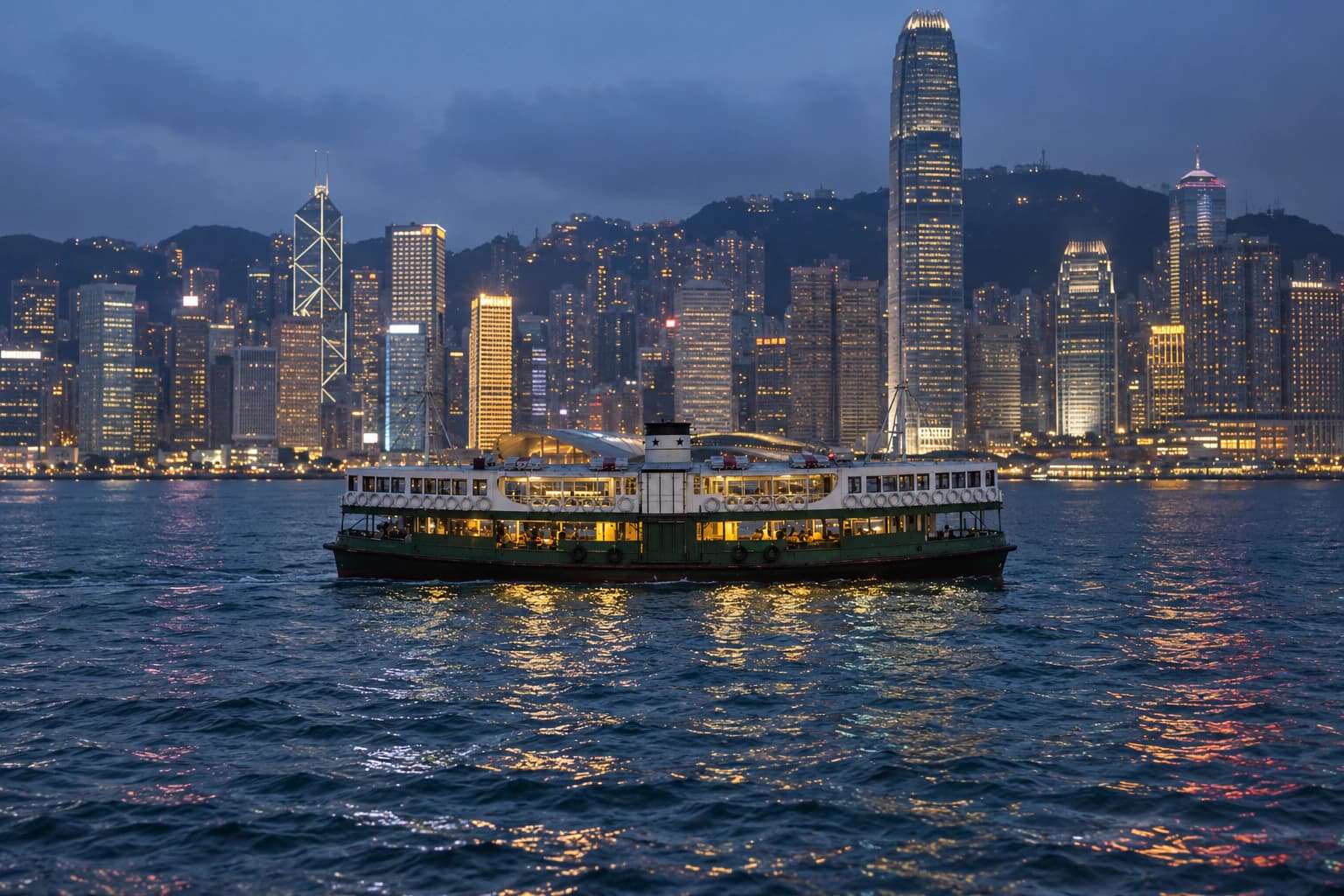
Start low and rise later. Central and Sheung Wan work in the morning through markets, temples, stairs and older commercial streets. Move toward the Peak only after checking visibility. If the skyline is inside cloud, extend the neighbourhood walk toward Wan Chai or use a museum rather than paying for a blank view.
Day 7 — Kowloon neighbourhoods or an island-side extension
Choose one side. In Kowloon, link Yau Ma Tei and the Mong Kok markets walk without presenting living markets as a spectacle. On Hong Kong Island, choose the Wan Chai old-and-new walk or continue west toward Kennedy Town. Keep the final night close to the transport that matters the next morning.
The nine-day route: add depth, not more cities
Use the seven-day structure, then add one day in Guangzhou and one in Hong Kong. Keep Shenzhen at two nights unless electronics sourcing, design institutions or a specific business visit is the trip's main purpose.
Extra Guangzhou day — food and one deep cultural theme
Choose a single thread:
- Cantonese craft and domestic life: Liwan Museum, arcades, a slower Enning Road walk and a meal chosen for turnover rather than online fame.
- Maritime and religious Guangzhou: one museum collection, one active temple and riverfront context, with respectful behaviour inside worship space.
- Contemporary Guangzhou: Guangdong Museum, Flower City Square, Haixin Bridge when open and safe, then a ground-level tower view.
The extra day should create unhurried observation and a second substantial meal. It should not become a Foshan, Shunde or Macau day trip hidden inside a Guangzhou itinerary.
Extra Hong Kong day — choose landscape, culture or rest
Pick one meaningful contrast: a carefully checked hiking/coastal day, a major museum plus West Kowloon public space, or a slower tram-and-neighbourhood day on Hong Kong Island. Keep a rain fallback and avoid reserving a non-refundable outdoor day during a volatile weather window.
Nine days also make the route resilient. A stormy Pearl River evening can move; a museum closure does not collapse a city; a crowded border morning does not erase Hong Kong.
Choose hotels by the next transport job
Three bases are enough. Changing hotels within a city rarely saves more time than it costs.
Guangzhou
- Beijing Road/Gongyuanqian: the best general base for Yuexiu, food and multi-direction metro access.
- Liwan/Huangsha: best for the old-city day and Shamian; slower to Zhujiang New Town and Guangzhou South.
- Zhujiang New Town/Tianhe: best for modern Guangzhou and potentially convenient access to Guangzhou East; less atmospheric for early Liwan walks.
Shenzhen
- Futian: the default for a one-night stay, Huaqiangbei, Civic Center, Futian Railway Station and access toward Futian Port.
- Nanshan: best for a two-night design/waterfront emphasis; add time to a Futian or Shenzhen North departure.
- Shenzhen North: useful only for a very early onward train. It is a transport choice, not the most rewarding sightseeing base.
Hong Kong
- Jordan/Tsim Sha Tsui: practical after West Kowloon arrival and strong for harbour evenings.
- Central/Sheung Wan: best for Hong Kong Island's historic-commercial layers and ferries, usually at a higher room cost.
- Wan Chai/Causeway Bay: useful for island transport, food and evening activity; less direct from West Kowloon with luggage.
Compare current hotel inventory on Trip.com only after fixing the district, station and dates. Check the actual entrance, nearest usable transit exit, room-size reviews and cancellation terms rather than buying a vague “near downtown” label.
The border-day playbook
High-speed rail to West Kowloon
This is the most legible option for many first-time visitors. Buy with the passport you will carry. At a Mainland station, allow time for the real-name check, security and the station's boarding cutoff. Immigration takes place after arrival at Hong Kong West Kowloon.
West Kowloon is connected by walkways to Austin and Kowloon stations, but the transfer can feel long with luggage. Add the walk, ticket or Octopus setup and hotel transfer before planning the first attraction.
When departing Hong Kong in the reverse direction, MTR currently says travellers complete security plus both Hong Kong and Mainland immigration at West Kowloon. Its live guidance says the formalities normally take around 30–45 minutes, while passport holders, staffed-counter users and holiday travellers should allow more. Follow the current West Kowloon process, because cutoffs can change.
Futian Port to Lok Ma Chau
This route is a pedestrian border plus Hong Kong MTR connection. It can be efficient from central Futian and for destinations along the East Rail Line. It also exposes travellers to two station systems, walking with luggage and peak-period queues. The Hong Kong Immigration Department currently lists limited daily hours for Lok Ma Chau Spur Line; verify the live control-point page on the travel date.
Shenzhen Bay and Huanggang
Use Shenzhen Bay only when the current cross-boundary bus serves the actual Hong Kong destination better than rail. Use Huanggang as a late-night contingency only after confirming the current passenger transport on both sides; a 24-hour checkpoint does not mean every onward bus or local connection runs continuously.
Never schedule the last practical crossing as the only route to a separate long-haul flight. Weather, queues, ticket inventory and local transport can all fail independently.
Luggage across three hotel systems
Pack for repeated handling, not only airline allowance. Current cross-boundary HSR guidance lists a 20 kg total allowance per adult and a 130 cm length-plus-width-plus-height limit per item. Space is shared rather than reserved.
- Keep one case you can control on escalators, lifts and busy platforms.
- Store the passport, entry documents, medicine, batteries and valuables in the day bag.
- Move shopping into the main case before the border morning; do not repack in the immigration queue.
- Retain receipts for high-value purchases and check customs allowances for the direction of travel.
- Do not assume that a product acceptable on a Mainland train is automatically unrestricted at a border or on a flight.
The five-day route is especially sensitive to luggage. If shopping is a major purpose, use the seven- or nine-day version and leave empty space from the start.
Balance food, technology and shopping
Give each city a different shopping job.
Guangzhou is strongest for food and regional culture. Use markets and commercial streets to understand ingredients, arcades and local consumption, not to chase counterfeit-branded goods. A proper yum-cha meal, roast meats or claypot rice deserves more time than a second generic mall.
Shenzhen is the technology stop. Huaqiangbei is valuable for seeing the supply-chain relationship among components, repair and finished devices. Casual visitors should prefer modest, testable purchases. High-value cameras, phones, drones and computer parts require written warranty, region and return checks.
Hong Kong works best for tightly curated purchases with clear retailer terms, plus books, design, food and neighbourhood browsing. Compare the final card price and warranty rather than assuming a universal tax or currency advantage.
For food, order in a sequence that leaves room to learn. Guangzhou morning tea, Shenzhen's migrant and Chaoshan-influenced dining, and Hong Kong cha chaan teng, roast-meat and dim-sum traditions overlap without being interchangeable. Choose one substantial local meal per day, then use snacks as exploration rather than a checklist.
Weather, crowds and fallback logic
The corridor is humid, rain-prone and exposed to tropical weather. Severe-weather signals can suspend outdoor attractions, ferries, rail or flights. Keep the most exposed elements movable: Pearl River promenades, Shenzhen Bay, harbour crossings and Victoria Peak.
Use indoor anchors by geography rather than crossing a city to “save” a plan: Guangdong Museum in modern Guangzhou when reserved, a current Futian or Nanshan cultural venue in Shenzhen, and a nearby Hong Kong museum or covered neighbourhood route. Same-day capacity is not guaranteed.
Public holidays create a compound problem: rail inventory, border queues, hotel rates and attraction crowds can rise together. Book the intercity legs when the railway sale window opens, keep one later acceptable service in mind and avoid the last train before an inflexible booking.
Booking order
- Verify Mainland and Hong Kong entry conditions for every passport.
- Price an open-jaw international arrival into Guangzhou or the wider Mainland and departure from Hong Kong, then compare the reverse.
- Fix the 5/7/9-day city-night split.
- Choose hotel districts based on the first and last major transport job.
- Search exact station pairs for Guangzhou–Shenzhen and the exact Shenzhen–Hong Kong crossing.
- Book the least flexible rail leg first, using the same passport details throughout.
- Add museums, paid viewpoints and restaurants only after transfers work.
For live train inventory, compare the exact station pair on Trip.com, then recheck the train number, full station name, passenger document and change conditions before payment. China Railway 12306 remains the official railway platform.
Final route verdict
Choose five days only when speed is intentional and luggage is light. Choose seven days for the best first-trip balance: two nights in Guangzhou, two in Shenzhen and three in Hong Kong. Choose nine days when food, museums and neighbourhood texture matter more than adding another city.
The route succeeds when each move changes the story: Cantonese craft and meals in Guangzhou, technology and designed urban space in Shenzhen, then harbour density and cross-cultural street life in Hong Kong. It fails when short train times are mistaken for short travel days. Protect the city nights, name the exact stations and treat the border as part of the itinerary.