Mong Kok Markets Walk
The useful version of a Mong Kok market day is a north-to-south walk, not a collection of separate MTR trips. Start near Prince Edward, visit the Flower Market and Yuen Po Street Bird Garden while there is daylight, then continue through Goldfish Market, Sneakers Street and Ladies' Market. Finish near Mong Kok MTR instead of walking back to the start.
Allow three to five hours depending on how much you shop and whether you enter the Bird Garden. The walking transfers are short; browsing, crowds, crossings and food breaks create most of the variation. This is a neighborhood route, not five equally large attractions.
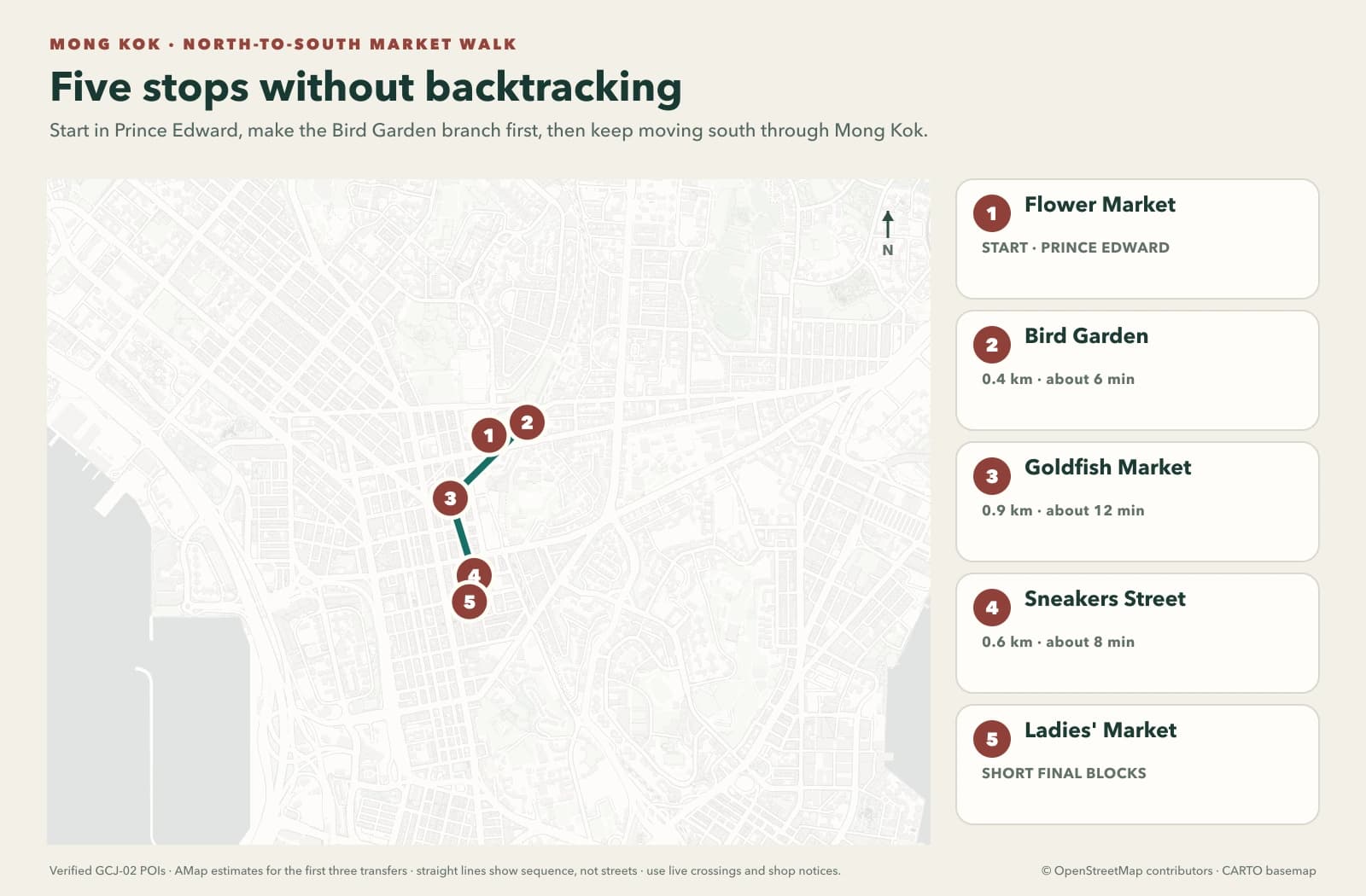
The map uses verified map locations on a real basemap. Straight lines show visit sequence, not streets. Use live navigation, crossings and current shop notices for the exact path.
The Route at a Glance
- Flower Market: start with the most daylight-dependent stop.
- Yuen Po Street Bird Garden: about 0.4 km / 6 minutes from the Flower Market map location used for planning.
- Goldfish Market: about 0.9 km / 12 minutes from the Bird Garden map location.
- Sneakers Street: about 0.6 km / 8 minutes from Goldfish Market.
- Ladies' Market: continue for the short final blocks, following live crossings rather than a guessed fixed distance.
These transfer estimates come from an AMap walking plan. Construction, crowd control and pedestrian signals can change the usable route. If you have only two hours, choose Flower Market plus Goldfish Market, or Goldfish Market plus the two southern shopping streets; do not rush all five.
1. Flower Market: Begin With the Living Trade
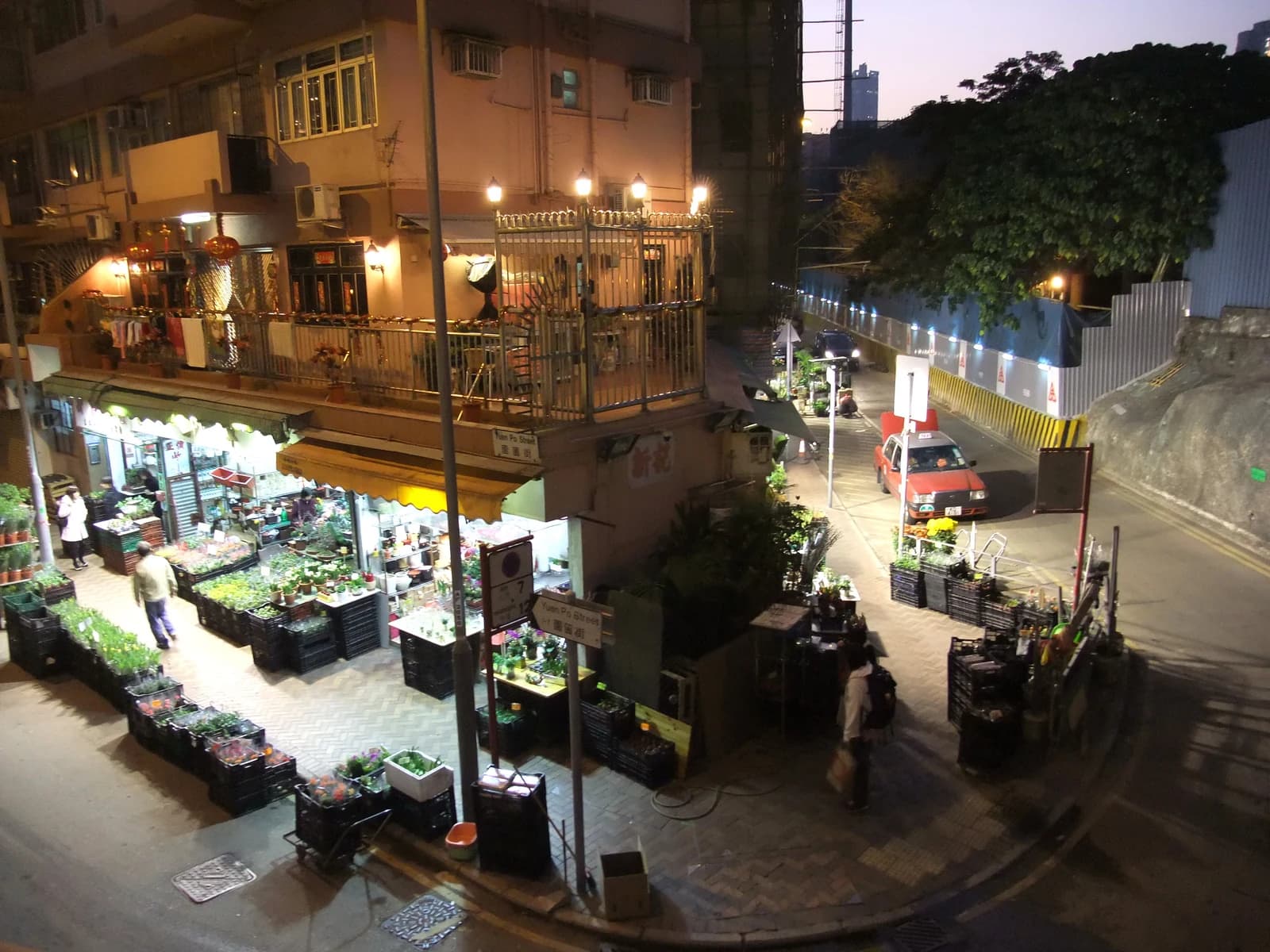
Documentary photograph by Mk2010, adapted from Wikimedia Commons under CC BY-SA 3.0.
The Flower Market is a working cluster of cut-flower, potted-plant and supply shops, not one enclosed hall. Look for the change in scale: delivery buckets and pavement displays sit below apartment blocks and ordinary traffic. Buy only what you can carry without damaging plants or obstructing the next four stops.
Morning gives a more work-focused atmosphere; later daylight usually fits this combined route better because it leads naturally toward the southern evening markets. Individual businesses set their own hours, so do not treat a generic market listing as a guarantee that every shop is open.
2. Bird Garden: A Real Choice, Not a Mandatory Photo Stop
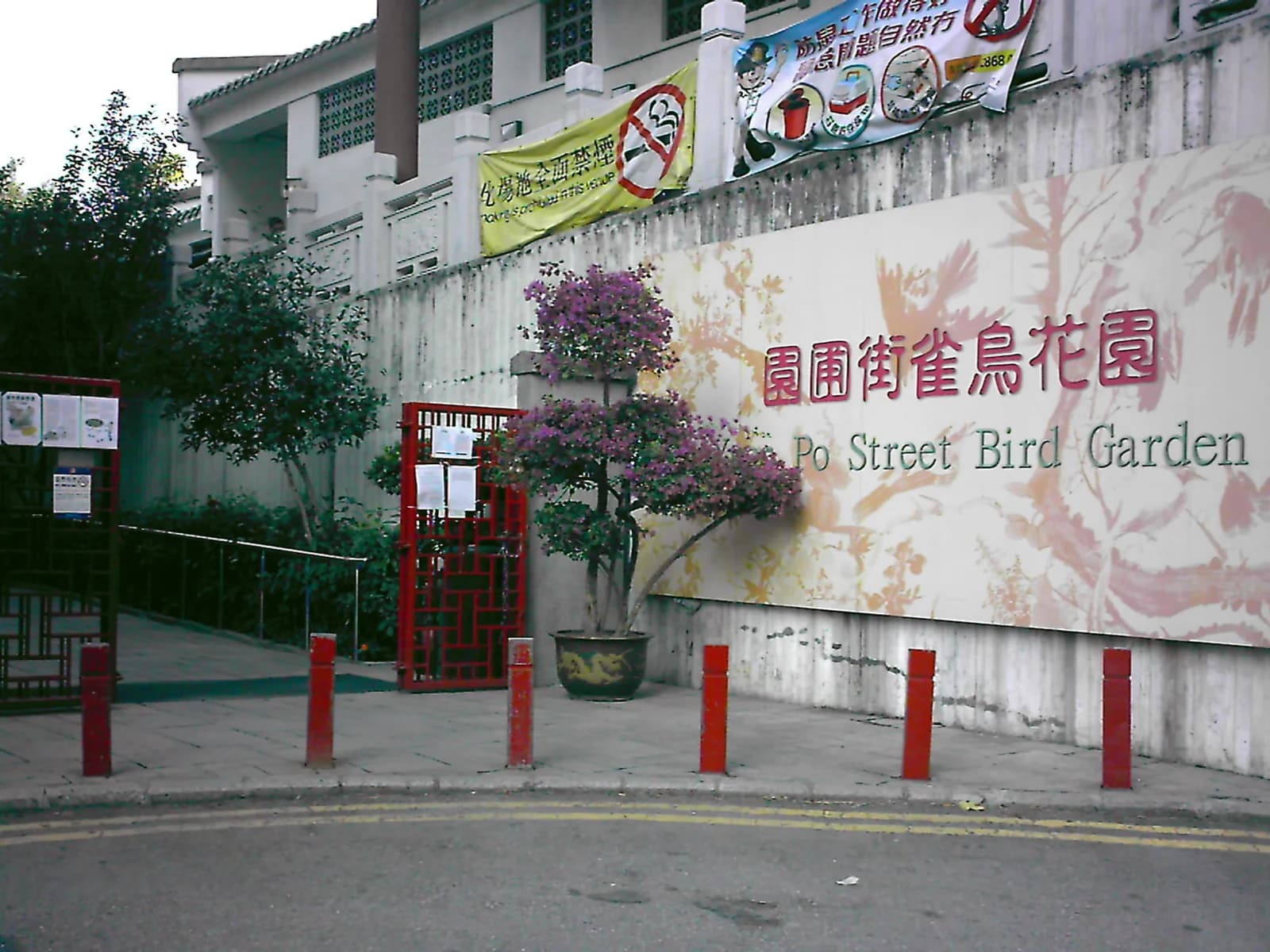
Documentary photograph by hkgalbert, adapted from a public-domain Wikimedia Commons file.
The Leisure and Cultural Services Department lists 07:00–20:00 daily for Yuen Po Street Bird Garden and directs visitors from Prince Edward MTR Exit B. Check the current notice before relying on those hours, especially around maintenance or severe weather.
The garden combines landscaped architecture with a caged-bird trade. Some visitors find that culturally interesting; others find it uncomfortable. Either response is reasonable. Do not tap cages, imitate calls at close range, use flash or turn owners into portrait subjects without permission. Skipping the garden does not break the route.
3. Goldfish Market: Observe a Specialist Street Respectfully
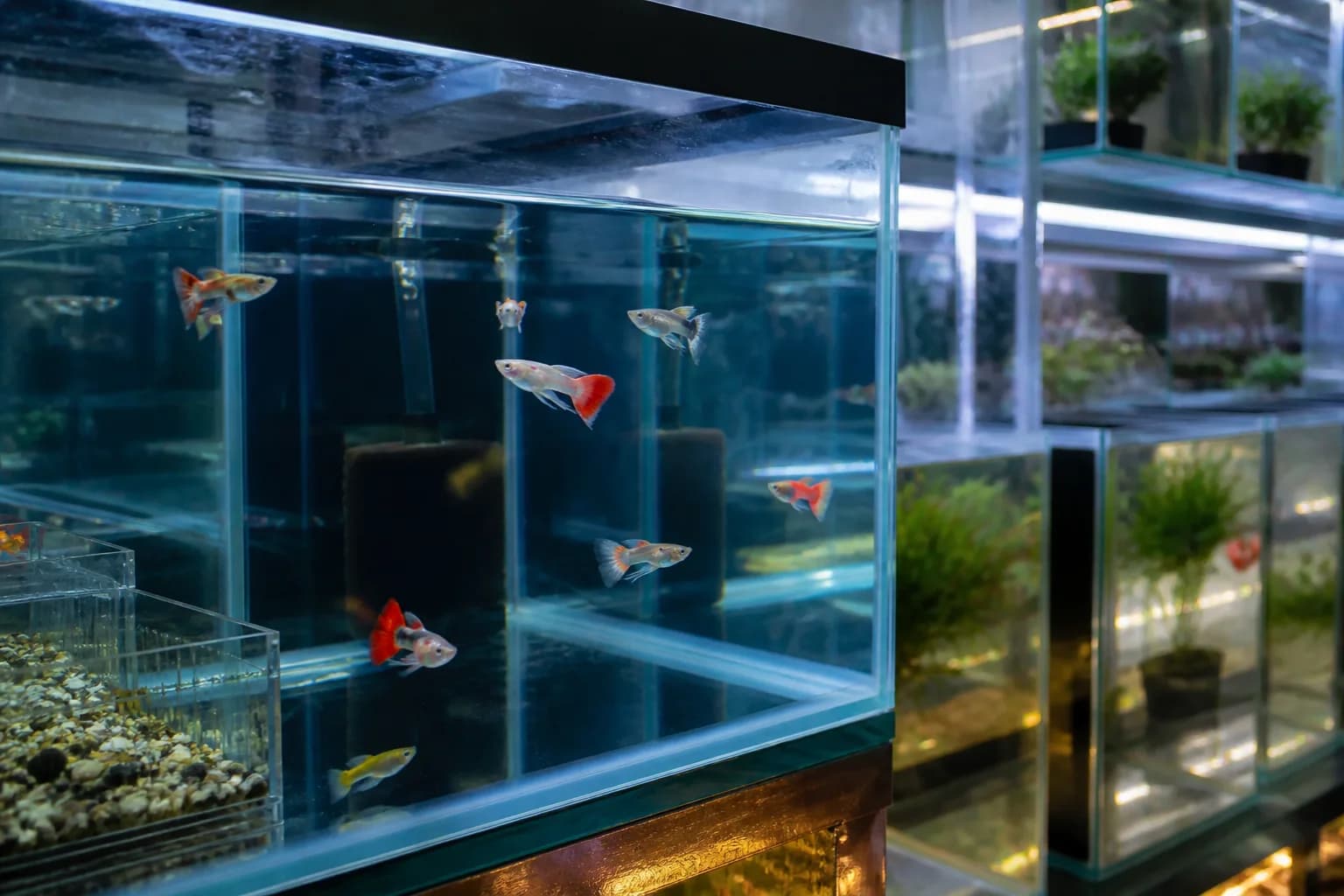
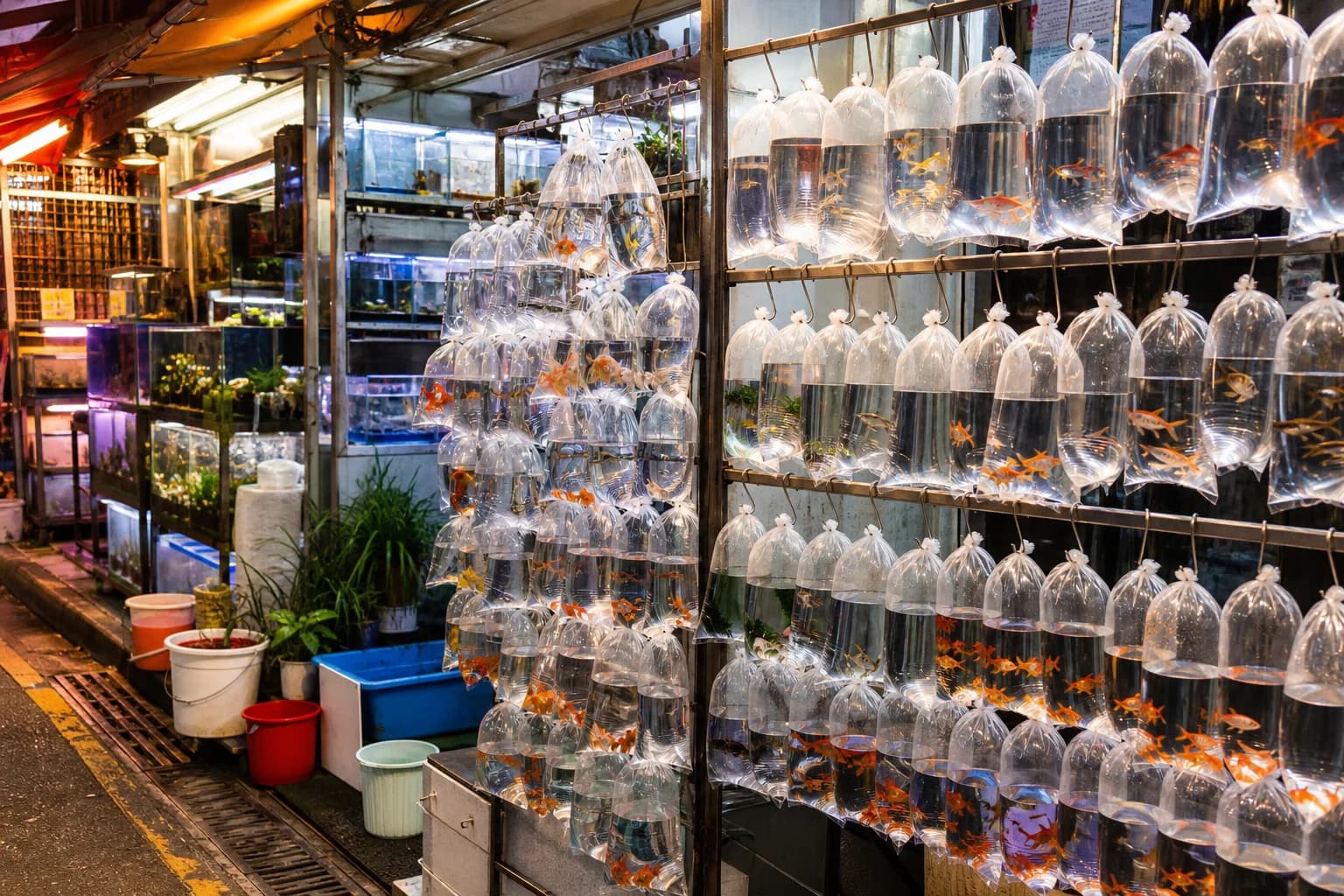
Goldfish Market occupies the northern part of Tung Choi Street. It is a working aquarium and pet-retail district, not an aquarium attraction. Spend 30–45 minutes, keep doorways and delivery space open, never tap tanks, and follow the Hong Kong Tourism Board's request to avoid flash.
Do not confuse this section with Ladies' Market farther south on the same street. That shared street name is precisely why a one-direction walk works well. The separate Goldfish Market guide covers photo etiquette and the quick-visit option in more detail.
4. Sneakers Street: Shop by Product, Not by Hype
Sneakers Street is the sportswear cluster around Fa Yuen Street. It is most useful when you already know the model, size and acceptable price range. Compare at least two legitimate storefronts, inspect the return policy, and ask whether an apparent discount applies to the exact size or color you want.
Skip it if shopping is not a priority. The street is a route connector, not a cultural obligation. A short tea or air-conditioned break here is often more valuable than forcing another purchase.
5. Ladies' Market: Finish When the Street Is Active
Ladies' Market is the southern Tung Choi Street market strip, known for clothing, accessories, souvenirs and small goods. Its energy is generally more useful from afternoon into evening, which is why it belongs at the end of this route. Vendor presence and stall times vary; there is no reason to wait for every shutter or stall to match an old guide.
Treat bargaining as a transaction, not a performance. Ask the price, make one calm counteroffer only if you are ready to buy, inspect quality before paying and walk away politely when the value is wrong. Branded goods at implausible prices should not be assumed authentic.
Food Without a Fragile Shop List
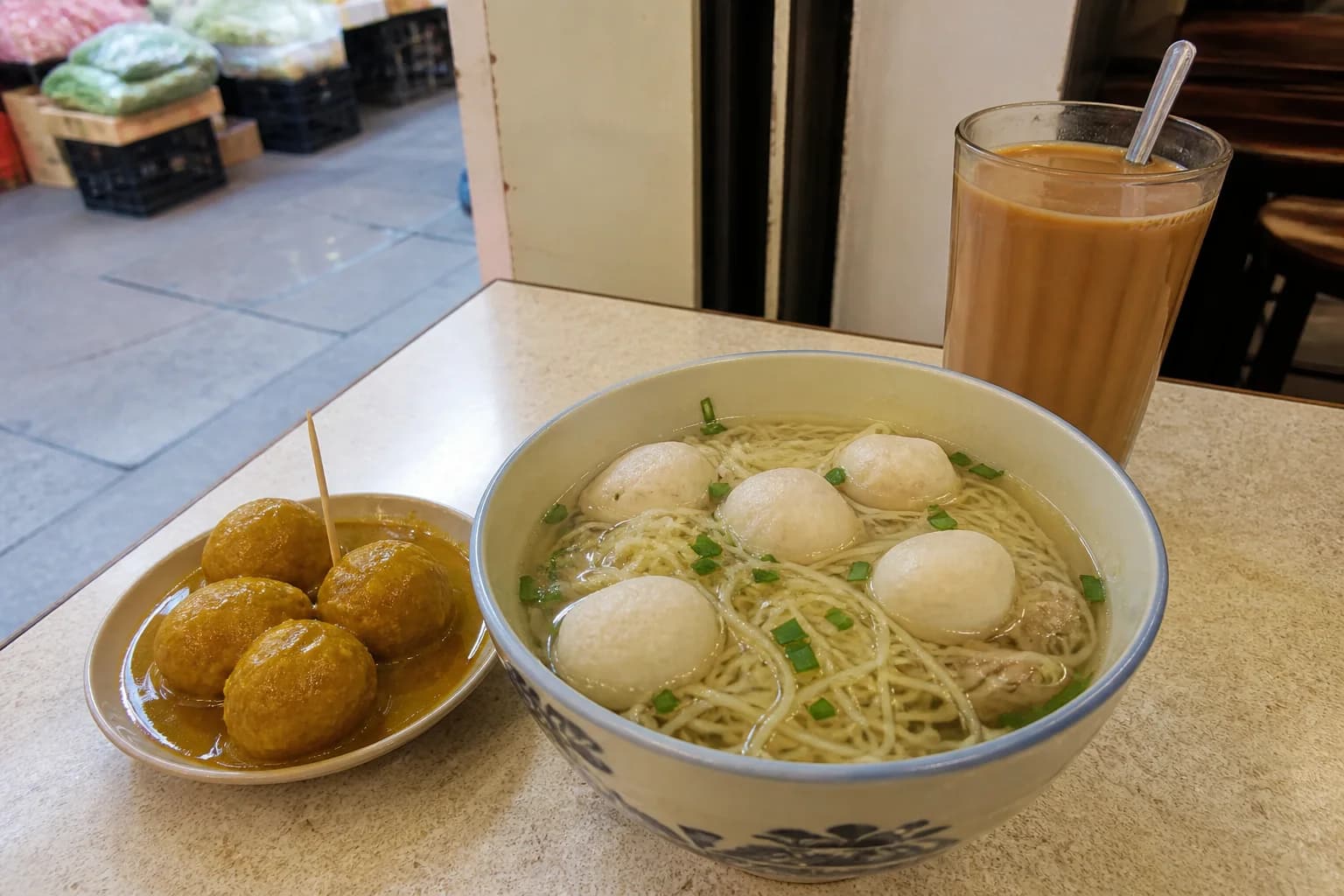
Choose a food category after seeing the live queue and menu instead of preserving a viral shop name long after a branch changes:
- Fish-ball or wonton noodles: efficient when you want a seated meal without ending the walk.
- Curry fish balls or siu mai: order one shared portion first; sauce heat varies.
- Congee: a gentler option in humidity or after a heavy travel day.
- Milk tea or lemon tea: take the break indoors instead of carrying an open drink through crowded shopfronts.
The aquarium trade and fish-ball food are unrelated. Their proximity does not create a special market tradition.
Weather, Mobility and Where to Stay
- Rain: the route remains possible, but umbrellas narrow pavements around working shops. Drop Sneakers Street or Ladies' Market if a severe-weather warning escalates.
- Heat: use the Flower Market and Bird Garden first, then take an indoor break before the southern section.
- Mobility: this district has crowded pavements, loading activity and variable curb access. Confirm current lift-equipped MTR exits and be prepared to bypass obstructed blocks.
- Families: the colors are engaging, but adults need to enforce no touching, no flash and no running into shop space.
Stay in Mong Kok or Prince Edward for late food and the shortest start, Yau Ma Tei or Jordan for a calmer south-Kowloon compromise, or Tsim Sha Tsui for the harbour and museums. Compare current area-level availability on Trip.com, paying close attention to recent room-size, lift and noise reviews.
For official context, see the Hong Kong Tourism Board's Kowloon markets walk and its Goldfish Market guidance. Current on-site notices and live transport information override any static guide.
The Short Verdict
Use this route when you want to understand Mong Kok through different working trades, not when you need five headline sights. Starting north protects the daylight stops; finishing south matches the later street-market rhythm. The route succeeds because it is selective, one-directional and honest about which stops are optional.