Victoria Harbour
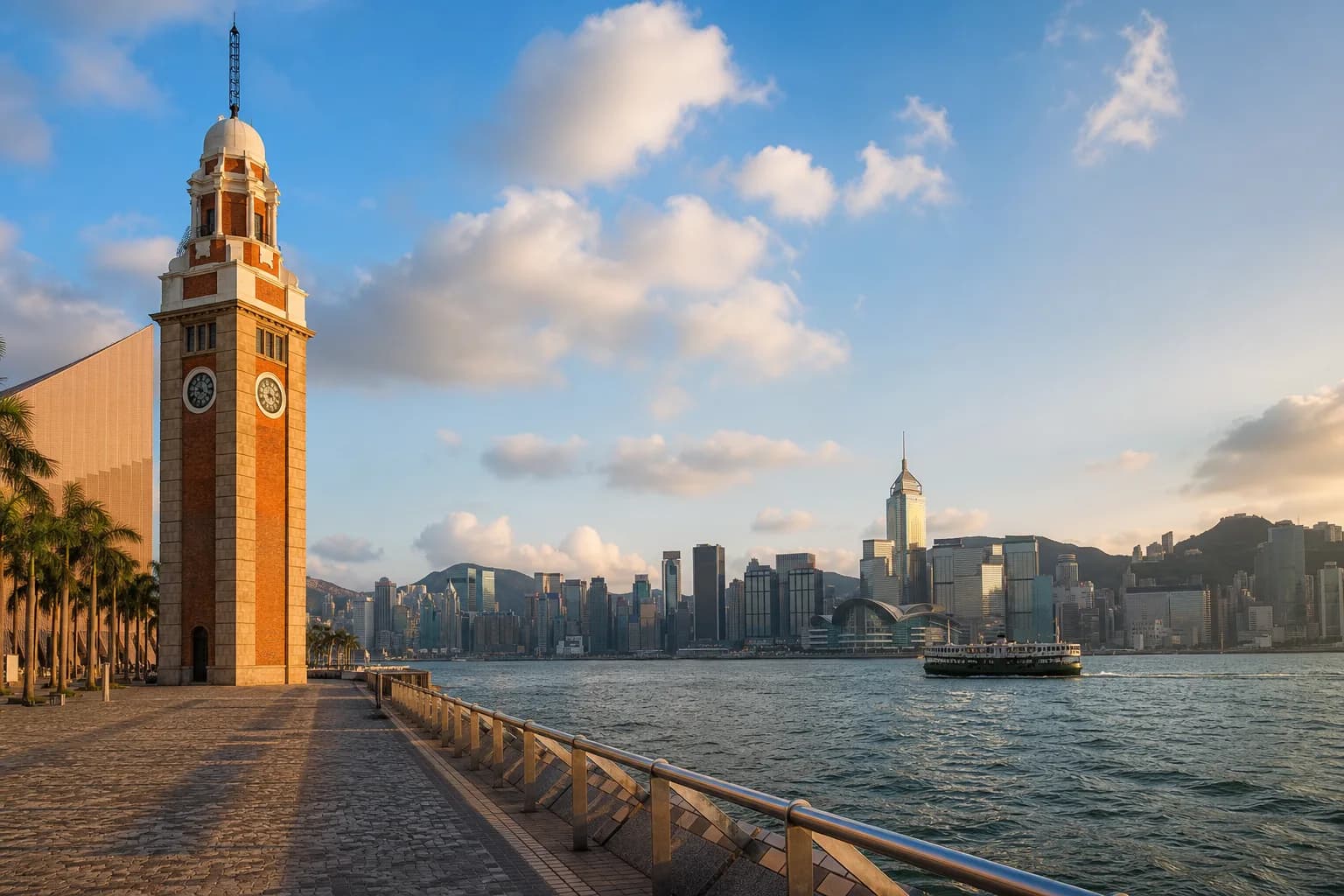
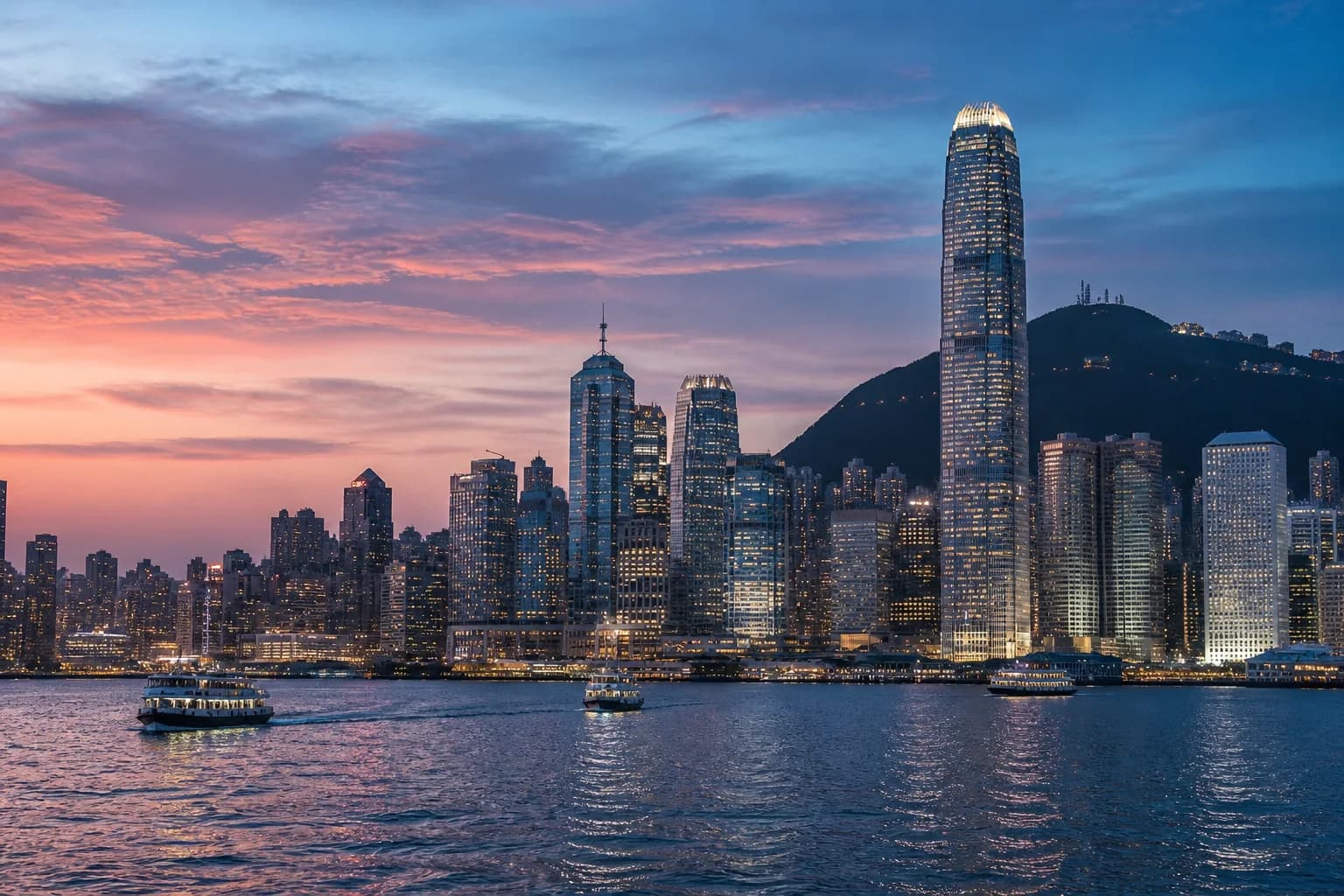
Victoria Harbour (維多利亞港) is the waterway between Hong Kong Island and the Kowloon Peninsula. It is not a gated attraction, and there is no single “entrance.” The classic postcard view comes from Tsim Sha Tsui in Kowloon, looking toward the dense Hong Kong Island skyline. The island waterfront gives the opposite experience: you stand among the towers and look back toward Kowloon.
The most satisfying first visit combines three things: one shoreline walk, one Star Ferry crossing and a second shoreline after the light changes. That turns the harbour from a static photograph into what it really is—a working urban channel that still determines how Hong Kong looks and moves.
Skip the old checklist approach of Peak, promenade, mall and cruise in rapid succession. Choose the side you want to finish on, then use the ferry as the route between views.
Choose Your Harbour Plan
| Time available | Best plan | Finish |
|---|---|---|
| 45–90 minutes | Star Ferry plus Clock Tower and a short Tsim Sha Tsui promenade walk | Kowloon skyline rail |
| 2.5–4 hours | Central waterfront → ferry → Tsim Sha Tsui → Avenue of Stars → 8pm show | Tsim Sha Tsui |
| 2–3 hours | Tsim Sha Tsui → Wan Chai ferry → Golden Bauhinia → walk west to Central | Central |
| Rain or poor visibility | One ferry crossing plus Hong Kong Museum of Art or indoor waterfront stops | Whichever side suits dinner |
If you only have one viewpoint, choose Tsim Sha Tsui. If you have half a day, start on Hong Kong Island and finish in Kowloon so the skyline becomes more dramatic as daylight fades.
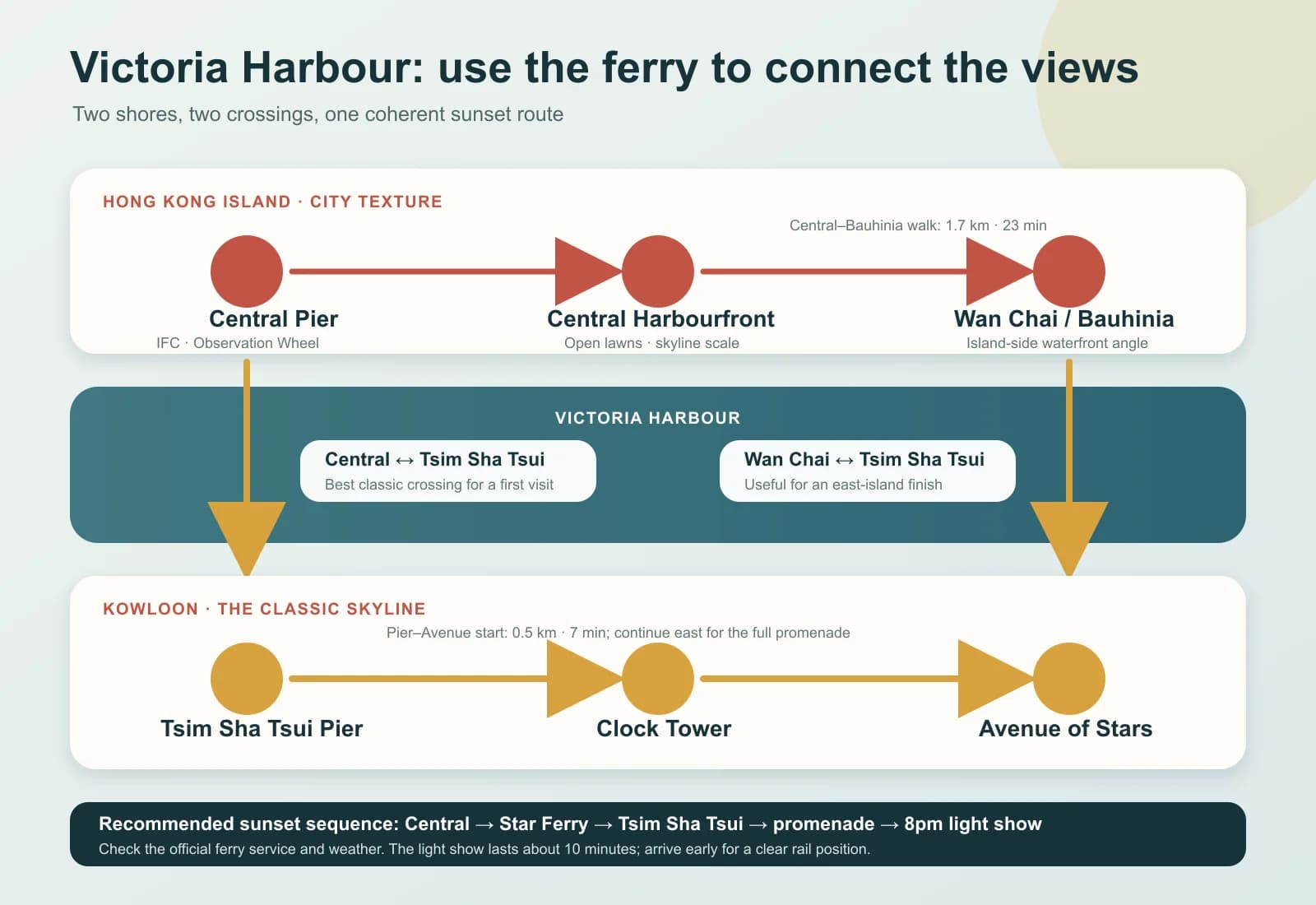
This is a planning schematic, not a marine-navigation map. Check the official Star Ferry service page and weather before departure; sailings can vary with traffic, sea conditions and vessel deployment.
The Best First Route: Central to Tsim Sha Tsui at Sunset
1. Begin where the towers meet the water
Start at Central Pier or the Central Harbourfront 60–90 minutes before sunset. This side is less useful for a single postcard because you are standing beneath the island skyline, but it reveals the scale of IFC, the piers, elevated walkways and the open harbourfront lawns. The city feels vertical here in a way that cannot be seen from Kowloon.
Do not spend the whole golden hour searching for a perfect island-side rail. Walk just enough to understand Central, then move toward the Star Ferry. The crossing is the transition from “inside the skyline” to looking back at it.
2. Take the Central–Tsim Sha Tsui Star Ferry
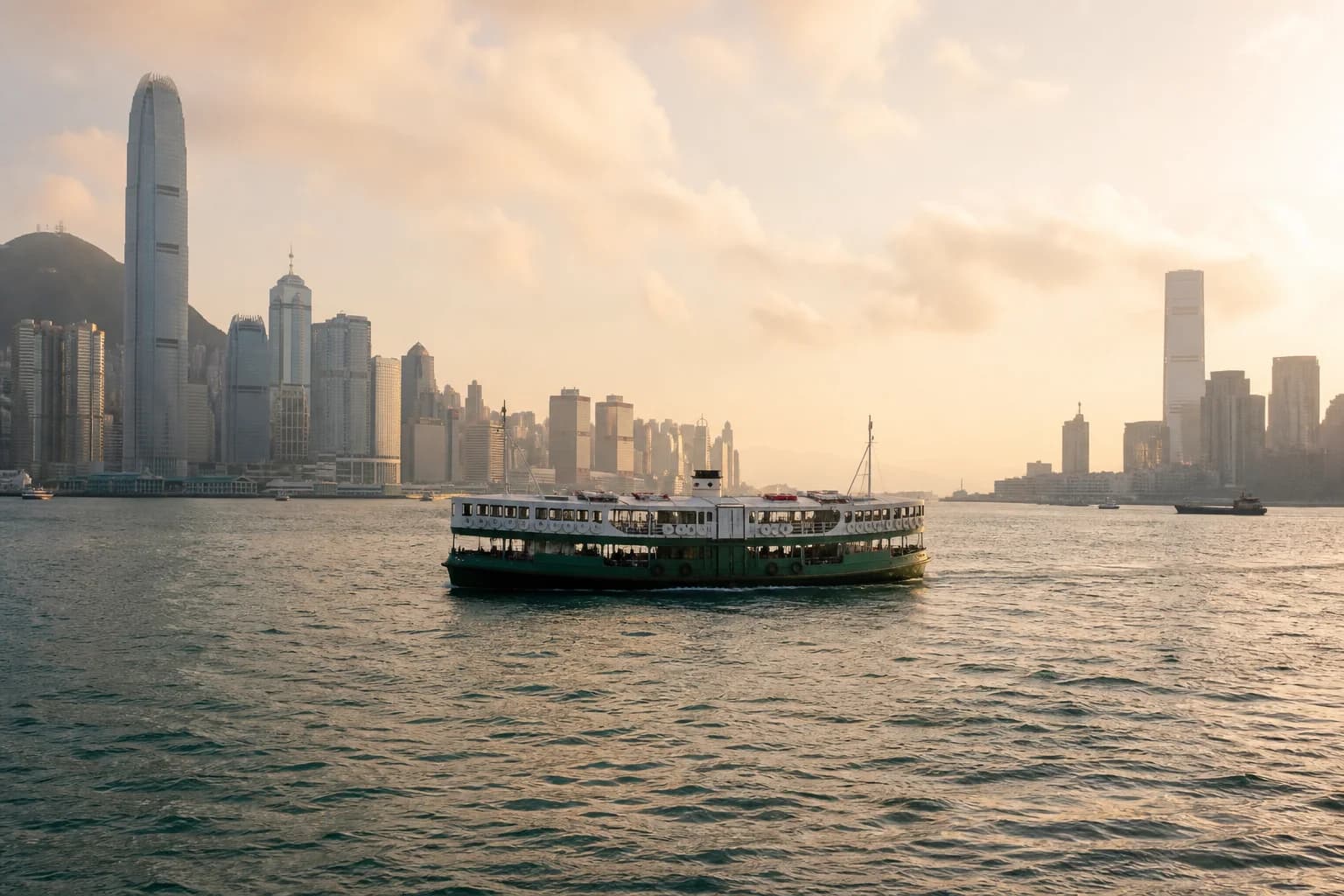
The Star Ferry currently operates Central–Tsim Sha Tsui and Wan Chai–Tsim Sha Tsui passenger routes. For a first visit, Central to Tsim Sha Tsui creates the cleanest sequence. The ride is short, but it puts open water between you and both skylines without the schedule, price or commitment of a sightseeing cruise.
Use Octopus at the gate or check the official site for current ticket-machine and cash options. Upper and lower decks give slightly different height, breeze and engine-noise experiences; neither is an observation deck, so take the next practical sailing rather than waiting for a theoretically perfect seat. Remain seated and follow crew instructions while the vessel is moving and docking.
At sunset, the best photographs often happen before and after the midpoint rather than exactly in the centre. The island towers separate as the ferry changes angle, while other ferries and working vessels give the harbour scale.
3. Walk east from the Clock Tower
After arriving at Tsim Sha Tsui, pause at the Clock Tower and the cultural-centre forecourt. Then continue east toward the Avenue of Stars. AMap measures about 0.5 km / 7 minutes from the Star Ferry Pier to the beginning of the Avenue of Stars; the full waterfront experience takes longer because the promenade continues and rewards repeated stops.
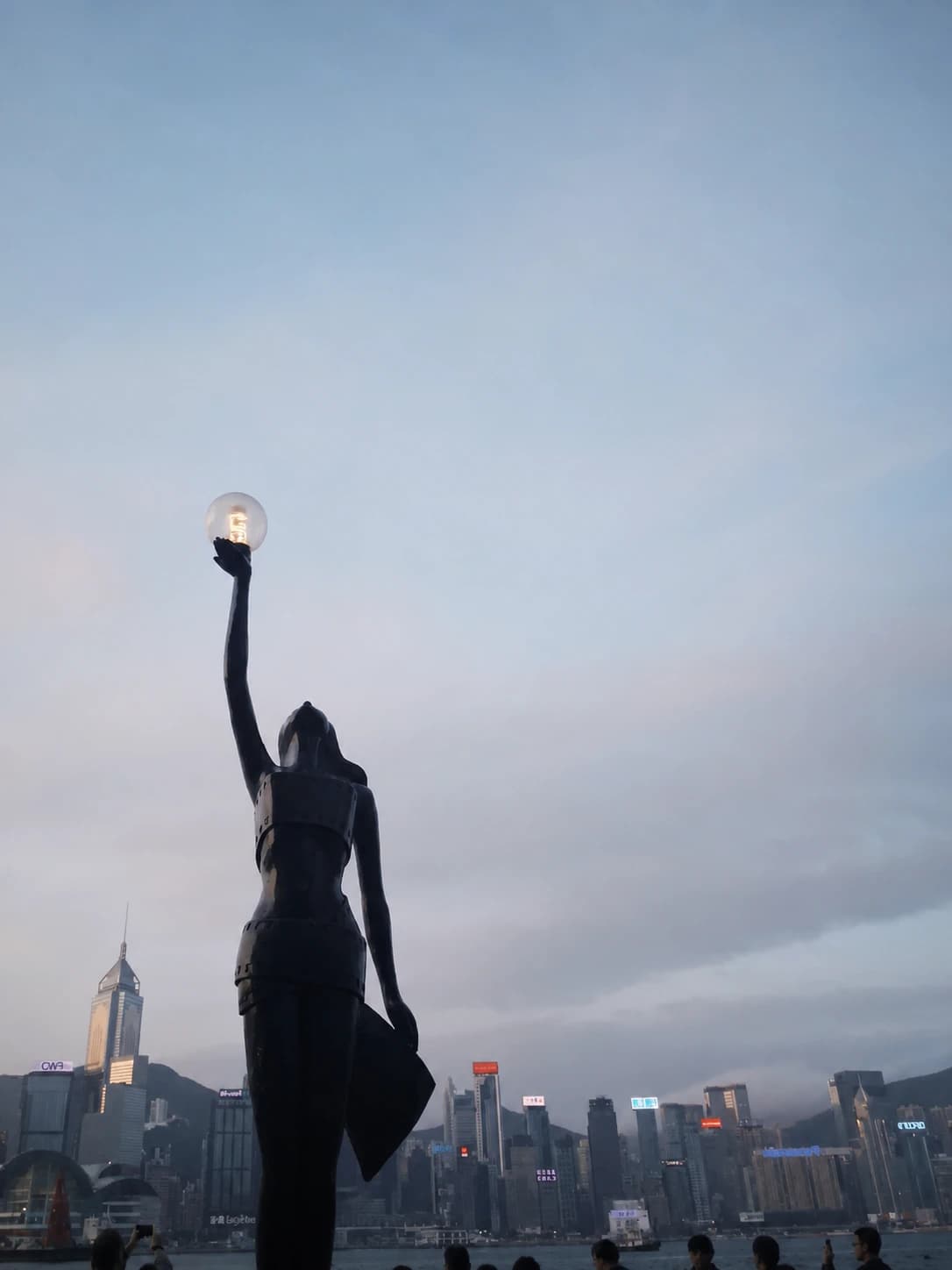
Our Tsim Sha Tsui waterfront guide explains the wider neighbourhood, while the Avenue of Stars guide focuses on Hong Kong cinema. For the harbour route, treat both as one continuous eastbound walk rather than separate attractions requiring new transport.
Where the Views Are Actually Different
Tsim Sha Tsui: the definitive skyline
This is the classic view because the Central and Wan Chai towers align across the water with the Peak behind them. Start near the Clock Tower for open water and ferry movement, then walk east for changing tower overlap and fewer people concentrated around the pier.
Central Harbourfront: city scale and open space
Central works best for watching ferries, feeling the height of the island skyline and starting a cross-harbour route. It is weaker if your only goal is a photograph of Hong Kong Island, because you are already on that side.
Wan Chai and Golden Bauhinia: an oblique angle
Wan Chai gives a more easterly, working-waterfront perspective with the Convention and Exhibition Centre close by. It is useful when your day is already in Wan Chai or when you want to take the second Star Ferry route to Tsim Sha Tsui.
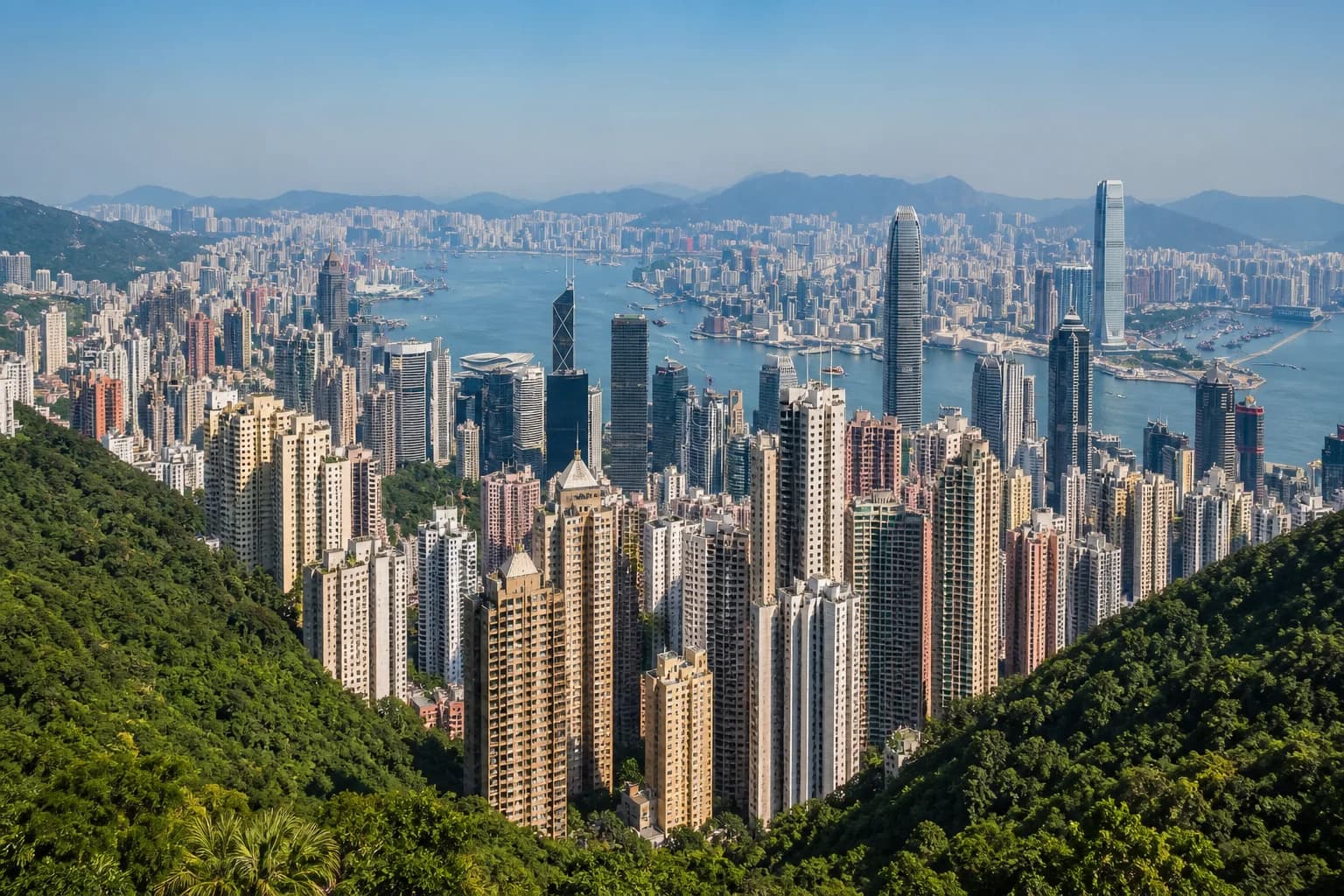
The Peak: the geographic overview
Victoria Peak shows the whole harbour, both shorelines and the surrounding mountains, but it is a separate weather-dependent hill visit. Use our Victoria Peak guide rather than trying to squeeze the Peak into the same sunset window as a long waterfront walk.
The Reverse Route: Tsim Sha Tsui to Wan Chai and Central
Begin at Tsim Sha Tsui in daylight, then board the Wan Chai ferry. From the Wan Chai pier, walk to Golden Bauhinia Square and continue west toward Central Harbourfront. AMap estimates 1.7 km / 23 minutes from Central Pier to Golden Bauhinia Square; use that as a surface-walking comparison, not a guarantee that every event-space diversion will leave the route unchanged.
This direction is better when dinner, a hotel or evening plans are in Wan Chai, Admiralty or Central. It also avoids returning to Kowloon after the light show. The view is less iconic at the finish, but the route feels more like moving through Hong Kong than standing at one rail.
Symphony of Lights: Treat It as a Finish, Not the Whole Evening
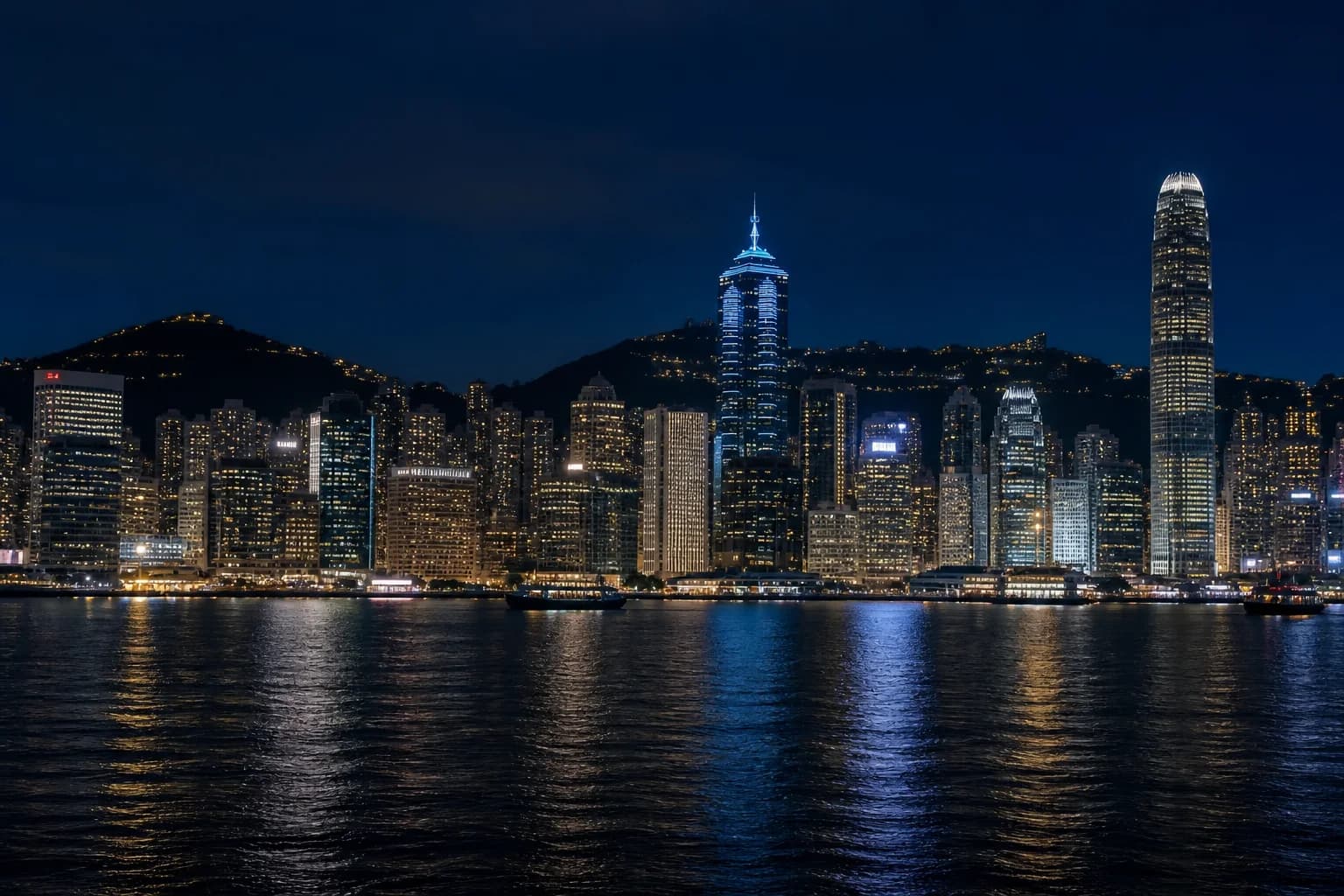
The Hong Kong Tourism Board currently lists A Symphony of Lights at 8pm daily for about 10 minutes. The Tsim Sha Tsui waterfront is the easiest first-time location because you see the island skyline and can hear the accompanying audio. Arrive early enough to stand comfortably rather than pushing toward the rail at 7:59pm.
The show is a pleasant punctuation mark, not a reason to sacrifice good weather or a calm ferry crossing. Haze can mute the beams, rain can make the rail unpleasant, and special events or weather warnings may change the presentation. Check the current HKTB promenade guidance on the day.
For photography, blue hour often creates a better balance than full darkness: there is still colour in the sky, building lights are visible, and the water retains texture. A phone held steadily against a fixed rail can outperform an elaborate setup in a crowd.
Star Ferry or Harbour Cruise?
Choose the Star Ferry when you want efficient transport, historic character and one short open-water view. It is the default recommendation for most first-time visitors.
Choose a harbour cruise when you deliberately want 45–90 minutes on the water, a wider loop, seating for the view or a particular evening atmosphere. Before booking, compare:
- exact boarding pier and check-in time;
- actual sailing duration rather than total activity duration;
- open-deck versus enclosed seating;
- whether food, drinks and light-show timing are included or merely nearby;
- weather and cancellation terms;
- the return shore, especially if dinner or your hotel is elsewhere.
Trip.com currently lists multiple Victoria Harbour boat experiences; compare them through Victoria Harbour cruises on Trip.com. Do not book a cruise merely because the free light show is mentioned—the ordinary ferry and public promenade may already deliver the experience you want.
Eat After You Choose the Shore
Harbourfront dining buys convenience and a view, but it is not automatically the best introduction to Hong Kong food. Walk a few blocks inland and choose by the side where you finish.
- Tsim Sha Tsui: useful for Cantonese roast meats, wonton noodles, cha chaan teng meals and a wide range of regional Chinese food. Move north or east from the luxury-mall frontage before deciding.
- Central: strong for a planned restaurant, bar or contemporary Cantonese meal, but prices rise quickly around the office core.
- Sheung Wan: better for older streets, dried-seafood shops, tea and a more layered post-harbour wander.
- Wan Chai: a practical mix of roast-meat shops, noodle counters, pubs and late dinners without crossing the harbour again.
A bowl of shrimp wonton noodles and a small roast-goose plate make a useful shared order: the noodles are light enough after a long walk, while the roast gives the lacquered skin and savoury depth associated with Cantonese siu mei. Verify a restaurant's current hours rather than making the route depend on one viral shop.
Where to Stay for Harbour Access
- Tsim Sha Tsui: best for the postcard skyline, evening promenade access and a straightforward first visit.
- Central or Admiralty: best for business-district transport, the Peak and ferry connections; harbour-view rooms can be expensive.
- Wan Chai: best balance of island nightlife, restaurants, the convention waterfront and two-direction transport.
- West Kowloon: best for M+, the Palace Museum and high-speed rail, but it is not the same promenade as Tsim Sha Tsui.
Compare current inventory through Trip.com hotels. Check the room's stated view direction, not just a hotel description saying “harbour area”: towers, reclaimed land and neighbouring buildings can block the water even at waterfront properties.
Weather, Crowds and Practical Safety
- Check the Hong Kong Observatory forecast, thunderstorm and tropical-cyclone signals before committing to open water or an exposed promenade.
- Ferry operations can change with marine traffic, sea conditions and vessel deployment.
- Hold children close near rails, gangways and crowded boarding areas.
- Do not block the promenade with tripods during the evening crowd; keep emergency and walking space clear.
- Carry Octopus or another currently accepted payment method, but keep a small amount of Hong Kong-dollar cash as backup.
- After the 8pm show, either wait ten minutes for the first crowd to disperse or walk inland before entering the MTR.
Victoria Harbour is not something to “tick off” from one rail. Start inside the island skyline, cross the working water and finish where the whole city becomes visible. That short sequence explains Hong Kong better than a disconnected list of waterfront attractions.