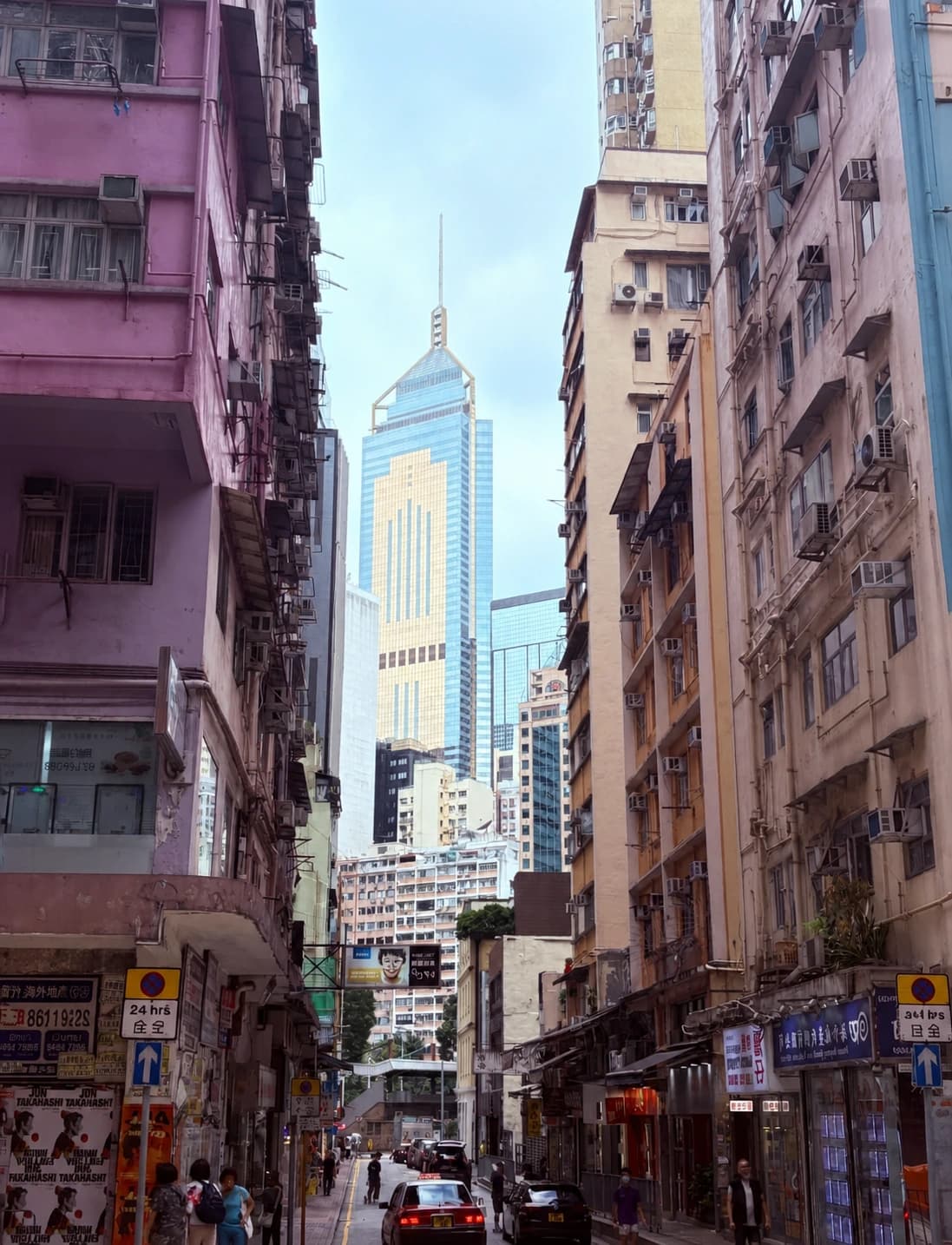
Wan Chai Walking Route
Wan Chai is most useful when you stop calling the entire district either “old Hong Kong” or a business zone. This three-to-five-hour, 2.4 km walk begins with occupied tenements and an active community temple, passes a reused post office and a redeveloped commercial street, then crosses the modern road-and-footbridge layer to the reclaimed waterfront.
Start around late morning if you want food and the possibility of Blue House programming. Finish near the ferry or Golden Bauhinia Square in late afternoon. The route is mostly urban walking, but heat, stairs, traffic crossings and construction make the real effort greater than the navigation total.
Route at a Glance
- Blue House Cluster: begin with living tenement heritage, not a vacant façade.
- Pak Tai Temple: walk about 0.1 km / two minutes and enter an active community temple respectfully.
- Old Wan Chai Post Office: walk about 0.3 km / four minutes to Hong Kong's oldest surviving post-office building, now adapted as kNOw Carbon House.
- Lee Tung Avenue: walk about 0.1 km / two minutes and read the difference between remembered “Wedding Card Street” and today's redevelopment.
- Wan Chai Ferry Pier and HarbourChill: follow current pedestrian signs north for about 1.4 km / 19 minutes; this is the route's long transition.
- Golden Bauhinia Square: finish after another 0.5 km / seven minutes along the harbour side.
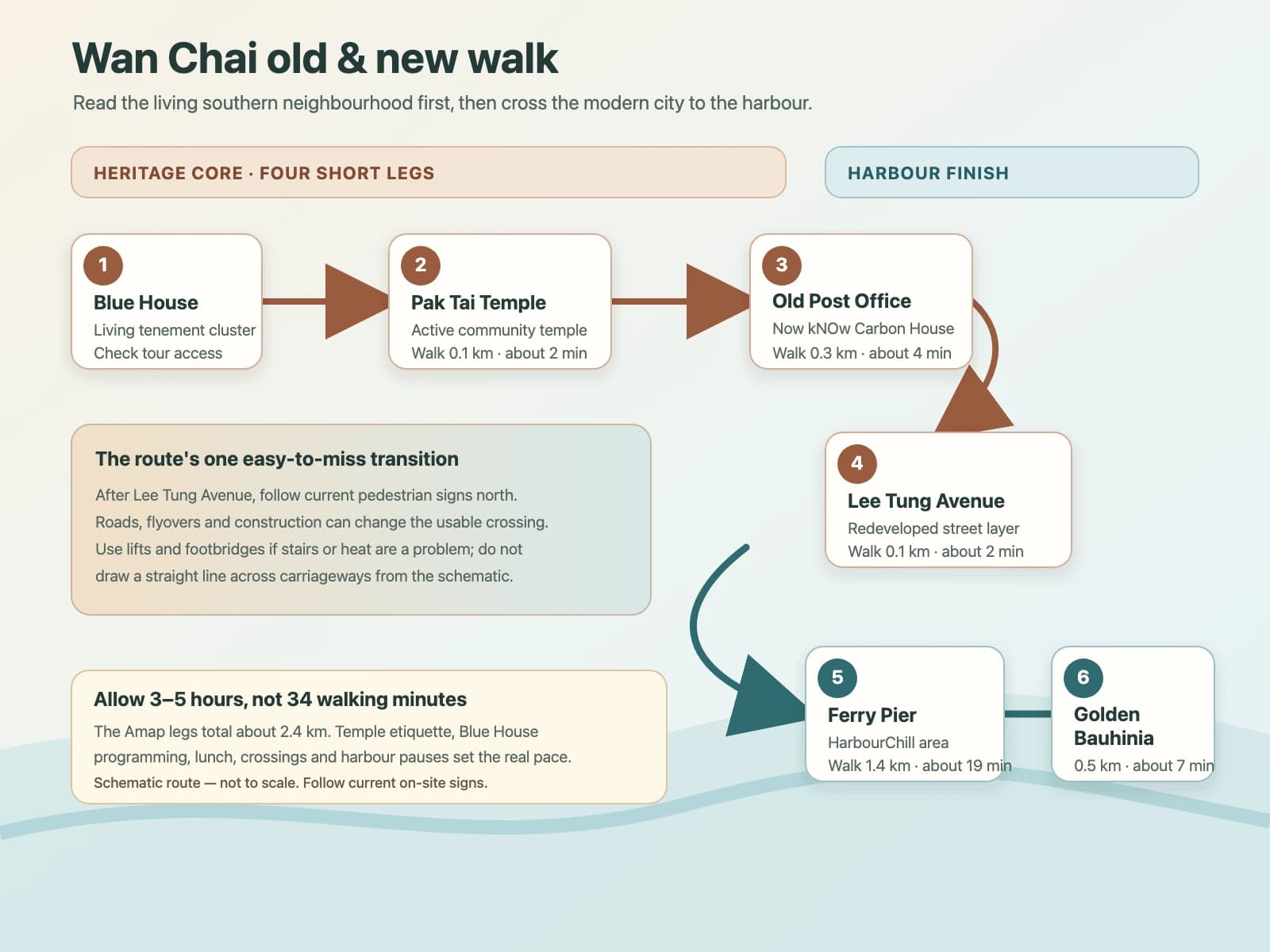
The diagram is a sequence, not a street map. The five Amap walking legs total about 34 minutes, but that excludes interiors, temple etiquette, lunch, traffic signals and harbor stops. Roads, construction and elevated walkways change; never draw a straight line across a carriageway because two points look close.
1. Blue House: Heritage Still Has Residents
The Blue House Cluster (蓝屋建筑群) includes Blue, Yellow and Orange House buildings from different decades. It retains residential use while supporting community and cultural programs through Viva Blue House and the Hong Kong House of Stories. This is the page's most important distinction: conservation here did not require turning every unit into a museum or shop.
Look at the balconies, narrow frontage and relationship between Stone Nullah Lane and the building cluster. Stay in public areas and do not photograph through residential windows. Interior programs and tours are controlled by the operator; check the current Viva Blue House information instead of assuming walk-in access.
2. Pak Tai Temple: Use Religious Etiquette
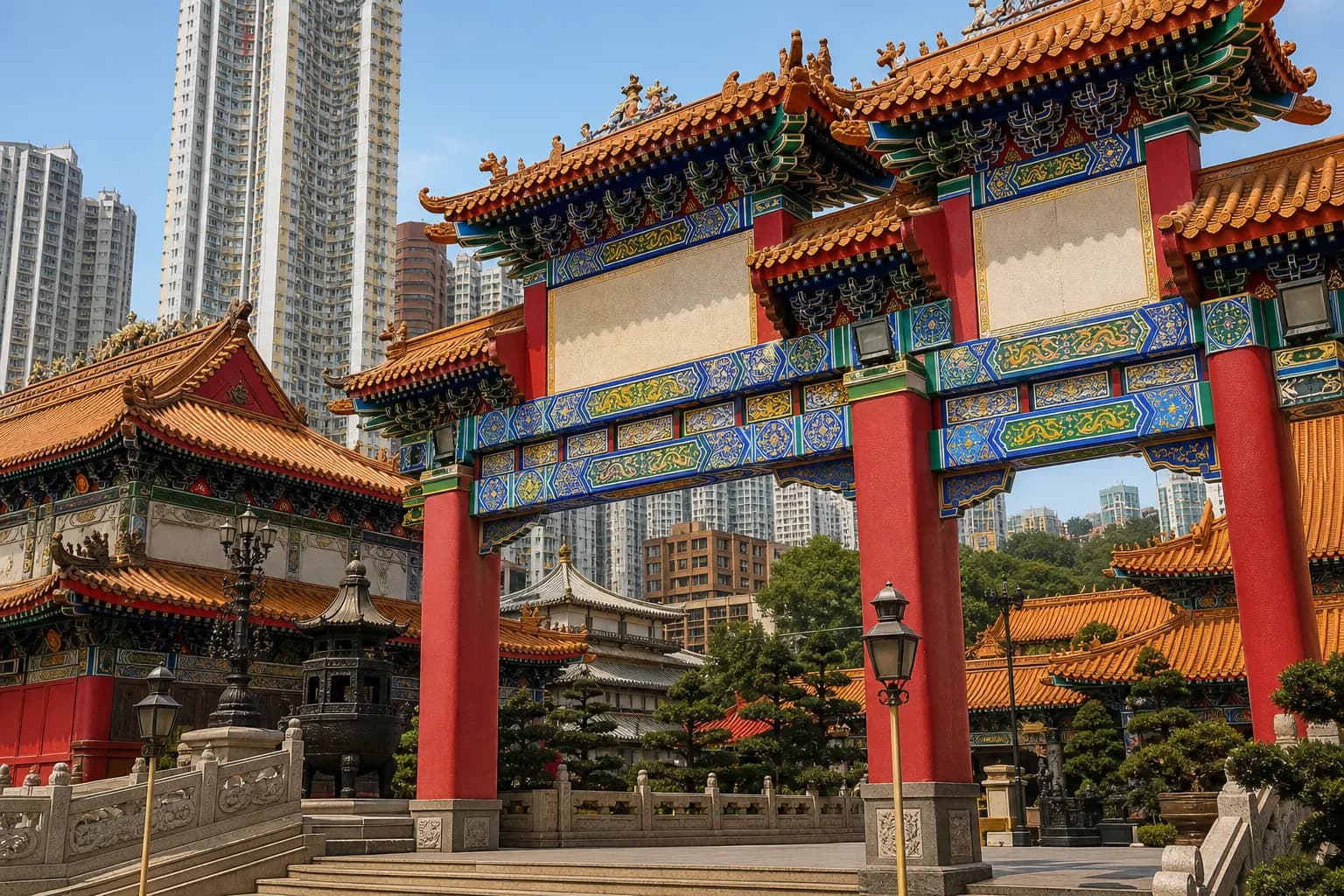
Pak Tai Temple is also known as Yuk Hui Temple (玉虚宫). The main 1860s building uses a two-hall, three-bay Qing vernacular layout with an incense pavilion and side annexes. Its significance is not only age: it reflects Wan Chai's early community development and remains a place of worship.
Enter quietly, keep the central worship space clear and follow current photography and incense rules. Do not invent a ritual sequence or promise an outcome from worship. The Antiquities and Monuments Office provides the architectural and monument context.
3. Old Post Office: Read Adaptive Reuse
The Old Wan Chai Post Office was built in 1912–13 and opened in 1915. Its compact L-shaped plan, pitched roof and gable details feel almost domestic beside later towers. The building is now kNOw Carbon House, so treat the exterior heritage and current environmental use as two layers rather than expecting a preserved postal museum.
The interior opening arrangement belongs to the current operator. Check it before depending on entry; the official monument record explicitly directs visitors to live operating information.
4. Lee Tung Avenue: Remember What Redevelopment Changed
Lee Tung Street was associated with wedding-card printing and related trades. The current Lee Tung Avenue is a landscaped commercial redevelopment, not a preserved line of the original printing businesses. A few older façades and interpretation cues can prompt the history, but the luxury storefront environment is part of the modern story.
Use it for a weather break, lunch or a comparison in urban scale. Do not describe every decorative element as historic. If retail atmosphere is not your interest, 20 minutes is enough before continuing north.
5. Cross the Modern City Carefully
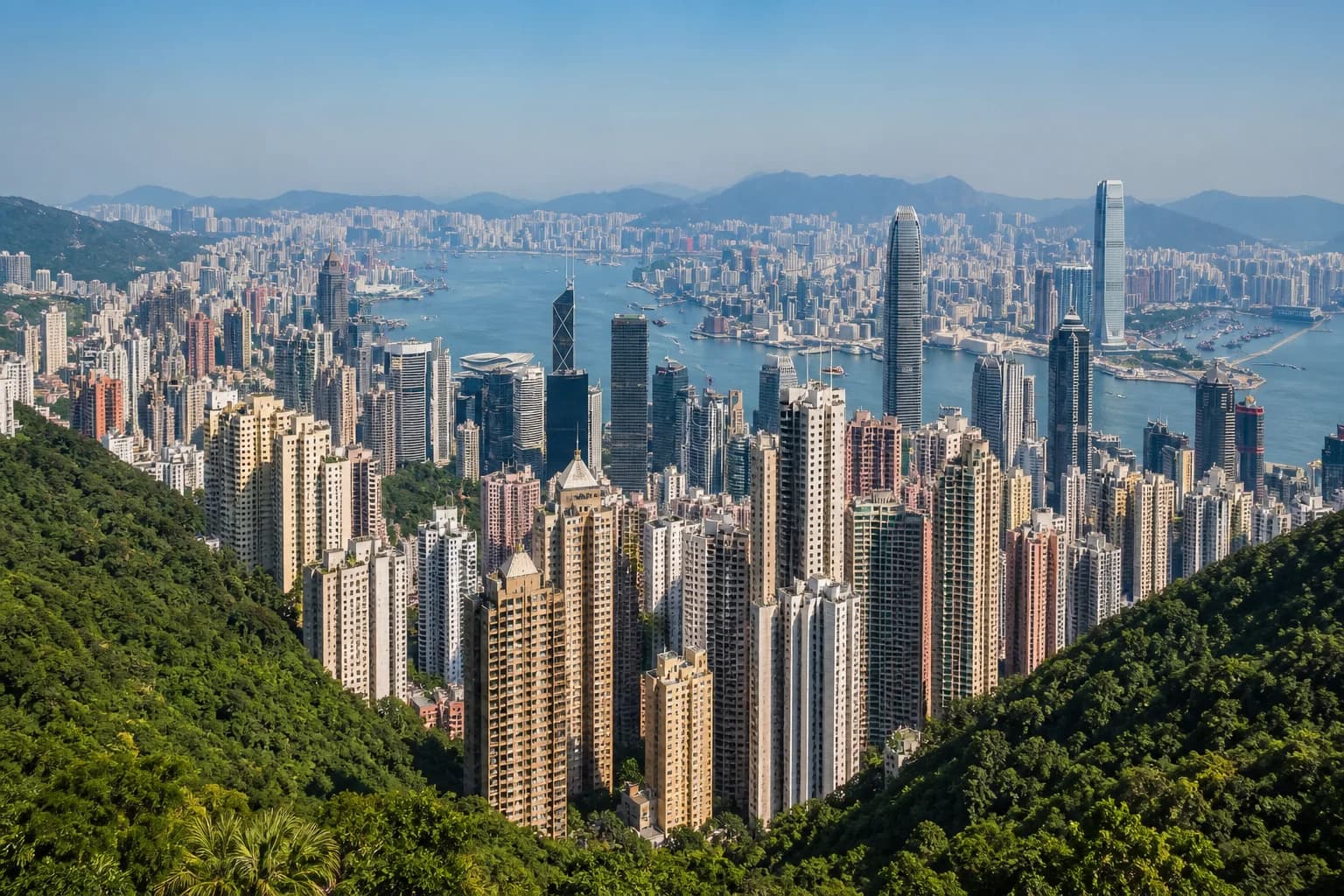
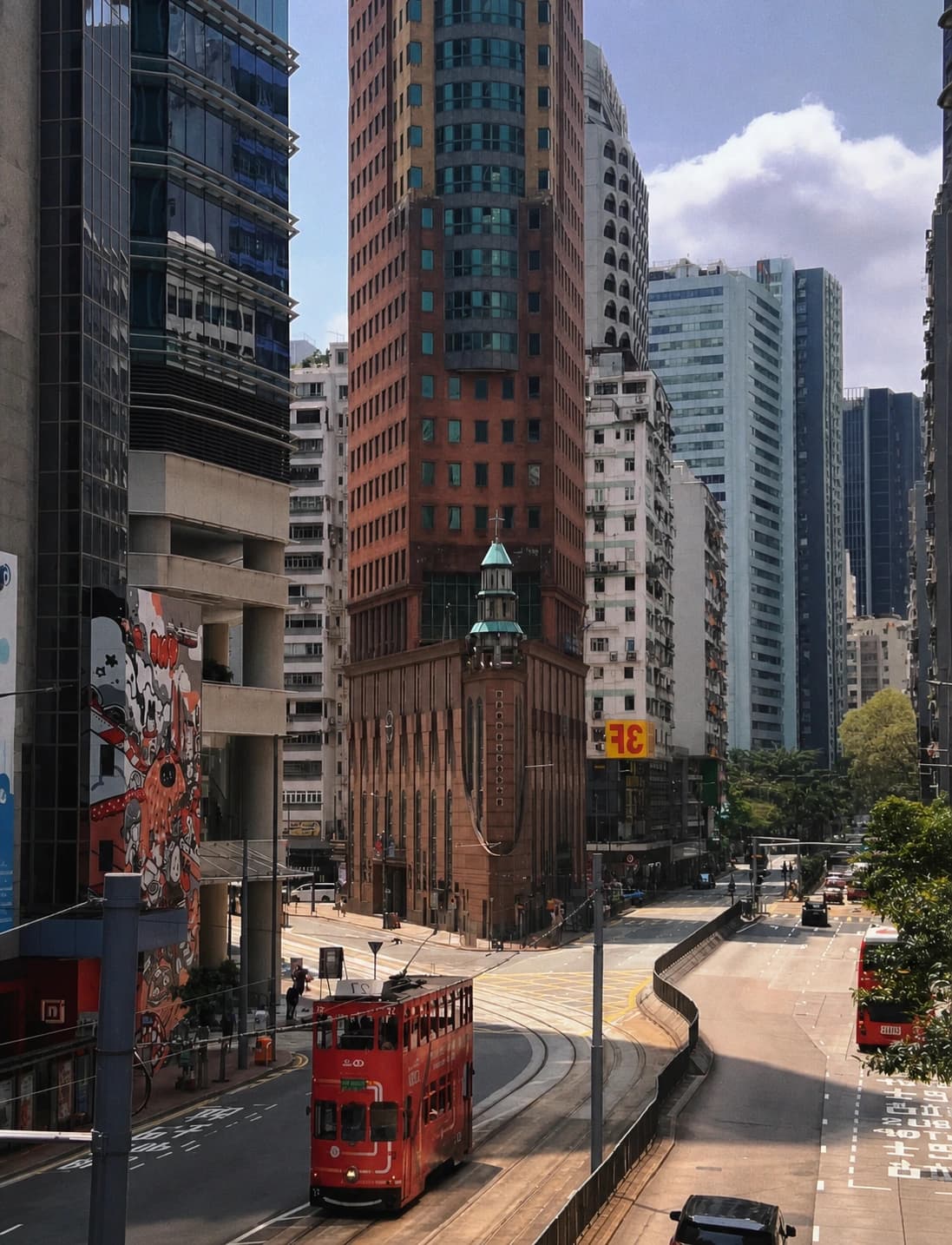
The 1.4 km walk from Lee Tung Avenue to the ferry pier is where a clean route diagram can mislead. Wan Chai's rail lines, major roads, flyovers, convention buildings and reclamation have produced a layered pedestrian network. Follow current signs for the ferry pier or harbourfront, using lifts and footbridges where helpful.
In heavy heat or rain, take the MTR one stop, a tram for part of the corridor or a short taxi instead of treating the surface route as mandatory. The point of this section is to experience the urban transition safely—not to preserve every metre of a line.
6. Finish at the Harbour
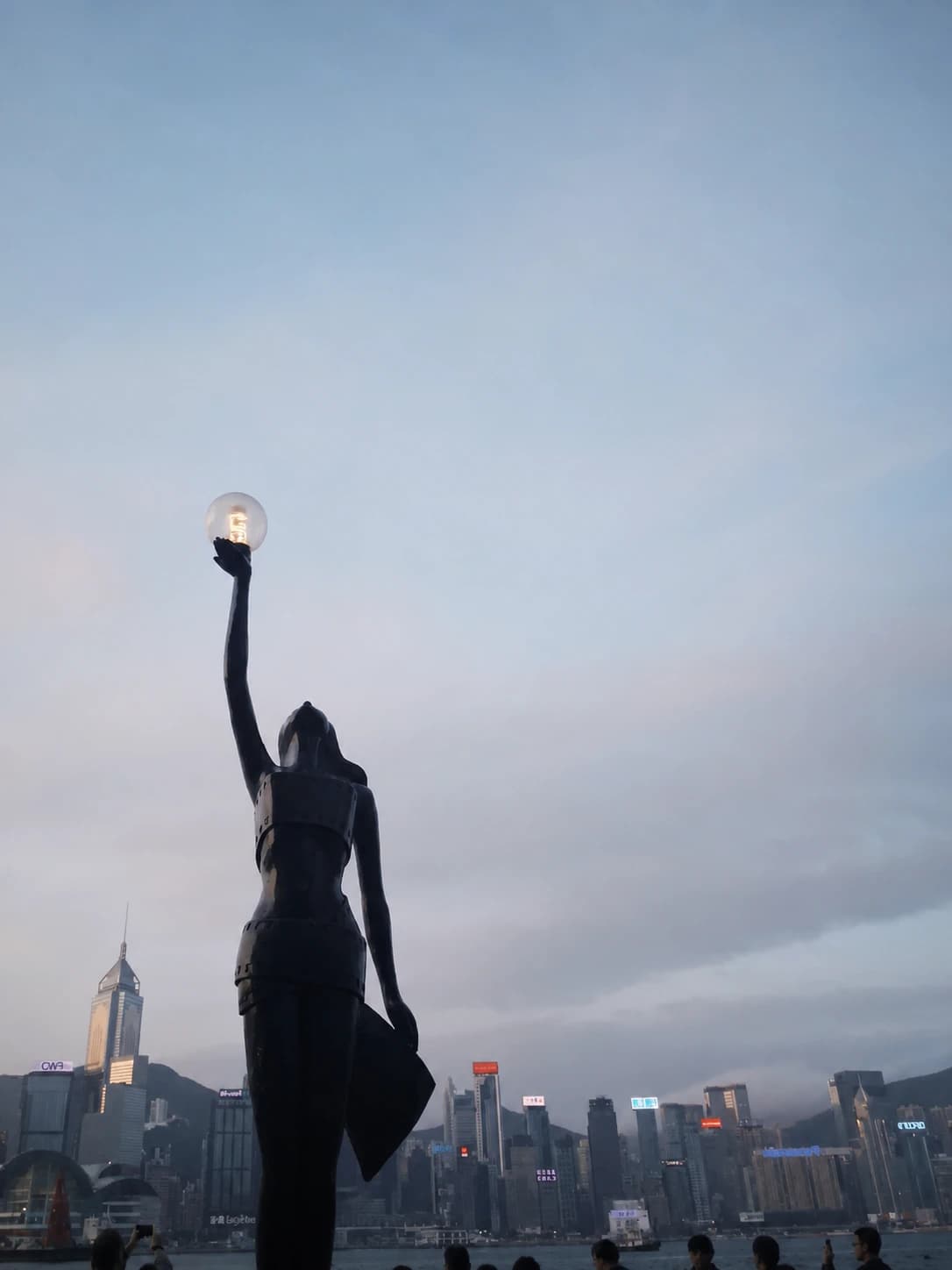
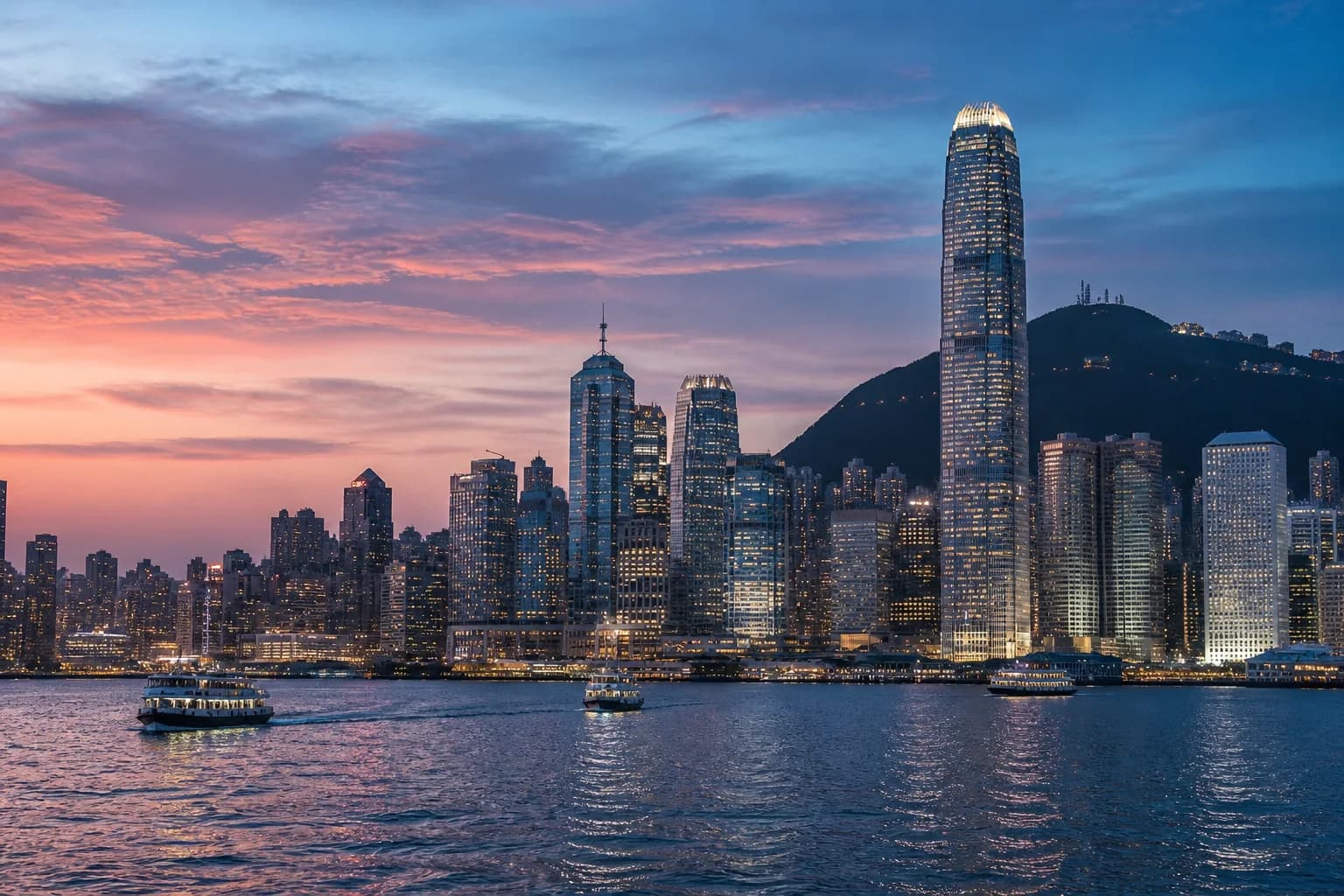
HarbourChill and the Wan Chai waterfront provide a more relaxed pause than the traffic-heavy interior. From the ferry-pier area, continue to Golden Bauhinia Square only if its 1997 handover symbolism and Convention Centre setting interest you. The Forever Blooming Bauhinia sculpture is a different monument from the Hong Kong Film Awards statue across the water at the Avenue of Stars.
The official Hong Kong Tourism Board page places Golden Bauhinia Square at the Expo Promenade outside the Convention and Exhibition Centre. Events and access controls can affect the open space, so use current signs.
What to Eat Along the Route
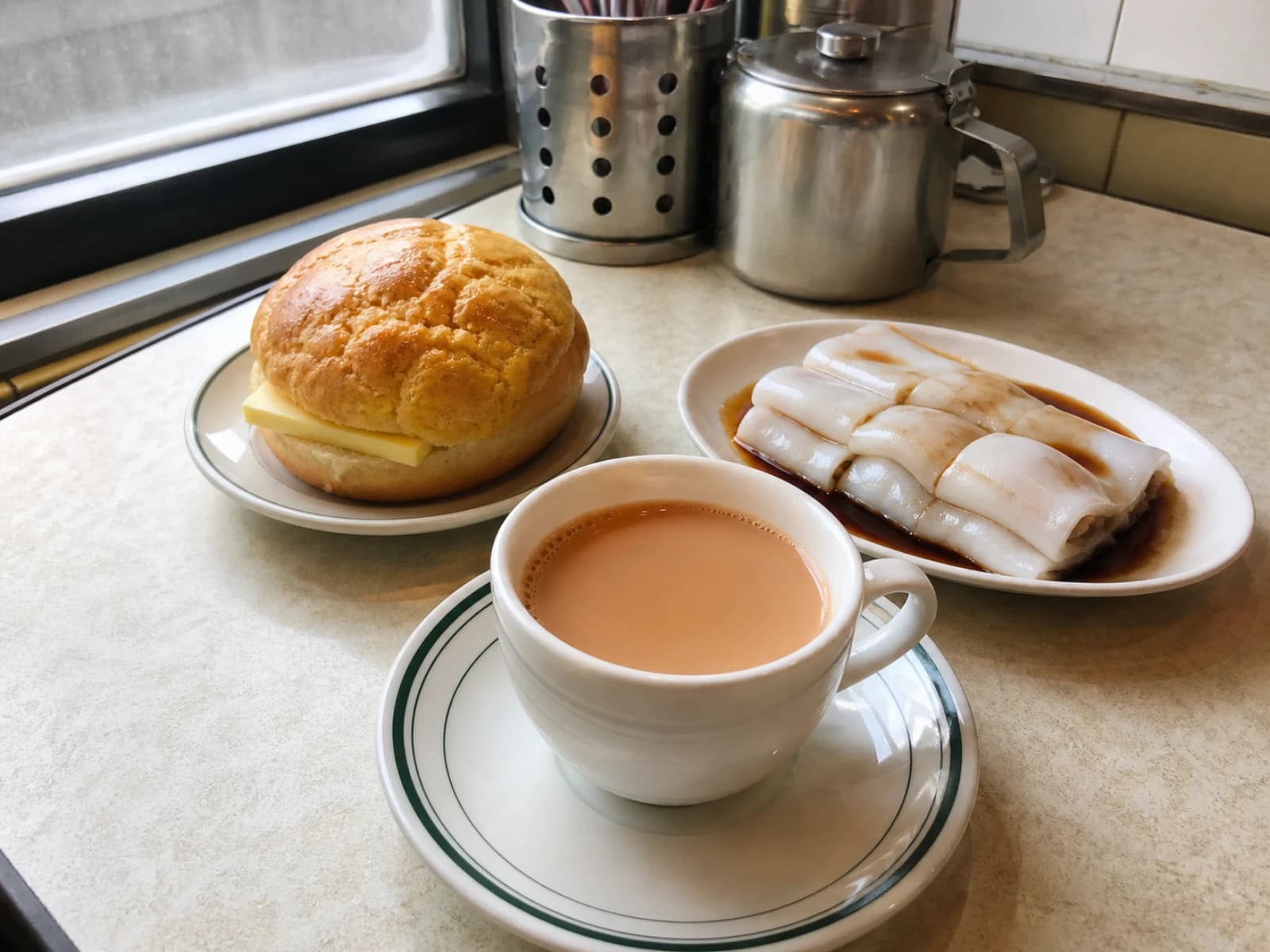
Cha chaan teng breakfast or lunch
Milk tea, pineapple buns, egg sandwiches and macaroni soup belong to different meal moods; you do not need all of them at once. Choose a busy neighborhood café with a readable menu and steady table turnover. “Pineapple” describes the bun's crust pattern—it normally contains no pineapple fruit.
Rice noodle rolls and noodles
Plain cheung fun with sesame, sweet and soy sauces is a small snack; filled dim sum cheung fun is a different dish. For wonton noodles or fish-ball noodles, prioritize a focused menu and broth being actively served rather than a long list of tourist sets.
Roast meats
Order a single-meat or two-meat rice plate if you want a full meal without derailing the walk. Look for regular chopping and fresh replenishment. Confirm whether goose, duck or pork is actually available instead of assuming every branch serves the same meats all day.
Eat before the long waterfront transition. The convention area has convenient commercial dining, but the southern neighborhood offers the more useful local food layer.
Where to Stay
- Wan Chai MTR side: best for this walk, trams, local food and business access. Check nightlife noise and whether the hotel sits north or south of Hennessy Road.
- Convention Centre / waterfront: best for events, harbour walks and newer rooms, but less atmospheric for breakfast and neighborhood evenings.
- Admiralty: best for efficient Central connections and business travel; usually quieter and more expensive.
- Causeway Bay: best for shopping, late dining and dense transport, with more crowds and smaller rooms.
- Tsim Sha Tsui: stay across the harbour for museums and skyline views, then approach Wan Chai by ferry when the current service fits.
Compare Hong Kong hotels on Trip.com, checking the exact building entrance, lift access and walking route. “Wan Chai” covers enough terrain that the wrong side of major roads can change a short stay.
Mobility, Weather and Practical Rules
- The heritage-core stops are close, but older pavements, thresholds and temple steps may limit step-free access.
- The northbound transition can involve footbridges and lifts. Use current accessibility signs rather than copying a fixed bridge sequence.
- Blue House is living heritage; stay out of residential space and keep voices low.
- Pak Tai Temple is active. Dress and behave respectfully and do not block worshippers.
- In summer, take an indoor break before the waterfront. During typhoon or rainstorm warnings, check ferry, venue and public-space notices.
- The route is free unless you choose food, a paid program or another ticketed venue.
Best Variations
- Two-hour compact walk: Blue House → Pak Tai Temple → Old Post Office → Lee Tung Avenue; skip the waterfront.
- Family/rain version: Blue House exterior → short cultural program if confirmed → lunch → MTR or taxi to the harbour.
- Architecture version: focus on tong lau balconies, temple timber/brick, post-office roof forms, redevelopment façades and Convention Centre scale.
- Harbour evening: start at Lee Tung Avenue, go directly to the ferry pier and finish with the Star Ferry or official light-show viewpoint.
Final Planning Rule
Do not ask whether Wan Chai is “traditional” or “modern.” Walk the sequence and identify which parts are still lived in, which are religious, which have been adaptively reused, which were redeveloped and which exist because the harbour edge moved. That contrast is the reason to choose this route.