China study tours and university visits: identify the product before paying
A walk through a historic university, an admissions open day, a two-week summer school and a commercial “prestigious university study tour” are four different products. They may use the same campus photographs, yet they grant different access, teach different material and produce different documents. None creates an advantage in degree admission unless the university's published admissions rules explicitly say so.
The safest starting point is simple: decide whether you want a tourist visit, an official prospective-student event, formal short-term study or an organized youth trip. Then verify the exact campus, date, participant name, identity document and organizer on the university's own domain. A screenshot from a seller is not an entry entitlement. A certificate of attendance is not an academic degree. A campus logo on a brochure does not prove that the university runs the program.
This guide gives you an executable verification sequence. It uses Beijing's tightly controlled campus visits as the clearest test case, then shows how Wuhan, Xiamen and Kunming can work as lower-stakes city pairings. Access changes with teaching, examinations, special events, weather and security needs, so a beautiful campus must remain a conditional stop until your reservation is valid.
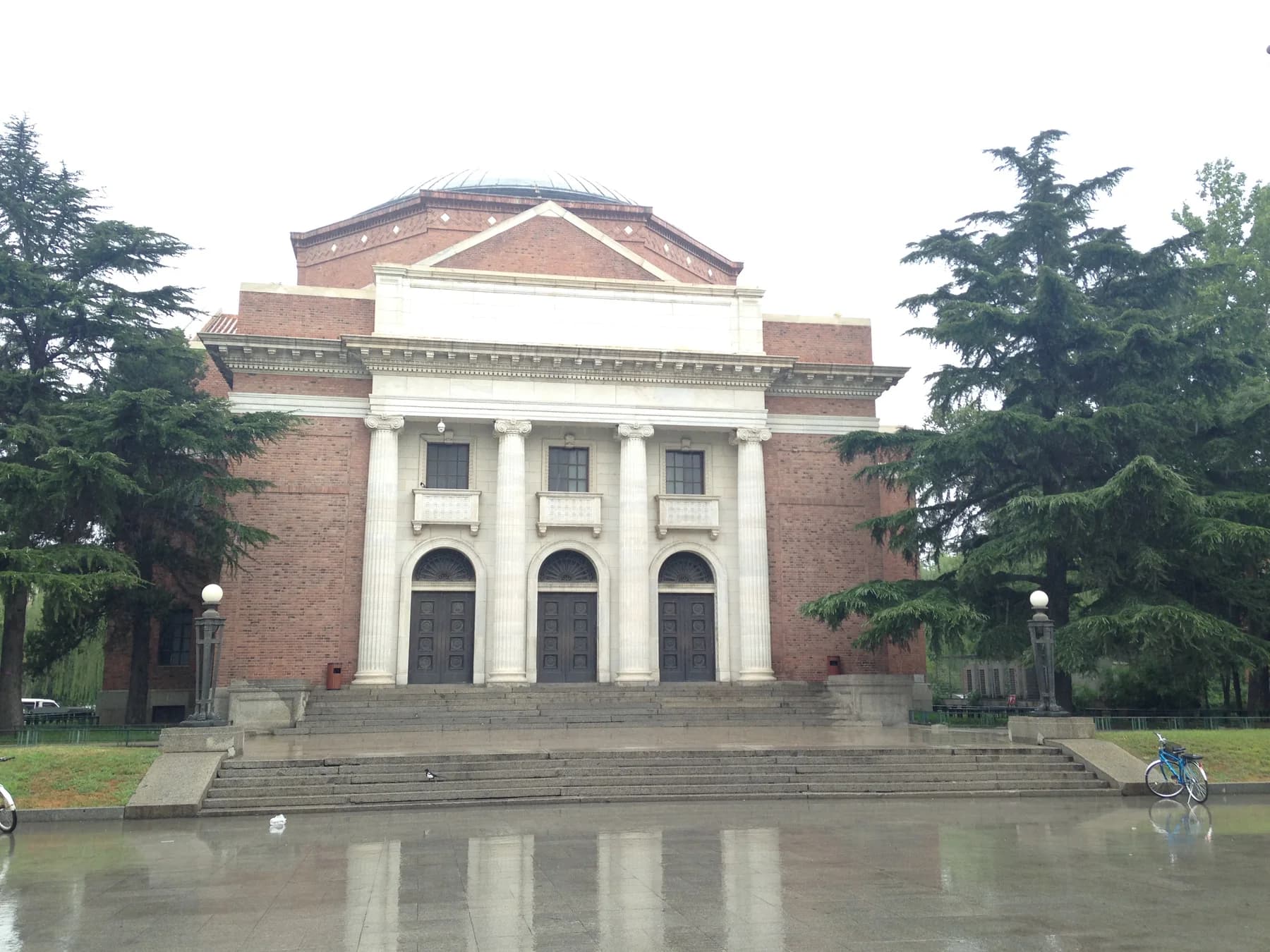
Tsinghua's historic architecture explains the appeal of a campus visit, but a photograph does not prove that the grounds or any building are open on your date. Photo by Soramimi, CC BY-SA 4.0.
Choose the product in 60 seconds
| What you actually want | Correct channel | What it gives you | What it does not give you | Stop before paying if… |
|---|---|---|---|---|
| A look at a famous campus | The university's official visitor system | Conditional pedestrian entry to named public areas during a reserved window | Classroom access, library access, a guide, admission advice or guaranteed entry after closure | A private seller asks for money to “secure” a free slot |
| An official tour or open day | The university or faculty admissions office | A dated event, briefing, perhaps a guided route and staff questions | General access on another date or preferential admission | The event is absent from the named university unit's website |
| Short-term study or summer school | The university's international office, school or department | A defined curriculum, eligibility test, application, fees and a program-specific record | A degree, automatic credit transfer or later admission | The awarding unit, academic status or refund terms are vague |
| A commercial study tour | A licensed operator under a written contract | Transport, accommodation, supervision and promised activities as specified | University ownership, unrestricted campus access or an admissions advantage | Campus entry is described as “guaranteed” without university confirmation |
| Degree admissions advice | The university's official admissions office and application portal | Current eligibility, documents, deadlines and selection rules | A tourist itinerary or purchasable shortcut | An agent promises admission, scholarship or internal influence |
The categories can meet in one trip, but the paperwork should remain separate. A family might reserve a free public campus visit, attend a faculty open day and buy a city tour. Each must stand on its own source and terms.
Public campus access is a revocable reservation
Treat a university as a working teaching and residential site. Public access is permission for a specific person, date, time and route; it is not the default condition of the campus.
As of 3 October 2026, Tsinghua University's visitor page says individual visits require real-name registration through the Chinese-language “Visit Tsinghua” WeChat mini-program. Its English page says the mini-program currently supports Mainland ID verification; visitors from Hong Kong, Macau or Taiwan are directed to a telephone procedure. The same official visitor system states that Tsinghua is a teaching and research institution, charges no campus-visit fee and may suspend visits for major events, extreme weather or other unsuitable conditions. If your passport category is not expressly supported by the live notice, contact the visitor service rather than entering substitute identity data.
Peking University's current individual-visit notice, published 26 June 2025 and still live at verification, is more explicit for international visitors: the mini-program supports Mainland ID authentication, while foreign visitors should email [email protected] in advance. It says entry is free, normally offered on weekends, public holidays and university vacations, and can be changed or suspended. A successful visitor must use the registered identity document at the named time and gate. Teaching, research, offices, dormitories, libraries and sports buildings remain non-public.
Those are examples, not a national rule. For any campus, complete this five-part match:
- Source: start from the university's main domain and follow its visitor or security-office link. A mini-program name copied into a reseller chat is not enough.
- Person: every participant's name and document type must match the accepted real-name workflow. Carry the original passport or other document used.
- Place: check the campus and gate. A university may have several campuses in different districts or cities.
- Time: retain the live confirmation, entry window and cancellation rule. “Application submitted” is not “approved.”
- Scope: read which outdoor routes, museums, canteens and buildings are open. Public grounds do not make every interior public.
Do not pay a student, guide, hotel employee or social-media account for a “reservation slot.” Current Tsinghua and PKU notices say their public visit is free and use named official channels. Recent traveler reports describe private sellers displaying apparent confirmation screenshots, accepting a service fee, then failing to deliver entry or a refund. That is useful friction evidence, not proof about every seller. The durable response is to make the university's live reservation record and your matching document the test.
Beijing: highest interest, least room for improvisation
Beijing is the strongest base for travelers interested in Chinese higher education because Peking University (北京大学, Běijīng Dàxué) and Tsinghua University (清华大学, Qīnghuá Dàxué) sit in Haidian. It is also the place where an unverified campus promise can consume most of a day.
If one valid reservation exists, make that campus the fixed stop and treat the other as optional. Do not assume proximity allows you to walk into both. Keep the rest of the day outside university security: the Summer Palace or Yuanmingyuan can provide a substantial Haidian visit even if a campus closes. Use the Beijing guide to build the larger trip around imperial history, museums and neighbourhoods rather than making two gates carry the whole day.
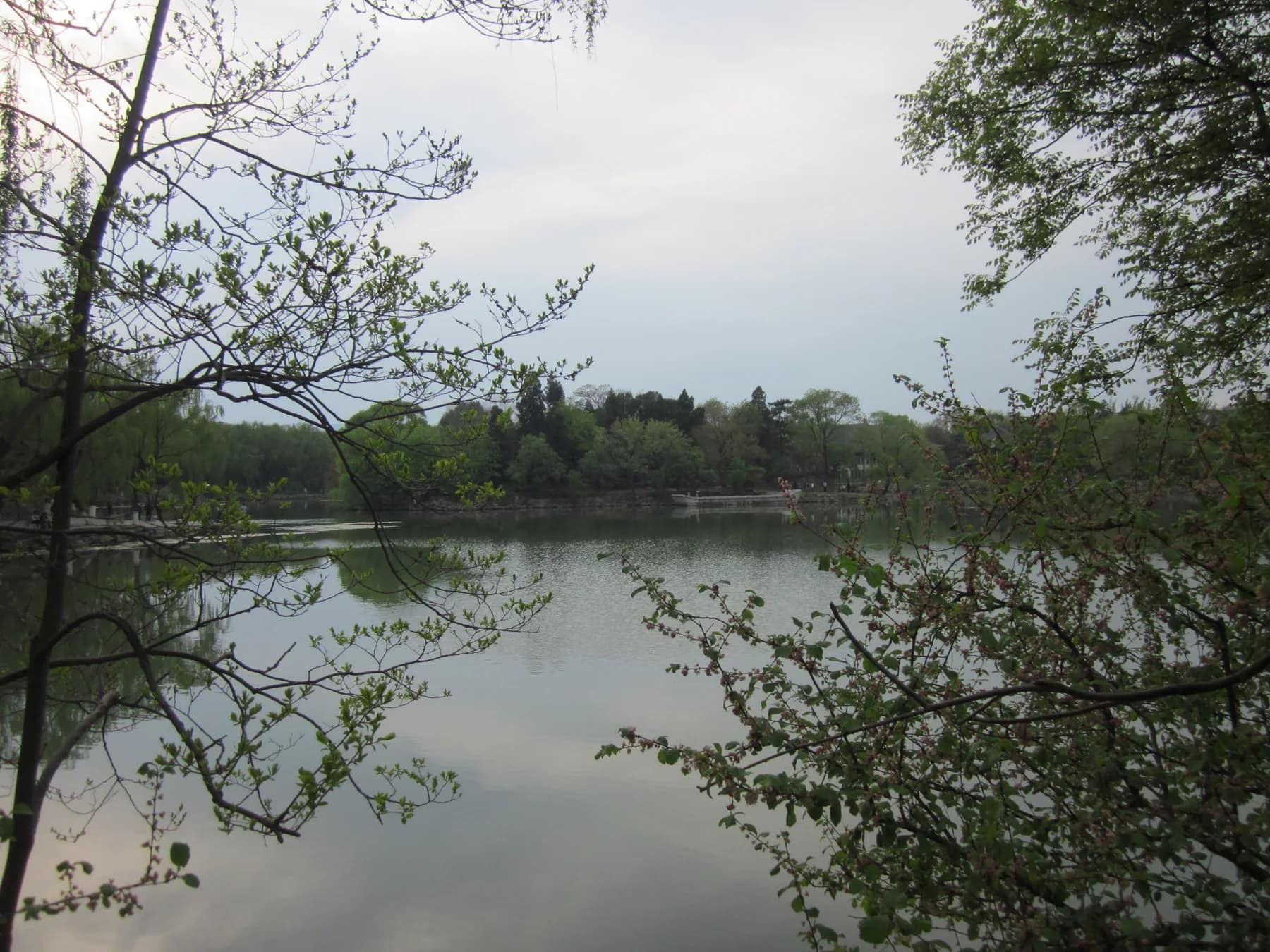
Weiming Lake is an appealing landscape anchor when access is valid. It is still inside an active campus, and its visibility in travel photographs does not override the official reservation system. Photo by Huangdan2060, CC0.
PKU's published visitor rules offer a useful family example, but they apply only while that notice remains current. Children under eight must be registered, accompany an adult with a successful reservation and do not use a regular slot; one booking has stated participant limits. Do not turn that into a rule for another campus or next year. Enter every child's details required by the current system and ask the university how foreign passports, mixed-document families and guardianship are handled before travel.
For groups, individual slots are not a substitute for a group permit. Tsinghua says team reservations are for primary and secondary schools or education authorities. PKU's current group page likewise limits the social-group process to schools and education authorities, requires institutional documents and says no reply by its stated cut-off means no permission. A commercial operator calling itself an “education organization” does not inherit those rights.
Wuhan, Xiamen and Kunming: build a city day that survives refusal
Some campuses are valuable because the surrounding city makes a coherent visit. The plan should work even when access fails.
Wuhan: architecture plus East Lake
Wuhan University (武汉大学) combines Luojia Hill, twentieth-century architecture and a strong landscape setting. Its access becomes especially sensitive during blossom season. Use the dedicated Wuhan University and Luojia Hill guide for the current conditional plan: verify passport acceptance and the live visitor notice, keep the campus to 60–90 minutes if admitted, and use East Lake as the planned fallback. Do not buy a blossom-season “inside route” from an unverified promoter.

Wuhan University's former library is a strong architectural reason to be interested in the campus. Access to the surrounding route still depends on the university's current controls. Photo by Howchou, CC BY-SA 3.0.
Xiamen: separate the campus from the neighbourhood
Xiamen University's Siming campus can appear next to South Putuo Temple and Shapowei in route ideas. They are separate access decisions. The South Putuo guide explains the workable fallback: if the current university system does not accept your document or has no slot, visit the temple, Shapowei and the coast without trying a side gate or paying a promoter. An open day at Xiamen University's Zhangzhou campus is also not permission to visit Siming; always match the campus name.
Kunming: make Green Lake the dependable core
Yunnan University's historic buildings pair naturally with Green Lake, but campus entry remains conditional. The Green Lake and Yunnan University guide keeps the public lake, streets and neighbourhood as the dependable route. That model is useful nationwide: choose a public museum, park or district first, then add the campus only after approval.
An open day is a dated admissions event
An official open day may include a presentation, faculty introductions, student questions and a guided campus segment. It is valuable when you are considering that exact school or program. It is poor evidence for access on any other date.
Check the event at the university, faculty or admissions office that will actually receive you. Record the campus, audience, language, registration deadline, check-in document and whether parents may attend. An event recap proves that an open day happened; it does not announce the next one. If the future event page is absent, the correct status is unannounced, not “usually every June” or “likely next month.”
At the event, ask admissions questions in the official context: eligibility, academic prerequisites, language scores, application portal, tuition, scholarship rules and who awards the qualification. Do not ask a tour guide to interpret your chance of admission. No campus visit, souvenir certificate, recommendation from a commercial group leader or paid “professor meeting” replaces the university's published selection process.
Short-term study: verify the academic object
A real summer school is more than a campus walk. It should name the organizing university unit, eligibility, teaching dates, course or project, instruction language, assessment, academic status, application system, fees, cancellation terms and contact address. It may award university credits, a transcript, a completion certificate or none of these. Those outcomes are not interchangeable, and your home institution decides whether it accepts transfer credit.
Peking University's 2026 Summer School International provides a useful dated example of what an official program can disclose. Its university-hosted brochure identified the route inside the application system as a Non-Degree Program → Short-term Program, stated age and current-university eligibility, listed two- and four-week sessions, capped course selection at six PKU credits, published tuition and staged refund deadlines, described limited on-campus accommodation, and instructed successful applicants to use the admission documents to apply for an X2 visa. The 2026 sessions are over. Do not reuse those dates, prices, housing availability or refund percentages for a future edition; wait for the next official publication.
Before paying any short program, obtain written answers to these questions:
- Who operates it? Name the university office or department and verify the page under the institution's official domain.
- What is the status? Non-degree, exchange, visiting student, language course, youth camp, executive training or degree-bearing study?
- What record is issued? Attendance certificate, assessed credit, transcript or another document? Who signs it?
- Who is eligible? Age, current enrollment, academic background, language level, passport status and prerequisites.
- What is taught? Named instructors, contact hours, assessment, field visits and the consequence if a class is cancelled.
- What is the complete price? Application fee, tuition, materials, visits, meals, housing, deposit, local transport and payment charges.
- What can be refunded? Trigger, deadline, percentage, currency, bank charges, processing time, and what happens if the university cancels.
- Where do you sleep? Exact campus or hotel, room type, bathroom, check-in dates, curfew, deposit and whether housing is guaranteed or merely requestable.
- What protection is required? Insurance minimums, exclusions, emergency contact, accessibility and any health documentation.
Do not infer “university-run” from a professor's name or a classroom rented on campus. Ask the named academic unit to confirm the relationship in writing.
Commercial study tours: make the contract carry the promise
A commercial study tour can be worthwhile when families need transport, supervision, meals, accommodation and a structured theme. Its value comes from those delivered services, not from borrowed prestige.
China's Ministry of Culture and Tourism and State Administration for Market Regulation published a 2026 model study-tour contract for travel agencies, minors and guardians. It provides a strong checklist: travel-agency licence number, social-credit code, local operator, participant list, itinerary, study sessions, transport, accommodation, safety information, insurance prompt, invoices, personal-information handling, refunds and responsibilities when an attraction does not open. A foreign seller may use a different lawful contract, but vague chat messages should not replace equivalent detail.
Ask the operator to identify each campus activity as one of three things:
- Confirmed university-hosted session — name the university unit, contact, room, date and approval.
- Public visitor reservation — state who must make it, whether passports are accepted and what happens if no slot is obtained.
- Exterior or neighbourhood stop — say clearly that the group may not enter.
The refund clause should answer the most predictable failure: if the campus closes or the reservation is denied, what exact substitute occurs and what amount is refundable? “Equivalent university” or “schedule subject to change” is too loose unless the contract defines the substitution and your cancellation right. Pay the legal entity named in the contract, keep the advertisement, itinerary, receipt and correspondence, and do not transfer a campus fee to a private account when the university says visits are free.
For minors, require more than a general claim of “full supervision.” Get the staff names or qualification standard, adult-to-child plan, rooming policy, nighttime supervision, pickup authorization, medication process, emergency contact, hospital response, dietary collection, photography consent and procedure for a child leaving an activity. The guardian should know which entity holds passport data and emergency health information, why it needs them, how it sends them and when it deletes them.
Verify university and qualification claims independently
The institution name is the first check, not the last. China's Ministry of Education publishes the national list of higher-education institutions; the edition dated 17 June 2026 lists recognized institutions in mainland China. Confirm the exact Chinese legal name, campus and awarding body. Similar English names, a training centre near a university or a company described as an “academy” should not be treated as the university itself.
For a Chinese higher-education credential, CHSI is the Ministry of Education's official route for applicable student-status, qualification and verification reports. A study-tour certificate or short-program attendance sheet normally has a different purpose. Ask what it verifies and whether any external institution accepts it before paying for its “prestige.”
For genuine degree admission, move completely out of the tour sales funnel. Use the university's current international admissions site for program status, language, deadlines, required documents, application fee, scholarship and offer. Verify any agent's authorization with that office. Never buy a tour on the claim that it raises admission odds, produces a recommendation letter or secures a scholarship.
Visa and study-permit boundary
A tourist campus visit is travel. Enrolling in instruction can be a different immigration purpose. The length of the course alone does not let a salesperson declare that your existing status is sufficient.
Ask the official program which admission and visa documents it issues, then confirm the required category with the Chinese embassy or consulate responsible for your application. China's National Immigration Administration says an X2 visa process requires enrollment certification from a Chinese education or training institution; for longer study, its student residence-permit guidance connects the permit to the school's study-period letter and admission or enrollment record. Rules depend on nationality, program and length, and the receiving institution's current documents control the application.
Do not travel first and assume the course can “change the visa later.” Do not perform paid work or an internship because a study tour calls it “career exposure.” If a program includes work-like activity, ask the university and immigration authority what authorization is required.
Photography, privacy and campus conduct
Ordinary memory photographs on an approved outdoor route are different from a crew, interview, livestream, drone flight or commercial shoot. PKU's campus-order rules require approval for interviews, filming and livestreaming. Tsinghua Library's current rules require prior approval for outside photography or filming, protect readers who object to being photographed and do not accept commercial shoots. Another building may have different signs.
Keep students, ID badges, classroom screens, research work, dorm windows and identifiable minors out of the frame unless you have informed consent. Do not block doors, stage costume shoots, use lighting stands or enter a quiet interior because the exterior reservation worked. Ask before publishing a person's image, and obtain the university's written approval for commercial use.
For a youth program, the media-release form should separate participation from promotional consent. Ask where images will appear, how long permission lasts, whether a child can participate without publicity and how to request removal. A group photo posted by the organizer is not automatically free for families to republish.
Three trip shapes that remain useful
One day: conditional campus plus public fallback
Use this for an ordinary traveler. Reserve one campus through the official channel. Keep 90 minutes for entry, security and the approved outdoor route, then use a public museum, park or historic district. In Beijing, pair one confirmed campus with the Summer Palace or Yuanmingyuan. In Wuhan, pair conditional Luojia Hill access with East Lake. If approval never arrives, start at the fallback and lose nothing.
Three to five days: prospective-student visit
Base in one city. Attend one officially announced open day or admissions appointment, inspect the surrounding neighbourhood and transport, and leave a separate day for ordinary sightseeing. A future student learns more from the commute, food access and area around the campus than from collecting three gate photographs. Arrange faculty or admissions meetings only through the official unit; do not arrive expecting staff availability.
Two to four weeks: real short-term study
Choose one official program for its curriculum and fit, then build travel around its attendance rules. Arrive before registration, protect every class day, and add city trips only when the timetable permits. Confirm the exit date, dorm checkout and visa validity before buying onward transport. A two-week course with four days of unrelated touring is a weak academic product even if the campus name is famous.
The final pre-payment test
You should be able to answer every line below from first-party pages or a signed contract:
- What category is this: visit, open day, non-degree study, commercial tour or degree admission?
- Which legal institution and campus deliver each promised activity?
- Is the future date published? If not, label it unannounced.
- What identity document does the live entry system accept for every traveler?
- Is entry approved, pending, lottery-based or merely planned?
- Which buildings and activities are included, and which remain restricted?
- For a minor, who supervises transport, rooms, free time, medicine and emergencies?
- What academic record is issued, and who recognizes it?
- What visa or study document does the official host provide?
- What are the total price, cancellation triggers, refund amount, currency and deadline?
- What happens if a campus closes or a named session is cancelled?
- Who holds passport, health and image data, and for how long?
If the seller cannot answer, remove the campus claim from the purchase decision. You can still visit Beijing, Wuhan, Xiamen or Kunming as excellent cities. The best study-focused trip is the one whose access, teaching and documents remain useful after the prestige language is stripped away.