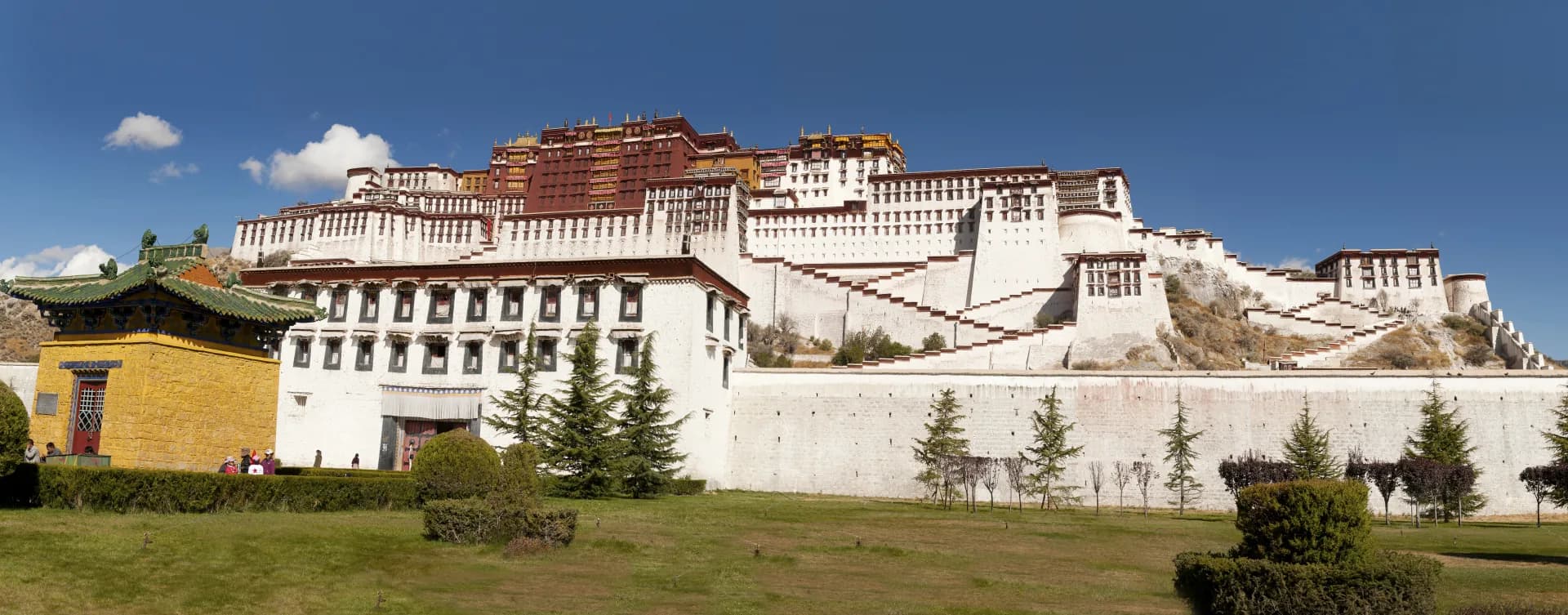
Tibet
Lhasa is the cultural and transport center, but a successful first trip begins before arrival. Foreign-passport holders cannot independently arrange an ordinary leisure itinerary in Tibet: official government guidance says the required travel approval and organized reception must be handled through a qualified travel agency. Additional border-area permission may be needed for routes toward Everest or other restricted areas. Rules differ for mainland, Hong Kong, Macau and Taiwan documents, so confirm the exact current requirement before buying nonrefundable transport.
Choose your first route
- Lhasa and nearby monasteries: 4–5 days, with a light arrival and no immediate high-pass excursion.
- Nyingchi to Lhasa: 7–9 days, using lower, greener Nyingchi as the opening chapter before Lhasa.
- Lhasa and Shigatse: 8–10 days, adding Yamdrok Lake and gradual westward travel.
- Everest route: at least 10–12 days with extra permits, long road stages and conservative acclimatization.
- Ali or a full plateau circuit: a specialist expedition measured in weeks, not an extension to a first seven-day trip.
How many days
Seven days are enough for Lhasa plus Nyingchi or one carefully paced Shigatse route. Flying directly to Lhasa and scheduling Potala Palace, a high lake and a long drive on consecutive days is poor planning. The acute acclimatization period develops over the first several days, so the beginning of the trip should remain easy.
Bases and route
Use Lhasa for Jokhang, Barkhor, Potala, Norbulingka and the major monasteries. Nyingchi city is a useful base for Basum Lake and the Yarlung Tsangpo region, but mountain visibility is weather-dependent. Shigatse anchors Tashilhunpo and westward roads. Scenic lakes that appear close to Lhasa on a map often require high passes and a full day.
Seven-day Lhasa and Nyingchi route
- Arrive in Nyingchi or Lhasa and rest; keep activity mild.
- If starting in Nyingchi, choose one lower-elevation landscape day.
- Add a second Nyingchi route only when weather and condition are good.
- Travel to Lhasa and avoid a major climb after arrival.
- Visit Jokhang and Barkhor at a respectful pace.
- Reserve Potala Palace and pair it with a lower-intensity museum or park.
- Choose one monastery cluster, then depart or add recovery time.
Yamdrok, Namtso and other high lakes are not interchangeable photo stops. Choose one that fits your acclimatization, season, permitted itinerary and road conditions.
Altitude and health
Lhasa sits at roughly 3,700 meters. Fitness does not prevent altitude illness. Follow current CDC high-altitude guidance: ascend gradually where the authorized route permits, avoid alcohol and hard exercise during the first 48 hours, and never move to a higher sleeping altitude while symptoms are present. Headache with nausea, dizziness or unusual fatigue can indicate acute mountain sickness. Worsening symptoms at rest, confusion, loss of coordination, cough or shortness of breath require urgent professional help and descent.
Travelers with heart, lung or other relevant medical conditions should consult a clinician familiar with high-altitude medicine before the trip. Do not self-prescribe preventive medication based on social media.
When to visit
Spring and autumn often offer clear views and cold mornings. Summer is greener and wetter, with clouds and road disruption possible. Winter is dry, bright and very cold, with seasonal closures and reduced routes. Pilgrimage, festival and monastery access can change independently of the weather.
Getting there, staying and booking
Flights and the plateau railway reach Lhasa; rail does not eliminate altitude risk. Your licensed operator should coordinate permits, guide, vehicle, hotels and the approved itinerary. Choose accommodation for quiet sleep, heating and practical access rather than assuming room oxygen prevents altitude illness.
Book the qualified operator and approved route first, well before flights or trains. Then confirm Potala and other timed reservations through the operator. Keep cancellation terms, emergency support and insurance coverage clear.