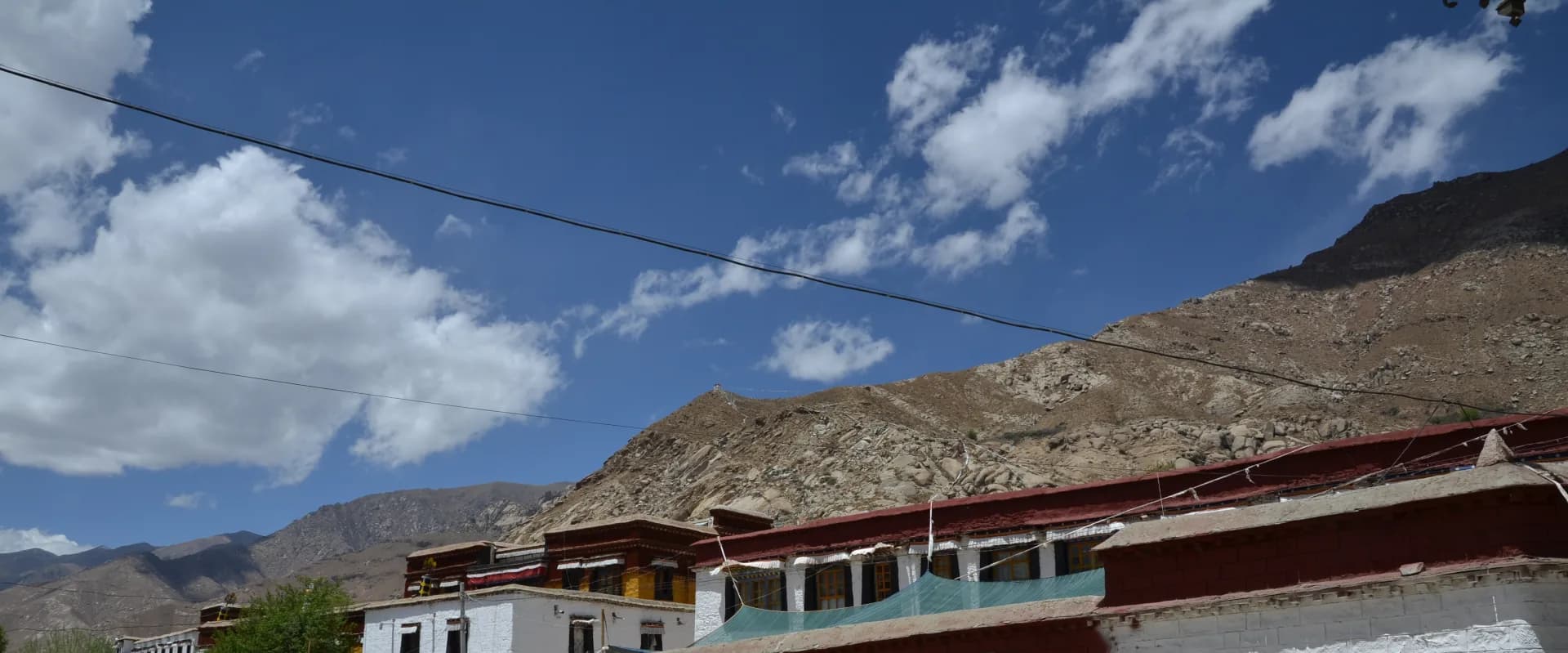
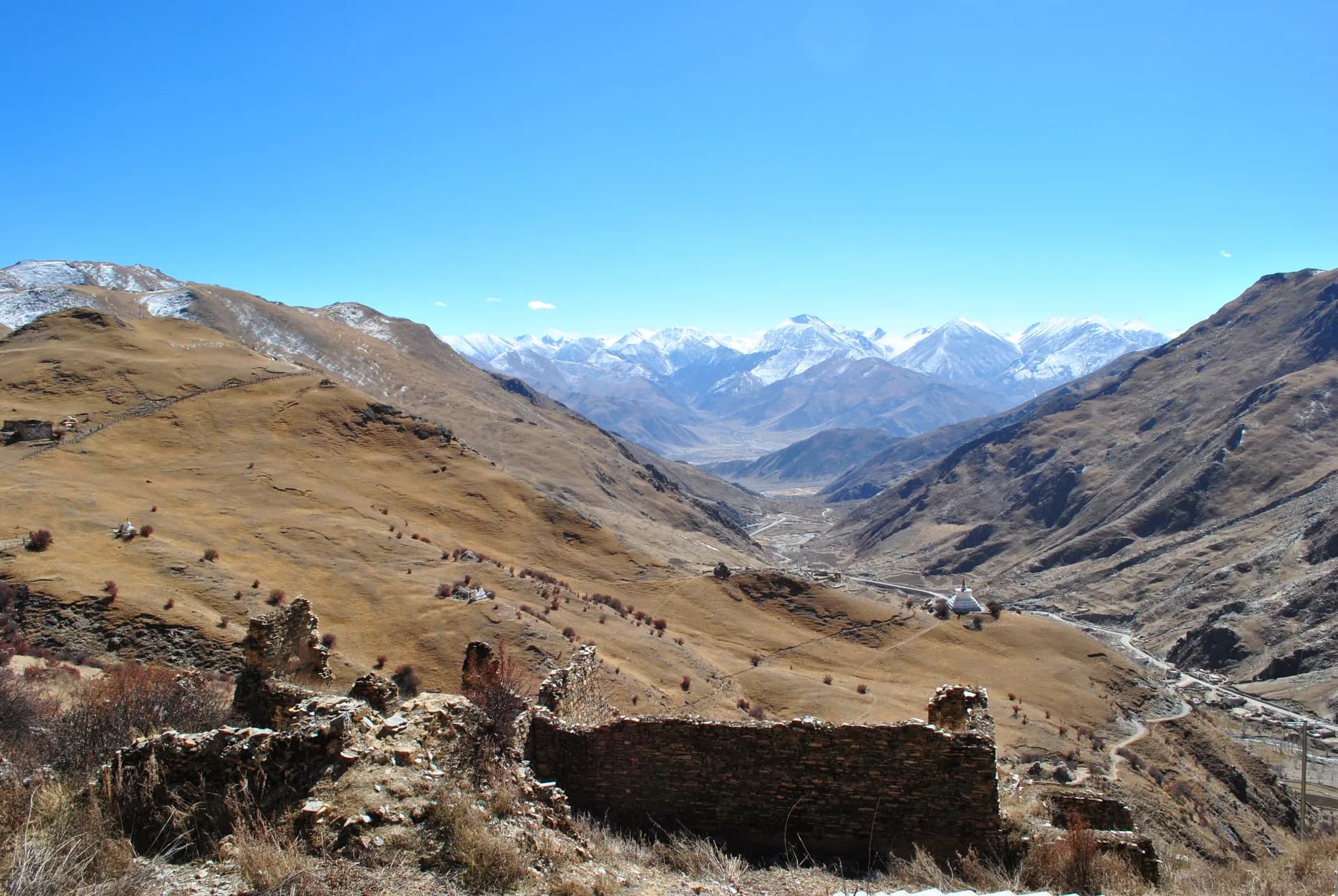
Norbulingka
Norbulingka (罗布林卡) is the garden-and-palace counterpoint to Lhasa's dense temples and steep monasteries. Broad grounds, trees and palace architecture create a slower half-day where landscape and history share attention. As part of the UNESCO Historic Ensemble, it also completes the relationship among Jokhang, Potala and the former summer-palace setting.
Choose it when you want a gentler outdoor rhythm and enough time to understand one or two palace interiors rather than collecting every building.
A coherent garden walk
Start at the current east-side entrance, ask which palace rooms are open and choose a route connecting one or two interiors with the garden landscape. Pause between buildings and notice how enclosure, planting and open space change the experience. A full-building checklist can obscure the garden; a selective route usually works better.
Choose a short palace loop or a longer visit
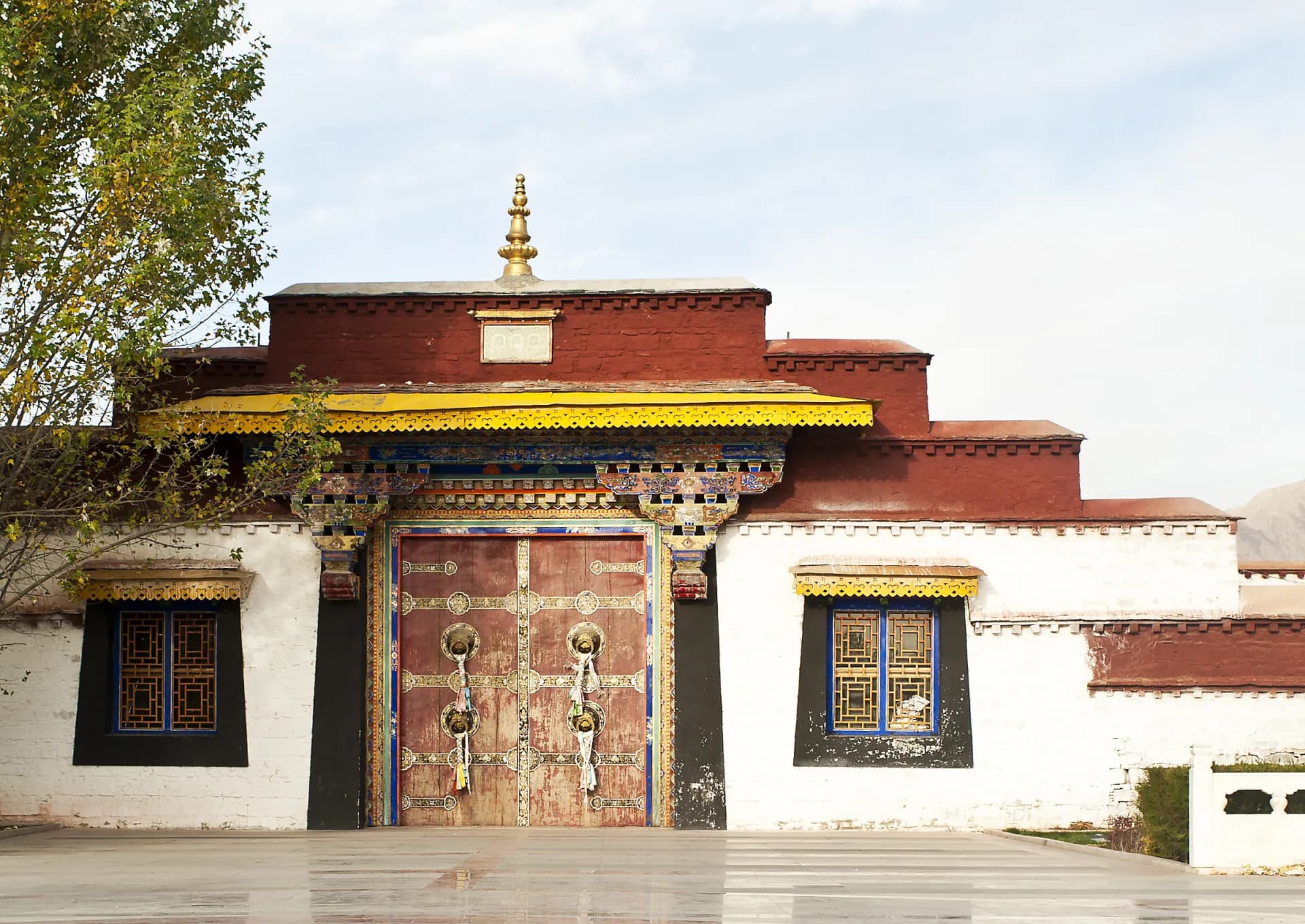
Use the entrance map to locate Kelsang Potrang (格桑颇章), the lake garden and Takten Migyur Potrang (达旦明久颇章, the New Palace). These give a shorter visit three different experiences: an early palace courtyard, the garden's water and island setting, and a later palace interior. Ask which interiors are open before setting the order; room closing times should take priority over an ideal loop.
At Kelsang Potrang, slow down in the courtyard before entering the available halls. If nearby Uya Potrang (乌尧颇章) is open, ask your guide to make its wall paintings one of the visit's detailed stops. Then use the lake garden as a breathing space between interiors, looking at how buildings frame the water. Seeing a pavilion across the lake does not mean its rooms are accessible.
At the New Palace, look for the relationship between residential rooms, decorative painting and the building's more recent character. Visitor accounts particularly value the murals, but one describes viewing some only from a doorway. Have the guide identify a visible scene instead of planning to inspect every panel close up.
For a longer visit, add Jin se Potrang (金色颇章) and its surrounding courts. Its woodwork and murals provide another comparison with the earlier palace area. Ask staff to place this extension before any earlier-closing interior, and leave a garden break before returning to the east gate. The official architectural overview identifies these main palace groups; it is not a current room-opening list.
Keep roughly two hours for a selective visit, as in the museum pairing below; allow closer to three if you add the farther palace group and detailed explanations. Reduce the number of interiors when energy is limited rather than rushing between every named building.
Pair it with the Tibet Museum
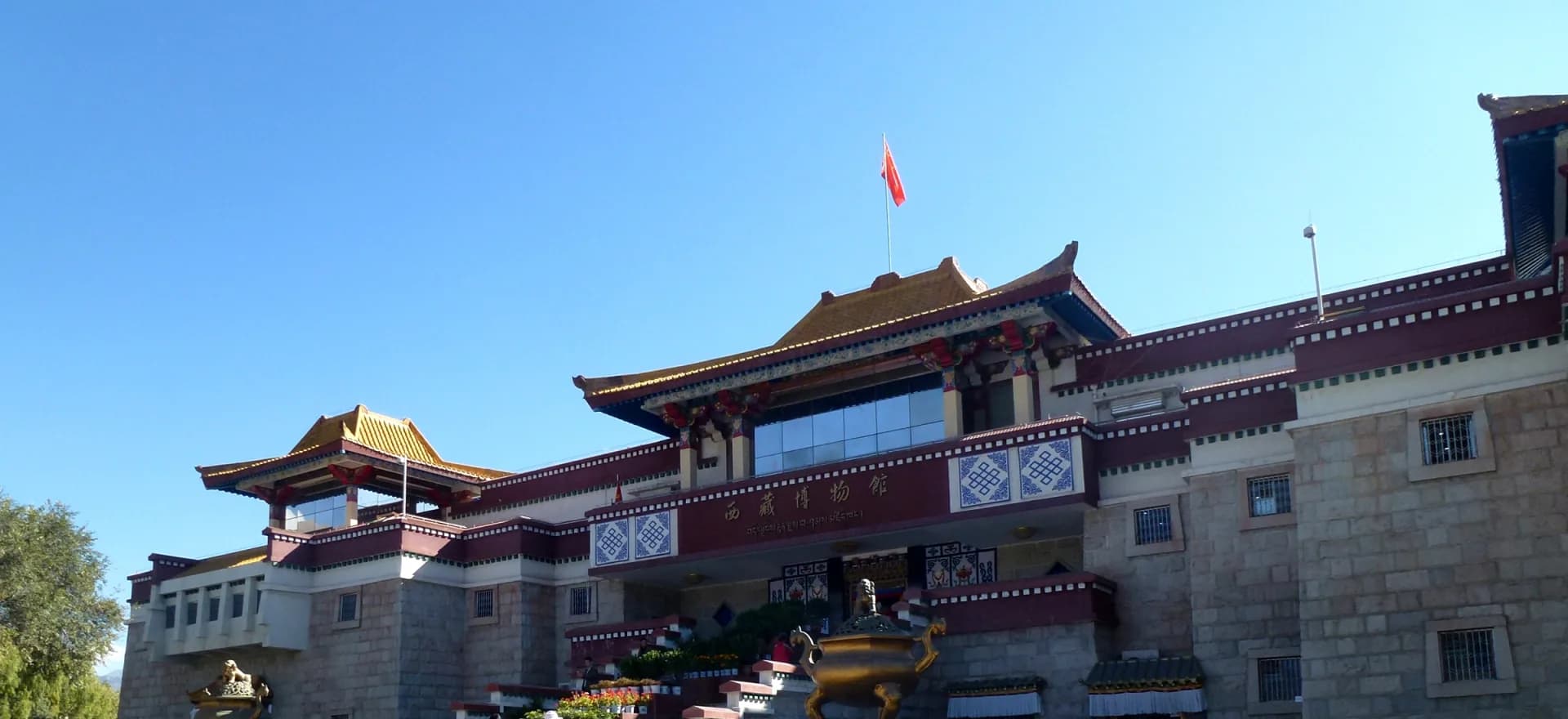
The Tibet Museum is a natural interpretation partner. Start at the museum when historical framing will improve the palace walk; reverse the order when cooler morning garden conditions or the museum reservation controls the day.
Two visitor reports found both stops workable in one city block, often around two hours each. AMap places the verified east ticket office about 276 m / four planning minutes on foot from the museum. Follow the current crossing and entrance.
Tickets and current rooms
The March 2026 Norbulingka notice names the east-gate ticket office and official mini-program as authorized sales channels. It separates grounds hours from earlier ticket-sale, last-entry and palace-room cutoffs, so confirm the specific room plan with the organizer rather than using the outer closing time for everything.
Current passport handling, internal vehicles, public tours and step-free route need a live check. Ask about seating, toilets, palace thresholds and the shortest open circuit. Respect closed doors, lawns and conservation barriers.
Best fit in the itinerary
Norbulingka works well as a flexible early or middle day, especially when you want recovery from steep sites without giving up cultural depth. One coherent palace-and-landscape sequence plus the museum is a complete day; distant rooms are optional when energy is limited.