Macau
Macau—officially Macao in many government and international contexts—is a Special Administrative Region of China on the western side of the Pearl River estuary. It is not one island and it is not only a casino destination. A useful first trip separates four different geographic jobs:
- Macau Peninsula: dense historic streets, temples, churches, civic buildings and everyday neighbourhood food.
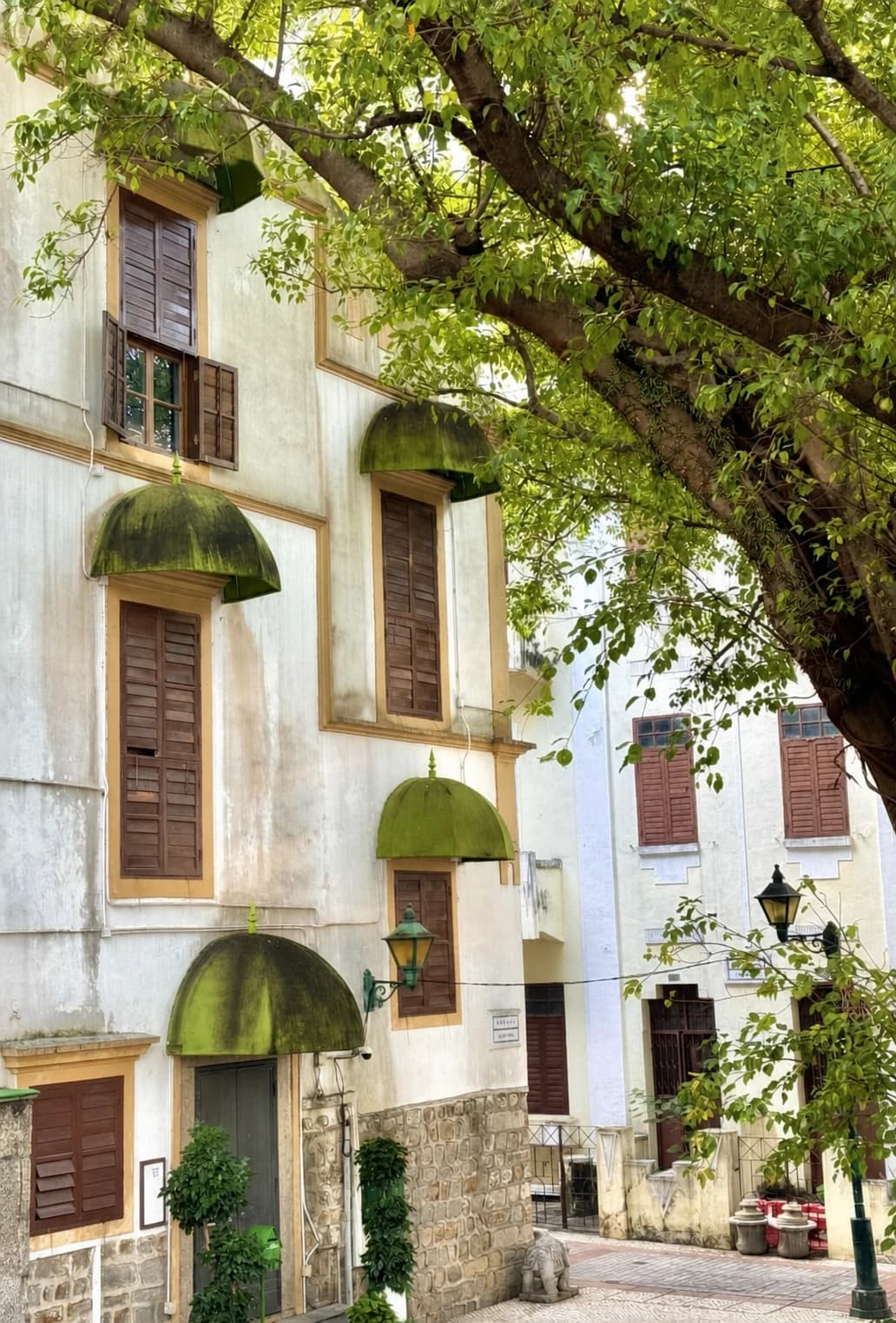
- Taipa: a smaller old-village scale, Macanese domestic architecture and a practical food walk.
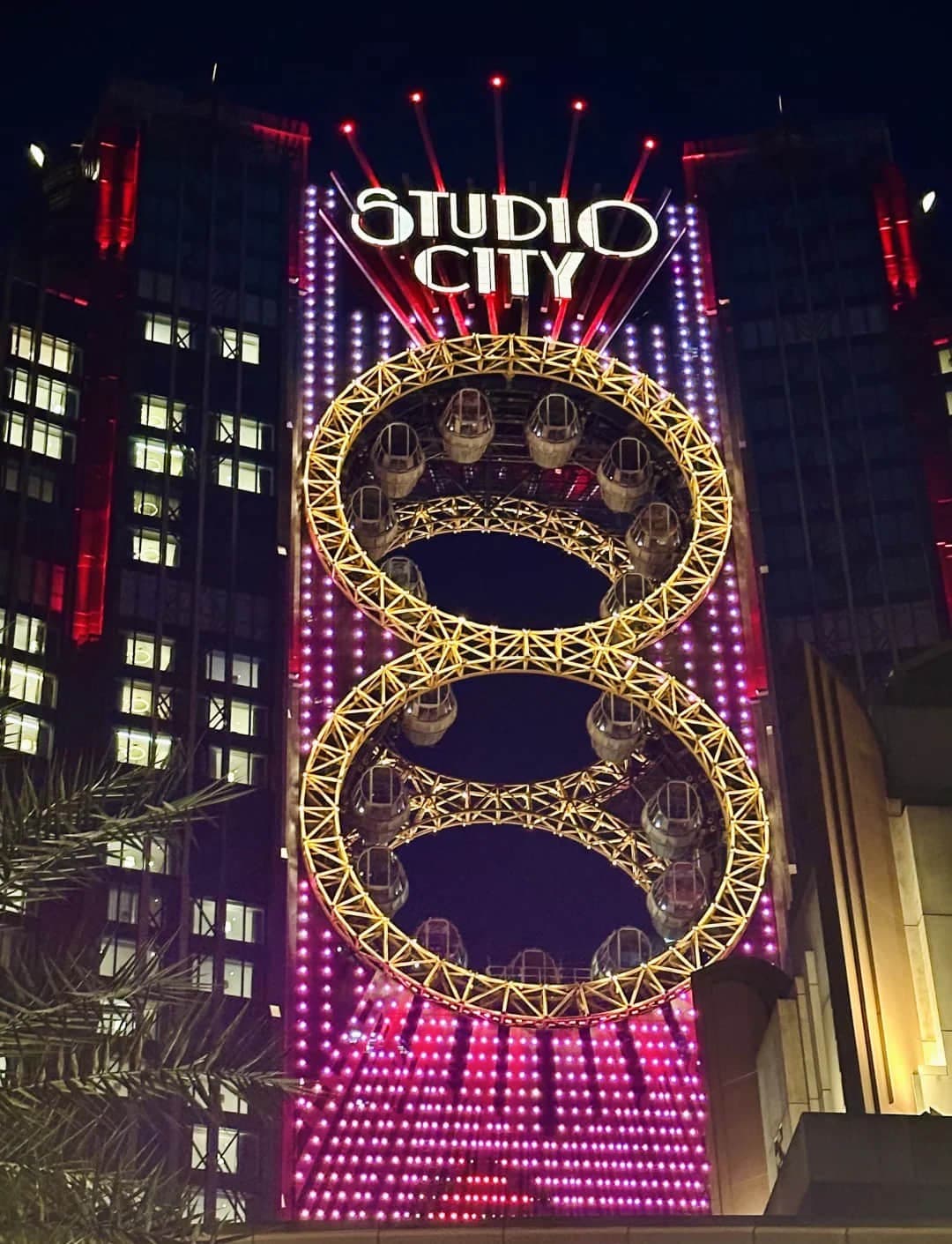
- Cotai: reclaimed land occupied by large integrated resorts, shows, shopping and contemporary spectacle.
- Coloane: a slower village and coast extension whose value depends on weather and return transport.
The common mistake is to alternate between peninsula heritage and Cotai resorts several times a day. Choose one side for each half-day, use Taipa as the transition, and reserve enough time for border, ferry or bridge formalities.
Choose the Right Route
- Choose the new Taipa Village half-day food walk when architecture, local history and one considered meal matter more than a souvenir crawl.
- Choose the two-day city walk for a fast peninsula-and-Cotai overview.
- Choose the three-day city walk when Taipa and resort time need more breathing room.
- Choose the rebuilt three-day heritage route for the deepest temple, residence, church and civic-building sequence; it is not a resort itinerary.
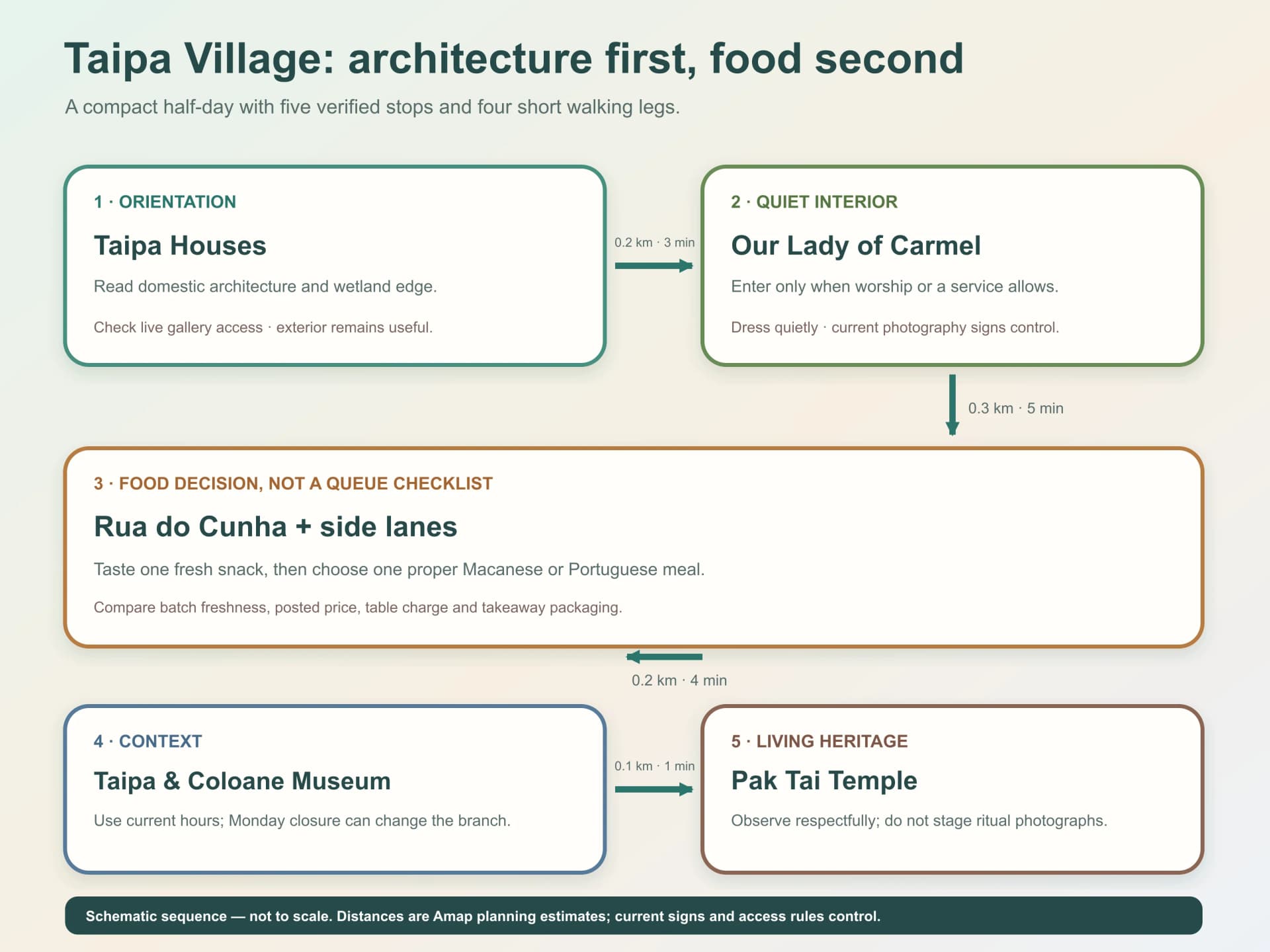
This diagram is a sequence, not a street map. Its five map locations use verified GCJ-02 coordinates and the four short walking legs use Amap planning estimates. Current signs, worship, museum access and crowd controls decide the final movement.
Macau Peninsula: Read Heritage as a Connected Street System
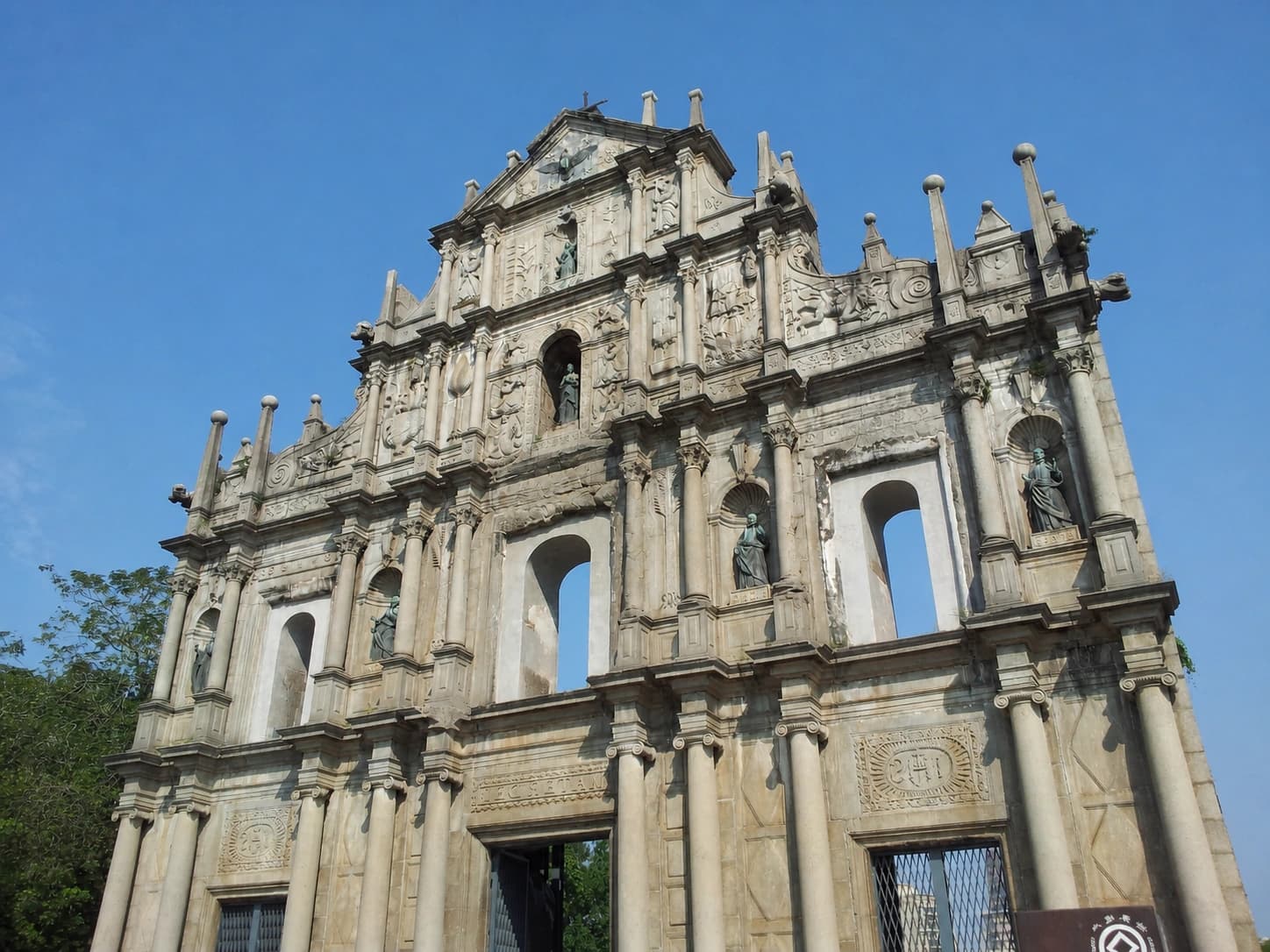
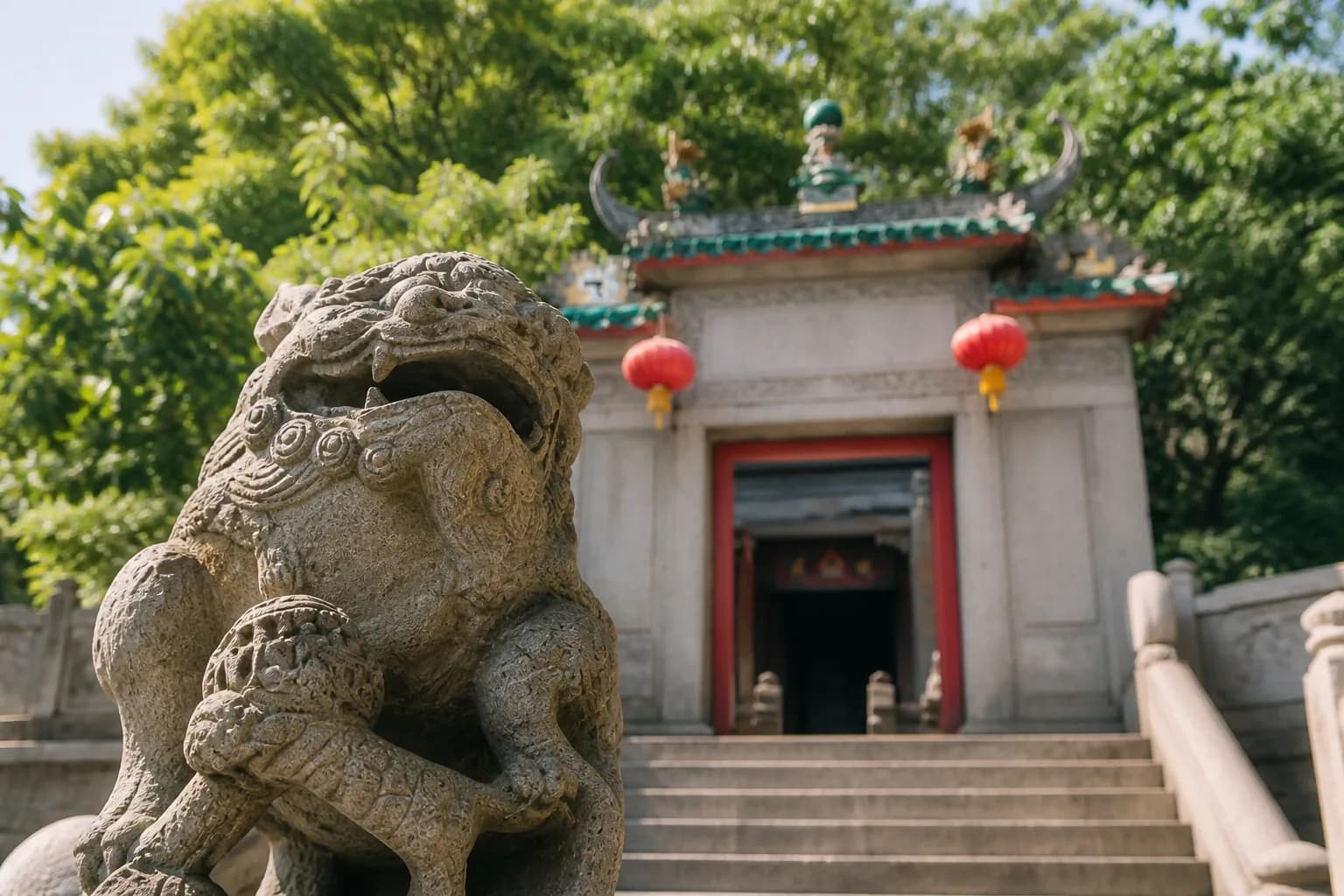
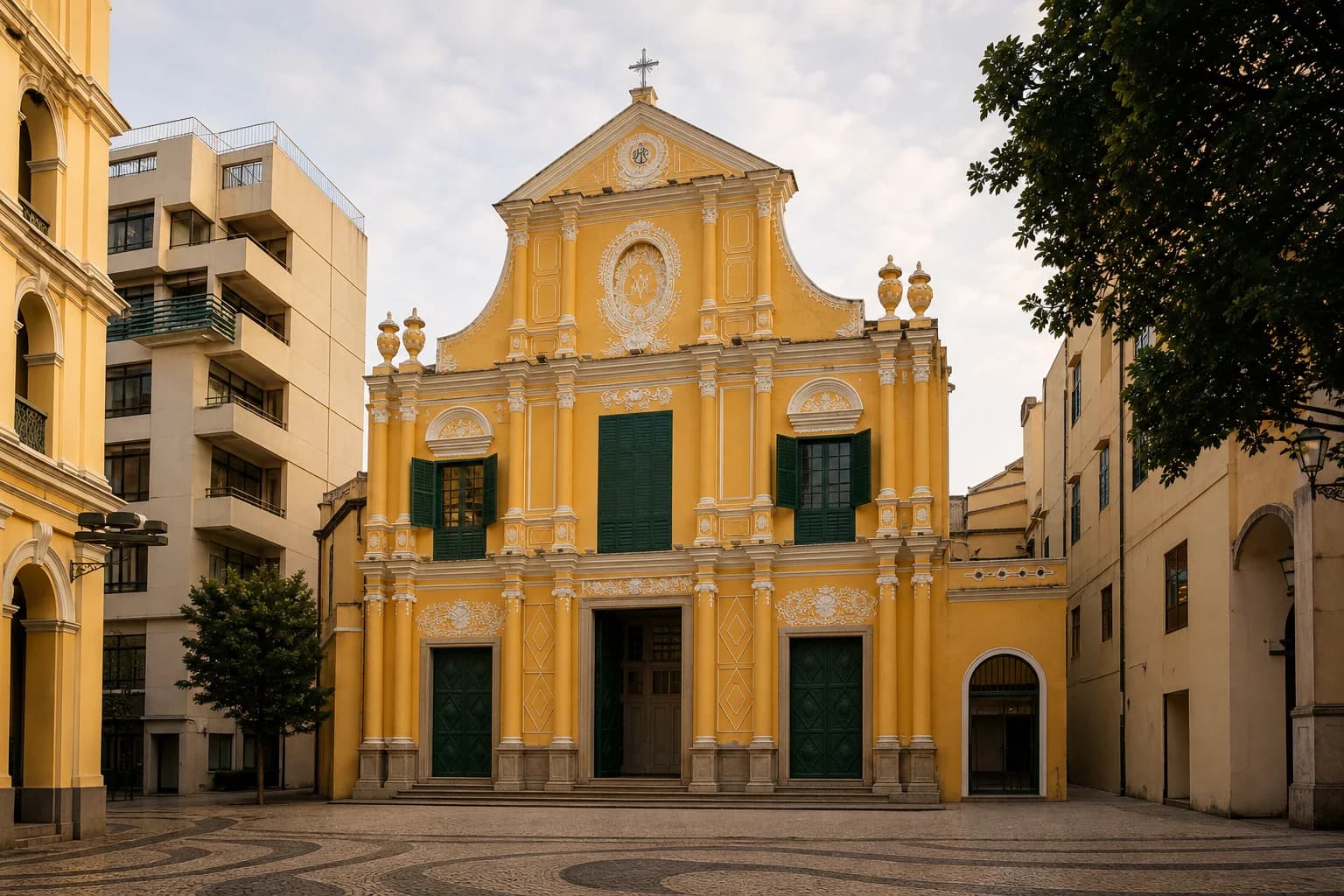
The Historic Centre works best from south to north or north to south, not as isolated taxi drops. A-Ma Temple, Barra Square, Mandarin's House, St. Lawrence's Church, Senado Square and the Ruins of St. Paul's belong to different religious, domestic and civic histories.
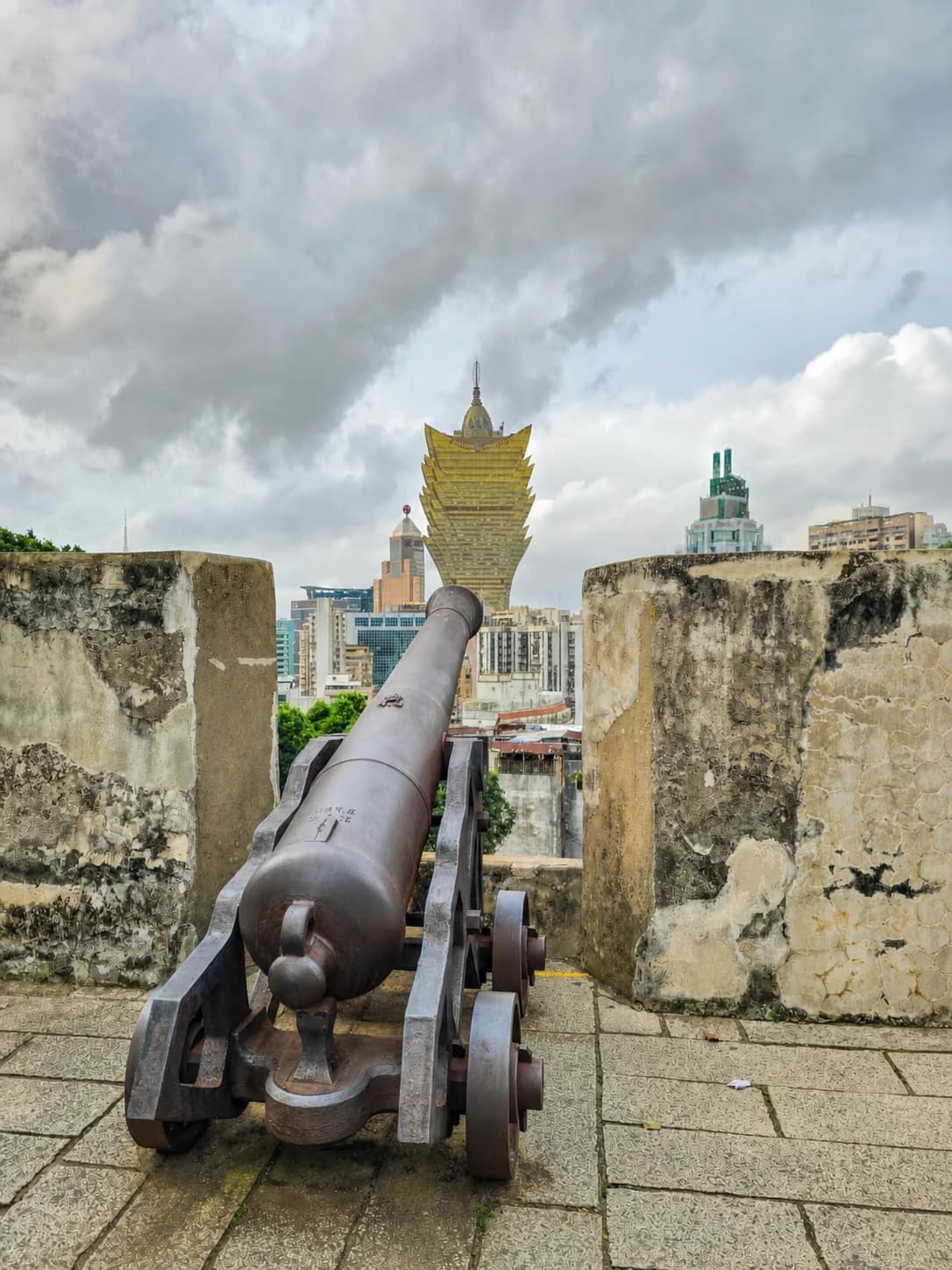
At the ruins, look past the famous façade: the rear archaeological area, crypt and museum have their own current access rules. Continue only to the branch that matches energy—Na Tcha Temple for a short living-religion contrast or Mount Fortress for stairs, museum context and a wider view.
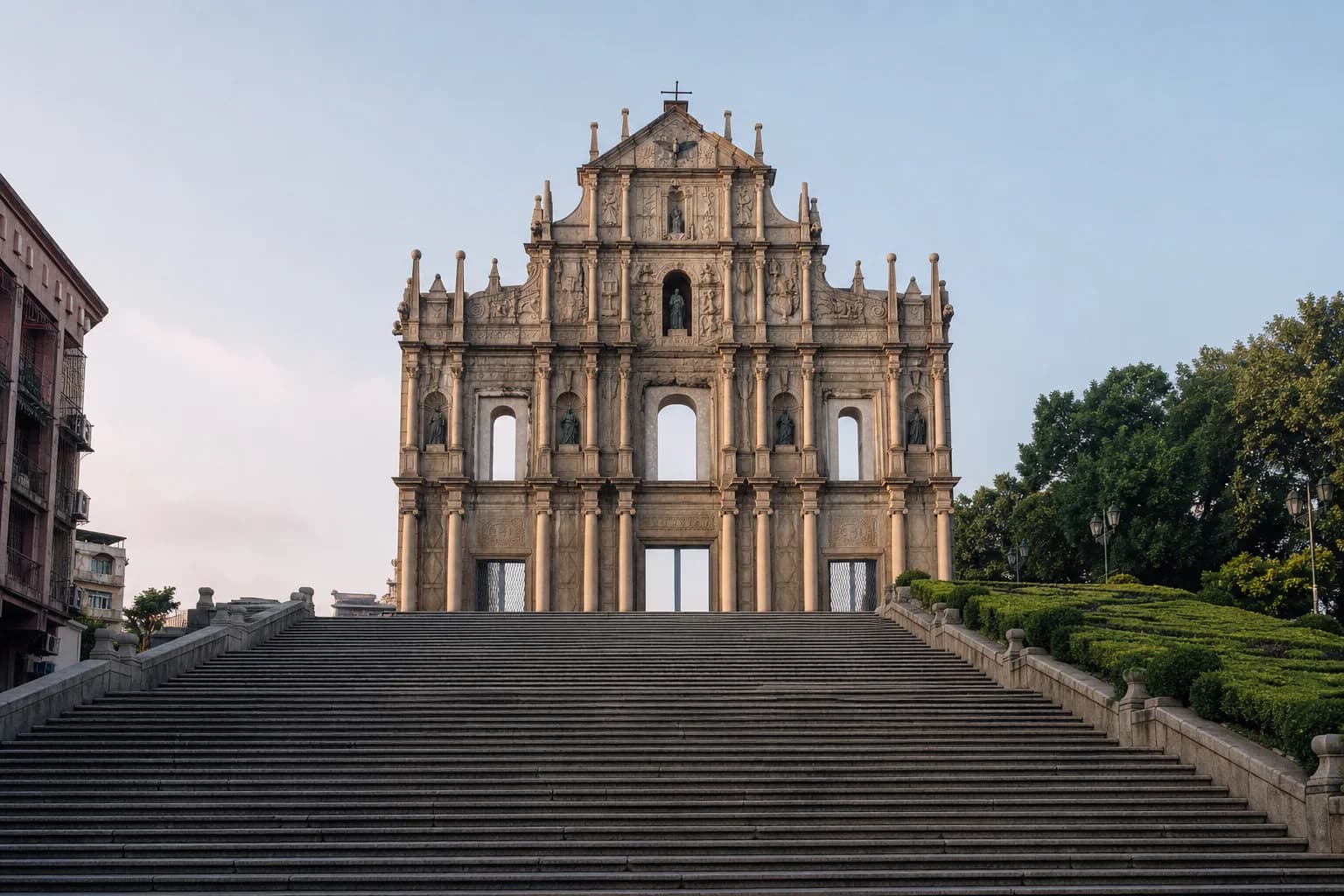
The wave-pattern paving and pastel façades are only one layer. Chinese temples, guild activity, courtyard houses, Catholic institutions and port commerce often occupy adjacent lanes. Treat active religious sites as living places: keep entrances clear, follow photography signs and do not imitate worship for a picture.
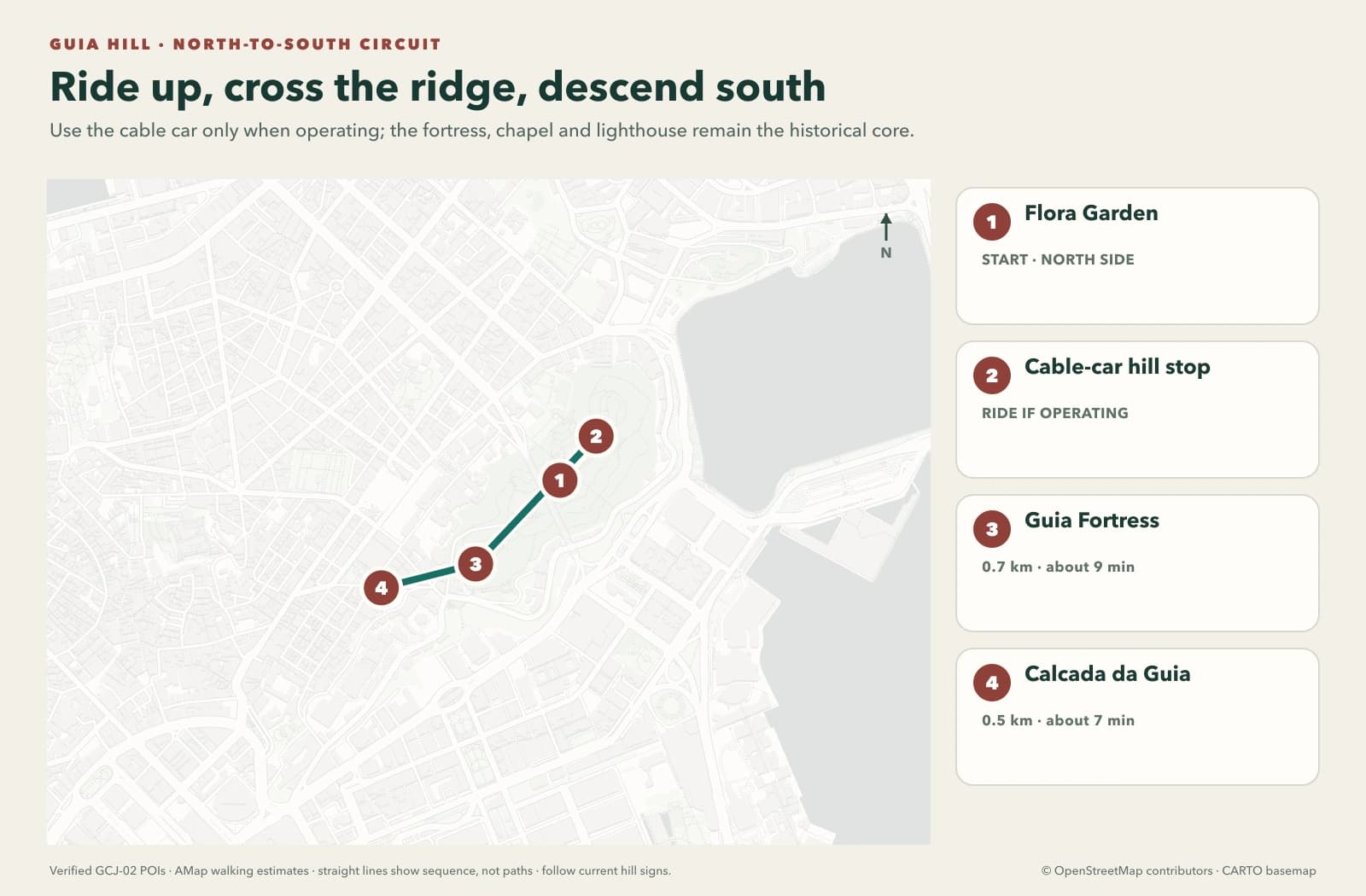
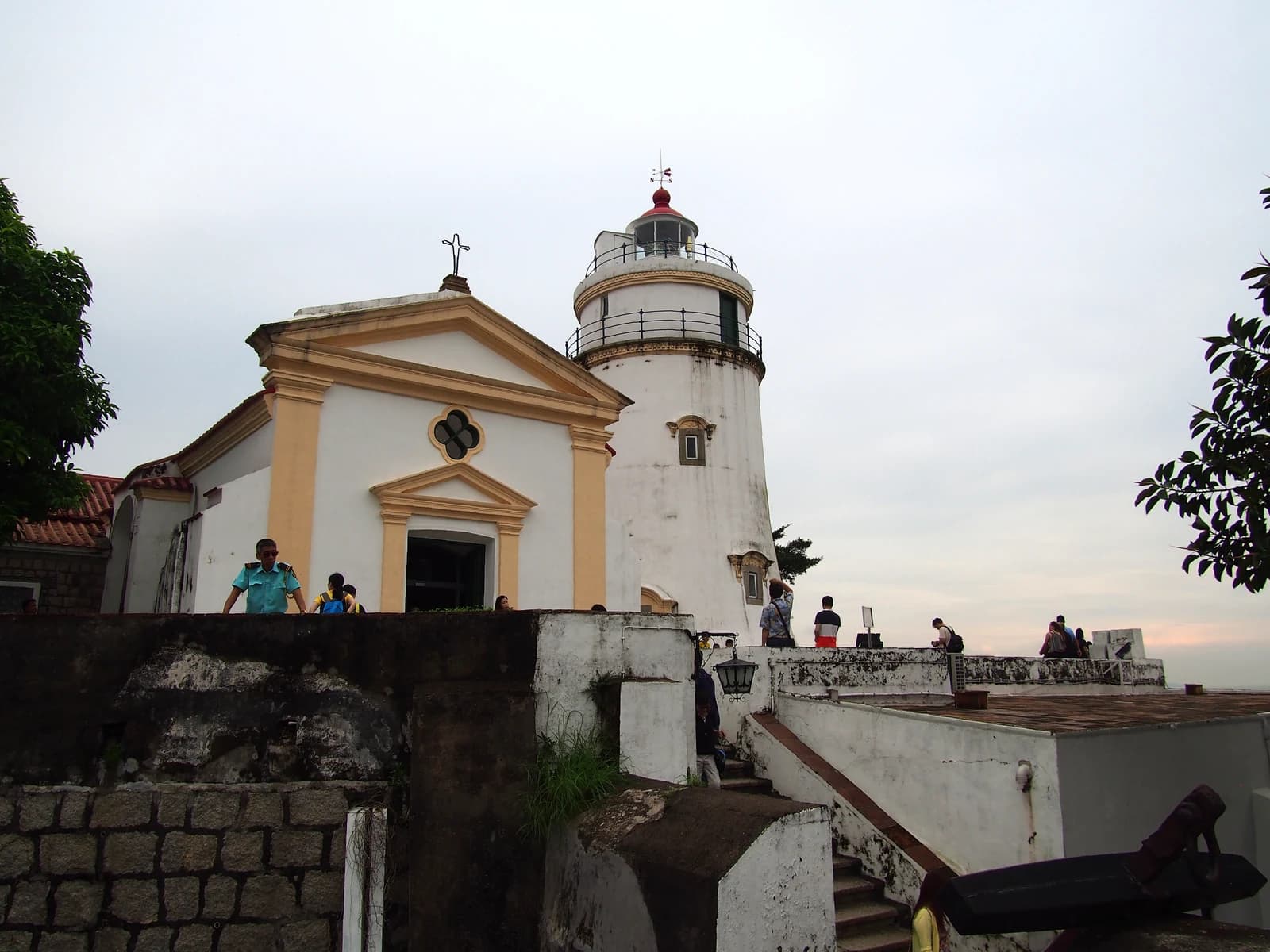
For a shorter elevated contrast, use the Guia Hill and lighthouse circuit: enter from Flora Garden, ride only if the cable car is operating, cross the ridge to the fortress and chapel, view the closed lighthouse exterior, then descend south instead of backtracking.
Taipa: Architecture First, Food Second
Begin at Taipa Houses, where the Cultural Affairs Bureau identifies five 1921 residences associated with senior civil servants and Macanese families. Read the raised domestic forms, shutters, colour and former shoreline relationship before walking uphill to Our Lady of Carmel Church.
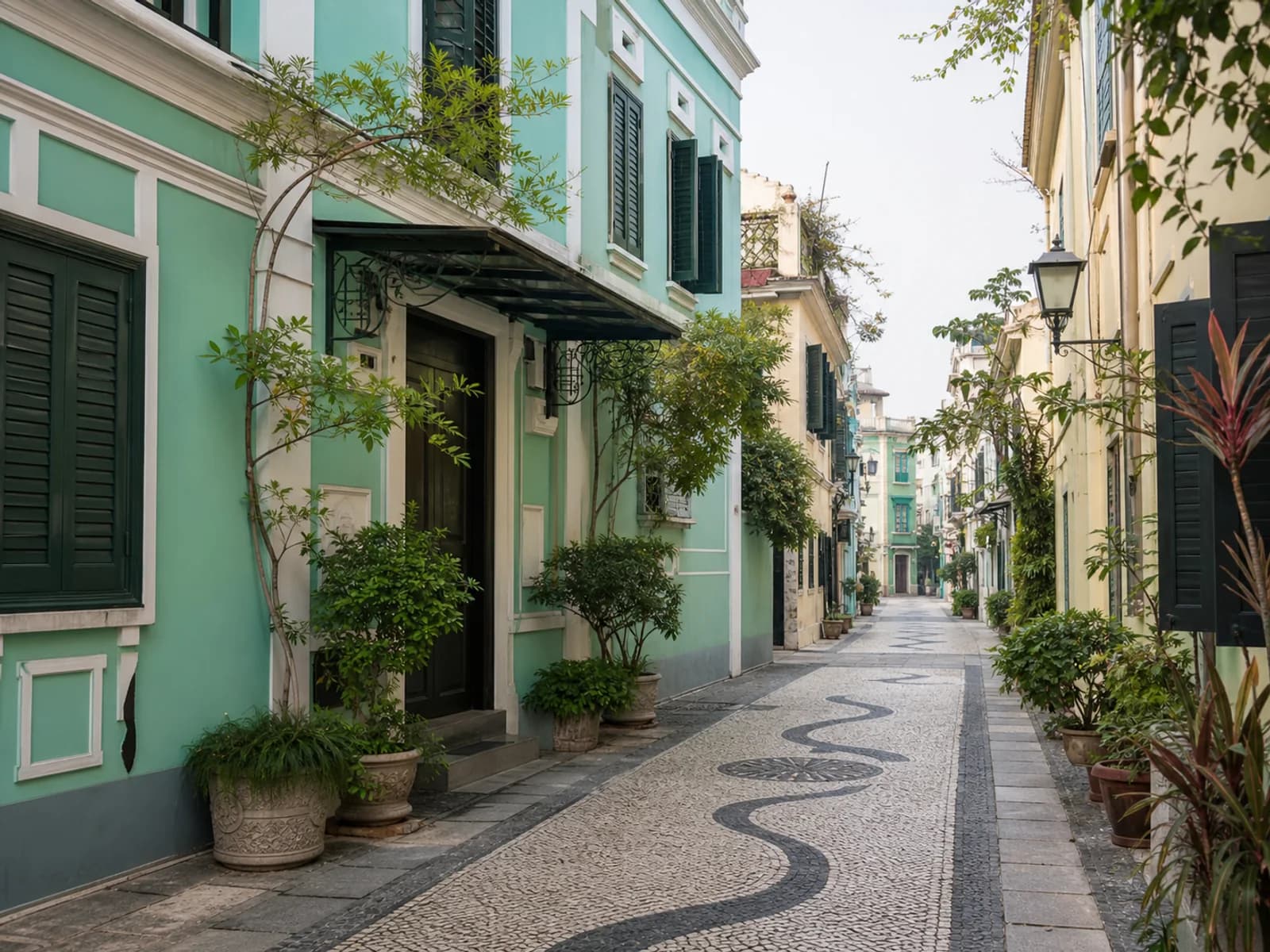
On Rua do Cunha, avoid turning every snack into a compulsory stop. Taste one fresh item, then choose one proper meal in the side lanes. The official tourism description identifies this as a narrow pedestrian street inside a maze of older lanes; the surrounding village is the experience, not just the busiest block.
Cotai: Choose One Resort Job
Cotai is strongest when the visit has a defined job:
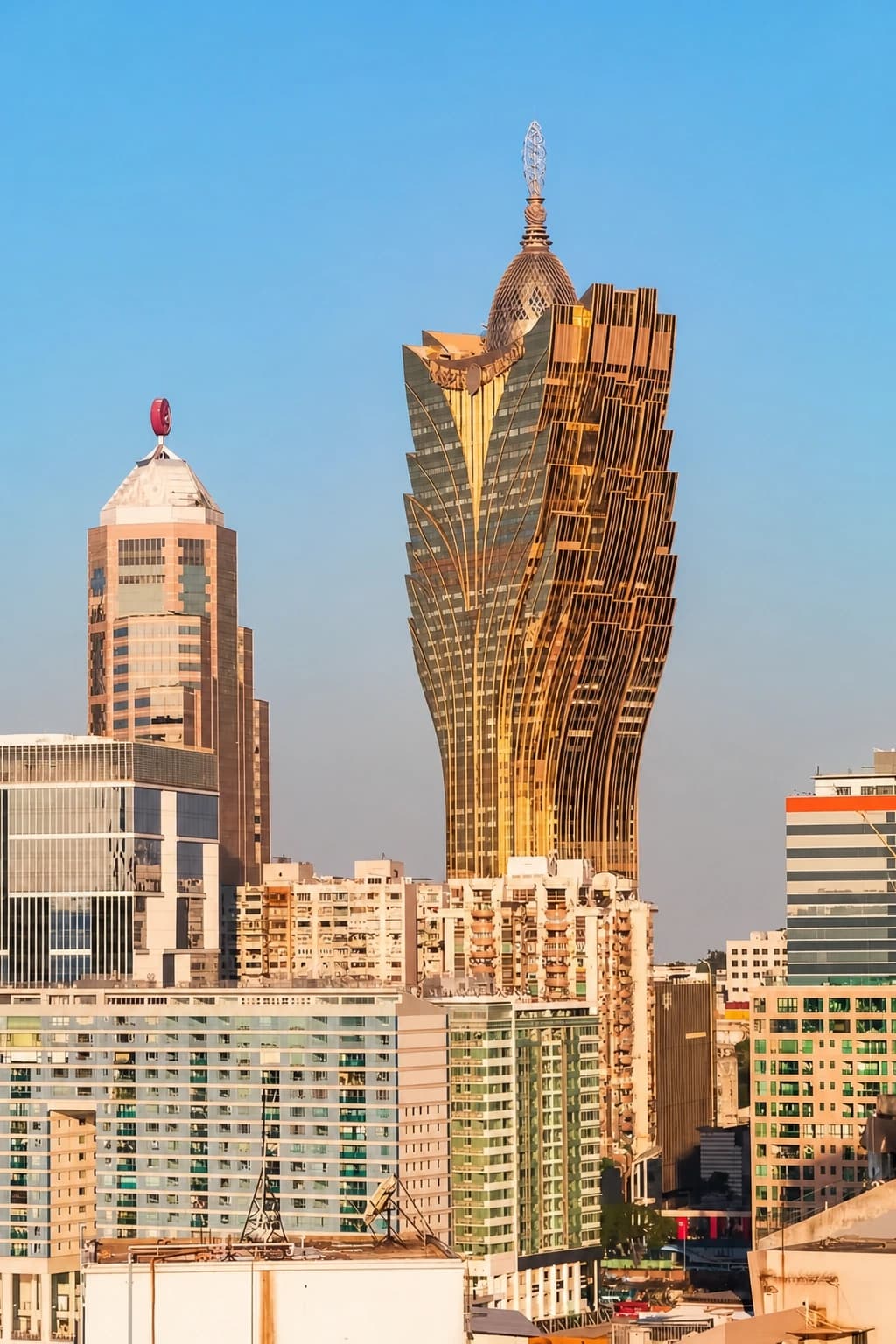
- Architecture and public art: use City of Dreams for Morpheus and its current public-art directory.
- A ticketed performance: check the exact live House of Dancing Water product, date, seat category and check-in conditions before committing the evening.
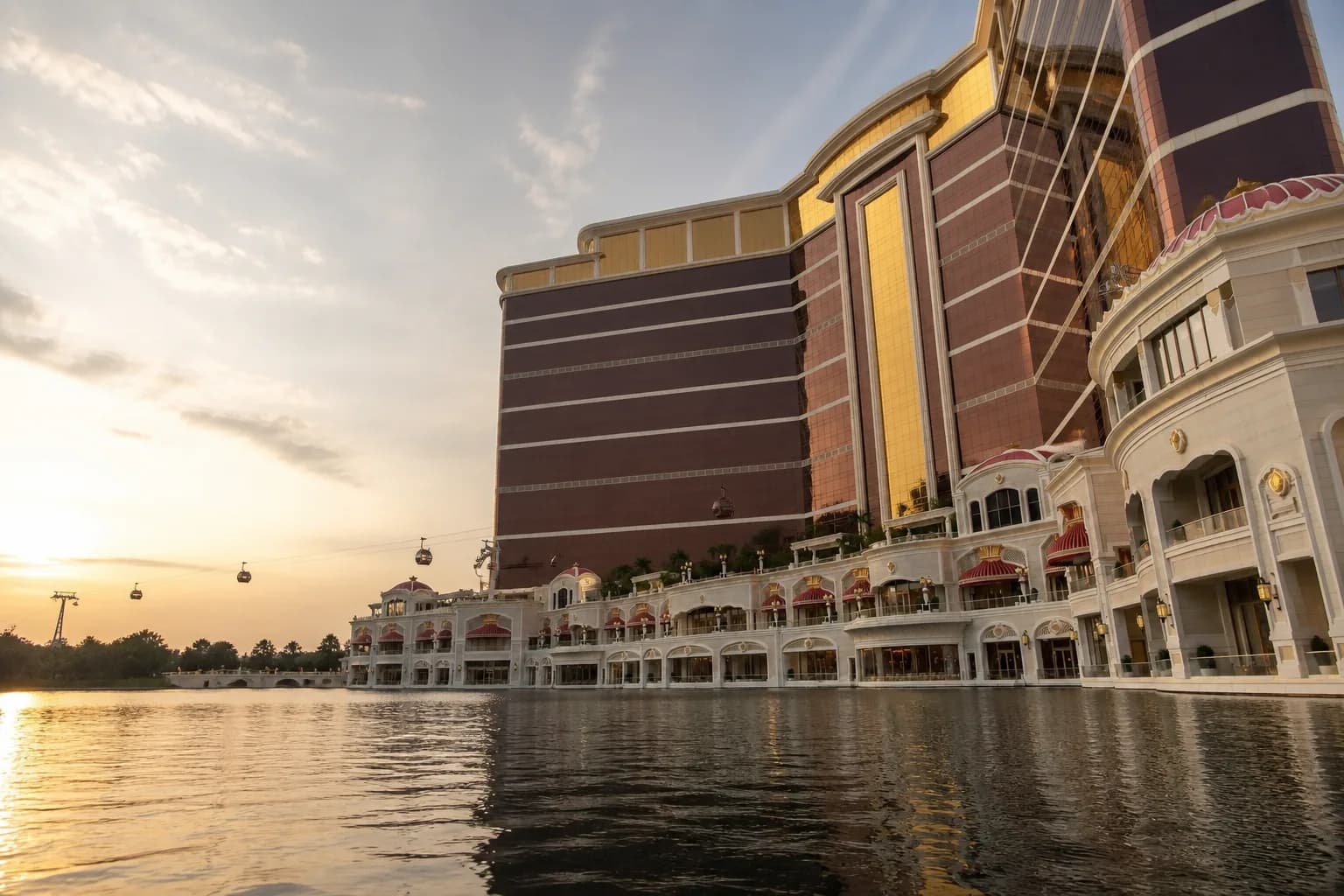
- A free spectacle: use Wynn Palace for the lake-and-cable-car relationship, with live weather and maintenance checks.
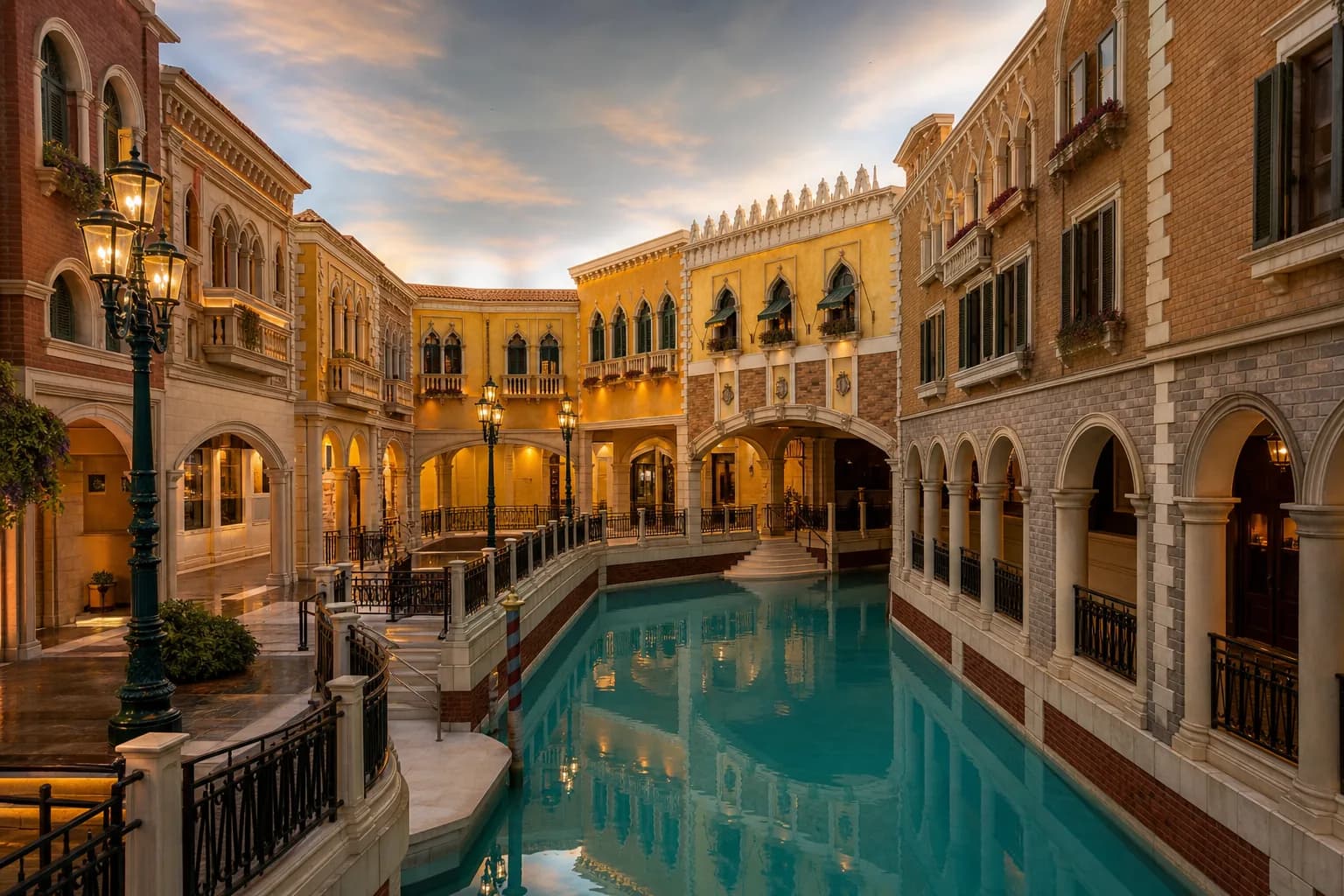
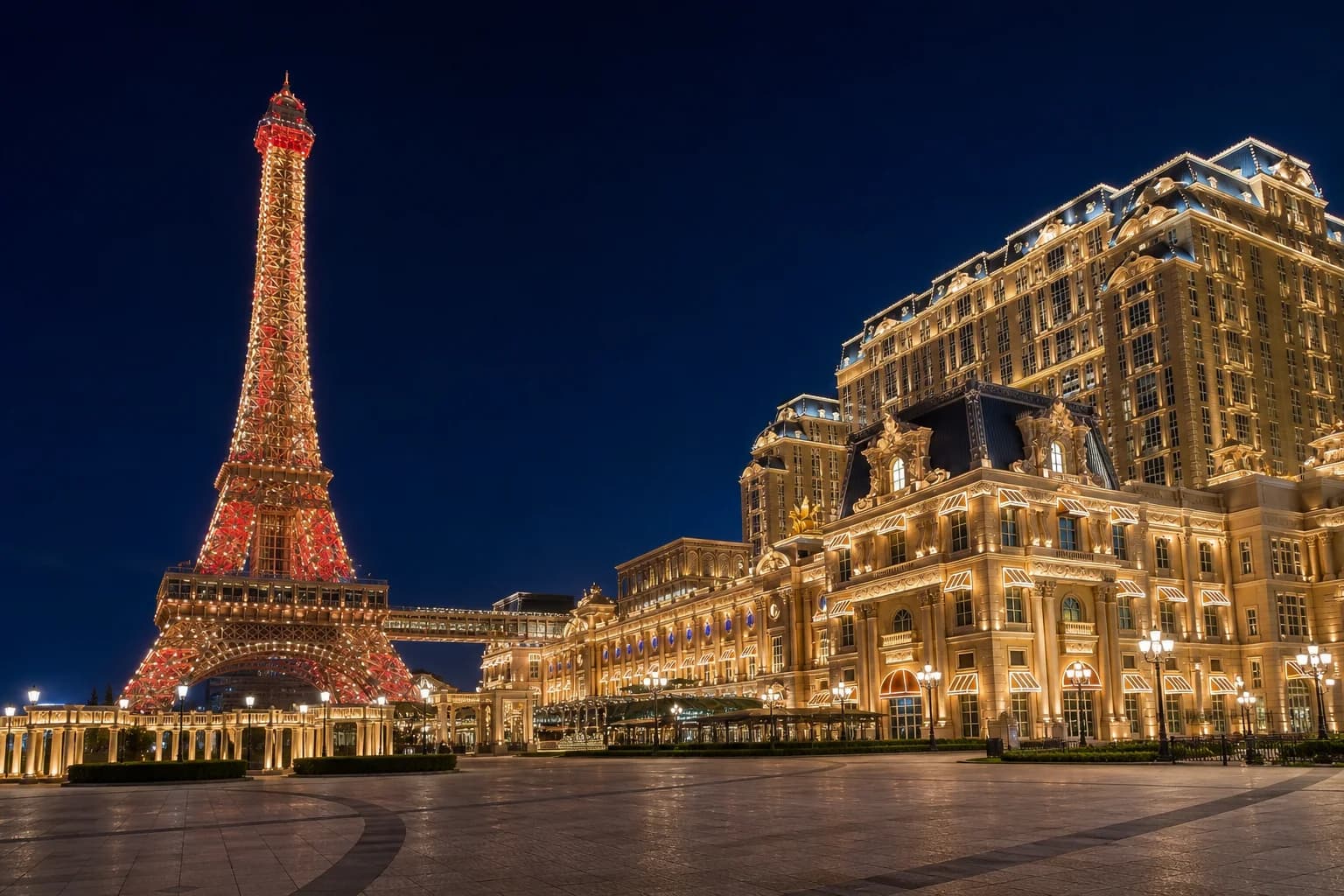
- Themed interiors: choose the Venetian, Parisian or Londoner according to the architecture that actually interests you; completing all three lobbies is not a cultural route.
Choose the evening anchor
- The Venetian Macao: choose it for the largest indoor canal-and-shopping environment and the easiest long weather-proof browse.
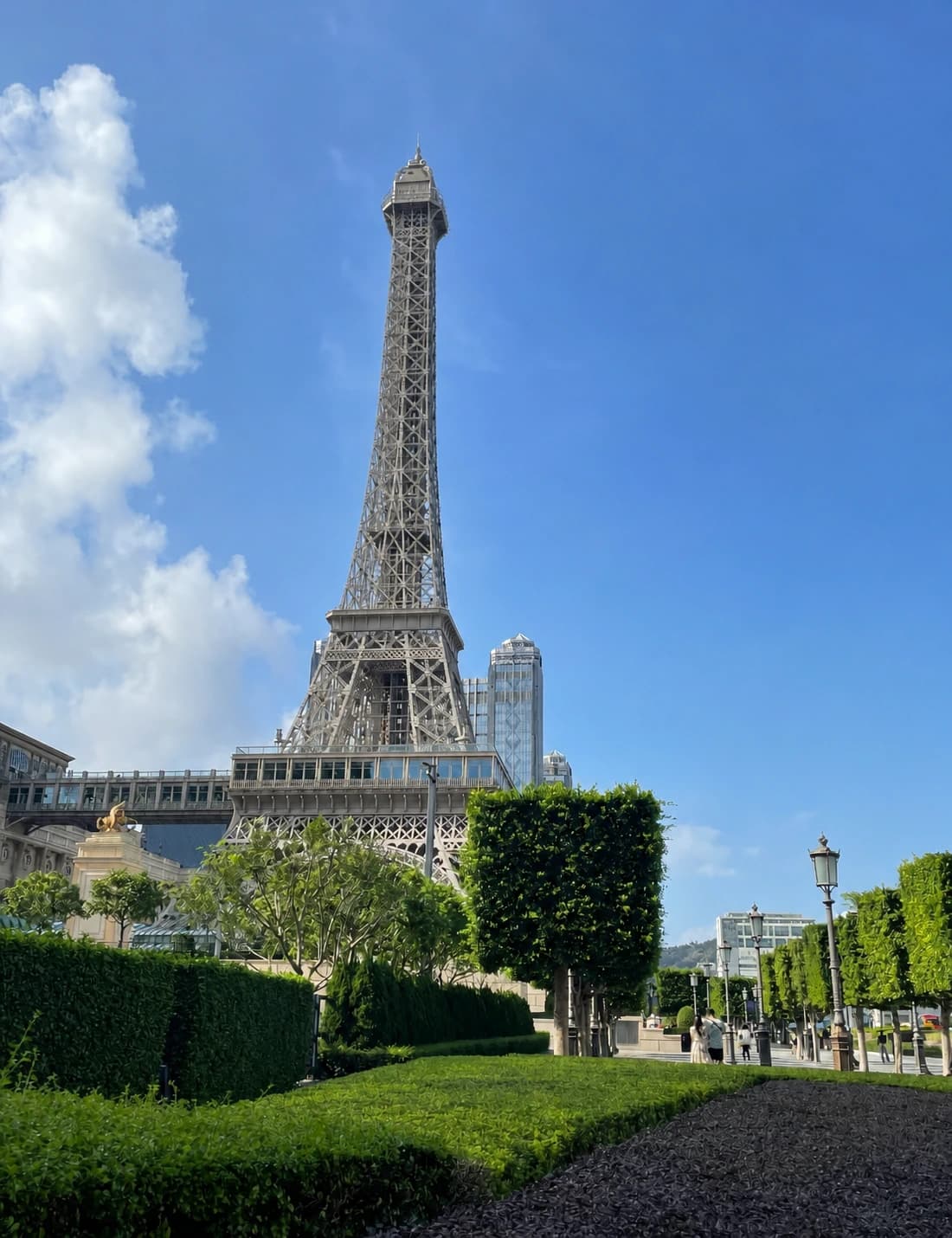
- The Parisian Macao: choose it for the exterior tower composition, one themed interior sequence and an optional observation decision.
- The Londoner Macao: choose it as the adjacent façade/interior extension when the connected Sands cluster is already the plan.
- City of Dreams: choose it for Morpheus, current public art or a booked House of Dancing Water performance.
- Wynn Palace: choose it for the free lake-and-SkyCab relationship when weather and maintenance permit.
Build the evening around one anchor plus at most one adjacent extension. Venetian, Londoner and Parisian can share an indoor-connected cluster, but “connected” does not mean short: their podiums, shops and event diversions consume time. City of Dreams and Wynn Palace are different jobs, not mandatory final stops. A separate five-resort route would duplicate the verified property guides and reward lobby counting rather than a better night.
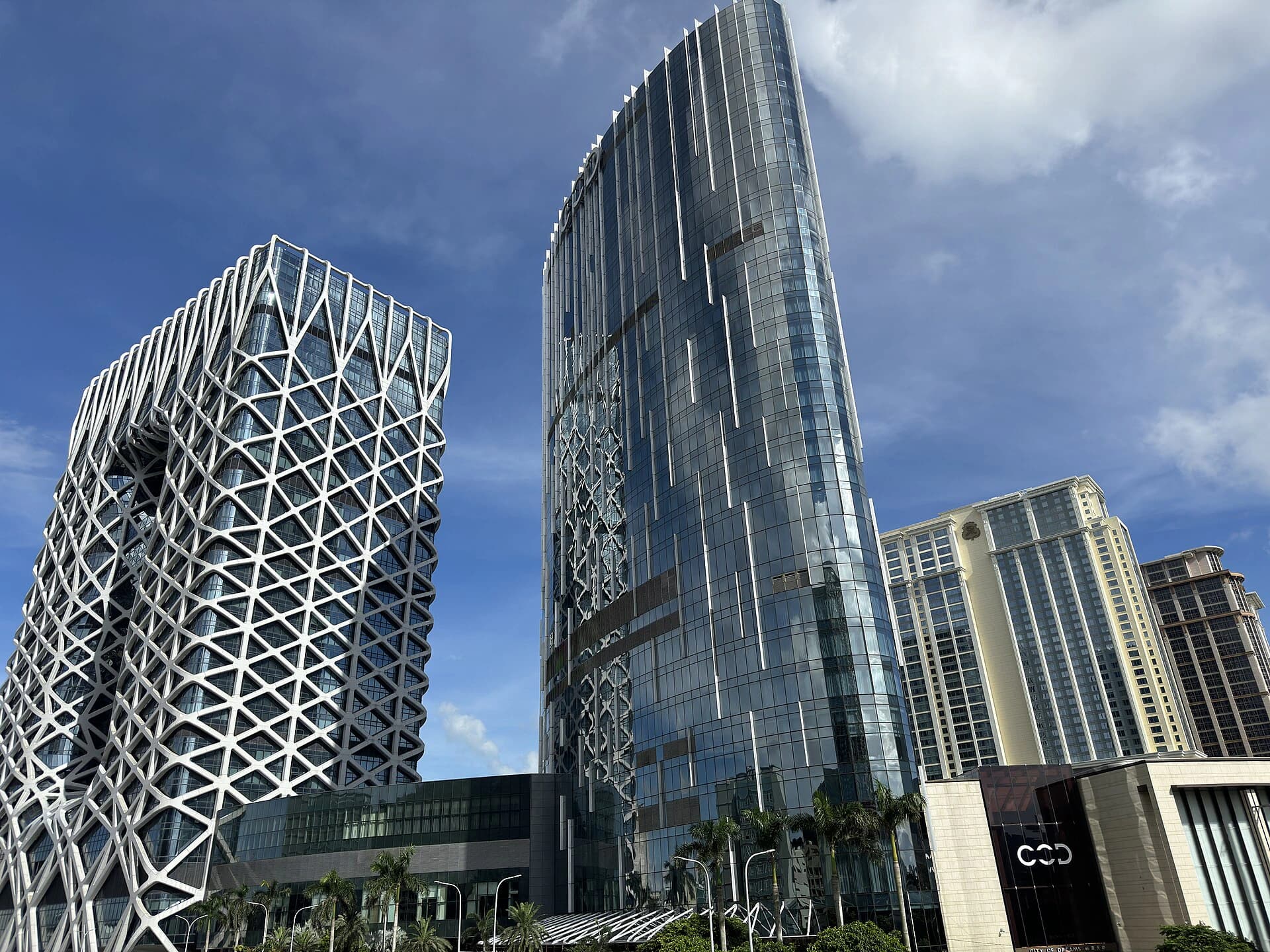
Exterior photograph: LN9267, Wikimedia Commons, licensed under CC BY-SA 4.0.
Public resort areas can be visited without gambling. Casinos are separate regulated adult environments; carry identification and follow current house and legal rules. Do not make gaming losses part of a sightseeing budget.
Coloane: Add It Only When Slower Is the Point
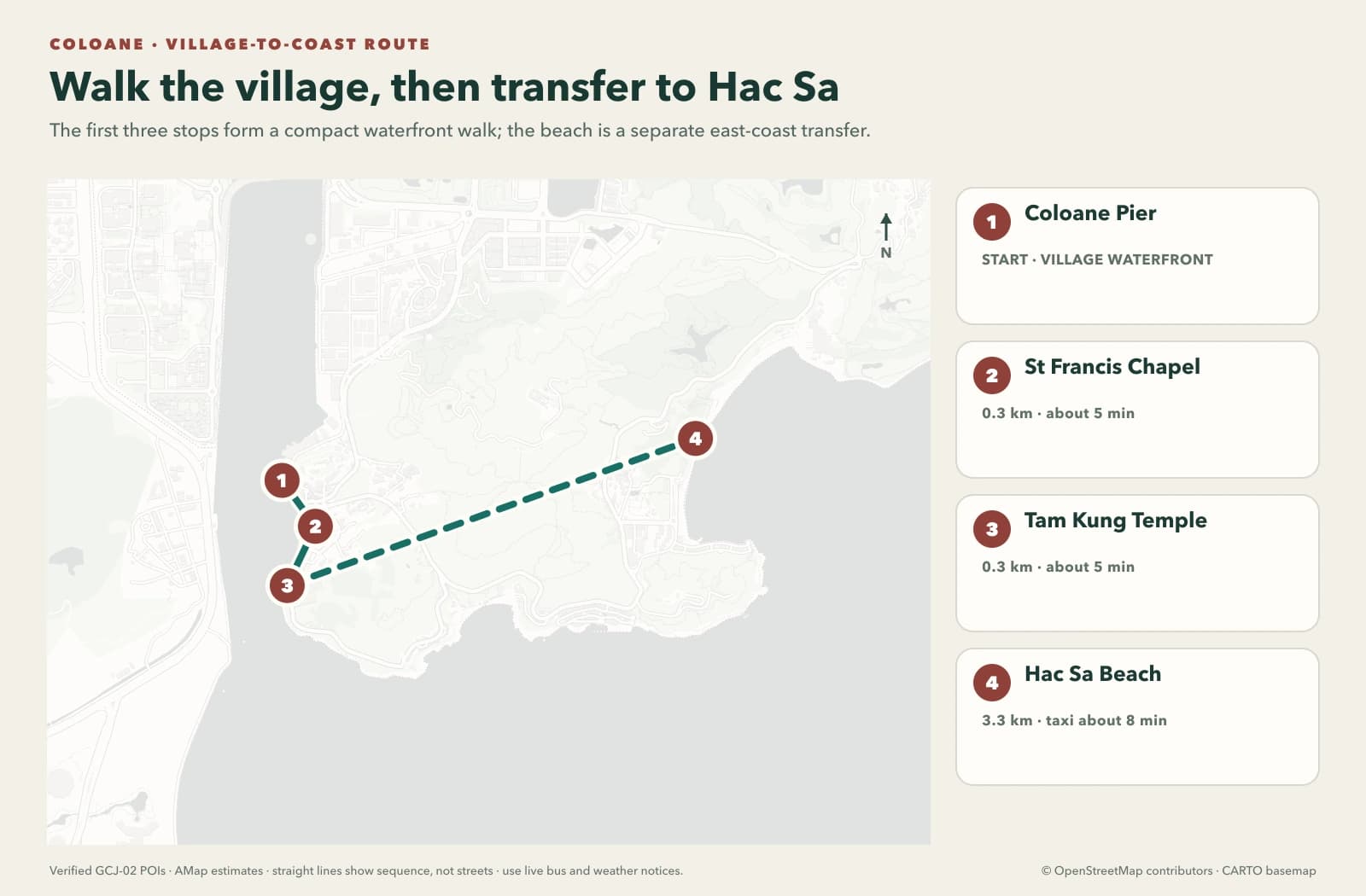
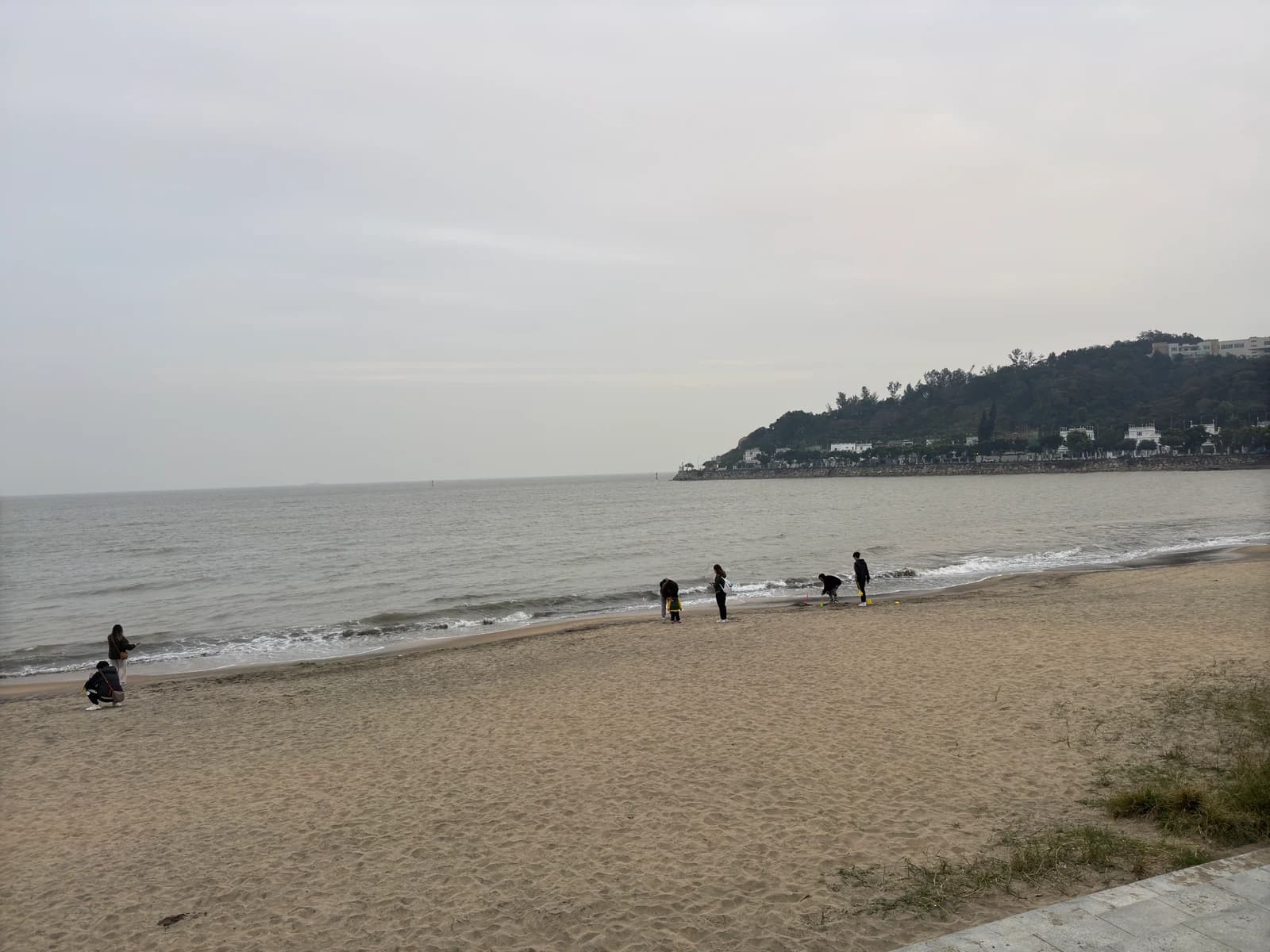
Coloane Village, its religious buildings, old pier setting and Hac Sa coast form a quieter contrast to Cotai. They are not a quick add-on between two shows. Use a current bus or taxi planner, keep the return leg visible, and cancel exposed coastal time during severe rain, lightning or tropical-cyclone warnings.
The complete Coloane Village and Hac Sa route separates the compact pier–chapel–temple walk from the roughly three-kilometre vehicle or bus transfer to the east coast. This prevents the city map from making the beach look like an adjacent village stop.
An overnight stay is rarely necessary for a first visit. Add Coloane when walking, a long lunch and neighbourhood pace are the purpose; skip it when the trip is already full of peninsula heritage and a ticketed evening.
Food: Understand the Category Before the Queue
Macanese cooking
Macanese cuisine developed through Portuguese maritime connections, local Chinese cooking and ingredients and techniques circulating through other ports. Dishes such as African chicken, minchi and baked Portuguese-style preparations are not simply “Portuguese food in China.” Choose a restaurant whose current menu explains the dish and portion rather than assuming every place near a landmark specializes in Macanese cooking.
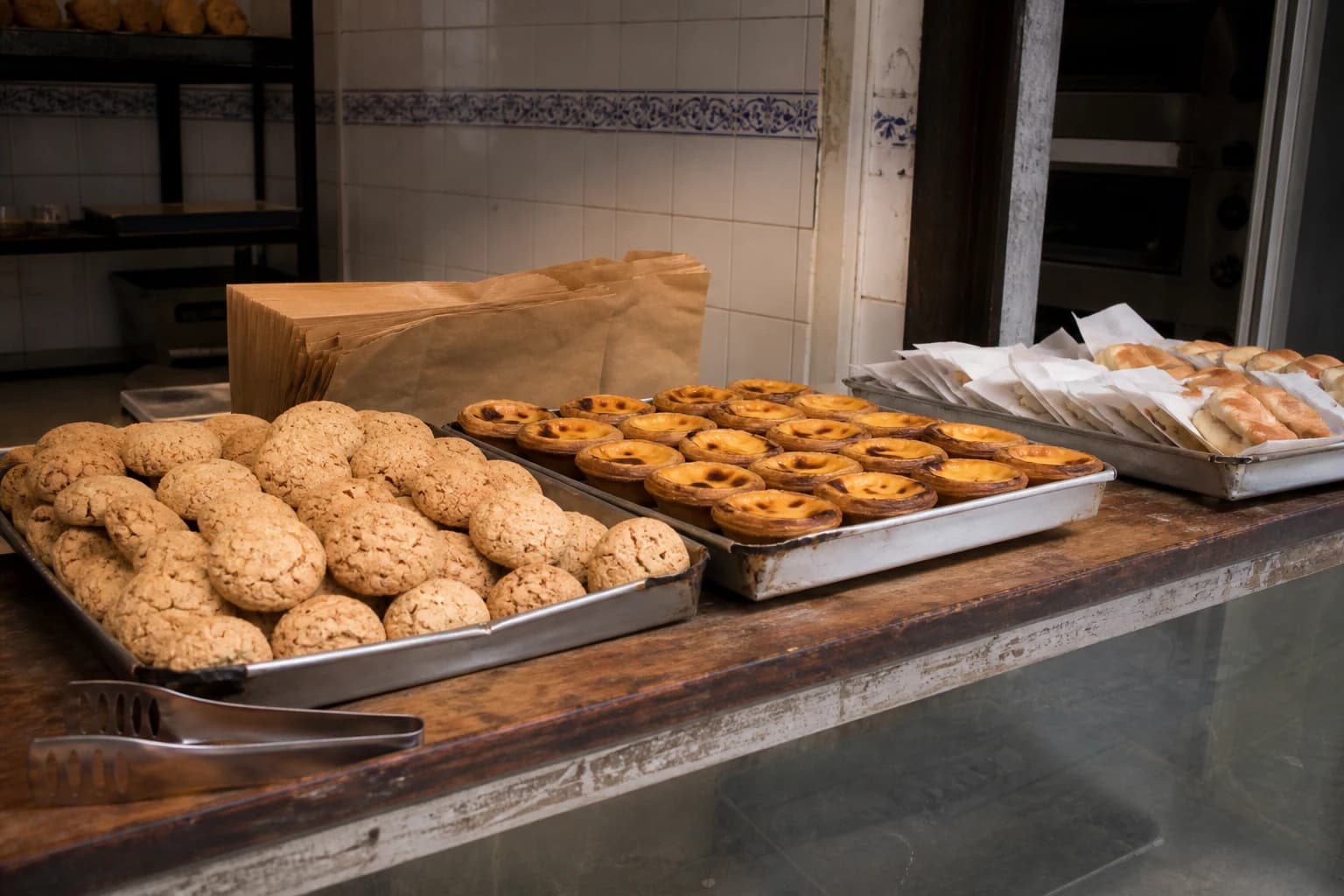
Egg tarts and almond cookies
For egg tarts, warmth, a crisp shell and a freshly set custard matter more than the longest social-media queue. For almond cookies, sample the dry, crumbly texture before buying a gift box and ask directly about nuts, dairy, eggs and cross-contact.
Portuguese and Cantonese meals
Portuguese restaurants range from casual grills to formal wine-led dining; check whether bread, water and starters carry separate charges. Cantonese congee, noodles, dim sum and roast meats often make a more practical breakfast or lunch between heritage stops. A famous resort restaurant and a neighbourhood café solve different needs.
Souvenirs
Compare production date, ingredient label, shelf life, breakage risk and customs restrictions before buying multiple boxes. A free sample does not prove the packaged product was made in the same batch.
Where to Stay
Macau Peninsula
Best for early heritage walks, neighbourhood food and returning to historic streets after day visitors leave. Choose a hotel by the exact uphill/downhill route and nearest useful bus stop; “near Senado Square” can still mean stairs, crowds or a difficult vehicle approach.
Taipa
Best for village evenings and food while remaining close to the airport and Cotai. It offers a smaller scale than the resort strip, but room inventory is thinner. Check the real walk between the hotel and old village rather than treating all Taipa addresses as adjacent.
Cotai
Best when shows, resort dining, pools, shopping or family entertainment define the trip. It is less useful for spontaneous peninsula heritage walks. Large resorts have multiple wings and entrances, so confirm the correct tower, shuttle stop and room-to-venue walking time.
Coloane
Best only when quiet surroundings and slower resort time are the purpose. It adds transport friction to peninsula and Cotai sightseeing and can be inconvenient after a late show.
Compare Macau hotels on Trip.com by exact entrance, shuttle or public-transport connection, resort wing, construction reviews and night-noise reports—not star rating alone.
Entry Documents: Check the Passport, Not the Blog
Entry rules depend on nationality, residence, travel document and route. The Macao Government Tourism Office entry page says visitors need a passport or valid travel document and directs travelers to current immigration information for visa or entry-permit exemptions.
Verify the rule for every traveler before buying a non-refundable ferry, train, bus or show. Keep onward travel and accommodation information available when required. Mainland Chinese residents should use the current permit and endorsement rules published for their own departure location; an international passport does not automatically replace them.
Money and Payments
The official practical-information page identifies the pataca (MOP) as Macau's official currency and notes that electronic transactions and major cards are common. Carry some MOP for small transport or merchants and ask how change will be returned before paying in another currency. Do not assume a mainland or Hong Kong wallet works for every visitor account or every terminal.
Compare the amount on the terminal before tapping a card, decline unhelpful dynamic currency conversion when appropriate, and retain receipts for hotel deposits and high-value purchases.
Arriving and Moving Around
- From Hong Kong: compare the Hong Kong–Zhuhai–Macao Bridge coach with the current ferry that best matches the departure point and Macau hotel. Neither mode ends at the hotel; add immigration, baggage and the final bus, shuttle or taxi.
- From Zhuhai: choose the land checkpoint according to the actual mainland origin and Macau destination. Opening arrangements and queues can change.
- By air: Macau International Airport is in Taipa, convenient for Taipa and Cotai but still a transfer from the peninsula.
- By ferry: Outer Harbour generally suits the peninsula; Taipa Ferry Terminal generally suits Taipa and Cotai. Verify the live sailing, terminal and baggage rule before departure.
- Inside Macau: public buses connect the peninsula, Taipa and Coloane; the LRT is useful for selected Taipa/Cotai corridors. Resort shuttles are not a guaranteed public network—routes, eligibility and intervals change.
Use the government transport overview and live operator information rather than copying a fixed timetable into the itinerary.
Weather Is an Operating Rule
The official tourism guidance places the rainy season broadly from May to September and the tropical-cyclone season from May to November. Under severe rain or a high tropical-cyclone signal, ferries, bridges, outdoor attractions and resort operations can change independently.
Do not begin an exposed coast, hill or long cross-town movement because the morning looks calm. Keep one museum or resort-art branch available, confirm the return route, and follow the current Macao Meteorological and Geophysical Bureau warnings.
Major Attractions and Area Guides
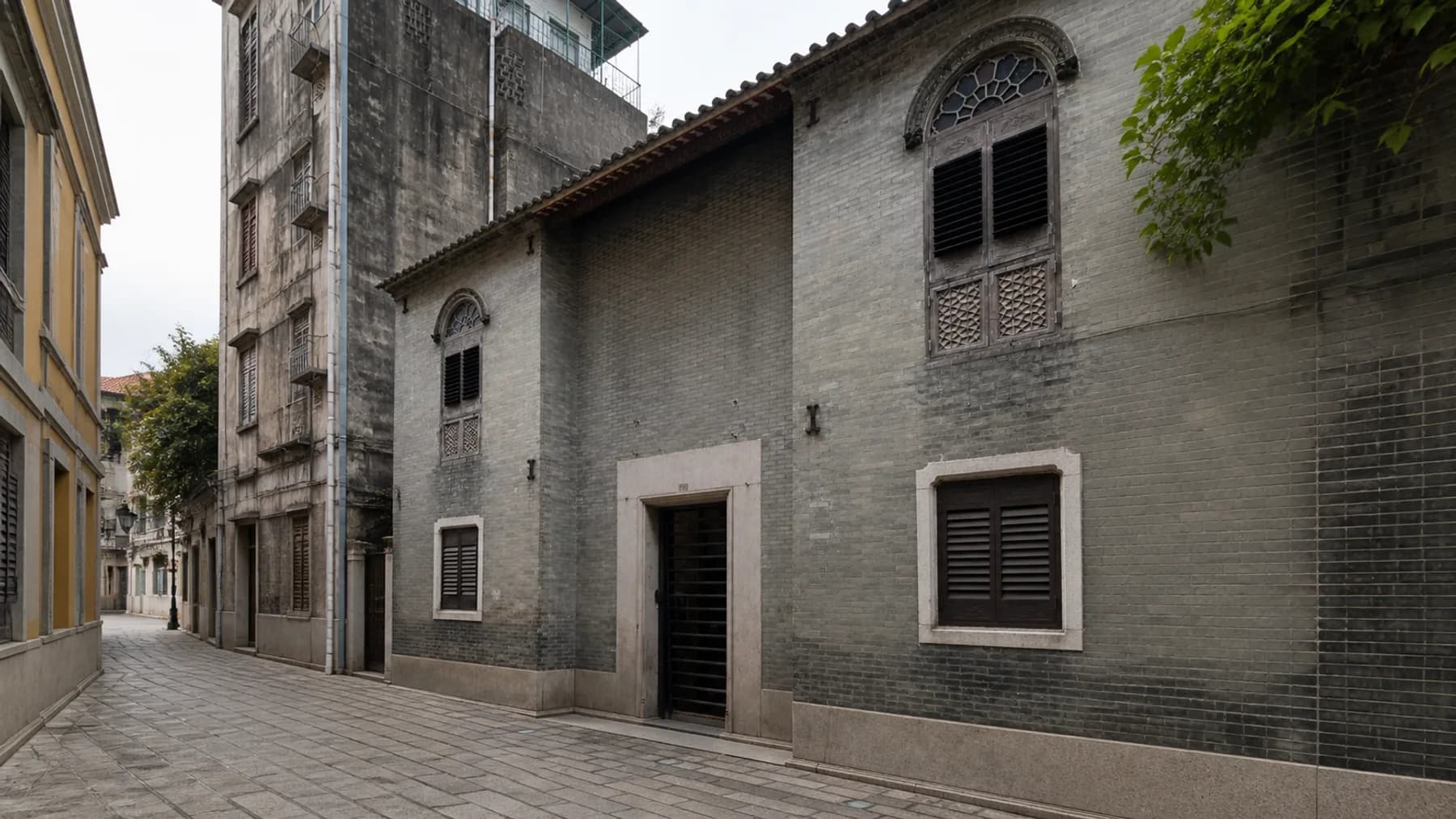
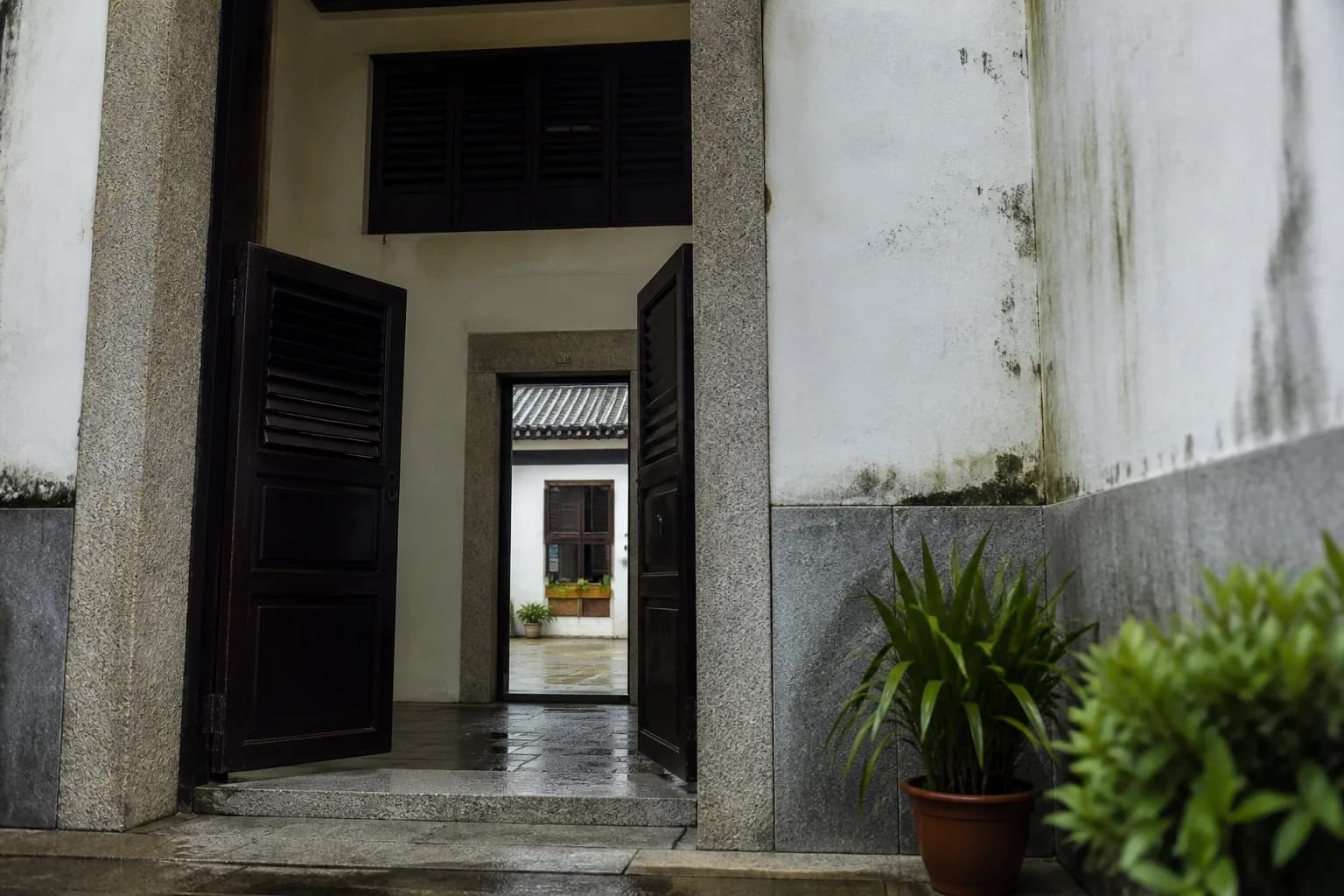
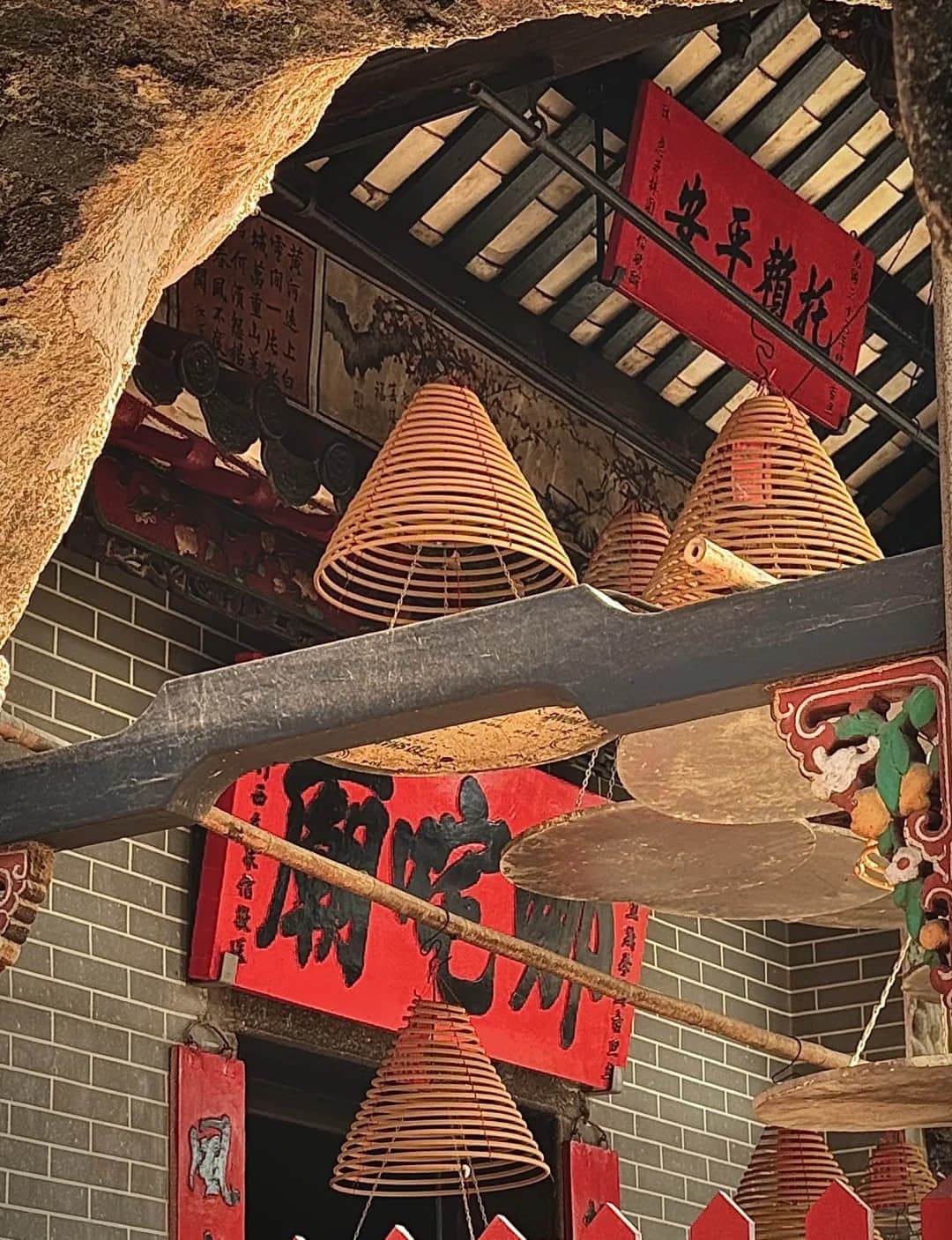
Use these pages by job: peninsula heritage for connected walks, Taipa for food and domestic architecture, Cotai resorts for one defined spectacle, and Coloane only when slower distance is part of the plan.