Mandarin's House Macau
Mandarin's House (郑家大屋, Zhèngjiā Dàwū) is the most rewarding historic interior on Macau's southern heritage route. It is quieter than the Ruins of St. Paul's and more intellectually demanding: the pleasure comes from reading courtyards, thresholds, windows and family hierarchy rather than collecting a single iconic view.
Visit if you enjoy architecture, late-Qing history or places that reveal how Chinese and foreign building traditions met in Macau. Allow 45–75 minutes inside and 2–3 hours for the full A-Ma–Lilau–Mandarin's House sequence. It is not worth crossing Macau solely for a quick exterior photograph.
Quick visitor facts
- Opening hours: 10:00 am–6:00 pm, last admission 5:30 pm.
- Closed: Wednesday, according to the Macao Cultural Heritage listing. Public-holiday arrangements and conservation closures can differ, so confirm before making a special trip.
- Admission: free.
- Useful duration: 45 minutes for the main sequence; 75 minutes if you read the interpretation carefully.
- Best time: at opening for quieter rooms and cooler courtyards. Afternoon side light can reveal plaster and timber texture, but do not arrive close to last admission.
- Accessibility: the complex has thresholds, steps, uneven historic surfaces and rooms with controlled access. Ask staff about the current accessible route rather than assuming every courtyard is step-free.
- Best pairing: A-Ma Temple, Moorish Barracks exterior and Lilau Square.
Why this house matters
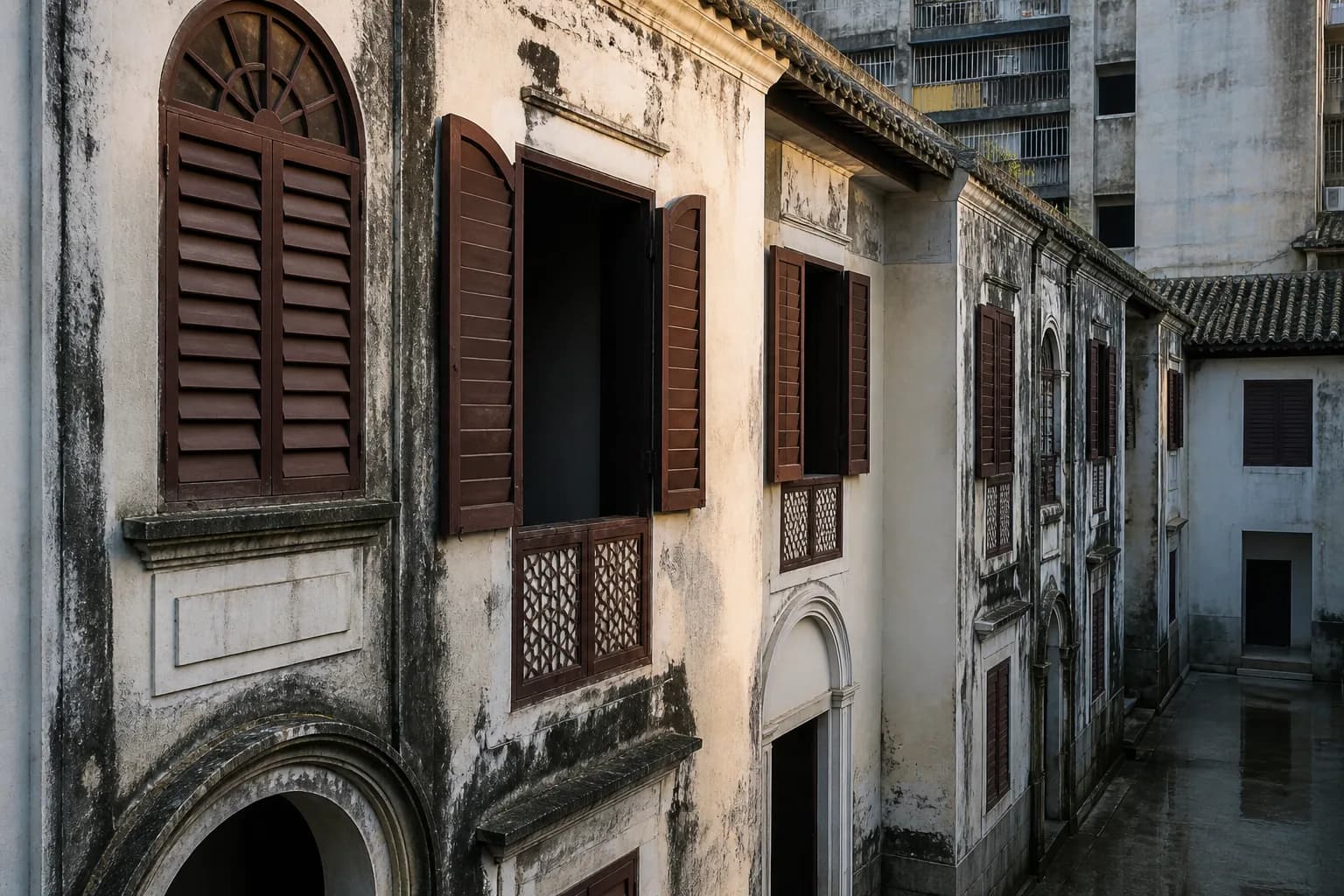
The compound was built before 1869 and is associated with Zheng Guanying, a writer and reform-minded thinker whose work on commerce and statecraft influenced later debates about China's modernization. The official heritage description emphasizes a different point from the usual “East meets West” slogan: this is a fundamentally Chinese residential compound whose structure, materials and decorative details selectively absorbed foreign influences.
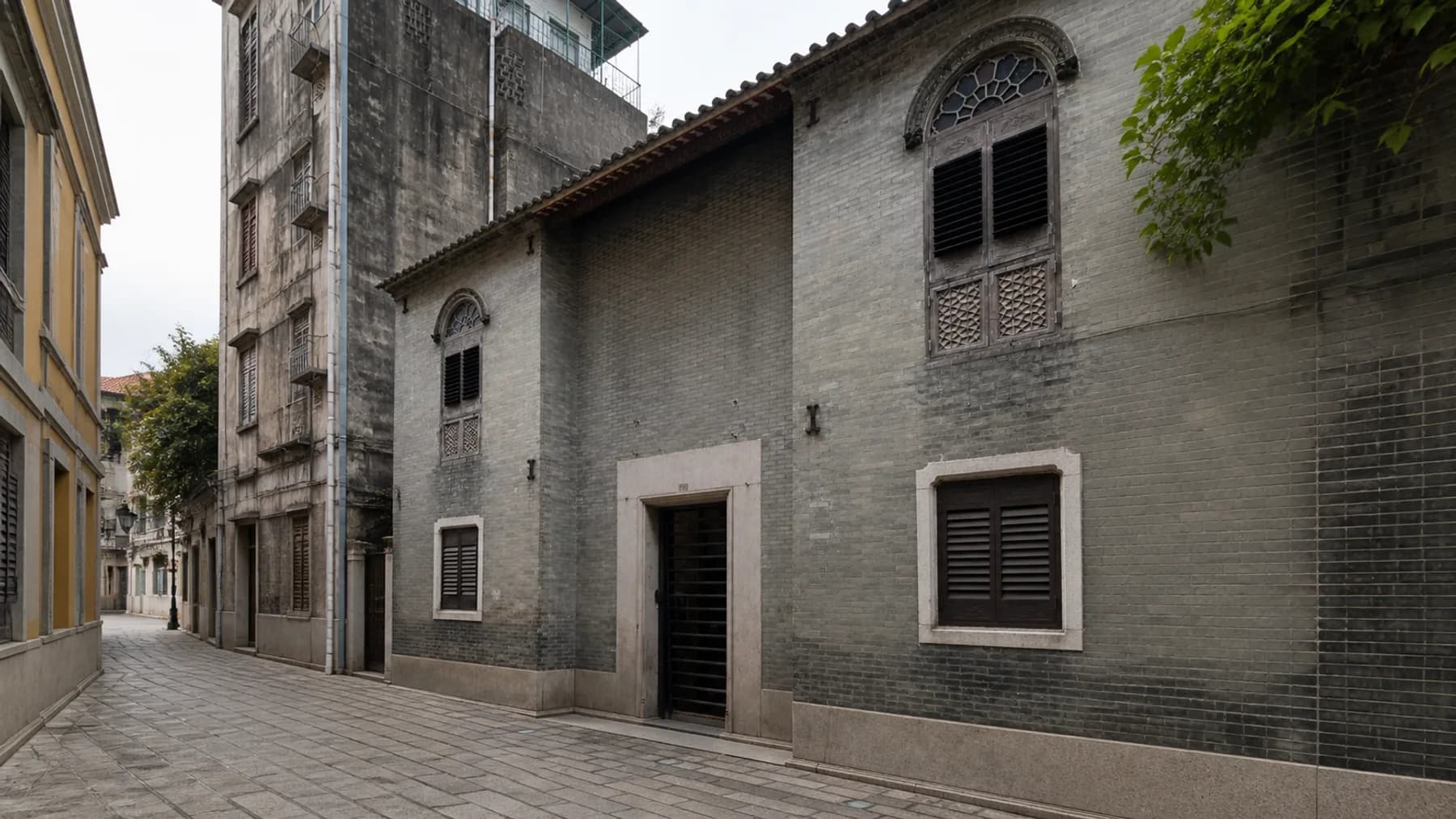
At roughly 4,000 square metres and more than 120 metres along Barra Street, the house is large enough to express family and service hierarchies. Gatehouse, courtyards, servants' areas and masters' quarters are arranged as a sequence of increasingly private spaces. You understand it by moving through those layers.
A 45–75 minute route through the compound
1. Pause at the gatehouse
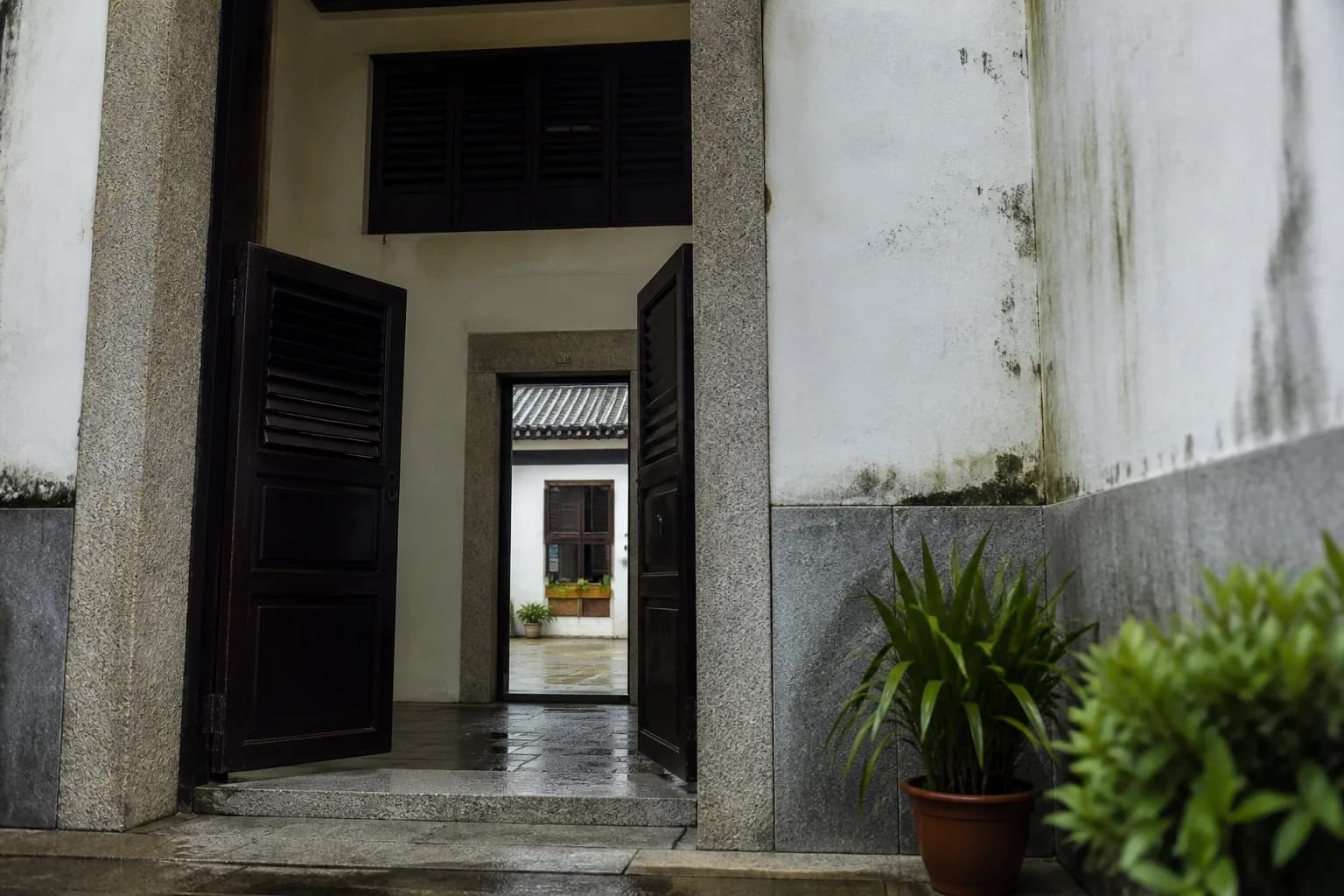
Do not hurry from the street into the first courtyard. The gate establishes what is public, what is controlled and how little of the residence could be seen from outside. Notice how the entrance manages privacy without relying on a monumental facade.
2. Read the service and family zones
The outer areas once supported the household; the inner compound contains the principal residential quarters. Look for changes in doorway treatment, ornament and courtyard scale rather than expecting every room to contain furniture. Empty or sparsely interpreted rooms can still show circulation and status.
3. Use the courtyards to understand climate
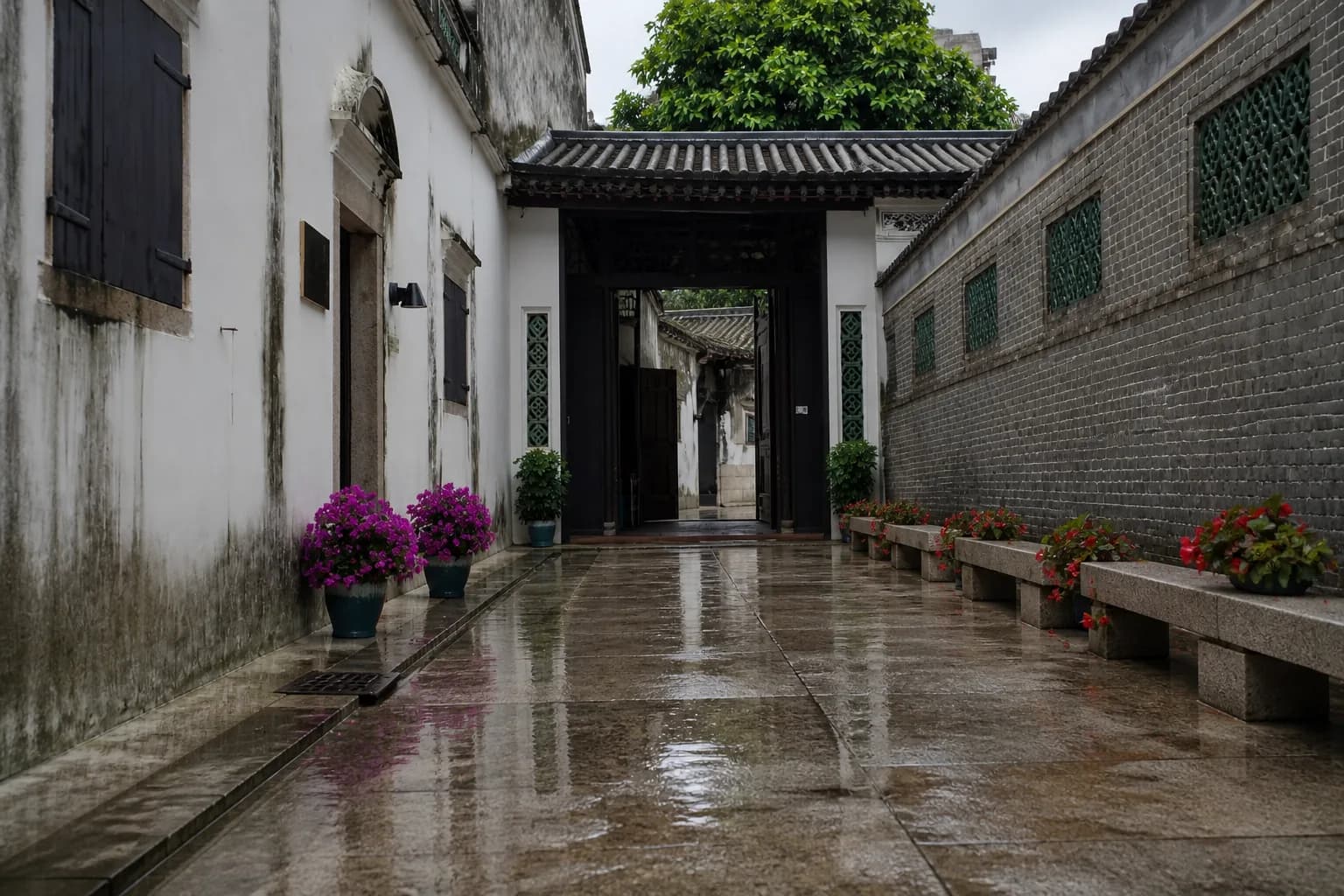
Courtyards bring light and air into a deep compound. Covered edges allow circulation in sun and rain, while layered openings create cross-views without exposing the entire house at once. On a humid day, pay attention to shade, air movement and the transition from hot exterior light to cool interior surfaces.
4. Compare Chinese structure with imported details
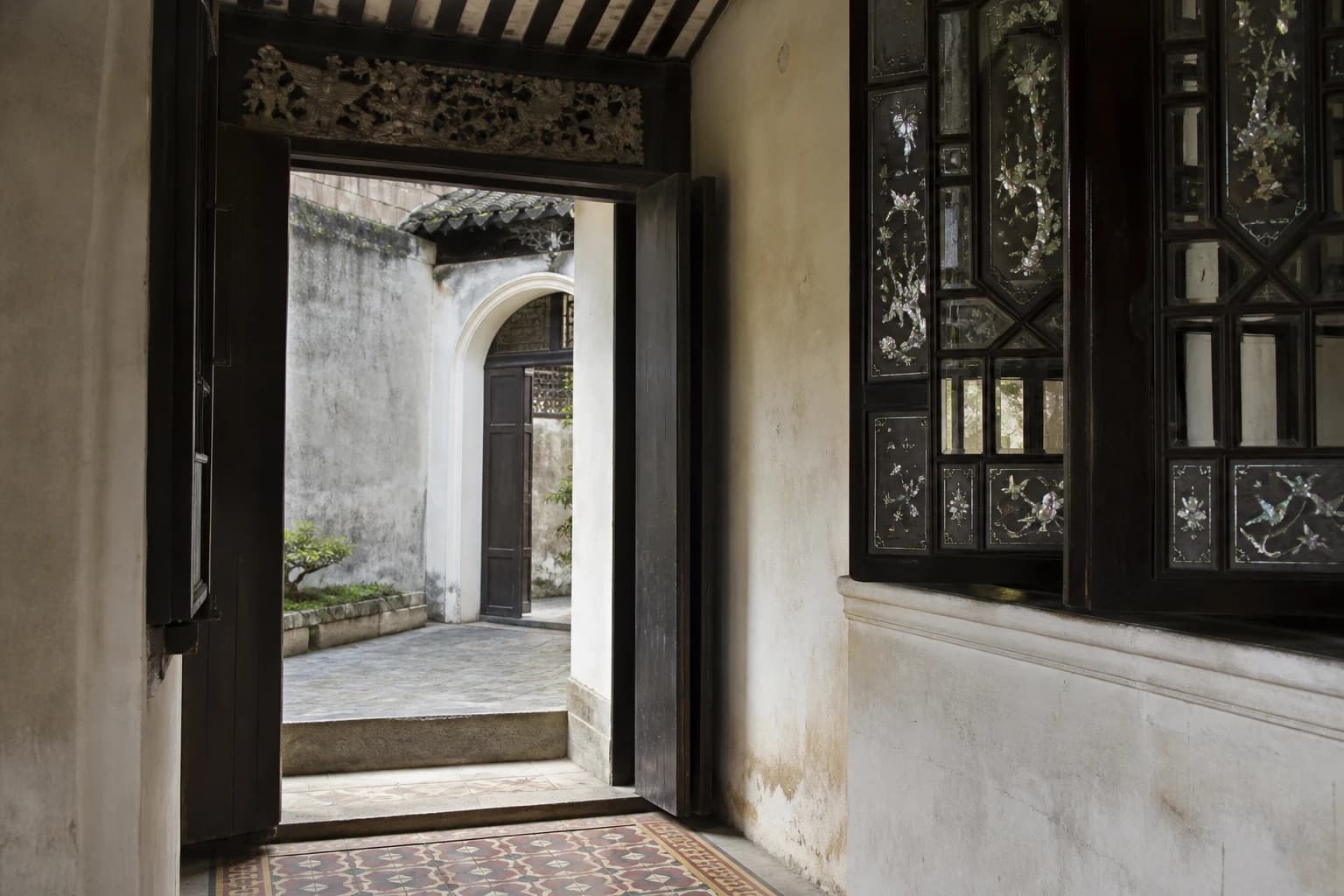
The main building logic—timber construction, courtyard organization, roof and decorative friezes—is Chinese. Foreign influence appears more selectively in plaster arches, some doorway treatments and mother-of-pearl window panels of Indian origin. The useful reading exercise is to identify where the structure remains Chinese and where the surface language changes.
5. Finish with Zheng Guanying's ideas
Architecture gives the visit shape, but the resident gives it purpose. Read enough of the interpretation to connect the house with Zheng's writing on markets, institutions and reform. Otherwise the compound risks becoming another set of photogenic courtyards detached from Macau's role as a place where ideas circulated.
The best south heritage sequence
Start at A-Ma Temple near the waterfront, pass the Moorish Barracks exterior, climb toward Lilau Square, then enter Mandarin's House. This direction moves from maritime worship and port infrastructure into one of Macau's earliest Portuguese residential areas and finally a Chinese family compound.
The route is short on a map but includes slopes, crossings and tempting side streets. Allow 90 minutes before the house if you are entering A-Ma Temple and stopping for interpretation; allow less only when the temple is an exterior stop.
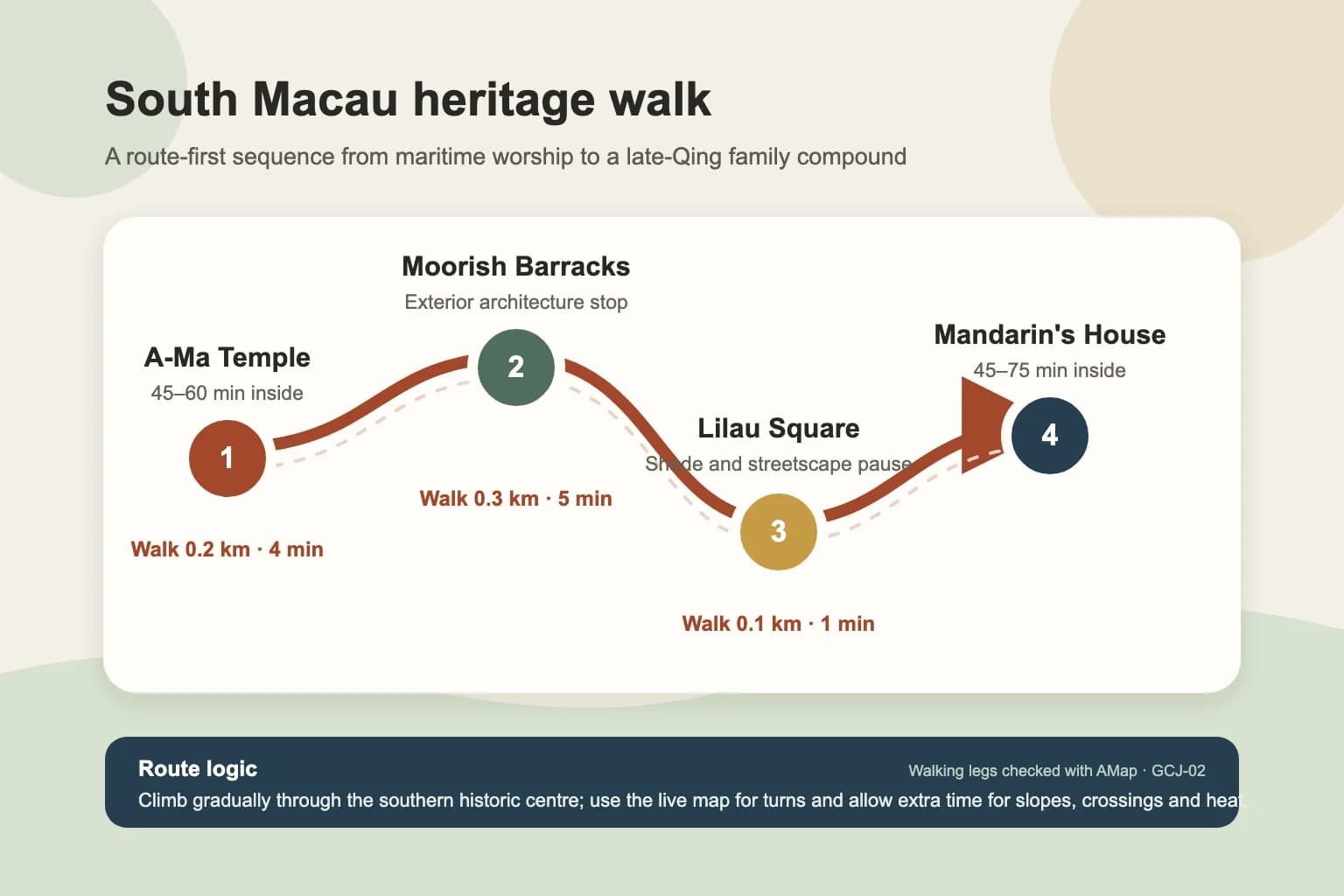
The diagram is an original orientation aid based on verified AMap walking legs, not a turn-by-turn map. Use a live map for individual corners, temporary closures and the exact accessible approach.
After Mandarin's House, choose one of two endings:
- Short finish: walk back through Lilau Square and find lunch around the southern peninsula.
- Long heritage continuation: continue toward St. Lawrence's Church, Dom Pedro V Theatre and Senado Square. This turns the outing into a half-day and should not be attempted as a rushed string of photo stops.
Nearby food: look south, not back toward the souvenir lane
The southern peninsula is useful for a less theatrical meal than the streets around the Ruins of St. Paul's. Around Barra and the Inner Harbour side, look for everyday noodle shops, rice plates, roast meats and small Cantonese dining rooms; toward the Portuguese residential streets, menus may include Macanese and Portuguese dishes.
Use three tests before choosing:
- A visible full menu: confirm prices before sitting down, especially for seafood sold by weight.
- A realistic meal pace: a heritage half-day needs a proper rest, not five sweet snack queues.
- A clear reason for the stop: choose a dish or cooking style connected to the area rather than a branch you could visit anywhere in Macau.
Restaurants and stalls change faster than the heritage route. Choose a nearby meal by the current menu, opening hours and the kind of food you want rather than relying on a fixed “must-eat” list.
Getting there
The clearest arrival point is often A-Ma: Macau's light rail reaches A-Ma Station, and buses serve the Barra area. From there, treat the walk as part of the visit rather than searching for a vehicle to the door. Save 郑家大屋 and 亚婆井前地 (Lilau Square) in your map so you can match local signs.
From Senado Square, walking south is possible but should be understood as a heritage route, not a ten-minute transfer. If time is limited, use public transport or a taxi to the A-Ma/Barra end and walk north through the sequence.
Where to stay
Mandarin's House should influence your day plan, not dictate a hotel. Stay on the Macau Peninsula if early heritage walks and local streets are the priority. Stay in Taipa for village-scale evenings and food, or on Cotai for resort attractions, then allocate one focused peninsula half-day. There is little benefit in changing accommodation merely to sleep beside this one attraction.
Compare Macau hotels on Trip.com only after choosing the district. For peninsula hotels, inspect the real walking route and elevation rather than relying on straight-line distance to the historic centre.
Common mistakes
- Arriving on Wednesday without checking the closure.
- Treating every decorative feature as “Portuguese”; many important elements are Chinese, with selective imported influences.
- Photographing courtyards without reading the household sequence.
- Combining the entire UNESCO list in one exhausting day.
- Assuming empty rooms mean there is nothing to see—the spatial organization is the primary exhibit.
Mandarin's House earns its place by slowing the visitor down. It turns Macau's cultural mixture from an abstract slogan into doors, courtyards, imported materials and a reformer's intellectual world.