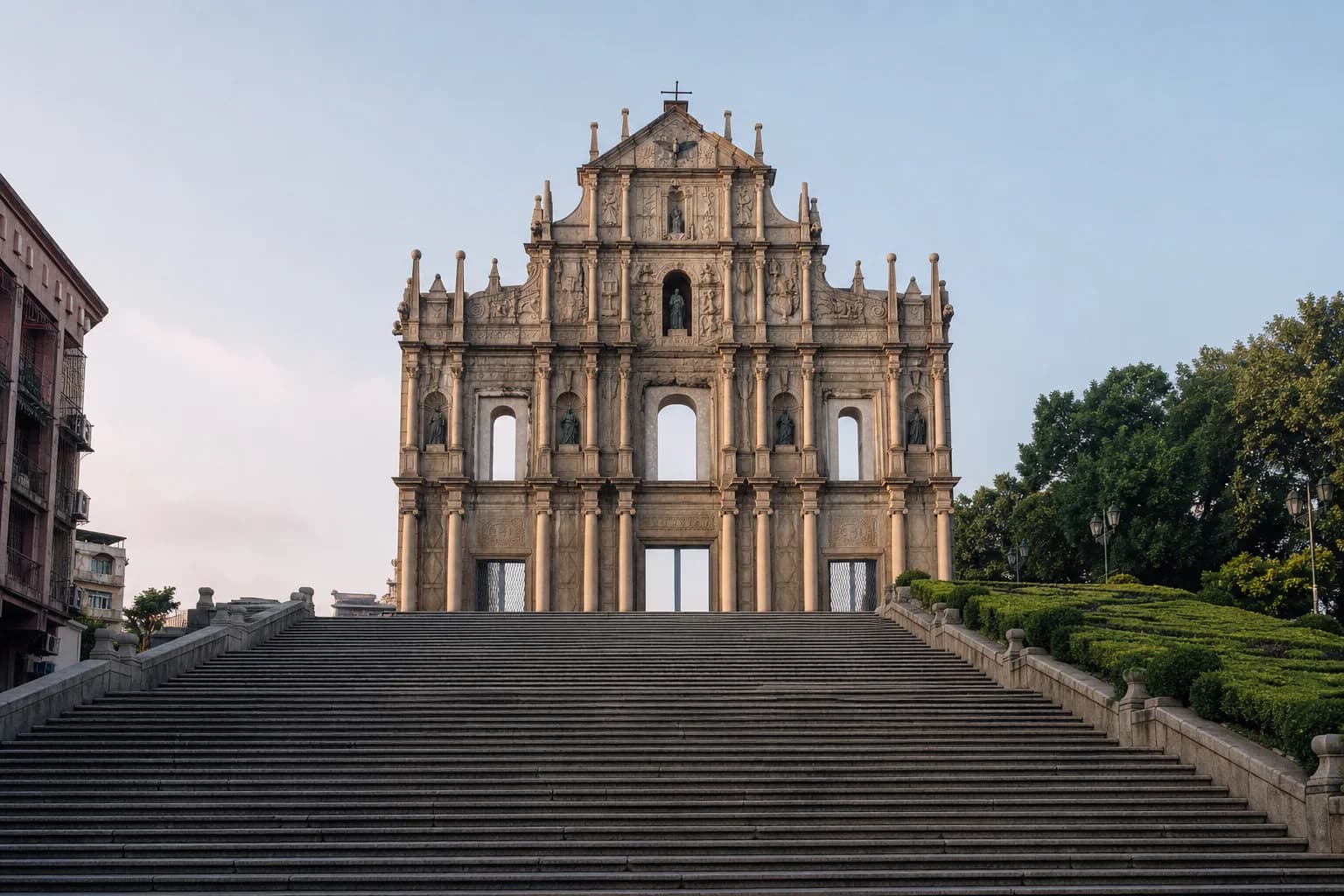
Ruins of St. Paul's Macau
The Ruins of St. Paul's (大三巴牌坊, Dà Sānbā Páifāng) are Macau's best-known landmark, but the name can be misleading. You are not entering a complete cathedral. The surviving granite screen belonged to the Church of Mater Dei, built from 1602 to 1640 beside St. Paul's College and destroyed by fire in 1835. The staircase, façade, archaeological remains, crypt and neighboring streets are the experience.
For a first visit, follow the old pedestrian lanes from Senado Square, read the façade instead of merely photographing it, walk behind the stone screen, then choose Na Tcha Temple or Mount Fortress as a final branch. Allow 75–120 minutes for this north historic-centre sequence. The façade alone needs only 15–20 minutes, but treating it as one crowded photograph misses the East–West details that make it distinctive.
Quick visitor facts
- Façade and staircase: visible 24 hours according to the Macao Cultural Heritage site.
- Ruins, Sacred Art Museum and Crypt: currently listed as 9:00 am–6:00 pm, with last admission at 5:30 pm. The museum and crypt close on Tuesdays from 2:00–6:00 pm. Check the official notice before visiting because controlled spaces can close separately.
- Admission: the monument area is free. There is no ticket product worth forcing into this visit.
- Best time for space: arrive before 9:00 am for a quieter staircase and clean frontal view. Arrive just after 9:00 am when entering the rear area and crypt matters more.
- Best light: morning is easiest for a clear, lower-stair photograph; late afternoon can warm the stone but usually brings heavier foot traffic.
- Terrain: sloping stone lanes and a long staircase. Mount Fortress adds more climbing. Visitors needing step-free access should confirm the current approach with on-site staff rather than relying on the ceremonial staircase.
- Best fit: first-time visitors, photographers, architecture travelers and anyone building a half-day UNESCO walk.
The useful north historic-centre sequence
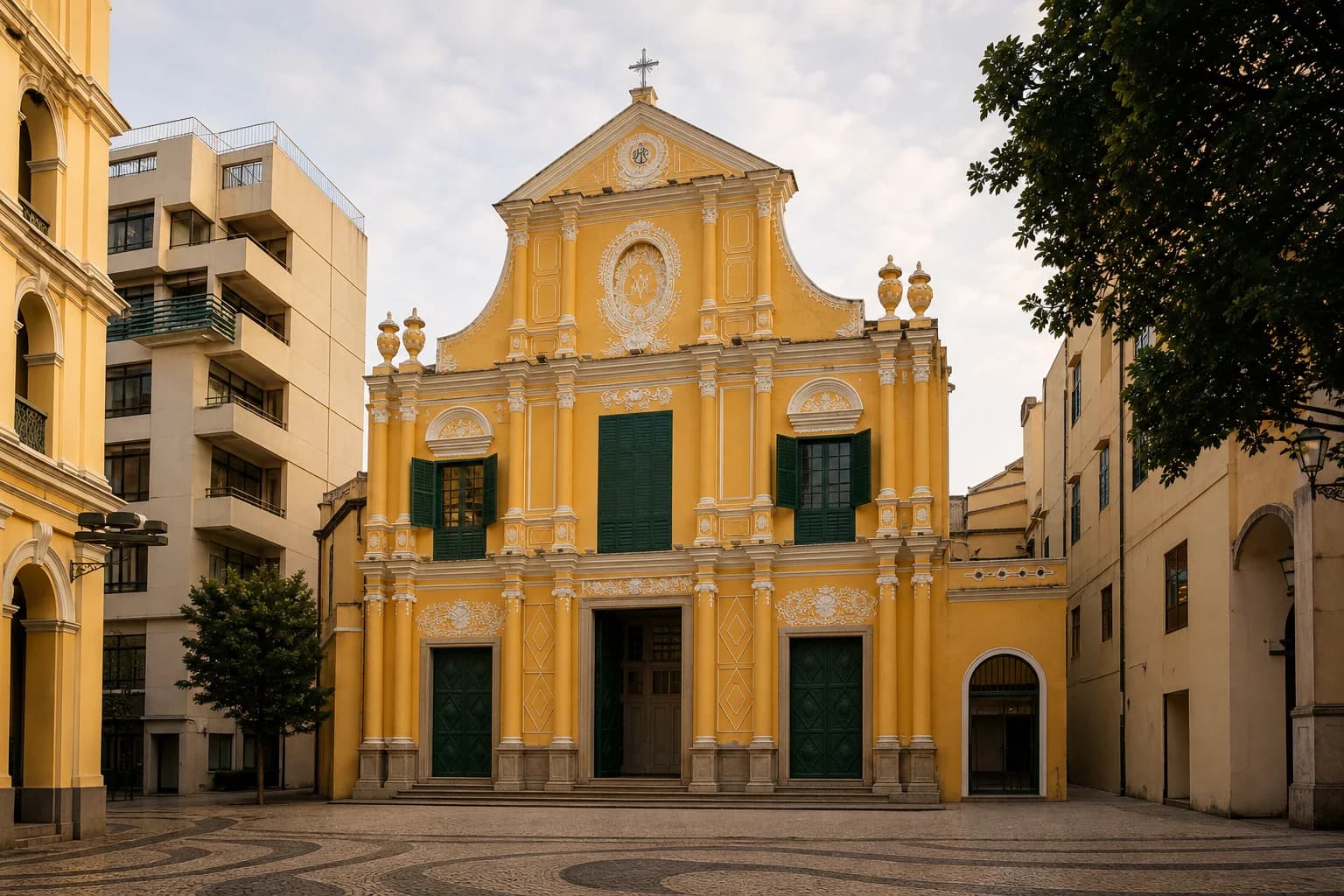
Start at Senado Square, pass St. Dominic's Church, continue along Rua de São Paulo, then climb to the ruins. After the rear platform, add Na Tcha Temple for a compact cultural contrast, Mount Fortress for more history and views, or both if heat and energy allow.
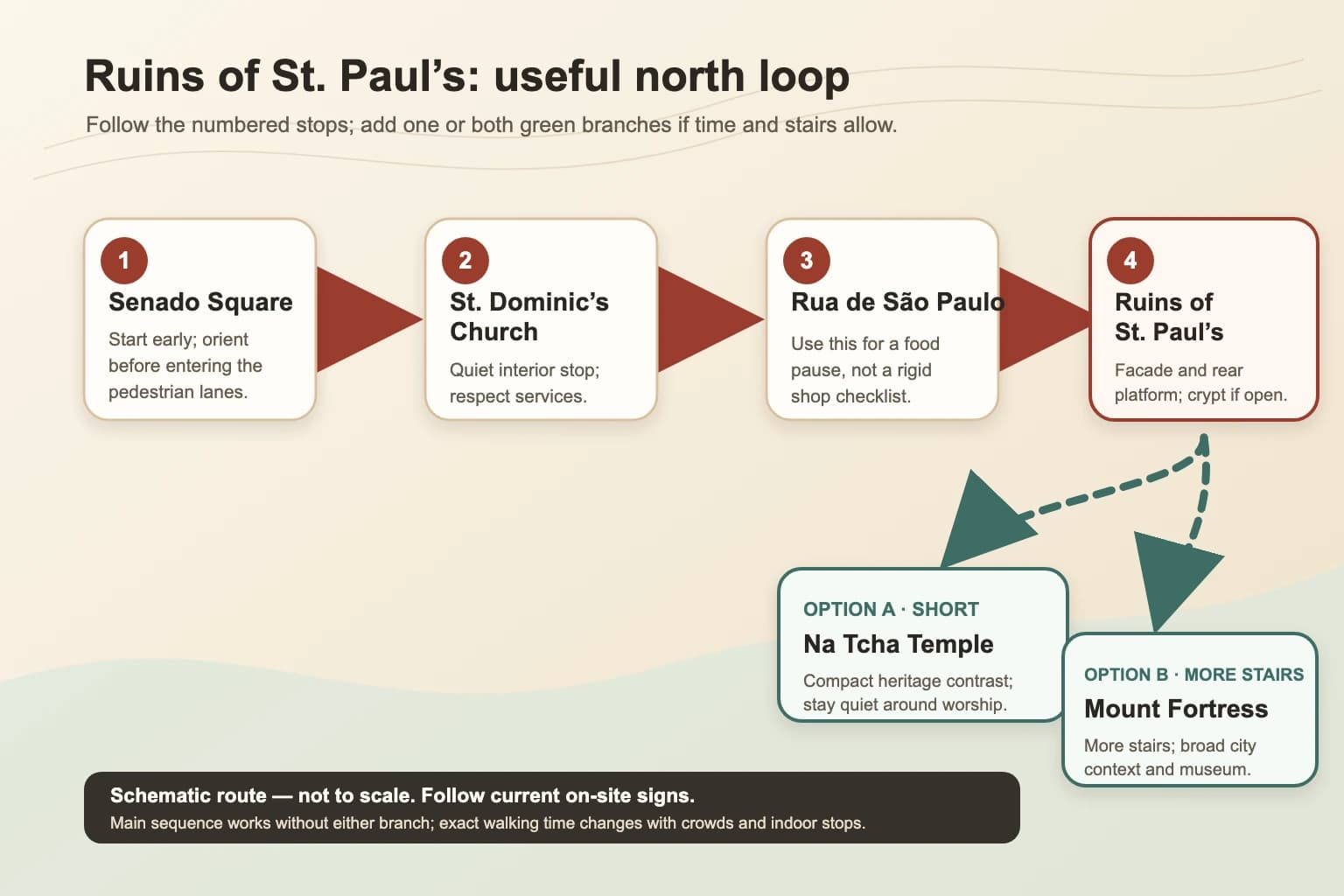
Stop 1: Senado Square
Begin early enough to orient yourself before the shopping lanes fill. The wave-pattern paving and civic buildings establish the Portuguese urban layer, while the route north quickly becomes narrower and more commercial. Do not spend the entire morning in the square: its real value is as the opening room in a connected urban walk.
Stop 2: St. Dominic's Church
St. Dominic's Church is a short, quiet interior stop when open. Check whether a service is underway, keep voices low and avoid treating worshippers as scenery. The church also gives the route an interior architectural layer before the outdoor monument.
Stop 3: Rua de São Paulo
This uphill commercial street is busiest around the middle of the day. Use it for one intentional food pause or edible souvenir, not a list of ten compulsory shops. Samples, queues and storefront competition make the lane feel slower than the map suggests. If it is packed, keep moving uphill and explore calmer side streets after the ruins.
Stop 4: façade, rear platform and crypt
At the top of the steps, first turn around. The view back over the narrow street explains why the façade functions like a public altar above the city. Then step close enough to see that it is not a flat European import: Chinese characters, chrysanthemums, lions and maritime motifs share the stone with classical columns, Jesuit saints and biblical imagery.
Continue behind it while the controlled area is open. The oblique and rear views reveal how thin the surviving screen is and help your eye reconstruct the lost volume of the church. The crypt and museum add religious and archaeological context, but the staircase and façade still make a worthwhile early or evening visit when those spaces are closed.
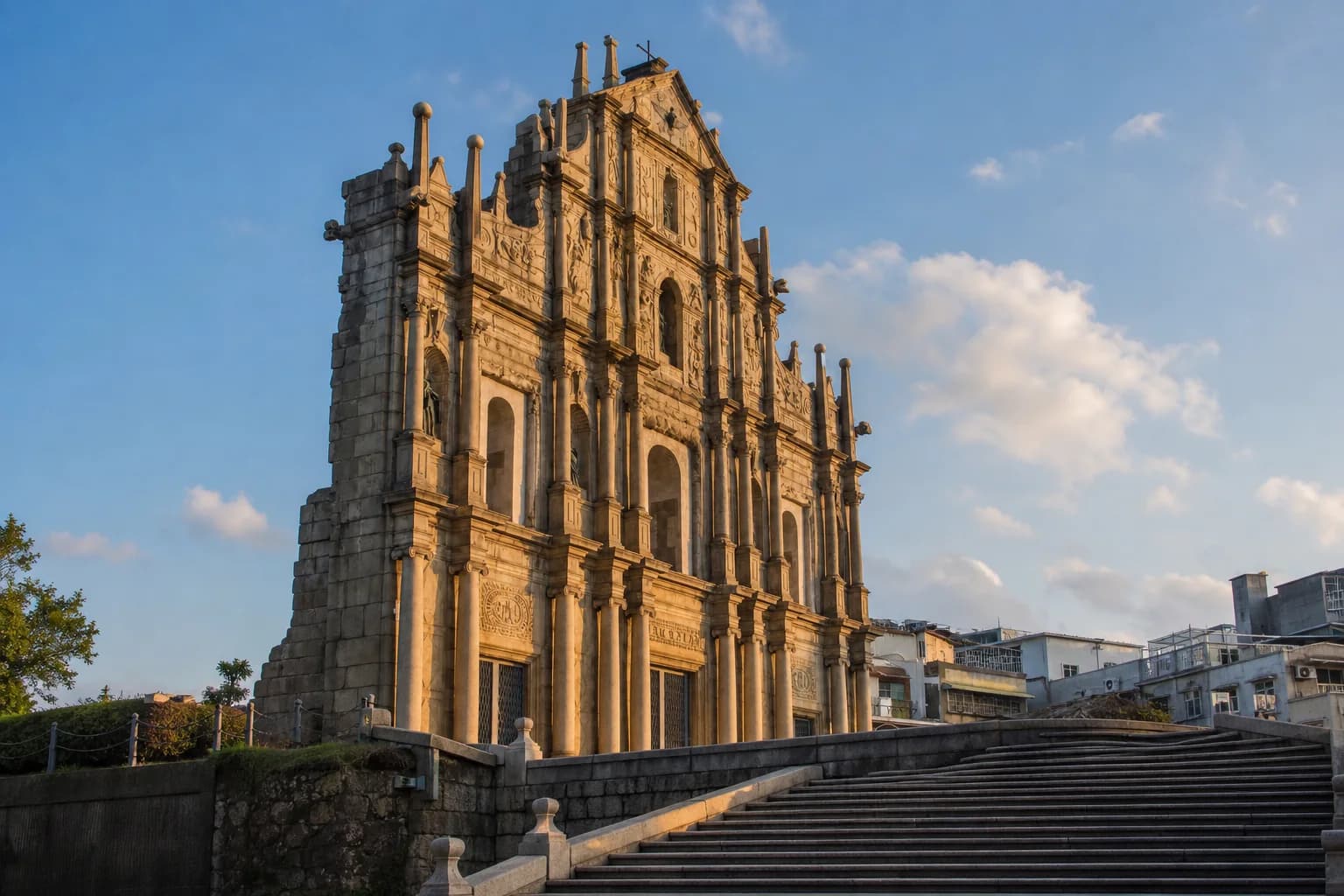
How to read the five-level façade
The façade measures about 23 metres across and 25.5 metres high. Its five levels narrow as they rise, turning a stone wall into a visual ascent. Ionic, Corinthian and Composite forms organize the classical structure, but the carvings record a much wider network connecting Europe, China and maritime Asia.
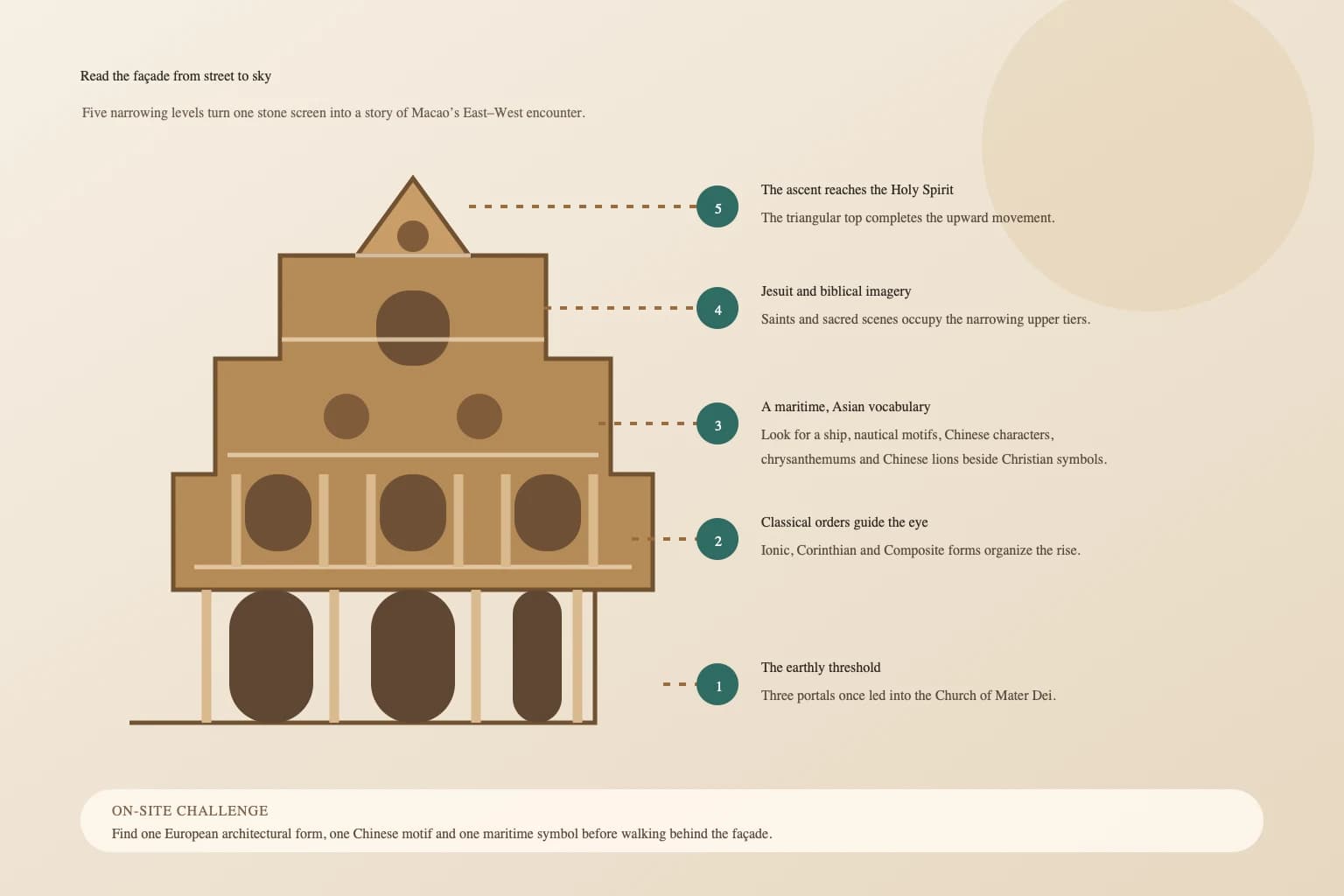
Use this simple reading exercise rather than trying to memorize every figure:
- Begin at the portals. They once opened into the Church of Mater Dei, so imagine the large interior that is no longer there.
- Follow the classical framework upward. The changing orders and narrowing tiers create the official heritage interpretation of divine ascent.
- Scan the middle levels for movement. Find a Portuguese ship or another nautical sign: Macau's religious story was inseparable from its trading-port geography.
- Look for the Asian vocabulary. Chinese characters, chrysanthemums and Chinese lions are not decorative footnotes; they are part of the monument's central identity.
- Finish at the triangular top. The ascent resolves in the Holy Spirit rather than simply ending at a roofline.
This mixture is why the façade matters beyond its age. UNESCO describes the Historic Centre of Macao as evidence of one of the earliest and longest encounters between China and the West. At St. Paul's, that exchange appears within a single building face.
Four photo positions that tell different stories
1. Lower staircase, centered
Use this for the recognizable full façade. A modest zoom helps reduce empty foreground and makes the narrowing tiers legible. Before 9:00 am offers the best chance of open steps, although the site is public and never guaranteed to be empty.
2. Lower-left or lower-right angle
Move off the center line to show carved depth and side light. This is often more revealing than repeating the postcard view. Keep the whole top in frame; very wide phone lenses can make the building lean unnaturally.
3. Top of the steps, looking back
This photograph is about the approach street and urban setting, not the monument itself. It explains how the façade dominates the northward walk from Senado Square.
4. Behind the façade
Photograph the supports, openings and archaeological space while access is open. The rear is the visual proof that you are looking at a surviving screen rather than a complete church. Do not use the crypt as a portrait set, and follow any photography restrictions posted inside.
Choose the right final branch
Na Tcha Temple: the short cultural contrast
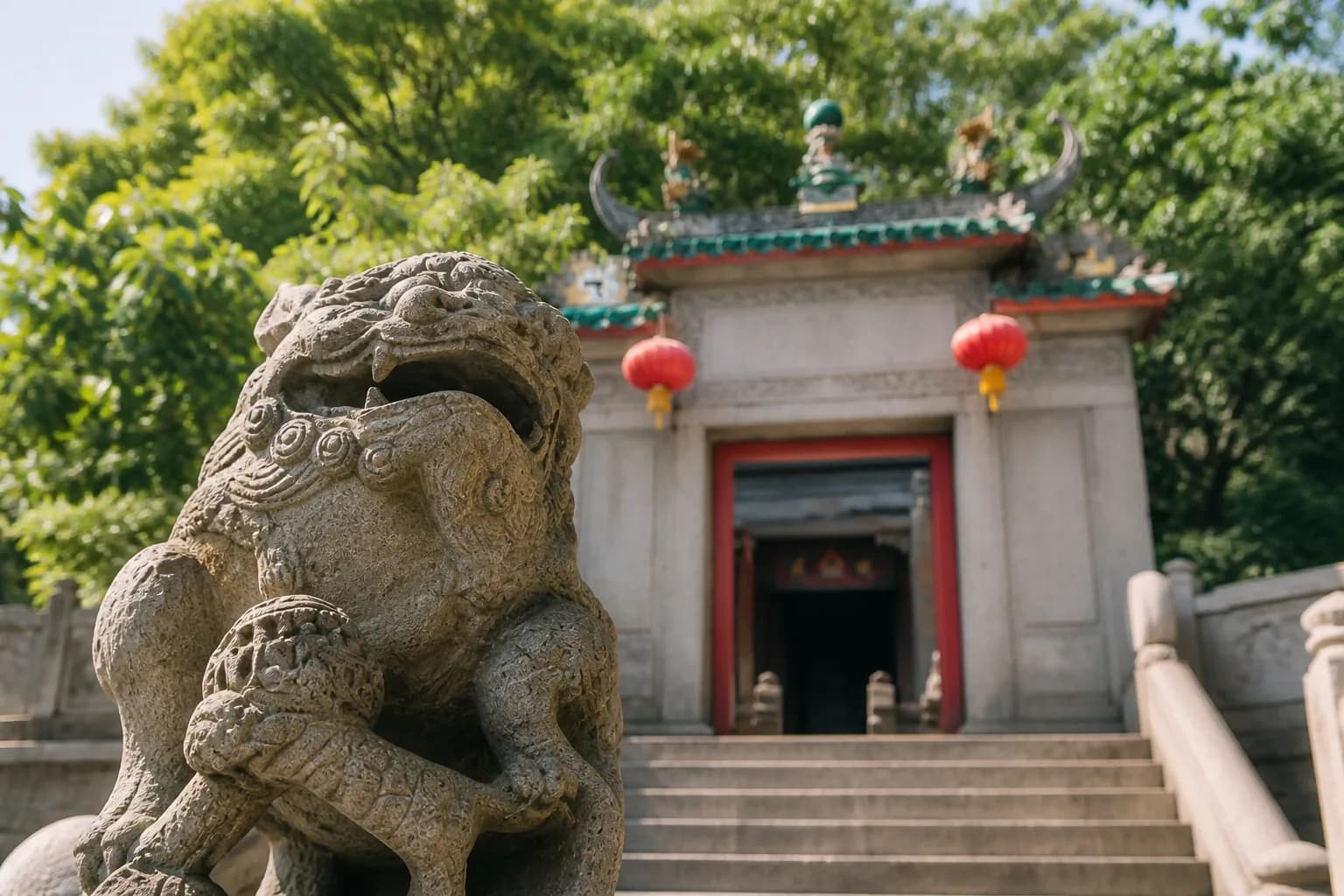
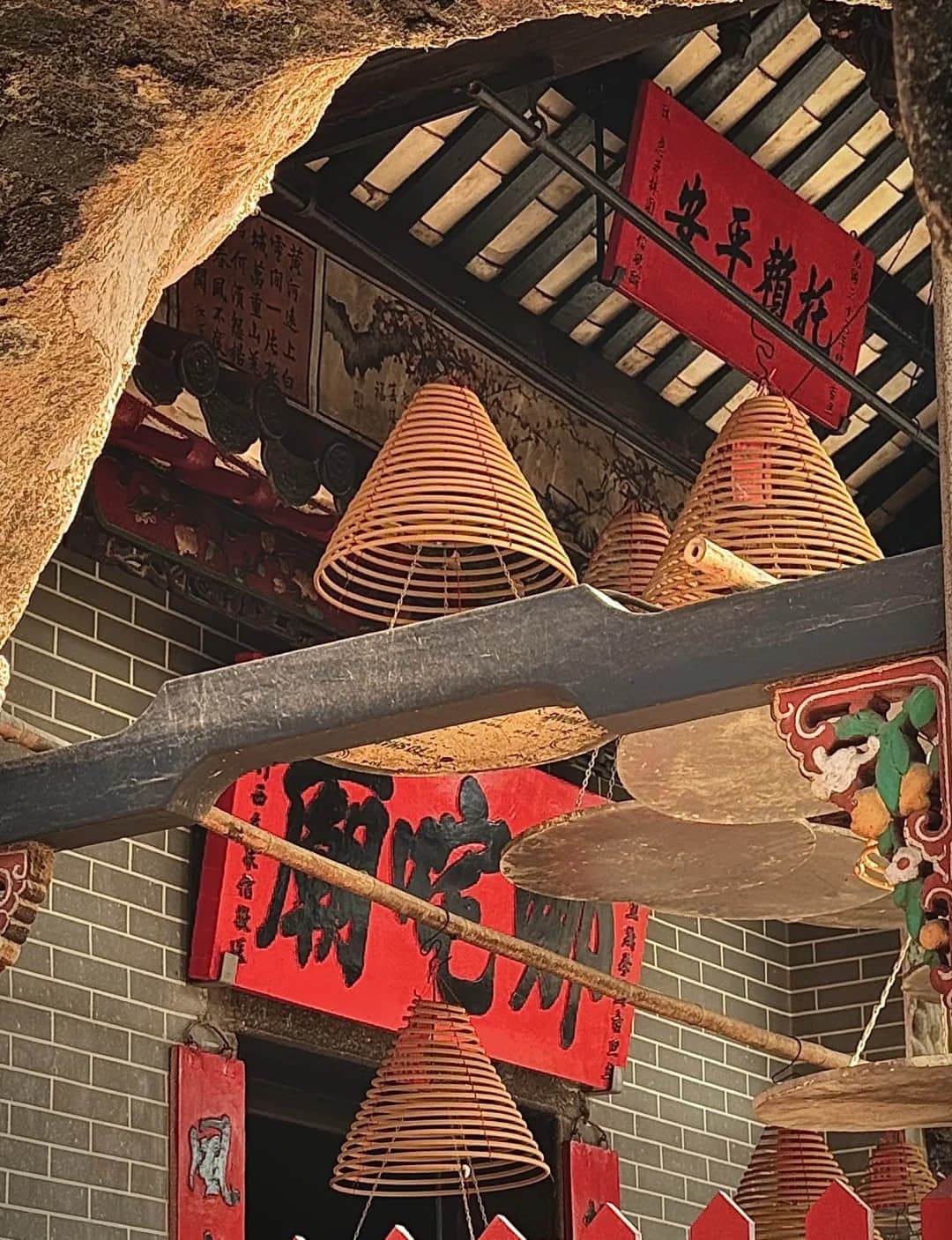
Na Tcha Temple sits close to the ruins and old city wall. Add it when you want to see different religious traditions occupying the same heritage landscape. It is an active temple: stay quiet, do not imitate rituals for photographs and keep the visit brief when worship is underway.
Mount Fortress: the longer strategic context
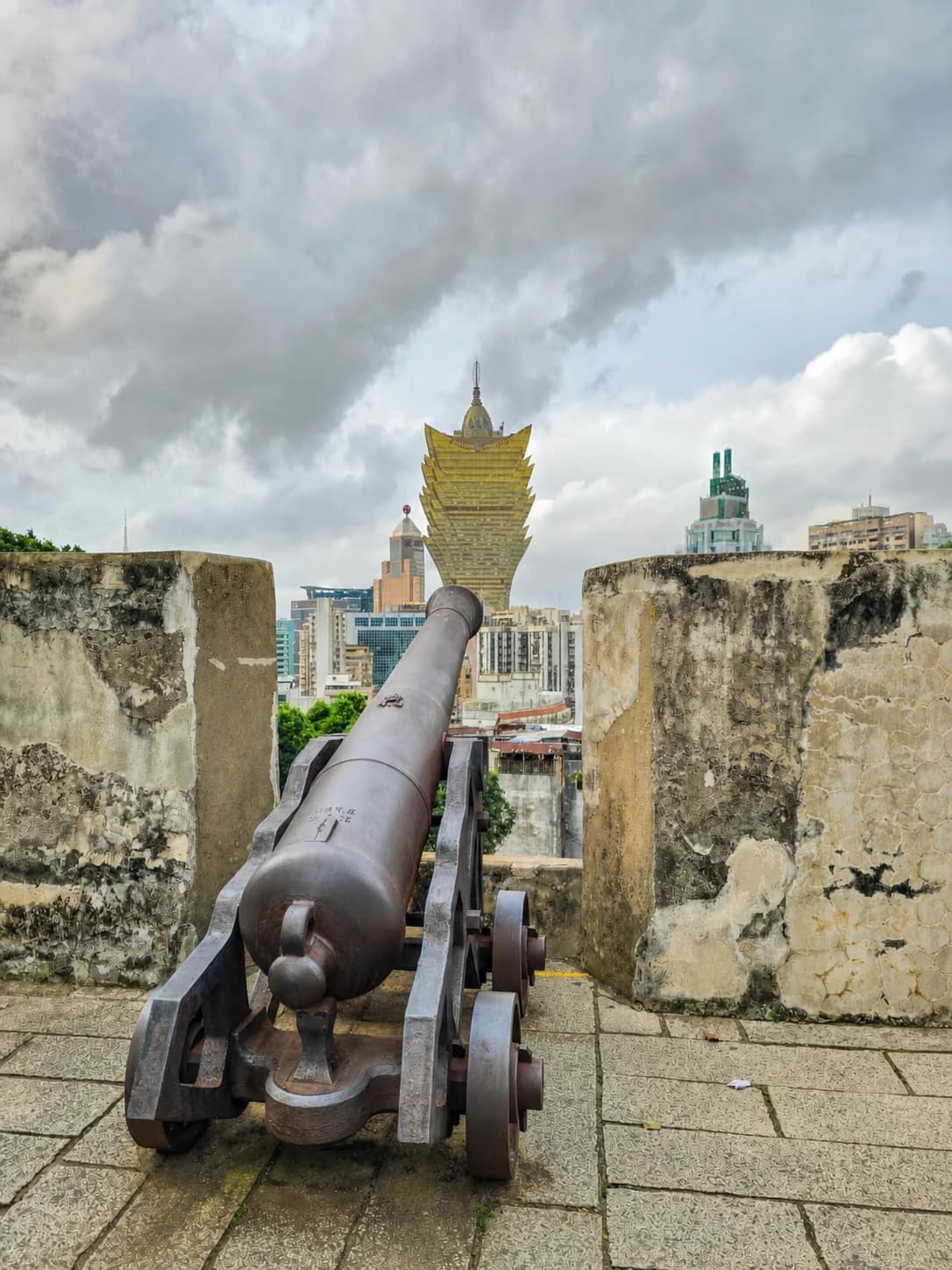
Mount Fortress adds stairs but explains the relationship among the Jesuit complex, fortified high ground and the wider port city. Choose it for broader views and museum context. Skip it in severe heat, heavy rain or when mobility is limited; the main north route works without this branch.
A second heritage cluster: save it for later
Mandarin's House and A-Ma Temple sit in the southern historic centre. They are not quick add-ons to the ruins. Link them as a deliberate southward route after lunch or on another half-day, ideally with time for the lanes between them.
Food near the ruins: snacks first, a real meal elsewhere
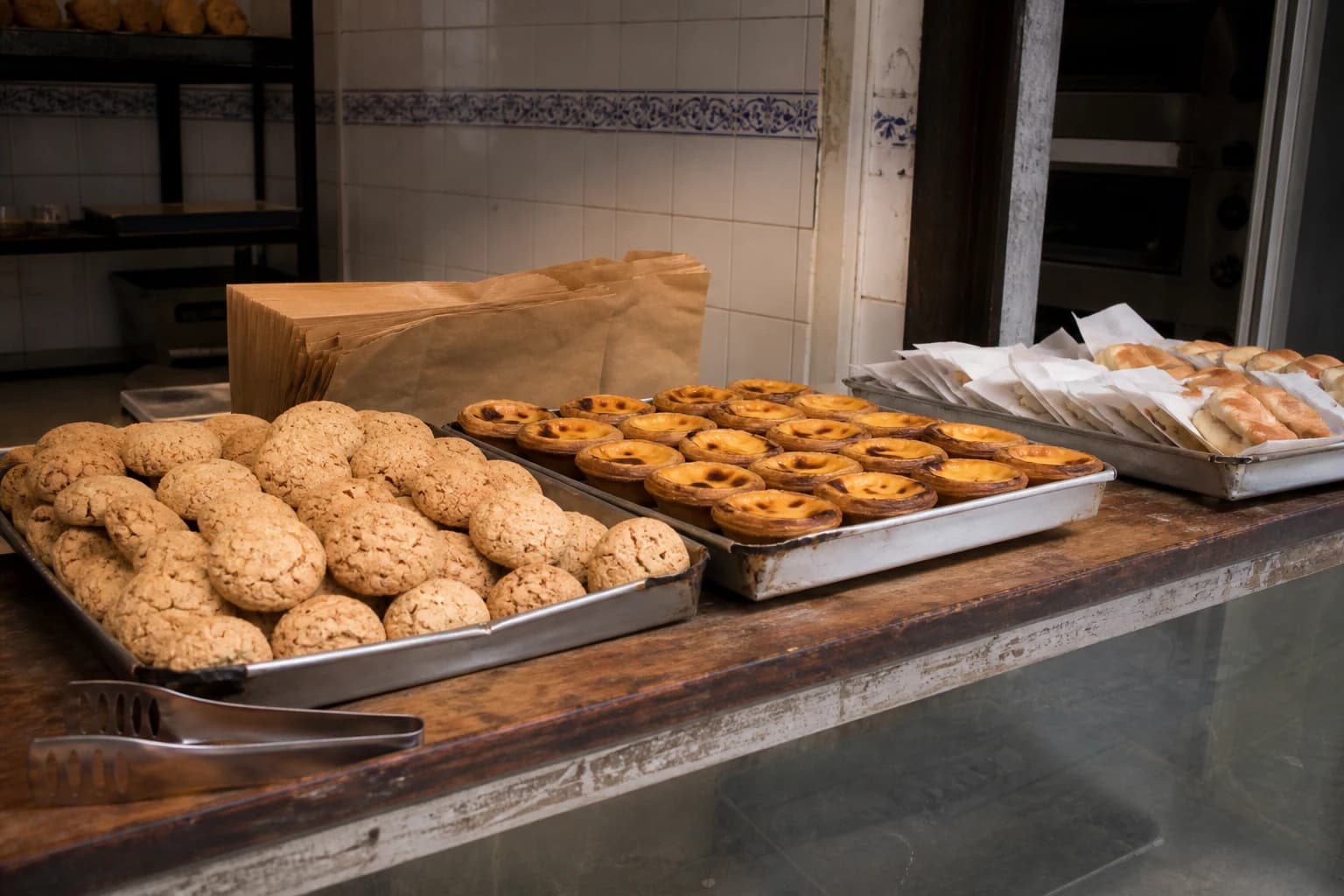
Rua de São Paulo is useful for sampling, but popularity alone does not identify the best food. The lane's most visible products—almond cookies, egg tarts, pork-chop buns and jerky—are portable snacks, not a complete picture of Macau cooking.
Use a practical selection test: choose trays being replenished, check posted prices and buy a small portion before committing to a gift box. Freshness matters more than the longest egg-tart queue. Almond cookies are intentionally dry and crumbly, so taste before buying several tins. Travelers with nut, dairy or egg allergies should ask directly rather than trusting an English product name.
For a proper lunch, leave the densest souvenir lane and compare menus in the wider peninsula. Look for dishes that express Macau's layered food culture rather than assembling five sweets into a meal. A Macanese menu may include minchi, African chicken or dishes shaped by Portuguese and Asian pantry traditions; a Cantonese meal offers a different local layer. Neither should be reduced to the other.
If your priority is a longer food walk, save appetite for the Taipa Village food-and-heritage route later. Trying to complete a souvenir snack crawl, a full Macanese lunch and Taipa tasting stops in one short afternoon creates more queuing than discovery.
Getting there and leaving
There is no rail station at the ruins. Public buses stop around the wider central district, followed by a walk through pedestrian lanes; taxis cannot deliver passengers to the top of the staircase. Save 大三巴牌坊 in your map, but use Senado Square or a suitable nearby street as the route anchor rather than expecting door-to-door access.
From the Outer Harbour Ferry Terminal, the Border Gate or Taipa, routes and stop patterns can change. Check the current Macao bus information on the day and allow a walking buffer through the historic core. In humid or rainy weather, the final stone lanes deserve more time than their distance suggests.
Where to stay for an early visit
- Macau Peninsula: best when the ruins, Senado Square and side streets are the trip's priority. You can reach the historic centre early and return after the day-trip peak.
- Taipa: best for a village-scale evening and food focus, accepting a bus or taxi transfer to the ruins.
- Cotai: best when resorts, shows and family facilities dominate. Treat the ruins as one focused half-day rather than commuting back and forth.
Compare Macau hotels on Trip.com only after choosing the right district. For the peninsula, check the actual walking route rather than straight-line distance: steep lanes, staircases and a hotel entrance on the wrong side of a block can matter more than a few hundred metres on the map.
A realistic half-day plan
- 8:15 am: Senado Square and the quietest part of the northward lanes.
- 8:35 am: St. Dominic's Church exterior or a respectful interior visit if open.
- 8:50 am: Rua de São Paulo without stopping at every sample counter.
- 9:05 am: façade photographs, then rear ruins, museum and crypt.
- 9:50 am: Na Tcha Temple; add Mount Fortress only if conditions suit.
- 10:30 am onward: one snack stop, then leave the busiest lane for a proper meal.
The sequence is more useful than the precise minutes. Arrive early, read the building before the crowd becomes the subject, and let the nearby religious, military and food layers explain why the ruins belong to a living city rather than an isolated postcard.