St. Dominic's Church Macau
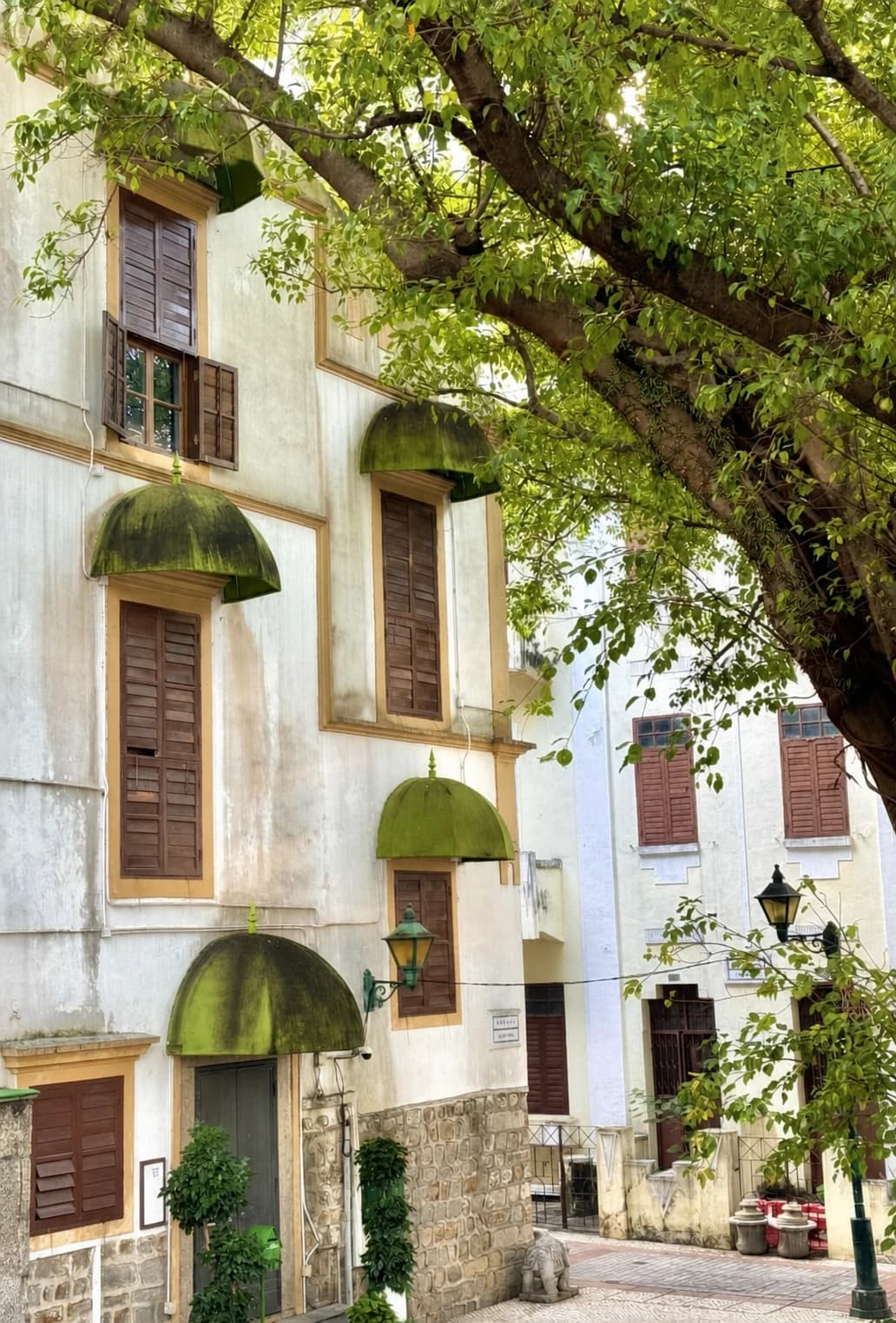
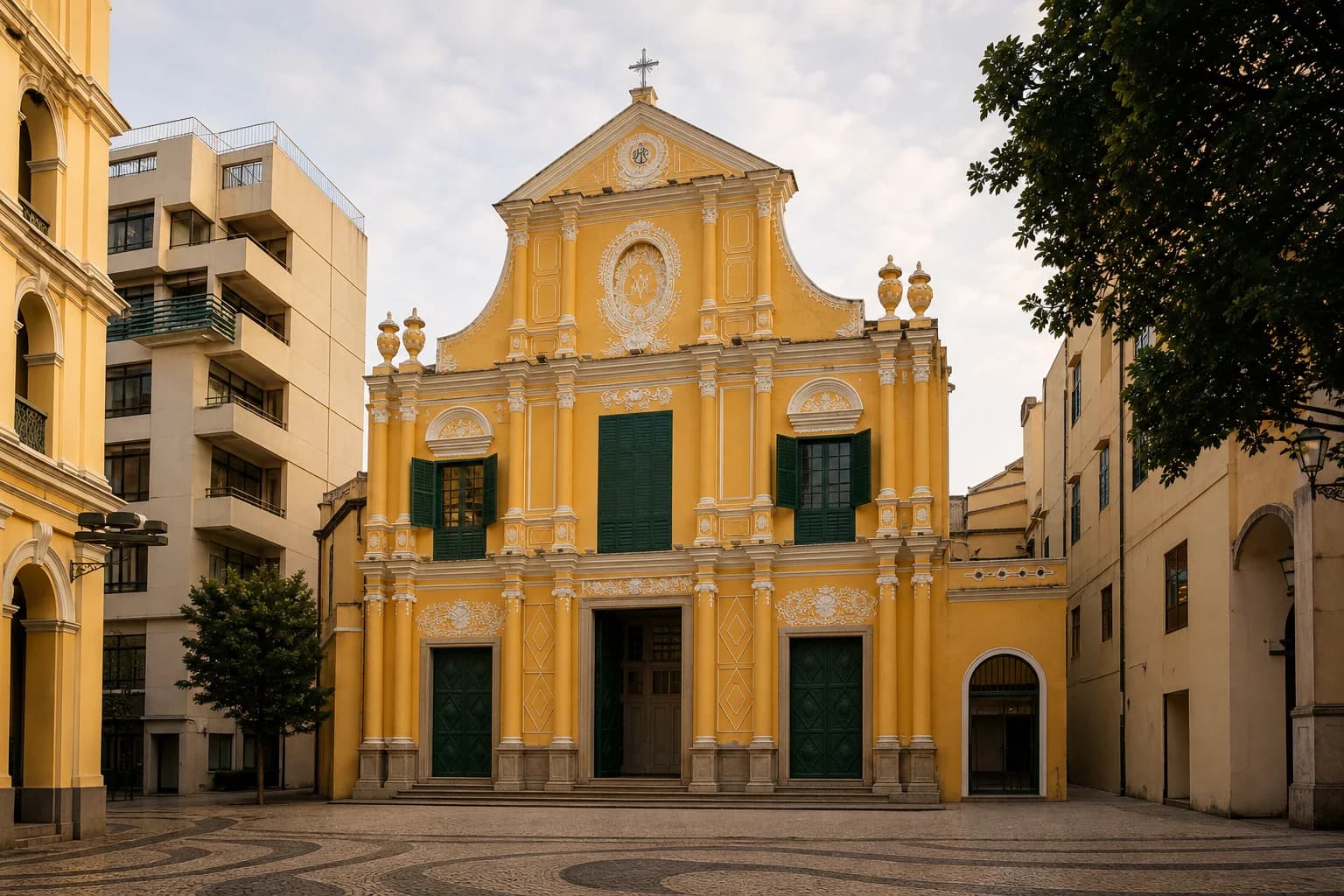
St. Dominic's Church (玫瑰堂; Igreja de São Domingos) stands just north of Senado Square, directly on the useful pedestrian sequence to the Ruins of St. Paul's. Its yellow plaster, white relief and dark green shutters make an immediate photograph, but its more distinctive story lies inside: a Dominican church founded in 1587, a pale carved nave, an active devotional tradition and an adjacent treasury of Catholic art from Macau and Asia.
Temporary closure update — checked August 11, 2026
The church is currently closed for maintenance. The Macao Cultural Affairs Bureau notice says work at St. Dominic's Church began on June 8, 2026 for approximately 120 days. The Treasure of Sacred Art closed from July 8 for approximately 90 days. Completion for both was estimated in October, but that is not a guaranteed reopening date.
The square and exterior remain part of the historic-centre walk. Until an official reopening notice appears, plan a 5–10 minute exterior stop, then continue toward Rua de São Paulo and the Ruins of St. Paul's. Do not rely on older pages that still list normal interior hours.
After reopening, allow 20–30 minutes for the church alone or 40–50 minutes when the Treasure of Sacred Art is also open.
Quick visitor facts
- Location: St. Dominic's Square, a short walk north of Senado Square.
- Current status: church and treasury temporarily closed for 2026 maintenance; check the official notice before visiting.
- Normal church hours: the Macao Government Tourism Office has historically listed 10:00 am–6:00 pm, but the closure notice currently supersedes that schedule.
- Admission: normally free.
- Best route role: a short interior and architectural pause between civic Senado Square and the commercial climb to St. Paul's.
- Best exterior light: morning or late afternoon, when angled light separates the white plaster relief from the yellow wall.
- Active worship: services, devotions and processions take priority over tourism. Use the Diocese of Macau's current Mass schedule rather than a travel blog when attending worship.
- Photography: treat interior access and photography as conditional. Put phones away during Mass, prayer or a posted restriction.
Where it fits in the north historic-centre route
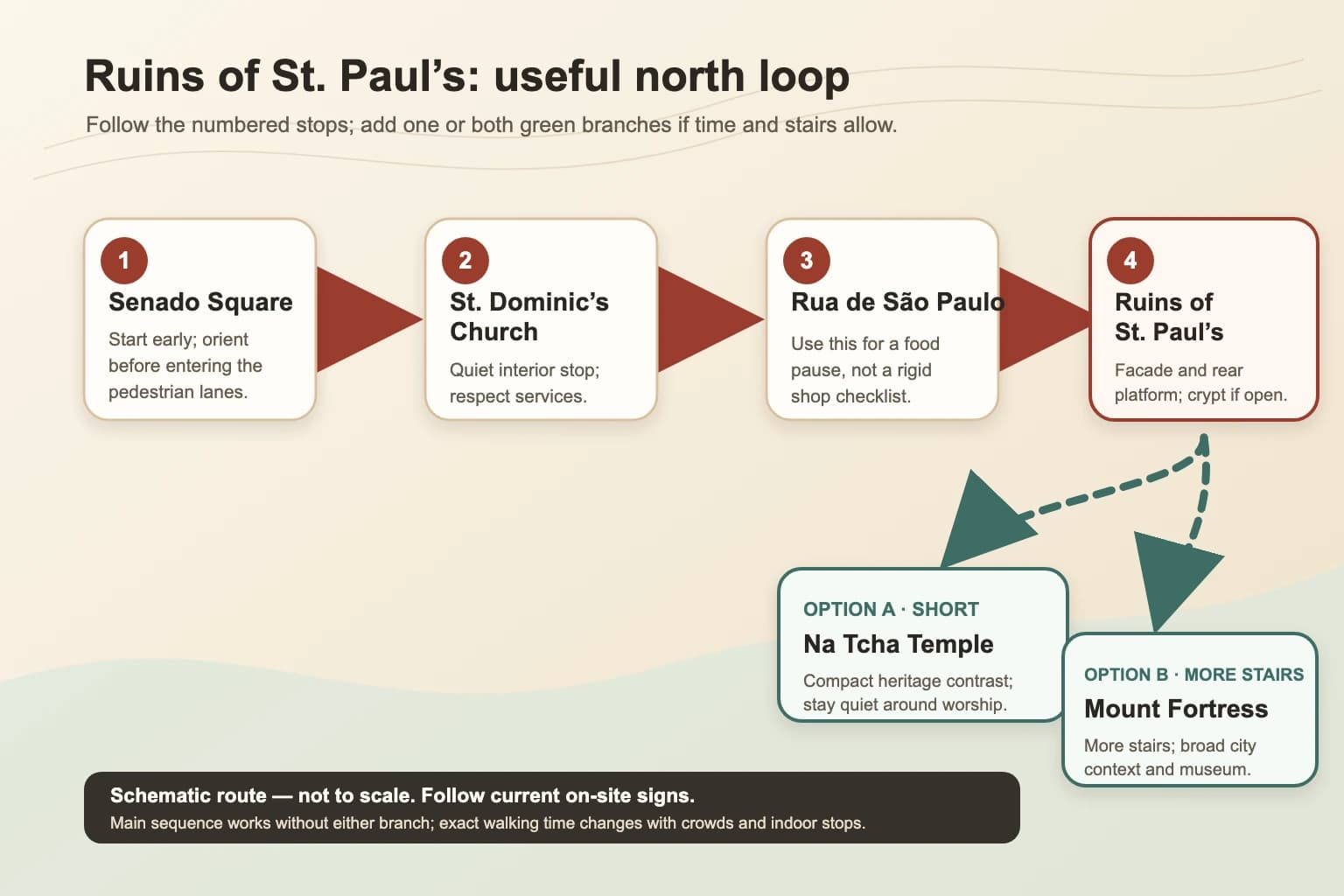
The most efficient sequence is Senado Square → St. Dominic's Church → Rua de São Paulo → Ruins of St. Paul's, followed by either Na Tcha Temple or Mount Fortress. The church is not a separate cross-city excursion; it is the interior counterpoint inside this northward walk.
While the church is closed
Photograph the façade from the far side of the small square, inspect the three portals and green shutters, then continue north. Scaffolding or safety barriers may affect the view during maintenance. Do not step around a closure line for a cleaner photograph.
After reopening
Enter for one quiet circuit rather than repeatedly crossing the center aisle. Begin at the rear to understand the nave's proportions, move along one side toward the devotional altars, pause before the main altar without crossing barriers, then visit the adjacent treasury if its separate door and hours are open.
Read the yellow façade in three passes
The façade is often described too generically as “Baroque.” A more useful reading focuses on color, depth and rhythm.
First: yellow, white and green
The warm yellow wall is the field; white plaster moldings create shadows around columns, openings and scroll-like edges; dark green shutters provide the strongest contrast. The result feels elaborate without relying on multicolored stone.
Second: three portals, three vertical bays
Stand far enough back to see how the three ground-floor doors establish a broad base. Pilasters and window openings carry those divisions upward, while the upper central section narrows toward the cross. Photographing too close loses this tiered organization.
Third: plaster is not the whole structure
Cultural Affairs Bureau conservation material notes that the church was built with unusually large green bricks beneath early clay-sand plaster and lime wash. Macau's salty groundwater has repeatedly damaged the wall plaster through crystallization, which helps explain why conservation is an ongoing part of the building's story rather than a cosmetic interruption.
Why this church matters beyond its façade
Three Spanish Dominican priests arriving from Acapulco founded the church in 1587. The original building used wooden boards, which contributed to the Cantonese name often rendered as Ban Zhang Tang. The present church developed through later rebuilding and conservation rather than surviving unchanged from one construction date.
It also belongs to Macau's publishing history. The Macao Government Tourism Office records that A Abelha da China (“The China Bee”), the first Portuguese-language newspaper published on Chinese soil, was issued here on September 12, 1822. That detail turns the site from a picturesque church into part of the city's political and print culture.
Inside after reopening: what deserves attention
The pale nave and dark pews
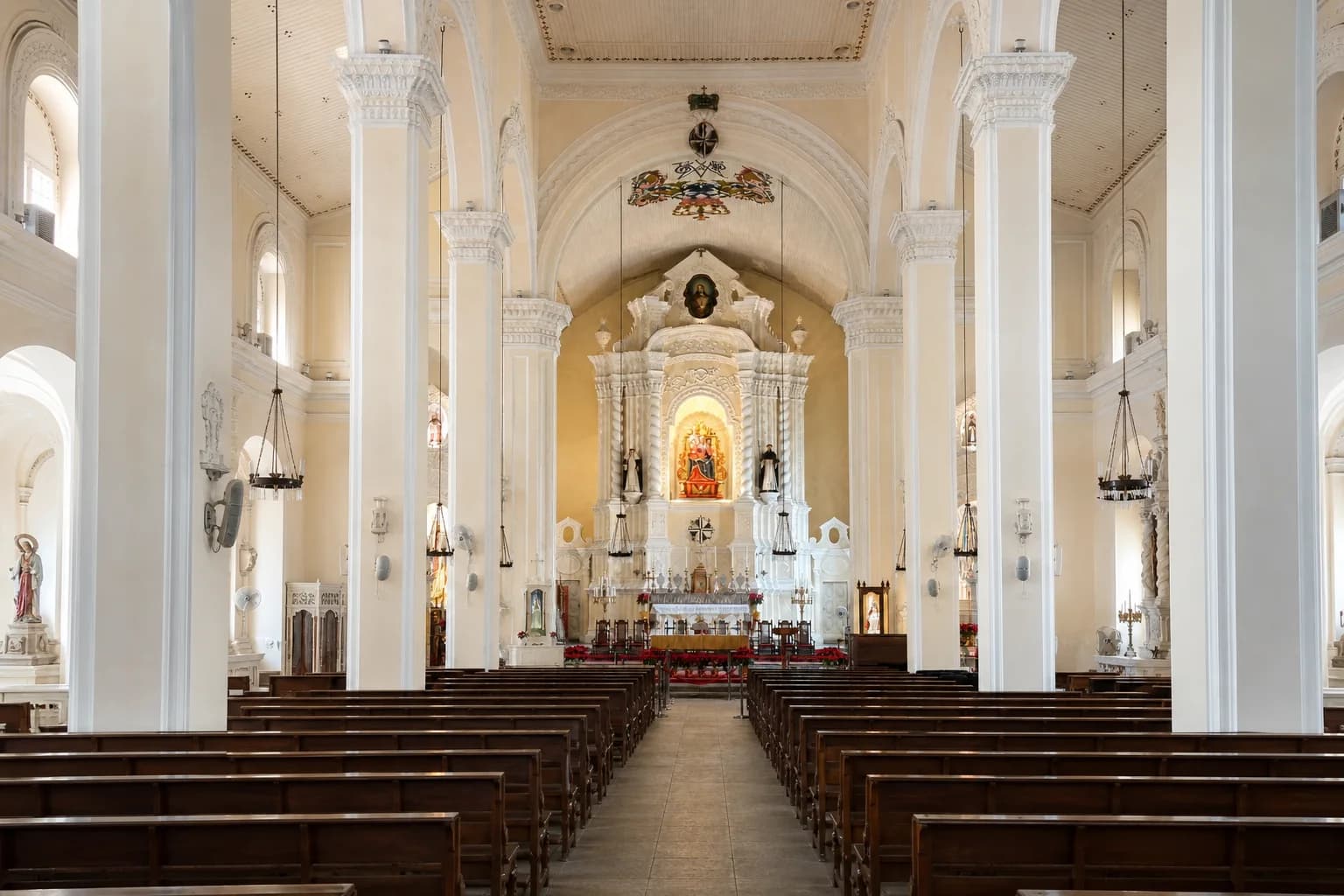
From the rear, the interior is calmer than the façade suggests. Cream surfaces and white carved capitals lift the eye, while dark wooden pews anchor the lower half. Use the center aisle briefly for a symmetrical view, then move aside so worshippers and staff can pass.
The main altar
Look at the relationship among the tall columns, twisted details, hanging lamps and concentrated gold around the central image. The visual structure draws attention forward without filling every wall with color. Do not approach beyond ropes or the sanctuary threshold.
The Fatima devotional altar
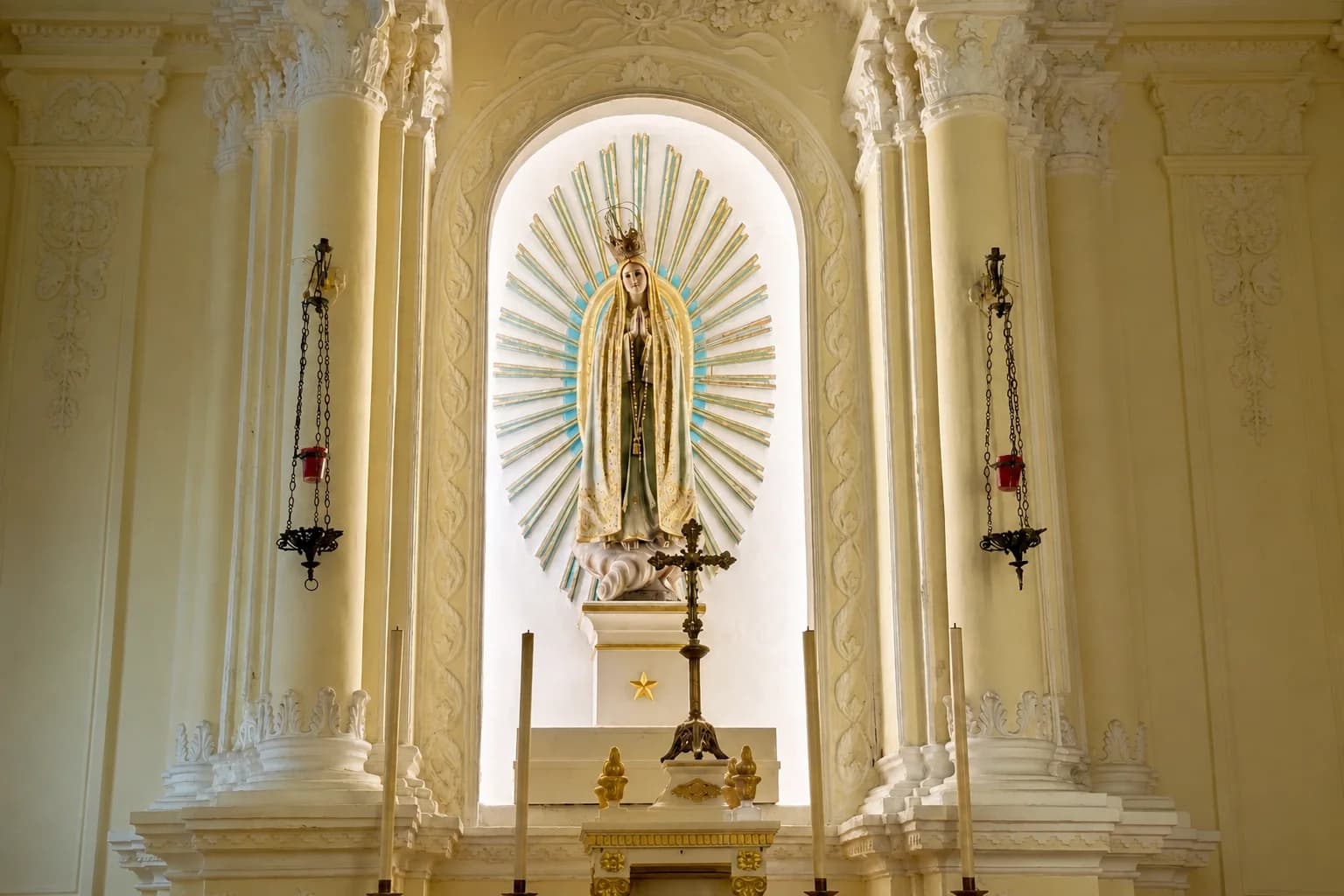
The statue of Our Lady of Fatima is connected to one of Macau's visible Catholic traditions. The annual May procession begins at St. Dominic's and moves through the city, so this side altar is not merely a museum object. If a devotion is underway, observe from a respectful distance rather than composing portraits around participants.
The building's acoustics
The high nave and hard surfaces also explain why the church has hosted sacred and early-music performances. A quiet visit lets you notice the space's acoustic character without manufacturing noise: never clap or play audio to “test” it.
Treasure of Sacred Art: treat it as a separate visit decision
The bell-tower building behind and beside the church was adapted into the Treasure of Sacred Art of St. Dominic's Church. Official tourism material describes a collection of around 300 artifacts; Cultural Affairs Bureau sources describe more than 300 Catholic relics across three floors.
The collection includes sculpture, liturgical objects, paintings and vestments that help explain Catholic artistic practice in Macau and wider Asian networks. It is especially useful for visitors who want material culture rather than another façade photograph.
The treasury has its own closures and shortened days, even under normal conditions, and religious activities can change access. After the 2026 maintenance period, verify both the church and museum schedules separately. Do not assume an open church means an open treasury.
Respectful visit rules
- Enter quietly and remove hats when appropriate.
- Keep shoulders and midriff reasonably covered; this is an active church, not a themed interior.
- Do not use flash, tripods or prolonged photo setups without permission.
- Never photograph people receiving sacraments, praying or attending Mass without explicit consent.
- Step out before taking a phone call.
- During a service, either participate respectfully from the rear or return later for sightseeing.
These practices produce a better visit as well as better photographs: the room becomes legible when it is not treated as a busy studio.
Food nearby: do not eat through the church stop
St. Dominic's Square is a transition point, not the place to assemble a viral snack checklist. Continue into Rua de São Paulo for almond cookies, jerky or an egg tart, but buy one thing with visible turnover instead of joining every queue. For a seated meal, move back toward the wider side streets around Senado Square, where it is easier to compare menus, seating and prices.
Keep Macanese and Cantonese food identities distinct. Portuguese-style sweets and pork-chop buns are convenient route snacks; minchi, African chicken or a proper Cantonese meal deserve more time than a five-minute church interval.
Getting there
From Senado Square
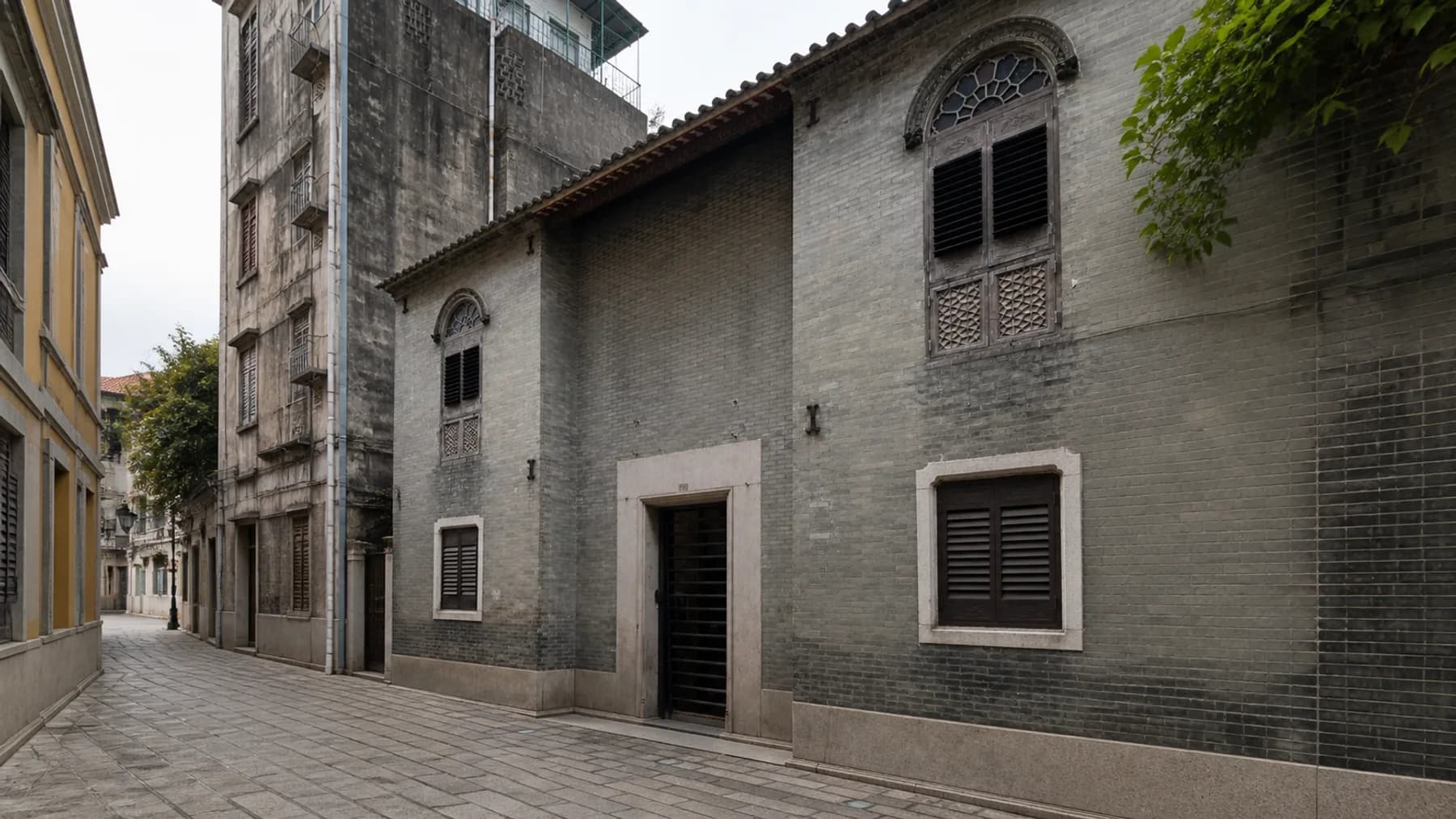
Walk north through the pedestrian lanes toward St. Dominic's Square. The distance is short, but crowd flow around storefronts can slow the approach. The yellow façade appears at the end of the small square.
By bus or taxi
Use Avenida de Almeida Ribeiro / San Ma Lo as the practical drop-off area, then walk. Routes and stops change, so check the live Macau transport source rather than relying on the old fixed list of buses 3, 33, 8A and 26A. Taxis cannot turn the church forecourt into a door-to-door stop.
Continue north
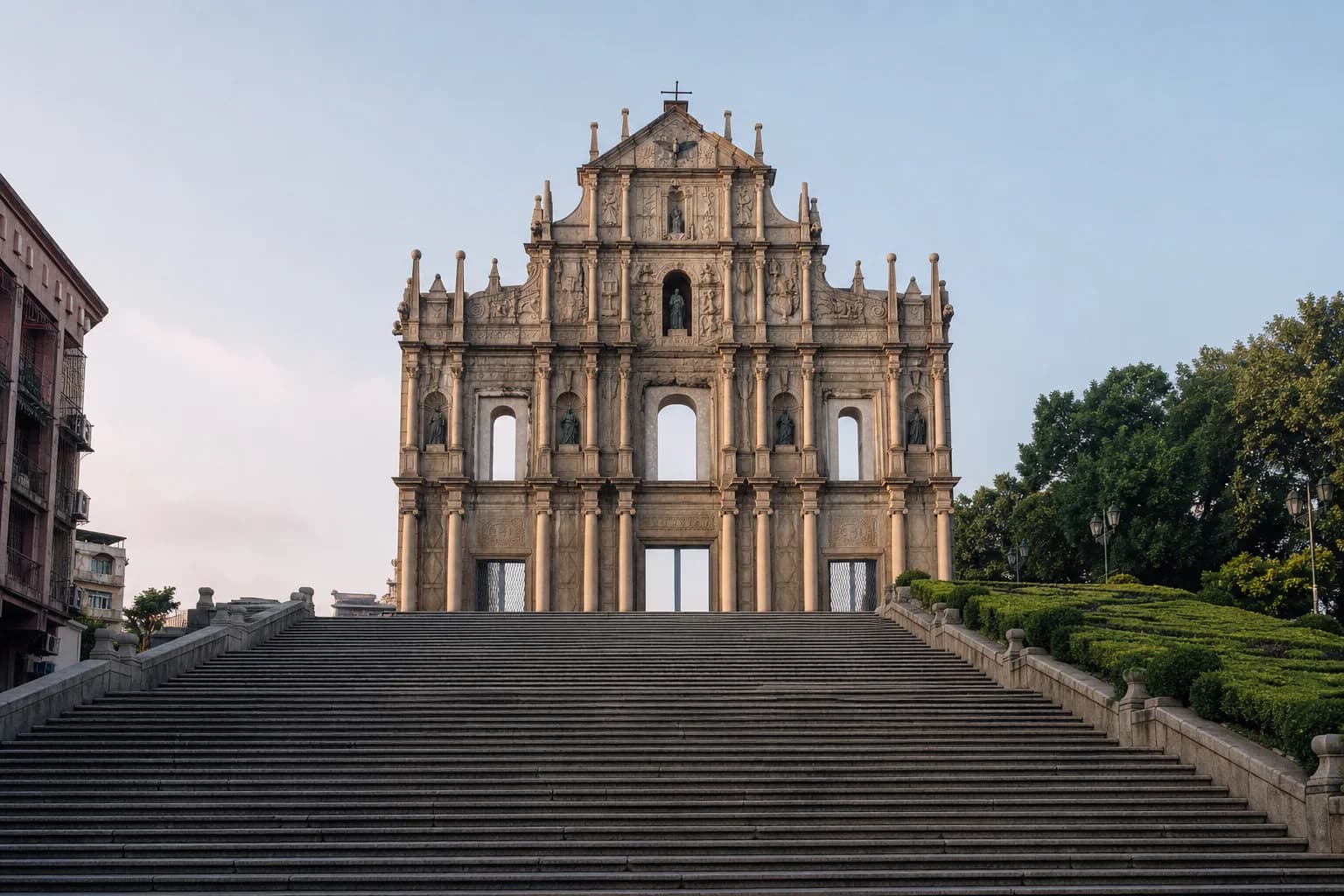
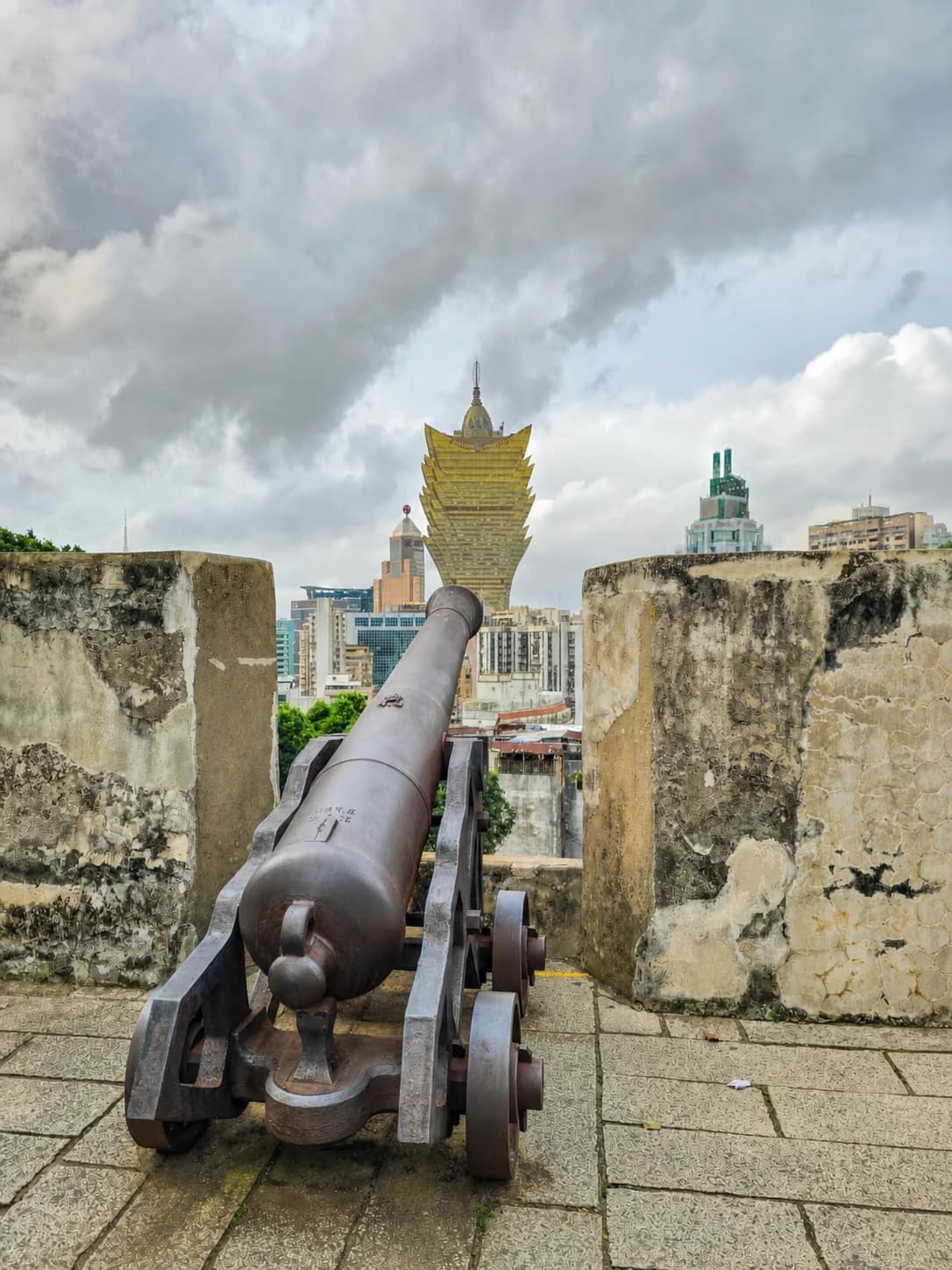
After the church, follow Rua de São Paulo toward the Ruins of St. Paul's. Add Na Tcha Temple for a compact religious contrast or Mount Fortress for military and city context.
Where to stay
Stay on the Macau Peninsula when you want Senado Square and St. Dominic's before day-trip crowds or intend to walk several UNESCO clusters. Choose Taipa for evening food streets and a quieter neighborhood base. Choose Cotai when resorts and shows dominate, treating the church as part of one focused peninsula half-day.
Compare Macau hotels on Trip.com only after choosing the district. On the peninsula, inspect the actual walking route: a property that looks close in a straight line may sit above steep lanes or on a less convenient side of the historic core.
A realistic post-reopening sequence
- 8:20 am: Senado Square exterior and lanes before peak groups.
- 8:35 am: St. Dominic's façade; if normal opening is later, continue the route and return only if the interior is a priority.
- 10:00 am: after confirmed reopening, church interior and the treasury if both are open.
- 10:40 am: one intentional snack on Rua de São Paulo.
- 11:00 am: Ruins of St. Paul's, then one final branch.
During the 2026 closure, remove the interior block rather than waiting outside. The façade still explains the architectural sequence, and the route remains coherent without pretending a closed heritage building is open.