Prince Gong's Mansion
Prince Gong's Mansion (恭王府, Gōngwáng Fǔ) is a grand, beautifully preserved Qing dynasty residence and garden complex located right beside Shichahai. It is well worth a dedicated visit if you want to understand how high-ranking imperial nobility lived, entertained, and designed their private retreats. Allow two hours inside, reserve your ticket in advance, and treat the two-story Back Tower as the natural dividing line between the formal ceremonial courts and the whimsical rear garden.
Quick Verdict
- Go for authentic Qing aristocratic residential architecture, masterful compact garden design, or as part of a culture-rich half-day around Shichahai.
- Allow 2 hours to follow the recommended sequence below. A 1-hour visit is possible, but reduces the intricate garden to a hurried rush.
- Skip or shorten it if you are already feeling monument fatigue after full-day visits to the Forbidden City and Summer Palace, or if high stone thresholds, uneven flagstones, and rock-garden steps pose mobility challenges.
- Do not plan your day around a live performance. The Grand Theatre is primarily an architectural highlight; public staging and programming change frequently, so check same-day notices rather than expecting a guaranteed show.
This is not a miniature Forbidden City. Here, formal reception halls transition into intimate family residences, the Back Tower encloses the domestic quarters, and an ingeniously compressed garden uses rockeries, waterways, and covered corridors to feel vastly larger than its footprint.
A Two-Hour Route That Avoids Backtracking
The museum outlines 1-hour, 2-hour, and half-day options. The sequence below distills the official two-hour itinerary into eight clear, logical steps. It is a sequential guide rather than a literal scale map; always follow active on-site signage whenever pathways are temporarily rerouted.
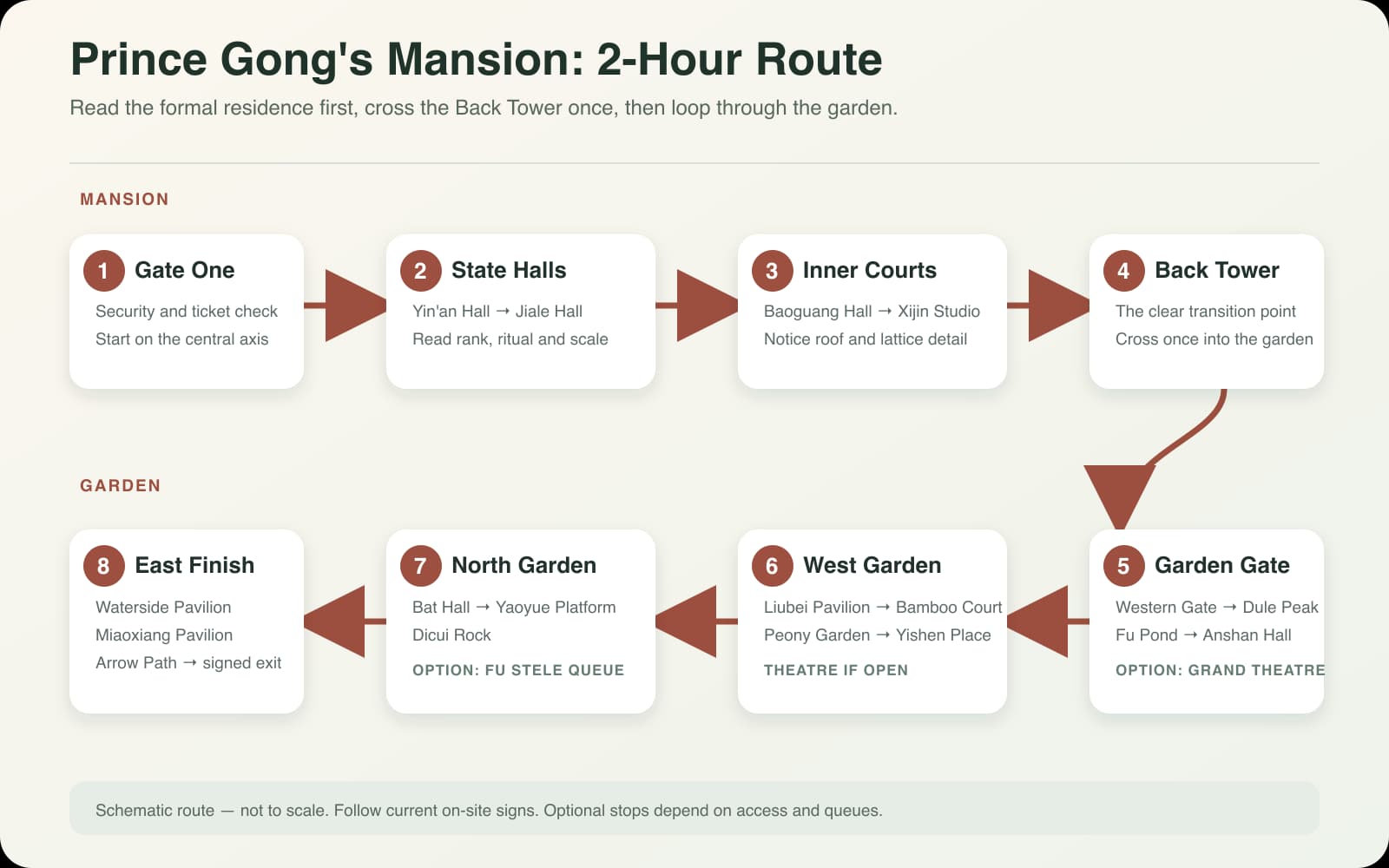
- Enter through Gate One. Complete security and ticket verification, then proceed straight onto the central axis rather than drifting into side yards.
- Read the ceremonial halls together. Yin'an Hall (Hall of Silver Peace) and Jiale Hall establish the public, stately face of the mansion. Note the spacious courtyards, distinctive rooflines, and ceremonial approaches before inspecting interior displays.
- Continue through the inner living quarters. Baoguang Hall and the Xijin Studio bring the architecture down to a domestic, human scale. Here, delicate lattice windows, nanmu wood interiors, painted bracket sets, and flowing courtyard transitions reveal the daily luxury of Qing nobility.
- Use the Back Tower as your transition point. Stretching over 150 meters across the northern perimeter of the residence, this long two-story building strictly separates the living compound from the garden. Cross this threshold once—doubling back wastes valuable time.
- Enter the garden through the Western Gate sequence. Walk past Dule Peak and the Fu Pond toward Anshan Hall. These compact garden spaces are designed to unfold gradually, so take in each framed view rather than rushing ahead.
- Loop through the western garden. Pass the Liubei Pavilion (Floating Cup Pavilion), the serene Bamboo Court, the Peony Garden, and Yishen Place. Peek into the Grand Theatre courtyard if open and time permits.
- Make your decision in the northern garden. Continue from Bat Hall toward Yaoyue Platform and Dicui Rock. The secret cave containing Emperor Kangxi's famous Fu Character Stele is an optional branch: if the visitor queue is long, skipping it allows you to enjoy the rest of the rockeries unhurriedly.
- Finish on the eastern side. Return past the waterside pavilion, Miaoxiang Pavilion, and the Arrow Path, following the exit signs toward the gift shop and gate. This keeps you moving smoothly toward the exit without retracing your steps.
For a 1-hour express visit, complete steps 1–5, take a shortened loop through the garden center, and bypass the theatre and Fu Stele queues.
What to Notice Beyond the Famous “Fu” Stele
Rather than treating the mansion as a random collection of individual halls, observe how its architecture orchestrated social hierarchy, privacy, and visual surprise.
Roofs, brackets, and thresholds
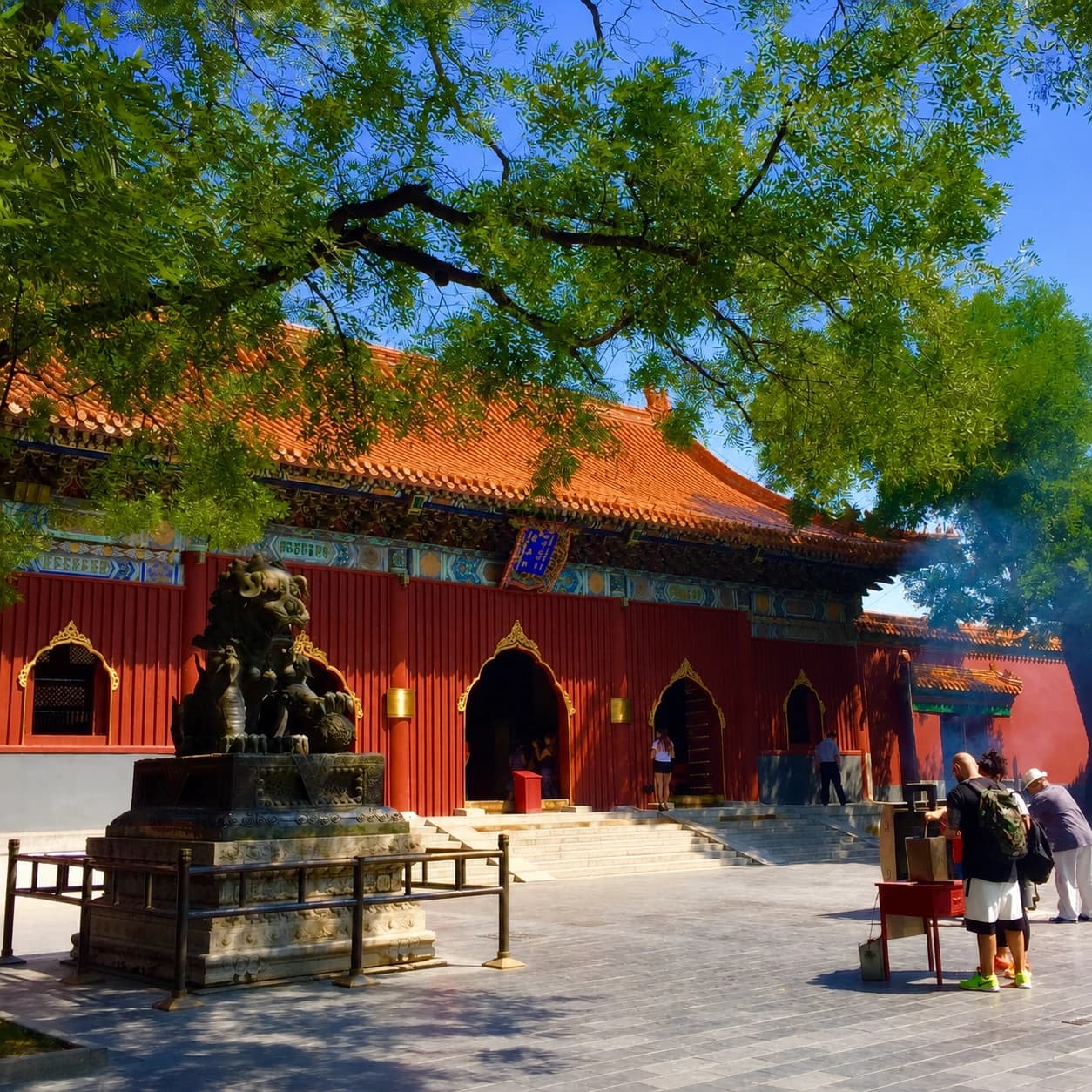
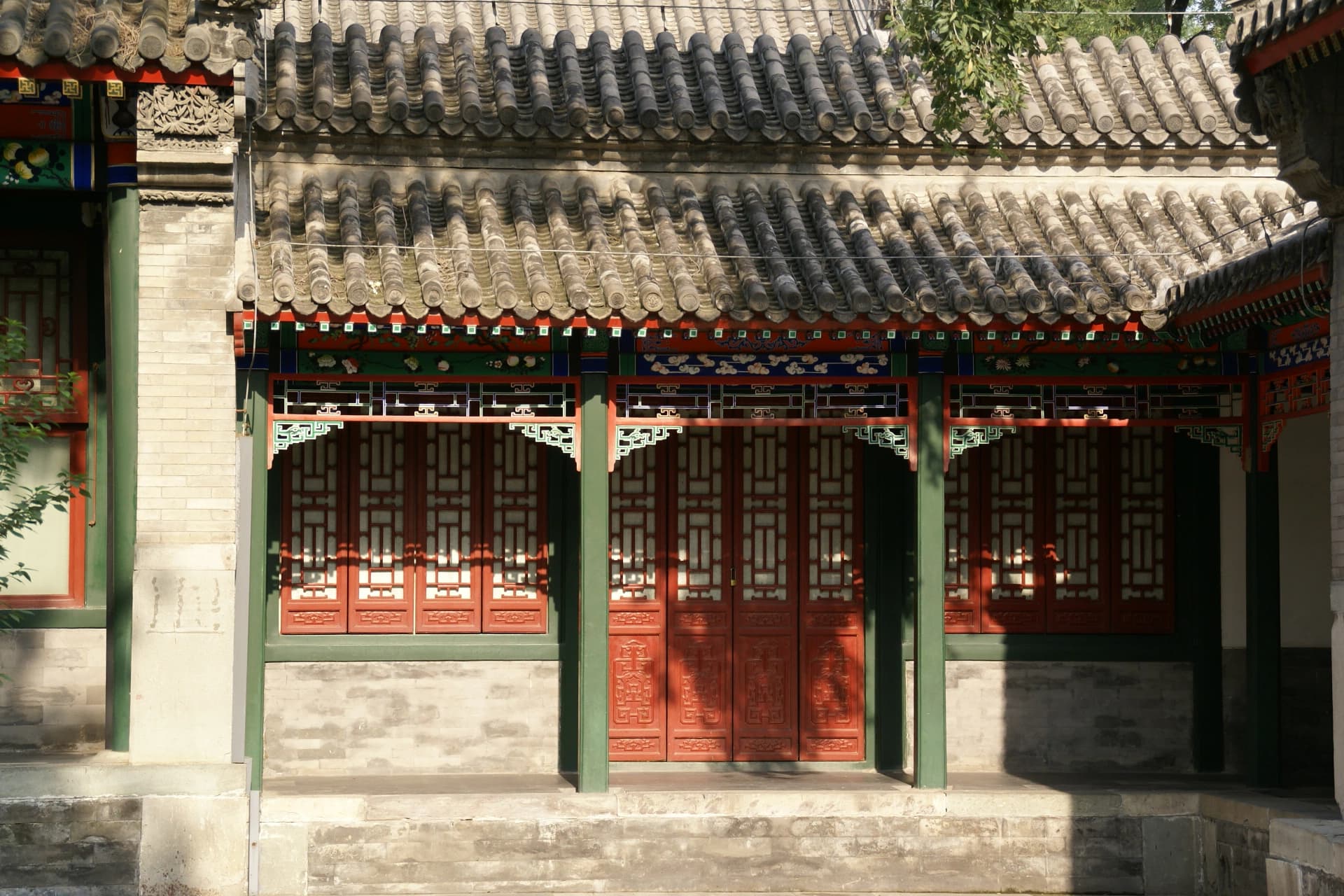
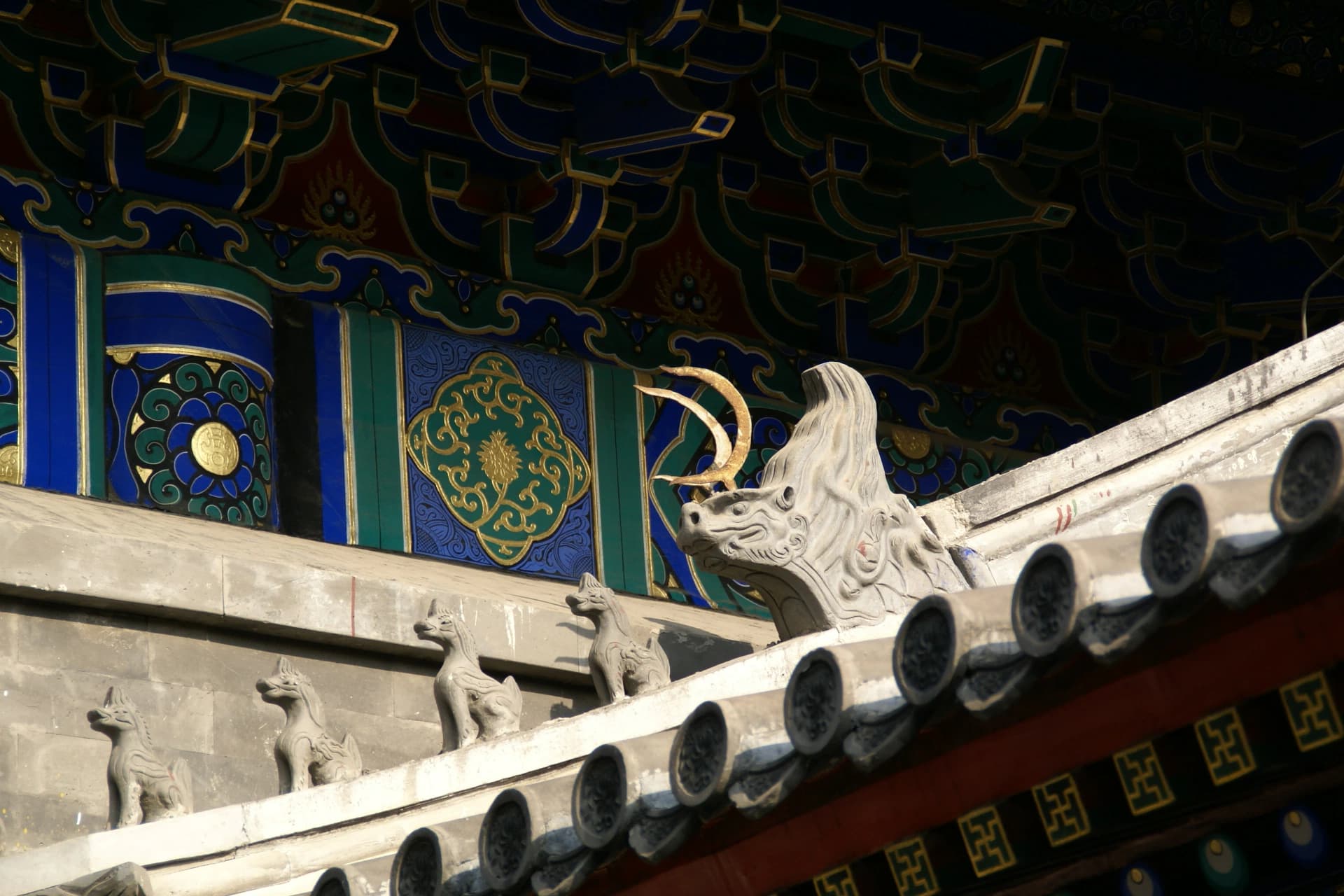
Look upward before stepping into each courtyard. Glazed green tiles, painted bracket sets (dougong), grey civilian roof tiles, and decorative ridge beasts vary deliberately from front to back, signaling where formal state reception ended and private family life began. At your feet, raised wooden door thresholds and tiered stone steps intentionally regulate your pace, marking every transition into a deeper layer of the estate.
The Back Tower as spatial boundary
Beyond legends of hidden treasures in its diverse window shapes, the Back Tower's real genius is architectural. Spanning the entire width of the compound, it creates an unmistakable barrier between the structured discipline of the mansion and the natural freedom of the garden.
The garden's spatial illusions
The garden relies on deliberate spatial compression rather than vast lakes. Towering limestone rockeries conceal what lies ahead, zigzag covered corridors skirt around ponds, and ornamental moon gates frame one exquisite vista at a time. Pause immediately after passing through any gate and look backward—the reverse view is often just as meticulously composed.
Tickets, Passport Entry, and Opening Hours
The museum's standard visiting schedule is:
- Open: Tuesday–Sunday, 8:30–17:00
- Ticket sales stop: 16:00
- Last entry: 16:10
- Closed: Mondays (except on statutory public holidays)
- Standard admission: ¥40
Real-name advance ticket purchase is required. Tickets typically go on sale at 20:00, 10 days in advance. While returned tickets occasionally reappear if visitors cancel, booking ahead is essential during peak travel seasons.
International visitors can select the passport option during online booking. On the day of your visit, bring your original physical passport to the Comprehensive Service Desk at the entrance for verification and entry credentials. Digital photos of passports are not accepted.
Authorized ticket channels include the official website, official WeChat mini-program, Trip.com/Ctrip, and Meituan. For a convenient English booking experience and live ticket availability, check Prince Gong's Mansion on Trip.com. Be sure to check inclusions carefully between basic admission tickets and guided tour packages.
Holiday schedules and extended summer hours are posted periodically. Always verify the latest announcements before heading out during public holidays, extreme weather events, or summer vacation periods.
Getting There
Take Beijing Subway Line 6 to Beihai North Station (北海北站), Exit B (Northeast). From the station, short walking routes along Sanzuo Bridge Hutong or Longtoujing Street lead directly to Gate One (about a 5-minute walk). Follow the brown tourist signs and your map app, and ignore unauthorized pedicab solicitations outside the subway exit.
Driving is strongly discouraged, as parking in the surrounding historic hutong lanes is extremely restricted.
The Visitor Service Center east of Gate One provides consultations, free luggage storage, phone-charging facilities, and loaner wheelchairs and strollers. Note that historic stone courtyards and rockeries have stairs, so ask staff for designated step-free routes if needed.
Where to Eat After the Mansion
There is no need to dine inside the attraction. Complete your visit, stroll toward Shichahai, and choose from excellent nearby dining options:
- For a quick lunch: Head to a neighborhood noodle shop for zhajiangmian (Beijing noodles with fermented bean pork sauce), ideally where noodles, sauce, and shredded toppings are served separately so you can season to taste.
- For a leisurely meal: Traditional copper-pot mutton hotpot (shuan yangrou) is fantastic, especially in cooler weather. Check whether menu pricing is per plate, per set, or per person.
- For a light snack: Fresh sesame shaobing, traditional Beijing yogurt in ceramic jars, or fresh pastries offer a quick, authentic bite. Choose established shops with clear posted pricing.
Restaurant turnover in the bustling lake area is high; you will enjoy a wonderful meal simply by following local patrons rather than chasing viral social media trends.
Build a Half-Day Around Shichahai

The most seamless pairing is with Shichahai. Tour the mansion in the morning, enjoy lunch nearby upon exiting, and spend the afternoon strolling the willowed lakeside paths and traditional hutongs. This gives you ticketed heritage first and flexible outdoor relaxation second.
Alternatively, pair the mansion with neighboring Beihai Park for a grander imperial lake landscape. Combining both the Forbidden City and Prince Gong's Mansion on the same day is generally too tiring unless your trip is strictly architecture-focused.
Where to Stay by Area
Prince Gong's Mansion fits into itineraries from several popular lodging hubs. Choose Shichahai or Gulou (Drum Tower) if you love evening lake walks, lively music bars, hutong culture, and characterful courtyard boutique hotels. Choose Wangfujing or Qianmen for central access to the Forbidden City, Tiananmen Square, and major transport lines. Check the current metro route from your hotel; some starting points require a transfer before Line 6.
The practical trade-off is character versus logistical ease: Shichahai/Gulou offers rich neighborhood charm but may require carrying luggage down narrower alleys, while Wangfujing/Qianmen offers broad avenues and smoother taxi access.