China's cool summer escapes: choose the climate, not the slogan
A cooler China trip is possible in June, July and August, but there is no single “summer escape” climate. Kunming feels mild because of elevation and frequent cloud. Lijiang is higher, sunnier between showers and cooler after dark. Jiuzhaigou is a high valley with wet-season road and operating risk. Yili pairs a sometimes-hot gateway city with much cooler mountain country several hours away. Changbaishan can be cold and windy at the summit while the forest base is comfortable. Guiyang is mild but humid; Xining is high, bright and dry-feeling.
That distinction matters more than a list of average temperatures. A traveller who dislikes sticky air may prefer Xining to cooler-on-paper Guiyang. A family that wants simple public transport may enjoy Kunming more than a spectacular but road-heavy Yili loop. A photographer can accept Changbaishan's cloud risk; someone travelling for one guaranteed crater-lake view should not.
Use the climate patterns below as a filter, not a forecast. Recent Chinese summers have produced both exceptional heat and exceptional rain. Check a seven-day forecast, severe-weather warnings, road notices and scenic-area operating updates again before each transfer.
The quick chooser
| Choose | Summer pattern | Rain and cloud | Travel effort | Minimum useful stay | Best fit | Cut it if… |
|---|---|---|---|---|---|---|
| Kunming | Mild highland city; comfortable mornings and evenings | Frequent wet-season showers; long grey spells possible | Low | 3–4 nights | First China trip, mixed ages, easy city days | Your main goal is crisp, dry mountain air |
| Lijiang / northwest Yunnan | Cooler nights, strong sun between showers, large local variation by altitude | July and August sit inside the concentrated rainy season | Medium | 4–6 nights | Old towns plus one deliberate mountain landscape | Altitude, stairs or rain-sensitive mountain days are poor fits |
| Jiuzhaigou | Cool high-valley mornings and nights; sun can still feel warm | Summer rain can affect roads, trails and operating zones | Medium–high | 3–4 nights | One organised, high-impact nature day | You have no buffer after the park or dislike timed scenic systems |
| Yining and Yili | Yining can be hot; high grasslands and passes are cooler | Drier-feeling valley, local mountain rain and big day/night swings | High | 7–10 nights | Road-trip scale, grassland and lake landscapes | You have only a long weekend or expect every stop to be cool |
| Changbaishan | Mild forest base; exposed summit can be cold, wet and windy | High cloud/visibility risk around Tianchi | Medium–high | 4–5 nights | Forest walks, volcanic landscape, flexible photographers | Tianchi visibility is the only acceptable outcome |
| Guiyang | Mild city temperatures with humid air | Frequent rain and thunderstorms | Low–medium | 3–5 nights | Food, karst excursions and easy urban recovery | You want dry evenings or mountain-cold nights |
| Xining | Cool high-plateau city, strong sun, cold evenings | Lower total rain than southwest choices, but summer is its wetter season | Medium | 4–6 nights | Low humidity, broad landscapes, rail-based gateway | Anyone in the group needs a low-altitude start |
“Minimum useful stay” includes the destination, not the international journey to reach China. Add an arrival night when a late flight, rail connection or long road transfer would otherwise consume the first day.
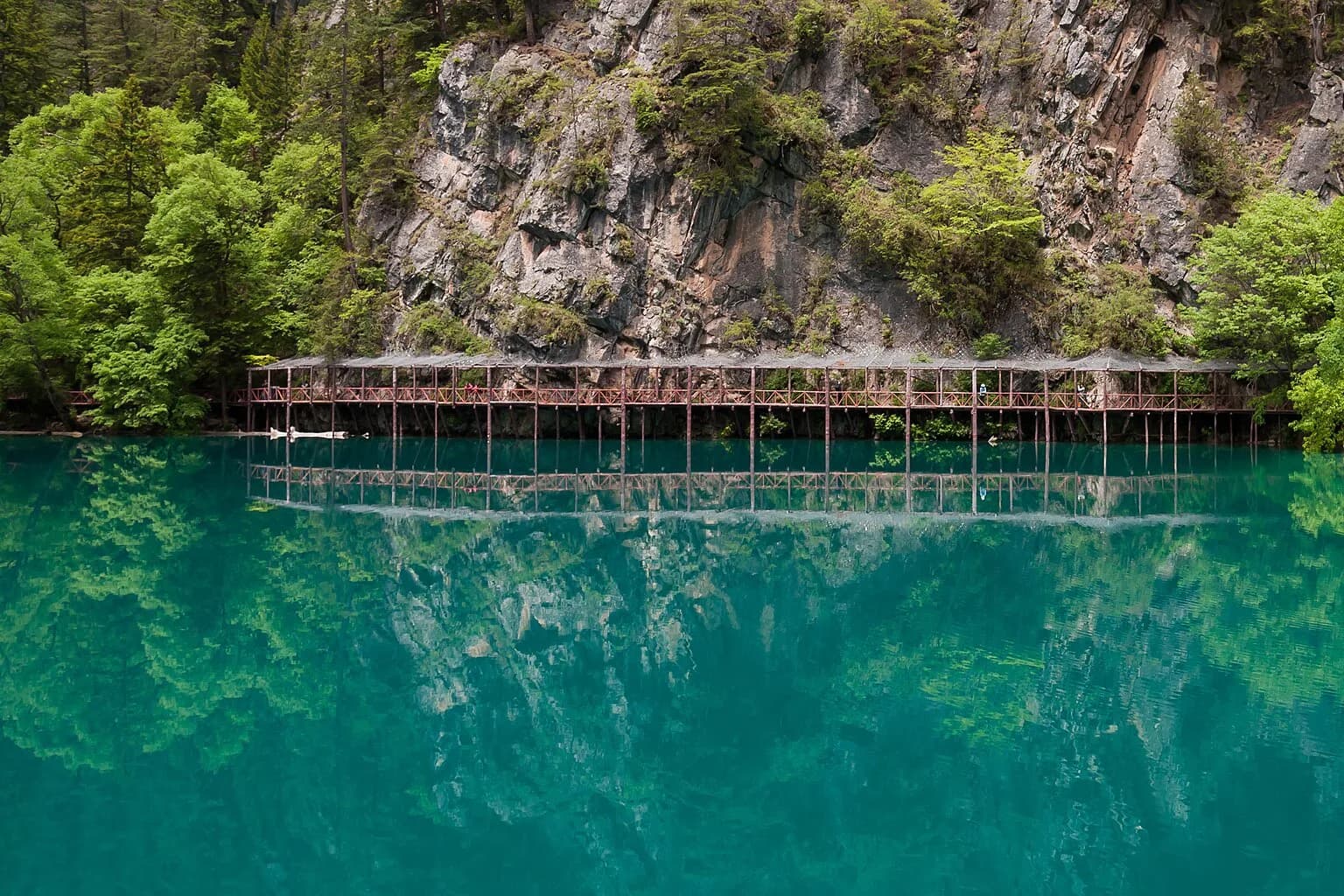
Panda Lake's water-and-forest contrast is the kind of high-valley landscape that justifies Jiuzhaigou's transfer. Conditions change, so check current park and weather notices. Photo by CEphoto, Uwe Aranas, CC BY-SA 3.0.
First decide what kind of “cool” you need
Mild city days: Kunming or Guiyang
Choose this category when the group wants normal hotels, metro or taxi access, indoor alternatives and no high-mountain commitment. Neither city guarantees sweater weather at noon. Their advantage is that long spells of severe heat are less characteristic than in many eastern and central cities, while rain and cloud often suppress daytime temperatures.
Kunming is the easier all-rounder. Guiyang suits travellers who also want Guizhou food and karst country and do not mind higher humidity. Both work for three or four nights because a rainy afternoon can become a museum, market or café block rather than a cancelled regional route.
Cold nights and mountain scenery: Lijiang, Jiuzhaigou or Changbaishan
Elevation or exposed summit terrain produces the relief here. The trade is bigger temperature swings, stronger ultraviolet light and weather-sensitive transport. A sunny mountain platform can feel hot at midday even when the morning started in a jacket. Pack for the whole day rather than dressing for the hotel forecast.
Lijiang offers the best urban-and-mountain mix. Jiuzhaigou delivers the most structured single scenic day. Changbaishan offers the strongest forest-to-alpine contrast but the greatest chance that cloud removes the signature Tianchi view.
Broad, drier-feeling landscapes: Yili or Xining
Yili and Xining suit travellers who dislike the southwest monsoon feel, yet the two trips are very different. Xining is one high city with practical rail and road excursions. Yili is a region: Yining is the hub, Sayram Lake lies west, and major grassland areas lie in other directions. The holiday succeeds through a coherent vehicle route and several bases, not repeated day trips from one hotel.
1. Kunming: the lowest-friction answer
Kunming is the default choice for a mixed group that wants to escape intense heat without turning the trip into an expedition. It sits at highland elevation, has a large airport and rail hub, and offers enough indoor and urban choices to survive a wet day.
The catch is rain. May through October is the established rainy season, and summer showers can be heavy. “Spring City” should not be translated into permanent blue sky. Bring a light waterproof shell and quick-drying shoes, leave one afternoon movable, and avoid building every day around distant outdoor sites.
A practical four-night plan has two city days, one outward day and one flexible block. Use Green Lake and Yunnan University for a low-stakes arrival walk. Choose the Stone Forest or Jiuxiang Cave for one outward day, not both as a race. Dounan Flower Market gives the wettest day a useful evening anchor.
Choose Kunming over Lijiang when anyone is sensitive to altitude, the group needs easy recovery days, or the trip is only three to four nights. Choose Lijiang instead when cool evenings and mountain scale matter enough to accept a higher base and more weather dependence.
2. Lijiang and northwest Yunnan: cooler nights, higher stakes
Lijiang lies around 2,400 metres in the old-town basin, and local elevation changes are dramatic. The town, Jade Dragon Snow Mountain, Tiger Leaping Gorge and low river valleys do not share one temperature. A forecast labelled “Lijiang” cannot describe every outing.
Summer brings the region's concentrated rainy period, especially July and August. It also brings strong solar radiation whenever cloud breaks. The useful packing combination is a breathable base layer, a warm mid-layer, a waterproof outer layer and serious sun protection. One heavy coat is less adaptable.
Give Lijiang four nights at minimum: arrival and gentle town time, one full weather-sensitive landscape day, one lower-intensity cultural day, then departure. Lijiang Old Town and Shuhe can absorb mixed weather. Jade Dragon Snow Mountain needs a dated booking and a live operating check. Tiger Leaping Gorge is a separate canyon decision; heavy rain and trail conditions matter more than a generic city forecast.
Do not move straight from a low-altitude flight into the hardest mountain product. Keep the first day light, sleep, and see how the group responds. Travellers with relevant health concerns should discuss high-altitude plans with a clinician before the trip. If significant symptoms develop, stop ascending and seek local medical help rather than trying to “win” a booked itinerary.
3. Jiuzhaigou: the strongest one-day landscape, with a buffer
Jiuzhaigou is the choice for travellers who want cool forest, blue-green lakes and waterfalls more than café time or nightlife. The valley spans roughly 1,900 to 3,100 metres, so morning conditions and temperature differ by elevation. Summer is relatively mild by Chinese lowland standards, but warm sun, cold rain and cool evenings can occur in one visit.
The planning risk is not temperature alone. Much of the region's precipitation falls from May to October. In July 2026, short intense rain triggered a debris flow and temporary partial closure before official inspection and reopening. That does not make summer a bad season. It means a tight park-day-to-flight connection is a bad structure.
Protect one full day for Jiuzhaigou Valley, sleep near Goukou, and keep the next major connection separate. Huanglong Jiuzhai railway station improved access, but the station is still an onward road transfer from the park. Three days/two nights is the working minimum; four days/three nights is more resilient.
Peak-season admission is dated and capacity controlled. Check the exact Jiuzhaigou park product on Trip.com only after confirming the date, passport handling, admission inclusions and cancellation terms. The Jiuzhaigou guide explains the station, Goukou base and Huanglong order in detail.
Choose Jiuzhaigou over Lijiang when one organised nature day is more valuable than an old-town base. Cut Jiuzhaigou first when the wider China itinerary cannot spare the arrival and departure margins; the valley should not be reduced to a day trip from Chengdu.
4. Yining and Yili: choose a road region, not a cool city
Yili is frequently marketed as a summer escape, but Yining itself can have hot afternoons. Historical July averages sit in the low twenties, while heat extremes can approach 40°C. The cooler promise belongs more reliably to elevation, night-time and mountain zones than to every street in the valley.
This is why Yili deserves seven to ten nights. Use Yining for arrival, food and neighbourhoods; then choose a coherent loop. Sayram Lake is a westbound lake-and-road day. Nalati, Kalajun and other grassland areas lie on longer regional legs and often justify different bases. The Ili grassland chooser compares those landscapes without pretending they are adjacent.
July and August are a major regional travel peak. Road traffic, hotel demand and scenic shuttles can matter as much as air temperature. A private driver or tour should be checked for licence, vehicle, insurance, luggage space, daily driving limit, waiting time and hotel coverage. Do not price only the kilometres shown on a map.
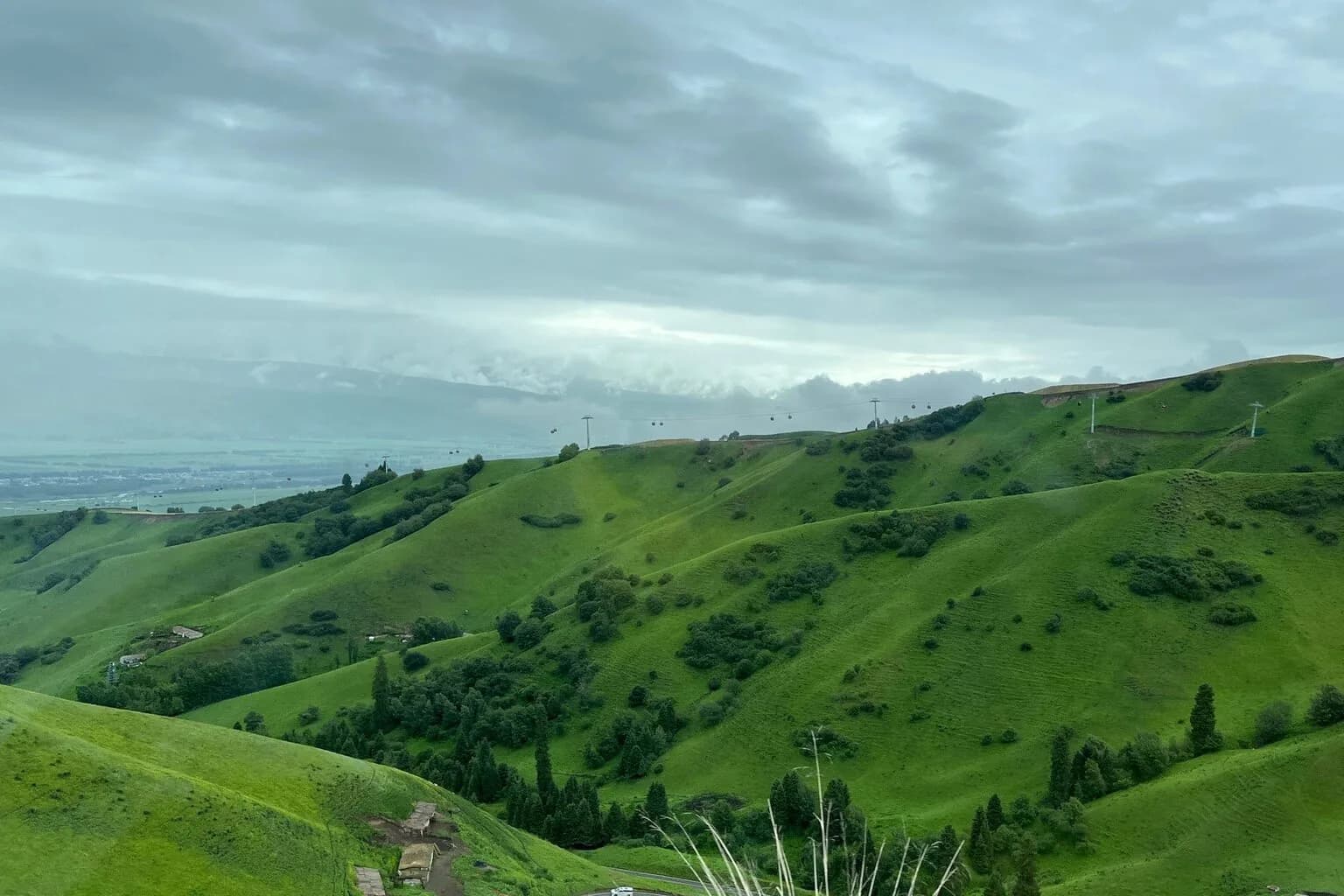
Nalati shows the higher grassland side of Yili, which feels different from Yining city. Green cover and visibility vary by week. Photo by Yoshi Canopus, CC0.
Do not book Yili for one promised lavender or wildflower photograph. Bloom timing, mowing, rain and local access shift. Book the region for grassland scale, lakes, road scenery and long evenings; treat flowers as a bonus. Cut the second grassland before cutting every overnight into a transfer.
5. Changbaishan: cool forest with a visibility gamble
Changbaishan offers a different summer escape: temperate forest at the base, then exposed volcanic terrain near Tianchi. The mountain climate is changeable and moist. A warm forecast in Erdaobaihe does not tell you how cold, windy or wet the summit transport will feel.
Choose the slope before the hotel. The north slope has the broadest attraction sequence and is generally the easiest first choice. The west slope has a wider crater view but requires 1,442 steps for Tianchi access. The south slope is seasonal and weather dependent. These are separate scenic systems, not three interchangeable doors to one short walk.
The best structure is four or five nights with one main slope, one forest or hot-spring recovery day and a movable mountain day. Improved high-speed rail makes the region more accessible, but summer is still a peak period. Reserve the chosen base and dated admission before adding secondary stops.
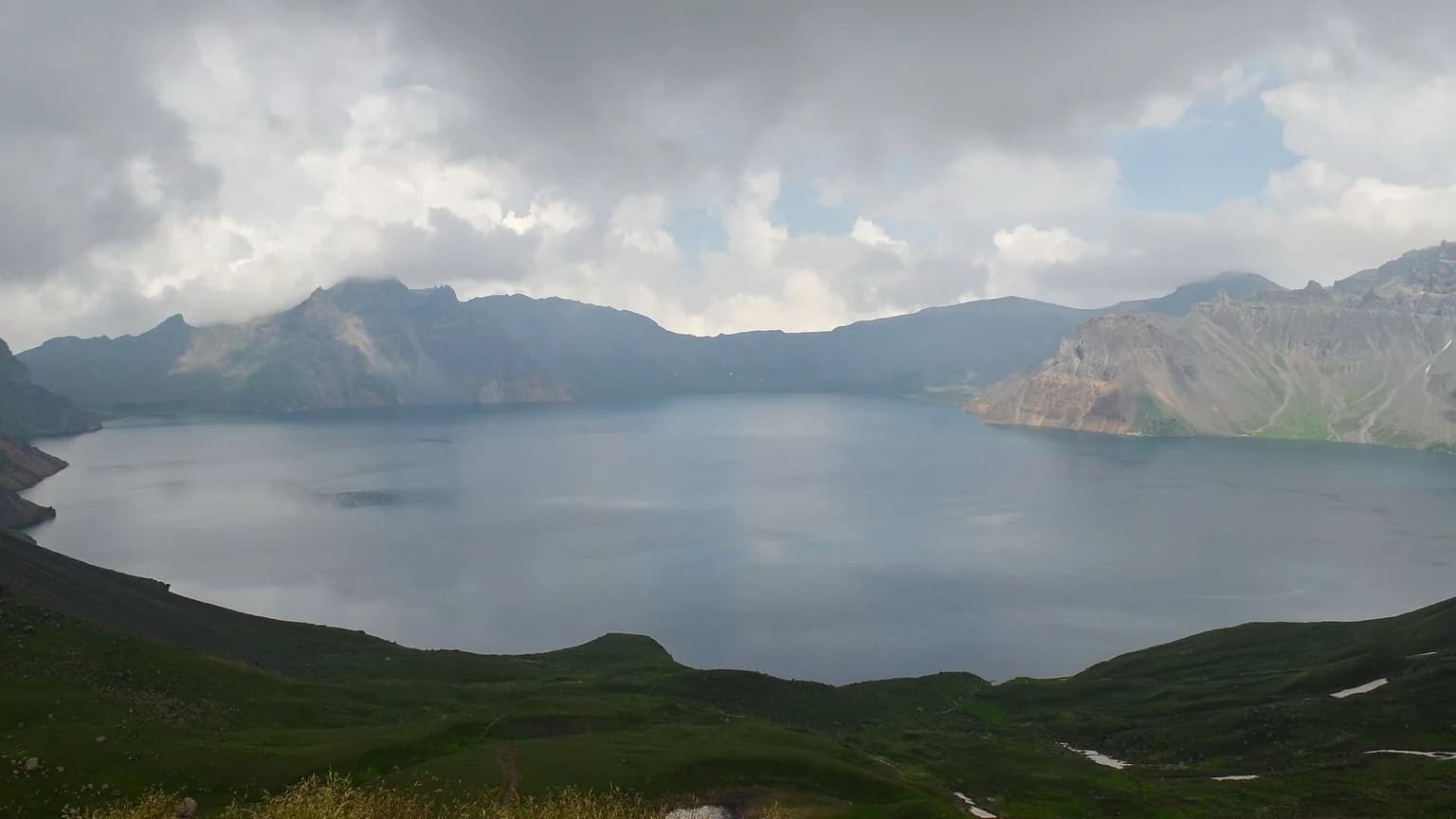
Tianchi's exposed rim explains why summit weather can differ sharply from the forest base. A clear view is never assured. Photo by 颐园新居, CC BY-SA 3.0.
The key decision is emotional: would the forest, waterfall and volcanic landscape still make the trip worthwhile if Tianchi is hidden? If yes, Changbaishan is a strong cool-weather choice. If no, choose a destination whose value does not depend on one exposed viewpoint.
6. Guiyang: mild, green and humid
Guiyang is the practical alternative for travellers who want food, city comfort and karst day trips. Its elevation is lower than Lijiang or Xining, yet the historic summer pattern is mild; late-July averages are around the mid-twenties rather than the extreme heat of many nearby lowlands.
The feel is humid. Summer rain is substantial, thunderstorms occur, and a room can feel damp even when the temperature number looks pleasant. Prioritise a hotel with reliable air conditioning or dehumidification, keep a dry set of socks, and build one indoor half-day into the plan.
Three city nights work; five nights allow two outward choices. Qianling Mountain Park and the Jiaxiu Pavilion–Nanming River route keep the urban days compact. Qingyan Ancient Town or Tianhetan can fill one outward day. Choose one after checking rain and transport rather than collecting every karst name.
Guiyang beats Kunming when Guizhou cuisine and karst are the trip's purpose. Kunming wins when easier Yunnan extensions and a broader flight-and-rail gateway matter more.
7. Xining: the driest-feeling cool option, with altitude
Xining sits around 2,275 metres. Historical June-to-August monthly averages are roughly 15–17°C, and average highs remain below 25°C. Those numbers sound ideal, but the plateau sun is strong and shade-to-sun contrast is large. A clear afternoon can feel much warmer than the air temperature; evenings cool quickly.
Rain is lighter overall than in Kunming, Lijiang or Guiyang, although summer holds most of Xining's annual precipitation. Pack sun protection and a warm layer as carefully as a rain shell. Treat the first day as altitude adjustment, not a race to a higher lake pass.
Xining works best as a four-to-six-night gateway. Give the city one easy day, then choose Kumbum Monastery and either a carefully planned Qinghai Lake route or another lower-intensity excursion. The Qinghai Lake and Chaka chooser explains why those two names should not automatically be compressed into one punishing day.
Choose Xining over Yili for a shorter trip with simpler rail geometry. Choose Yili when you have a full week or more and the road journey itself is part of the holiday.
Match the destination to your available time
Three or four nights
Pick Kunming for the broadest weather backup, Guiyang for food and one karst day, or Xining only if everyone handles altitude reasonably and the flight or rail timing leaves a real first evening. Jiuzhaigou can fit three nights when transport aligns, but it should consume the whole short trip.
Do not choose Yili for four nights. Arrival, road positioning and departure will dominate. Do not add both Kunming and Lijiang simply because a train connects them; each becomes a thin stop.
Five to seven nights
Pick Lijiang plus one northwest Yunnan landscape, Jiuzhaigou with Huanglong and buffer, or Changbaishan with one slope and a movable weather day. A five-night Kunming–Lijiang split also works when the group wants an easier first base before higher Lijiang.
Yili remains compressed at five nights. Use that window only for Yining plus one regional direction, not Sayram, Nalati and Kalajun.
Eight to ten nights
This is when Yili becomes competitive. Build a one-way or loop route with two or three bases rather than returning to Yining after every long day. The same length can support a slower northwest Yunnan route, but monsoon rain argues for fewer bases and more movable days.
Avoid combining Yili with Jiuzhaigou or Changbaishan in one ten-night “cool China” tour. The air and rail repositioning consumes the time saved by cooler weather. Choose one climatic region and experience it properly.
Book in the order that protects a summer escape
- Choose the climate mechanism. Humid-mild, high-and-sunny, or remote mountain should be a deliberate choice.
- Fix the minimum nights. Do not buy a cheap flight that reduces Yili to three road days or Jiuzhaigou to a same-day transfer.
- Reserve the weather-sensitive anchor. Dated scenic admission comes before a secondary market, old town or photo stop.
- Choose the exact base. Changbaishan slope, Jiuzhaigou Goukou, Yili direction and Xining excursion matter more than the city's English name.
- Keep cancellation room. Refundable hotels or a movable outward day are valuable in monsoon and mountain regions.
- Recheck one week out. Use the official meteorological forecast, road alerts and scenic-area notice, then move the exposed day if possible.
For a mountain transfer, never join separate train, road and timed-entry products with only the theoretical map duration between them. Station exits, luggage, shuttle queues and weather controls are part of the journey.
Pack for the swing, not the average
A compact system works across all seven choices:
- a breathable shirt for sunny urban hours;
- a light fleece or warm mid-layer for altitude and evening;
- a genuinely waterproof outer layer for southwest and mountain rain;
- quick-drying footwear plus a dry pair of socks;
- hat, sunglasses and high-SPF sunscreen for plateau ultraviolet exposure;
- a small dry bag or zip pouch for passport, phone and power bank;
- water and regular food rather than relying on one scenic-area stop.
An umbrella is useful in Kunming or Guiyang streets but should not replace a shell in exposed wind. Cotton layers that stay wet are unpleasant on a cool shuttle ride. At altitude, pace the first day conservatively and do not hide worsening symptoms to protect a prepaid booking.
The cut-first logic
- Cut Kunming if every traveller wants a dramatic landscape and accepts a more complex transfer.
- Cut Lijiang if altitude or heavy summer rain would make the mountain days stressful.
- Cut Jiuzhaigou if you cannot protect a full park day plus transfer margin.
- Cut Yili if you have fewer than seven nights or dislike long road sectors.
- Cut Changbaishan if a hidden Tianchi would feel like failure.
- Cut Guiyang if humidity matters more than the temperature number.
- Cut Xining if the group needs a low-altitude start or does not enjoy strong sun and dry air.
The best summer escape is the one that remains satisfying when the forecast is imperfect. Choose a destination with a useful wet-day plan, enough nights to move one exposed outing, and a landscape you value beyond the single photograph that sold you the trip.