Kumbum Monastery
Kumbum Monastery (塔尔寺, Ta'er Si) is an active Gelug Tibetan Buddhist monastery in Huangzhong, outside central Xining. It is a strong choice if you want religious art, living practice and the historic landscape around Tsongkhapa's birthplace. It is a poor quick stop for anyone interested only in courtyard photographs.
Budget three to four hours inside plus 45–90 minutes each way, depending on traffic and transport. Recent visitors report that four hours without long rests can still feel tiring because the complex spreads across sloping lanes at plateau altitude. Do not schedule it immediately after landing if you are already breathless, headachy or dehydrated.
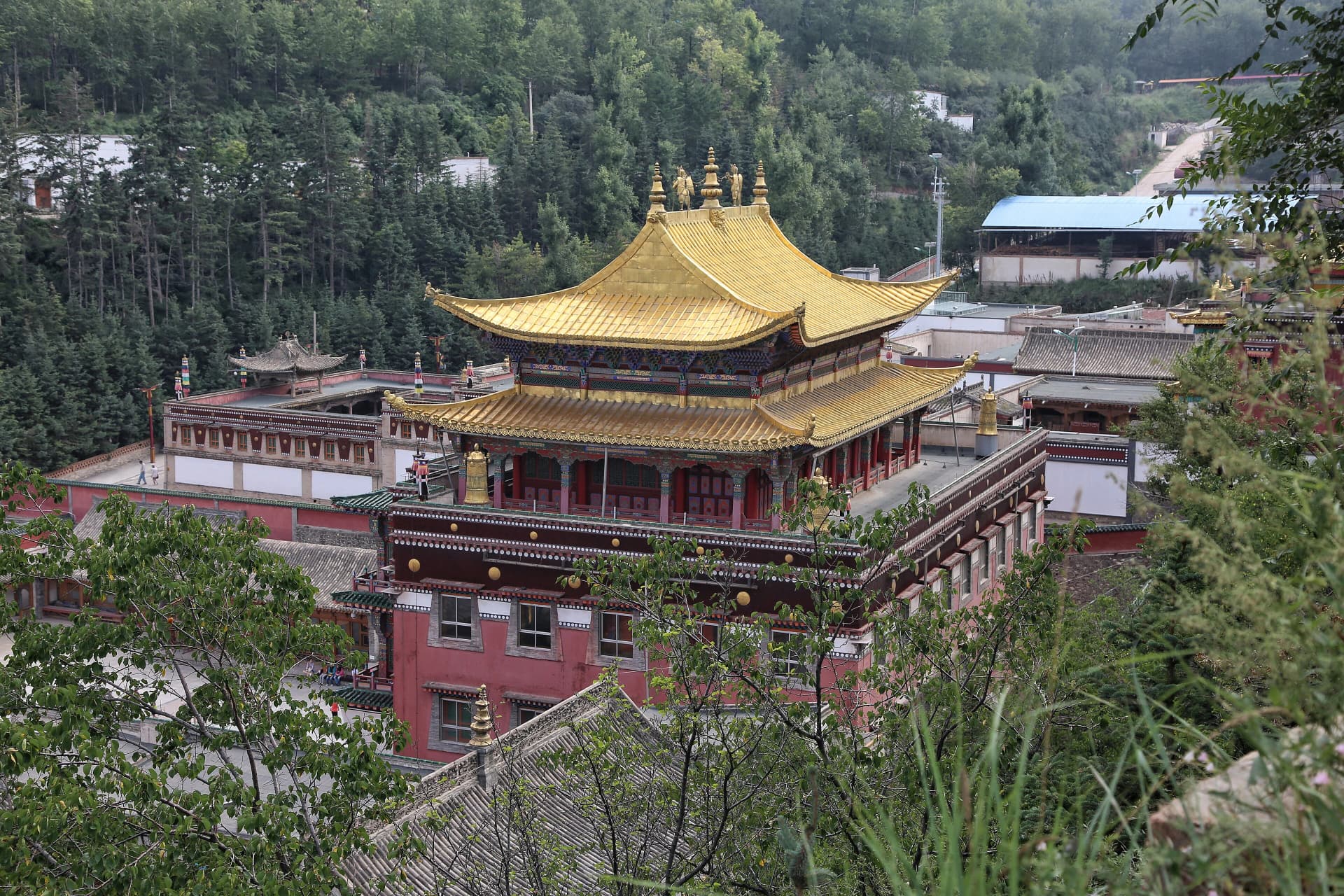
Photo: Charlie fong · Source · CC BY-SA 4.0
Follow a meaning-first route
Collect the current map and ask which halls are open. Restoration, ceremonies and crowd control can close individual buildings. A useful sequence is:
- Eight Auspicious Stupas and the entrance courtyards: learn the site plan and observe how worshippers move before joining the flow.
- Prayer Hall and monastic courtyards: focus on how the complex functions as a religious institution, not only on its façades.
- Golden-roofed core: use a guide or reliable audio interpretation to understand Tsongkhapa, the sacred tree tradition and why the stupa preceded the wider monastery.
- The three artistic traditions: find the currently open butter-sculpture, appliqué and mural displays rather than assuming all are in one hall.
- Finish through the quieter outer courtyards and return to your chosen gate without crossing closed monastic areas.
The exact hall order changes with the gate and closures. If a main assembly area is under repair, do not treat barriers as an invitation to find a side entrance. Ask staff for the revised visitor circuit. Allow more time for interpretation than for photography: without context, richly decorated halls quickly blur together.
Tickets, gate choice and live conditions
Open the exact Kumbum Monastery listing on Trip.com to compare dated admission. Confirm passport or QR entry, ticket collection, included halls, last admission and cancellation. Separate guide, sightseeing-vehicle or costume-photo products should be named explicitly.
Visitors in 2026 reported that the west gate reopened and provided a short approach to ticketing and buses, while other arrivals used the east-side visitor facilities. Treat this as a current-route clue, not a permanent rule. On the morning of travel, check the official account and a live map for:
- which visitor gate is accepting your ticket;
- which car park or bus stop serves that gate;
- open halls and restoration closures;
- last admission and closing flow;
- whether any internal vehicle is necessary or optional.
Do not preserve an old high- or low-season price as fact. A selected-date voucher and the monastery's same-day notice control.
A guide is valuable—but buy the right one
Kumbum is one of the pages where interpretation changes the experience. A competent guide can connect the murals, butter sculpture, appliqué, monastic practice and Tsongkhapa tradition. Visitors who walked without one often say they saw the “three arts” but understood little.
Use the official guide desk or a pre-booked licensed guide. Confirm language, group size, duration, halls covered and total group price before starting. In peak periods, crowded halls make a large group hard to hear; a small shared group or good audio guide can be better. Reject anyone who promises access to closed halls, staged contact with monks or guaranteed ceremonies.
Religious activity is not an attraction timetable. You may encounter chanting, debate or ritual, but never pressure participants to perform or move for a photograph.
Respect inside a living monastery
Wear clothing that covers shoulders and knees. Remove hats where signs or attendants request it. Photography rules vary by space; assume no photography inside halls unless clearly permitted, and never use flash. Courtyard permission does not extend to worshippers, monks or children as portrait subjects.
Do not touch statues, offerings, butter lamps or ritual objects. Do not step on thresholds. Give priority to people prostrating or completing a devotional circuit, keep voices low and follow the direction shown onsite rather than copying an online ritual instruction. Prayer wheels are devotional objects, not props.
Avoid buying costume photography that blocks entrances or turns sacred courtyards into a private set. If using any commercial photography service outside restricted areas, get the location, garment, deliverables and price in writing.
Altitude, steps and comfort
Xining already sits above 2,000 metres, and Kumbum's slopes can amplify a first-day headache. Walk slowly, hydrate and pause in courtyards without obstructing circulation. There are stone thresholds, stairs, uneven paving and densely crowded interiors; full step-free access to every hall is unrealistic. Ask at the gate for the lowest-effort open route and accessible toilet.
The weather can swing from strong sun to wind and cold quickly. Carry sun protection, water and a light warm layer even in summer. In winter, shaded stone can ice. Food inside the religious core is not the plan: eat before arrival or after exiting, and keep drinks out of halls.
From Xining: fix the return before entering
A legal taxi or booked car is easiest for two or more people. Set the destination to the exact operating gate, agree on the total round-trip or pickup terms and save your driver's details. Public buses from Xining can be economical but slower; route 909 and 910 appear in recent reports, yet stops, fares and travel time are volatile. Verify the departure in a live transit app and photograph the return stop and last service when you arrive.
Ride-hailing generally works better than at remote Qinghai Lake sites, but weekend and closing-time demand can still produce delays. Leave a buffer rather than booking a train or flight immediately afterward.
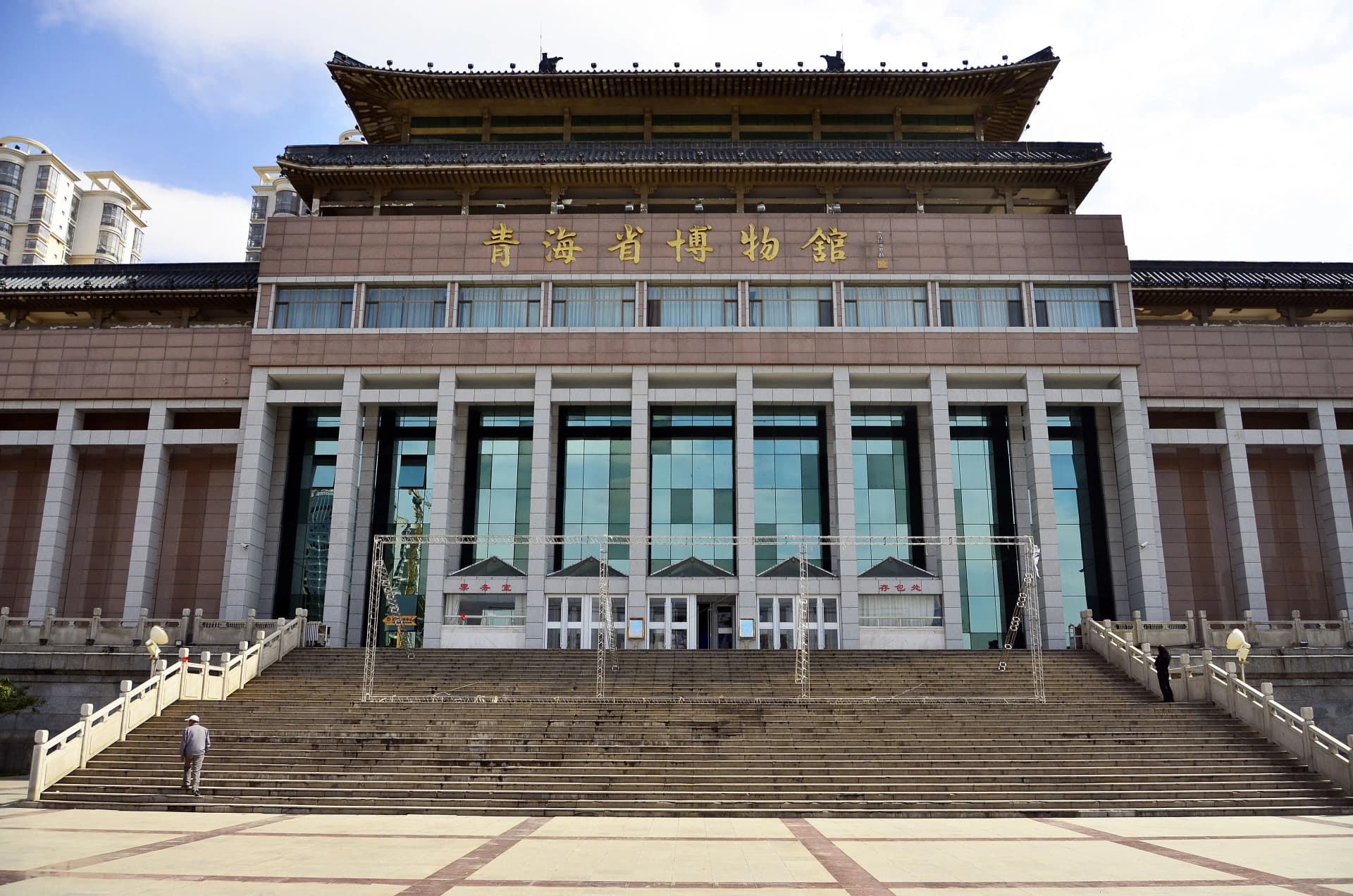
Pair Kumbum with a relaxed city evening or the Qinghai Provincial Museum on another half day. Kumbum, the zoo and the museum can technically fit into one long day; recent itineraries show it, but they also depend on fast transfers and reduce the monastery to a rushed late-afternoon stop. Choose depth over a three-icon checklist.