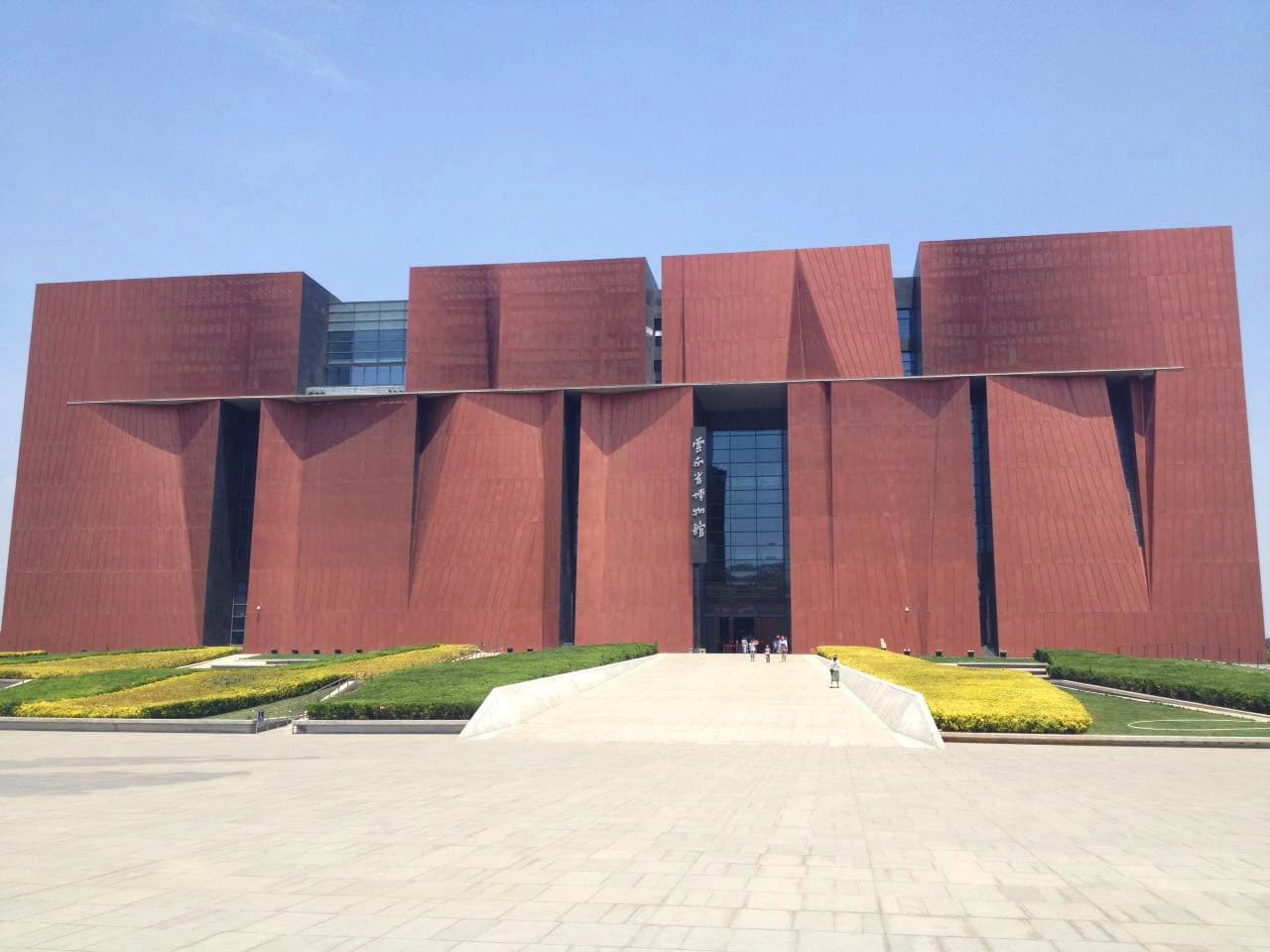
Kunming Stone Forest
Stone Forest is the strongest first landscape excursion from Kunming when you want exposed karst rather than a cave. UNESCO treats the Shilin component of the South China Karst as a world reference for pinnacle karst. The useful visit is not a race through every signed rock: it is a progression from the famous dense formations into a quieter section where scale becomes easier to read.
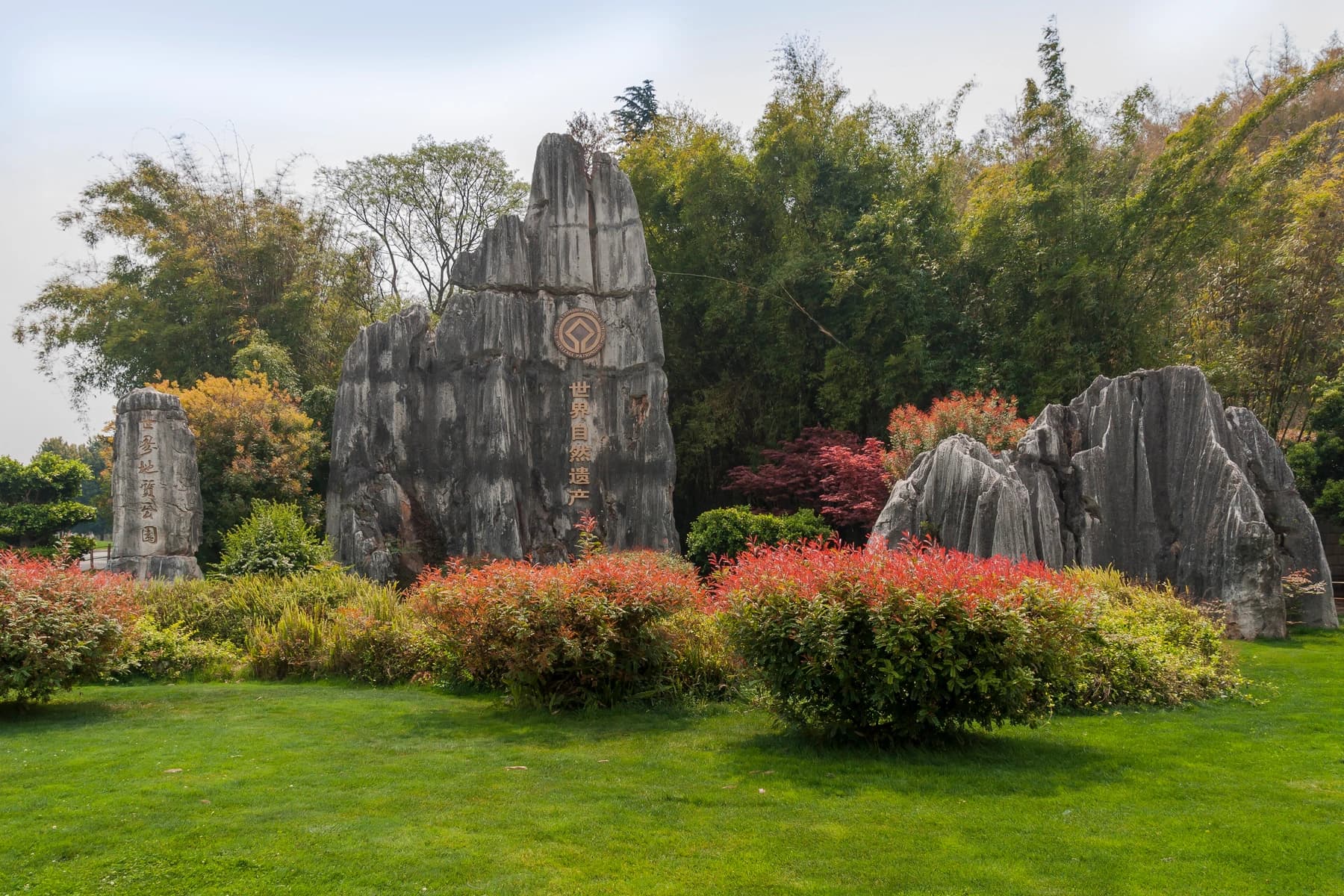
Photo: CEphoto, Uwe Aranas · Source · CC BY-SA 3.0
Use one of two visit depths
About 2.5–3 hours: cover the Major Stone Forest core, the main viewpoint zone and one lower path. This suits a late start, limited mobility or a same-day onward train.
About 4–5 hours: add a broader Minor Stone Forest loop and deliberately leave the busiest photo nodes. This is the better first visit if the excursion is your only karst landscape in Yunnan.
At the entrance, photograph the current shuttle map and closing information. Internal shuttle products and stop patterns can change. Do not assume a shuttle removes all stairs: the most interesting passages still use narrow, uneven stone paths.
A readable sequence
Start with the main panoramic area while attention is fresh. Descend into one dense corridor, then return to open ground before choosing a second loop. Repeating three similar narrow passages rarely adds understanding and makes orientation harder.
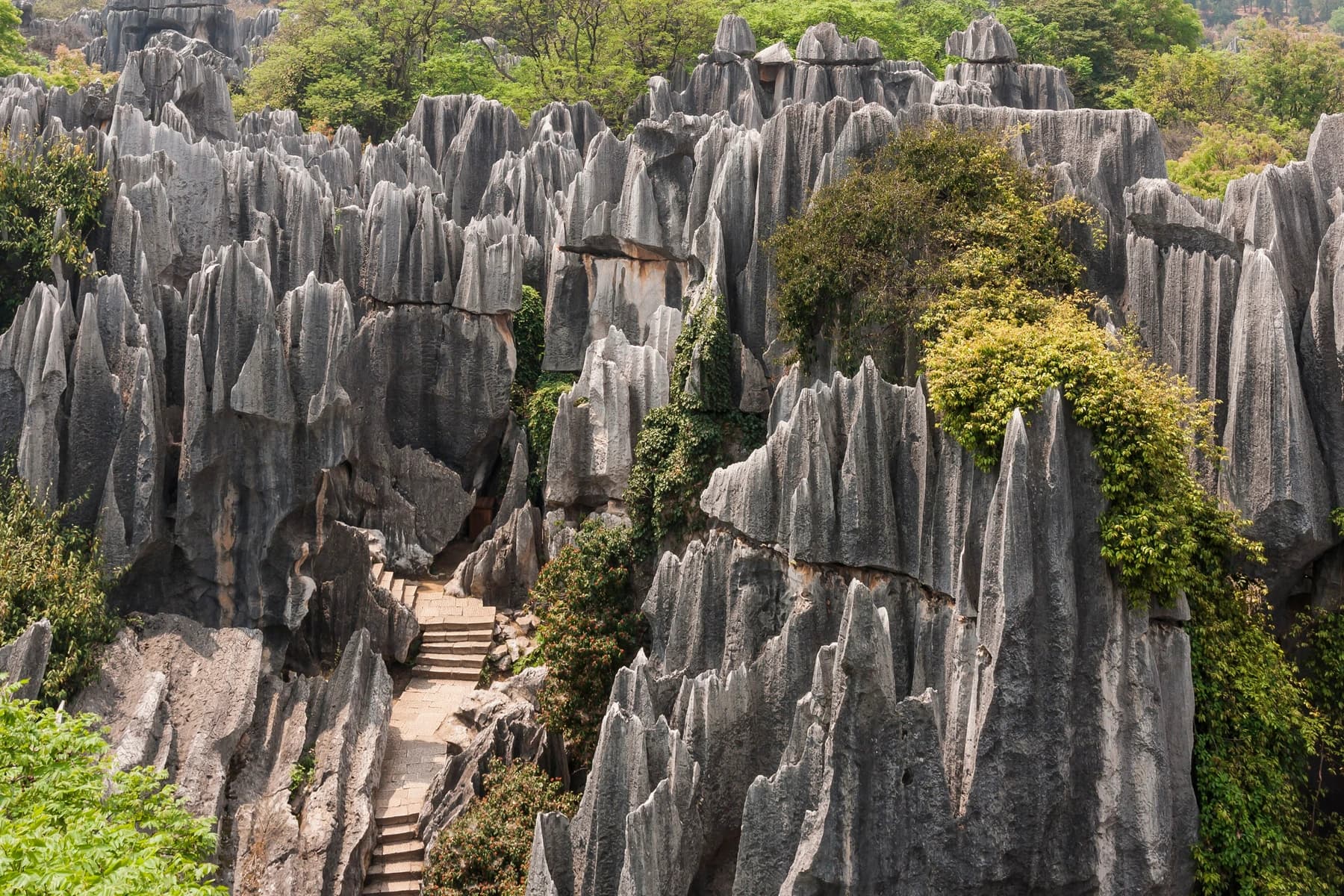
Photo: CEphoto, Uwe Aranas · Source · CC BY-SA 3.0
Use these decision rules:
- If group traffic is heavy, keep moving past the first named-photo cluster.
- If rain begins, avoid polished descents and exposed edges; limestone becomes slippery quickly.
- If visibility is poor, prioritize the close formations rather than waiting for a broad panorama.
- Treat named rock resemblances and Ashima stories as cultural interpretation, not geological labels.
Decide when to leave the narrow passages
Visitor accounts describe the Major Stone Forest as an engaging walk between close rock walls, with repeated climbs and changes of direction. Pause at each signed junction to check where you are and which way returns to open ground. A path being quieter does not establish that it is shorter or easier.
Use the Minor Stone Forest as a change of pace when you still have energy: one family account valued its more open scenery for group photographs, while another skipped it after the children had had enough of the rock passages. Both are reasonable choices. Stop for water and decide before committing to another circuit.
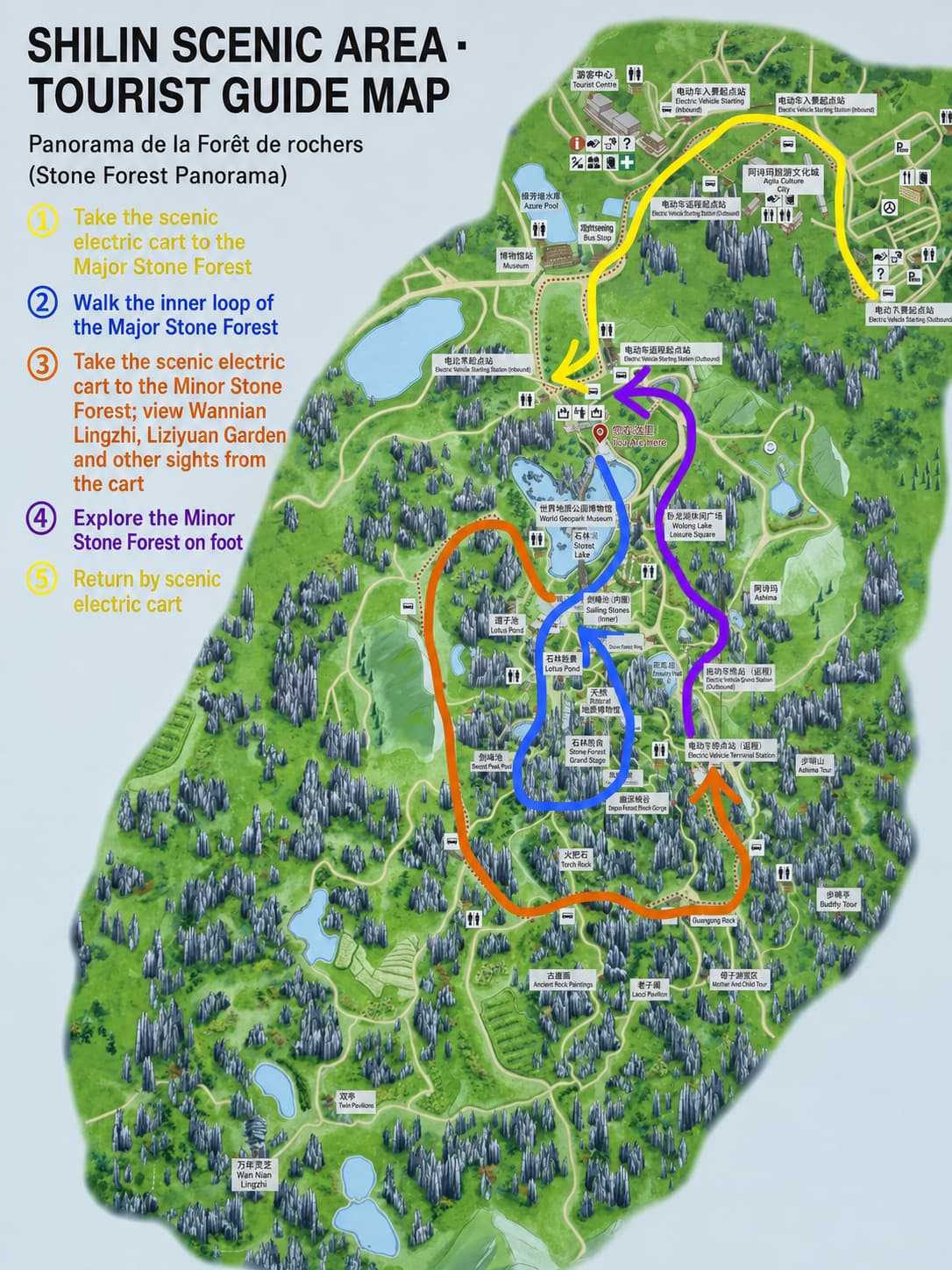
The diagram is an overview of a visitor circuit, not a live shuttle timetable. Photograph the map at your actual boarding point and check which stops your transport ticket serves. Do not assume the arrows guarantee that every part of the route is open.
For a railway return, allow time after the final scenic-area shuttle to reach the external pickup. One family report describes waiting for a connecting coach to fill and another group finding it already full. Confirm today's departure arrangement and leave a margin; do not turn that traveler's successful connection into a minimum transfer time.
Getting there from Kunming
From the Green Lake area to the verified visitor centre, Amap planning gives roughly 88.6 km / 1 hr 13 min by car in ordinary conditions. Public-transport results are much slower and may combine metro, airport transfer and a local coach rather than provide a clean tourist connection. A booked transfer, current official excursion or a carefully checked bus plan is more realistic than improvising after breakfast.
If using rail, verify the exact station, the station-to-scenic-area transfer and the last practical return before buying. “Shilin” can refer to the county, a rail station or the scenic area; they are not the same point.
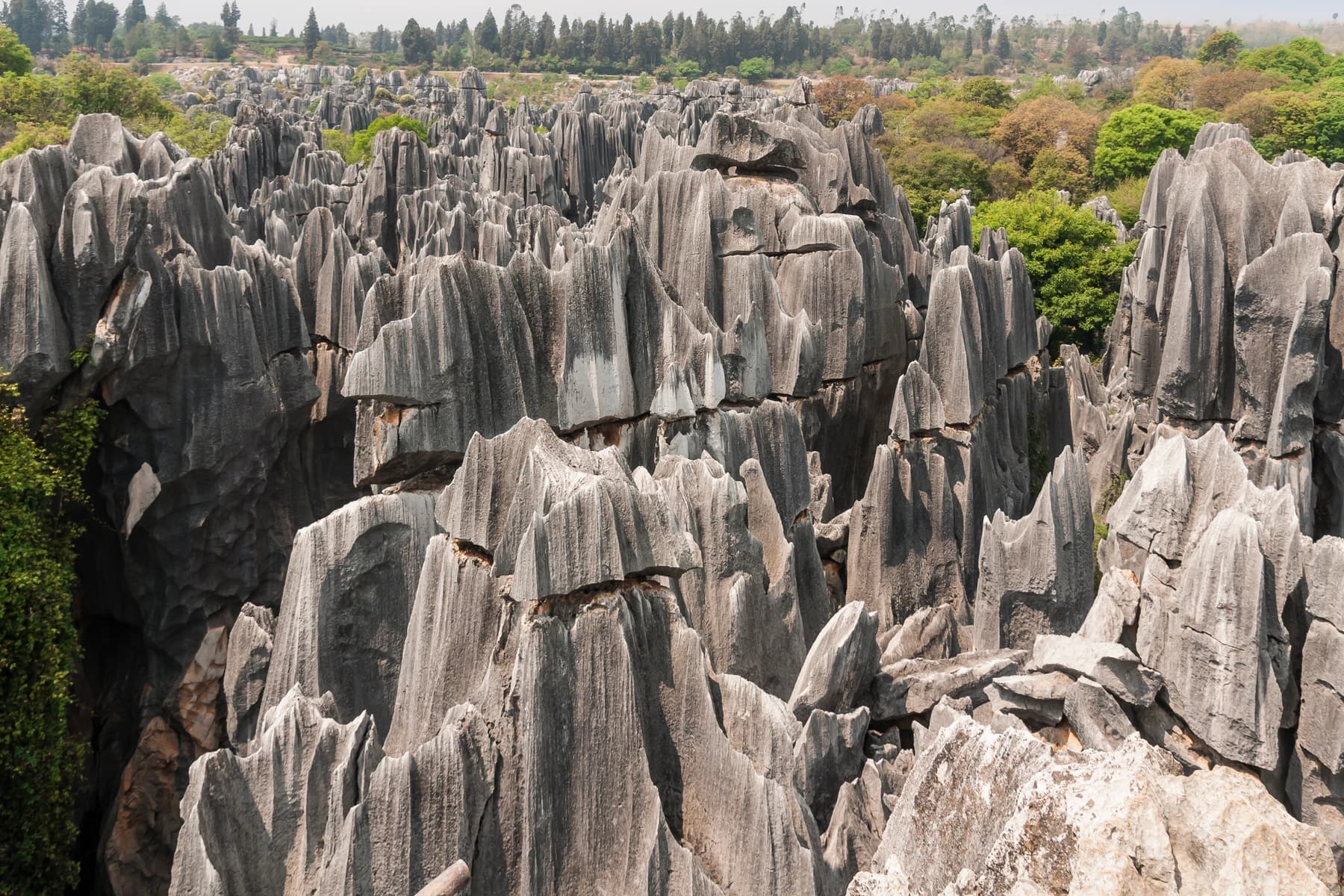
Photo: CEphoto, Uwe Aranas · Source · CC BY-SA 3.0
Stone Forest or Jiuxiang?
Choose Stone Forest for daylight, open views and the clearest UNESCO karst context. Choose Jiuxiang for underground scale, river gorge and more stairs. They lie in the same broad eastern direction but are not a sensible casual two-stop day for most independent visitors. Give one destination enough time instead of collecting both names.
Recheck live ticketing, shuttle operation and severe-weather notices before departure. Carry water, sun protection and shoes with reliable grip; shade changes constantly between open platforms and rock corridors.