Guiyang
Guiyang is Guizhou's provincial capital and the practical gateway to the province, but it is not shorthand for every famous landscape in Guizhou. Within and near the city, urban mountains, two complementary museums, the Nanming River, historic Qingyan and managed karst sites can make a strong two-to-four-day trip. Huangguoshu, Libo and distant village regions belong to separate journeys with their own transport and overnight decisions.
The central planning mistake is distance. Jiaxiu Pavilion, Qianling Mountain, Guanshanhu's museums, Qingyan, Huaxi, Tianhetan, Yelang Valley, Nanjiang Grand Canyon and Xifeng sit in different sectors. A good plan chooses one city job plus one nearby job per day, then protects the return from every outward attraction.
Guiyang in 60 seconds
- Best for: Guizhou context before a wider trip, karst science, urban nature, regional food and cooler-paced city days.
- Allow: two days for city culture; three to add one southern outing; four only if a second outward sector genuinely adds value.
- Choose a base: Guanshanhu for Guiyang North and museums; Nanming for Jiaxiu, food and an evening river walk.
- Main risks: assuming short map distances, overpacking caves and old towns, weak foreign-passport booking paths, wet surfaces and unsafe macaque interaction.
- First booking decision: exact hotel building and room, then any museum interpretation or scenic product that matters.
Choose the right base
Guanshanhu: calmer logistics and museum access
Guanshanhu is the practical default for arrival at Guiyang North Railway Station and for Guizhou Provincial Museum plus the Guizhou Geological Museum. The area generally offers wider roads, newer hotels and easier station access, but it is not the best base for walking out to the old river landmarks.
AMap planning estimates place Guiyang North about 5.8 km / 14 minutes by car from the Provincial Museum under modelled conditions. The metro alternative includes a substantial access walk, so a car can be the lower-friction choice with luggage or limited mobility.
Nanming: river landmark, food and denser city life
Choose Nanming when Jiaxiu Pavilion, central meals and evening walking matter more than museum convenience. The trade-off is denser traffic, underpasses, noise and more complicated pickup points. Recent visitors repeatedly found that a good district name did not protect them from a poor tower, noisy room or awkward entrance.
Compare Guiyang hotels on Trip.com, but verify the exact building, reception entrance, lift access, room window and recent cleanliness reports before committing to a long stay.
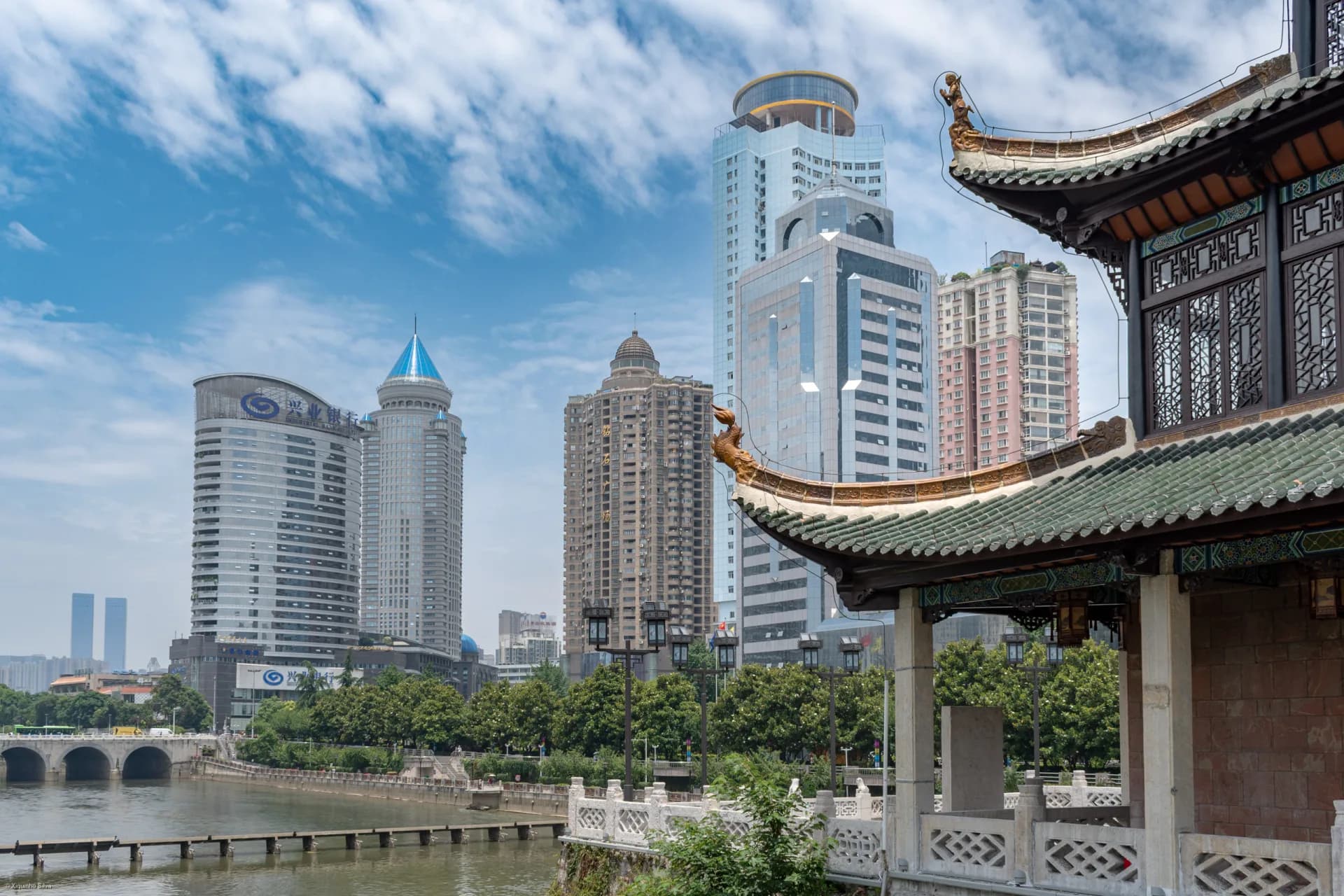
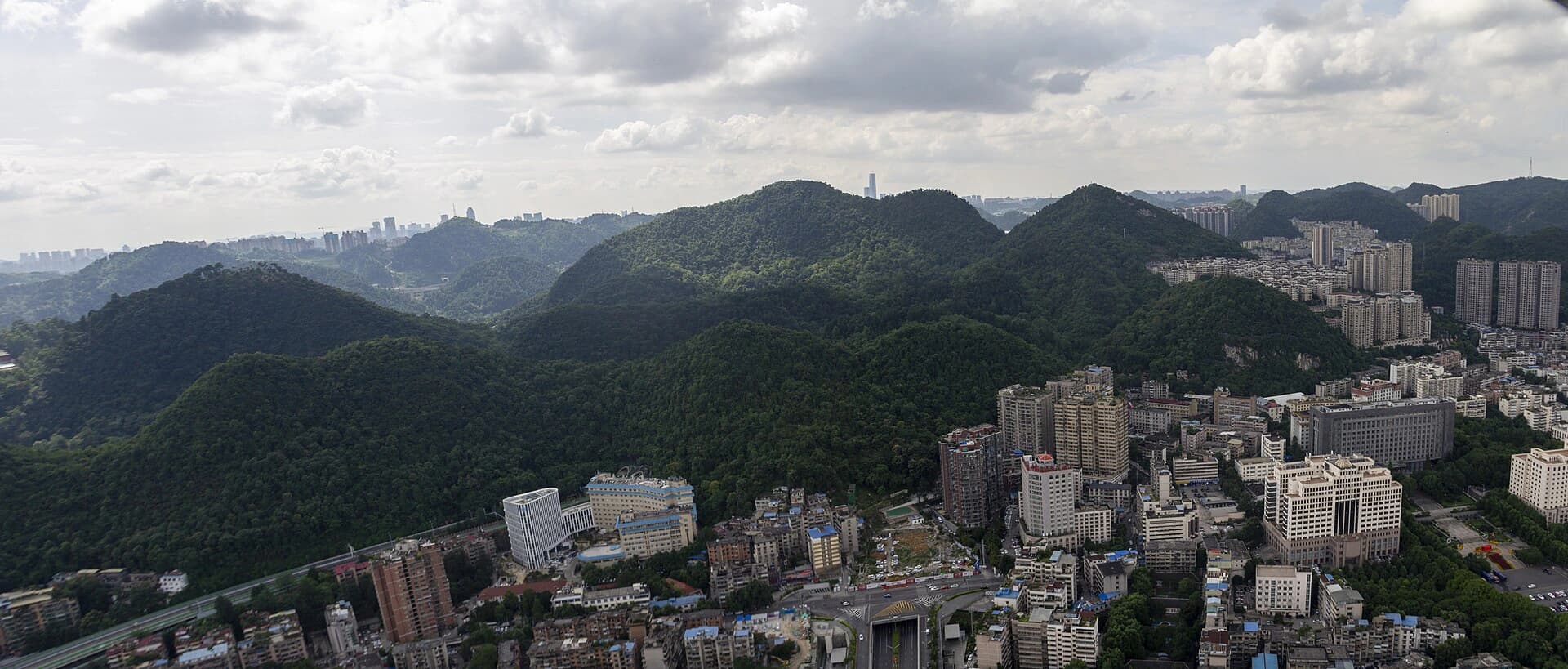
Four geographic layers that make the city understandable
1. Guanshanhu museum day: regional history or earth science
Start with the Provincial Museum if this is your first Guizhou visit. Its strongest job is to build regional chronology and introduce archaeology, textiles and named communities before you see the province elsewhere. Do not organize the visit around one promoted object: displays rotate, and a highlighted piece may be an original, a replica or temporarily absent.
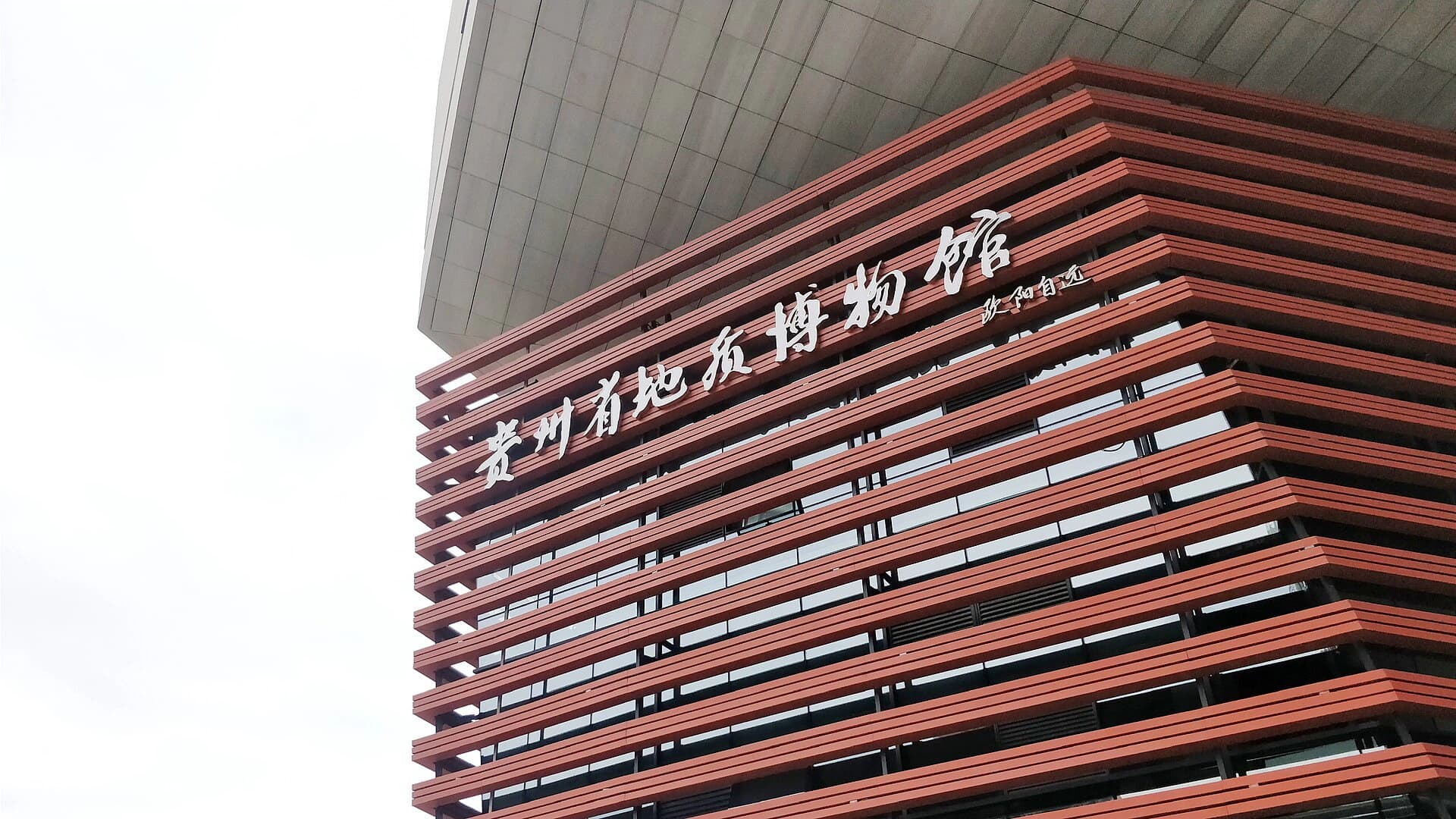
Add the Geological Museum only if fossils, minerals, palaeontology and karst formation deserve another two hours. The institutions are about 6 km / 16 minutes by car apart in AMap planning; they are complementary, not interchangeable branches of one museum.
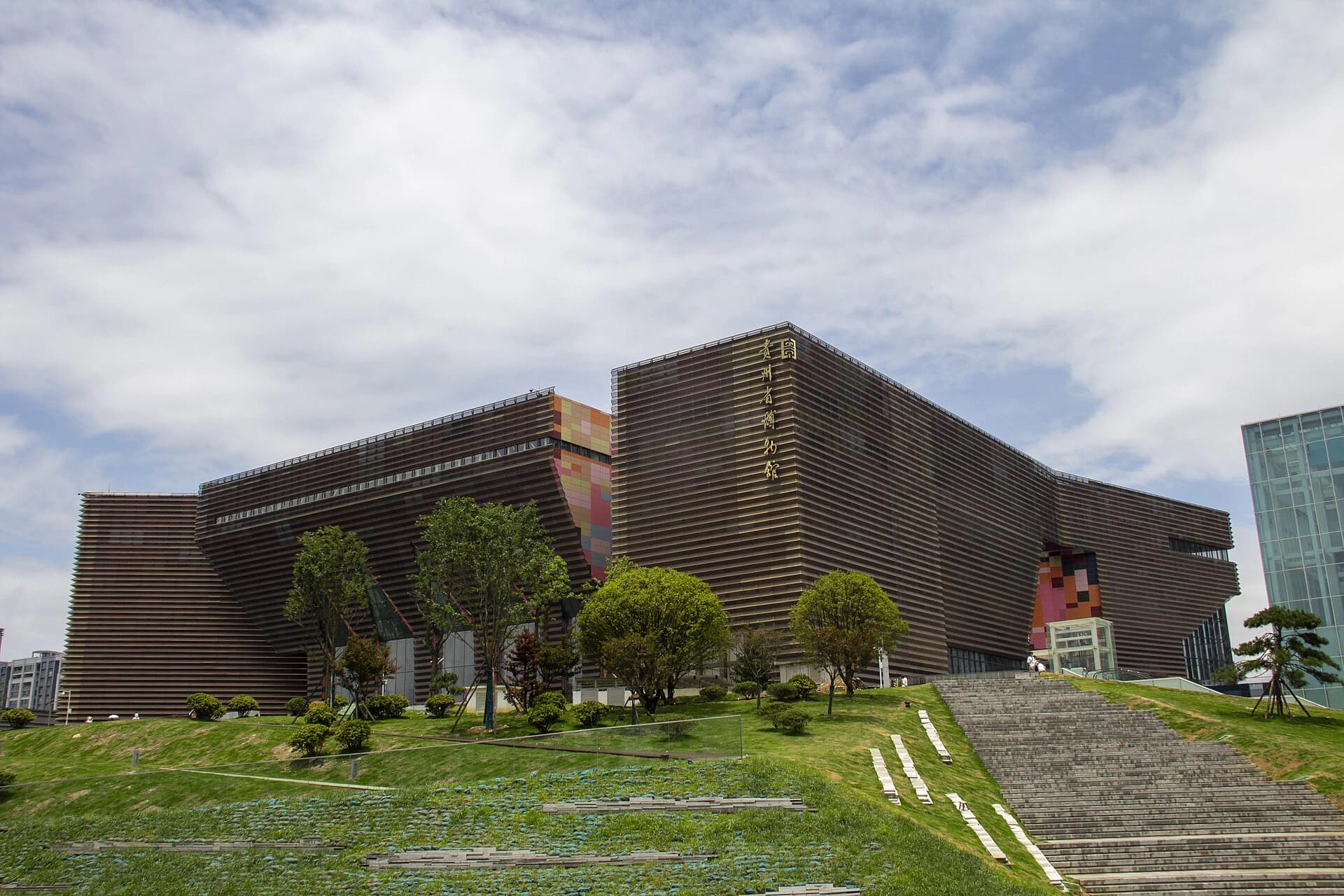
Photo: 維基小霸王 · Source · CC BY-SA 4.0
2. Nanming River: one concise city-landmark walk
Jiaxiu works as a short architecture-and-river stop. Choose daylight if an open interior matters, or night if the exterior reflection matters more. The opposite bank often provides the clearer view, while the bridge itself can become intensely crowded. Lighting, interior entry, boat products and temporary shows are separate live operations.
Do not assume Jiaxiu to Qianling is a quick stroll. AMap estimates roughly 3.9 km / 52 minutes on foot, while traffic can make even the car transfer unpredictable. Give each site its own time block.
3. Qianling Mountain: scenery, temple or macaque route
Qianling Mountain Park is not one gentle urban loop. The main side serves scenery, elevation and Hongfu Temple; East Gate supports a shorter macaque-focused visit. Zoo, panda areas, boats and cable transport are additional components whose current access must be checked separately.
Free-ranging macaques are wildlife, not performers. Never feed, touch or threaten them, and do not show food or unsecured bags. A bite or scratch needs prompt medical assessment.
4. Southern and outward sectors: choose one purpose
- Qingyan Ancient Town: choose for a historic-town walk, religious and residential fabric, and optional interiors. The outer commercial approach, heat and wall stairs can consume more energy than expected.
- Tianhetan: choose for a managed cave, water and karst sequence. Caves, boats, waterfalls, shuttles and night products may not share one ticket or one operating status.
- Yelang Valley: choose for Song Peilun's modern artist-built stone environment. It is not an excavated capital of the ancient Yelang kingdom.
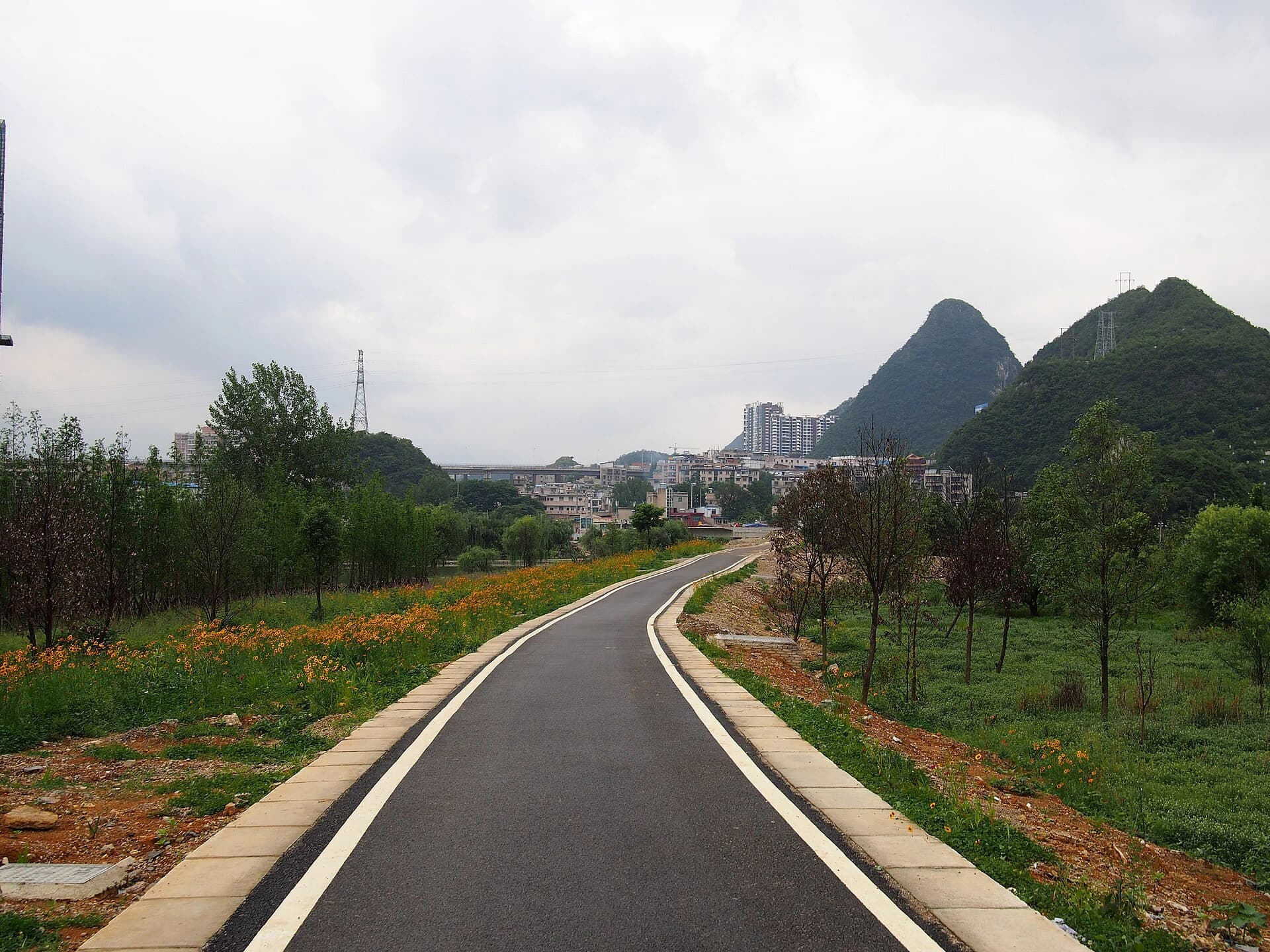
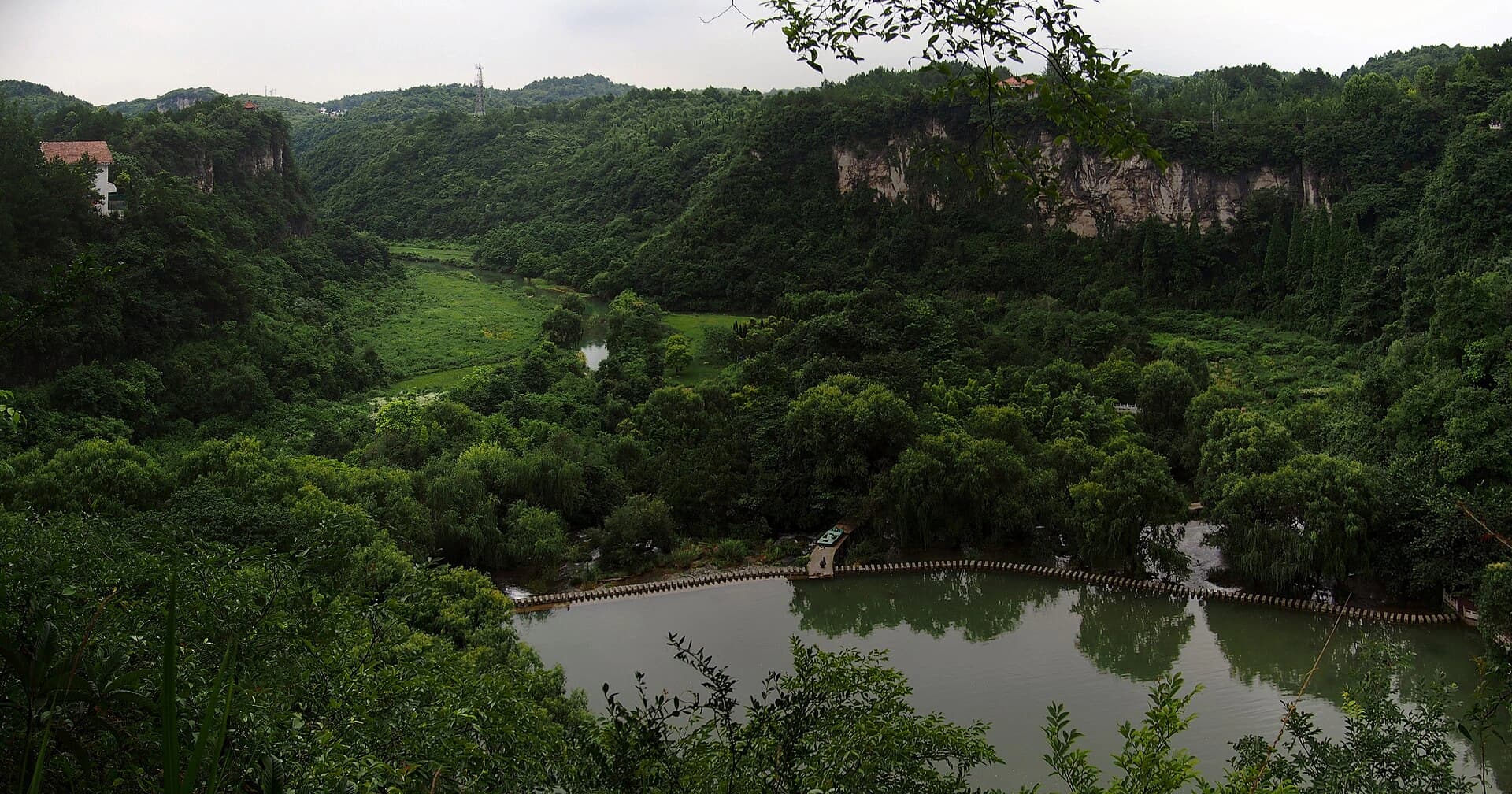
- Huaxi wetland route: choose for a gentler, defined riverbank segment. Do not turn the entire Huaxi greenway system into an imaginary short loop.
Qingyan and Yelang can work on the same day with a confirmed car: AMap estimates 10.9 km / 25 minutes between the selected anchors. The public-transport comparison takes about an hour and still involves walking, so protect the return before entering the second site.
A complete two-day city route
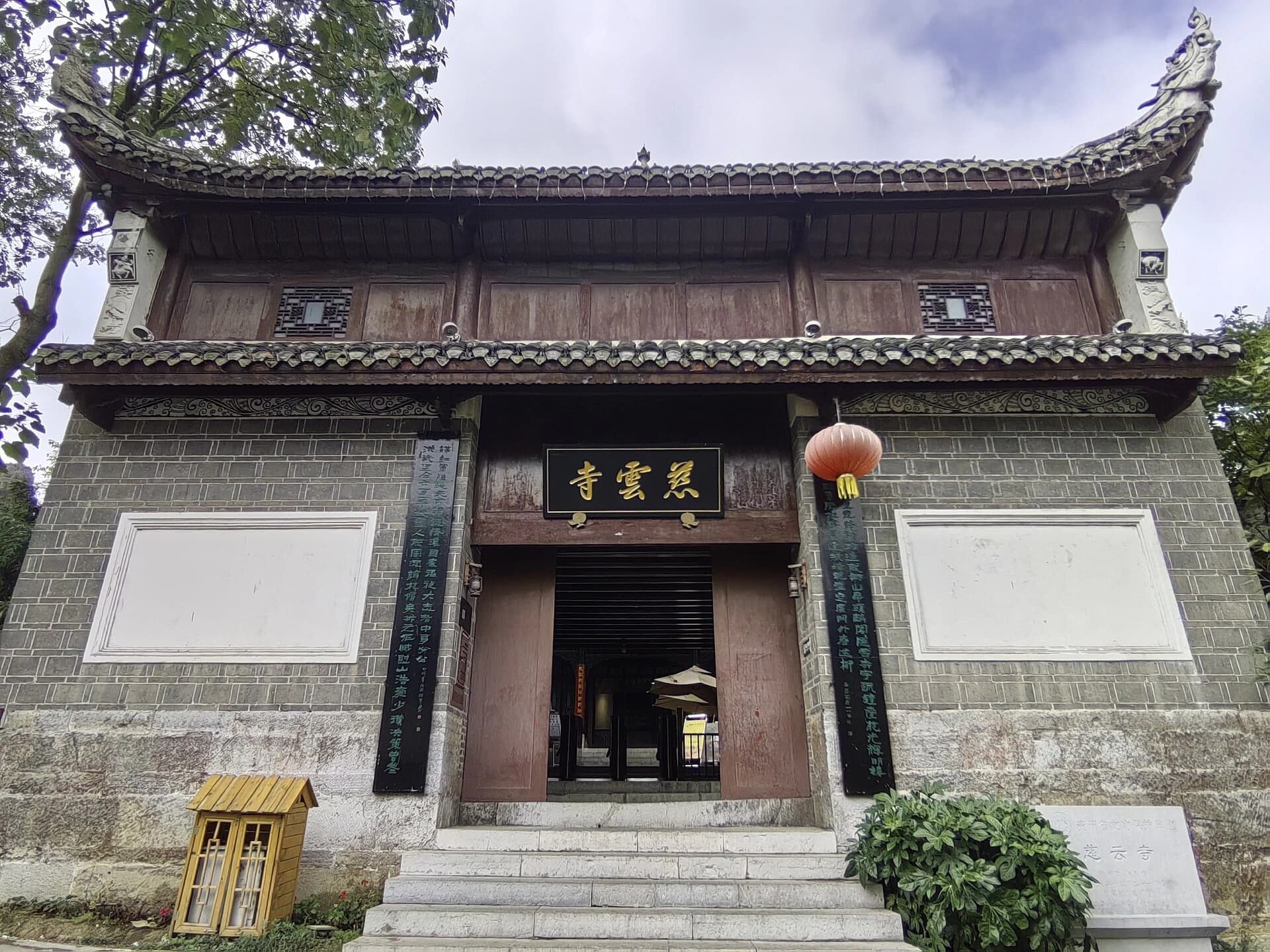
Wenchang Pavilion fits naturally after Qianling Park and before the nearby food streets. Use its exact map pin for the old East Gate area, then continue on foot; allow extra time if the pavilion rooms are closed.
Day 1: museum context and Nanming evening
Use the Provincial Museum as the main indoor anchor. Add the Geological Museum only for a genuine science interest; otherwise save energy for Jiaxiu and dinner. If a foreign-passport reservation route is unclear, contact the museum before crossing the city rather than relying on a screenshot of a mainland-ID form.
Day 2: Qianling, Wenchang and a food finish
Use Qianling for mountain paths, temple context and wildlife—with strict macaque rules—then transfer to the old East Gate around Wenchang Pavilion. Minsheng Road offers a convenient dining stop, not another attraction counted to pad the route. If the group needs flatter pacing, replace this whole day with the Huaxi riverbank rather than forcing both.
Optional third and fourth days
Day 3: Qingyan, Tianhetan or Yelang
Pick one primary purpose: town heritage, managed karst or modern sculpture. Pair Qingyan and Yelang only with an early start and protected transport. Tianhetan needs its own cave-status, rain and product check and is usually stronger as the day's single major attraction.
Day 4: only for a justified outward trip
Nanjiang Grand Canyon is about 59.6 km / 1 hour 8 minutes by car from Guiyang North in AMap planning, with no public-transit option returned. Treat canyon sightseeing and rafting as different products; rafting requires current operator, river, eligibility, equipment, rescue, insurance and return proof.
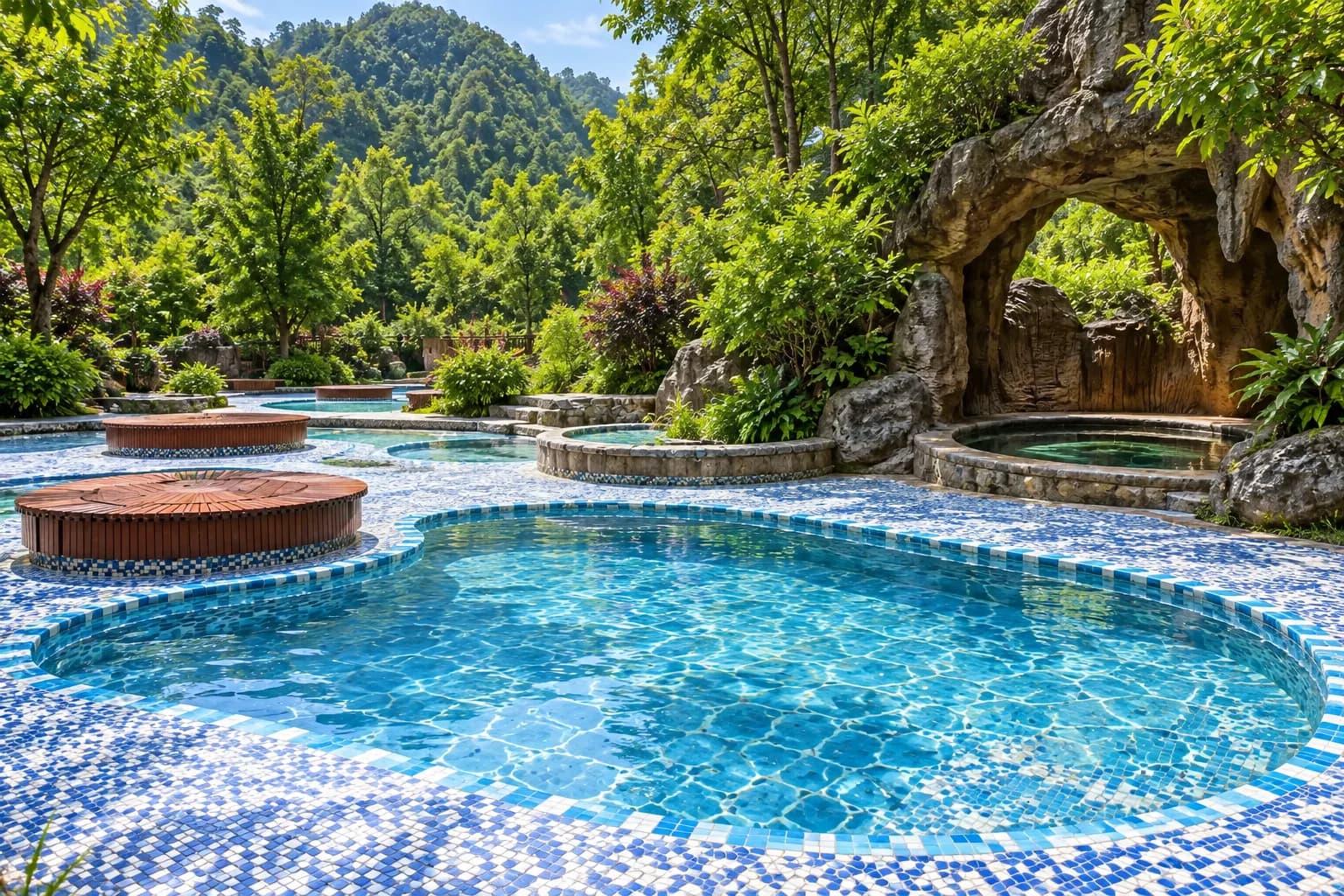
The Xifeng hot-spring decision is similarly conditional. Do not combine hot springs, memorial sites and mountain landscapes under one vague “Xifeng” label, and never repeat medical claims about the water.
Food: order by dish and ingredient, not by a viral queue
Guiyang's food is often sour, spicy, fermented or offal-rich, but every kitchen balances those elements differently. Useful starting points include:
- changwang noodles: commonly combine noodles with pork intestine and congealed pig blood; ask before ordering if either ingredient is unsuitable;
- siwawa: thin wrappers filled with shredded vegetables and dressed with a seasoned liquid;
- sour soup dishes: confirm the protein, fermentation and chilli level rather than assuming one standard recipe;
- tofu balls, grilled vegetables and rice noodles: good for sharing small portions before committing to a large meal.
Ask whether the displayed price is per bowl, portion, skewer, 500 grams or ingredient. Confirm allergens, chilli and offal directly. A queue shows demand at one moment; it does not prove hygiene, permanent quality or fair pricing.
Arrival and city movement
Guiyang North is the useful high-speed-rail anchor for many visitors, but it is not downtown. Check train inventory on Trip.com only after comparing the arrival station with your hotel. From Guiyang Longdongbao Airport to Jiaxiu, AMap planning estimates 11.9 km / 24 minutes by car; the metro alternative includes a long access walk and may be awkward with luggage.
For every outward site, save the exact AMap gate rather than the centre point. Scenic-area names often cover large zones, and a correct attraction pin may still be the wrong visitor entrance. Traffic, flood controls and temporary bus experiments can change the best route.
Weather, surfaces and accessibility
Rain is not a minor inconvenience here: it can affect cave boats, waterfalls, wetlands, canyon access, stone lanes and macaque behaviour. Carry traction-friendly footwear and move cave, river and canyon decisions to the morning of the visit.
Historic lanes, park summits, walls and caves include steps or slippery surfaces. “Accessible entrance” does not prove a complete step-free route. Ask the exact venue about lifts, ramps, accessible toilets and the open return path for that day.
Detailed Guiyang attraction guides
Six rules that improve the whole trip
- Keep the city centre, Guanshanhu, Huaxi/Qingyan, Tianhetan, Kaiyang and Xifeng as different sectors.
- Choose one main purpose per outward day and confirm the return before departure.
- Verify passport/manual-entry fields for museums and every ticketed venue.
- Treat rain, water level and maintenance as same-day gates for caves, wetlands, waterfalls and rafting.
- Never feed, touch, threaten or display food to Qianling's macaques.
- Name dishes, communities and historic layers precisely; “minority culture” is not a substitute for explanation.