Nanjing
Nanjing is not one continuous old city. Its most useful travel stories occupy different landscapes: Ming imperial monuments spread across Purple Mountain; Republican and museum sites sit in the central east–west corridor; the city wall and Xuanwu Lake meet at the northern edge; contemporary Buddhist architecture lies far south at Mount Niushou; Qinhuai's examination and commercial history appears around the south gate and river.
A good first trip does not collect all these labels in one day. Reserve the fragile entries, give Purple Mountain its own directional route, then pair flexible streets and food with the fixed-time sites.
Choose the Right Nanjing Route
- Choose the 2-day city walk if tree-lined streets, cafés and neighborhood atmosphere matter more than complete first-timer coverage.
- Choose the 3-day classic route for the strongest first trip: one Purple Mountain day, one central museum-to-lake day and one southern Niushou-to-Qinhuai day.
- Choose the 4-day route when you want the west-city memorials and Republican residential streets without compressing the first three days.
- Choose the 5-day route for a slower survey of the capital's historical layers.
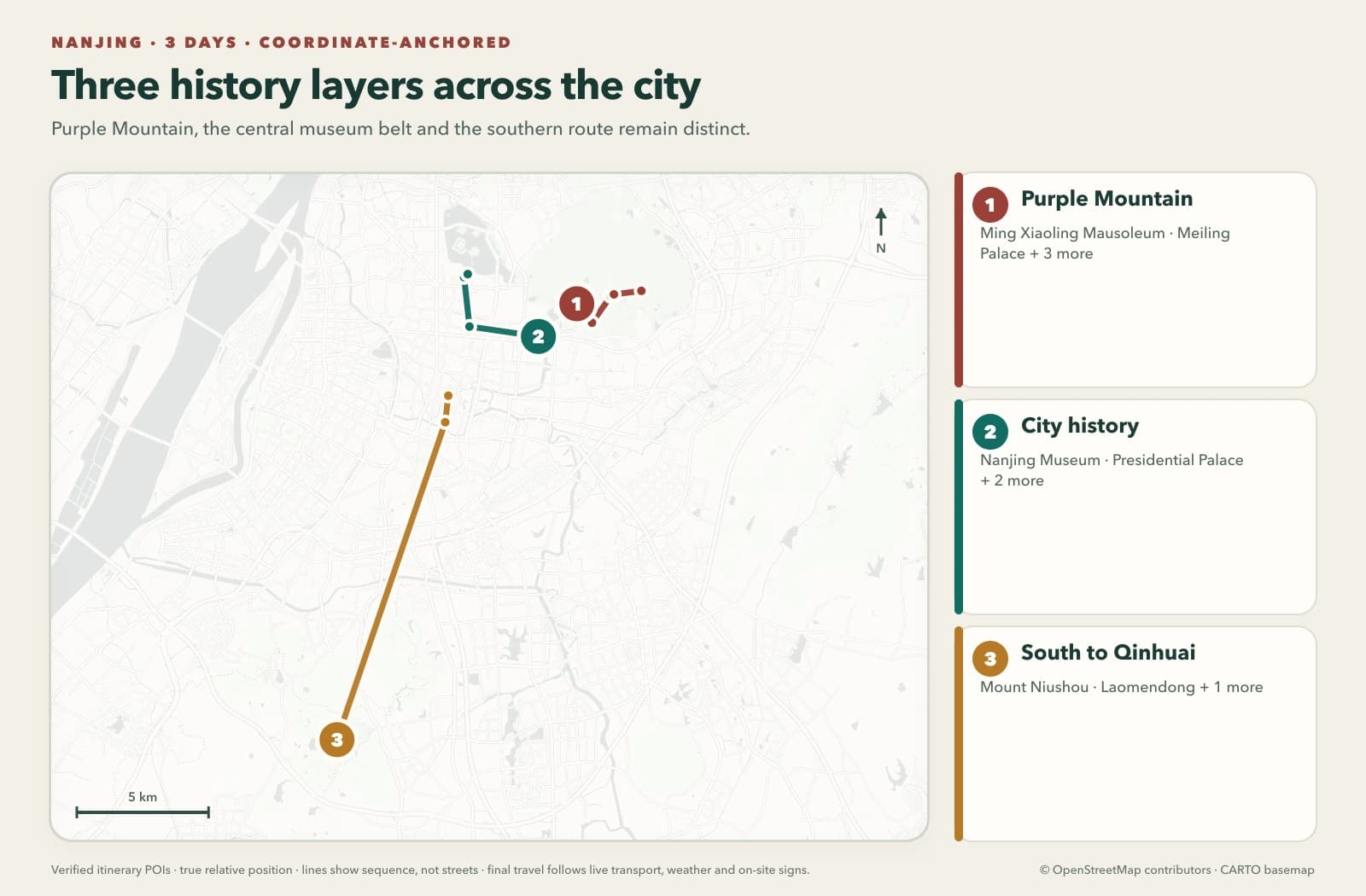
The diagram is schematic, not to scale. Amap planning placed the Nanjing Museum–Presidential Palace drive at about 3.5 km and the Mount Niushou–Laomendong drive at about 16.1 km, but these are planning estimates rather than live traffic. Inside Purple Mountain and Mount Niushou, use the scenic area's current shuttle system instead of assuming ordinary road routing applies.
Book in This Order
1. Sun Yat-sen Mausoleum
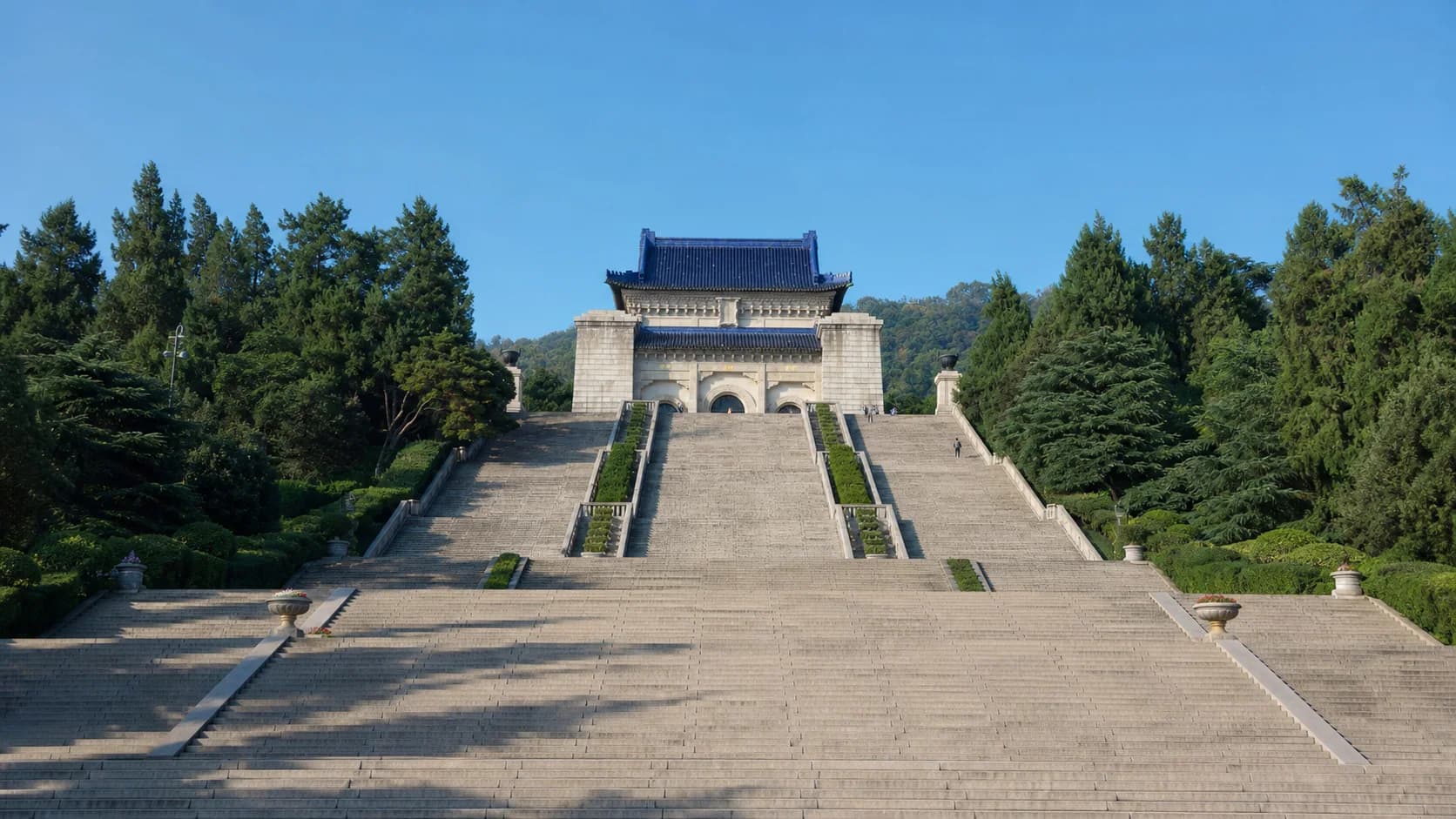
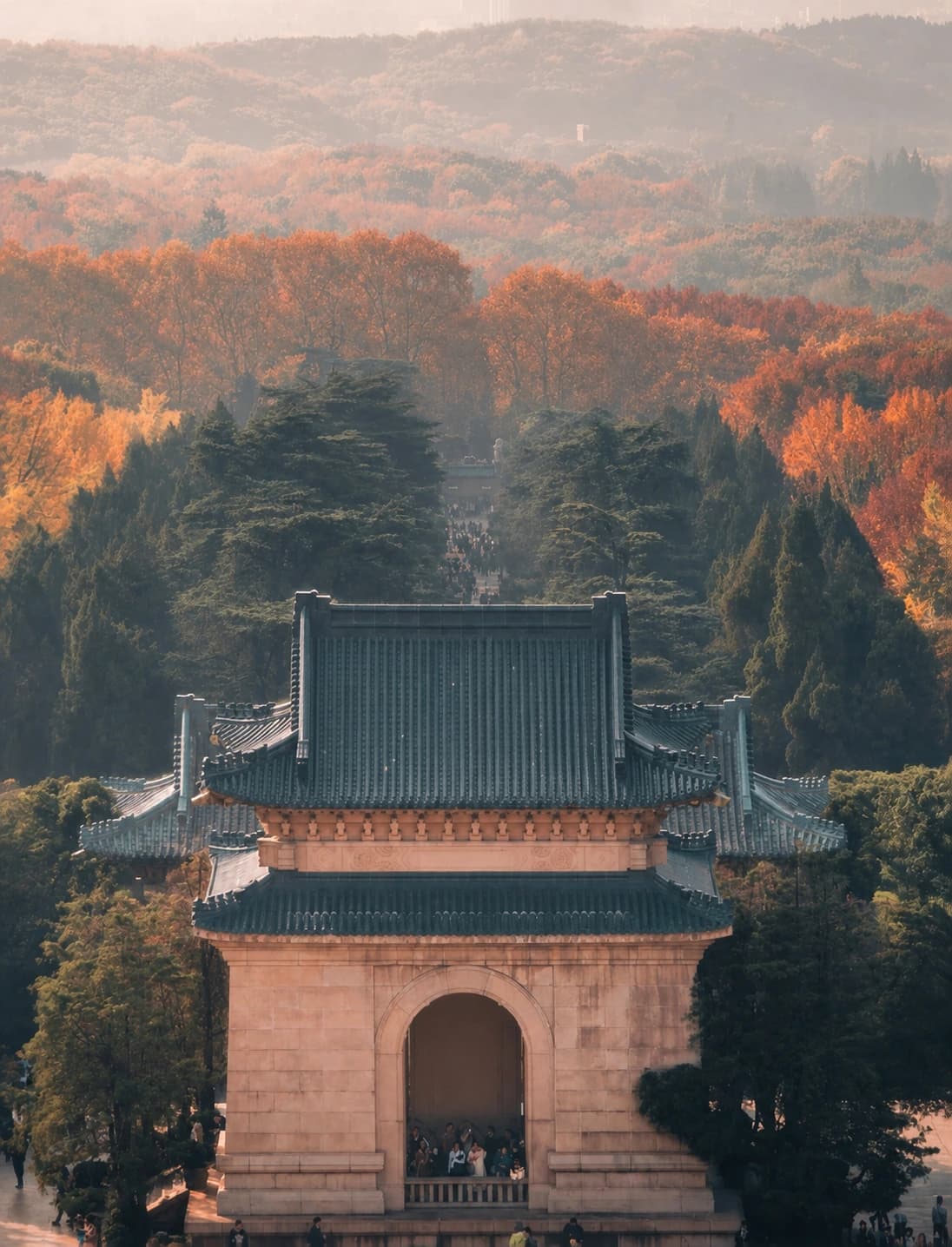
The mausoleum's timed reservation controls the eastbound Purple Mountain day. Book it first, carry the document used for reservation and leave shuttle-queue slack before the slot. Treat any interior access shown in an old post as provisional; live attraction notices control what can be entered.
2. Nanjing Museum
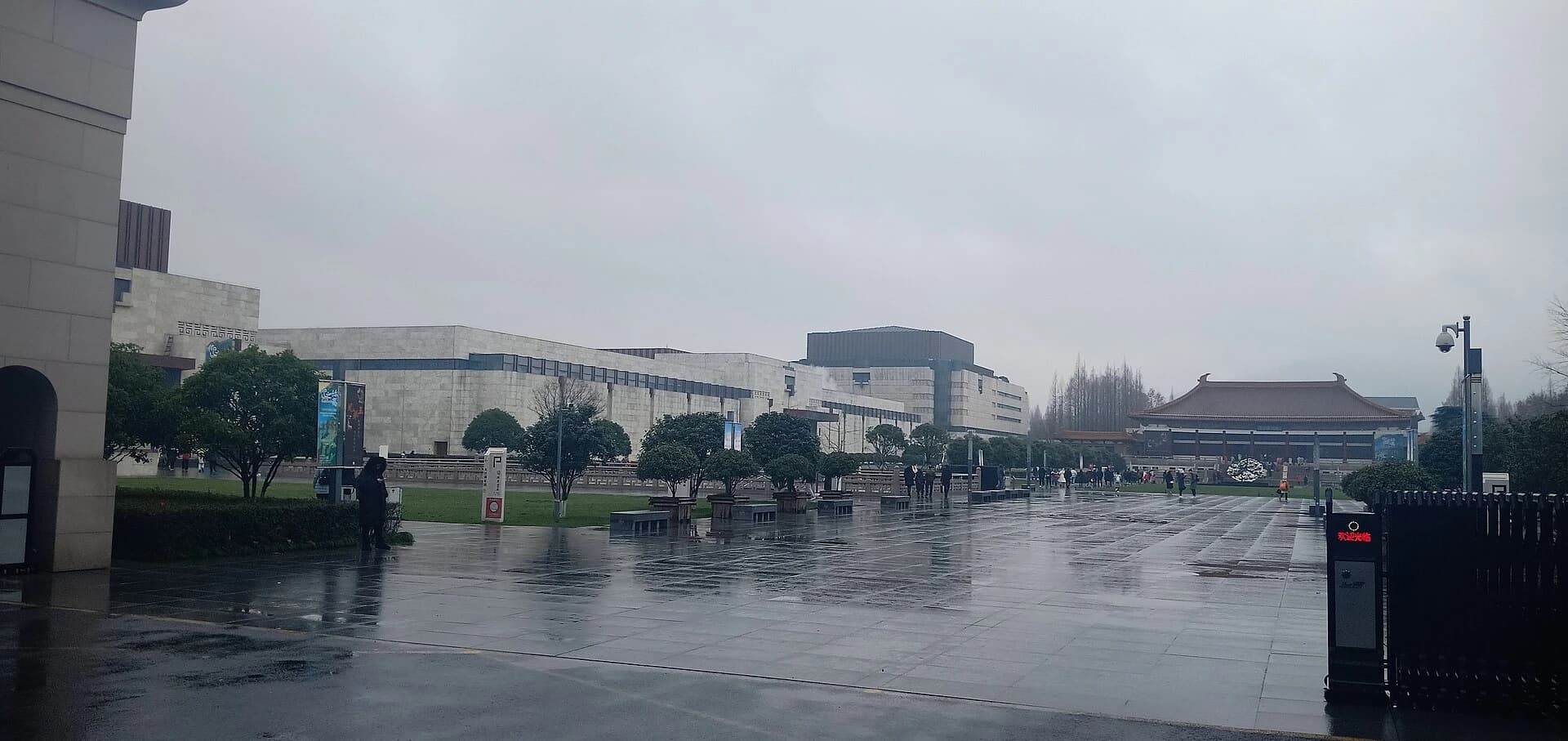
The official Nanjing Museum site is the source for the current reservation window, document rules and closure calendar. Foreign visitors should use passport details and carry the original document. A saved visitor profile is not the same as a successful reservation.
3. Presidential Palace
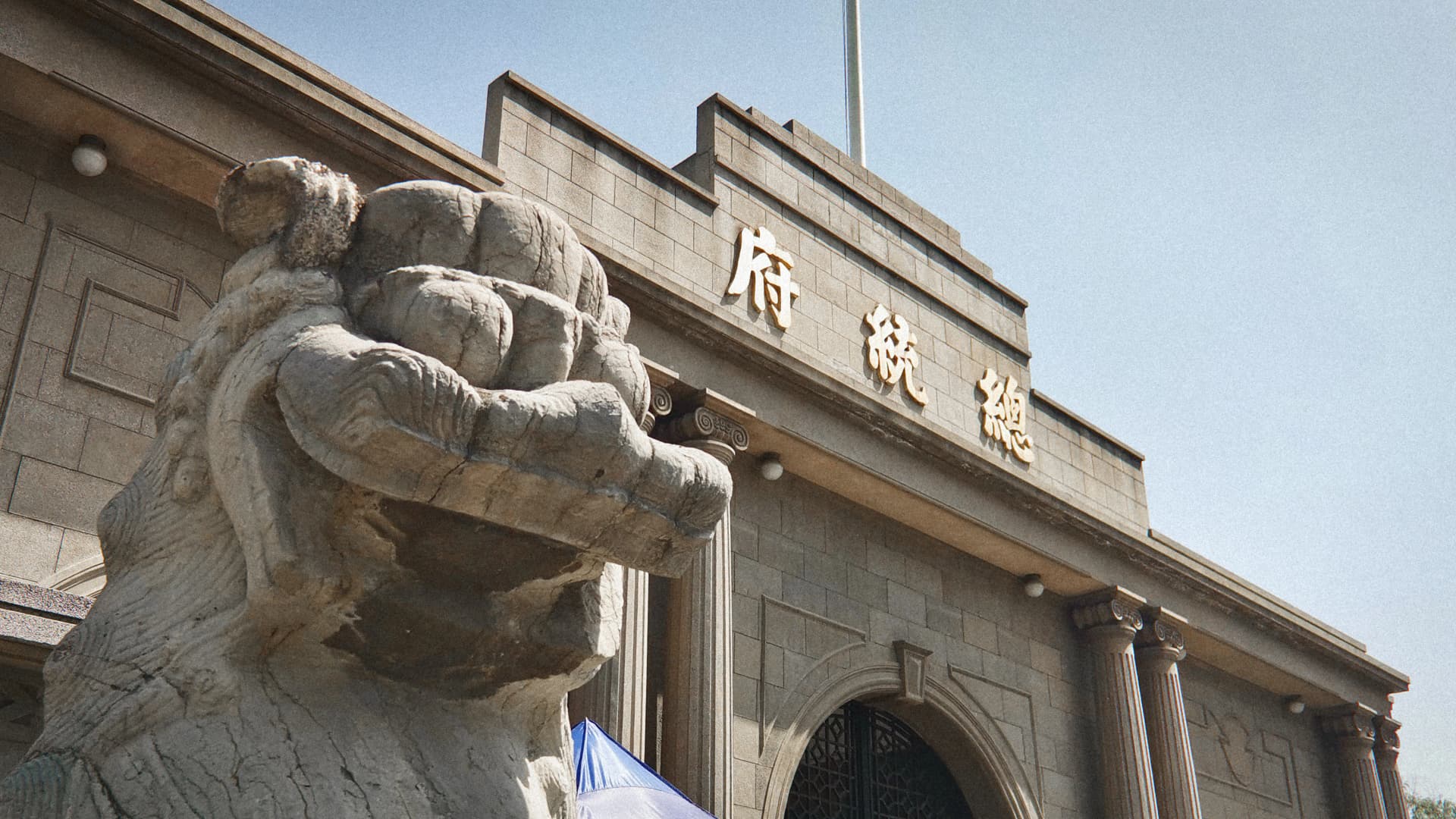
The official English ticket-service page directs visitors to the official 南京总统府 WeChat mini-program. Use that channel for entry and current notices. Check the exact Presidential Palace listing on Trip.com for current product context, but do not treat a third-party attraction page as proof of admission.
4. Mount Niushou and optional products
Niushou is a substantial south-city excursion with gates, internal transport and a long palace circulation. Check the official Mount Niushou notices for the live entrance and shuttle arrangement, then compare the current Niushou product on Trip.com. Qinhuai cruises, city-wall access and seasonal programs come after these route anchors.
Read Nanjing as Six Different Layers
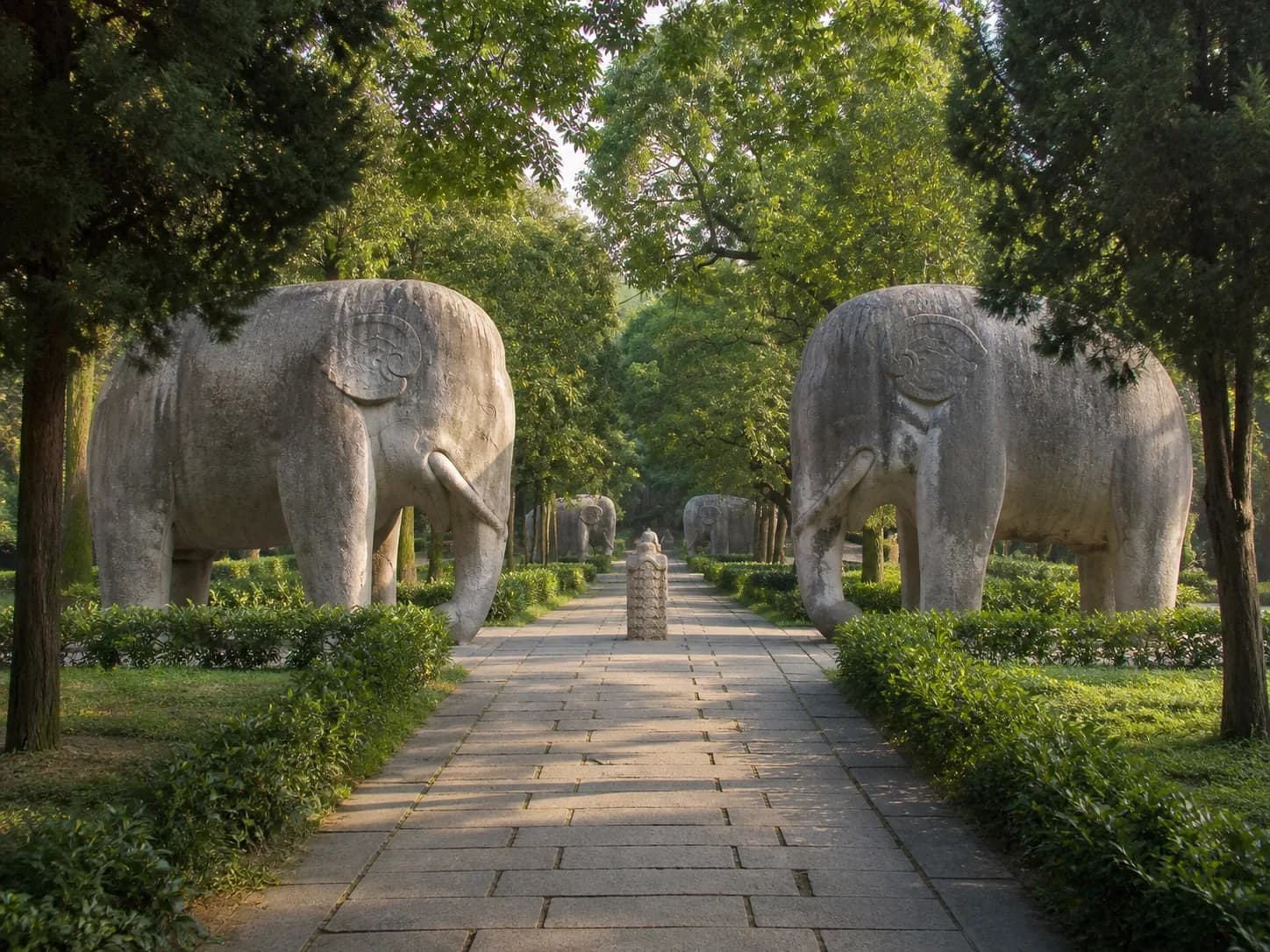
- Ming imperial landscape: At Ming Xiaoling, read the Sacred Way, tomb axis and mountain terrain together. The monuments were designed as a landscape sequence, not isolated statues.
- Republican state and architecture: Compare the ceremonial Sun Yat-sen Mausoleum, domestic Meiling Palace and administrative Presidential Palace. They express different kinds of authority.
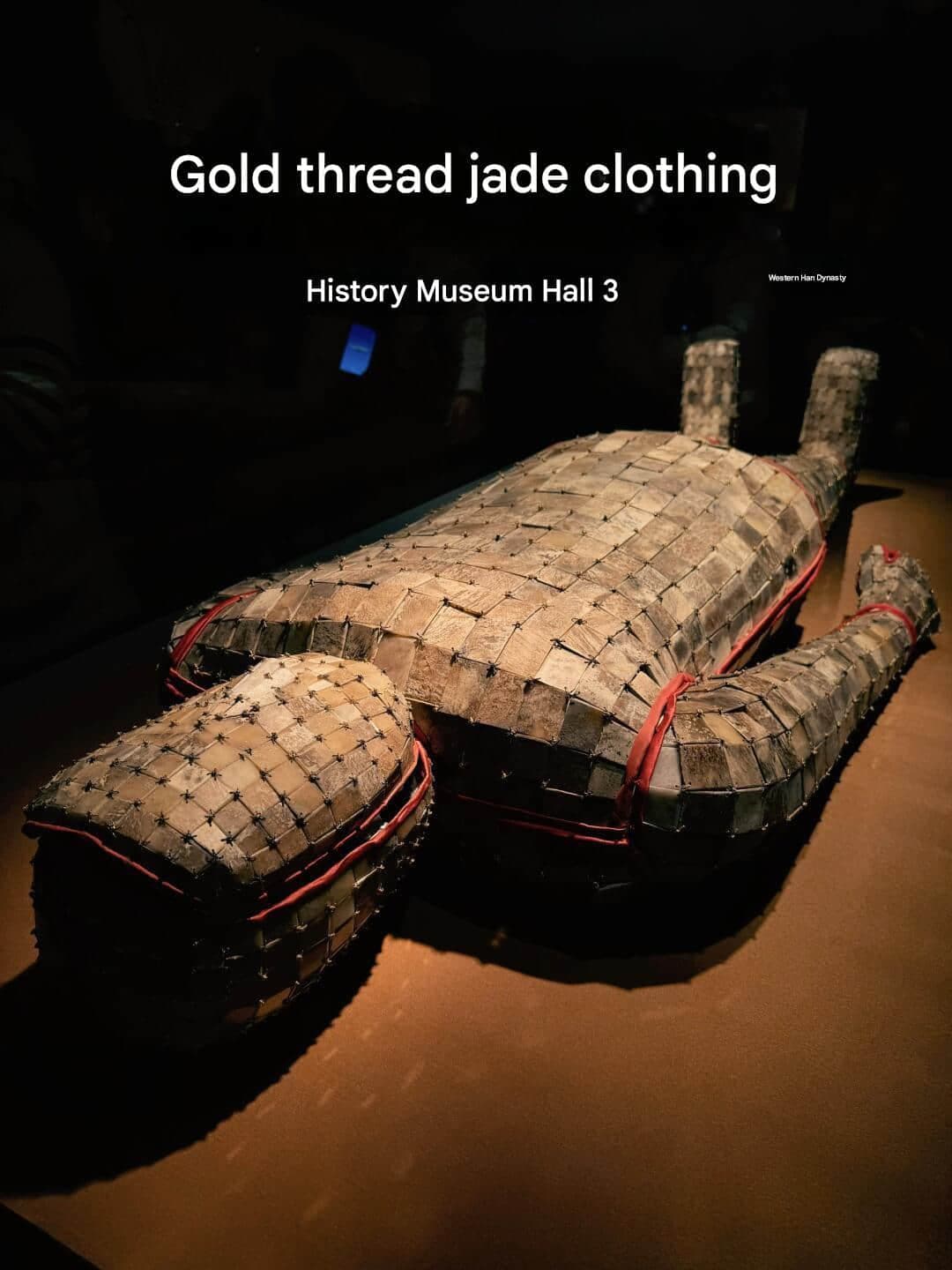
- Objects and material history: At Nanjing Museum, choose a chronological spine and two specialist galleries. Do not turn a major museum into a hurried checklist.
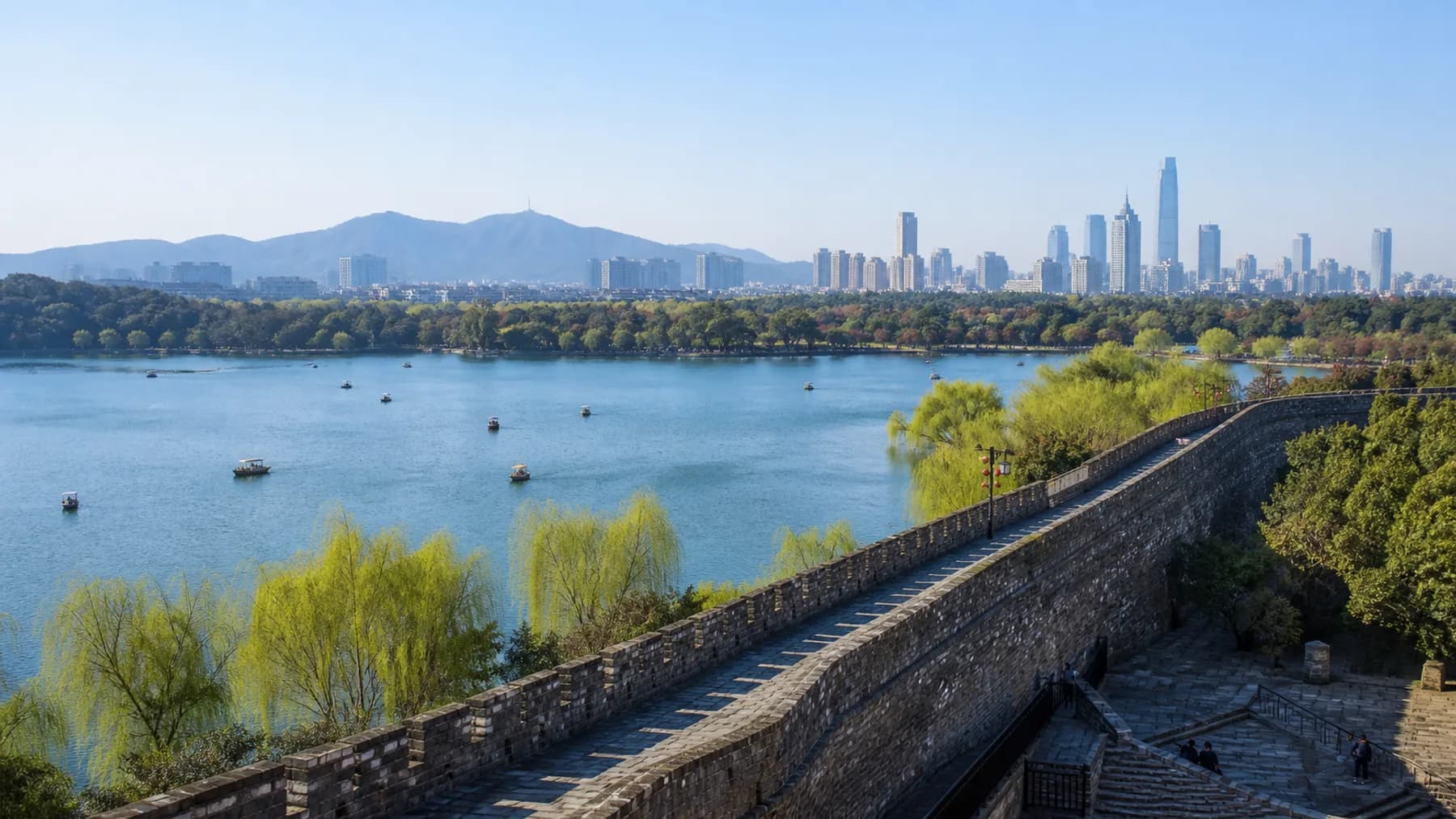
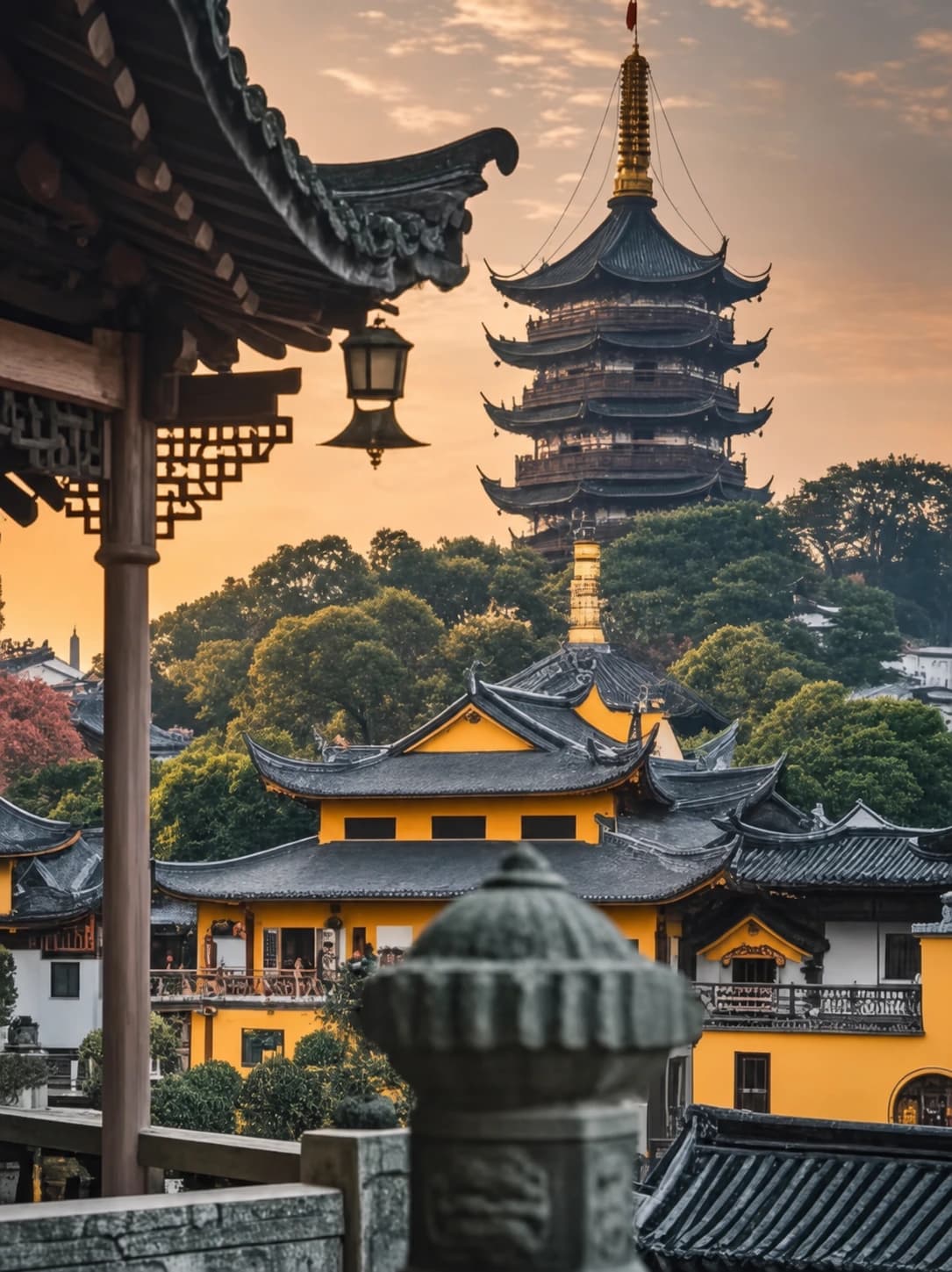
- Temple, wall and lake: Ancient Jiming Temple, Jiefang Gate and Xuanwu Lake form one compact sequence where religious life, defense and public landscape meet.
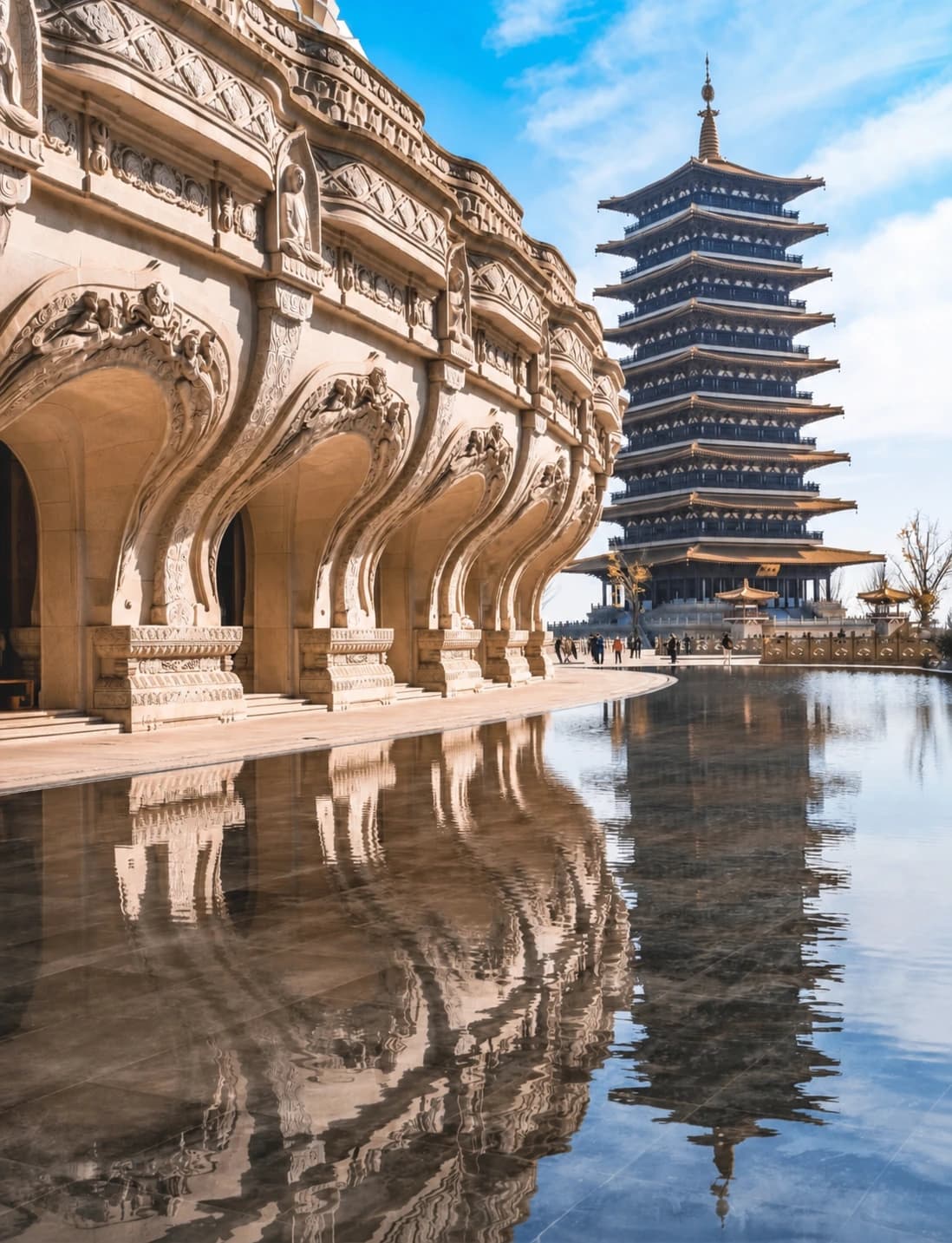
- Contemporary sacred architecture: Mount Niushou is modern Buddhist cultural architecture, not an untouched ancient monastery. Respect religious practice while reading the engineering and visitor circulation critically.
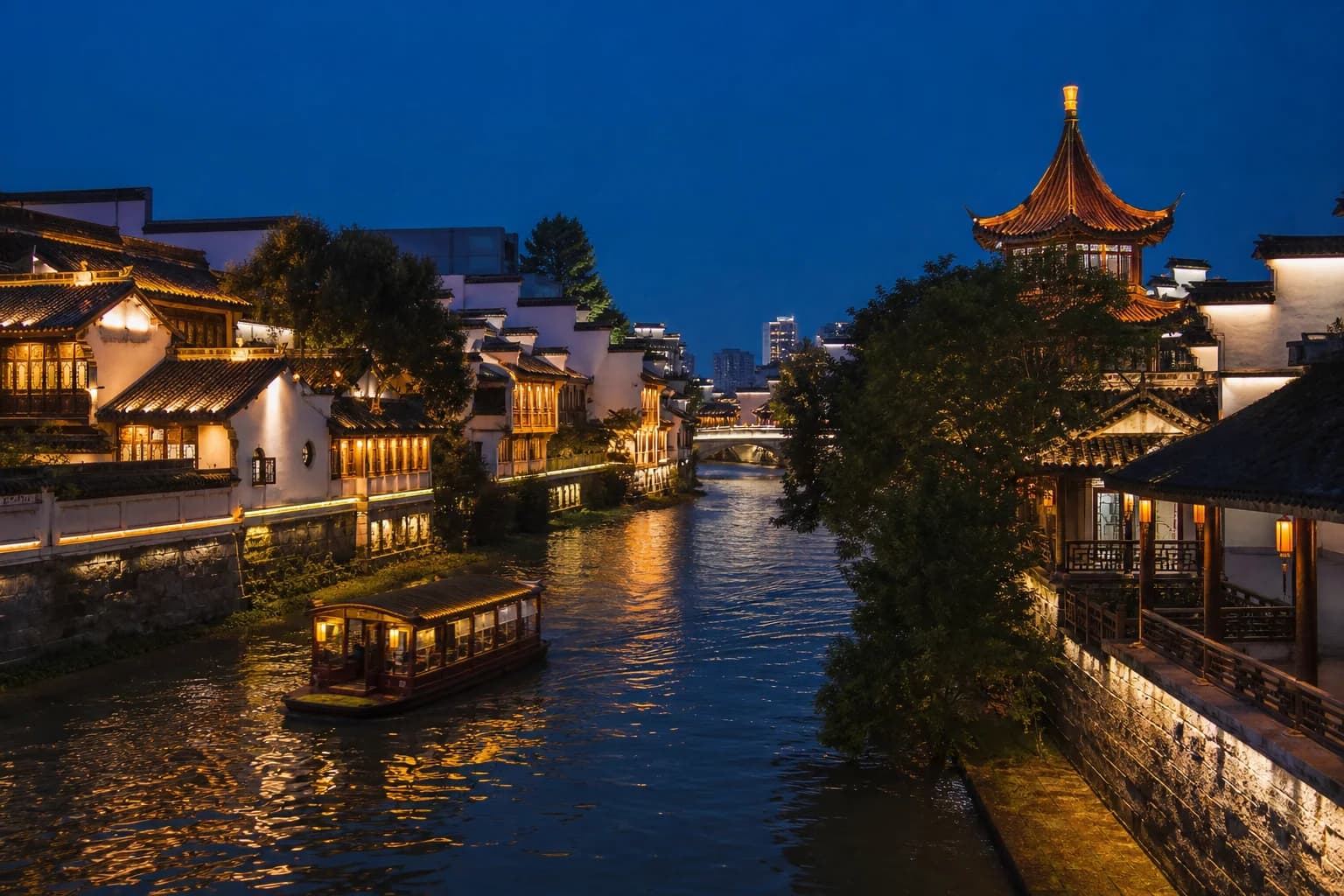
- Examination and commercial city: At Confucius Temple, separate the school and examination legacy from today's busy riverfront commerce.
Purple Mountain Needs a Route, Not a Pin List
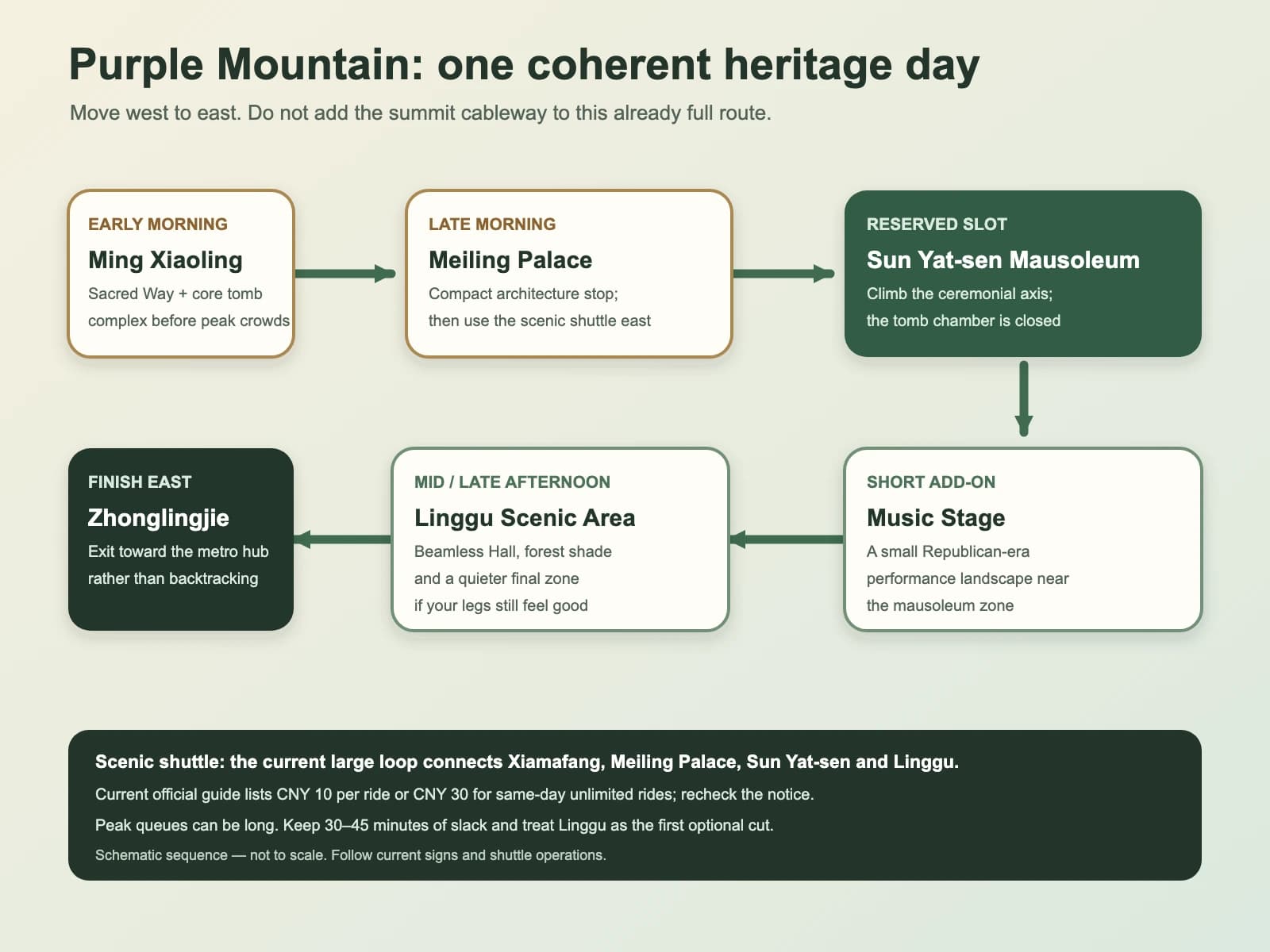
For a full heritage day, move Ming Xiaoling → Meiling Palace → Sun Yat-sen Mausoleum → Music Stage → Linggu Scenic Area. The west-to-east order reduces backtracking, but the mountain is still physically demanding. Use current scenic shuttles for the longer internal hops, carry water in hot weather and cut Linggu first if queues or rain consume the buffer.
Do not copy an ordinary driving route between internal attractions: park gates, pedestrian areas, shuttle stops and temporary controls determine the usable path. The route diagram shows the main access decisions; current gates, shuttles and temporary controls determine the exact path.
What to Eat—and How to Judge It
Salted duck
Good Nanjing salted duck should taste clean and gently aromatic, with moist meat and skin that has not dried into a hard edge. Choose a specialist counter with frequent chopping and replenishment, ask when the batch was prepared and buy a small portion first. Vacuum-packed gift versions solve transport, but they are a different eating experience.
Duck-blood vermicelli soup
Order this as a breakfast or light meal, not as a stunt. Look for hot, actively used broth and ingredients portioned to order. Duck blood, intestines and liver are common; ask clearly for omissions if you do not eat offal. A long menu and decorative branch do not guarantee a better bowl.
Beef potstickers
The defining contrast is a crisp base and juicy filling. Choose a shop cooking batches in view and eat them immediately; pre-stacked dumplings lose their main advantage. In halal Hui-run kitchens, follow the restaurant's food rules and do not bring outside food.
Qinhuai snacks and Yuhua tea
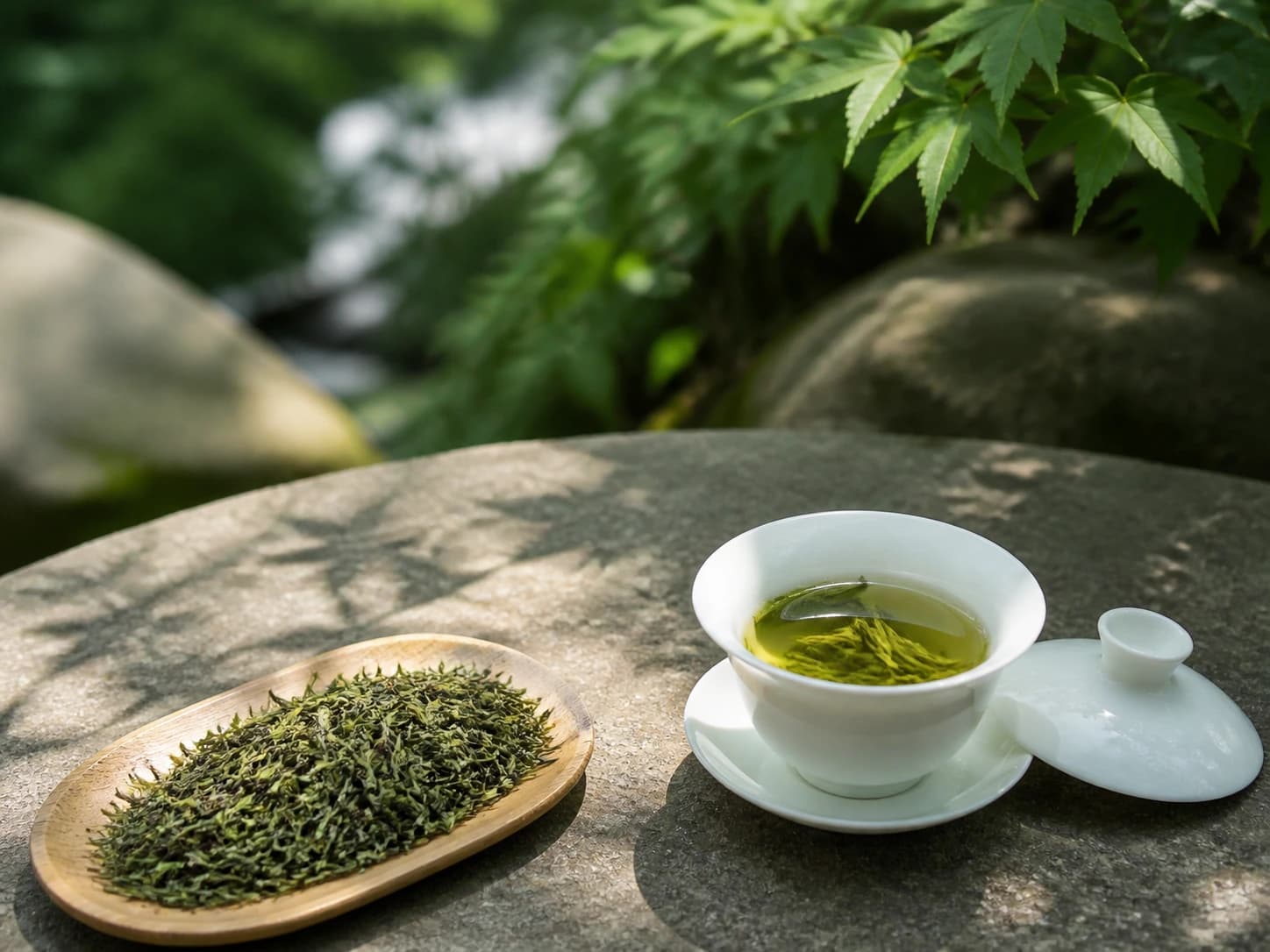
Treat a Qinhuai snack set as sampling, not proof of authenticity. Order two or three items, then have one proper meal away from the busiest riverfront block. For Yuhua tea, use a transparent tea shop that can explain origin, grade and brewing; avoid buying solely from an elaborate gift box or a theatrical tasting.
Where to Stay
Xinjiekou: best all-round first base
This central commercial district gives access to several directions and abundant indoor food options. It suits short first visits, rain plans and travelers who value transport over historic atmosphere. Check the exact hotel branch and vehicle entrance: a famous district name can cover several blocks.
South Gate or Laomendong: best for evening atmosphere
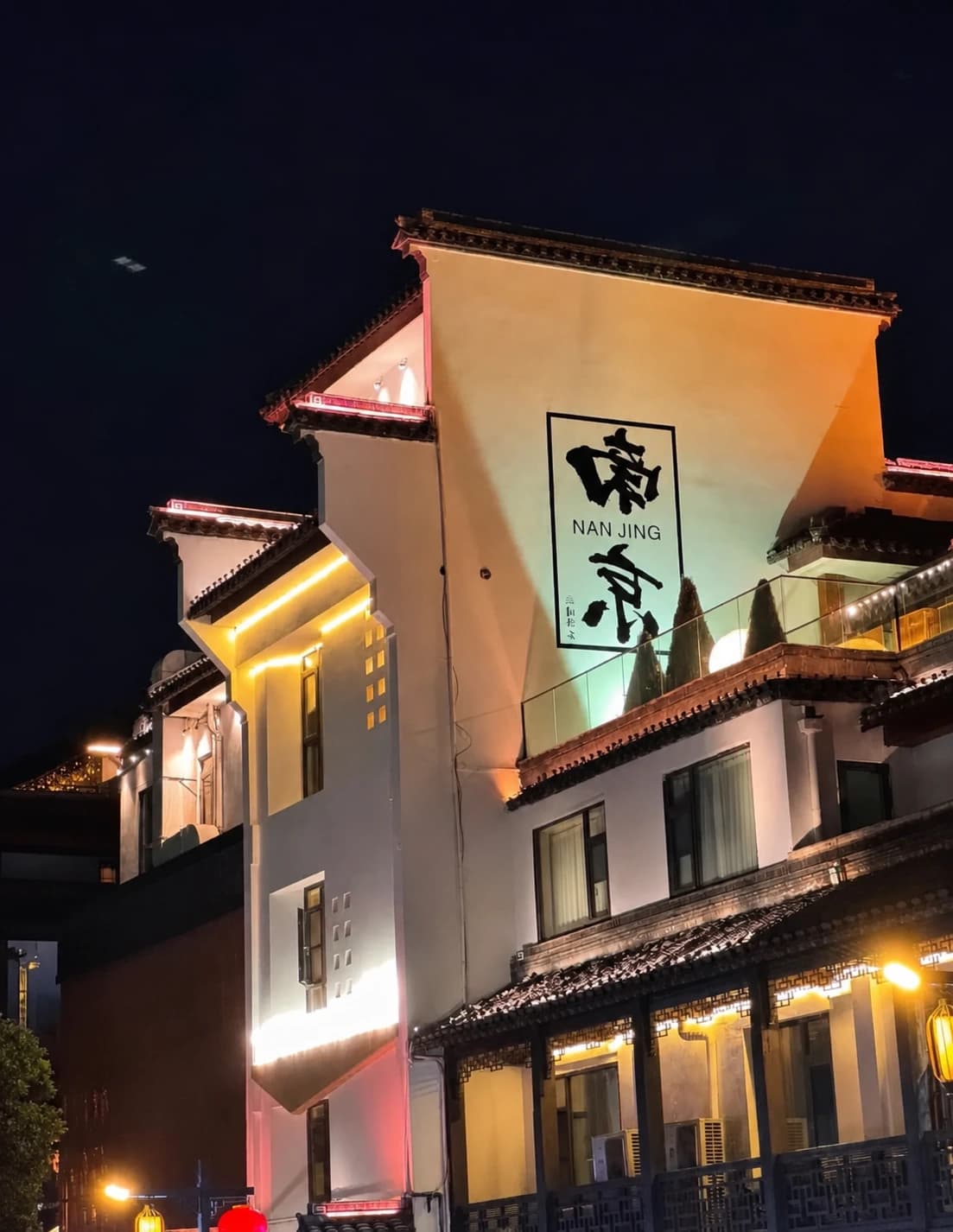
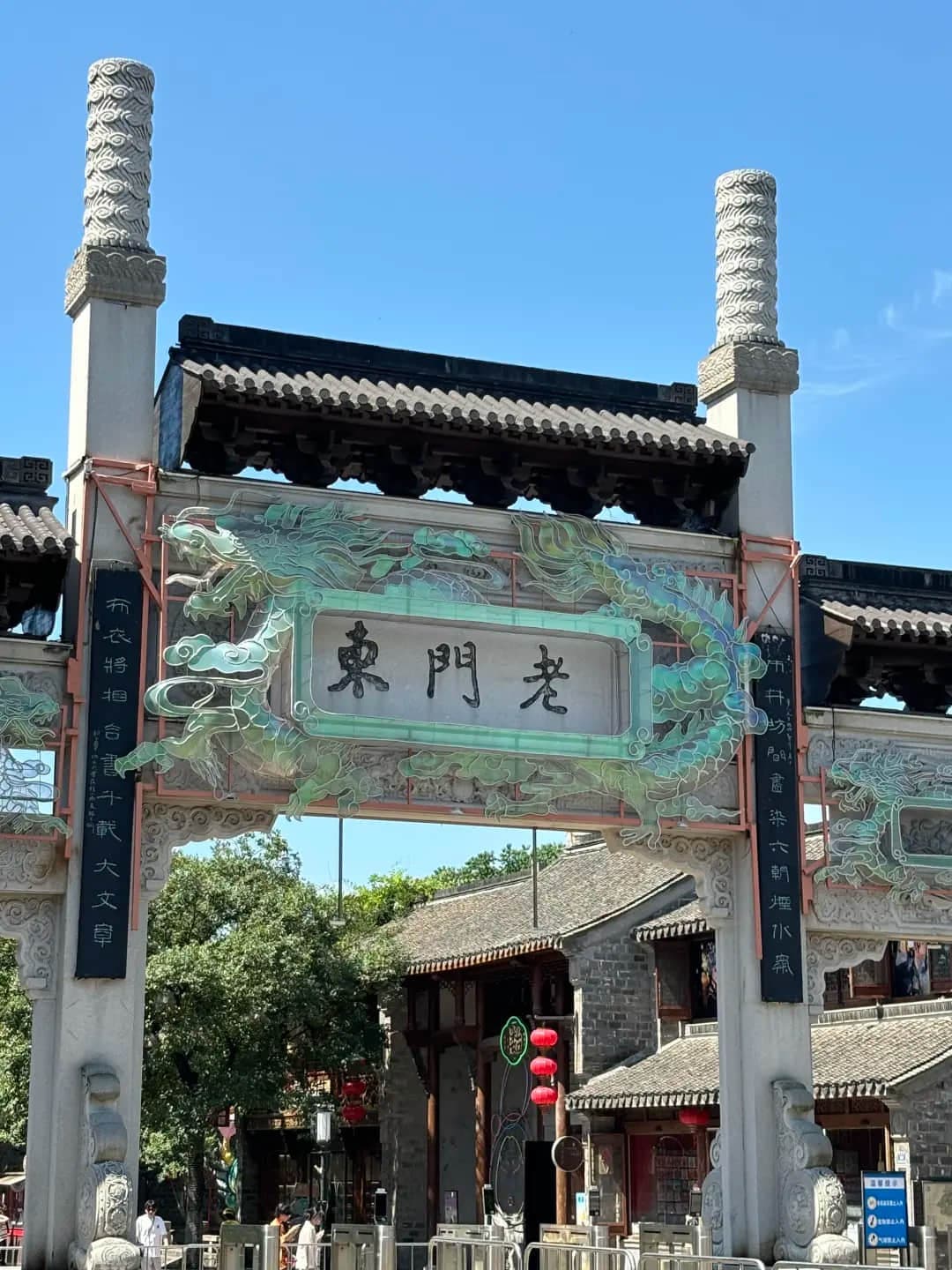
Stay here if wall lanes, Qinhuai evenings and walkable local food matter most. It is less convenient for an early Purple Mountain start and can be noisy near the busiest pedestrian streets. Confirm whether a taxi can reach the lobby or only a nearby gate.
Daxinggong or Xuanwu: best for museums and balanced routes
Daxinggong works well for the Presidential Palace and central east–west travel; the Xuanwu/Jiming side provides lake access and calmer morning walks. Either is a useful compromise for travelers who do not need nightlife outside the door.
Nanjing South Railway Station: only for a departure constraint
The station area is practical for a very early high-speed train or late arrival, but it is not the best sightseeing base. Moving hotels to save one morning transfer rarely helps a three-day city trip. Compare current Nanjing hotels on Trip.com, checking the exact branch, nearest usable station exit and late-arrival policy.
Four Distinctive Chapters for a Longer Visit
Memory and recovery in west Nanjing
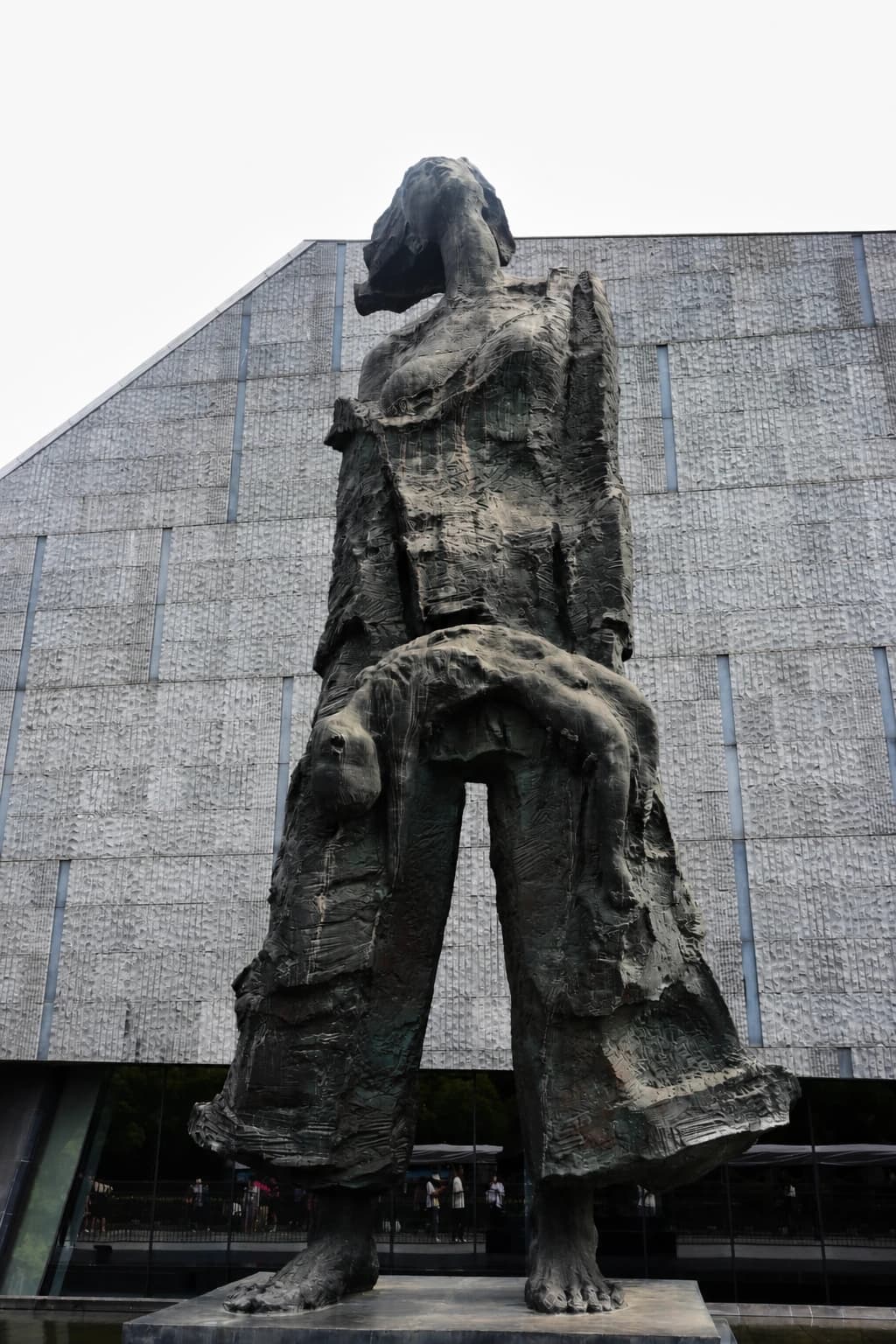
Give the Nanjing Massacre Memorial Hall a quiet morning and do not frame it as a photo stop. Leave schedule and emotional space afterward, then choose a restorative walk at Mochou Lake rather than another dense museum.
Republican residential streets
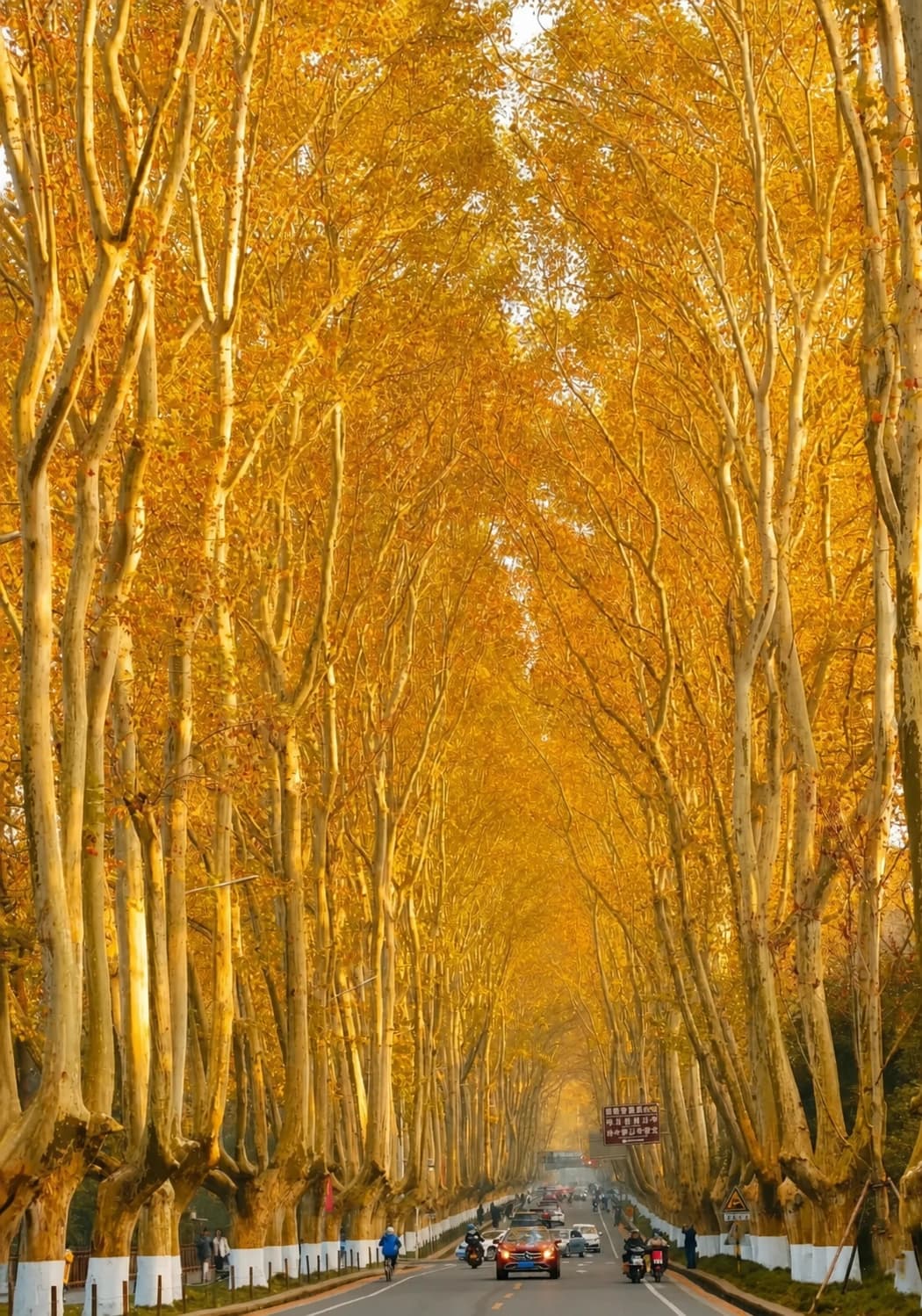
Yihe Road and nearby plane-tree streets are about urban fabric: walls, setbacks, street trees and villa districts. Many buildings are not public interiors. Walk respectfully, avoid photographing residents at close range and pair the streets with one architecture-focused site rather than a café checklist.
Wall and water
Use one city-wall gate and one lake section to understand how defenses meet the landscape. A shorter focused segment around Jiefang Gate can be more informative than completing a long exposed circuit in heat, rain or poor visibility.
Yunjin brocade and making
Nanjing Yunjin is most useful as a material-culture chapter: understand loom complexity, pattern planning and why handwoven work costs more before shopping. Prefer a museum, demonstration or seller that explains fibre and production method; do not treat every brocade-pattern souvenir as handwoven Yunjin.
Getting Around Without Route Mistakes
- Use exact Chinese attraction names and entrances. 玄武湖公园解放门 is more useful for the Jiming-to-lake sequence than a generic Xuanwu Lake pin.
- Use the metro for central corridors, a taxi or ride-hail for the Niushou transfer, and current scenic shuttles inside large attractions.
- Keep extra time for security, passport verification, station exits and weekend traffic.
- Do not rely on a single citywide metro closing time; check the exact line and station on the travel date.
- In summer, split exposed walking with indoor museums. In blossom and autumn-leaf periods, expect crowd controls even on otherwise simple paths.
- If mobility is limited, verify gate gradients, lift access and shuttle drop-off points before booking a mountain-heavy day.
Trending Attractions in Nanjing
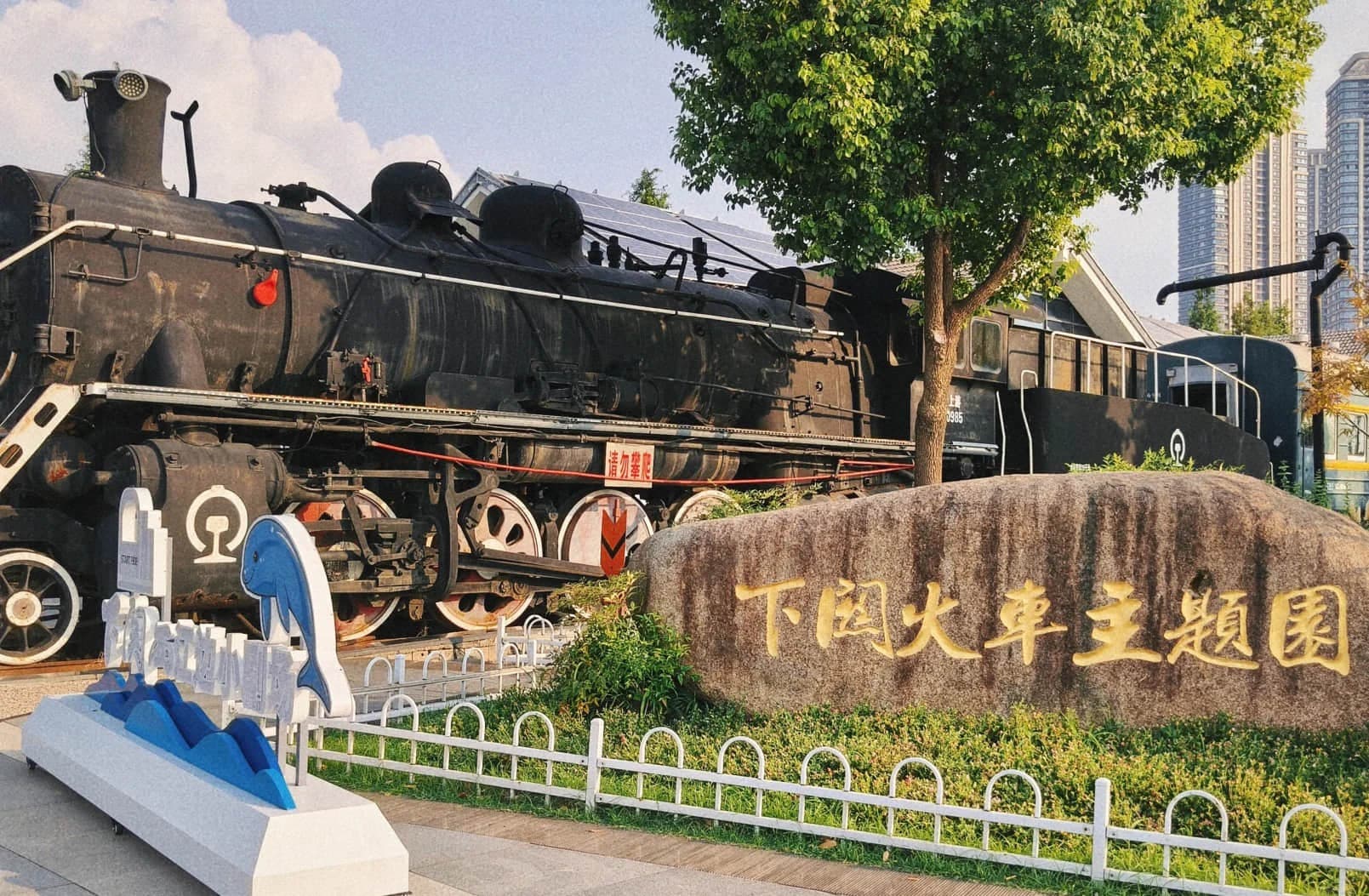
Final Planning Rules
- Reserve Sun Yat-sen Mausoleum and Nanjing Museum before arranging flexible streets.
- Give Purple Mountain a west-to-east day and Mount Niushou a separate half-day or more.
- Choose one central museum sequence, one Qinhuai evening and one food neighborhood instead of repeating similar commercial streets.
- Carry original passports, Chinese names and reservation confirmations offline.
- Recheck official attraction notices, weather and scenic transport the day before departure.