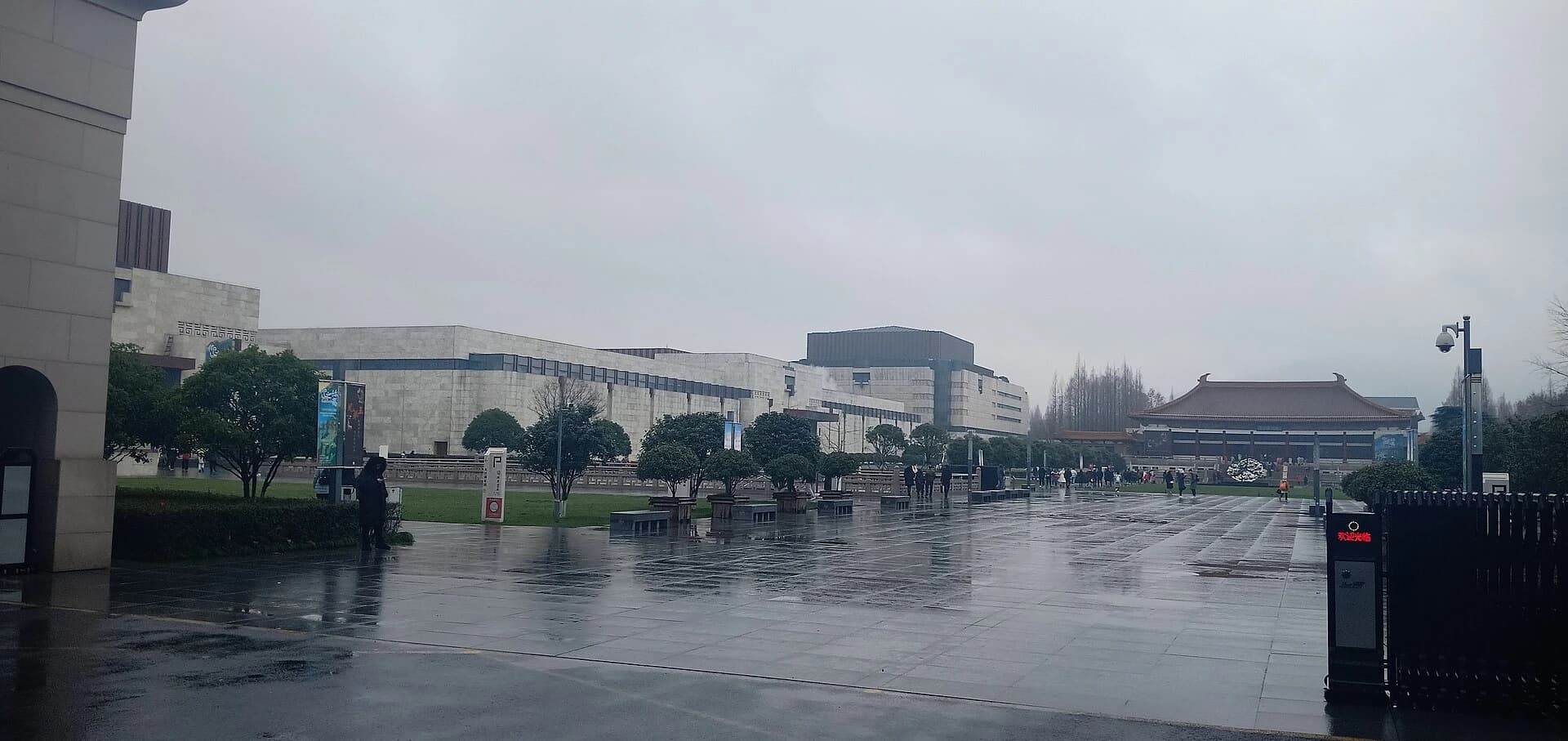
Qinhuai River Nanjing
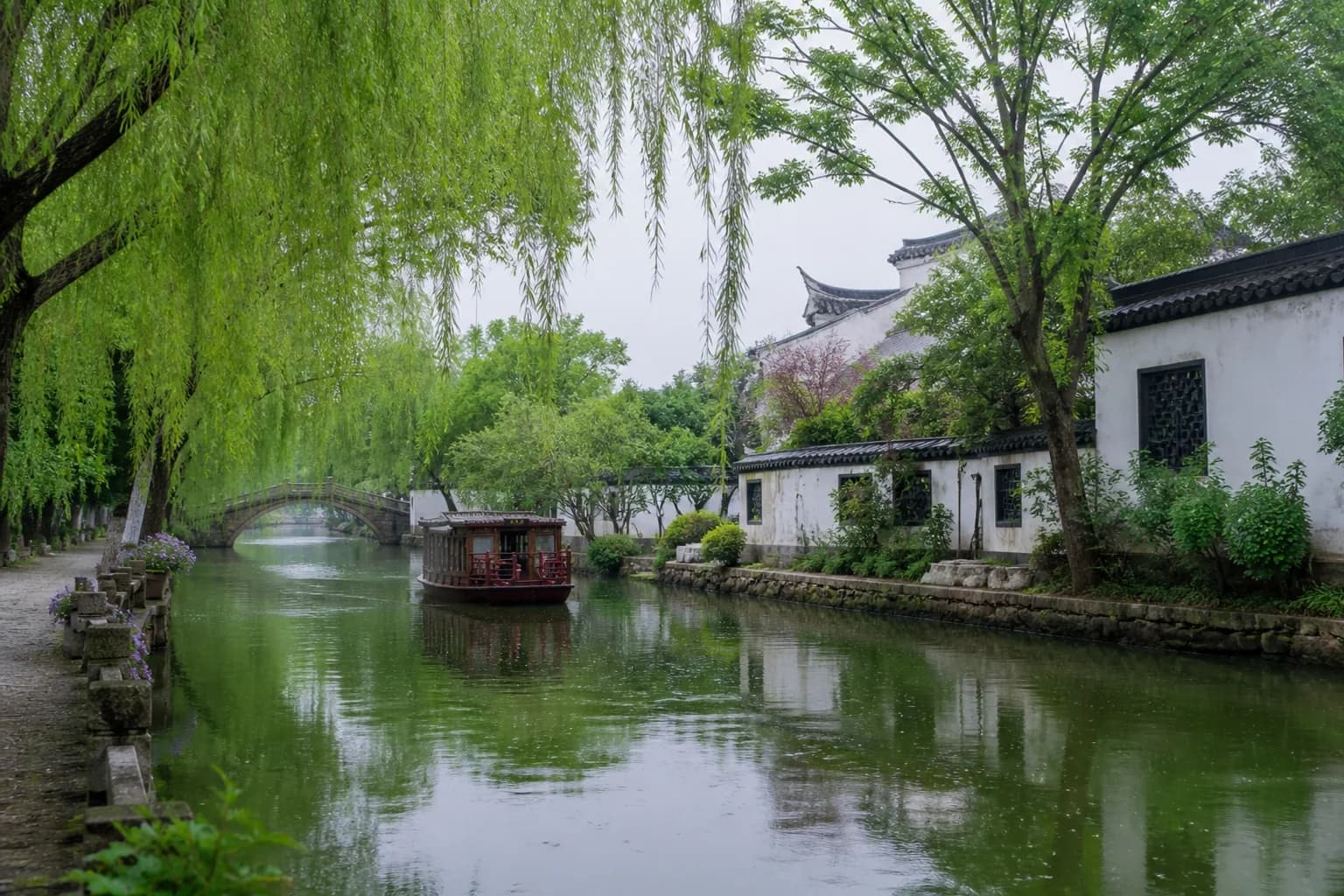
The Qinhuai River is not one attraction entrance. It is a water system woven through southern Nanjing, while most first-time visitors mean the Inner Qinhuai corridor around Fuzimiao (夫子庙). Here the river links the Confucius Temple, the former Jiangnan Examination Hall, Wende Bridge, Wuyi Lane, white-walled commercial streets and several boat docks.
The area's night lighting is memorable, but arriving only after dark misses the history that makes those reflections meaningful. The strongest plan starts with the China Imperial Examination Museum before its final entry, follows a 60–90 minute land loop, reaches the river at blue hour and treats the boat as an optional extra—not the structure holding the evening together.
The riverfront streets are free. Museums, memorial halls, gardens and cruises ticket separately and can suspend operations independently.
Important Cruise Status Check
The latest official Nanjing notice located during this update was published on July 14, 2026. It said several Fuzimiao attractions had reopened after severe weather, but the Inner Qinhuai boats, Outer Qinhuai boats and Bailuzhou Park had not yet resumed. I could not locate a newer official reopening notice.
That does not prove they remain closed on your travel date. It means you should confirm same-day operation through the official Fuzimiao channel or staffed dock before paying for a third-party ticket. A commercial listing marked “open” is not sufficient evidence after a weather or water-safety suspension.
If boats are operating, compare the live product on the Trip.com Qinhuai River boat-tour page, then verify the named dock, Inner or Outer Qinhuai route, departure window, duration, child rules and cancellation terms. If they are suspended, the land route below still gives you a complete evening.
Choose the Right Version
| Time | Best plan | What it gives you |
|---|---|---|
| 60–90 minutes | Examination Museum exterior or brief visit, temple, bridge and Wuyi Lane | Compact history-to-night route |
| 2–3 hours | Full museum visit plus the core land loop | Best first visit without depending on a boat |
| 3–4 hours | Core loop plus one extension | Zhan Garden, Bailuzhou or Laomendong—not all three |
| Evening only | Riverfront walk at blue hour and after dark | Atmosphere, but less historical context |
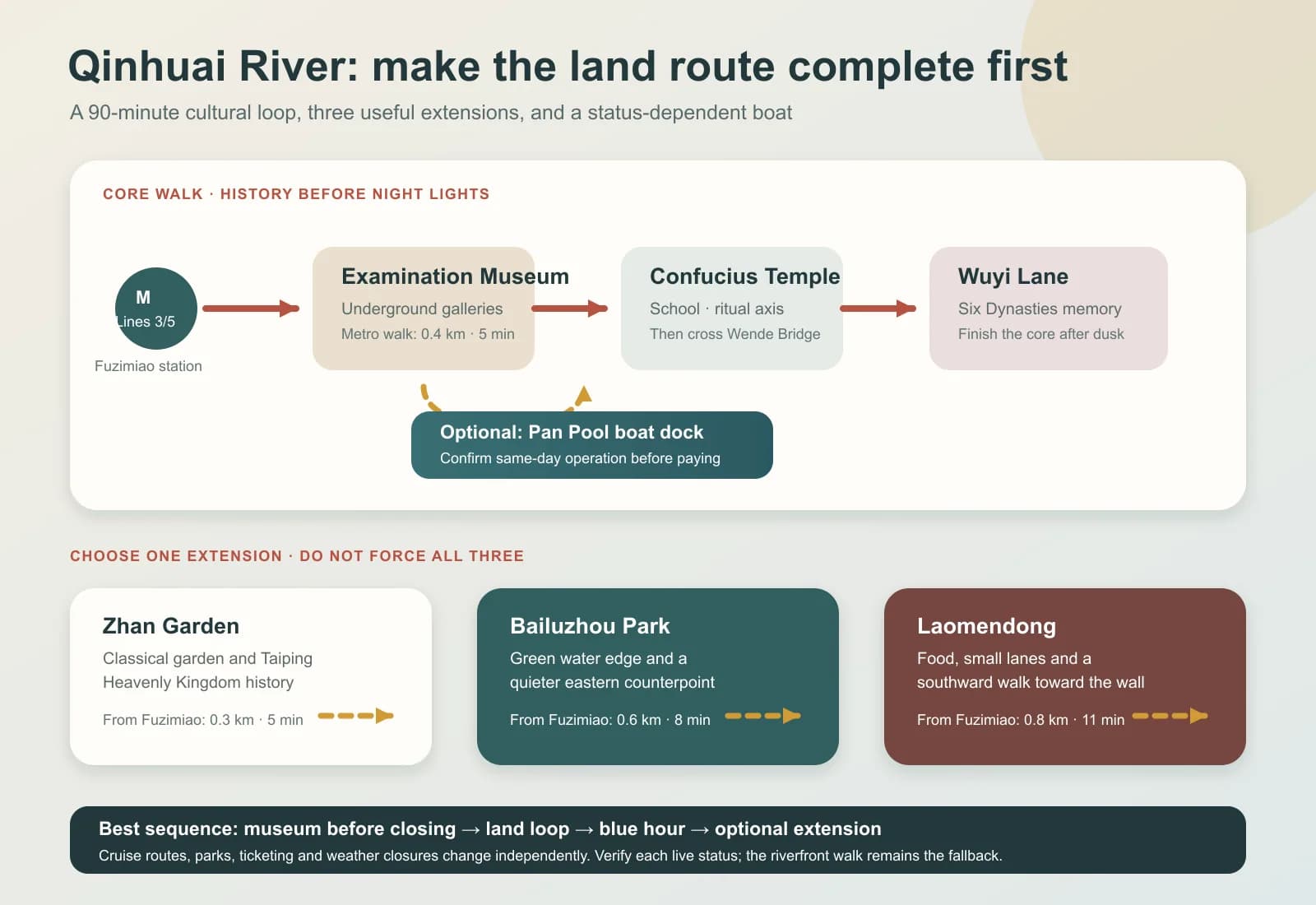
This is a route chooser rather than a surveyed map. Temporary crowd controls can create one-way pedestrian flows, especially during the Qinhuai Lantern Festival and national holidays. Follow on-site signs instead of fighting the direction of movement.
The Core Land Route
1. Start at the Imperial Examination Museum
Take Nanjing Metro Line 3 or 5 to Fuzimiao station. AMap measures the surface walk to the China Imperial Examination Museum at about 0.4 km / 5 minutes. Use live station signage rather than relying on an old exit number.
The museum stands on the remains of the Jiangnan Examination Hall, historically one of China's largest civil-service examination compounds. Its main modern galleries descend underground, while protected remains—including Mingyuan Tower and examination cells—sit above. An official Qinhuai District account describes five exhibition sections, 33 galleries and a collection of more than 10,000 objects.
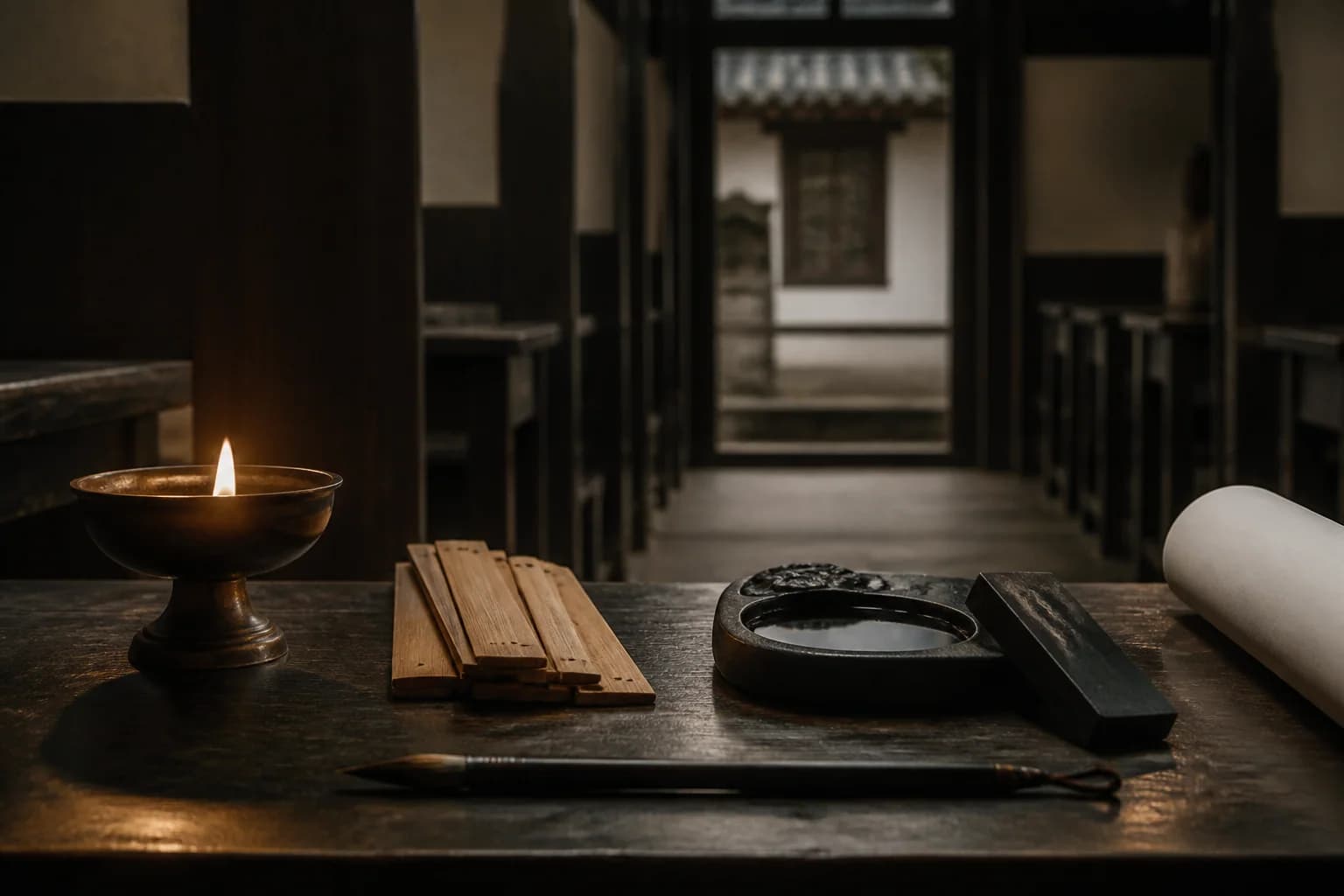
Do not treat the museum as a generic collection of old writing tools. Follow the human process: who could sit the examinations, how candidates were confined and supervised, what knowledge the state rewarded, and how success altered family and administrative life. The repetition of tiny cells makes the scale of competition more tangible than a list of famous degree holders.
Allow 60–90 minutes for a selective visit. If the museum is already near final entry, do not rush through a paid ticket; keep the land loop and return earlier another day.
2. Cross from education to ritual at Confucius Temple
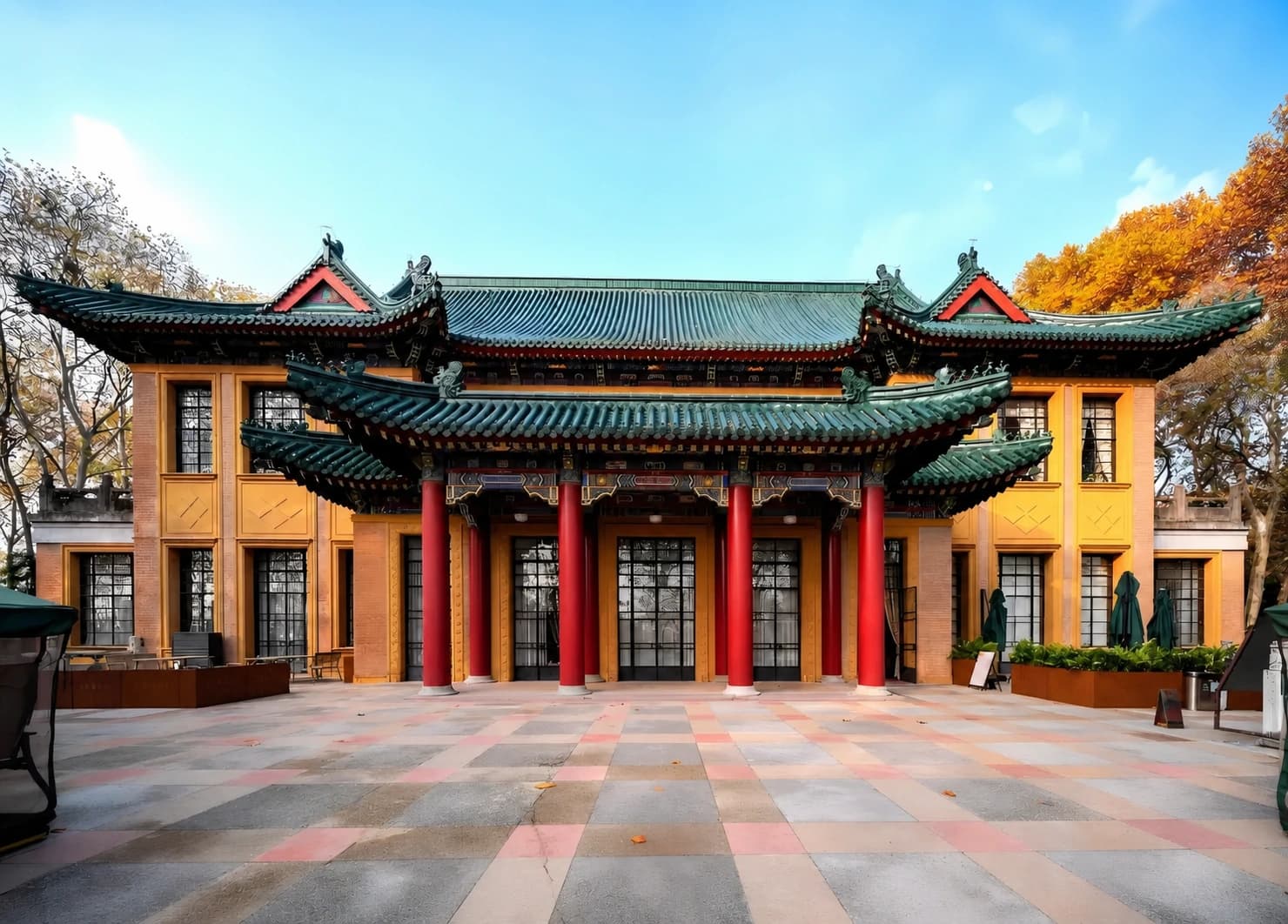
Move west toward the Confucius Temple complex. The river's south bank historically serves as the temple's natural screen, while Pan Pool and the main ritual axis tie water, education and Confucian learning together. Separate the actual temple precinct from the surrounding pedestrian shopping zone: “Fuzimiao” is used for both, which causes many visitors to assume the whole district is one ticketed temple.
Look for the sequence of gates, courtyard space and ceremonial halls rather than photographing only the decorated street arch. Opening hours and admission apply to individual interiors, not the public riverfront as a whole.
3. Use Wende Bridge for orientation
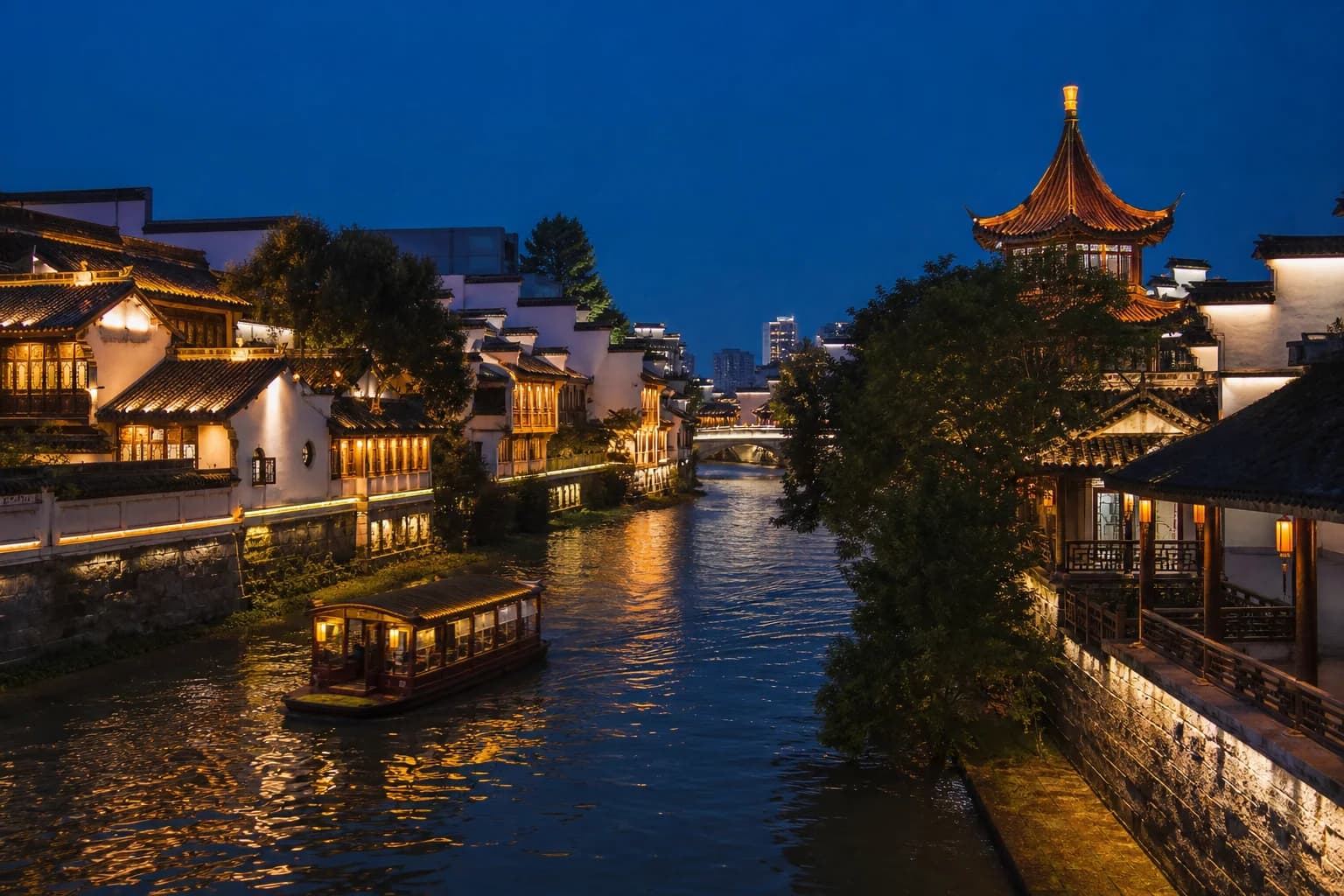
Wende Bridge is the simplest place to understand the core. From it, you can see the temple-facing water, boats when operating, white walls, dark roofs and the dense commercial edges that produce the famous reflections after dusk. Arrive during blue hour—after daylight softens but before the sky becomes black—for the best balance between building detail and lighting.
Do not block the bridge centre with a tripod during peak flow. A handheld photograph from one side often works better, and a short walk changes the reflection angle without joining the densest queue.
4. Finish the core at Wuyi Lane
Cross toward Wuyi Lane, associated with the elite Wang and Xie families of the Eastern Jin period and later fixed in cultural memory through poetry. Today's lane is heavily interpreted and commercialised; it is not an intact residential street from the Six Dynasties.
Read it as a memory site. The value lies in how later Nanjing continued to narrate aristocratic power, decline and ordinary street life—not in pretending every wall is ancient. Nearby memorial interiors have separate tickets and hours; add one only if you have enough attention left after the museum.
Boat or Walk?
Choose the boat when
- same-day official operation is confirmed;
- you want the low water-level perspective and commentary;
- the exact route and dock are named on the ticket;
- the queue fits your evening rather than replacing it;
- rain, wind and water conditions are comfortable.
Choose the land route when
- boats are suspended or the status is ambiguous;
- you want the museum, temple and lanes rather than only illuminated facades;
- mobility, motion sickness or enclosed seating makes a cruise uncomfortable;
- the night queue is longer than the experience is worth to you;
- you prefer control over photography and food stops.
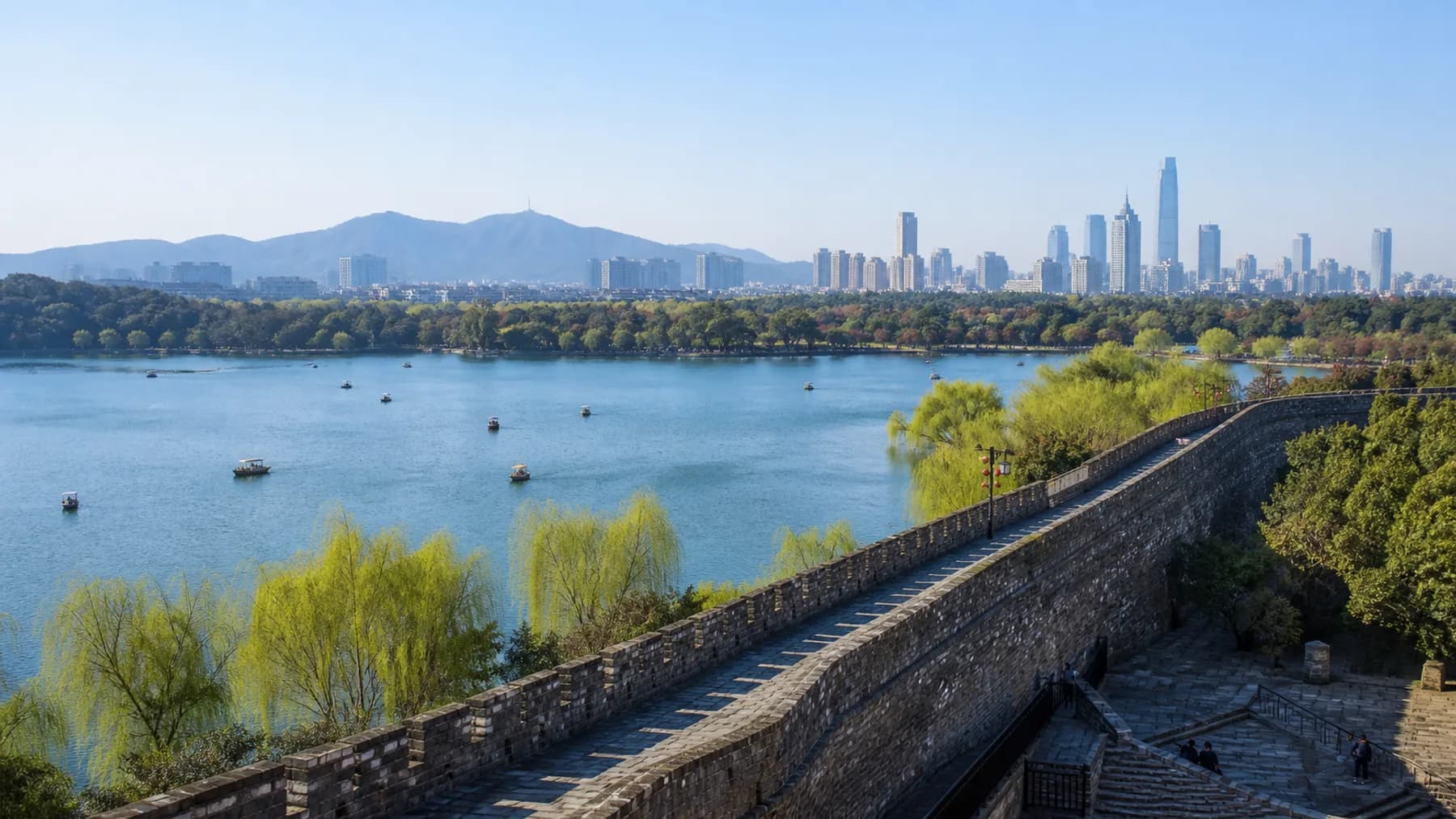
Inner and Outer Qinhuai are not interchangeable. The Inner Qinhuai route is associated with the dense Fuzimiao historic core. Outer Qinhuai services use different docks and relate more to the city wall and moat landscape. Never buy a product described only as “Qinhuai cruise” without identifying which waterway it uses.
Avoid copying fixed prices and hours from old posts. Day and night sailings, east and west sections, holiday capacity and weather controls change. The staffed dock or official booking channel on the day of travel is the authority.
Choose One Extension
Zhan Garden: best for a classical garden
AMap measures Fuzimiao to Zhan Garden at about 0.3 km / 5 minutes on foot. Choose it when you want rockeries, enclosed garden composition and the site's later association with the Taiping Heavenly Kingdom. Visit before its final entry; it is not a useful spontaneous add-on after every interior has closed.
Bailuzhou Park: best for a greener water edge
AMap measures the walk at about 0.6 km / 8 minutes. Bailuzhou offers a calmer eastern counterpoint to the commercial core when open. Because the July 14 official notice still listed it as not resumed, verify current park access before walking there specifically.
Laomendong: best for food and small lanes
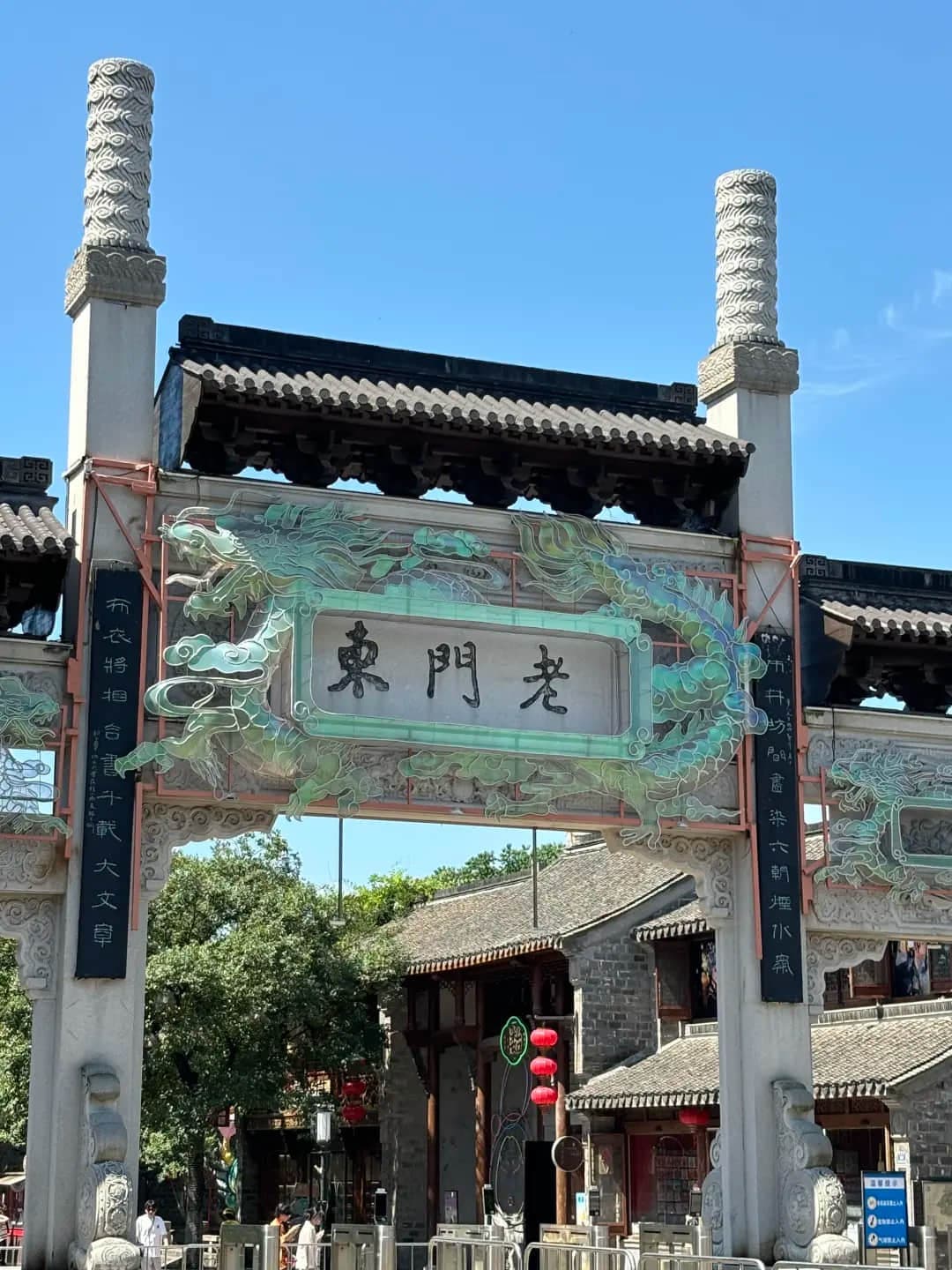
AMap measures Fuzimiao to Laomendong at about 0.8 km / 11 minutes. Walk south when you want a broader evening of food, restored lanes and a possible continuation toward Zhonghua Gate. Laomendong is also curated and popular, but its street pattern gives you more room to compare restaurants than the tightest Fuzimiao blocks.
Do not force all three extensions into one night. The museum, core loop and one extension are already a substantial visit.
What to Eat Without Collecting Every “Famous” Stall
Qinhuai food history is often packaged as fixed sets of “eight delicacies,” with shop names repeated long after ownership, quality or location changes. Use the tradition as a flavour guide rather than a compulsory brand checklist.
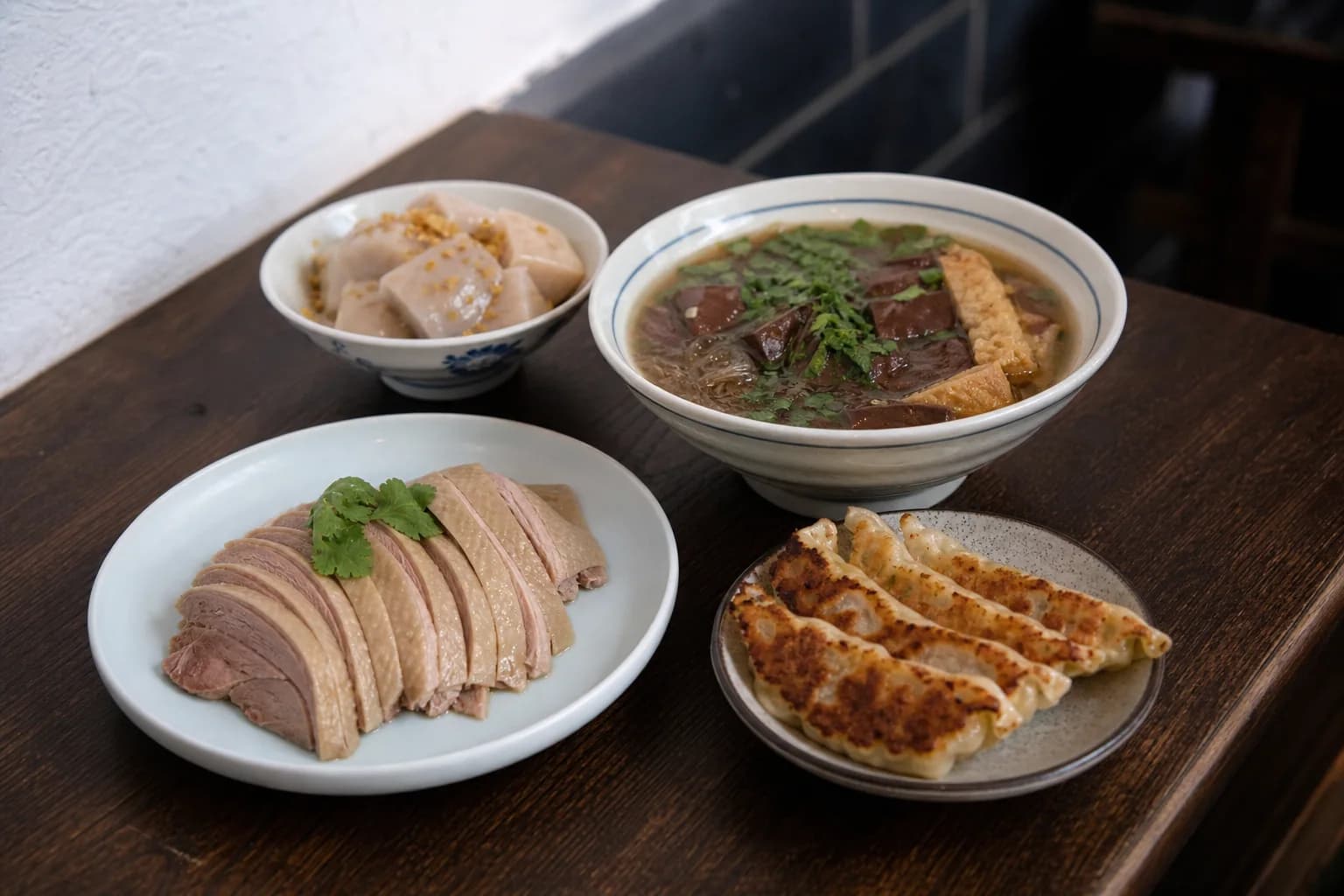
- Salt-water duck (盐水鸭): pale, aromatic and gently seasoned rather than lacquered like roast duck. Order a small portion freshly cut.
- Duck-blood vermicelli soup (鸭血粉丝汤): a light broth with vermicelli, duck blood and offal components; ask what is included if you avoid organ meats.
- Beef potstickers (牛肉锅贴): crisp-bottomed, juicy and often slightly sweet in Nanjing style. Eat them hot.
- Osmanthus sugar taro (桂花糖芋苗): a soft, fragrant dessert that balances a savoury meal.
- Dried tofu threads or sesame pastries: useful lighter choices when you do not want another full bowl.
Choose a short-menu specialist with visible turnover. Check posted prices before ordering a mixed snack set, and avoid waiting an hour merely because a stall is prominent on social media. Laomendong is generally easier for a deliberate dinner; the Fuzimiao core is better for one snack between cultural stops.
Where to Stay
- Fuzimiao / Qinhuai: best for night atmosphere and walking access; inspect recent noise comments and room orientation.
- Xinjiekou: best all-round base for metro connections, restaurants and reaching different parts of Nanjing.
- Daxinggong: best for central museums and a calmer historical-city itinerary while remaining convenient.
- Laomendong / Zhonghua Gate: best for slower southern-old-city mornings; fewer universal transport advantages.
- Nanjing South Railway Station: practical for an early train, but not the most atmospheric base for sightseeing.
Compare live inventory through Trip.com hotels. A hotel using “Qinhuai” in its name can be anywhere in a large district, so check the actual walking route to Fuzimiao station.
Practical Details
The core is pedestrian-heavy and public transport is the sensible default. The AMap marker for Nanjing Confucius Temple helps distinguish the temple from the broader district.
Stone paving and bridge surfaces can be slippery after rain. Summer evenings are humid and crowded; winter river wind is sharper than sheltered shopping streets. Carry water, weather protection and shoes with grip.
The public route is mostly level, but bridges, thresholds, museum circulation and individual historic interiors vary. Travellers using wheelchairs or strollers should check the accessible museum entrance and avoid the peak evening crush. A boat may require a step down and a moving boarding surface; ask staff about assistance before purchasing.
The Qinhuai River is most rewarding when its night scene becomes the final layer, not the entire story. Start with the examination system, cross into Confucian ritual space, use the bridge to read the river and finish with one neighbourhood extension. If the boats sail, they add a perspective. If they do not, the evening still works.