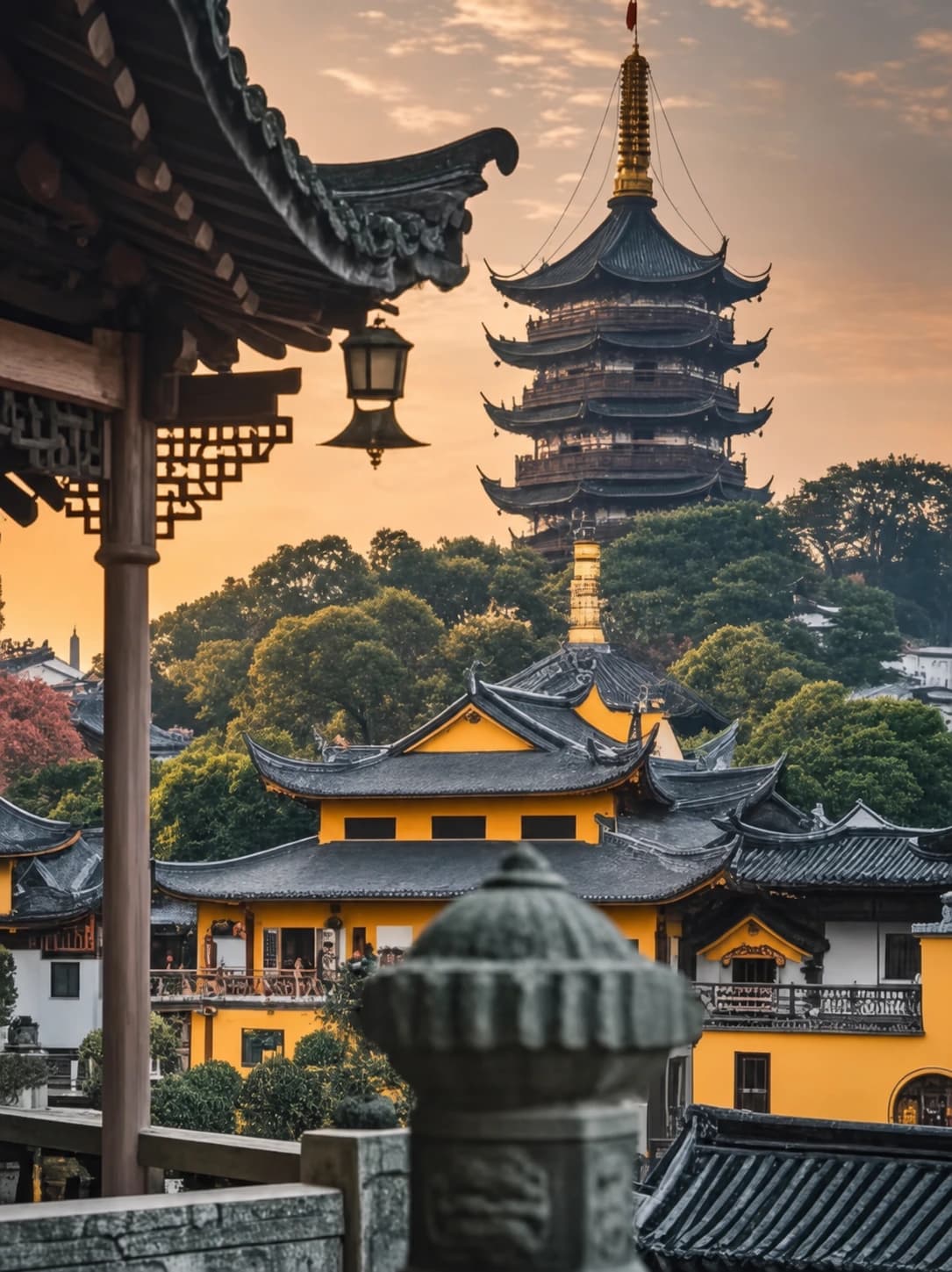
Sun Yat-sen Mausoleum Nanjing
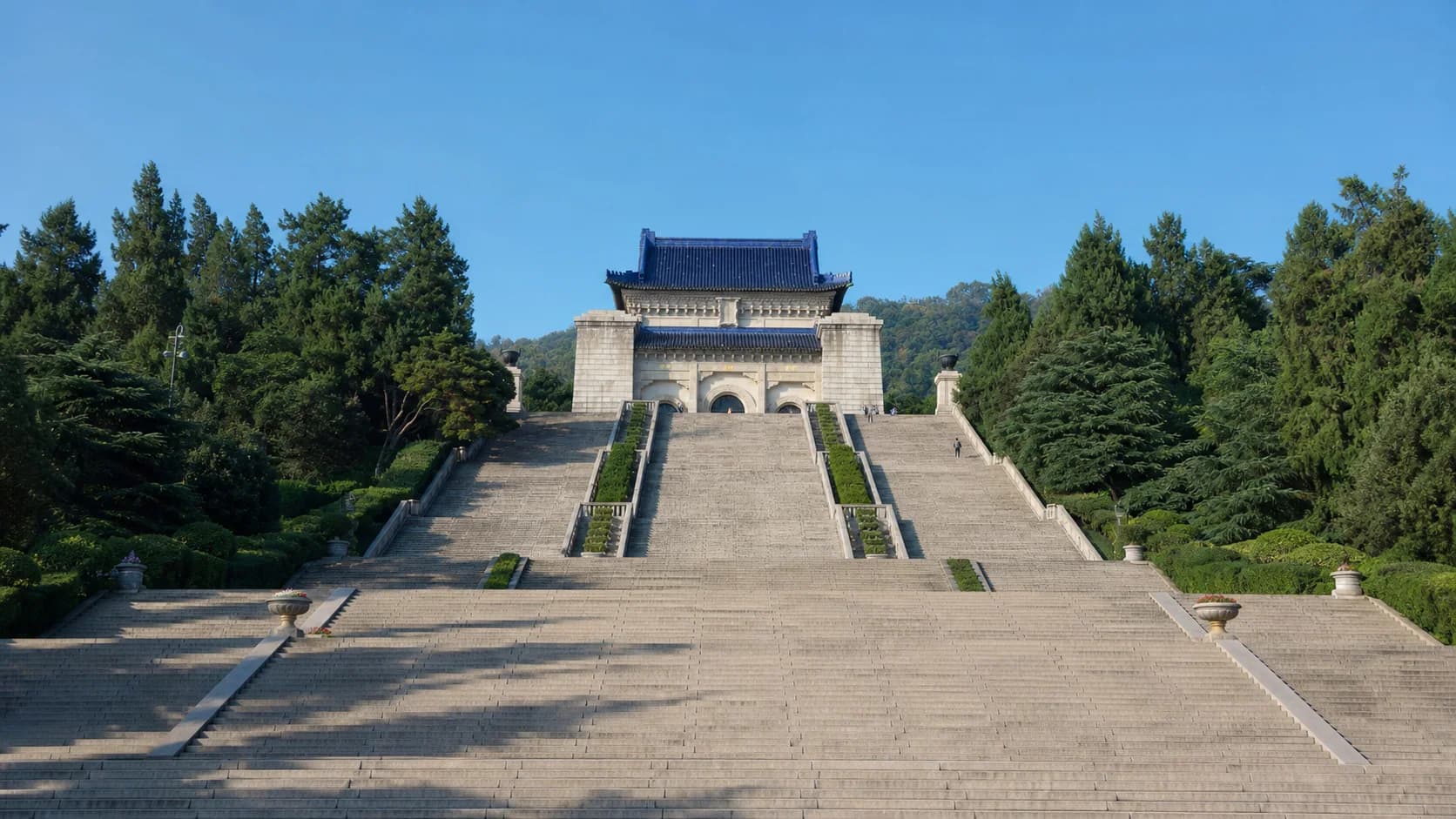
Sun Yat-sen Mausoleum is the ceremonial center of Nanjing's Purple Mountain, but it is not a quick roadside monument. The experience is a deliberate uphill sequence: forest approach, memorial arch, gate, stela pavilion, long stone stair and sacrificial hall. The architecture makes the climb part of the story.
Allow 1.5–2 hours for the mausoleum core after reaching its plaza. Add 30–45 minutes for Music Stage, or make it a half/full Purple Mountain day if you continue to Linggu or arrive from Ming Xiaoling. The core mausoleum is free but requires a real-name reservation. Most importantly, the tomb chamber is currently closed; old guides that give limited opening days are obsolete.
Current Opening and Reservation Rules
The Nanjing Zhongshan Mountain authority's June 2026 notice states that:
- The area above the “Tianxia Weigong” gate opens 08:30–17:00.
- The tomb chamber is closed and not open to visitors.
- A real-name reservation is required; during holidays, enter in the booked period.
- Self-service luggage lockers are available at several metro stations and scenic-area nodes, including Xiamafang, Muxuyuan, the visitor center and Bo'ai Square.
The normal pattern is closure for maintenance on Mondays, except public holidays and commemorative dates. Operating arrangements can change, so recheck the official scenic-area guide shortly before visiting. Bring the original passport or ID used for the reservation.
The mausoleum core has free admission. Music Stage and other Purple Mountain attractions have separate access or tickets; confirm the day's status and price instead of assuming that one reservation covers the mountain.
Choose the Right Metro Transfer
Purple Mountain is a network, not one front gate. The current official transport system uses direct and feeder scenic shuttles around a larger east–west loop. Live routes can be checked in AMap.
- Xiamafang, Metro Line 2: best for a focused mausoleum visit. Follow current signs to the scenic shuttle or walking approach.
- Muxuyuan, Metro Line 2: best when starting with Ming Xiaoling or Meiling Palace and moving west to east.
- Zhonglingjie, Metro Line 2: useful as an east-side finish after Linggu.
- Xiaolingwei, Metro Line 2: another official transfer point, but usually less intuitive for a first-time core-only visit.
Do not memorize old shuttle numbers, fares or bus lists. Purple Mountain traffic controls and shuttle routing change, particularly on holidays. Use the station signs, the current official notice and AMap on the day.
The Core Route, Step by Step
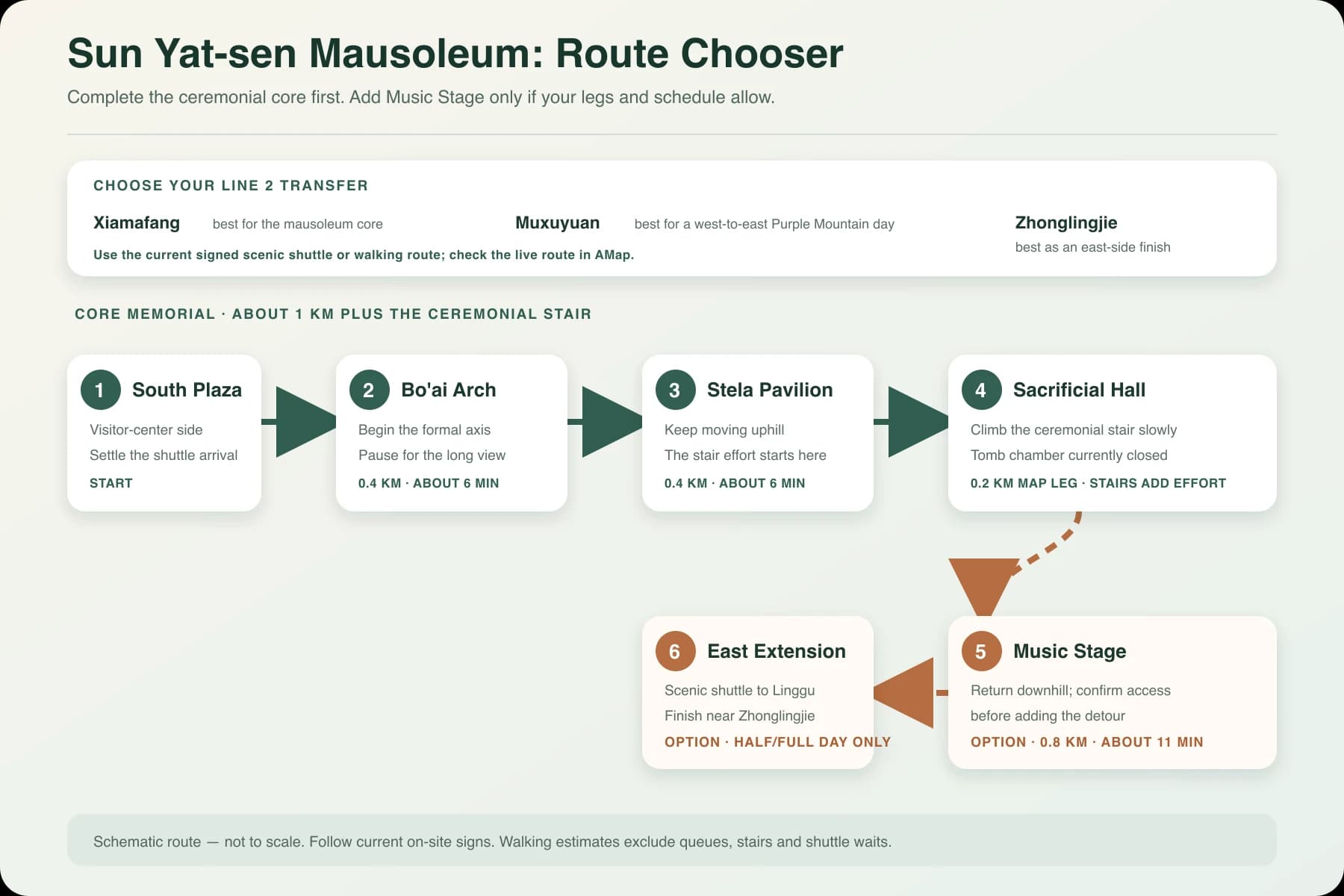
Original schematic based on official access information and verified AMap locations. It is not to scale; current signs and staff routing override the diagram.
1. South Plaza to Bo'ai Arch
Settle your shuttle arrival before joining the ceremonial axis. AMap resolves the walk from South Plaza to Bo'ai Arch at about 0.4 km / 6 minutes. This is the best point to refill water, find the visitor center or use a locker rather than carrying extra weight up the stair.
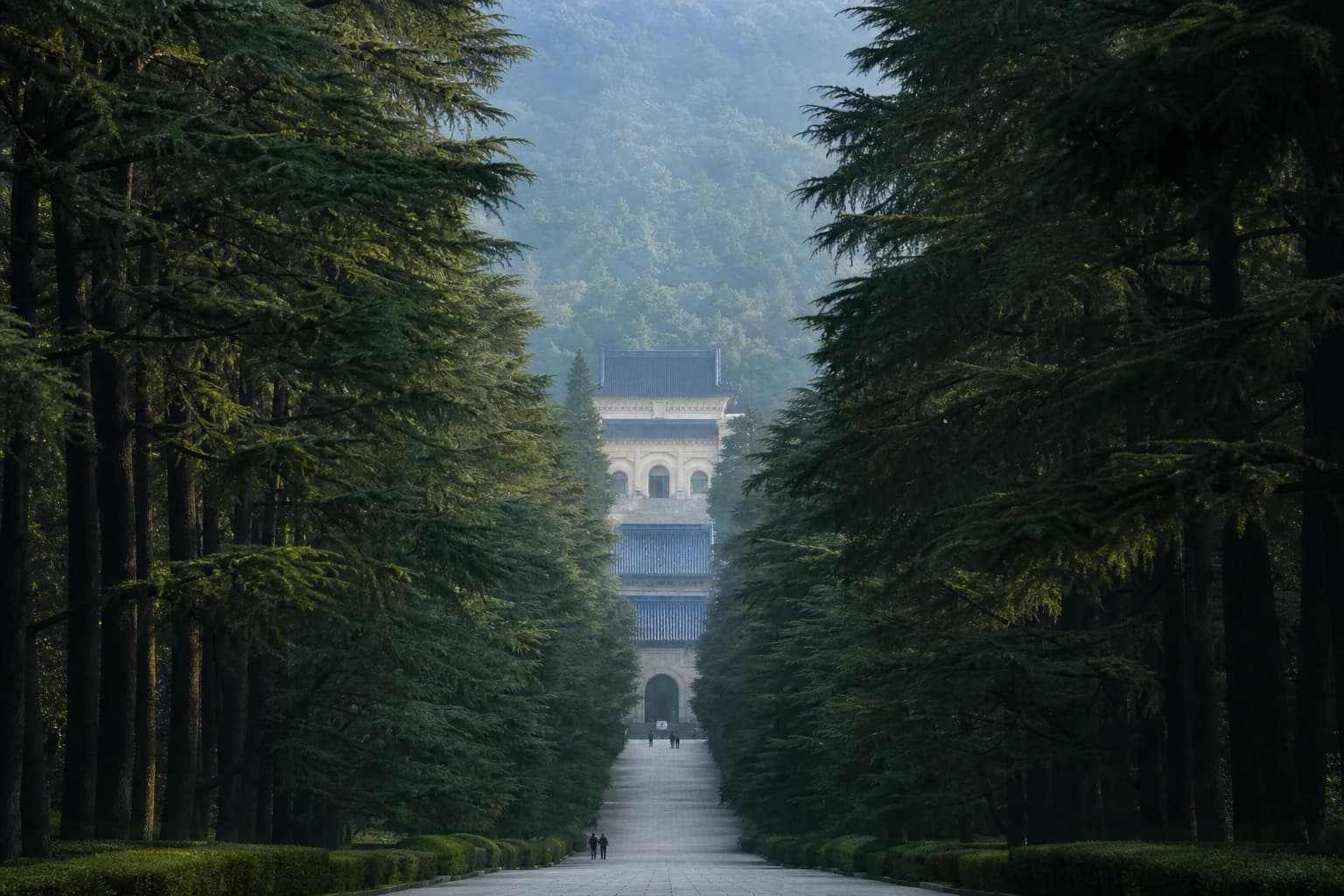
At Bo'ai Square, look straight north. Architect Lu Yanzhi designed the complex so the sequence rises with the mountain and the sacrificial hall commands the distant view. The official architecture account explains how the axial organization draws from Chinese imperial tombs while the hall's façade uses Western compositional ideas.
2. Bo'ai Arch to Stela Pavilion
The verified map leg is another 0.4 km / 6 minutes, but this is not a reason to rush. Watch how blue glazed roofs, pale granite and dark evergreens repeat along the axis. The restricted palette is one of the site's signatures: solemn without the red-and-gold language of an imperial palace.
3. Stela Pavilion to Sacrificial Hall
The map distance is only about 0.2 km / 3 minutes, but that estimate does not capture the climb. According to the official site introduction, the full axis spans roughly 700 metres horizontally, rises 70 metres, and uses 392 stone steps across ten platforms.
Climb at your own pace and use the platforms as intentional pauses. From below, the stair dominates; higher up, the platforms open views back across the axis. Summer heat and wet stone make this harder than the distance suggests. Wear shoes with grip, carry water and avoid building a tight timed reservation immediately after the visit.
Travelers with limited mobility should ask the visitor center about the current assisted or step-free arrangement before committing to the climb. The diagram is not an accessibility map and does not guarantee a stair-free connection.
4. Read the Sacrificial Hall from Outside In
The site was begun in 1926; its principal structures were completed in 1929 and the wider works continued into 1931. Lu Yanzhi's winning design joined an axial Chinese memorial landscape with modern structural methods and Western civic-monument composition.
Notice three things:
- Approach: the hall is revealed repeatedly, hidden by nearer roofs, then restored to view.
- Material: white granite, grey stone and blue tiles create unity from a distance.
- Scale: the climb enlarges the hall psychologically even though the building is restrained beside an imperial complex.
Inside permitted areas, keep voices low and follow the day's photography rules. Do not write that the closed tomb chamber can be visited “on selected weekdays”; as of the current official notice, it cannot.
Optional Extension: Music Stage
After returning downhill, AMap's verified walking route from the sacrificial hall to Music Stage is about 0.8 km / 11 minutes, excluding the descent, queues and pauses. Confirm that access is open before adding it.
Music Stage is not merely a lawn with pigeons. The official 2026 description identifies architects Guan Songsheng and Yang Tingbao and explains its mix of an open, classically inspired performance space with details drawn from Jiangnan gardens. That contrast makes it an excellent architectural coda to the strict memorial axis.
Skip it if the stair has already used your energy. Add it when you want a quieter study of acoustics, curved space and landscape rather than another major monument.
Three Sensible Purple Mountain Combinations
Focused morning: mausoleum core only
Transfer at Xiamafang, take the current scenic shuttle, complete the core route and return. This is the right choice for families, hot weather or a day that also includes a central Nanjing museum.
Half day: core plus Music Stage
Complete the climb first, then decide about Music Stage. Do not reverse the priorities: the optional stop should never make you hurry through the memorial or miss the reserved entry.
Full heritage day: west to east
Start near Muxuyuan for Ming Xiaoling, continue through the mountain network to Sun Yat-sen Mausoleum, then use the scenic shuttle toward Linggu and finish near Zhonglingjie. This is a serious walking day with separate admissions and more than one operating schedule. Use our Purple Mountain guide for the full route instead of stitching together old screenshots.
Photography Without Turning It into a Backdrop
- Use the lower platforms for the strongest symmetrical stair composition.
- Let the cedar trees frame the axis instead of using an ultra-wide lens that distorts the hall.
- Early light usually gives cleaner stone texture and gentler heat, but reservation timing comes first.
- Avoid blocking stair lanes, memorial ceremonies or other visitors for repeated portraits.
- Treat inscriptions and interior displays as historical material, not props. Follow no-flash and no-photography signs where posted.
What to Eat After the Climb
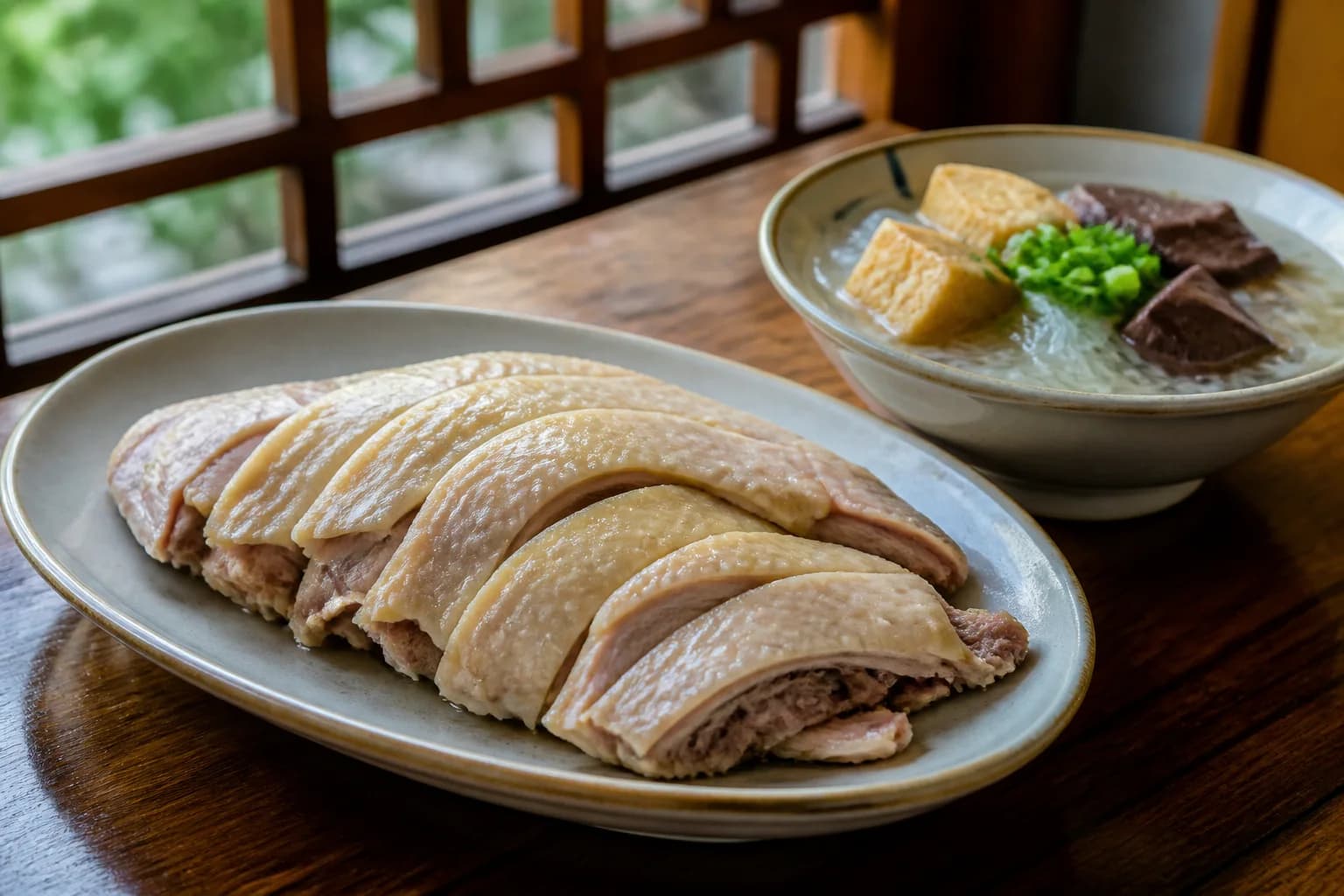
The scenic-area food strip is convenient, but it is not where you need to force a destination meal. Choose by timing:
- Duck-blood vermicelli soup: a fast, warming meal with vermicelli, duck offal and tofu puff; ask about ingredients if you avoid offal.
- Nanjing salted duck: better as a shared plate in a proper restaurant than as a rushed stair-side snack.
- Beef potstickers: a useful post-walk carbohydrate stop, often paired with soup.
- Vegetarian noodles or simple rice dishes: easier before the climb when rich duck dishes feel too heavy.
- Plum-blossom cake and osmanthus sweets: dessert categories, not substitutes for lunch.
For a broader restaurant choice, return toward Xinjiekou, Daxinggong or the Confucius Temple/Laomendong area. Branch-level recommendations age quickly; use recent menus, hygiene signals and queue length instead of treating a viral shop as essential.
Where to Stay
- Xinjiekou: the most practical first-visit base, with strong metro connections and the widest dining range.
- Daxinggong or Presidential Palace area: good for central history sights while keeping Line 2 access straightforward.
- Confucius Temple or Laomendong: best for evening atmosphere and Qinhuai walks, but expect busier streets and tourist pricing.
- Purple Mountain edge: choose this for greenery and an early start, not for nightlife or effortless access to every city sight.
- Nanjing South Railway Station: useful for a short rail stopover, but less atmospheric and farther from the mountain.
Compare district-level hotels on Trip.com. Recent reviews about metro walking distance, breakfast start time and taxi pickup are more useful than a hotel calling itself “near Purple Mountain.”
Final Planning Checklist
- Make the real-name reservation and save the official confirmation.
- Recheck the day's Monday/holiday arrangement and tomb-chamber closure notice.
- Choose Xiamafang for the core, Muxuyuan for a west-to-east day, or Zhonglingjie as an eastern finish.
- Budget for the stair effort, not merely the mapped kilometre count.
- Complete the memorial first; treat Music Stage and Linggu as optional extensions.
- Follow live signs and the current scenic shuttle network rather than an old social-media route card.
Sun Yat-sen Mausoleum is most rewarding when you let its architecture control the pace. The forest, measured thresholds and long stair are not empty space between attractions—they are the monument's central experience.