Xiaguan Railway Theme Park
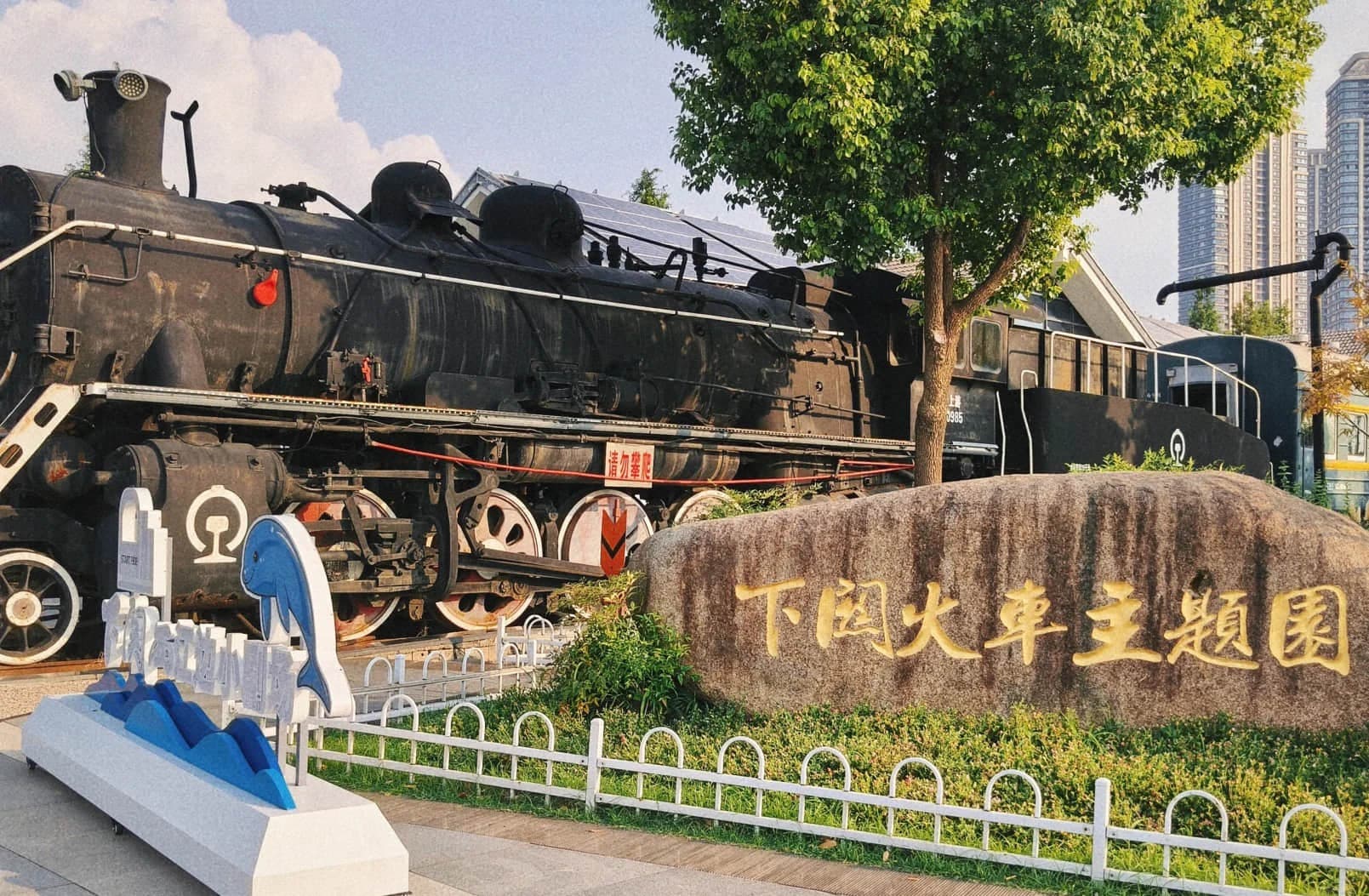
Xiaguan Railway Theme Park is not a rides-based theme park or a large railway museum. It is a free outdoor stop on Nanjing's Xiaguan waterfront, built around a display locomotive and green carriages near the former station and railway-ferry landscape. Its value comes from connecting rail, river and port history—not from spending hours inside a train.
Allow 45–75 minutes for the park alone or two to three hours for a wider waterfront walk. Recent Nanjing government material still identifies Xiaguan West Railway Theme Park as an active riverside venue, but events, carriage access and nearby interiors are not guaranteed daily.
Separate four different things
Old guides often merge the display park, former Xiaguan station, railway-ferry remains and every historic building on Jiangbian Road. Keep them distinct:
- Display train and railway art wall: the quick visual anchor. Carriages may be viewed only from outside; never promise interior access.
- Former station context: the protected station site at Jiangbian Road 8 belongs to the area's rail history, but heritage status does not mean every interior is open.
- Railway-ferry remains: the river crossing once linked rail networks before the Nanjing Yangtze River Bridge changed the transport system. View surviving structures only from signed public space.
- Xiaguan waterfront: a longer public landscape with port, industrial and ecological layers. It is the reason to stay after the train photograph.
This distinction prevents the biggest disappointment: arriving for a fully interpreted museum and finding an outdoor park.
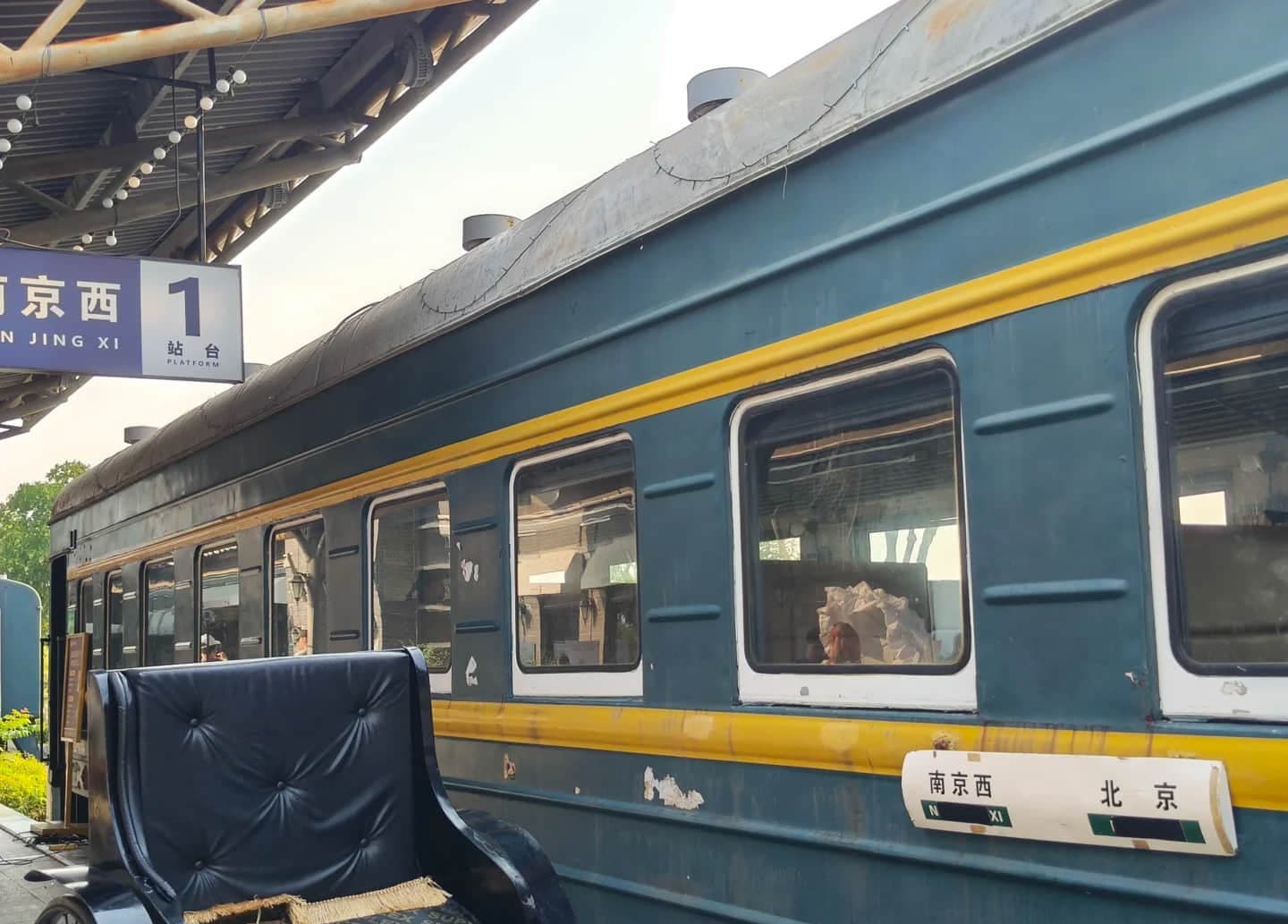
A route that explains the site
Begin at the locomotive, then read the rail-development wall before walking toward the river. Use the waterline to understand why Xiaguan mattered: trains could reach the port, but crossing the Yangtze required a ferry system. Continue along the signed waterfront only as far as your return plan allows. A one-way wander can create a long ride back.
The public outdoor area is normally treated as free-access parkland, but construction, events, flood control and riverside management can close sections. In 2026 the surrounding old-station area still has renewal works in planning and procurement, so follow barriers rather than an old map. Do not step onto tracks, climb rolling stock or approach an unprotected river edge.
Getting there without a stale bus list
Search Chinese navigation for 下关西火车主题园 and pin the exact current entrance. Metro and bus access around Xiaguan has changed with new-line construction and station openings; a long list copied from an old guide is less useful than a same-day route. For a taxi or ride-hail, show the Chinese destination and confirm the drop-off is on the Nanjing side, not Pukou Railway Station across the river.
Summer riverside exposure can be hot and humid; winter wind is sharper than in sheltered central streets. Sunset gives good light, but keep enough daylight for industrial remains and leave before an unfamiliar river path becomes difficult to read.
Who should go
Go if you enjoy transport history, industrial heritage, slow riverside walks or a quieter northern-Nanjing layer. Skip it on a first one-day trip if the Presidential Palace, Nanjing Museum or Purple Mountain is still missing. Families should treat the train as a display, not a playground.
Avoid fixed nearby-restaurant recommendations: the waterfront's commercial units and event vendors change. Eat before the trip or choose on arrival after checking the menu, operating state and price unit.
Checked: 2026-08-18. Current venue use and waterfront continuity are supported by maintained Nanjing government reporting; protected-station identity by the 2025 municipal heritage list. Live barriers and local notices control access.