Nanjing Presidential Palace
Nanjing Presidential Palace (南京总统府) is not one palace arranged around a single throne room. It is a large historic compound where late-imperial administration, the Taiping Heavenly Kingdom, the 1912 Provisional Government and the later National Government overlap. The official site divides the surviving spaces into central, west and east route zones; attempting every room without that structure quickly turns history into a corridor count.
For a first visit, follow the central route first, then add the west route for Xu Garden and Sun Yat-sen's Provisional President's Office. Add the east route only if you still have time and concentration. This produces a coherent two-to-three-hour visit while leaving a longer option for modern-history specialists.
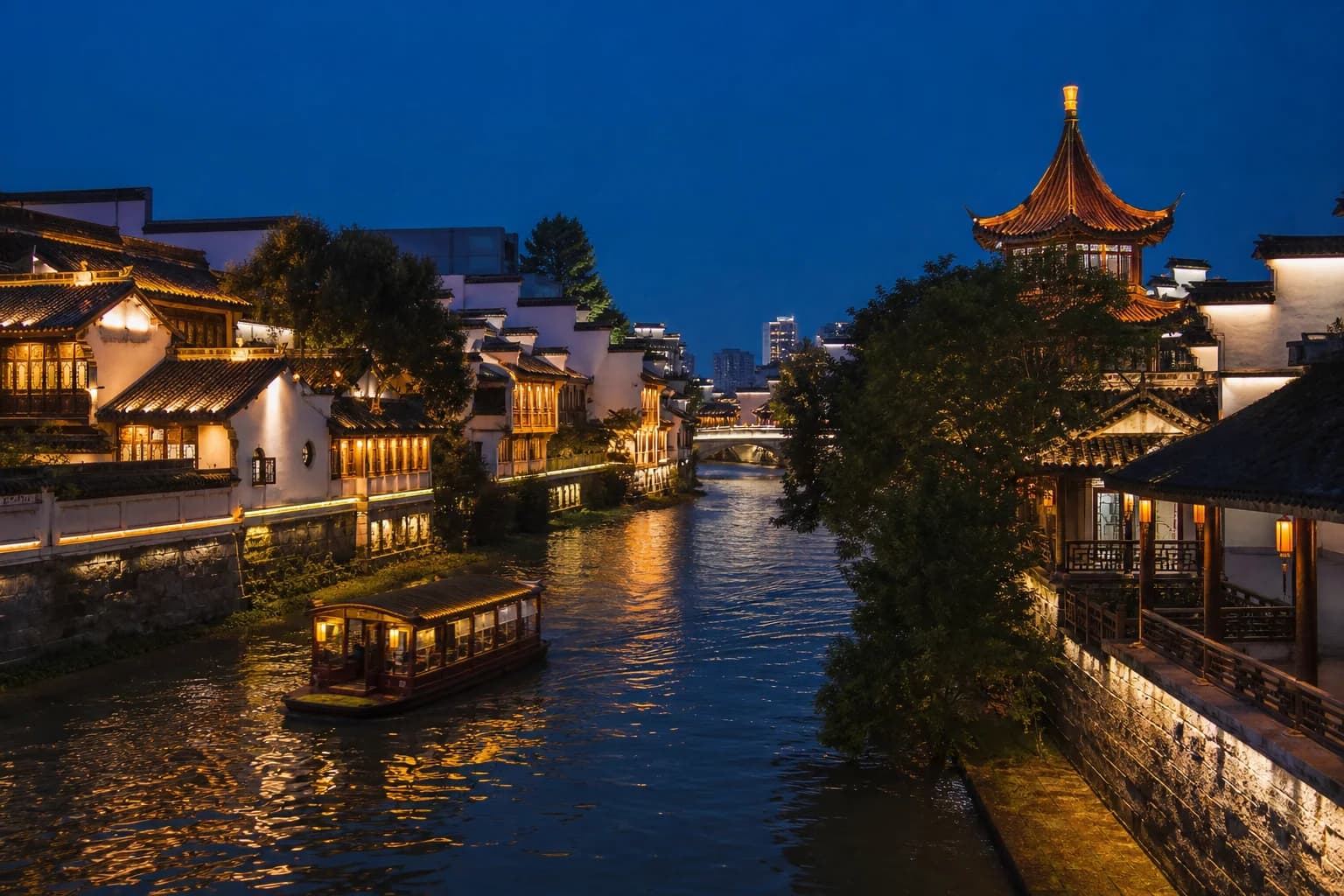
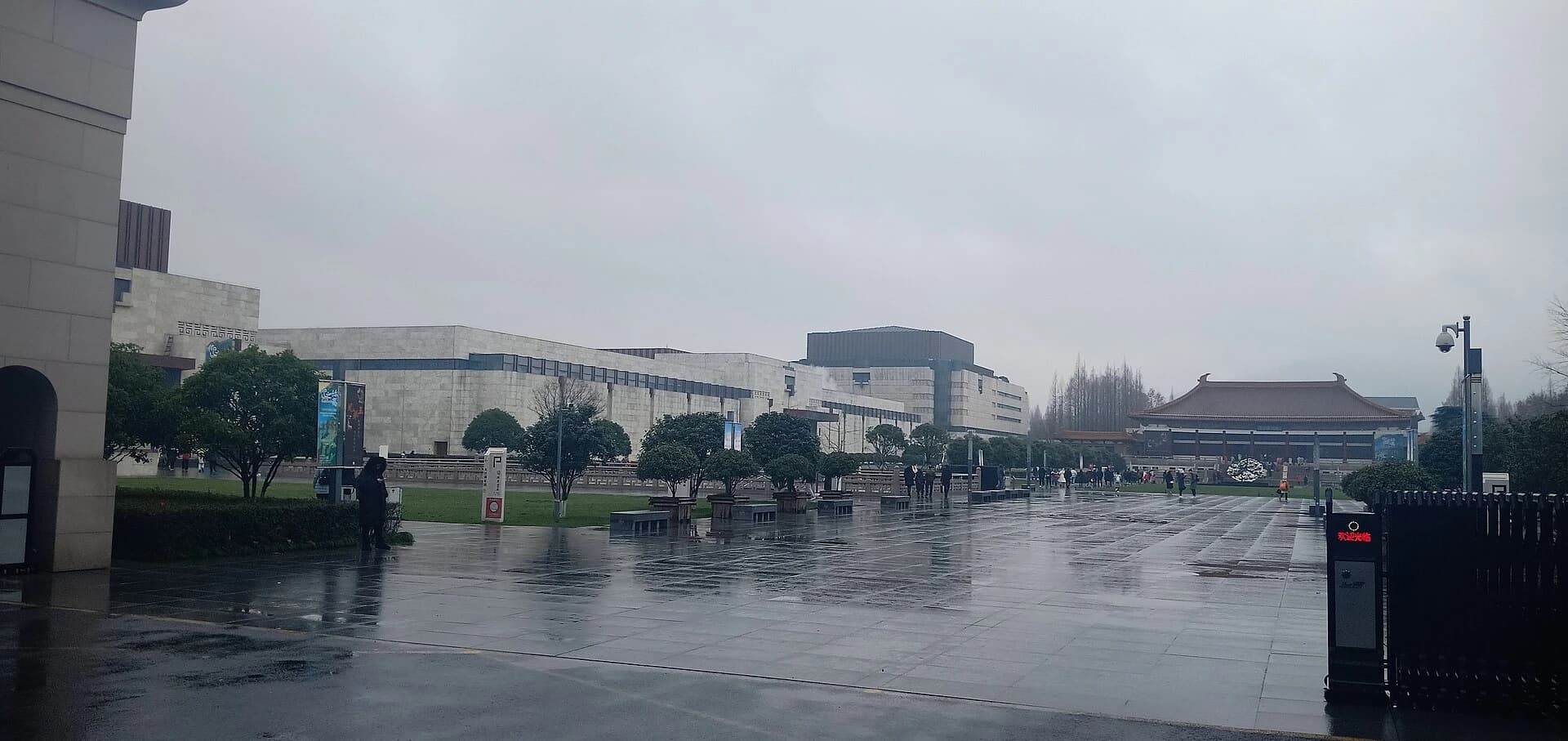
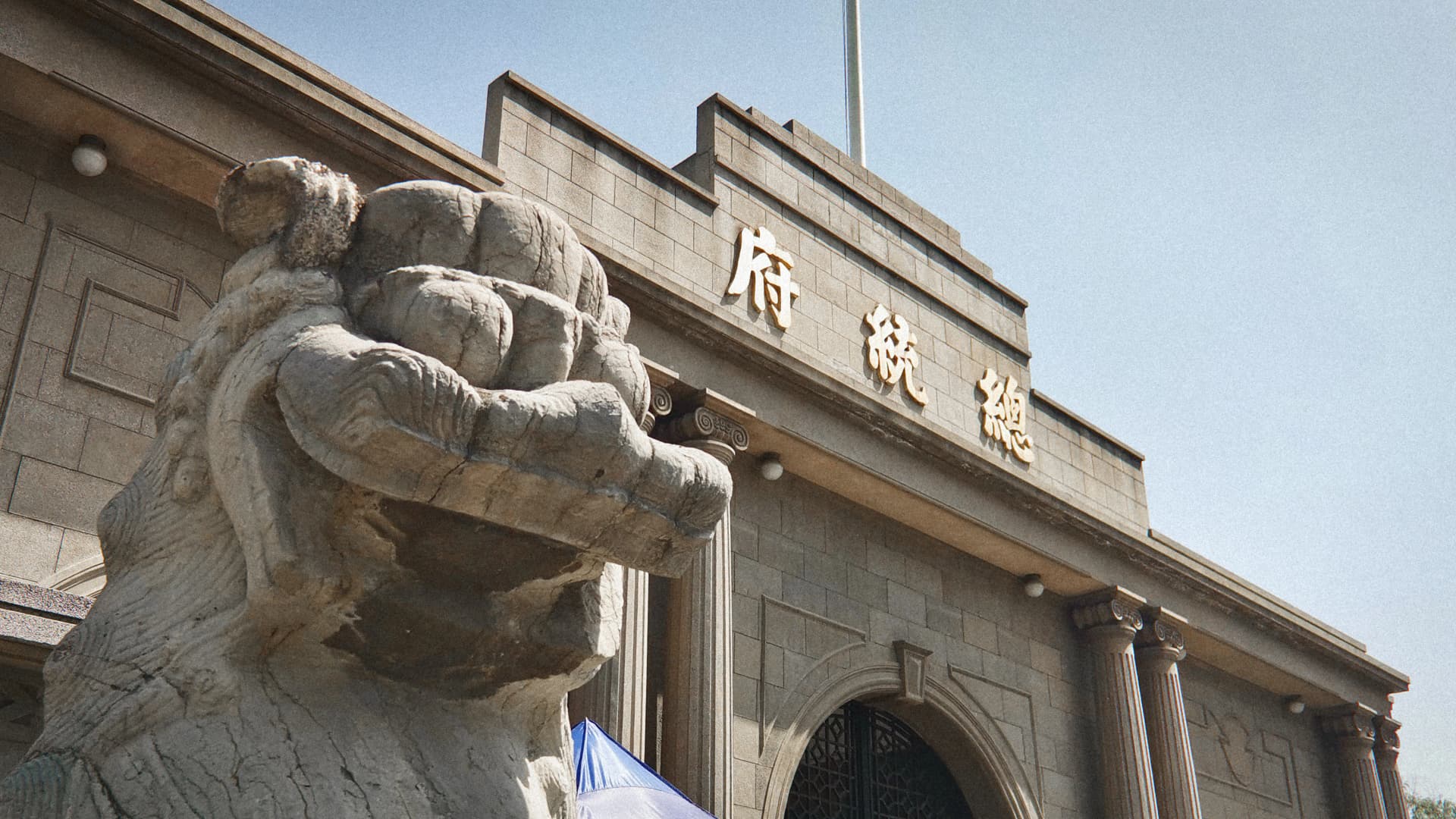
Gate photograph by HMGiovanniV, licensed CC BY-SA 4.0 via Wikimedia Commons. Current queueing and construction conditions can differ from the photograph.
Tickets, opening hours and the document problem
The official Chinese visitor page currently lists a full-price ticket at ¥35 and divides the year into two operating seasons:
- March 1–October 14: 08:30–18:00; last entry 17:00.
- October 15–the end of February: 08:30–17:00; last entry 16:00.
- Closed Monday, except statutory holidays or a special operating notice.
The palace requires a real-name timed ticket. Its official English ticket page says the authorised individual channel is the “南京总统府” WeChat mini-program and warns against unofficial ticketing or guide services. Bring the original identity document used for the booking; one ticket permits one entry on the booked day.
International visitors should not assume that a China-ID-only form will accept a passport. Select the passport or accepted-document option if it appears, keep the confirmation offline and contact the official ticket line if the mini-program cannot complete the document flow. Do not buy a supposed “mandatory admission service” merely because it bypasses an awkward form.
Check the latest official announcements shortly before departure. The site was publishing building-work notices in July 2026, so a photographed façade or gallery can be screened even while the wider compound remains open.
Getting there: use Daxinggong Exit 5
Take Metro Line 2 or 3 to Daxinggong Station (大行宫). The official directions specify Exit 5. Amap resolves Exit 5 (Daxinggong Station Exit 5 — open in AMap) and the palace gate (Presidential Palace gate — open in AMap) as a 0.3 km, approximately five-minute walk. The estimate is entrance-to-entrance; security, timed-ticket checks and queues are additional.
Use the precise Presidential Palace gate marker, not the centre point of the large compound. Save the gate and station exit in Chinese for the return journey.
Choose one internal route
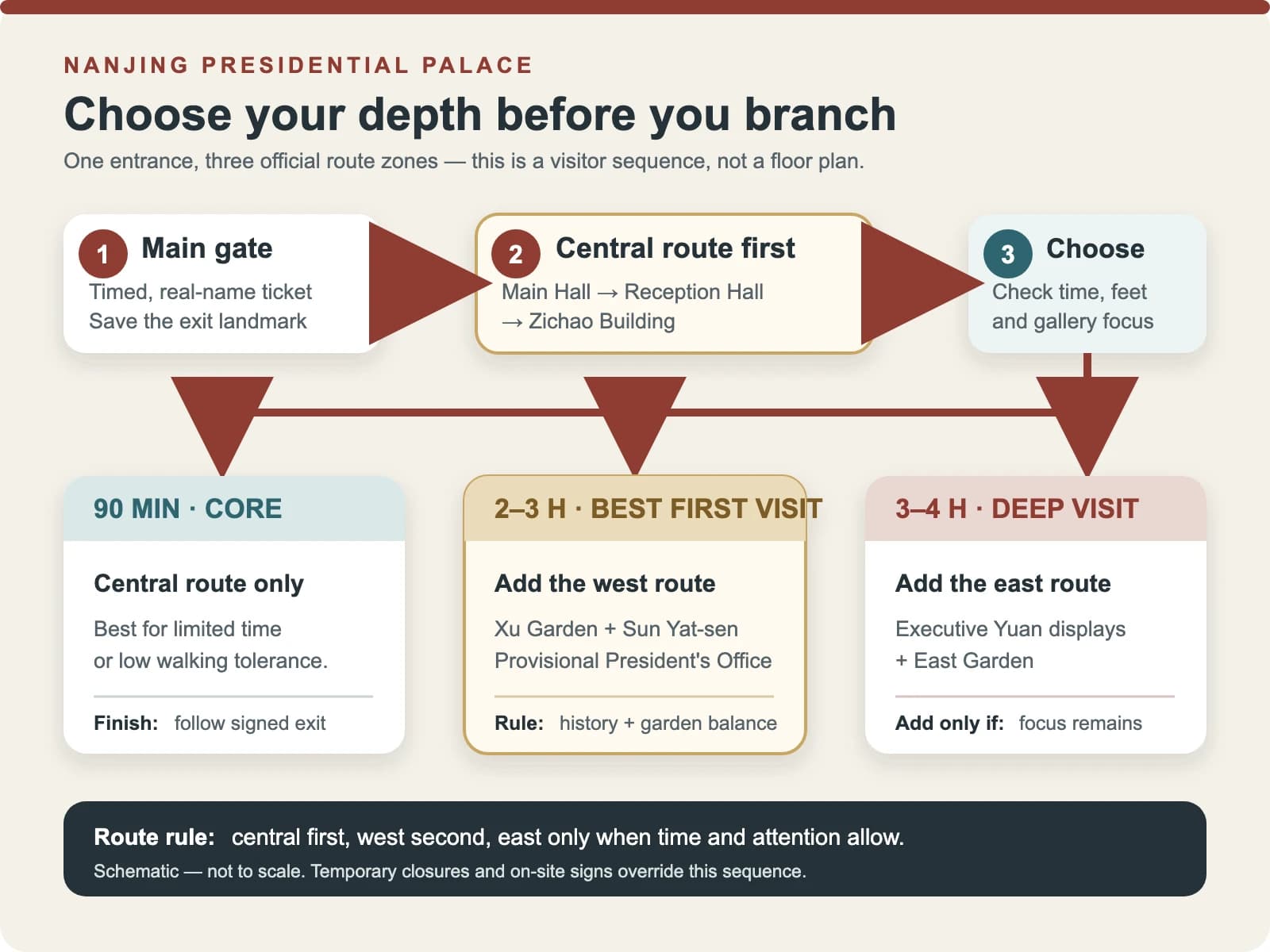
This is an original decision diagram built from the palace's official central, west and east route structure. It is deliberately not a traced floor plan. Temporary closures and the current one-way signs always override the sequence.
90 minutes: central route only
Use the compact route when the palace shares a day with Nanjing Museum or when stairs, heat or crowds are already reducing attention. Start at the Main Hall, continue through the Second Hall and Reception Hall, then reach the Zichao Building area. The exact open rooms can change, but the central axis gives the clearest view of how formal movement and government administration were staged.
Do not treat every desk as a separate attraction. Instead, ask three questions:
- Which spaces are ceremonial, and which are working offices?
- Where does a Chinese courtyard sequence give way to Republican-era institutional architecture?
- Which display belongs to the Qing, Taiping, 1912 or National Government layer?
If you cannot answer the third question, slow down before adding another wing.
Two to three hours: central plus west
This is the strongest first-visit route. After the central sequence, add the west route for Xu Garden and the Provisional President's Office associated with Sun Yat-sen and the 1912 government.
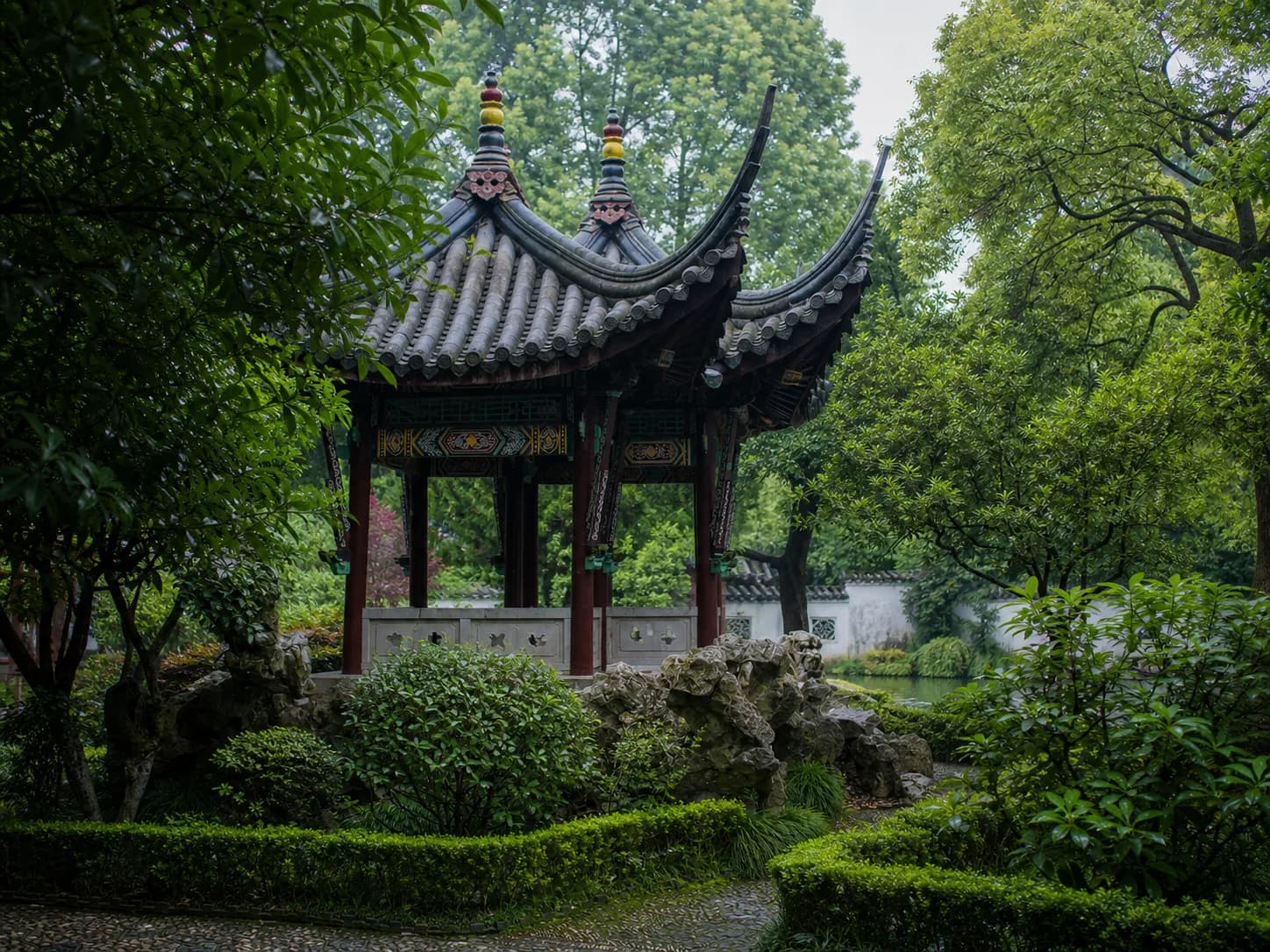
Xu Garden is not decorative filler between political exhibits. Its water, rockery, white walls and pavilions preserve a different spatial language from the axial halls. Notice how framed views and turning paths slow the visitor, then compare that rhythm with the direct approach to the office buildings.
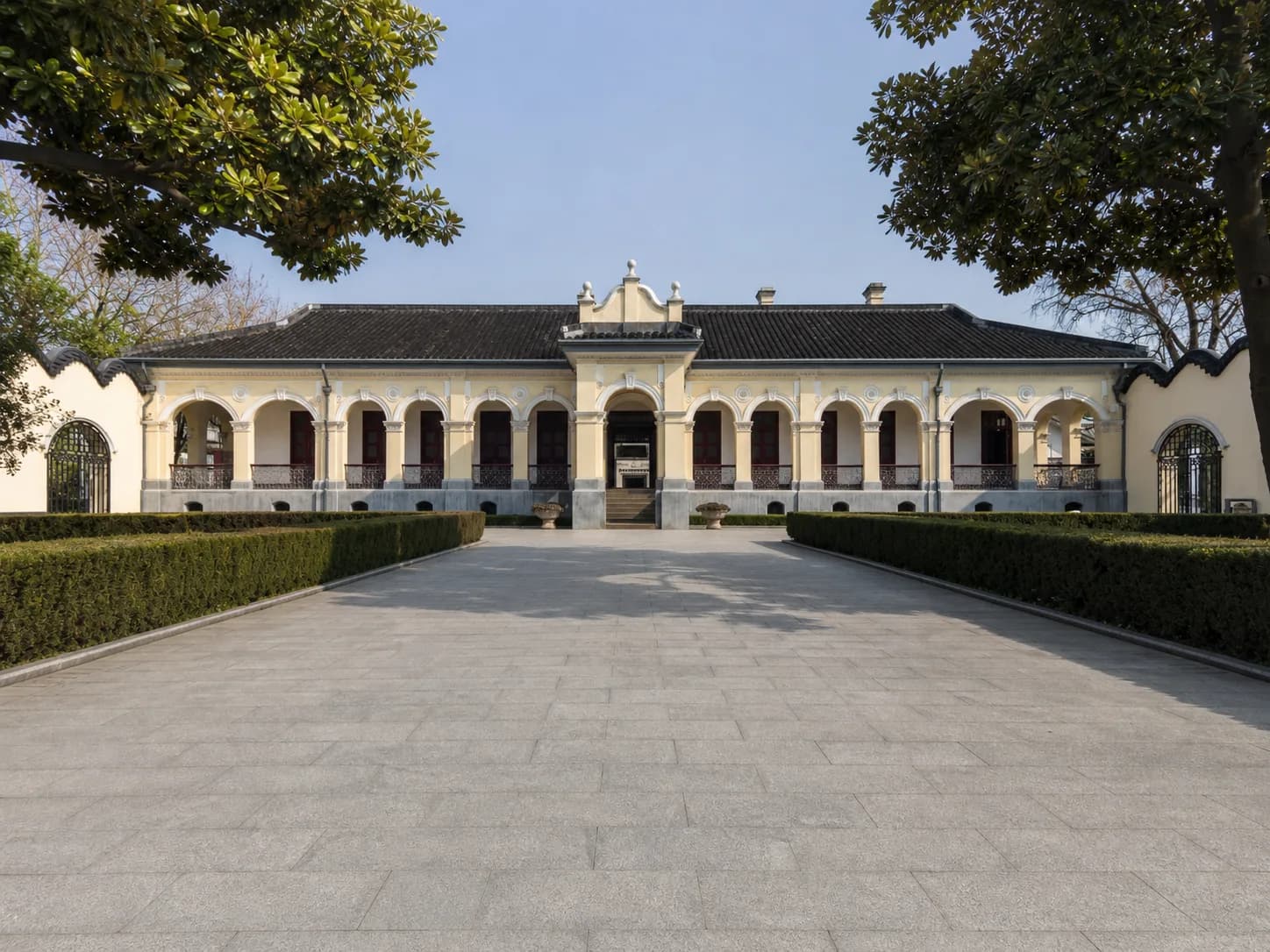
At the Provisional President's Office, focus on scale and function rather than searching for a cinematic presidential residence. The modest rooms, arcade and administrative layout help explain how a provisional government worked through existing buildings.
Three to four hours: add the east route
Add the east route when modern Chinese government history is a primary interest. The official site identifies the former Executive Yuan buildings, restored East Garden and related administrative remains in this zone. These spaces extend the story from individual office rooms to the machinery of government.
The east route is the first branch to cut when the compound is crowded or you have already spent three hours at Nanjing Museum. Museum fatigue does not become scholarship simply because another building is open. Pause before the branch, drink water and decide whether you can still read captions rather than merely photograph façades.
The distinctive way to read the palace
The most useful theme is reuse. The site accumulated new regimes without becoming a blank slate each time. Gardens, halls, gates, offices and later institutional buildings therefore sit beside one another rather than forming a stylistically unified palace.
Look for four contrasts:
- Axis versus garden: formal forward movement on the central route; indirect framed views in Xu Garden.
- Ceremony versus administration: reception and audience spaces compared with offices, files and support rooms.
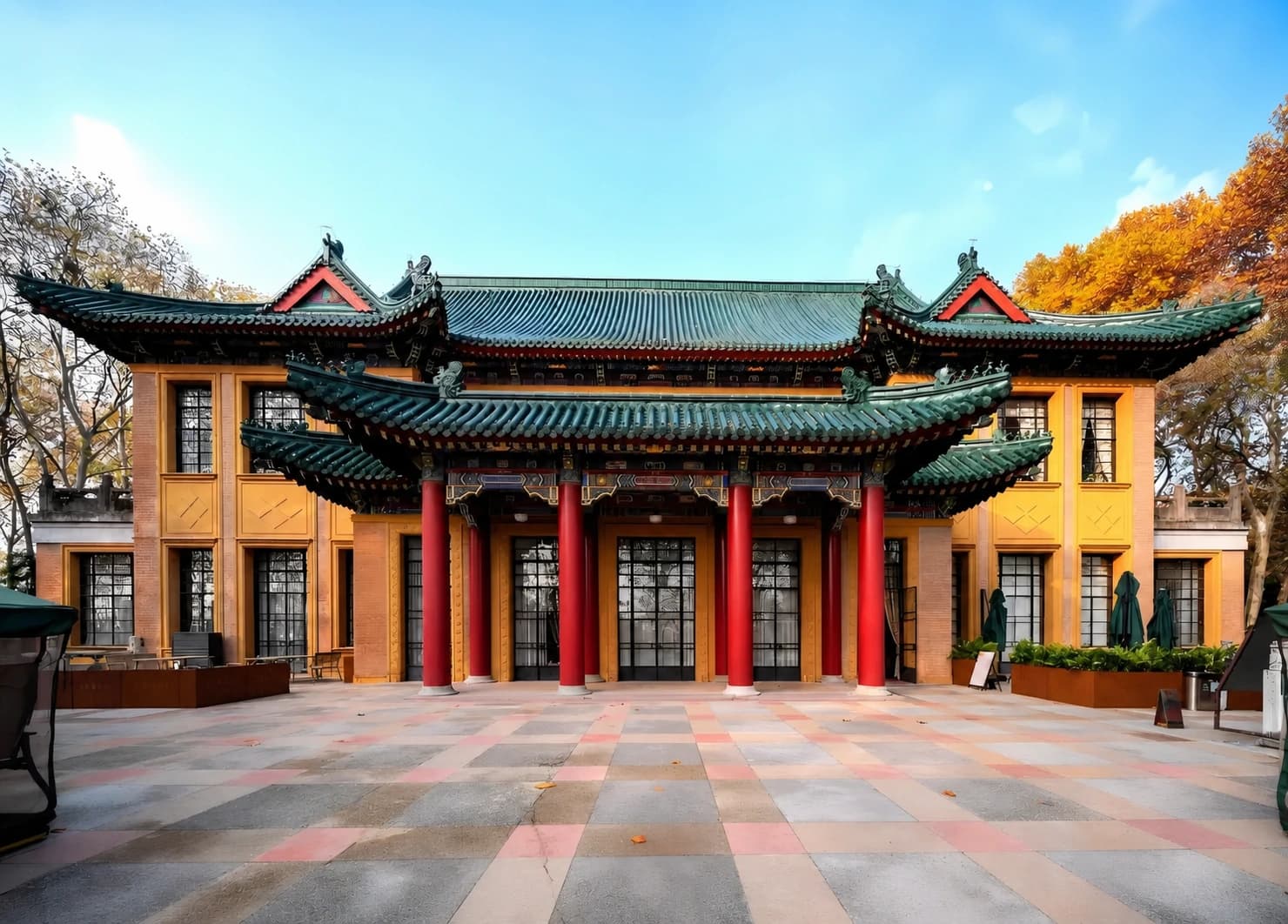
- Chinese versus Western-derived construction: courtyards and tiled roofs beside arcades and modern institutional façades.
- Survival versus reconstruction: an old-looking room may be restored, relocated or interpreted; read the label before treating it as untouched evidence.
This method gives the visit a stronger identity than memorising a long list of politicians.
Crowds, luggage and accessibility
The official safety guidance notes that the compound contains more than 140 late-Qing and Republican-era buildings, garden water, steep steps and low head clearances. Rain and snow make outdoor paving slippery. Some interiors are narrow and cannot absorb tour groups smoothly.
Arrive near opening for the calmest route, but keep the first fifteen minutes for entry rather than scheduling an immediate guided activity. Large luggage can be left at the official storage point according to the current safety notice; confirm today's capacity before arriving with a suitcase. Wheelchair and stroller users should ask staff for the accessible connection between route zones because the shortest historical path may include steps.
Eat after the history, not between wings
For a practical local meal, walk south toward Kexiang (科巷) after exiting. Amap's current model gives roughly 1.0 km and 14 minutes on foot from the palace gate to the Kexiang area (Kexiang — open in AMap). This is a better time to eat than interrupting the internal route for a generic snack.
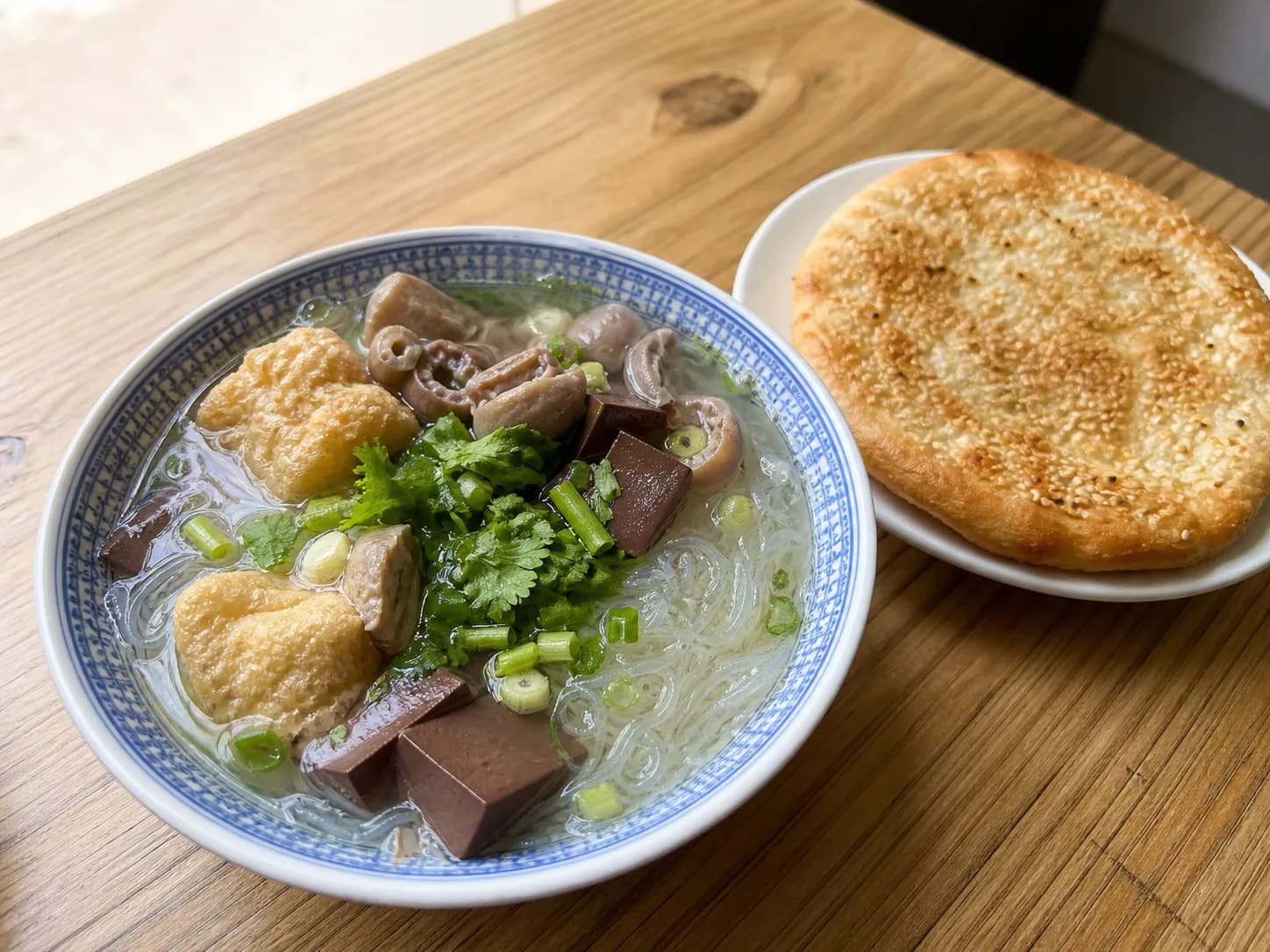
Duck-blood vermicelli soup is a useful Nanjing lunch because the clear broth, glass noodles, tofu puffs, duck blood and optional offal create several textures without requiring a long banquet. Pair it with a duck-oil sesame flatbread if you need more substance. Ask what is included before ordering—“full set” versions can contain liver, gizzard and intestine.
Judge a food stop by a focused menu, visible turnover and made-to-order service rather than a viral queue. Kexiang is an active commercial food area, not a heritage exhibit; vendors and opening patterns change.
One nearby extension, not three
The Nanjing 1912 district lies about 0.5 km and seven minutes on foot from the palace gate in Amap's current model. Use it for a short look at the wider Republican-era streetscape, a coffee or an evening transition. It is a redeveloped dining-and-entertainment district, so do not mistake themed façades for the same evidentiary value as the museum compound.
Alternatively, continue along Changjiang Road toward nearby cultural institutions. Do not combine a full palace, a full Nanjing Museum visit, Jiming Temple and a long Xuanwu Lake circuit unless you are deliberately following the site's three-day Nanjing route with cut-first rules.
Where to stay for this part of Nanjing
- Daxinggong / Changjiang Road: best for walking access to the palace and a culture-focused central day.
- Xinjiekou: the most flexible transport, shopping and restaurant base for a first trip; one metro stop or a short ride away.
- Confucius Temple / Qinhuai: better for evening atmosphere, but less efficient for an early palace start and Purple Mountain days.
Compare accommodation on Trip.com by the exact metro station and entrance rather than the marketing phrase “near Presidential Palace.” A hotel on the wrong side of a major junction can add more walking than the straight-line distance suggests.
The palace is most rewarding when you leave with a structure: central government axis, west garden and 1912 office, east administrative branch. Choose the depth before you branch, and the site becomes a readable sequence of changing governments rather than an exhausting collection of rooms.