Ming Xiaoling Mausoleum
Ming Xiaoling is not a monument you reach after one short path. It is a long imperial sequence across the wooded southern slope of Purple Mountain: stone animals, officials, bridges and gates gradually lead to the formal tomb axis of the Hongwu Emperor Zhu Yuanzhang and Empress Ma. The route is the experience.
Allow two and a half to three hours for a strong first visit. Enter near Muxuyuan Metro Station, walk the Sacred Way, continue to Golden Water Bridge and finish at Fangcheng Minglou. Add Plum Blossom Hill or the Ming Xiaoling Museum only when season and time justify it; trying to collect every branch weakens the main sequence and creates avoidable backtracking.
Tickets, passport booking and seasonal hours
The official bilingual Zhongshan Mountain guide currently lists Ming Xiaoling admission at ¥70 per person. A ¥100 combination ticket covers Ming Xiaoling, Linggu Scenic Area, the Open-Air Music Hall and Meiling Palace, but it is worthwhile only if your day genuinely includes several paid zones. Do not buy the bundle merely because the mountain looks compact on a map.
Ming Xiaoling uses real-name tickets and explicitly accepts passports and foreign permanent-residence cards. Unlike Sun Yat-sen Mausoleum, it does not require advance online reservation under the current general rules: individual tickets can be bought at a scenic-area entrance or through the official mini-program. Bring the original document used for the ticket and recheck holiday notices before travel.
The official ticketing hours are:
- February–November: 06:30–18:30.
- December–January: 07:00–17:30.
These are ticketing hours, not a promise that every museum room, tower level or side path remains accessible until the last minute. The Ming Xiaoling Museum currently follows a shorter 09:00–17:00 schedule, last entry 16:30, and closes on Monday. Start early for the outdoor route; schedule the museum only after checking its separate operation.
Getting there: Muxuyuan is the practical entrance
Take Metro Line 2 to Muxuyuan Station (苜蓿园). The official guide recommends Muxuyuan for Ming Xiaoling, with walking or scenic shuttle transfer. Amap resolves Exit 1 and the Gate 3 ticket entrance as approximately 0.4 km and six minutes on foot.
Use the gate marker rather than a generic Ming Xiaoling centre point. The scenic area contains several numbered entrances, and a pin at the tomb mound can leave a taxi or walker on the wrong side of a long protected landscape.
The official scenic transport plan also lists an internal line connecting Gate 3 → Gate 2 → Gate 1 → Golden Water Bridge. A single ride is currently ¥10 and an all-day general sightseeing-car ticket is ¥30. Service directions, crowd controls and stops can change, so confirm the useful direction before boarding. Walking the Sacred Way is the better first-visit choice; the shuttle is a mobility or time-saving fallback.
The route that makes the site readable
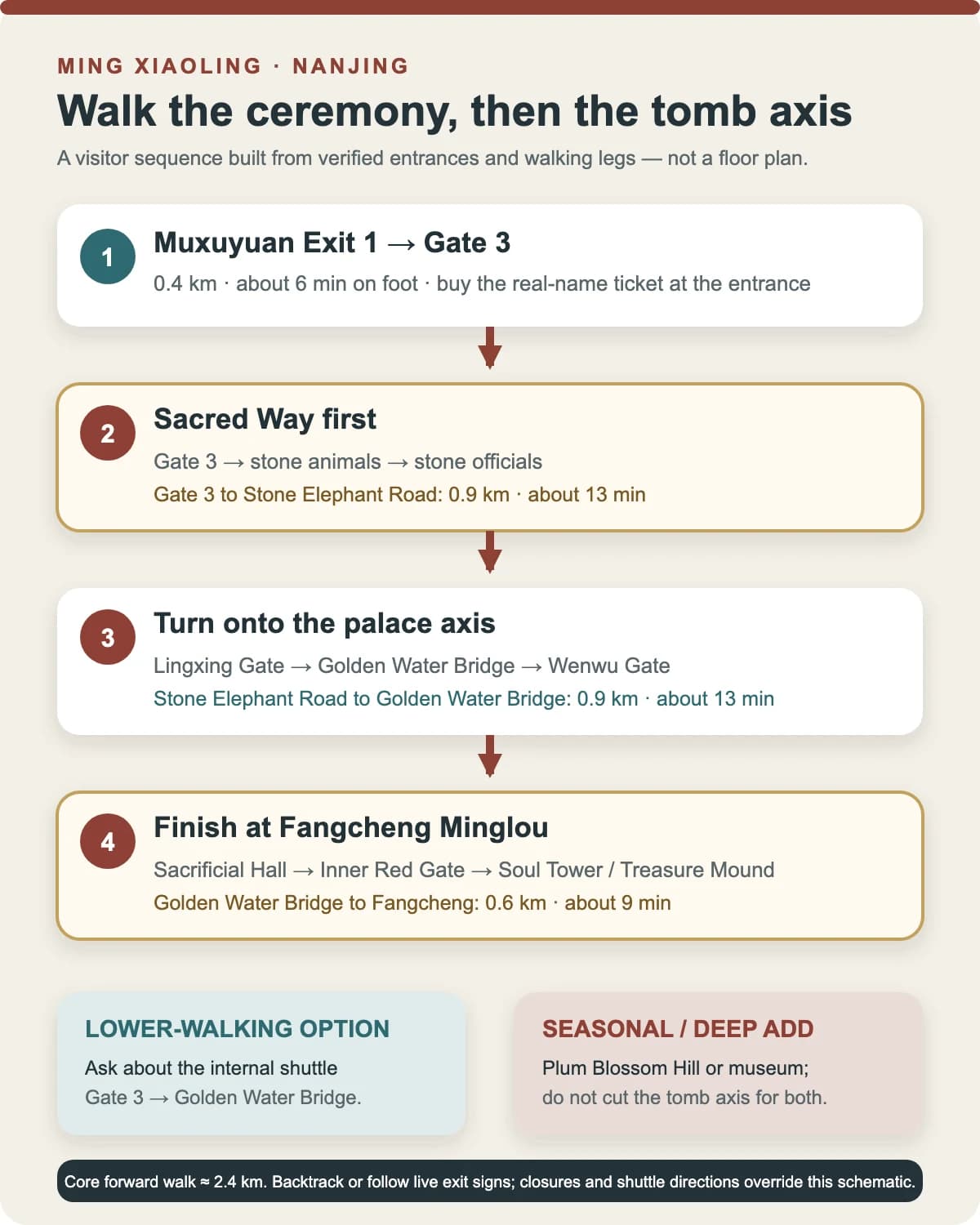
This is a visitor sequence, not a survey map. The verified forward legs total about 2.4 km before local wandering and the return to an exit. Live signs, temporary closures and staff instructions always override the diagram.
1. Gate 3 to the stone animals
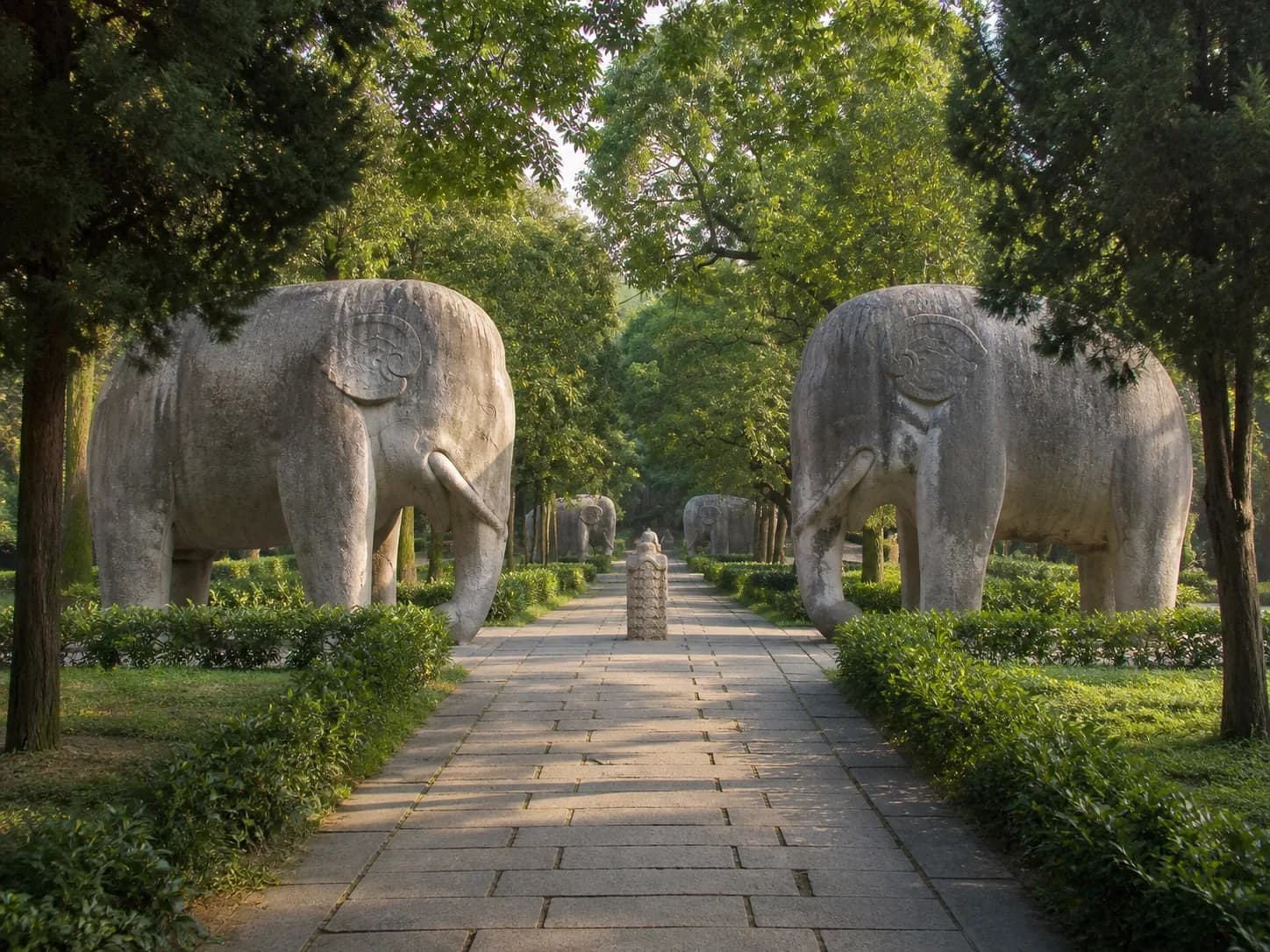
From Gate 3, enter the ceremonial landscape rather than rushing toward the highest building. Amap models the walk to the Stone Elephant Road area at roughly 0.9 km and 13 minutes, excluding stops. The official site identifies Stone Elephant Road as the first 615 metres of the Sacred Way, lined in sequence with lions, xiezhi, camels, elephants, qilin and horses.
Notice that standing and kneeling animals alternate. They are not a decorative zoo: the arrangement creates watch, rest and procession along a route designed to express protection and imperial order. Early morning gives the stone and trees more visual space; autumn colour is beautiful but brings photography congestion to the same narrow sight lines.
2. Stone animals to Golden Water Bridge
Continue from the animals toward the stone civil and military officials, then follow the route as it turns toward the tomb’s central axis. Amap gives approximately 0.9 km and 13 minutes from the Stone Elephant Road marker to Golden Water Bridge.
The bend matters. UNESCO describes the Ming and Qing imperial tombs as architecture integrated with topography and geomantic principles, while the official scenic history explains that Ming Xiaoling established a model used by later imperial tombs. The route does not force nature into one straight avenue from the beginning; it gradually converts a wooded ceremonial approach into a more formal architectural hierarchy.
3. Golden Water Bridge to Fangcheng Minglou
After Golden Water Bridge, continue through Wenwu Gate and the sacrificial precinct toward Inner Red Gate and Fangcheng Minglou. The bridge-to-tower leg is approximately 0.6 km and nine minutes in Amap’s walking model, but stairs, courtyards and reading time make the real visit longer.
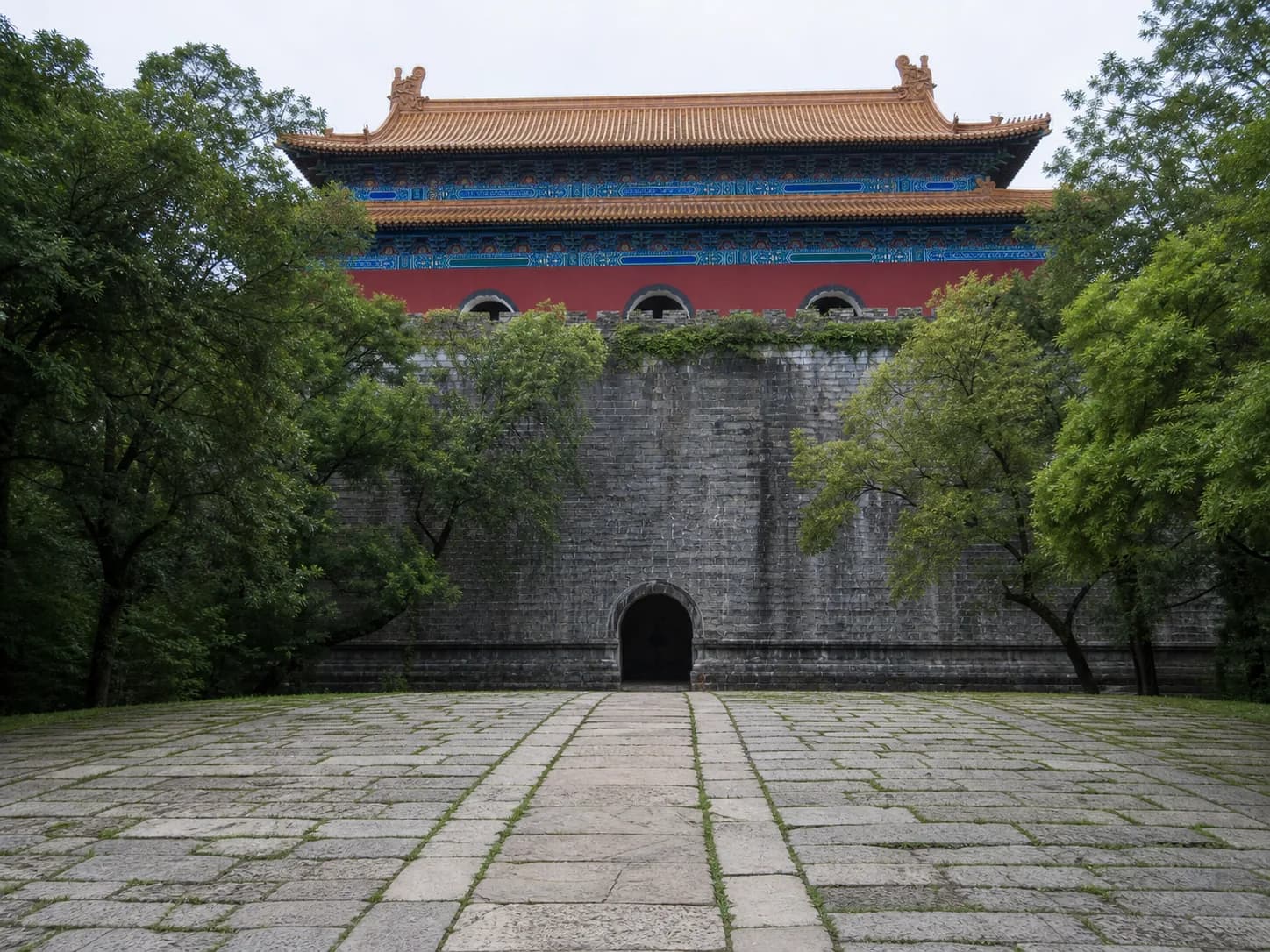
Fangcheng is the massive stone structure before the treasure mound; Minglou rises above it. The official conservation history notes that the tower roof was lost in nineteenth-century warfare and received a protective reconstruction completed in 2009. Read restored fabric and surviving Ming remains separately rather than treating every visible component as untouched fourteenth-century material.
The underground burial chamber is not a conventional walk-in tomb attraction. The physical climax is the relationship between the forecourt, arched passage, high platform, tower and wooded mound—not access to an excavated royal room.
Three ways to adjust the route
Lower walking tolerance
Ask whether the Gate 3–Golden Water Bridge internal shuttle is running in the direction you need, then walk the formal tomb axis to Fangcheng and back toward the nearest operating exit. This removes much of the Sacred Way, so use it only when distance, heat or limited time would otherwise prevent the visit.
Plum blossom season
Plum Blossom Hill is a justified branch in roughly mid-February to early March, but flowering dates change with weather. The official site describes tens of thousands of plum trees and hundreds of varieties across the hill and valley. Check current bloom reports instead of booking around a generic annual date.
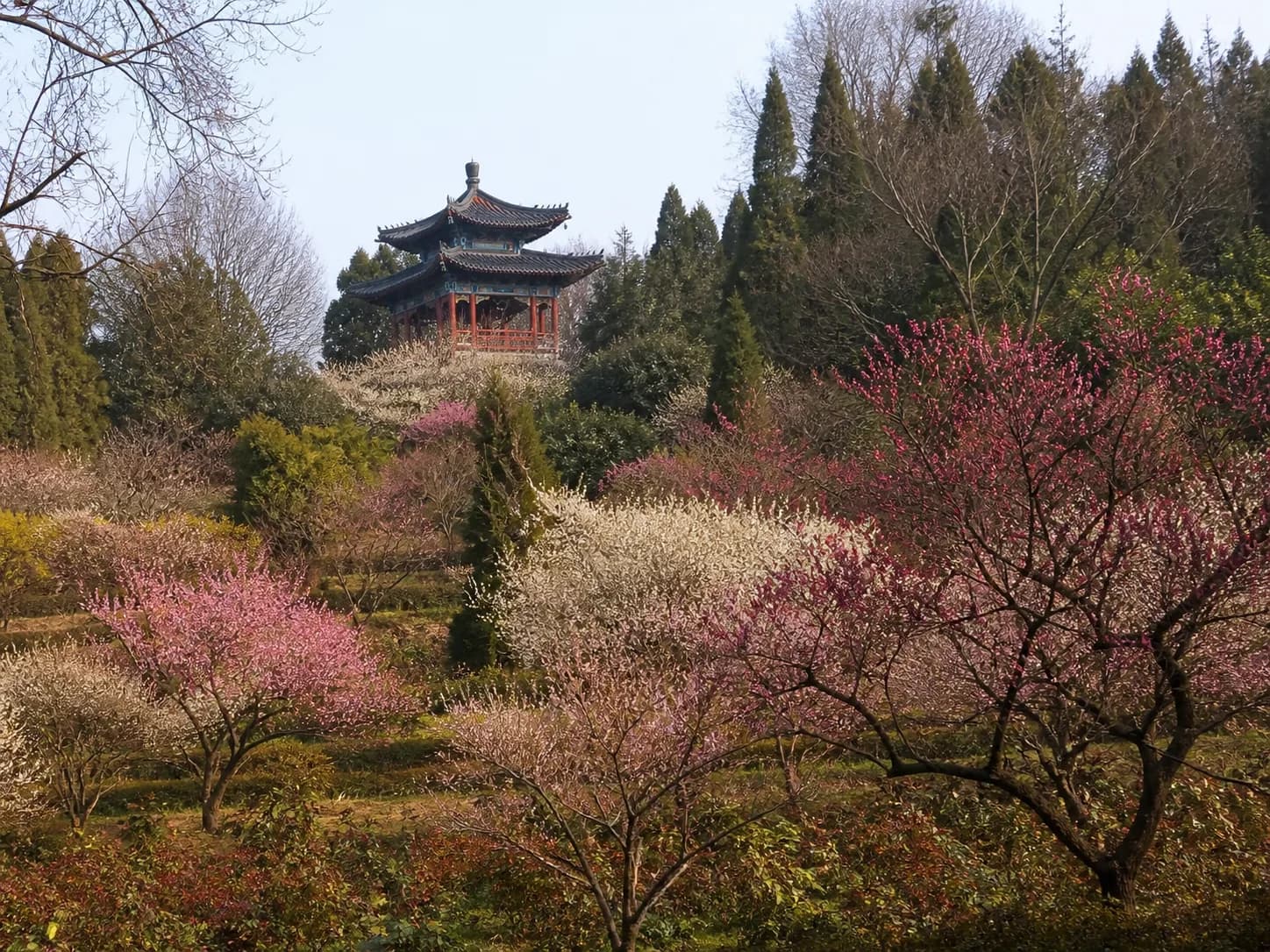
During peak bloom, add 60–90 minutes and expect slower movement around the most photogenic paths. Keep the tomb axis as the historical core; the blossoms are a seasonal layer, not a substitute for reaching Fangcheng Minglou.
History-first deep visit
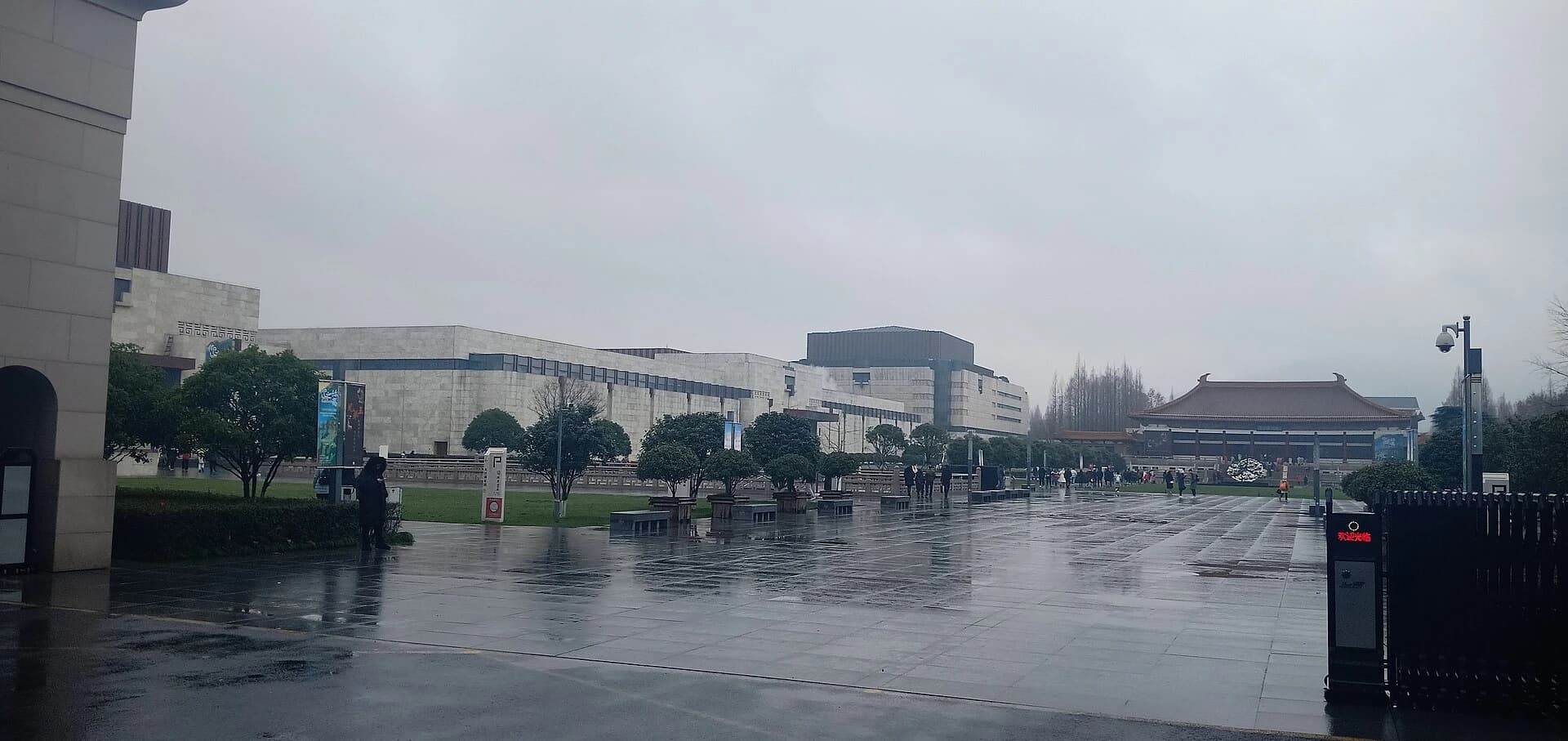
Add the Ming Xiaoling Museum near the southern approach when you want archaeological and institutional context before the landscape. Its later opening time makes it a poor anchor for a dawn start, and its Monday closure does not mean the entire outdoor Ming Xiaoling route is closed. If the museum consumes the morning, cut Plum Blossom Hill before cutting the tomb axis.
What makes Ming Xiaoling distinctive
The most useful theme is power expressed through landscape. Look for four transitions:
- Animals to officials: symbolic guardians give way to a human court in stone.
- Curved approach to formal axis: terrain controls the early procession before architecture becomes more commanding.
- Open woodland to enclosed courtyards: the route steadily narrows attention toward the burial precinct.
- Survival to conservation: original stone, later damage, restoration and protective reconstruction coexist.
This method is more memorable than trying to catalogue every gate. It also explains why the site influenced later Ming and Qing imperial tomb planning: the visitor is moved through hierarchy before reaching the mound.
Food, water and the rest of Purple Mountain
Carry water and eat a real breakfast before entry. Food inside a heritage landscape is best treated as a rest function, not a destination hunt. The official directory lists a tea stop near the stone elephants, but vendors and operating hours are volatile. Use visible opening, posted prices and clean turnover rather than building the day around one kiosk.
For a Nanjing meal, return toward Xinjiekou after the mountain and choose salted duck, duck-blood vermicelli soup or beef potstickers from a focused shop with strong turnover. This produces a better meal than forcing a city-food checklist into the scenic area.
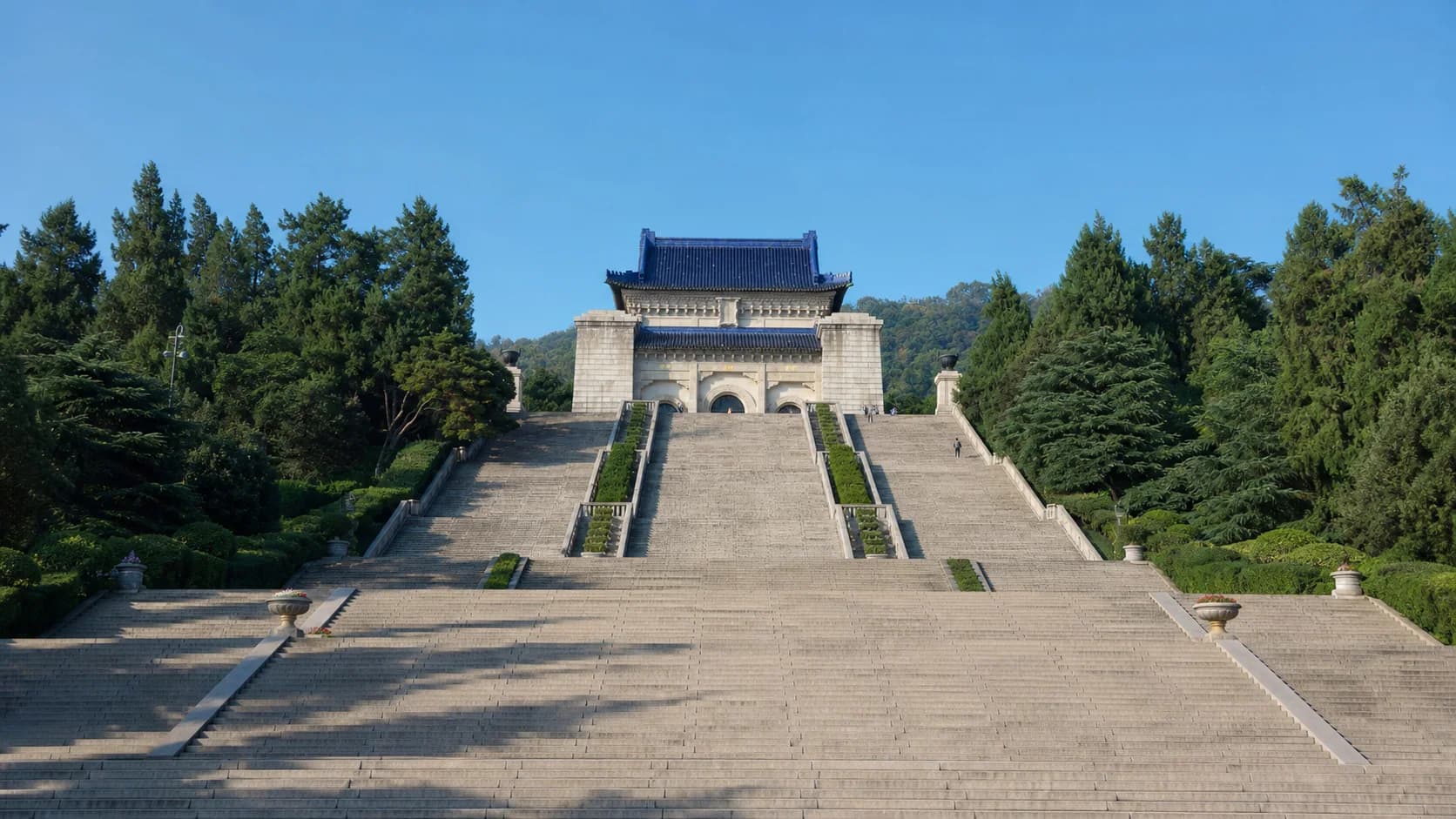
Do not automatically combine a full Ming Xiaoling route with Meiling Palace, Sun Yat-sen Mausoleum, Music Stage and Linggu Scenic Area. A realistic first day is Ming Xiaoling plus one major eastern or central extension. Use the site’s three-day Nanjing itinerary for cut-first rules and verified transfers.
Where to stay
- Xinjiekou: best all-round first-trip base for restaurants and metro connections; Line 2 reaches Muxuyuan directly.
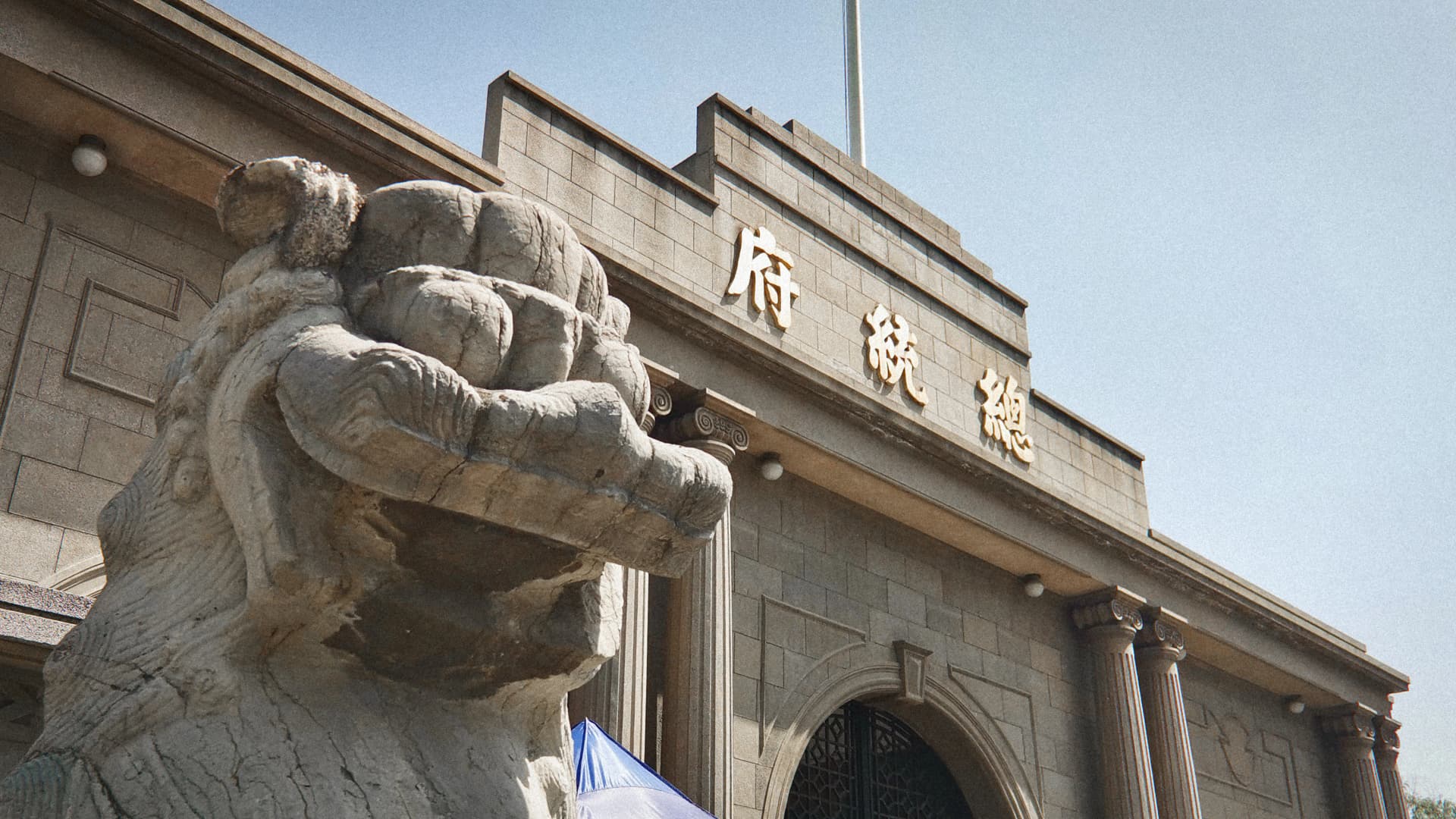
- Daxinggong / Changjiang Road: stronger for the Presidential Palace and central museums while retaining easy Line 2 access.
- Purple Mountain / Zhongshan Scenic Area: quiet and close to the heritage landscape, but less flexible for evening food and cross-city sightseeing.
Compare hotels on Trip.com by the nearest metro entrance, not by a broad “near Purple Mountain” label. The mountain covers a large area, and a property near one gate may still be inconvenient for the route you intend to walk.
Ming Xiaoling rewards sequence over speed. Enter at Gate 3, give the stone procession time to work, turn onto the palace axis and finish at Fangcheng Minglou. Add one seasonal or museum branch only when it strengthens that story.