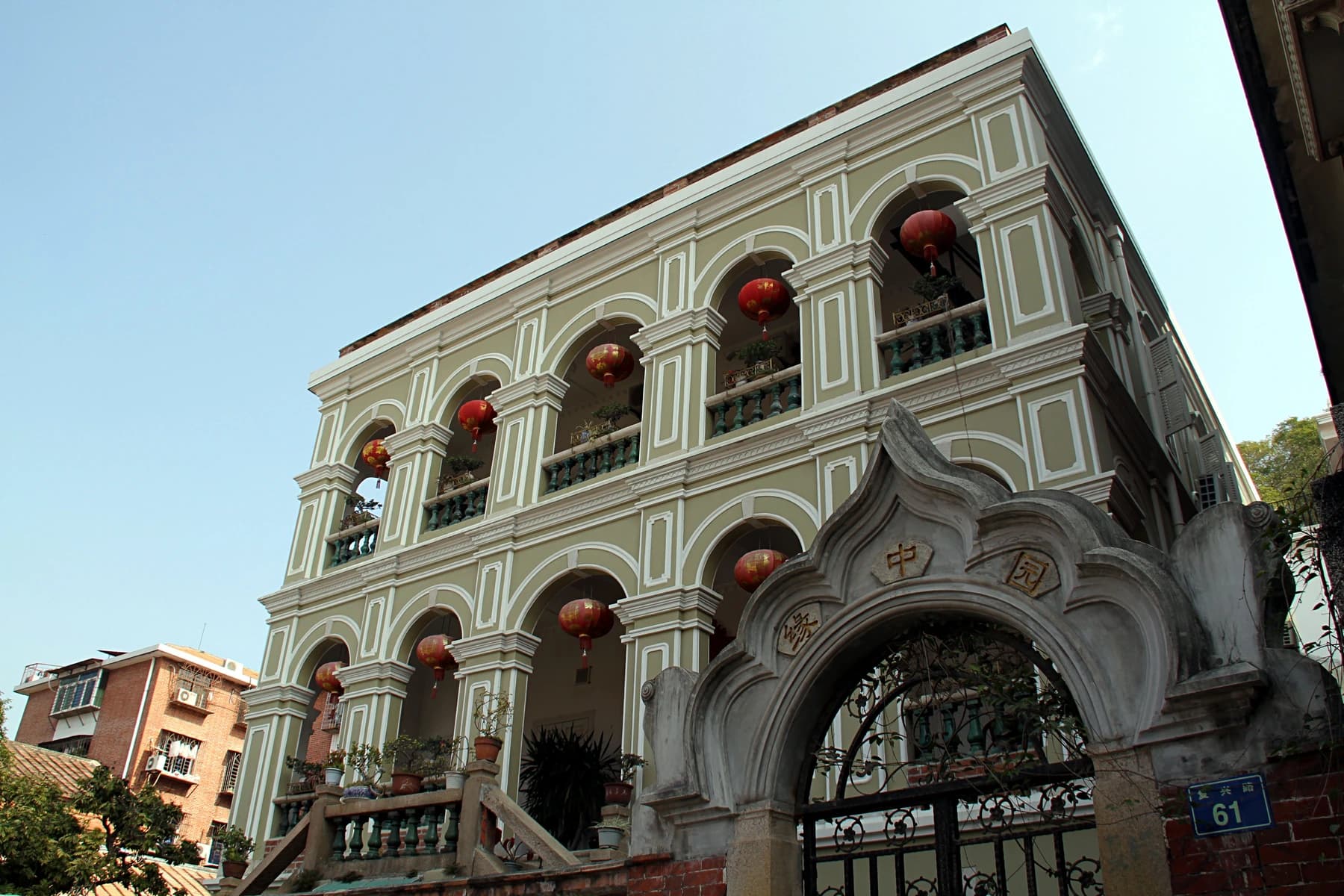
Xiamen
Xiamen looks compact on a map, but the water and long island shape punish random pin collecting. Separate Gulangyu, the south-coast line, the Botanical Garden–old port core, and Jimei. The first depends on a named ferry and passport check; the last is north of the sightseeing core and deserves one deliberate trip.
Choose the right route
- 2 days: south-coast sequence plus a full Gulangyu day.
- 3 days: add the Botanical Garden and old-port arcades.
- 4 days: add Jimei's education landscape without backtracking.
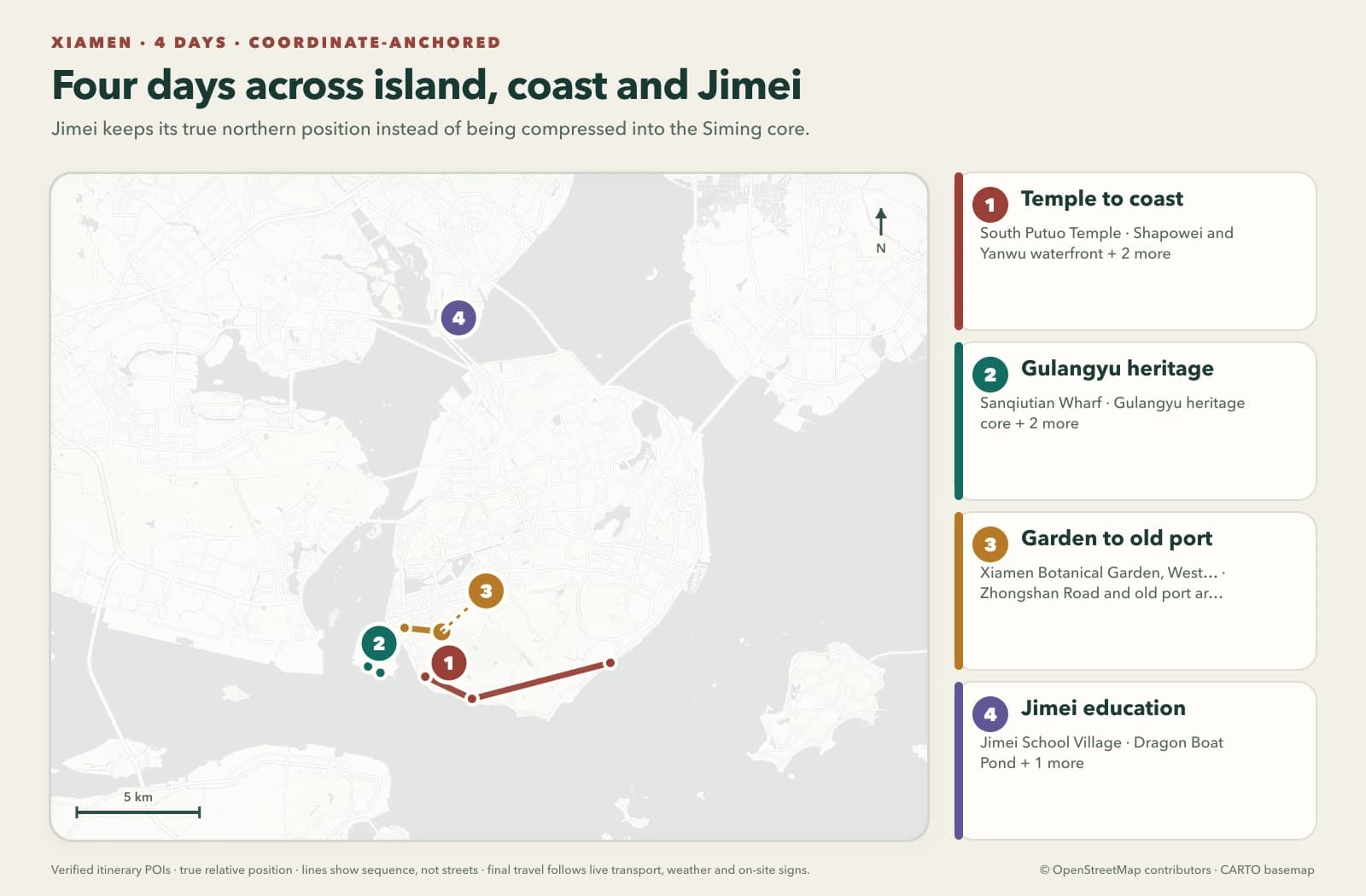
The map preserves relative geography. Its lines show suggested visit order, not literal roads. Gulangyu is offshore; Jimei is a separate northbound journey; the south-coast stops run west to east.
Book the ferry before building the day
Visitors normally use the tourist routes between Xiamen International Cruise Center at Dongdu (厦鼓码头) and Sanqiutian or Neicuo'ao wharf. Xiamen Port's official tourist-ferry notice lists these routes and the official 屿见厦门 WeChat/Alipay mini-program. Night operations can use a different mainland terminal. The ticket's live pier, sailing and passenger document override a saved blog.
Carry the original passport used for booking. Arrive early for document and security checks. Do not use a resident route as a visitor shortcut, and do not assume every return sailing serves the same wharf.
Day clusters that actually work
South coast
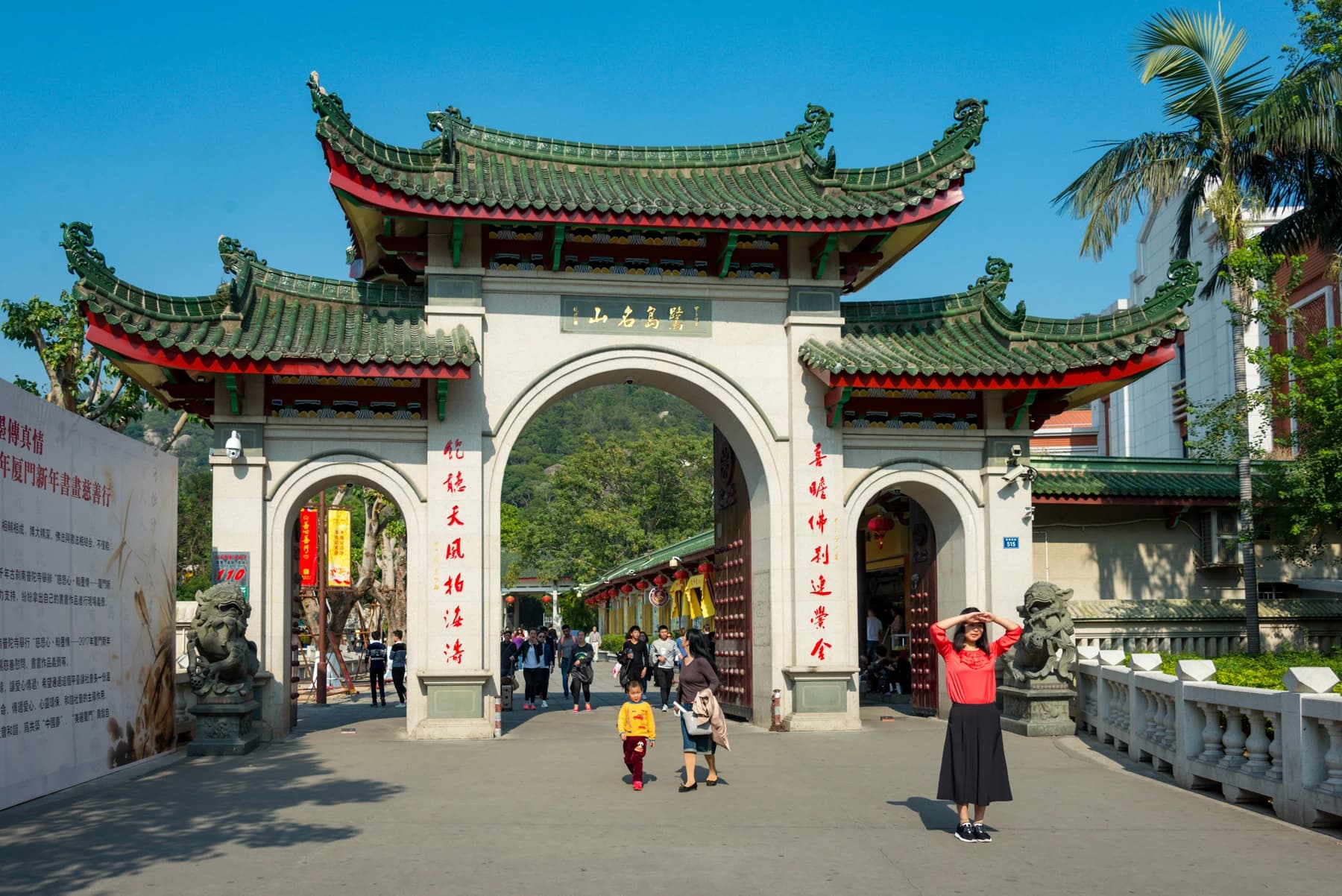
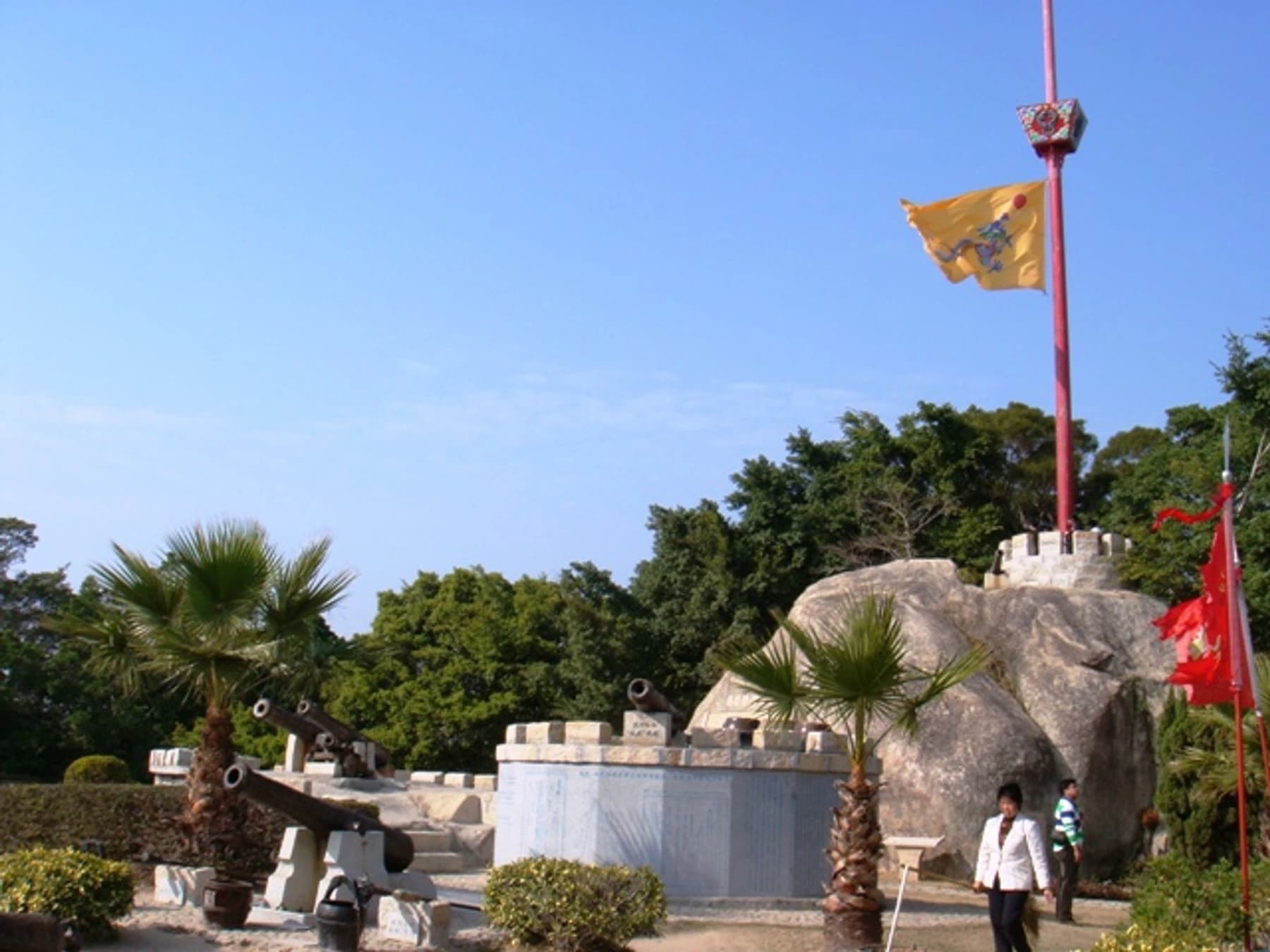
Begin at South Putuo Temple, walk 1.3 km to Shapowei and Yanwu, then use short vehicle transfers to Hulishan Fortress and a chosen Island Ring Road beach section. This is a direction, not a loop.
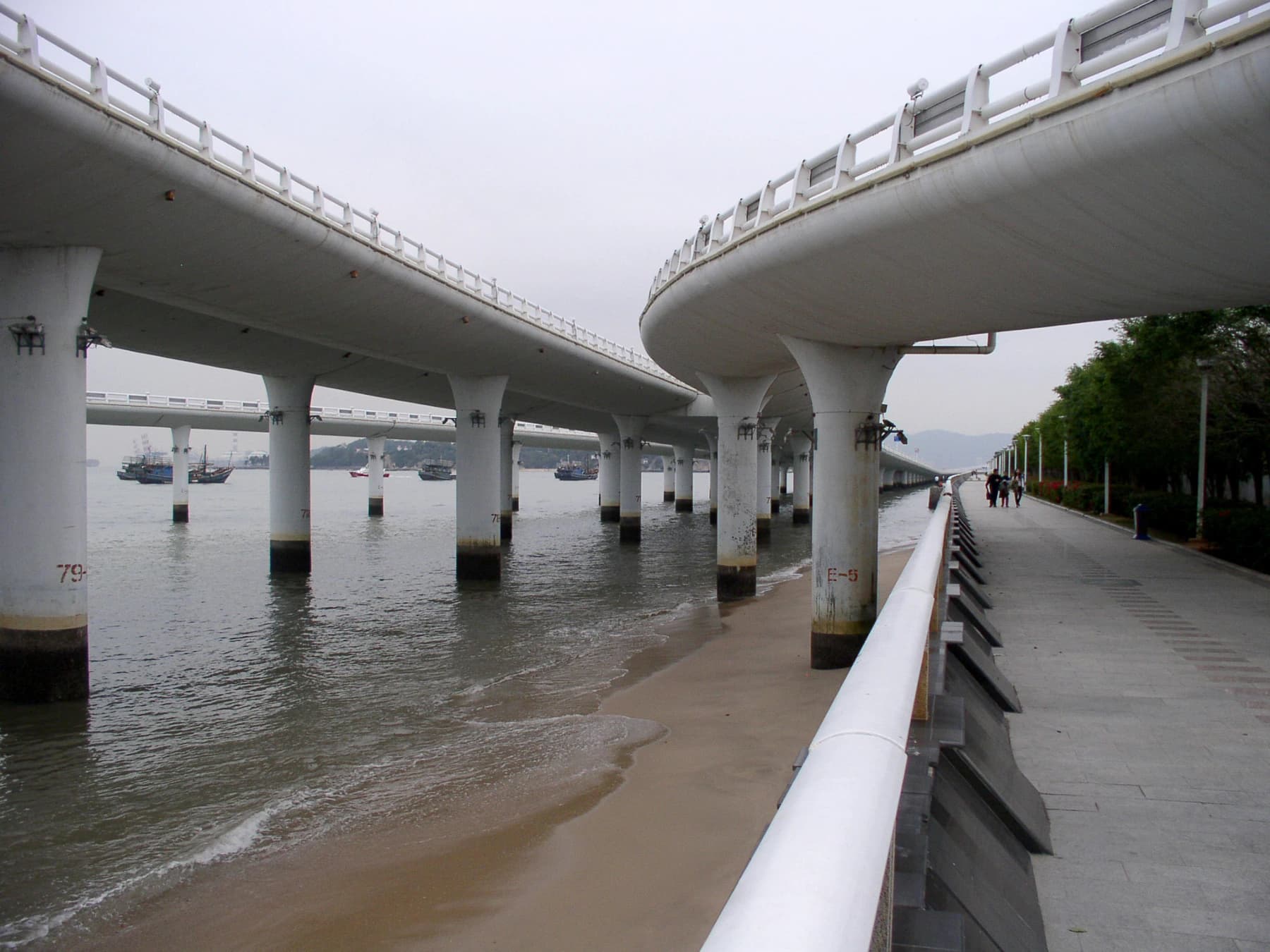
Photo: Mätes II. · Source · CC BY-SA 3.0
Garden and old port
Use the Botanical Garden's named west entrance and choose only the rainforest and succulent core. Then walk or take a short ride west to Zhongshan Road and the old port. This creates a useful contrast between managed subtropical landscape and commercial arcade fabric.
Jimei
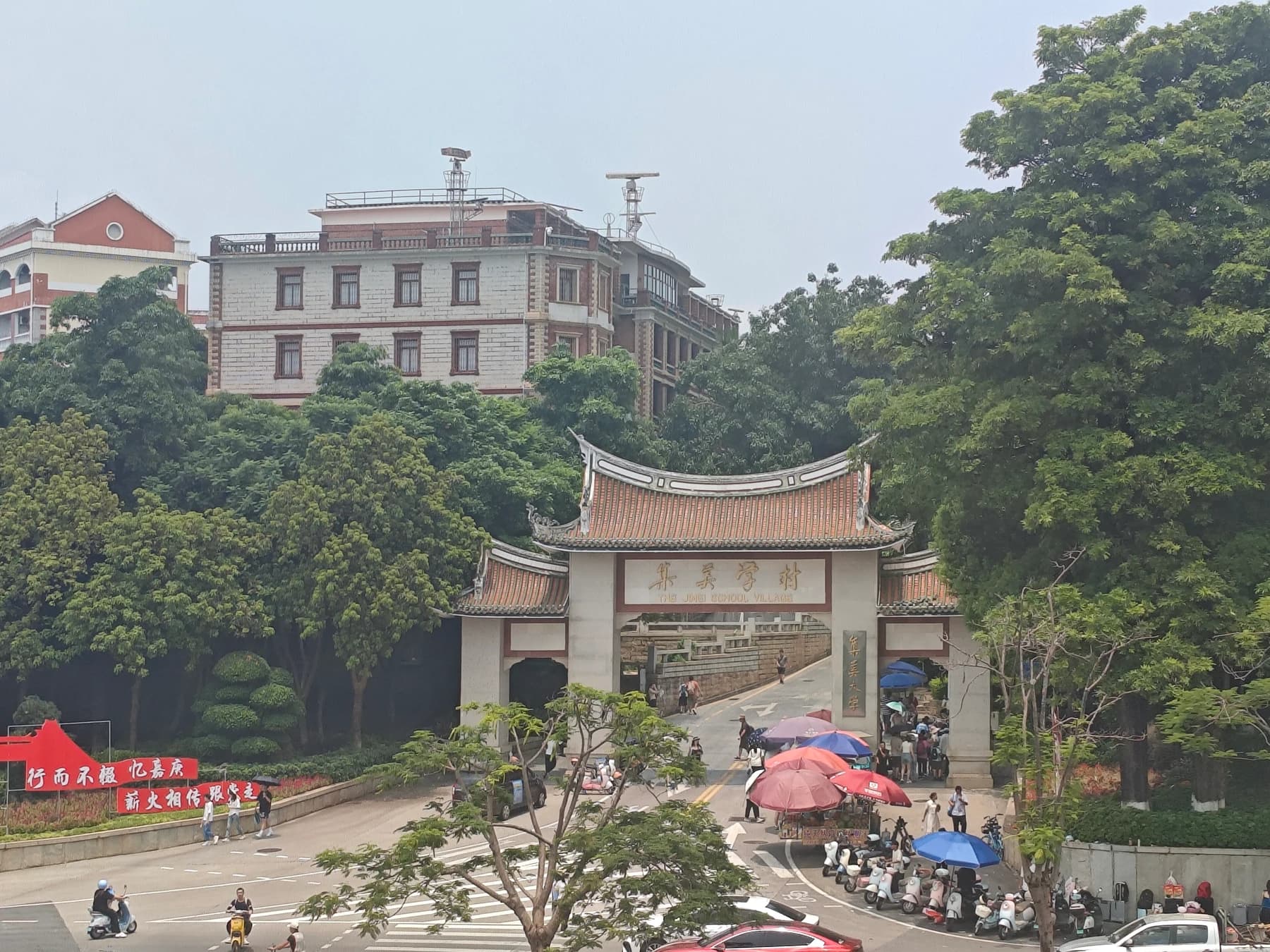
Metro Line 1 makes the northbound transfer legible, but Jimei is not a quick extra stop. Combine Jimei School Village, Dragon Boat Pond and the Tan Kah Kee museum area. Respect working school boundaries and current museum calendars.
Weather is an operational constraint
Summer heat, heavy rain, wind and typhoon warnings can disrupt ferries, viewpoints and exposed coastal walking. Keep a mainland museum or arcade walk as the compression option. Never interpret a blue-sky itinerary photo as proof that a ferry, swimming area or bridge platform is open today.
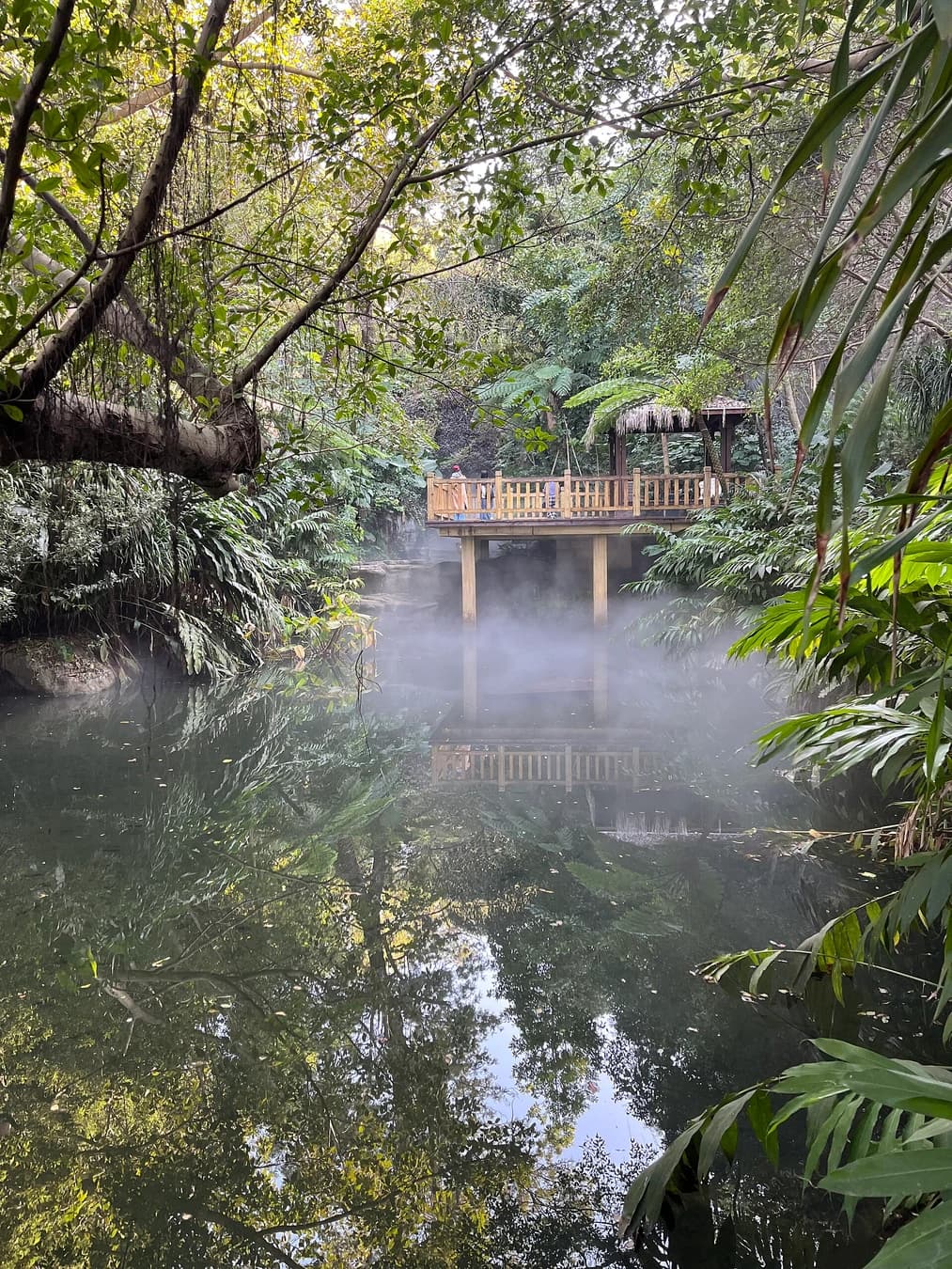
For Gulangyu, verify the sailing before leaving the hotel. For the coast, check official beach controls and do not equate an accessible shoreline with supervised swimming. Botanical-garden mist sessions and internal transport are presentation aids, not guaranteed natural phenomena.
What to eat—and how to choose
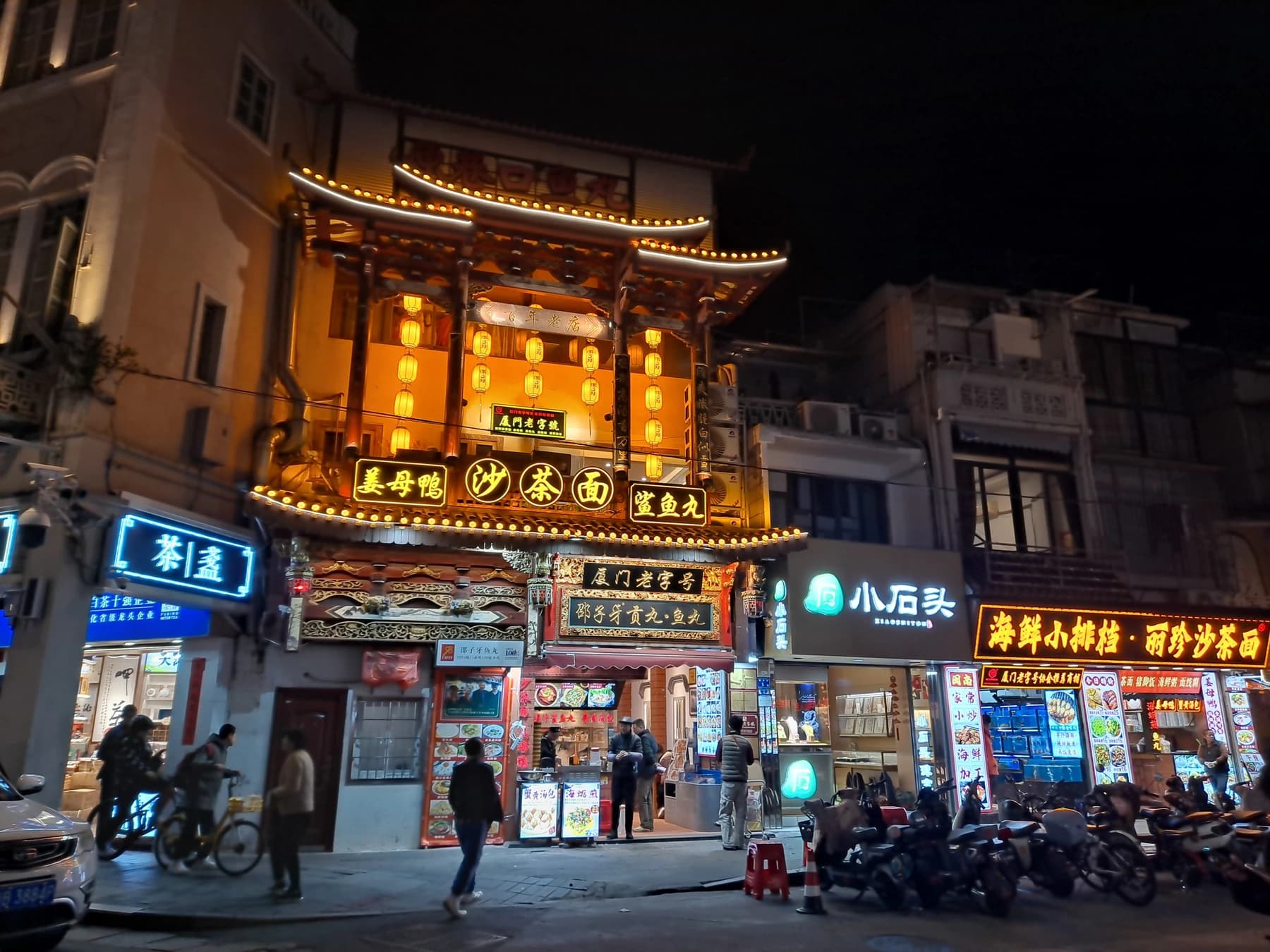
Xiamen's useful food vocabulary includes shacha noodles, oyster omelette, peanut soup, tusundong and Fujian-style seafood. Choose by cooking evidence:
- For shacha noodles, look for a broth with visible turnover and select additions before confirming the total price.
- For seafood, ask price per unit, whether weight is live or cleaned, and cooking fee before ordering.
- Oyster omelette should be cooked to order; a permanent stack loses the crisp–soft contrast.
- Tusundong is a marine-worm aspic. Know what it is before ordering; it is not a vegetarian jelly.
Zhongshan Road and Gulangyu concentrate convenient snacks but also tourist pricing. One or two deliberate samples are more useful than replacing a meal with queues.
Where to stay
- Zhongshan Road / old port: best for evening walking and short access to the historic core; verify vehicle access on pedestrianized lanes.
- South Putuo / Shapowei: best for a relaxed south-coast first day; less direct for an early Dongdu ferry.
- Dongdu / Huli: practical for an early tourist ferry, but weaker as an atmospheric evening base.
- Jimei: use only when north-Xiamen business, rail or a slower district stay is the priority.
Compare current Xiamen hotels on Trip.com, checking the exact branch, passport policy and actual drive to the pier printed on your ferry ticket.
Arrival and movement
- Xiamen Gaoqi Airport is on Xiamen Island; Xiamen North railway station is in Jimei. They are not interchangeable arrival points.
- Compare live train schedules on Trip.com, then confirm Xiamen (厦门站) versus Xiamen North (厦门北站).
- Use metro for major corridors, walking inside compact clusters and taxi/ride-hail for exposed coast transfers.
- Save exact Chinese entrances and wharves. A generic attraction pin can place a vehicle on the wrong side of a compound or the wrong ferry terminal.
Core Xiamen guides

Final planning rules
- Lock the Gulangyu sailing and original passport first.
- Keep the south coast directional: temple → harbour → fortress → beach.
- Choose one Botanical Garden route, not the entire mountain garden.
- Treat Jimei as a separate northbound day.
- Recheck ferry, wind, rain and venue notices the day before.