Zhongshan Road Xiamen
The street's value is its qilou arcade fabric and connection to the old port. The pedestrian commercial strip is only the most visible layer. Walk west, use side streets and compare façades before choosing food.
A useful two-hour walk
Start near the eastern end after the Botanical Garden, move west beneath the arcades and turn into two or three side streets where everyday commerce remains visible. Finish toward the old-port and Lujiang waterfront rather than retracing the same retail axis.
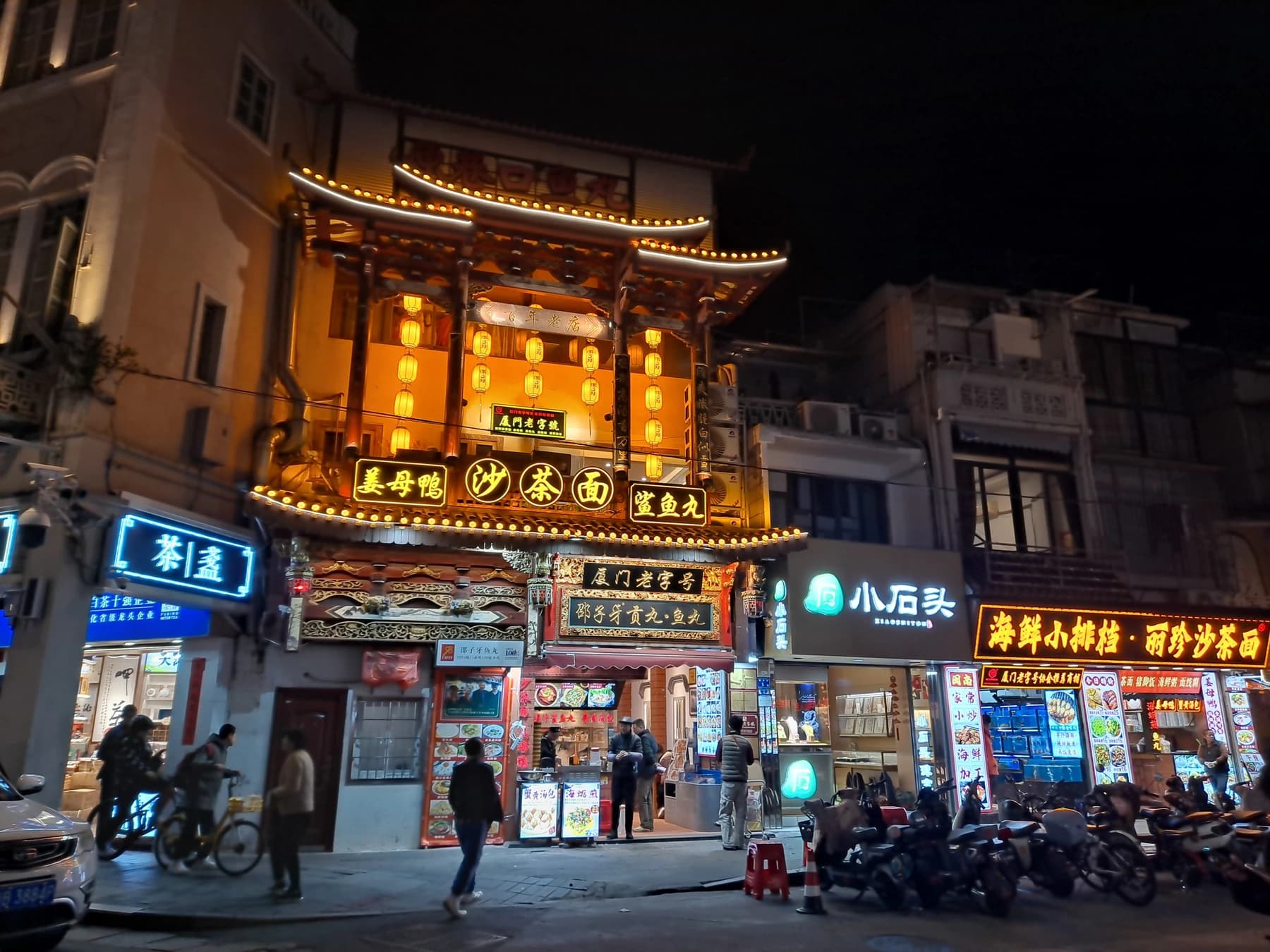
Rain makes the arcades useful, but wind-driven rain can still reach the walkway. At night the signage is lively; in daylight the column spacing, upper floors and building alterations are easier to read.
Commercial street, not compulsory street
Recent visitor reports are divided: some enjoy the convenient night atmosphere, while others find the pedestrian core repetitive and tourist-oriented. Use daylight architecture and one side-street food stop as the baseline. If chain shops and crowds dominate, continue to the old-port waterfront rather than forcing a longer “famous street” visit.
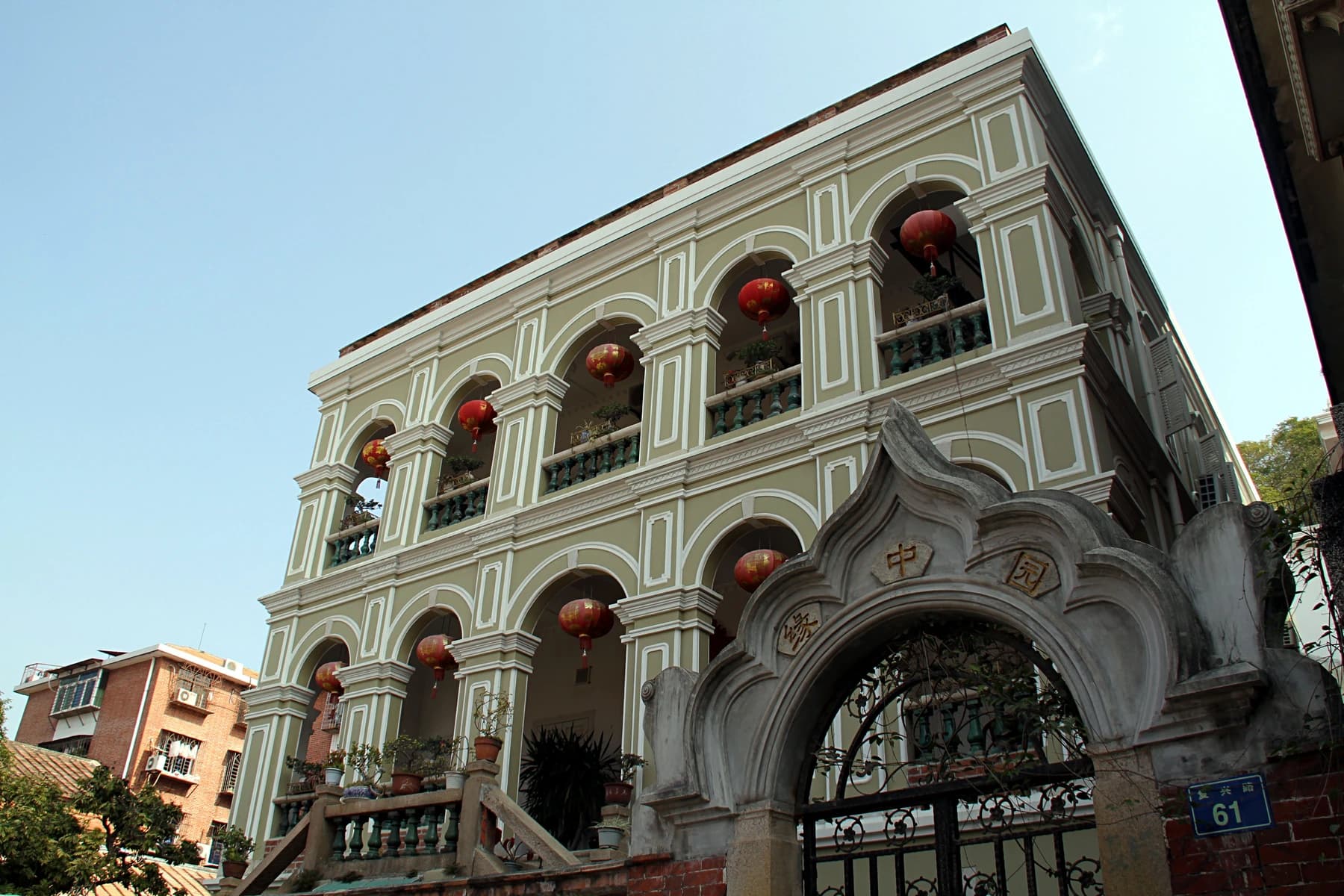
Look above renovated signs for balcony, ventilation and facade rhythm, then compare a restored block with an ordinary trading lane. Do not label every arcade “colonial”; overseas connection, local commerce and climate adaptation require building-specific evidence.
How to choose food
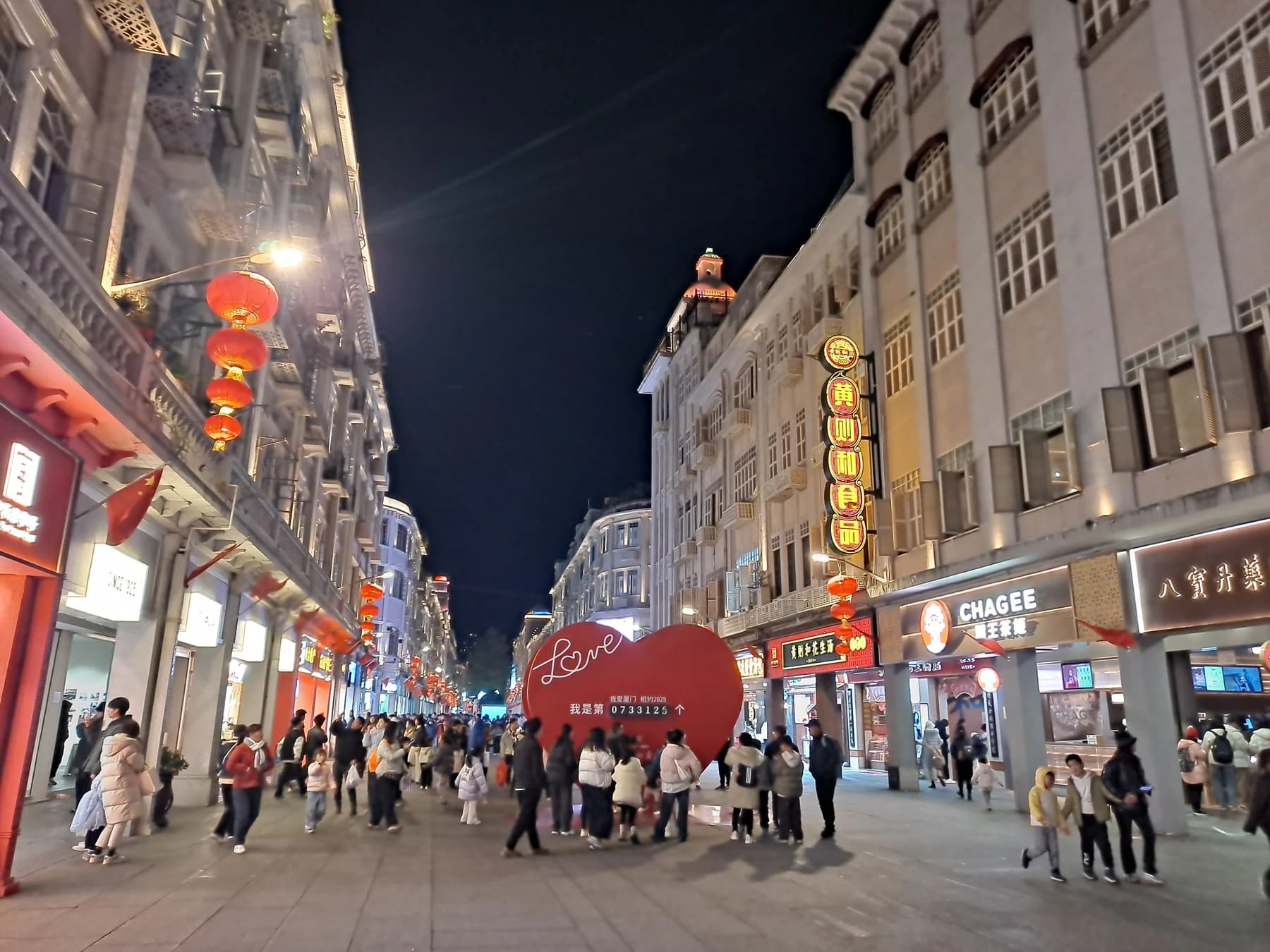
- Shacha noodles: select additions first and confirm the final bowl price.
- Oyster omelette: prefer made-to-order cooking and visible ingredient storage.
- Peanut soup: treat sweetness and texture as the product; a heritage sign is not quality evidence.
- Seafood: establish species, weight unit and cooking charge before the order is processed.
Avoid solving “what to eat” by joining the longest line. Queue length measures visibility and throughput, not necessarily care or value.
Do not let a taxi driver or street promoter select a seafood restaurant, ferry product or “local specialty” for you. Confirm menu, unit, weight and cooking charge directly. Electric-bike offers around tourist districts also need current legal and parking verification; public transit and walking are the safer central-city default.
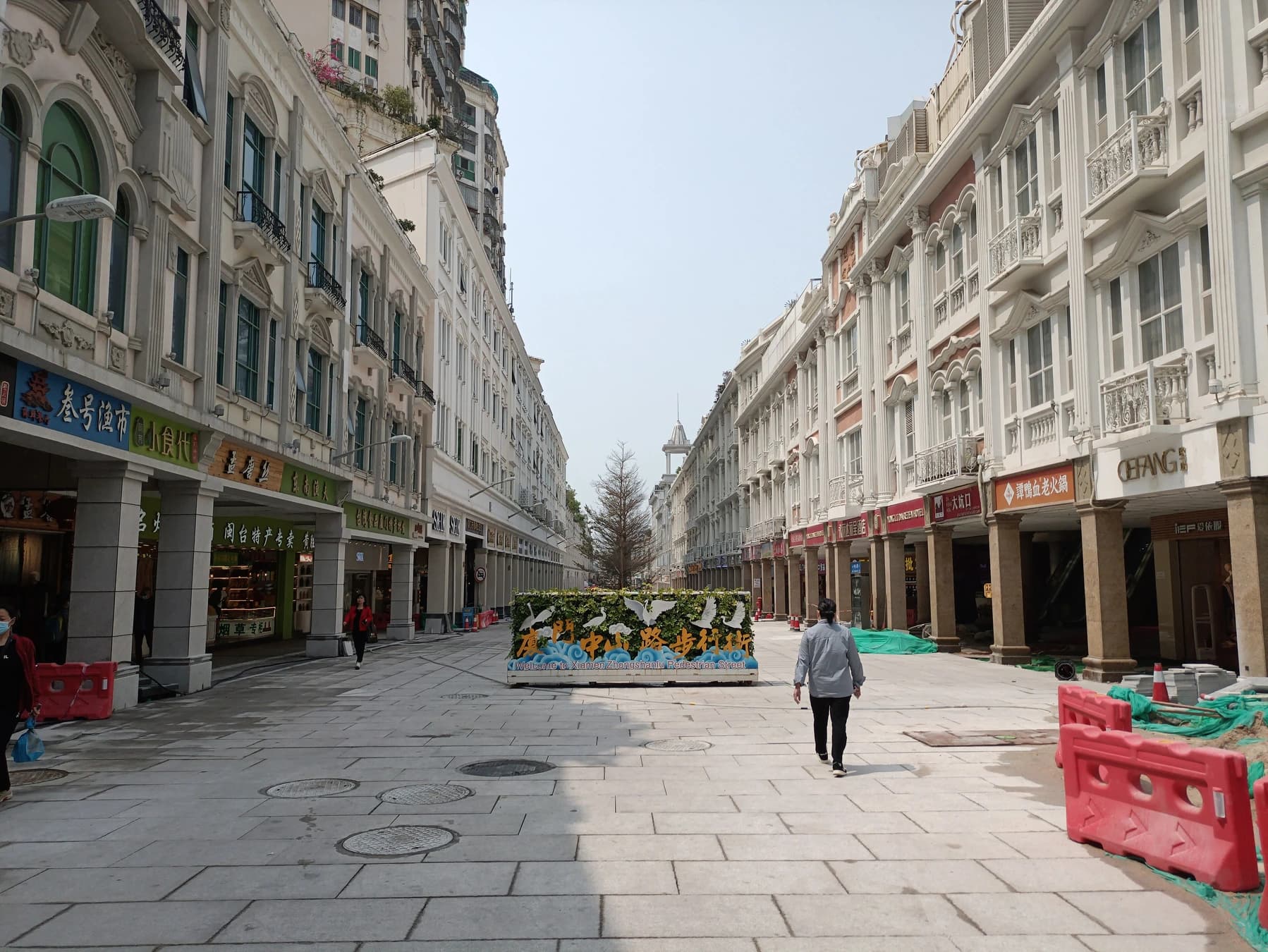
Photo: HualinXMN · Source · CC BY-SA 4.0
Stay and transport
The district is a convenient first-trip base, but an address inside a pedestrian lane may require a luggage walk from the vehicle drop-off. Check the exact hotel entrance. For an early Gulangyu sailing, calculate travel to the terminal printed on the ticket—not the visible ferry building across the water.
Save the official tourist terminal separately and never accept an informal “closer ferry” substitution. The Xiamen Port route table controls visitor sailings, while the Xiamen culture and tourism authority is the better source for city notices.
End near Lujiang Road only if wind and traffic make the waterfront comfortable. For the return, choose a formal pickup point outside the pedestrian zone and keep the hotel address in Chinese. A central metro or BRT route is often more predictable than repeated short ride-hails through evening road controls.