China in winter: choose snow, culture or warmth
“China in winter” can mean four different holidays. Harbin builds a city-scale ice season in severe cold. Changbaishan offers deep natural snow, skiing and a weather-sensitive volcanic mountain. Beijing and Xi'an put famous history into a quieter, dry-cold season, but cannot promise snow. Jiuzhaigou offers a controlled high-valley visit with seasonal closures and road risk. Kunming and Dali trade snow for bright mild days and cold nights, while Sanya is a tropical escape where the beach and hotel matter more than a winter coat.
Choose the winter objective first. If a child expects to build a snowman, a sunny photograph of the Forbidden City is not an adequate substitute. If an older traveler wants museums and food with short outdoor intervals, a spectacular mountain that closes in wind is a poor match. If warmth is the reason for traveling, adding Harbin to Sanya creates a luggage problem larger than the map suggests.
This guide compares the destinations as travel systems: weather pattern, daylight, transport, live operating risk, useful trip length and fallback quality. Temperatures and snow change from year to year. Check a dated forecast and current operator notices shortly before travel; historical patterns are filters, not promises.
The quick winter chooser
| Choose | The winter you get | Snow reliability | Main operating risk | Useful stay | Best fit | Cut it when… |
|---|---|---|---|---|---|---|
| Harbin | Extreme cold, ice architecture and a complete winter city | High regional snow/ice potential; individual festivals still need confirmed dates | Seasonal construction, warm spells, wind, cold exposure and queues | 4 nights | A first dedicated ice-and-snow trip | The outdoor edition is unconfirmed for your dates or the group cannot manage long cold exposure |
| Changbaishan | Natural mountain winter, skiing, forest and hot springs | High around the mountain; the Tianchi view is never guaranteed | Snow, wind, road and summit closures | 4 nights | Snow landscape plus resort time | The crater-lake view is the only acceptable outcome |
| Beijing | Major history in cold, dry air with fewer daylight hours | Low in the city; snowfall is episodic | Outdoor ice events and Great Wall conditions vary; major tickets still control the day | 4–5 nights | A first China trip where culture matters more than snow | You are booking primarily for a white cityscape |
| Xi'an | Compact ancient-capital trip with museums, walls and food | Low and unreliable | Icy surfaces or bad weather can alter outdoor sections | 3 nights | History with a lighter winter commitment than the northeast | The Terracotta Warriors do not justify a separate base for your group |
| Jiuzhaigou | Quiet high-valley winter, frozen edges, lakes and forest | Variable by elevation and week | Seasonal spot closures, icy roads, early last entry and high altitude | 3–4 nights | A controlled scenic-area day with a buffer | You cannot protect the road transfer or accept partial seasonal access |
| Kunming + Dali or Lijiang | Sunny highland days, cold nights and a mixed culture/landscape route | Not a snow trip; only high mountain products may have snow | Big day/night swings, altitude and mountain wind | 6–9 nights | Travelers who want a mild active winter | You need tropical warmth or guaranteed mountain visibility |
| Sanya | Warm coast, resort time and tropical landscapes | None | Wind, sea state, ferry changes and peak pricing | 4–6 nights | Beach-focused warmth, families and slow recovery | You want Chinese winter atmosphere rather than escape from it |
Useful stay means nights at or near the destination, excluding the international journey. Add a night whenever a late arrival, a long road transfer or a weather-sensitive mountain day would otherwise consume the only workable day.
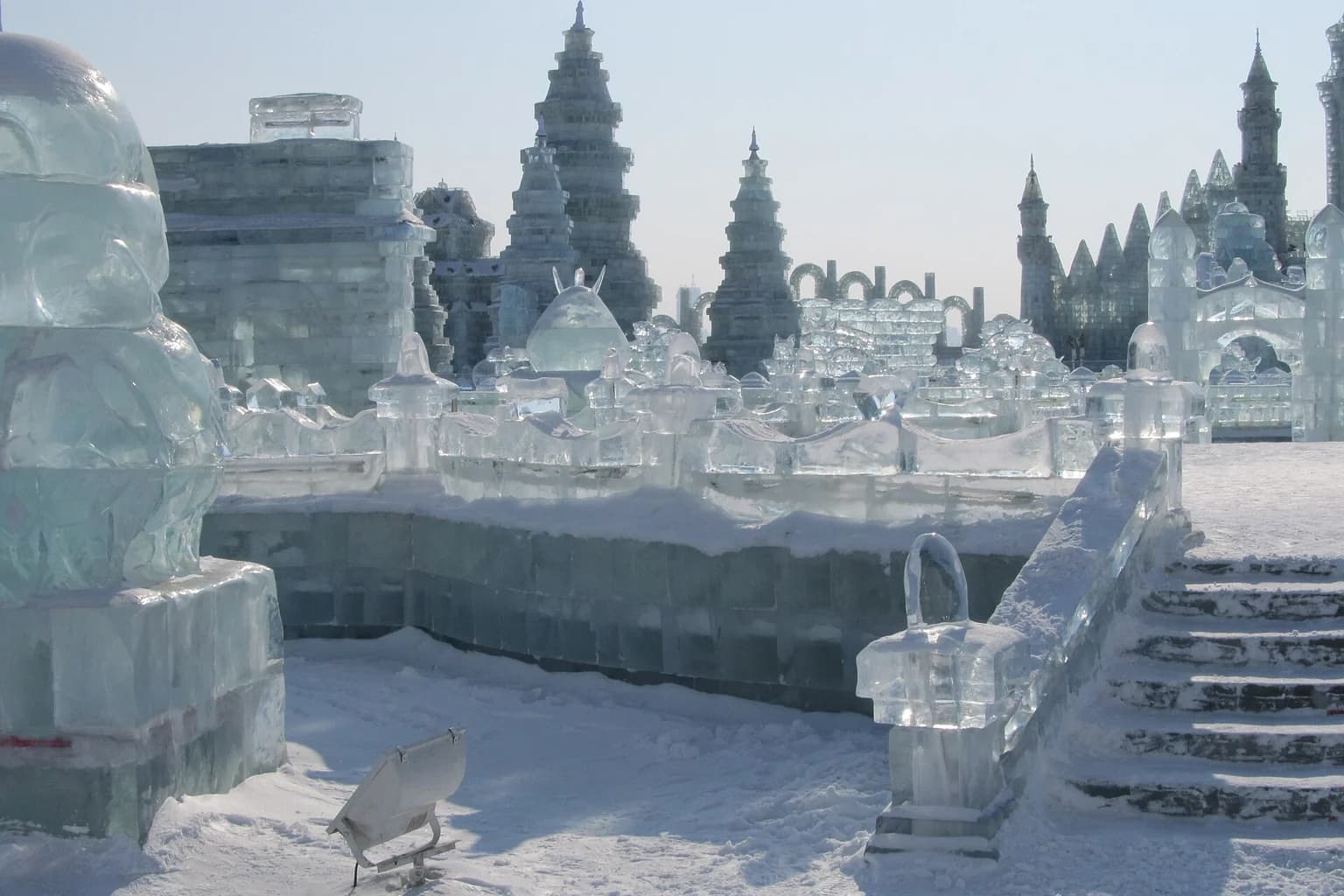
Harbin's ice architecture is rebuilt for each outdoor edition. This 2013 scene shows the scale, not the next layout, opening date or operating condition. Photo by Tracy Hunter, CC BY 2.0.
First decide which winter result would satisfy you
Ice spectacle: Harbin
Harbin is the strongest choice when winter itself is the attraction. The city combines historic streets and museums with separate seasonal products: Ice and Snow World, the Sun Island Snow Sculpture Expo and smaller ice-and-snow events. The Chinese Meteorological Administration describes the wider Harbin–Yabuli–Snow Town winter corridor as having a long snow-cover period and a winter mean around the mid-minus-teens Celsius. That regional pattern supports ice tourism, but it does not confirm any attraction's opening day.
Natural snow and mountain resort: Changbaishan
Choose Changbaishan when forest, skiing, hot springs and deep mountain winter matter more than an urban festival. The snow setting is more dependable than the Tianchi view. Cloud can hide the crater; wind, snow and road icing can close the summit transport or the entire scenic area. A good trip still works when the mountain day becomes skiing, a forest walk on an officially open route or a slow resort day.
History in a quieter season: Beijing or Xi'an
Beijing and Xi'an are winter city trips, not snow guarantees. They suit travelers who value palaces, museums, archaeology and food and are willing to compress the outdoor day into the brighter middle hours. Beijing has the larger first-trip payoff and the heavier walking burden. Xi'an is more compact and easier to use as a three-night chapter.
Mild highland movement: Yunnan
Kunming and Dali offer mild afternoons more often than northern cities, yet winter nights can feel surprisingly cold. Lijiang sits higher and is colder, especially after sunset. These places are useful for an active route of old towns, lakes, food and one mountain decision. They are not a substitute for tropical beach warmth, and “Spring City” is not a promise of warm hotel rooms.
Warm coast: Sanya
Choose Sanya when avoiding cold is the goal. Hainan's government described the island's 2026 winter as peak tourism season, with sun, sand and sea driving demand. The practical trip is built around a suitable bay and hotel, then one or two movable excursions. Warm air does not guarantee calm water, sunshine or safe swimming.
Use the Sanya winter-sun guide to choose among Yalong, Dadonghai, Sanya Bay, Haitang and Houhai, verify the exact heated-pool product and build a 4–6-night plan.
1. Harbin: the clearest ice-and-snow answer
Give Harbin four nights if the outdoor winter products are operating: arrival and city-center orientation, one historic-center day, one Songbei ice-and-snow day, and a buffer or separate Sun Island day. Two nights can produce photographs; four nights create enough margin to recover from cold, a changed opening or a delayed arrival.
The first decision is whether the specific seasonal product exists on your dates. Status checked October 2, 2026: the Ice and Snow World operator had not published a confirmed opening date, daily schedule, ticket price or ride policy for the 2026–27 outdoor edition. The previous outdoor edition closed on February 22, 2026 after warming affected the structures. An indoor attraction carrying the Ice and Snow World brand is a different product and does not confirm that the giant outdoor park is open.
When the outdoor edition is confirmed, combine it intelligently. Use Sun Island's snow sculptures in daylight, take a substantial indoor meal and warm-up, then enter Ice and Snow World before dusk if current hours allow. Split them across days for young children, older travelers, photographers or anyone who needs frequent toilet and warming stops. The full Harbin winter guide explains the distinction and current checking sequence.
Harbin has the earliest-feeling evening and the greatest cold-management burden in this guide. Put batteries and a power bank in inner pockets, carry offline ticket and hotel screenshots, and plan a direct return before entering. Boots need insulated space around the toes; adding socks until footwear becomes tight can reduce circulation. Schedule warming breaks before anyone is numb.
No-snow or not-open fallback: Central Street, Saint Sophia, museums, cafés and food still make a city trip, but they do not reproduce the ice festival. If the outdoor park is the reason for flying across China, keep the booking changeable until the operator announces your edition.
2. Changbaishan: dependable winter setting, uncertain summit
Changbaishan asks for a different kind of flexibility. Choose one slope, choose the correct base, and keep one day movable. The North Slope, West Slope and seasonal South Slope have separate gates and transport systems. North Slope is the usual first choice because it combines the most developed visitor system with waterfalls, forest and hot-spring landscapes. It is not a promise of Tianchi.
The mountain authority states that summit access responds to weather information and actual conditions. In December 2025 both North and West scenic areas closed during severe snow, wind, road icing and boardwalk risk. Other storms have closed only the Tianchi section while lower stops continued. Treat a closure as the operating system doing its job.
Stay four nights: arrival to the chosen base, one protected mountain day, one resort/ski/hot-spring or forest day, and a departure margin. Do not place the only mountain attempt between a same-day inbound flight and a non-refundable outbound train. If skiing matters, verify the exact resort's snowmaking, lift, lesson, equipment, child and insurance rules rather than assuming “Changbaishan” is one ski area.
For a mixed-age group, ask the current operator where indoor warming rooms and toilets sit on the chosen route, then set a turning point before anyone becomes cold. North Slope often reduces the stair commitment compared with the West Slope Tianchi approach, but vehicle access, lower paths and summit operation still depend on that day's conditions.
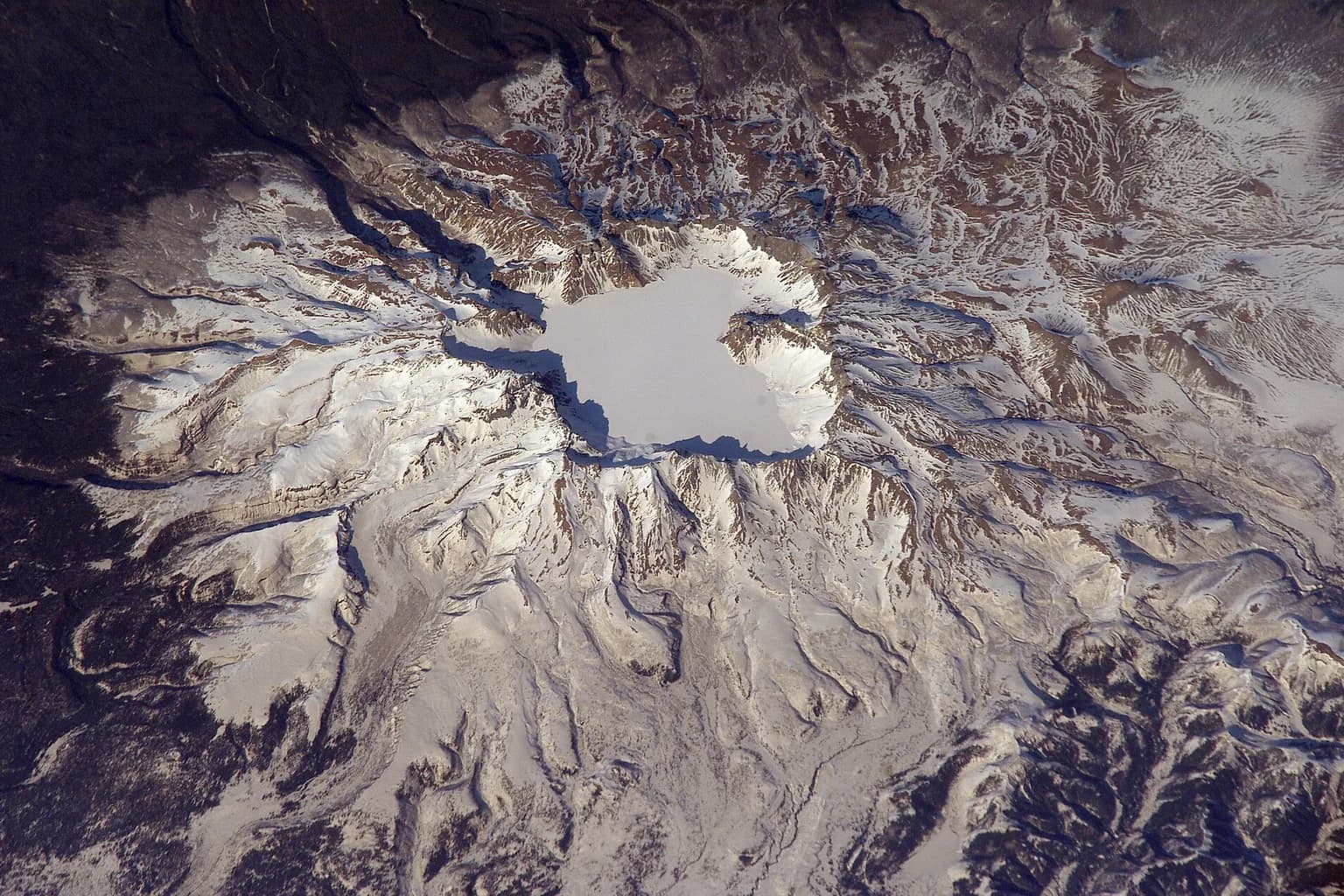
Snow can cover the volcanic rim while cloud, wind or road conditions prevent a visitor from seeing Tianchi. This winter astronaut view explains the terrain rather than promising ground access. Image: NASA, public domain.
Choose a dated North Slope product on Trip.com only after matching the distribution center, scenic transport, possible summit transfer, passport fields and weather terms. The official live notice controls access. If the whole trip collapses without Tianchi, choose a city instead; no ticket can buy visibility.
3. Beijing: best first-trip winter city, weak snow bet
Beijing is the most defensible winter choice for a first China visit because the core trip survives without snow. The Forbidden City, Temple of Heaven, hutong areas, museums and food remain the reasons to travel. Cold, dry weather can make long palace courts and the Great Wall demanding, but a museum block or early dinner can shorten exposure.
Snowfall is episodic. China Meteorological Administration climate material gives Beijing an average first-snow date around early December for the 1991–2020 period, while stressing that individual years do not follow the average neatly. A mean date cannot tell you whether snow will lie on the Forbidden City roof during a three-day stay. Book Beijing for history; enjoy snow if it arrives.
Use four or five nights. Put the Great Wall on the clearest, least windy workable day and keep the route after it light. Badaling, Mutianyu, Jinshanling and Simatai have different access and walking commitments; the Great Wall section chooser is more useful than copying a snowy photograph. Verify cableways, toboggans, night sessions and seasonal transport for the actual date.
Outdoor ice rinks, frozen-lake activities and winter fairs are edition-specific. Beijing's official 2025–26 winter pages are evidence of what operated that season, not a schedule for 2026–27. Wait for the new notices. If nothing seasonal opens, a Beijing winter trip still has a strong museum, palace, temple and neighborhood plan.
4. Xi'an: the compact culture choice
Xi'an fits travelers who want a major history stop but do not want the northeast's cold or a mountain resort. Stay three nights: one city-wall and central-heritage day, one full Terracotta Warriors day, and a museum, food or flexible day. The city is colder than many visitors expect, yet snow is too inconsistent to be the trip's premise.
Build shorter outdoor blocks. Use the Terracotta Warriors as the outward anchor, then place the Shaanxi History Museum, Beilin Museum or a long meal around the most uncomfortable weather. The City Wall is exposed; ice, wind or a local control can change the value of a complete circuit.
Xi'an's 2026 weather-emergency plan explicitly allows scenic areas to close under severe conditions and directs transport operators to manage snow and ice. That does not mean routine winter closures. It means the live warning outranks a saved itinerary. When surfaces are slick, cut a wall cycle or distant evening show before cutting the only indoor recovery period.
Choose Xi'an over Beijing when three nights are available, the Terracotta Warriors are a priority and another giant-city stay would exhaust the group. Choose Beijing when this is the only northern culture stop and the Great Wall or imperial capital is essential.
5. Jiuzhaigou or western Sichuan: choose controlled access
Jiuzhaigou is the strongest winter option in western Sichuan for travelers who want a managed scenic system rather than an improvised high-mountain road trip. In the park's latest published winter notice, the off-season ran November 16 through March 31, with entry from 8:30 to 14:00, an 18:00 close and a daily capacity limit. The park's current English visitor information also warns that some points, including primeval forest, can close seasonally. Verify the notice for your own winter; do not freeze those hours into a future booking.
Stay three or four nights, counting the transfer from Huanglongjiuzhai station or airport. Sleep near the park entrance before the park day, start only when entry opens, and protect the next connection. Snow and ice removal supports the official route, but does not remove altitude, slippery surfaces or the risk of road delay.
The valley's color and open-water pattern vary with light, temperature and hydrology. Do not expect every lake to be frozen or every waterfall to form ice. The trip remains worthwhile for winter forest, quiet viewpoints and the contrast between water and frozen edges, but only if partial access is acceptable.
For most independent first-time visitors, Jiuzhaigou is safer to structure than a self-drive through loosely defined “western Sichuan.” High passes, chain requirements, road controls, fuel, rescue distance and altitude turn a pretty loop into a transport project. Use an established base, licensed vehicle and live road information if you go farther. Never follow a social post onto an unofficial frozen lake or undeveloped pass.
An exact Jiuzhaigou park listing on Trip.com can be useful after the official season notice is current. Confirm admission, sightseeing bus, traveler documents and cancellation terms; the listing does not remove the need for a separate station-to-park plan.
6. Yunnan: warm-looking days, cold rooms and higher ground
“Yunnan in winter” needs to be divided by elevation. Kunming is the easiest mild-city base. Dali adds lake, old-town and mountain weather. Lijiang is higher and colder, especially at night, while Jade Dragon Snow Mountain is a separate high-altitude product with its own cableway and operating decisions.
Use six to nine nights for Kunming plus one second base. A six-night low-friction route can be three nights Kunming and three Dali. Add Lijiang only when the group wants the old town and mountain setting enough to accept another transfer and colder evenings. A trip that changes hotels every other night loses Yunnan's main winter advantage: slow bright days and flexible outdoor time.
Pack a light insulated layer and sun protection. Ask a hotel a concrete room question: what device heats this exact room, and can it operate overnight? “Heating available” may mean reverse-cycle air-conditioning or an electric blanket rather than the whole-building central heating common in northern cities. A sunny courtyard at noon says nothing about the room after midnight.
Yunnan's no-snow plan is the main plan: markets, old towns, lakeside walks, food, temples and one mountain day chosen from the live forecast. If snow is essential, go north or choose a ski resort. If warmth is essential, go farther south to Sanya.
7. Sanya: the warmest option, with peak-season trade-offs
Sanya is the cleanest answer for travelers who want a winter coast rather than a winter spectacle. Use four to six nights and select the hotel zone first. Dadonghai is convenient for restaurants and city access; Yalong Bay is a balanced resort beach; Haitang Bay suits self-contained resorts and Atlantis-focused stays. These zones are not interchangeable short walks.
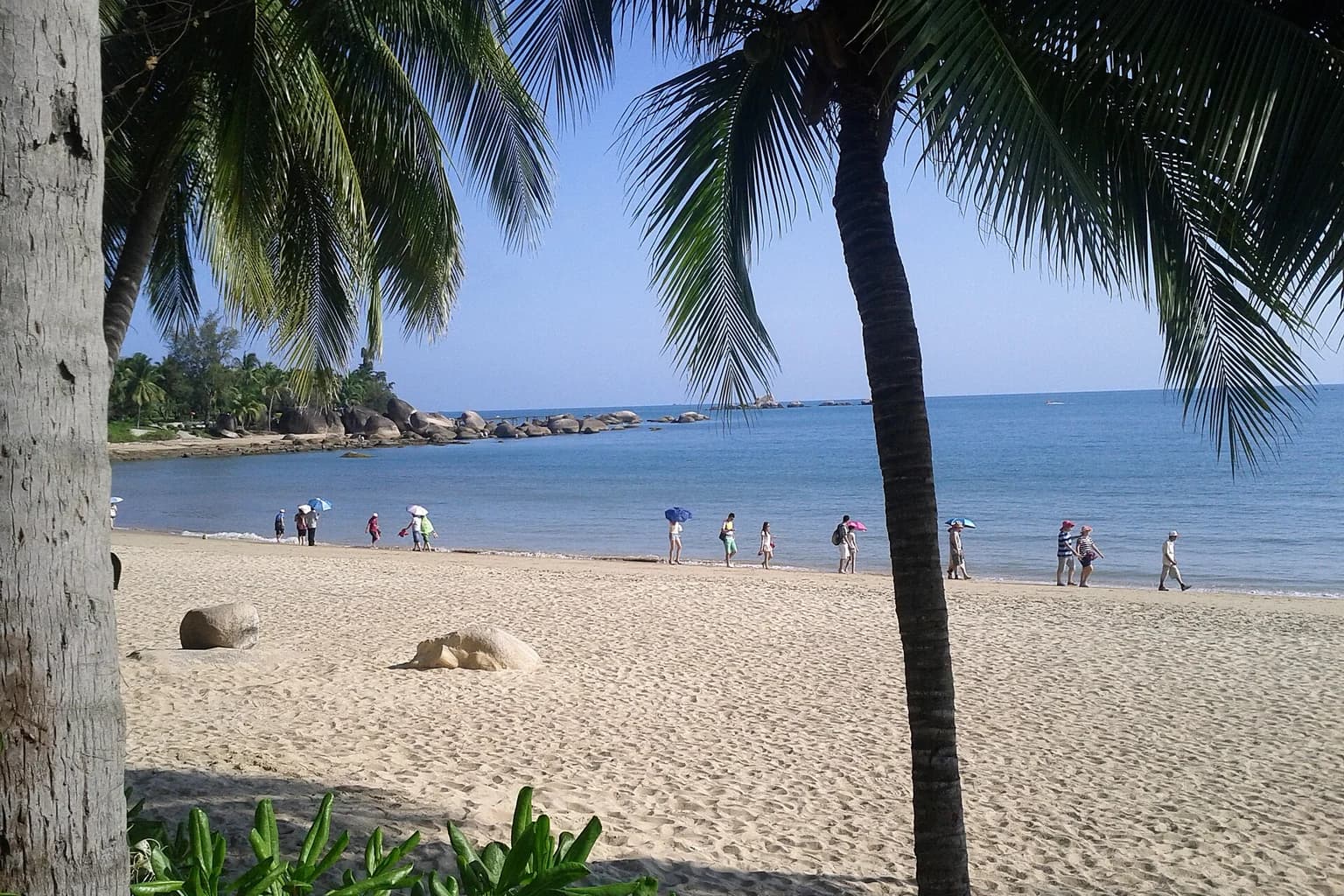
Sanya replaces snow planning with bay, hotel and sea-condition decisions. The calm-looking water in this photograph is not a swimming forecast. Photo by Huangdan2060, CC0.
Winter is peak season. Hainan authorities prepared for very high transport volumes during the 2026 Spring Festival travel period, and Sanya was one of the country's strongest warm-weather draws. Expect the best-located rooms and convenient flights to price differently from shoulder season. Compare the exact room, cancellation, meals, pool policy and beach access rather than a hotel name alone.
Warm winter air does not guarantee swimming. Wind, waves, water temperature, beach flags and boat notices control each day. Keep Wuzhizhou or another ferry-dependent excursion movable, and retain one inland, cultural or hotel day. The Sanya guide compares the coast sectors and realistic excursion geometry.
An exposed bay can feel cool and windy on a cloudy day even when the city forecast looks warm. For a family resort, check which pools and play areas are outdoors, whether any water is heated, how breakfast queues are managed and how far the room is from food and beach access. A calm-looking promotional sea is not evidence of clear water or suitable swimming on your dates.
Sanya works well for children and older travelers when the hotel solves shade, breakfast, pool supervision and short-return logistics. It works poorly as a frantic sightseeing base. If the itinerary lists a different coast every day, the group will spend the warm escape in traffic.
Children, older travelers and the cold-exposure budget
The most suitable destination depends on how reliably the slowest person can regulate temperature and communicate discomfort.
| Traveler need | Stronger choices | Harder choices | Planning response |
|---|---|---|---|
| Small child who needs naps and frequent toilets | Sanya resort, Kunming, city-based Beijing or Xi'an | Combined Sun Island + Ice World day; exposed Changbaishan summit attempt | One major outing, hotel return or long indoor meal, backup clothes |
| Older traveler with stable mobility but low cold tolerance | Sanya, Kunming, compact Xi'an | Harbin night outdoors, icy mountain boardwalks | Short outdoor intervals, door-to-door transport, never remove warm-up time |
| Family seeking reliable snow play | Changbaishan resort or confirmed Harbin product | Beijing, Xi'an, Kunming | Verify the exact snow-play venue, equipment and age/height rules |
| Traveler sensitive to altitude | Harbin, Beijing, Xi'an, Sanya | Jiuzhaigou, Lijiang mountain products, Changbaishan summit terrain | Slow first day, lower-intensity route, clinician advice for relevant conditions |
| Mixed group that needs independent choices | Beijing, Kunming, Sanya | Remote western Sichuan road loop | Pick a base where one person can return without ending everyone's day |
Height, age and health rules for rides, cableways and snow activities are volatile. Read the dated product rule rather than copying an old screenshot. No winter destination is universally accessible: snow, ice, heritage thresholds, high-altitude vehicles and long security approaches create different barriers.
Luggage and hotel heat: solve the whole route
For Harbin or Changbaishan, use a wicking base layer, adjustable insulation, a wind-resistant outer layer, hat, neck and face protection, mittens over liners, and insulated non-slip footwear with toe room. Snow play needs a water-resistant outer glove: an ordinary knit glove can become wet and dangerously cold. Carry spare dry liners and socks. Chemical warmers supplement good clothing; they do not repair wet fabric or restricted circulation.
For Beijing and Xi'an, the same layering logic works with less expedition-weight insulation. Long sunny walks can feel comfortable, then shaded courtyards and night streets become much colder. For Yunnan, pack for sunlight and cold interiors. For Sanya, retain one light layer for wind, air-conditioned interiors and an unusual cool spell.
Northern hotels usually plan for the heating season, but room comfort still varies. Southern and highland hotels may use room-level systems. Ask about the exact room, not the lobby. Across all destinations, verify hot water, lift access, breakfast hours, laundry and luggage storage. A beautiful homestay with outdoor stairs may be a poor winter choice for heavy suitcases.
Avoid combining Harbin and Sanya unless the contrast is the point and the trip is long enough. If you do, use luggage storage or a separate bag rather than carrying tropical and extreme-cold wardrobes through every transfer. Winter layers and boots also make rail luggage bulky; use a bag you can lift, arrive with enough boarding margin and remove an unnecessary base before creating another suitcase-heavy transfer.
Build disruption margin before buying the expensive legs
Use this booking order:
- Define the trip's non-negotiable result. Ice architecture, natural snow, history, mild highlands and tropical coast lead to different cities.
- Check the edition or season boundary. Wait for the relevant Ice World, snow expo, ski resort, outdoor rink or holiday notice. A previous year's date is not a prediction.
- Choose a refundable base. Match Changbaishan hotel to the slope; Sanya hotel to the bay; Jiuzhaigou hotel to the entrance and transfer.
- Protect weather-sensitive days. Put one spare night around Changbaishan or Jiuzhaigou. Keep Harbin's two seasonal attractions separable.
- Then buy long-distance transport. The high-speed rail planner explains the hidden station time. A three-hour train still consumes packing, station transfer, security, boarding and hotel check-in.
- Recheck 72 hours and again that morning. Use official weather warnings, attraction notices and road or ferry status. A prepaid ticket does not make conditions safe.
For a general first-trip structure, use the 10-, 14- and 21-day itinerary chooser. Winter rewards fewer bases because every transfer carries more clothing and a larger disruption tail.
Spring Festival and ice-festival peaks
Spring Festival is a national transport and demand peak, not a local Harbin issue. The Ministry of Culture and Tourism recorded 596 million domestic trips during the nine-day 2026 Spring Festival holiday. That past total shows the system-wide scale; it does not predict a future city's price.
Status checked October 2, 2026: the official State Council holiday arrangement for 2027 was not yet published in the sources reviewed for this guide. Do not infer the legal holiday, compensatory workdays or transport peak from an unofficial calendar. Wait for the State Council notice, then secure reversible accommodation and the critical domestic leg.
Harbin's ice attractions can peak outside Spring Festival as well. Changbaishan ski resorts and Sanya hotels also have their own high-demand periods. Compare the live date, room and transport inventory instead of applying one national “winter price.” The right response is margin and clear cancellation terms, not guessing a cheaper weekday months in advance.
If snow fails, what remains?
- Harbin: architecture, city history, museums and food remain, but they are not equivalent to the outdoor ice park. Rebook if that park is the sole reason for travel.
- Changbaishan: skiing, forest, hot spring or resort time may remain when Tianchi is hidden, depending on the exact operator status.
- Beijing: the main history trip is intact. Treat snow as a bonus.
- Xi'an: archaeology, museums and food remain; shorten exposed City Wall time.
- Jiuzhaigou: open water and forest can still be beautiful, but partial closures and road conditions decide whether the journey is worthwhile.
- Yunnan: the route never depended on snow. Use old towns, markets, lakes and a movable mountain day.
- Sanya: replace an unsuitable sea day with a cultural, rainforest, hotel or city day; never override a beach flag or ferry suspension.
The most resilient winter choice is not the place with the most dramatic photograph. It is the place whose second-best day you would still enjoy.
A final cut-first rule
Choose Harbin for the strongest urban ice spectacle; Changbaishan for snow plus resort and mountain; Beijing for a first China culture trip; Xi'an for a compact history chapter; Jiuzhaigou for a managed high-valley winter; Yunnan for mild active days; and Sanya for warmth.
When the itinerary becomes too long, cut the destination that adds a new wardrobe or a fragile one-day result. Keep four nights around the northeast mountain or festival choice, three around Xi'an or Jiuzhaigou, and four to six for a warm coast. Never cut the spare night immediately after the most weather-sensitive road or mountain day.