How to plan Harbin in winter: ice, snow and the city
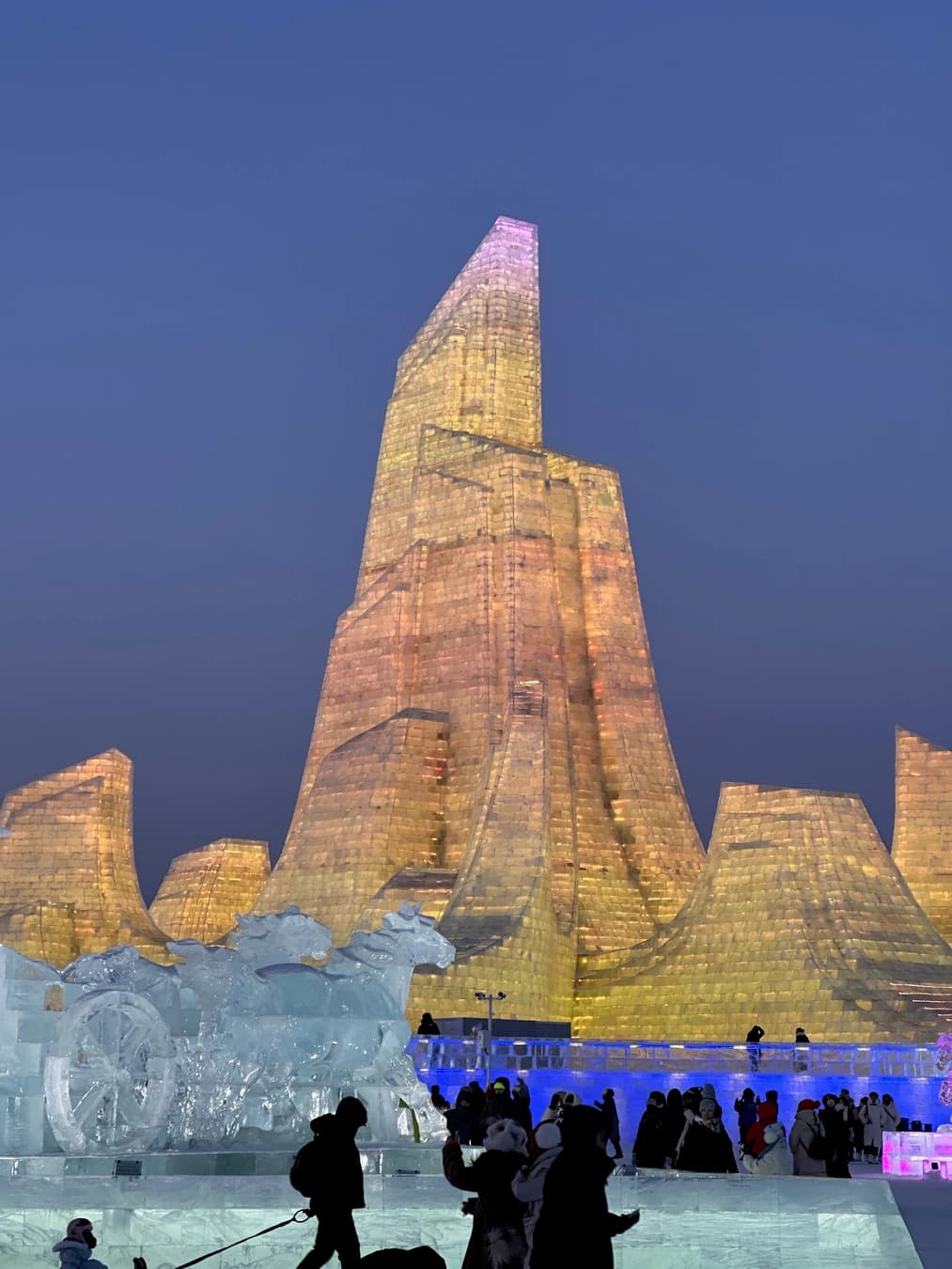
Harbin's three headline winter experiences are not versions of the same festival. Ice and Snow World is a seasonal outdoor park of large ice architecture, coloured illumination and rides. Sun Island Snow Sculpture Expo uses packed snow, which is most legible in daylight. Central Street and Saint Sophia form a city-centre architecture route with food, museums and warm interiors close at hand. They use different gates, tickets and chunks of the day.
The most reliable first plan is therefore simple: give the historic centre one day, then use a second day for Sun Island in daylight and Ice and Snow World from mid-afternoon into darkness. That second day is demanding. If your group includes small children, older travelers, anyone sensitive to cold, or a photographer who wants time rather than a checklist, split the two Songbei attractions across separate days.
This guide helps you make that trade-off. Once you have chosen the structure, use the linked attraction pages for detailed visit mechanics and the existing two-day, three-day and four-day itineraries for complete day-by-day routes.
First check whether the winter products actually exist on your dates
Status checked September 21, 2026: the official operator is preparing for another winter, but we did not find a confirmed public opening date, ticket price, daily schedule or ride-reservation policy for the 2026–27 outdoor edition. The previous outdoor Ice and Snow World edition has ended. The exact Sun Island Snow Expo pin is currently marked off-season on AMap. Neither fact predicts the next opening date.
Do not arrange a non-refundable December journey around an old date. The ice park opens only after construction, weather and safety conditions support it. Sun Island's snow exhibition has its own build and opening process. Before paying, check the Ice and Snow World operator and a current Sun Island notice for the exact date you intend to enter.
The operator also runs Dream Ice and Snow Hall (梦幻冰雪馆), an indoor ice attraction. It is a separate year-round product. A ticket or search result for that hall does not confirm that the giant outdoor Ice and Snow World is operating, and the experience is not an equivalent substitute. Read the Chinese product name, address, date and inclusions before paying.
The 90-second choice
| Experience | Choose it for | Best light | Realistic visit shape | Main cost |
|---|---|---|---|---|
| Ice and Snow World (哈尔滨冰雪大世界) | Monumental ice architecture, illumination and a high-energy winter evening | Enter in daylight or mid-afternoon, stay through dusk and darkness | One long afternoon and evening, with repeated warm-up stops | Cold exposure, queues and edition-specific ride rules |
| Sun Island Snow Sculpture Expo (太阳岛雪博会) | Carved snow, relief, texture and large sculptural scenes | Morning to mid-afternoon daylight | Roughly 2–3 hours inside, plus a separate gate transfer | Exposed walking and a seasonal ticket distinct from Ice World |
| Central Street + Saint Sophia (中央大街 + 圣·索菲亚教堂) | Harbin's city history, architecture, food and flexible indoor resets | Daylight for façades; blue hour for street atmosphere | A half or full day, expandable around museums and meals | Commercial crowds; it is not the ice festival |
If you have only one open winter attraction day, choose Ice and Snow World when illumination and ice architecture are the reason for the trip. Choose Sun Island Snow Expo when sculpture and daylight photography matter more than rides or night colour. Choose the historic centre if the seasonal venues are not confirmed, the weather is unsafe, or your group cannot sustain hours outdoors.
There is no failure in choosing only one Songbei attraction. The memorable part of a Harbin winter day is the contrast between scale, light and climate. That contrast disappears when the entire day becomes transport, ticket checks and attempts to recover feeling in your fingers.
Ice and Snow World: protect the transition into night
Ice and Snow World is strongest when you see it change. In daylight, transparent edges, construction joints and the thickness of the blocks are visible. At blue hour, the structures begin to glow against a still-readable sky. After dark, colour and scale dominate. Arriving only at night gives the signature lighting but removes half the visual story and pushes navigation, rides, photographs and dinner into the busiest window.
If current hours permit, aim to be through the gate by mid-afternoon. On entry, identify the exit, the live park map, a warm indoor space and your return option. Then choose one priority: a broad architecture circuit, one ride, or one elevated viewpoint. Everything else is optional.
The edition changes every winter, so screenshots of old layouts are inspiration rather than navigation. The previous edition's giant slide, performance schedule or fast-entry product does not establish what your edition includes. Confirm all of these on the live date:
- whether admission is timed and whether re-entry is allowed;
- which rides require a separate reservation, queue or paid product;
- height, age, footwear and clothing restrictions;
- the cancellation rule if wind, maintenance or ice conditions close a feature;
- the last entry and actual park closing time;
- whether your passport is needed at the gate and how the official platform collects it.
Avoid a private seller who promises queue-free access and asks you to send a passport photograph in chat. A third-party booking cannot override the operator's gate, ride or safety rules. If one popular ride is full, switch to the architecture plan rather than spending the coldest part of the visit refreshing a phone outdoors.
Read the detailed Ice and Snow World guide after you have decided to include it.
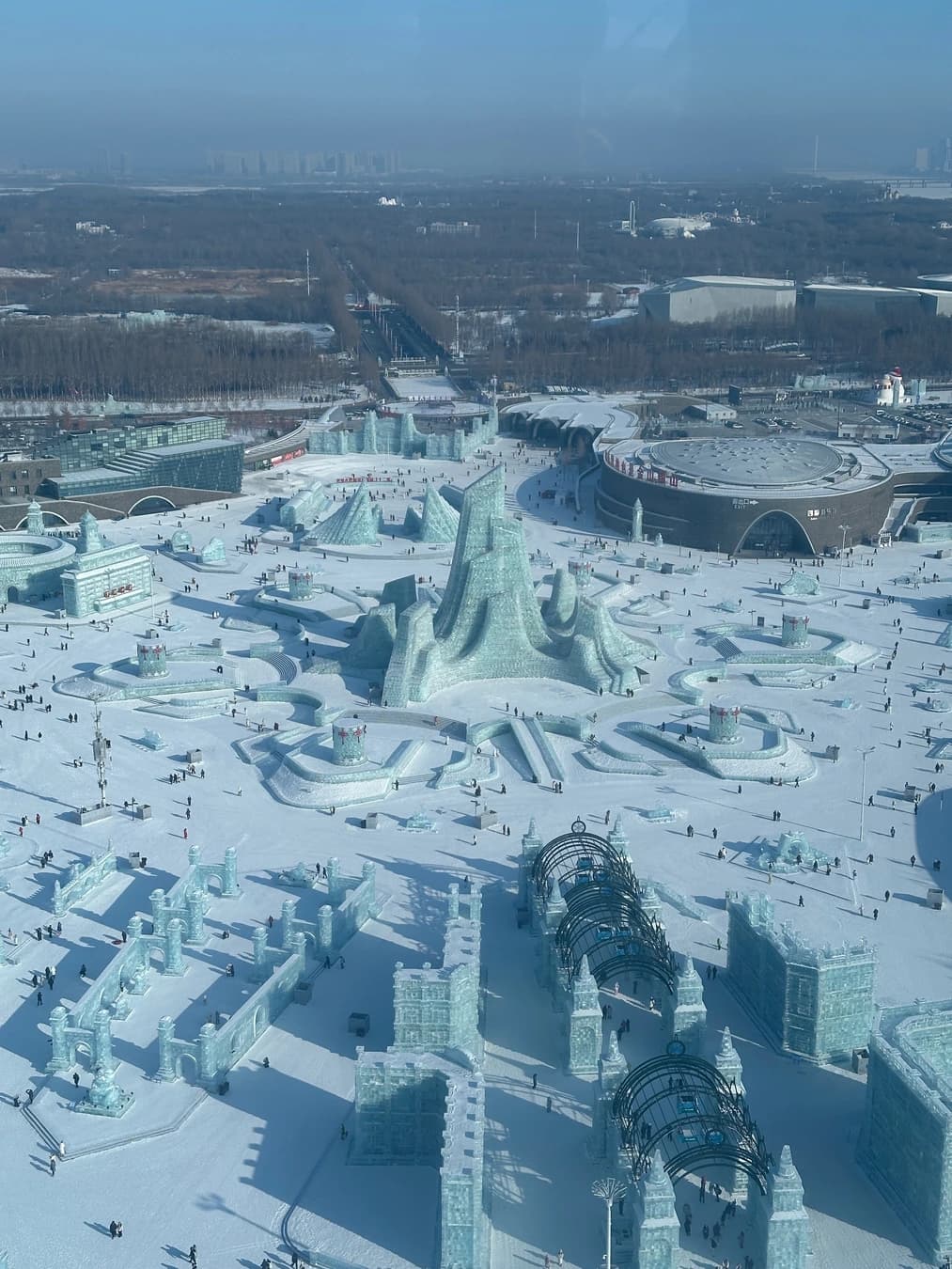
A previous edition in daylight. The attraction is rebuilt with a different layout each winter.
Sun Island: spend daylight on snow, not transport
The Sun Island Snow Sculpture Expo is made from snow rather than clear ice. Side light creates shadows across carved faces, folds and textures. Flat darkness erases much of that relief, which is why this visit belongs earlier in the day.
Use the specific Snow Expo marker when it is operating. A search for Sun Island Scenic Area (太阳岛风景区), the wider Sun Island scenic area, may lead to a general park pin rather than the current winter entrance. Photograph the live map at the gate because the exhibition footprint, warming spaces and internal transport can change.
Two to three hours is a useful planning envelope, not a completion target. Walk one coherent circuit. Do not cross a broad, exposed site repeatedly for isolated pieces saved from an old social post. The correct sculpture list is the current map, and the correct turning point is the condition of the slowest person in the group.
Snow glare can be tiring even on an overcast day. Bring sunglasses or photochromic lenses, keep skin covered, and avoid touching or climbing sculpture outside a marked interactive area. In windy conditions, use a shorter circuit and protect the warm transfer that follows.
Outside the confirmed Snow Expo season, Sun Island is a landscape park with different hours and separately operated indoor venues. A winter photograph attached to a generic “Sun Island” ticket does not prove that the snow exhibition is open.
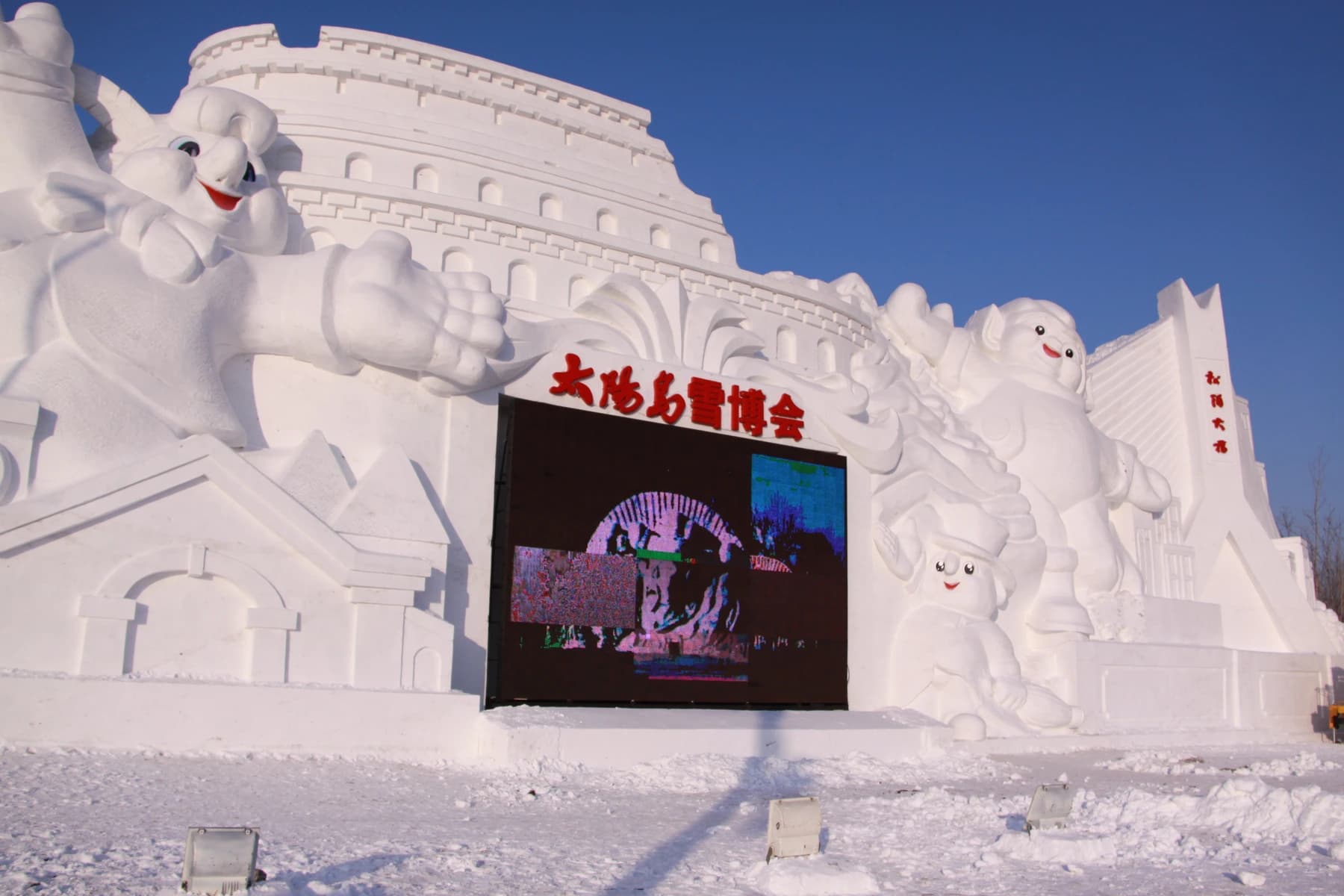
Photo: Caliva · Source · CC BY-SA 4.0
Combining Sun Island and Ice World on one day
The efficient order is Snow Expo in daylight → substantial indoor warm-up and meal → Ice and Snow World before dusk → night lighting → direct return. Reverse that sequence and you spend the best sculpture light inside the ice park, then reach Sun Island when its detail is harder to read.
The attractions remain separate. From the exact Snow Expo and Ice World pins, an AMap road query returned about 4.1 km / 12 minutes in one traffic snapshot. The apparent walking result was about 2.6 km / 35 minutes. Do not build the day around either minimum. Allow 30–60 minutes gate to gate for exit walking, pickup, traffic, the correct drop-off, security and the next entrance.
Walking between the broad pins is a poor winter default. It consumes warmth before the evening begins, and the route may not match the gate you actually use. Take an official shuttle if the current edition publishes one; otherwise use a road transfer. Never treat an informal frozen-river route as a shortcut. Government winter-safety guidance advises visitors to use managed ice and snow venues rather than unmanaged ice surfaces.
This combined day works when everyone can dress independently, communicate if they are becoming cold, and accept that a ride or sculpture circuit may be cut. It works poorly for a group that needs a long seated lunch, a midday hotel return, frequent toilet stops, or stroller-friendly ground. In those cases, assign Sun Island and Ice World to different days.
The Siberian Tiger Park is another separate Songbei attraction. It can sit first in an ambitious three-stop day, but it is also the first item to cut. Do not reduce the only warm meal or arrive at Ice World after dark merely to preserve it.
Central Street and Saint Sophia: the adjustable winter day
The city-centre route is more than a fallback. Saint Sophia Cathedral and Central Street introduce the trading, migration and architectural history that makes Harbin different from a purpose-built winter resort.
The route is adjustable because cafés, restaurants, shopping arcades and museums can interrupt the outdoor walking. That makes it the best first day after a flight, the best recovery day after a long Songbei evening, and the safest day to keep flexible when weather changes.
A practical sequence is Saint Sophia in daylight, then the historic commercial streets, Central Street, the Flood Control Monument and the Songhua River edge only where the public route is managed. Read the full Central Street and Saint Sophia guide for the walking order and historical context.
Do not mistake “more indoor options” for “no cold plan.” Central Street can funnel wind, pavements can be polished and slippery, and repeated transitions from overheated interiors to the street create damp layers. Open your coat indoors, dry gloves when possible, and replace a wet base layer rather than trapping moisture for the next walk.
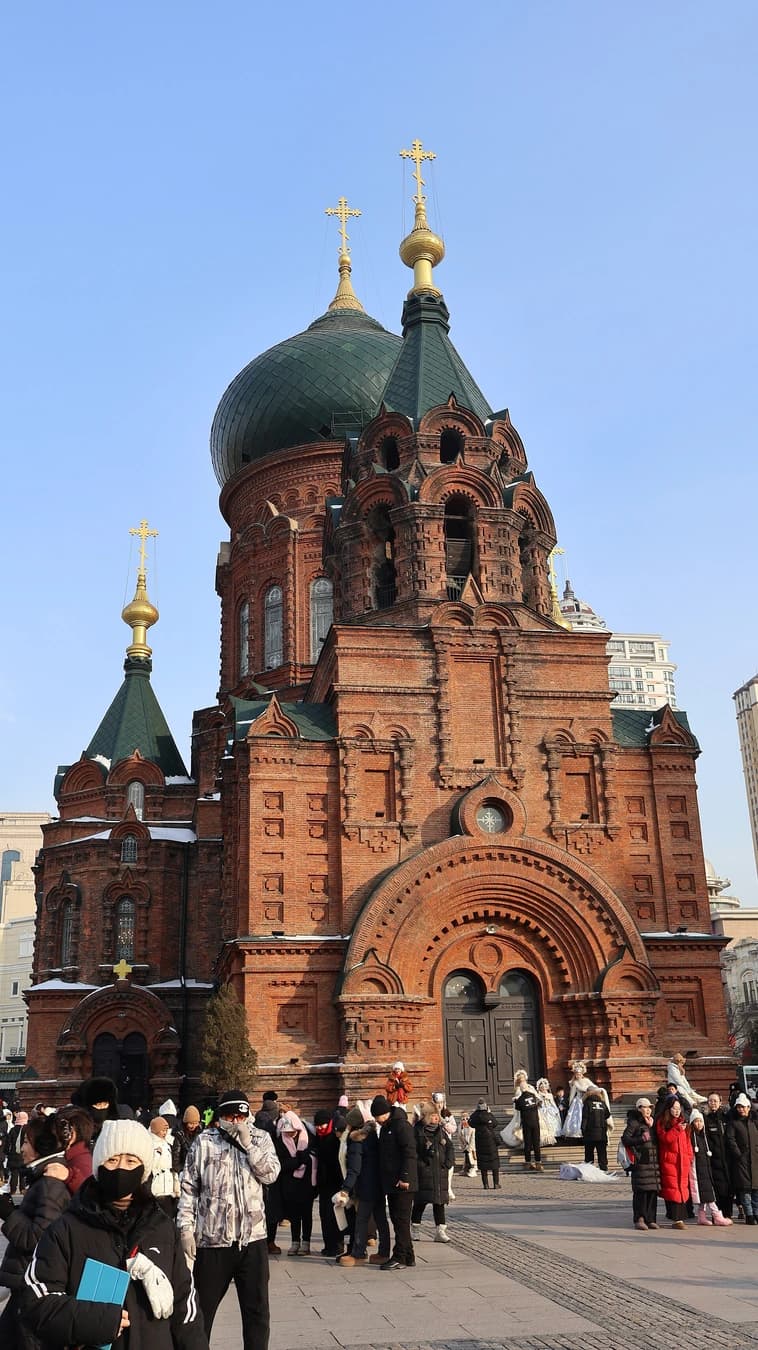
Photo: SmallSonMarex · Source · CC BY-SA 4.0
Dress for a sequence of exposures
The useful question is not “How cold is Harbin?” It is “How long will I stand still in wind before the next reliable warm room?” A forecast temperature cannot describe the entire day. Wind, damp clothing, queue speed, sun, individual circulation and the fit of your boots all change the result.
Build layers that can be adjusted:
- Dry base: a wicking thermal top and bottom. Cotton that stays damp is a poor foundation for a long outdoor evening.
- Insulation: fleece, wool or a light insulated layer with enough loft to trap air.
- Weather shell: a wind-resistant insulated coat long enough to protect the hips, plus snow-resistant trousers or an outer layer when conditions demand it.
- Head and face: a hat covering the ears, neck protection and a face covering that can be changed if breath makes it wet.
- Hands: thin glove liners for short phone use beneath warm mittens. Mittens preserve warmth better than five separated fingers.
- Feet: insulated, non-slip boots with room for the toes and socks. Two tight sock layers can reduce circulation and make feet colder.
Carry a spare dry pair of glove liners and socks in a sealed bag. Chemical warmers are supplementary; they cannot repair poor circulation, wet insulation or an exposed face. Apply them only as directed, not directly to bare skin and not as a reason to ignore numbness.
Plan warm-up points before anyone is cold. A warm-up means enough time indoors to recover dexterity, check skin, drink and decide whether to continue. It is not a three-minute shop queue. If a person has persistent numbness, pale or waxy skin, uncontrolled shivering, dizziness, unusual fatigue or confusion, move to warmth and seek help. The route is over for that person even if a light show is about to start.
That conservative threshold matches the Heilongjiang culture and tourism authority's 2026 winter warning, which tells children and older visitors to shorten outdoor exposure and urges immediate indoor rewarming when numbness, pallor or stinging appears.
What extreme cold does to a phone and battery
Cold can turn a phone from a convenience into the weak link in your return plan. Apple states that using an iPhone below its designed ambient range can temporarily shorten battery life or cause the device to switch off; charging may slow or stop until the device returns to a suitable temperature. Other devices have their own limits, so check the manufacturer's guidance for your phone, camera and power bank.
Before leaving the hotel:
- download tickets, passport details, hotel name and address in Chinese, and the relevant map area;
- take screenshots that do not depend on a mobile-data connection or a working booking app;
- charge both phone and power bank indoors;
- put the power bank and cable in an inner insulated pocket, not an exposed backpack sleeve;
- agree on a physical meeting point and a return plan in case one device fails.
Outside, keep the phone close to the body and take it out for short, deliberate uses. A wrist strap helps when gloves reduce grip. For photography, compose first with your eyes, then expose the device briefly and return it to the inner pocket. Rotate batteries if your camera system allows it.
When you enter a warm, humid interior, condensation can form on a very cold device. Leave the camera or phone in a closed bag while it warms gradually. Do not place it on a heater, and do not immediately charge a frozen or visibly damp device. The goal is a slow temperature transition, not a blast of heat.
Tickets, weather and closure uncertainty
Every outdoor winter plan needs a cancellation branch. Sustained cold supports construction, but wind, snow, maintenance, crowd control and changing ice conditions can close a ride or alter entry even while the park itself remains open. A single unavailable slide does not mean the entire attraction is closed; an indoor hall being open does not mean the outdoor edition has begun.
Use this purchase order:
- Confirm the exact Chinese attraction name and outdoor edition.
- Confirm the operating date and hours on the official operator channel.
- Read the dated ticket inclusions, ID rule, cancellation policy and last-entry time.
- Verify any ride reservation independently of general admission.
- Check the hourly forecast, wind and official notices on the morning of the visit.
- Keep a city-centre alternative that does not rely on the same weather.
Old prices are especially misleading because editions change their capacity controls and product tiers. Treat a previous visitor's price as evidence of what they paid, not what you will pay. We have not inserted a booking button because the site's current affiliate registry does not contain an exact, validated product for the next outdoor edition. Use an official live sale first; assess a marketplace only when it names the same edition, date and inclusions.
Getting there and getting back
Save the exact Ice and Snow World marker and Ice and Snow World Metro Station. The official operator identifies Metro Line 2 as the principal public-transport connection. Recheck the last train, current entrance and any crowd-control exits on the day.
From Central Street's exact POI to the ice park, one AMap snapshot returned about 7.2 km / 16 minutes by car and 6.8 km / 41 minutes by public transport, including about 1.7 km of walking around the broad POI endpoints. Those are route-planning results, not promises. A hotel near a useful metro entrance may have a cleaner trip; road controls and closing-time demand can make a car slower.
Metro is usually the most predictable choice when everyone can manage stairs, station walking and crowds. A taxi or ride-hail is useful for a group carrying bulky winter gear, but arrange a precise pickup point and expect a wait after the night rush. Do not postpone the exit until the only working phone is nearly empty.
Save your hotel's Chinese name and address offline. Leave while everyone can still operate a phone, identify a vehicle and walk steadily. That rule matters more than squeezing in one final illuminated façade.
Two days: choose compact or cold-sensitive
Compact first visit
Day 1 — historic centre: Start around Saint Sophia, continue through the historic streets to Central Street, and use a museum or long lunch as the middle warm-up. Finish at the riverfront only on a maintained public route. This is also the day to buy any missing winter gear and test whether boots, gloves and face protection actually work.
Day 2 — Songbei winter pair: Enter Sun Island Snow Expo in the late morning, leave enough time for a full indoor meal and warm-up, then transfer by road to Ice and Snow World for daylight, dusk and night. Cut the final Snow Expo loop if it threatens the Ice World entry window. Cut a ride if it threatens the return.
This is the classic structure, but it assumes the two seasonal attractions are confirmed and your group has strong cold tolerance.
Cold-sensitive alternative
Use Day 1 for the centre plus a short evening look at city lighting. Give Day 2 only to Ice and Snow World, entering in mid-afternoon after a warm morning and lunch. Omit Sun Island rather than turning both visits into endurance tests. If snow sculpture is the higher priority, reverse the choice and keep Ice World for another trip.
Three days: the best balance for most first visits
Three days lets the weather and your body influence the order.
Day 1 — city context and gear test: Saint Sophia, Central Street, food and an indoor cultural stop. Avoid a late first-night Ice World visit after a long flight; travel fatigue makes cold judgment worse.
Day 2 — the main winter day: Use Sun Island in daylight and Ice World into darkness if conditions, tickets and the group's recovery on Day 1 support the combination. Otherwise assign only one attraction and move the second to Day 3.
Day 3 — recovery or depth: Choose the remaining Songbei attraction, the Chinese Baroque district, the Harbin Museum, or the Unit 731 Museum according to interest. Unit 731 requires emotional attention and a separate Pingfang journey; do not present it as light entertainment between ice photographs.
The three-day structure is robust because Day 3 can absorb a weather closure or a decision to split the Songbei pair. That flexibility is more useful than a fixed promise to see every named attraction.
Four days: buy a weather buffer, not another checklist
Use the first three-day structure, then make Day 4 conditional.
- If a seasonal attraction was closed or visibility was poor, use the fourth day as the replacement.
- If everyone is comfortable and the core winter experiences are complete, take the dedicated outward excursion to Volga Manor.
- If the group needs less exposure, build a museum, food and neighborhood day in the centre.
- If Russian-influenced and Chinese-Baroque architecture matters more than another snow field, spend the day on urban history.
Volga Manor is not a quick city add-on. It needs a separate road transfer and a return plan. The four-day Harbin itinerary shows how it fits after the core city and Songbei days.
A cold-proof photography plan
At Ice World, make three frames before chasing variety: a daylight view that shows block detail, a blue-hour frame with the sky still visible, and a night frame that uses the illumination. For scale, include a small non-identifiable human figure or railing only when it does not expose a stranger's face. Avoid relying on a single viral installation because the layout changes.
At Sun Island, photograph across the sculpture rather than only from the front. Side light and a slightly oblique angle reveal relief. Bright snow can cause a phone or camera to underexpose the scene; check the histogram or screen and add modest exposure compensation when necessary. Do not step across barriers to “fix” the angle.
In the centre, use Saint Sophia during daylight for masonry and form, then use blue hour around Central Street for the balance between façades and street light. Keep the shoot short enough that bare-finger camera work does not compromise the rest of the day.
For video, record stable five-to-ten-second clips: one wide establishing view, one slow detail, one movement through a safe public path, and one transition as lights appear. Long continuous recording drains the battery and encourages you to stop monitoring your hands and footing.
Cut in this order when the plan slips
- Cut an optional ride or distant installation. The park experience survives without completing a list.
- Cut Siberian Tiger Park from a packed Songbei day. It is separate and consumes the daylight and transfer margin needed by the two seasonal art venues.
- Cut the final Sun Island circuit. Protect the warm meal and the pre-dusk Ice World entry.
- Split Sun Island and Ice World across days. This is often an upgrade, especially for photographers and families.
- Cut a seasonal attraction whose opening is unconfirmed. Do not substitute an unrelated indoor product without understanding what it is.
Never cut the warm-up, dry clothing, safe transport home or margin for a changed gate. Harbin rewards a decisive, shorter winter day far more than an exhausted attempt to complete someone else's map.