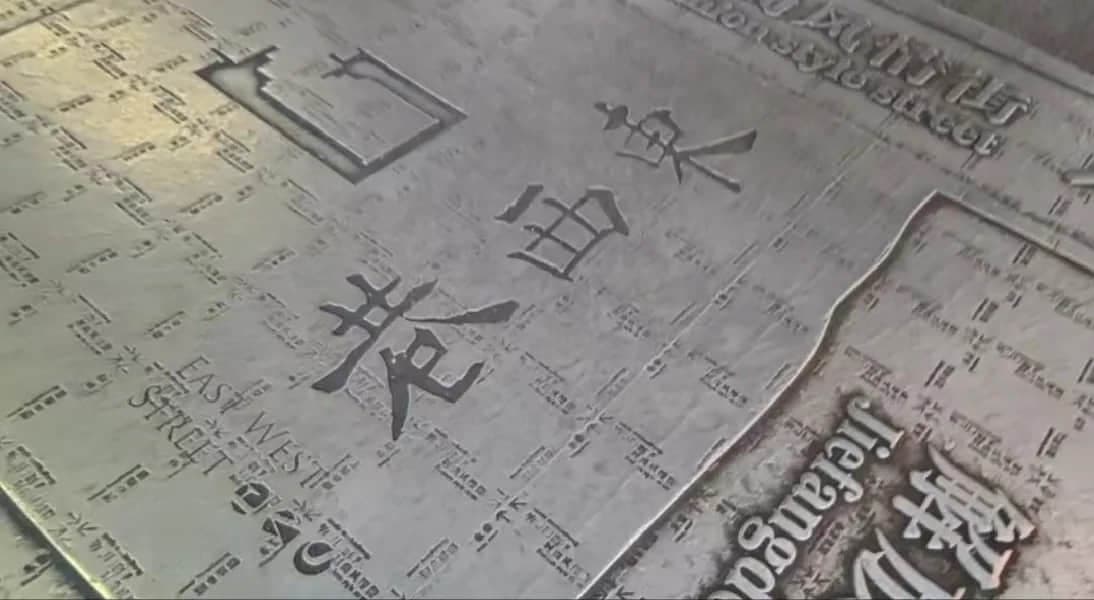
East–West Lane Guilin
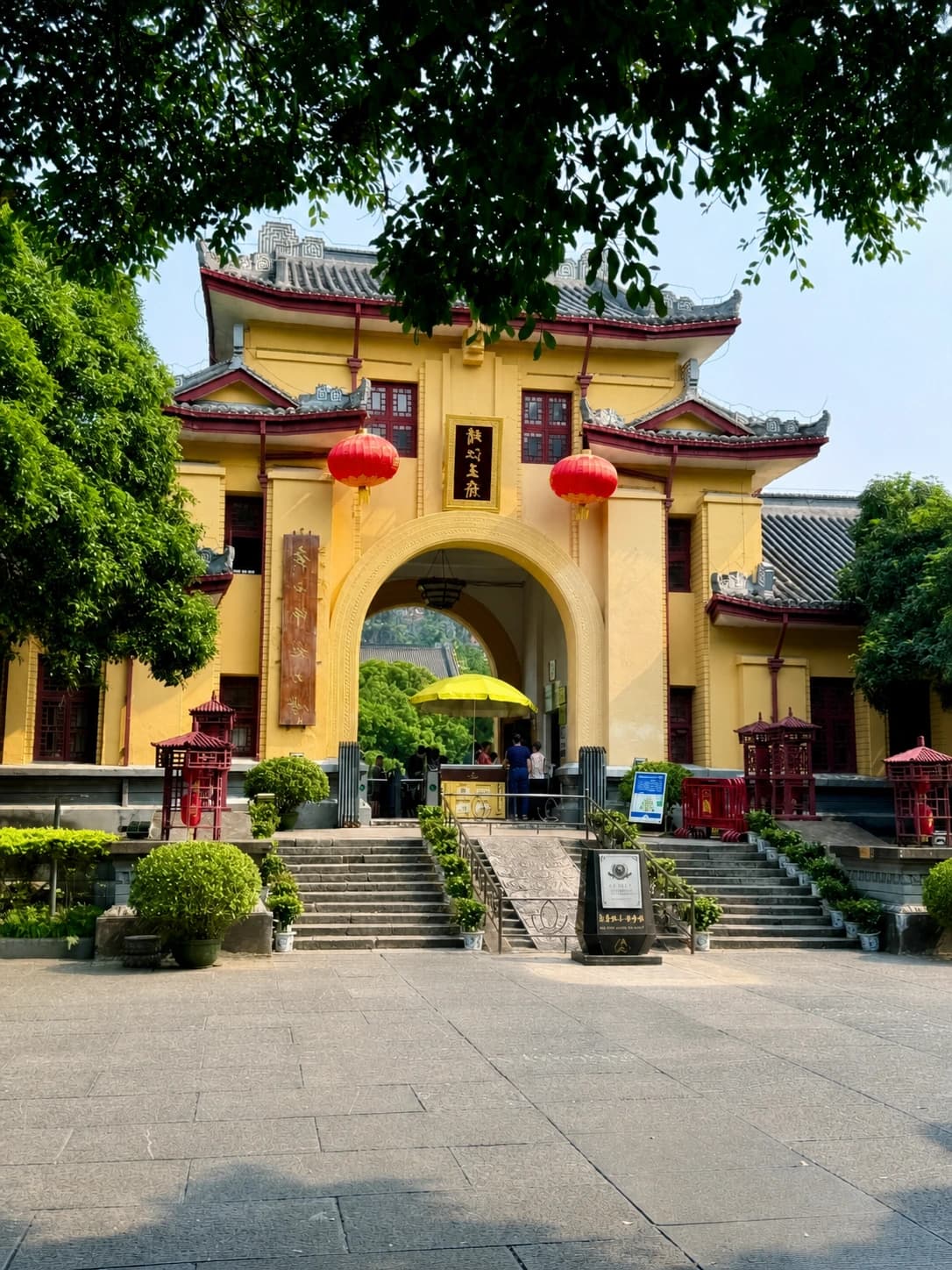
East–West Lane (东西巷, Dōngxī Xiàng) sits beside Jingjiang Princes' City in central Guilin. The visible district mixes historic urban traces, restored façades, reconstructed grey-brick lanes and modern retail. That does not make it worthless; it makes the correct visit a 45–75 minute connector between stronger city anchors rather than a half-day claim of perfectly preserved Ming–Qing streets.
Go for an easy evening walk, food and the relationship between the former princely-city edge and today's commercial center. Skip a special journey if you dislike chain retail, souvenir shops or reconstructed atmosphere. The lanes work best inside a Xiaoyao Tower–Zhengyang Street–lakes route.
A bounded route that does not consume the evening
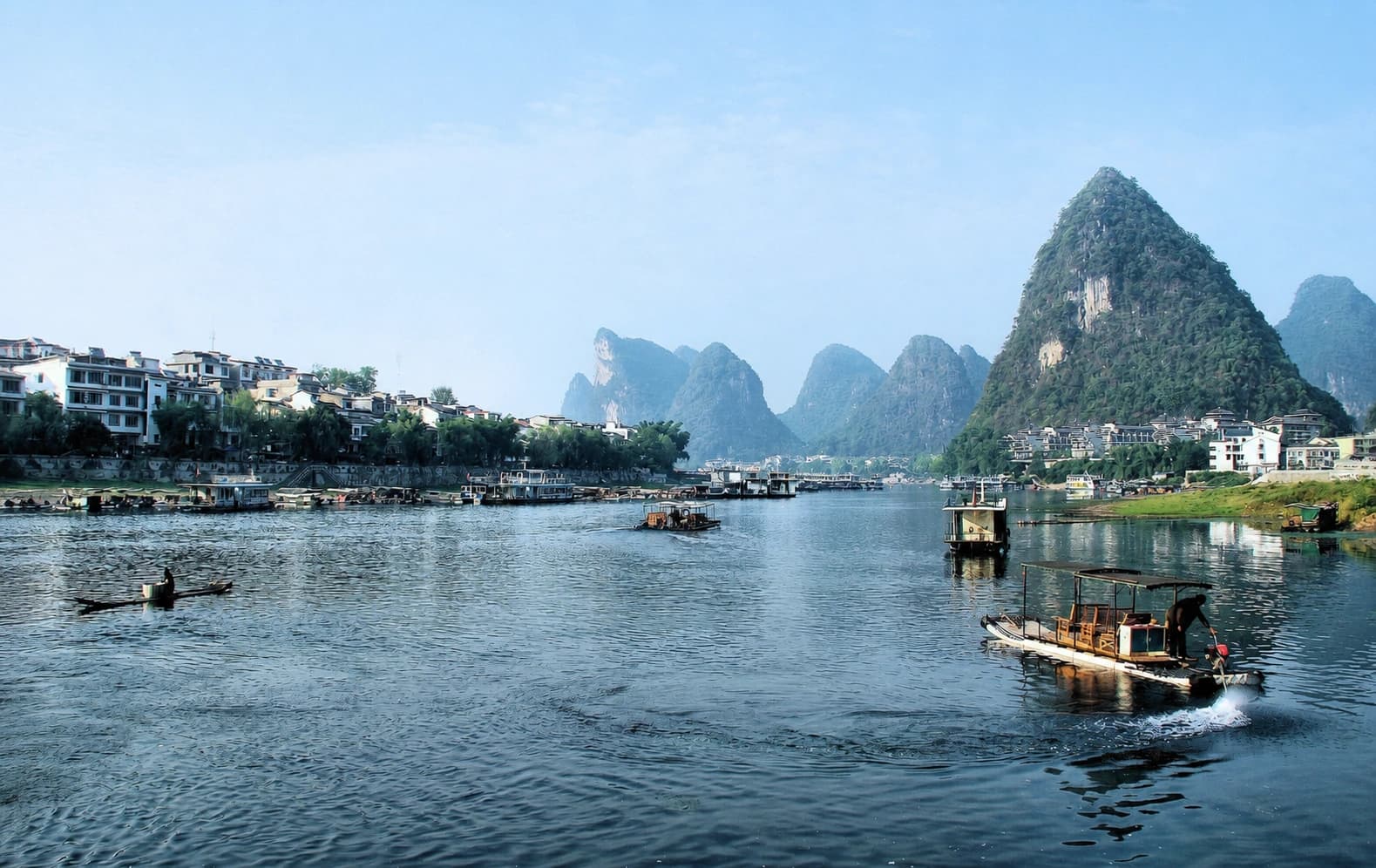
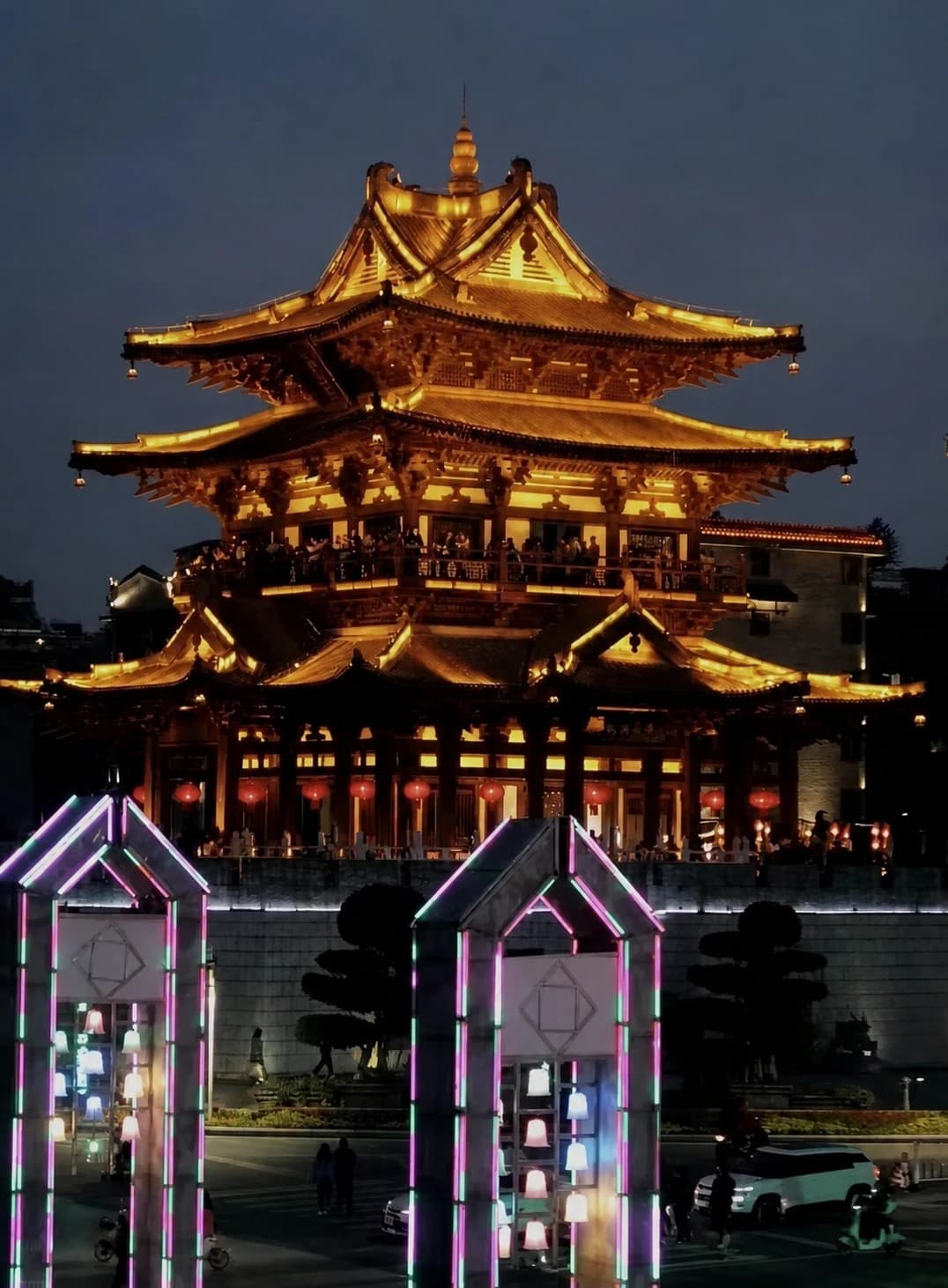
Start at Xiaoyao Tower (逍遥楼) and look across the Li River before entering the old-city side. Continue through Scholar's Gallery toward East–West Lane, then walk the main lanes slowly enough to read plaques and upper façades. Finish toward Zhengyang Pedestrian Street, then decide whether to continue to the lakes and Sun and Moon Pagodas after dark.
This order prevents the common mistake of circling the same retail blocks. Allow 45–75 minutes for the lanes, 90 minutes with a snack, or three to four hours for the full central night walk. Jingjiang Princes' City is a separate ticketed visit and should not be squeezed into a late-evening stroll without checking its last entry.
How to tell history from redevelopment
Look above modern shop signs for rooflines, lane widths, old wall fragments and plaques that identify protected structures. A traditional-looking façade is not automatically original. Treat dated interpretation as stronger evidence than decorative lanterns or a shop's heritage-themed marketing.
The useful story is urban continuity: a historic quarter beside the princely city was restored and redeveloped into today's food-and-retail district. That honest boundary is more informative than presenting every courtyard as a surviving dynasty residence.
Food and shopping without a stale tenant list
The public lanes are free. Most retail and restaurant activity follows a practical 10:00–22:00 baseline, but individual tenants set their own hours. Named businesses change too quickly to anchor the guide.
For Guilin rice noodles, prefer a busy specialist that displays portion and topping prices; noodles are an everyday dish, not improved merely by an “ancient lane” address. For osmanthus cakes, tea or packaged gifts, check ingredient labels and production location rather than buying from the first heritage-looking storefront. Ignore street approaches offering unusually cheap cruises or tours unless the operator, pier, route and total are clear.

Day versus evening
Daylight makes restoration boundaries and upper architecture easier to read. Evening brings more atmosphere and connects naturally to the illuminated lakes, but also more crowds and spending pressure. A good compromise is to reach Xiaoyao Tower before dusk, cross the lanes as lights come on and finish by the water.
Guilin can feel hotter and more humid than the forecast suggests, with quick rain. Carry water and a compact umbrella, and use comfortable shoes on wet paving. The main commercial lanes are relatively level, but thresholds, crowded side passages and separate historic interiors may not be step-free.
Getting there and staying oriented
Use 东西巷 or 逍遥楼 in a Chinese map app. Liberation Bridge buses and short taxis serve the area, but a long bus-number list ages quickly. The district is central enough to reach on foot from Zhengyang Street and the lakes; choose the route by your next stop rather than by a generic main gate.
Keep valuables secure in evening crowds and respect any residential or staff-only lane. Decorative courtyards are not an invitation to enter private doors.
Verdict
East–West Lane is useful precisely because it is central, free and easy—not because it is untouched. Spend about an hour reading the mix of old-city traces and reconstruction, then continue to Xiaoyao Tower, Zhengyang Street or the lakes. Visitors who want deeper history should give the separate princely-city visit its own daylight window.