Elephant Trunk Hill: Get the View, Then Decide Whether to Climb
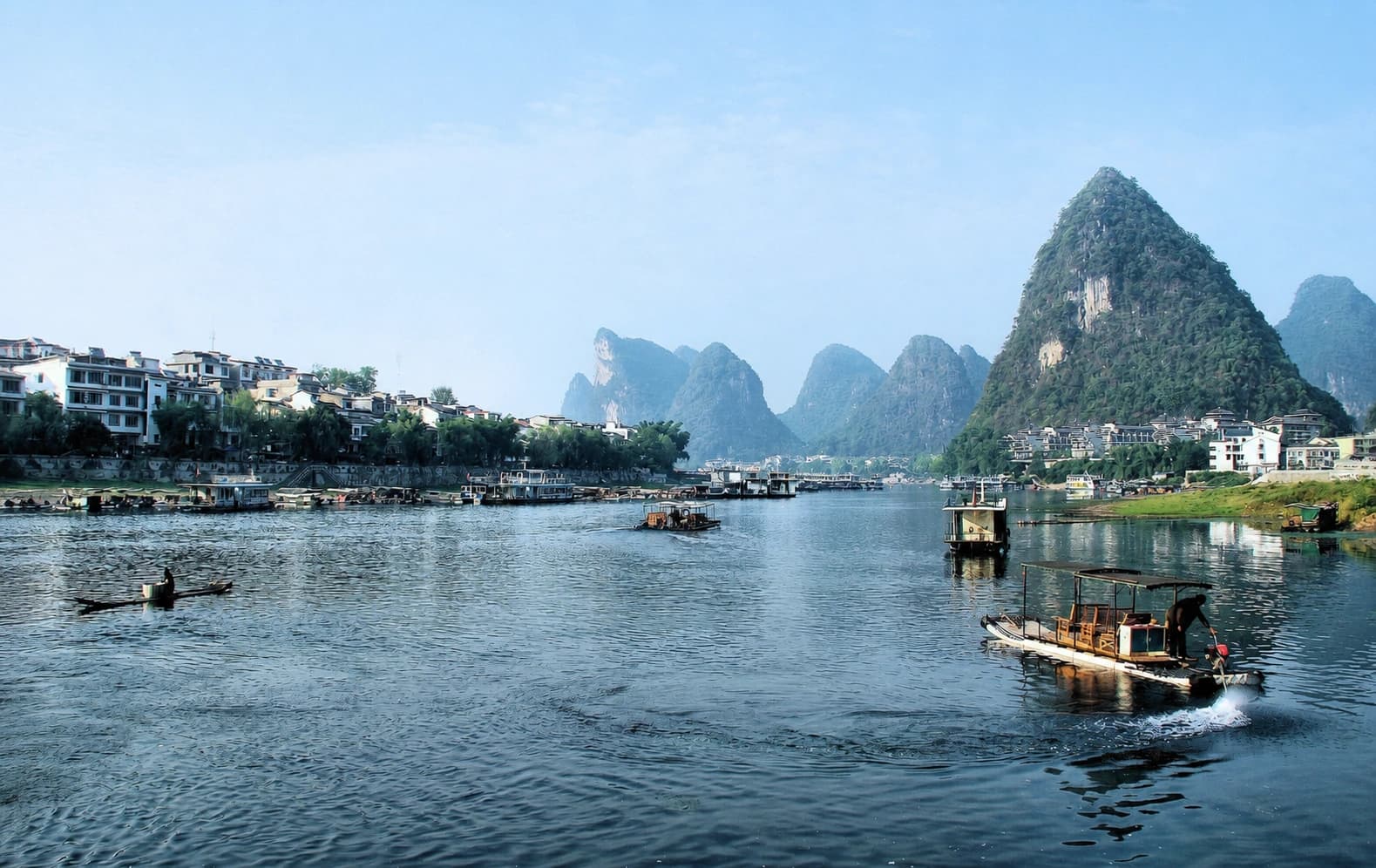
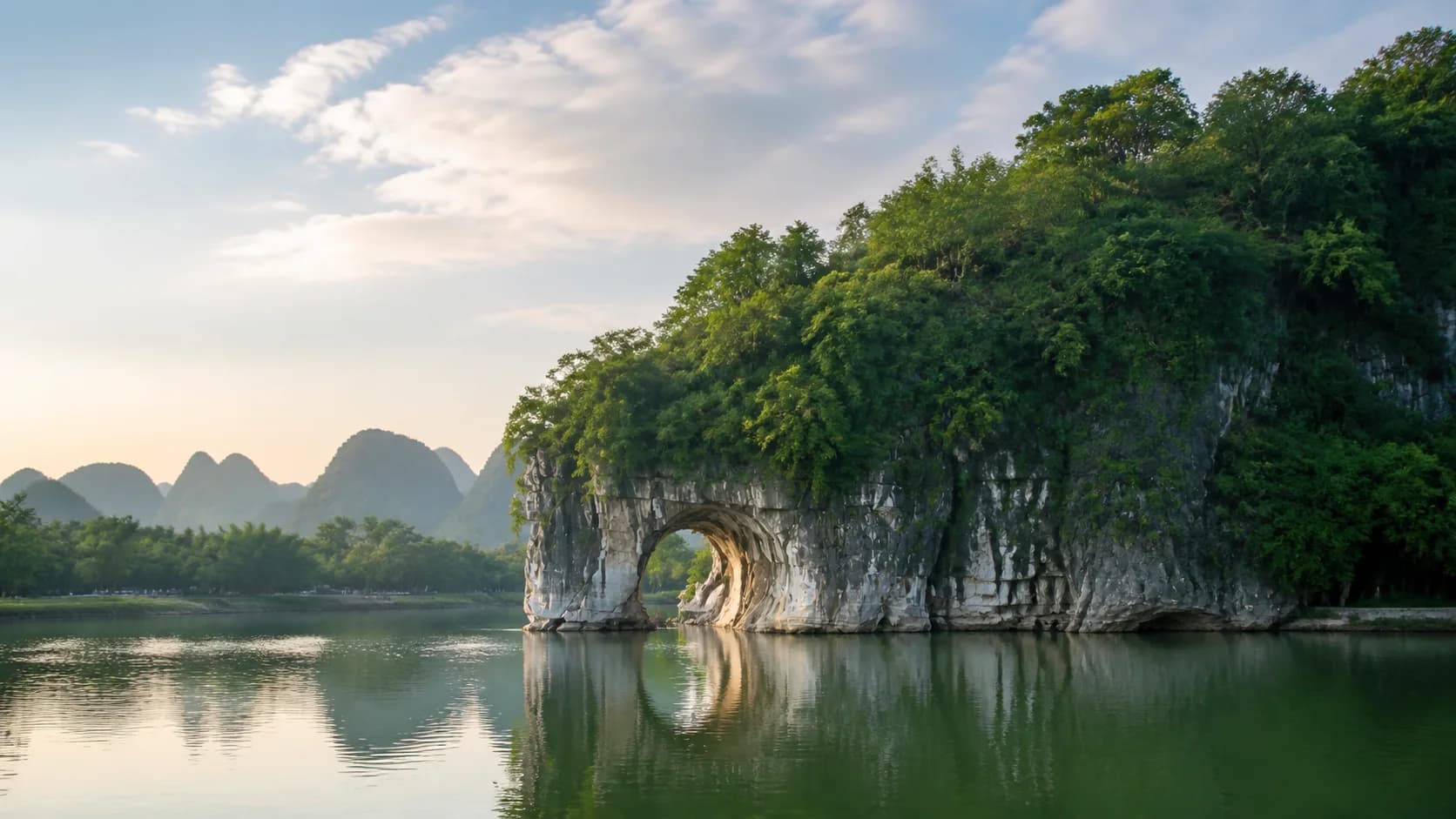
Elephant Trunk Hill is Guilin's city emblem because the limestone profile really does resemble an elephant lowering its trunk into the Li River. The decisive feature is Water Moon Cave, the arch between “trunk” and “body” where river and rock complete the silhouette.
This is a compact city landmark, not a substitute for a Li River cruise or Yangshuo's countryside. A 30–45 minute visit is enough for the classic view. Allow 75–120 minutes if you want Love Island, the cave-side inscriptions and the optional summit climb. That distinction protects a short Guilin arrival day from becoming an unnecessarily sweaty checklist.
Free Entry, but Reserve a Time
Elephant Trunk Hill has been free to enter since 2022. The attraction restored real-name timed reservations from June 16, 2025, according to the official scenic-area notice. Reserve through the official Two Rivers and Four Lakes–Elephant Hill channels and bring the passport or ID used for the booking.
The latest general gate schedule still published by the official operator lists:
- Scenic area: 07:00–21:30.
- Gate 1: entry and exit, 07:00–18:00.
- Gate 3: entry only, 07:00–21:00.
- Gate 2: exit only, until 21:30.
- Rear hill path for ascent and front path for descent.
That gate notice dates from 2023, while the reservation system changed again in 2025. Treat it as the operator's published baseline, not a guarantee for a particular day. Recheck the official announcements page before traveling, especially around floods, low water, public events or maintenance. Follow the live signs even when they conflict with a saved route image.
Choose the Short Visit or the Full Walk
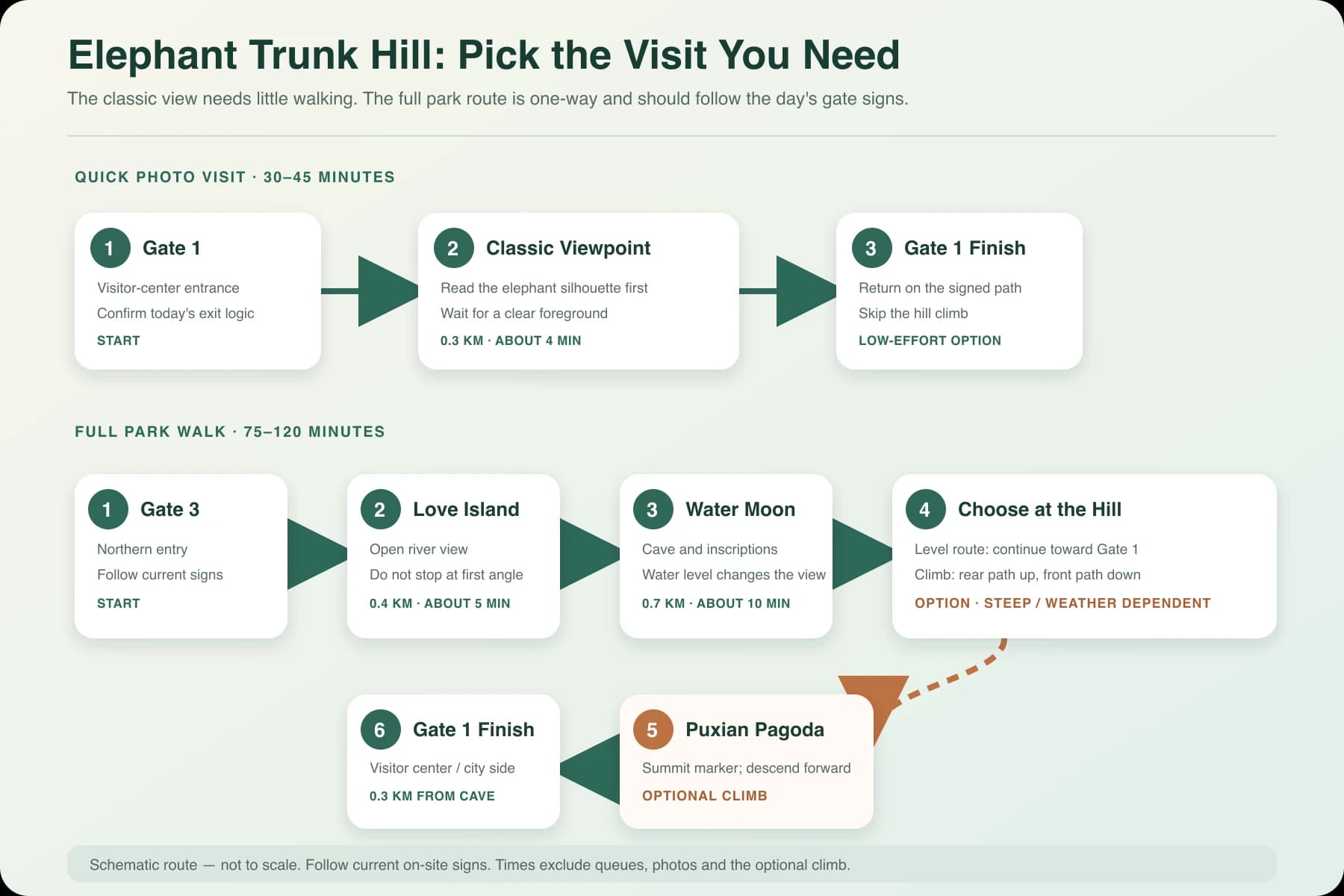
Original sequence diagram based on official gate logic and verified AMap locations. It is not to scale; current barriers and staff routing override it.
Route A: the 30–45 minute classic view
Enter through Gate 1 beside the visitor center. AMap resolves the walk to the main Elephant Trunk Hill viewpoint at approximately 0.3 km / 4 minutes. Read the complete silhouette before moving close to the rock: from too near, the “elephant” disappears into separate walls and arches.
Use this route when:
- You have just arrived at Guilin Railway Station.
- Heat, rain, children or limited mobility make the hill path unattractive.
- A Li River cruise, Reed Flute Cave or onward Yangshuo transfer is the day's priority.
- You mainly want to understand why this is Guilin's emblem.
Return along the current signed path. Confirm at entry whether Gate 1 remains the day's usable exit; temporary crowd controls can create a one-way flow.
Route B: the 75–120 minute park walk
When Gate 3 is operating as the northern entrance, use this sequence:
- Gate 3 → Love Island: about 0.4 km / 5 minutes by the verified AMap walking leg.
- Love Island → Water Moon Cave: about 0.7 km / 10 minutes.
- Pause at the classic river angles and read the cave-side heritage layer.
- Choose the level route toward Gate 1 or take the optional signed hill ascent.
- If climbing, use the official one-way logic: rear path up, front path down.
- Finish toward Gate 1 and the city side; Water Moon Cave to the visitor center resolves at about 0.3 km / 4 minutes, excluding stops.
The route totals are planning estimates, not promises. They exclude security, reservation checks, photography, wet surfaces and the summit climb.
Water Moon Cave Is More Than the “Trunk”
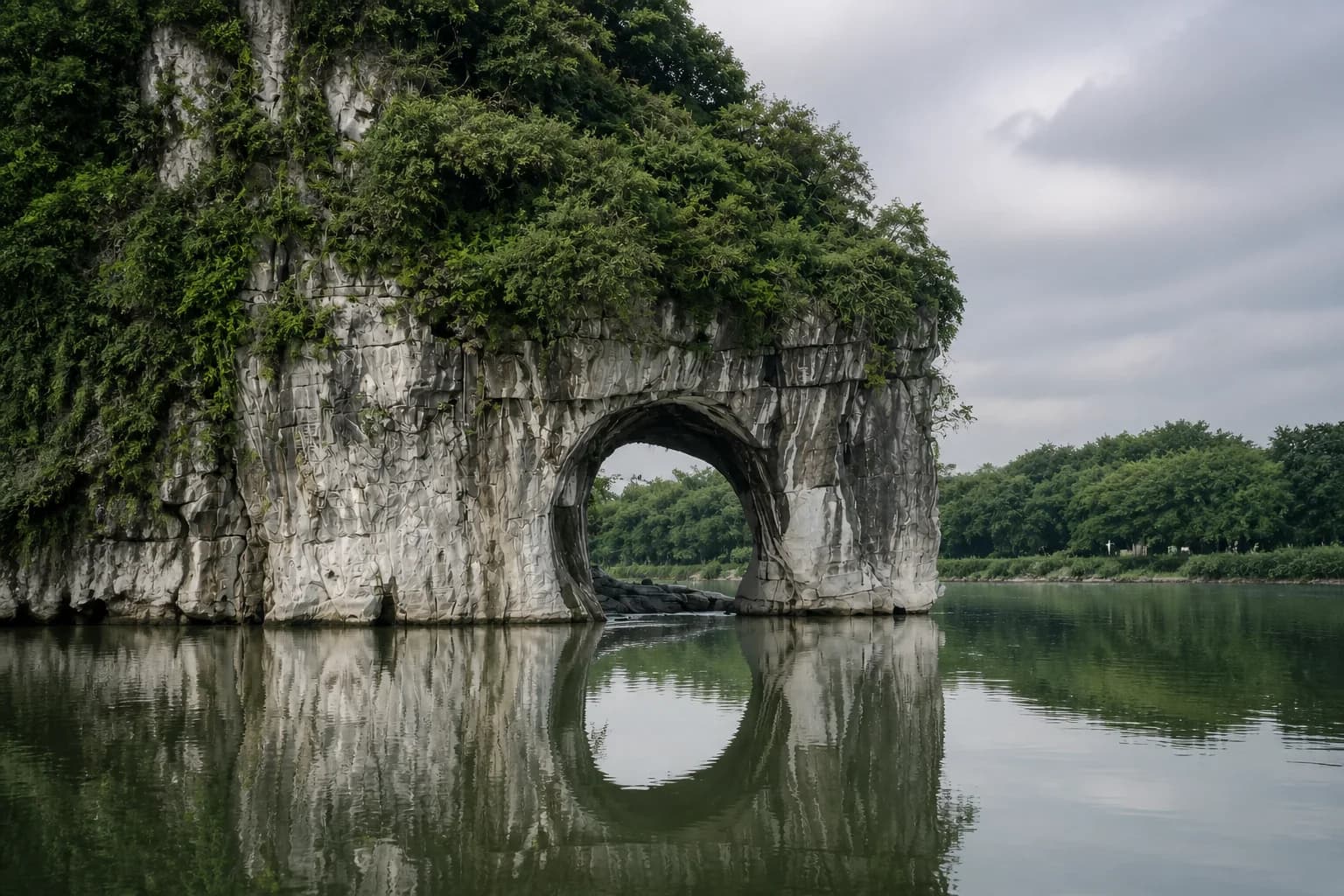
The arch is where the Taohua River–Li River setting, karst weathering and cultural memory meet. Its reflection can suggest a round moon, but do not build the whole visit around a perfect circle: water level, wind, sediment and viewing angle change it continuously.
The official scenic-area introduction identifies 22 Tang- and Song-period carved works containing 3,065 characters at the Water Moon Cave. That makes the cave an inscription site, not merely a selfie frame. Do not touch, trace or lean on the rock carvings; rely on the on-site interpretation to identify specific inscriptions.
Is the Summit Worth It?
The climb is optional. At the summit, Puxian Pagoda gives the hill a second visual identity beyond the elephant profile. The ascent also changes the experience from a river-level landmark visit into a humid, uneven limestone climb.
Climb when:
- The trail is open and dry.
- You have shoes with grip and enough water.
- You want the park's vertical geography, not only its postcard angle.
- The day's heat and visibility make the effort reasonable.
Skip it after heavy rain, in severe heat, when carrying luggage or when the city itinerary already includes a better panorama. Do not promise yourself a wide unobstructed skyline photograph: foliage, haze and controlled areas affect the summit view.
Photography: Five Decisions That Matter
- Start wide. Photograph the entire hill before moving to Water Moon Cave.
- Watch the water. A clean reflection needs calmer water, not necessarily a full moon or sunset.
- Use people for scale sparingly. Avoid blocking the narrow riverside viewpoint for repeated poses.
- Do not assume a fixed raft price. Small craft, permitted areas, prices and river operations vary; use only the current official desk and never board an informal boat because an old post shows one.
- Return after weather, not just by clock. Soft cloud can reveal more limestone texture than a harsh blue-sky afternoon.
Getting There Without a Metro
Guilin has no practical urban metro connection to the park. AMap identifies the main attraction as Elephant Trunk Hill — open in AMap and the Gate 1 visitor center as Gate 1 Visitor Centre — open in AMap.
From Guilin Railway Station, the verified walking route to the Gate 1 visitor center is about 1.7 km / 23 minutes. This is reasonable with a small daypack, but use a taxi or current local bus if you have luggage, rain or summer heat. Do not confuse Guilin Railway Station with Guilin North or Guilin West; those are much farther from the center.
From a central lakes hotel, walking is often simpler than negotiating a short taxi pickup. From Yangshuo, do not make a special return merely for Elephant Trunk Hill; place it on your Guilin arrival or departure day.
Continue as a Real City Walk
The strongest extension is north through the central lakes rather than another vehicle transfer:
- Gate 1 → Shanhu: about 1.0 km / 14 minutes.
- Shanhu → Zhengyang Pedestrian Street: about 0.5 km / 7 minutes.
- Zhengyang → East–West Lane: about 0.5 km / 7 minutes.
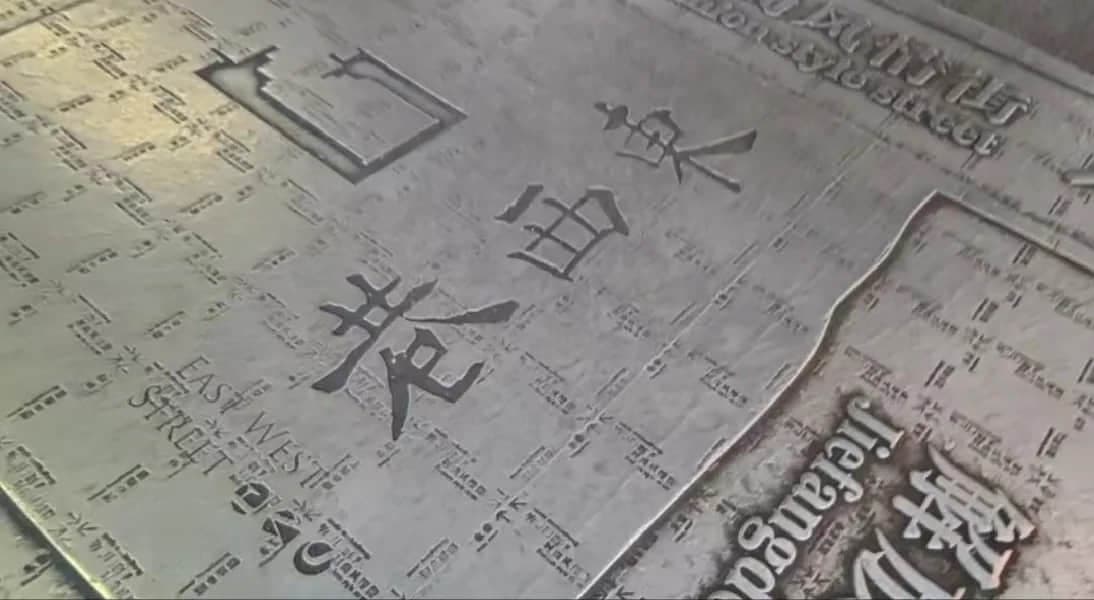
This sequence changes naturally from karst landscape to civic lakefront, commercial pedestrian street and reconstructed heritage-shopping quarter. Read our East–West Lane guide before treating every snack counter as a historic institution.
Important 2026 correction: the official operator announced that the Sun and Moon Twin Pagodas are temporarily closed for a cultural-tourism upgrade from May 2026. The lakeside walk can still be worthwhile, but do not promise entry to the towers until the official announcements confirm reopening.
For a bigger nature day, keep the Li River guide separate. A city park visit and a Guilin-to-Yangshuo cruise solve different itinerary needs.
What to Eat Nearby
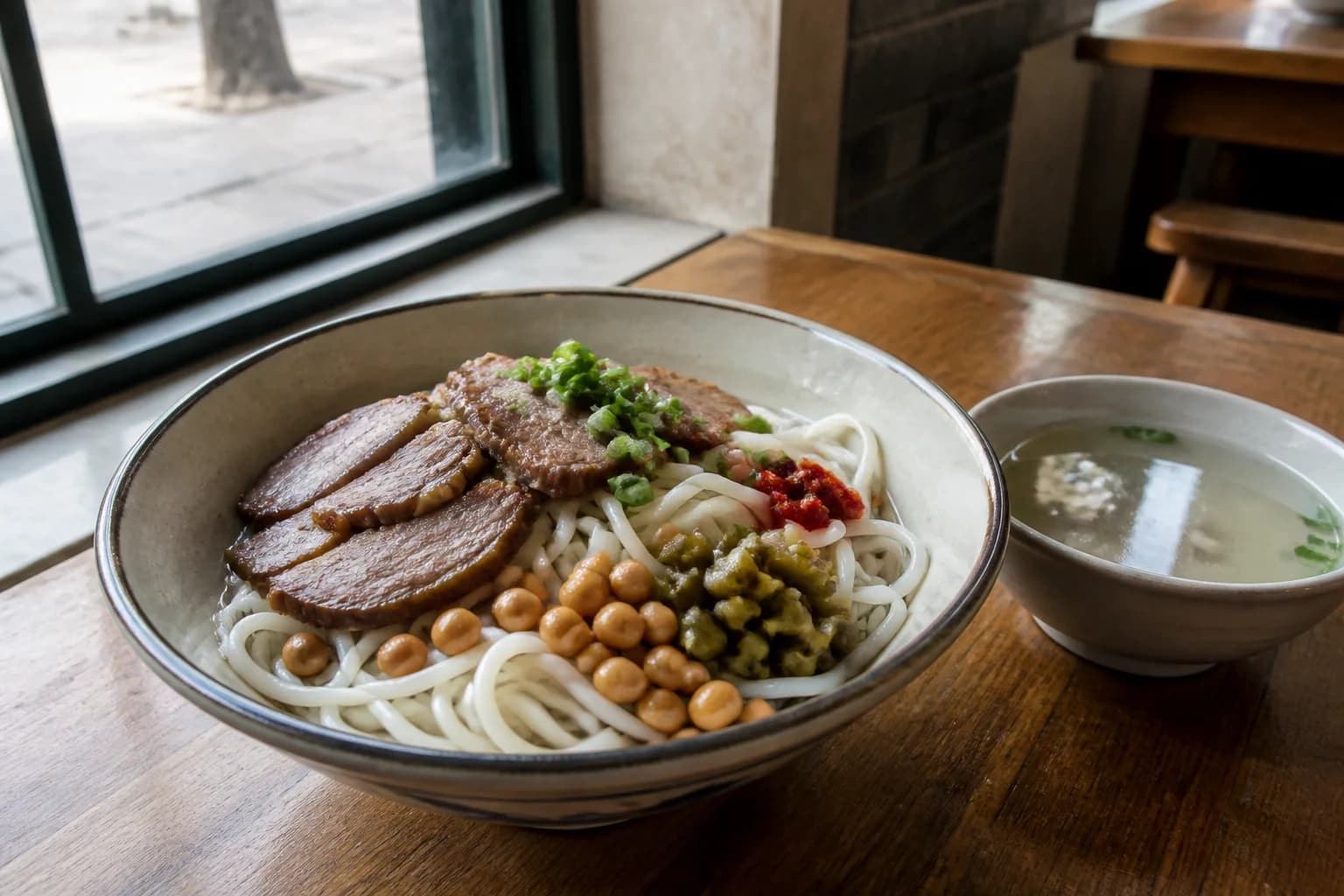
- Guilin rice noodles: the essential quick meal. A dry-tossed bowl often comes with braised meat, peanuts or soybeans, pickles and chili, with broth served separately. Add condiments gradually.
- Stuffed vegetables: look for peppers, tofu or mushrooms filled with seasoned meat; useful for a shared dinner rather than a rushed breakfast.
- Lipu taro with pork: rich and filling, best for two or more people after a walking day.
- Gongcheng oil tea: bitter, savory and aromatic rather than sweet. Try a small serving before ordering a full set.
- Yangshuo beer fish: save it for Yangshuo unless a central Guilin restaurant is genuinely your best logistical option; its destination context matters.
Eat beyond the immediate photo funnel when possible. Zhengyang and the streets around the central lakes offer more choice, but branch turnover is high. Read the current menu, check whether a rice-noodle shop prices by bowl or topping, and avoid assuming that the longest social-media queue is the most local.
Where to Stay
- Shanhu/Ronghu lake area: best for a first Guilin night, central walks and an easy Elephant Trunk Hill morning.
- Near Guilin Railway Station: best for a late arrival or early train, with a walkable route to Gate 1; check street noise and lift access.
- East–West Lane / Zhengyang: best for dining and evening activity, but busier and more commercial.
- Seven Star Park side: quieter river access and more local neighborhoods, with slightly less convenient luggage transfers.
- Yangshuo: choose it for countryside, river and evening atmosphere—not as a base for repeating central Guilin sights.
Compare district-level options through Trip.com. Prioritize recent reviews about lift availability, taxi pickup, mold in the humid season and the actual walking route rather than a hotel's straight-line “meters from Elephant Hill” claim.
The Short Verdict
Elephant Trunk Hill earns a place on a first Guilin trip because it explains the city's emblem in one compact stop. Enter with a reservation, get the wide silhouette first, and choose the summit only when weather and energy justify it. Then continue north through Shanhu and Zhengyang instead of paying for a questionable short raft or forcing the park to occupy half a day.