Liziba Monorail Station
Updated September 20, 2026
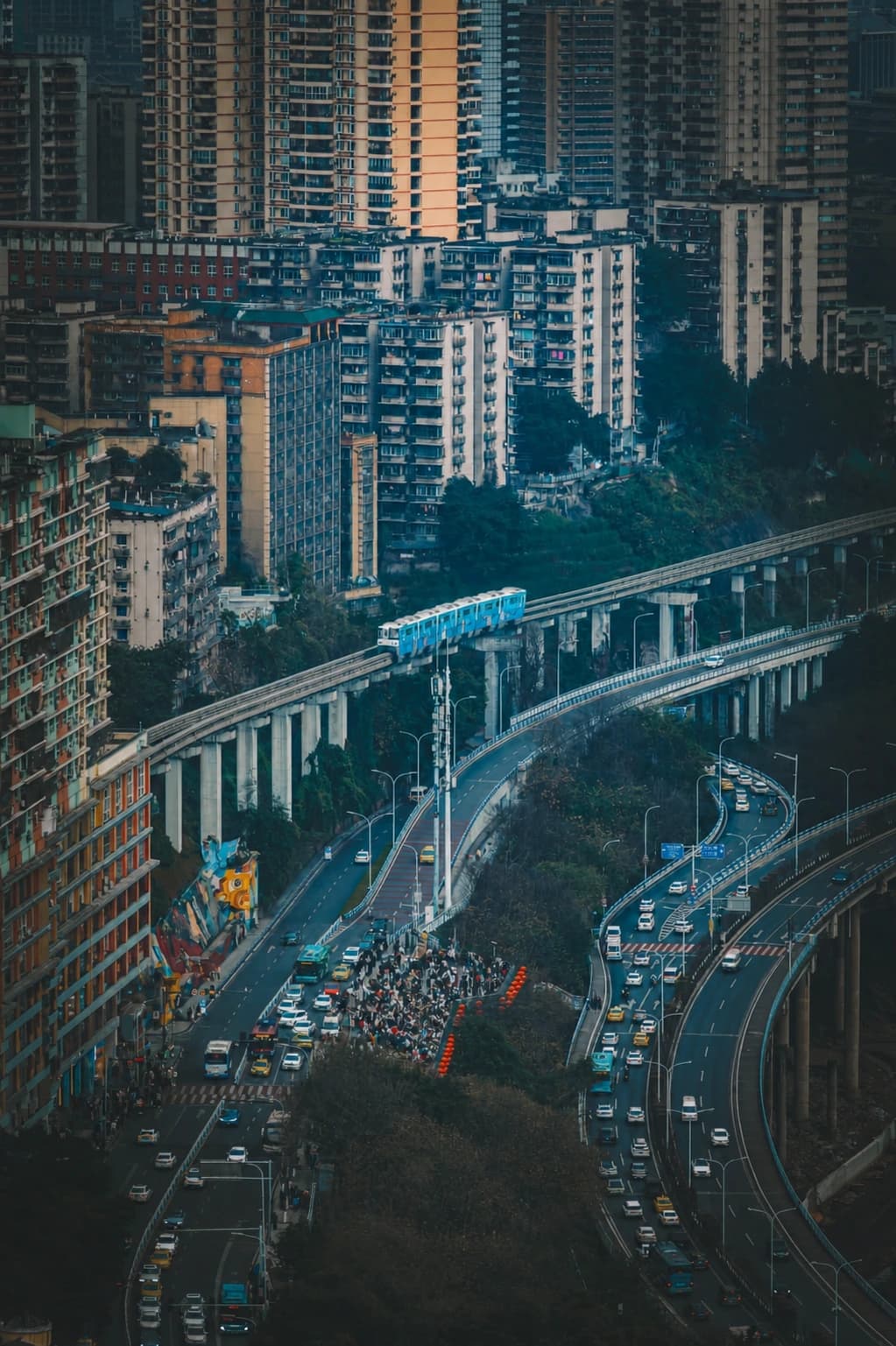
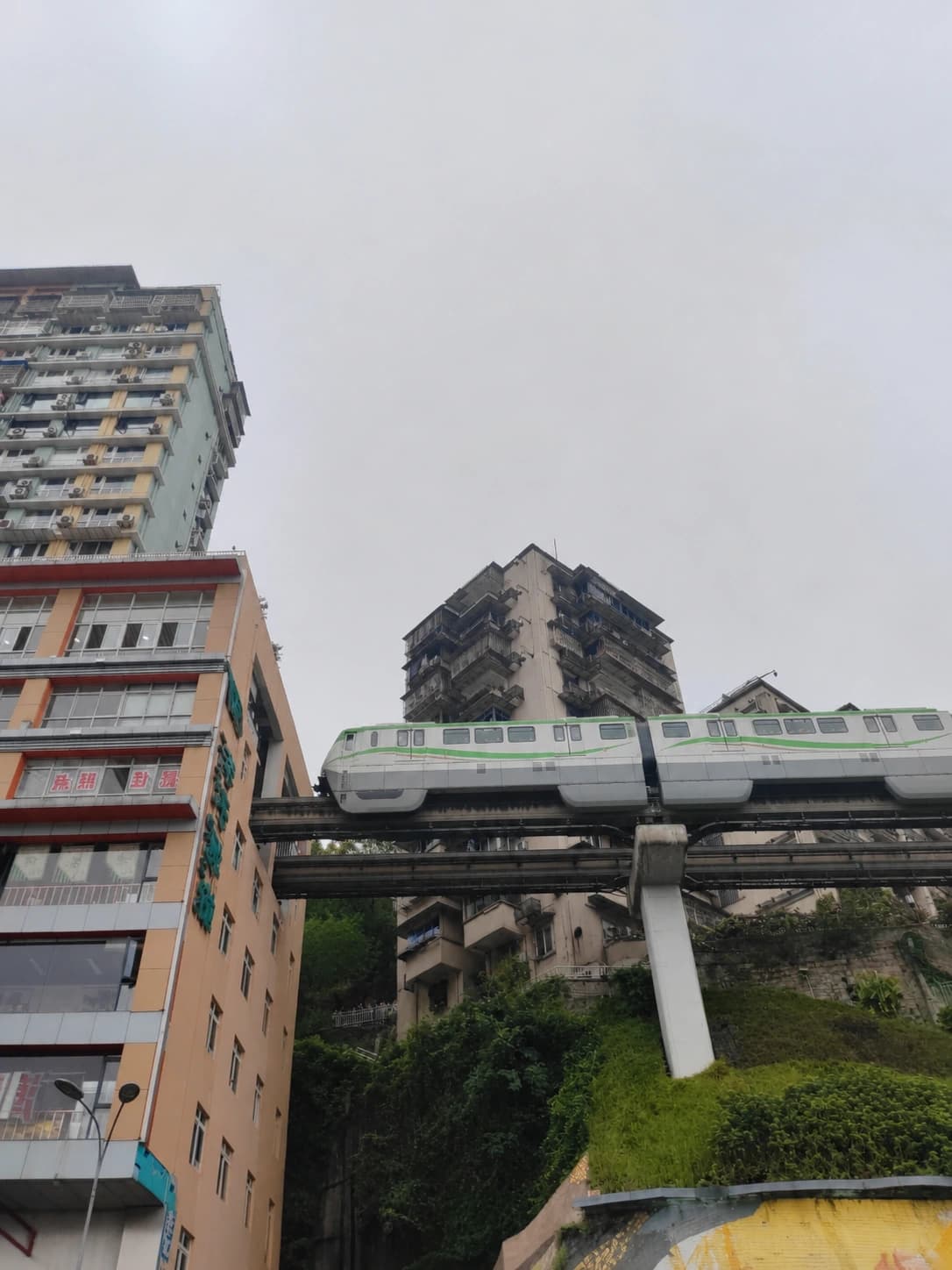
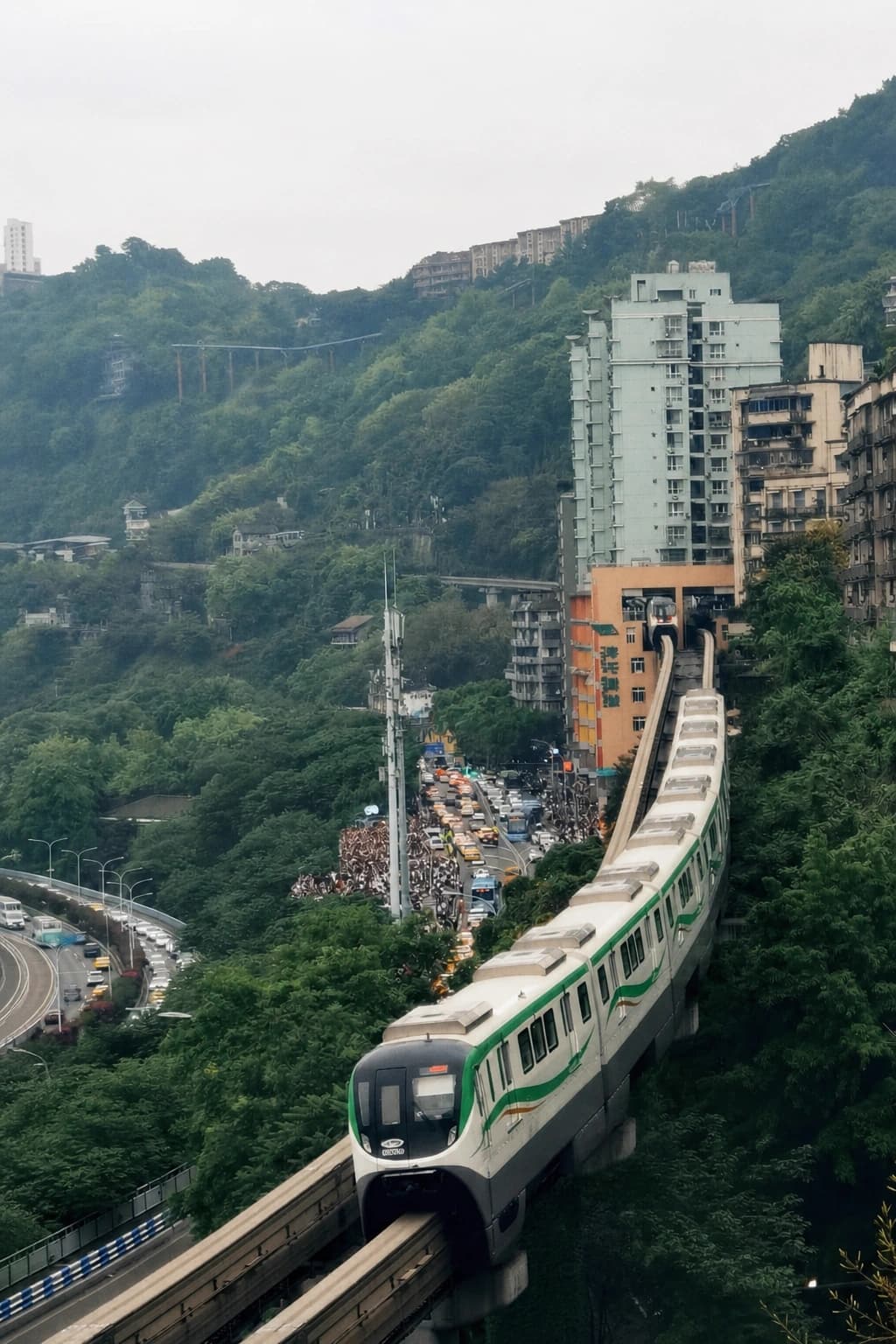
Liziba (李子坝, Lǐzǐbà) is the Chongqing Line 2 station where trains appear to pass through a high-rise building. The station occupies the building's sixth and seventh floors, a compact example of how Chongqing fits transport into steep terrain and dense neighbourhoods.
It is worth 30–60 minutes when photography is the goal. The public platform gives two different images, and a public pavilion uphill gives a third, long-lens view. Riding through the station is a separate experience and does not give you the exterior photo. Use the Chongqing 8D transport guide for a ride-first circuit, or the Eling-to-Liziba sunset walk for a dedicated downhill photo route.
The viewpoint and the ride are separate
- Watch from the official viewing platform. Search AMap for 李子坝单轨穿楼观景平台. This public platform is the reliable place to start for the exterior view.
- Ride Line 2 through Liziba Station. Pay the normal metro fare and stay on the train through the stop, or get off and follow the station signs to the viewpoint.
- Add Lansheng Pavilion only for a telephoto shot. Search 揽胜亭, 桂花园94号旁. It is uphill; on a first visit, start with the easy official platform instead.
Trains pass frequently. Once you have a clean pass, step back from the front rail so another visitor can use the angle.
Three different shots
- Complete landmark: official viewing platform, 1× phone lens or 24–35mm, with the train opening and several building floors visible.
- Forced-perspective portrait: official viewing platform, 1× phone lens, with the person safely behind the barrier and aligned with the approaching train.
- Compressed city view: Lansheng Pavilion, roughly 135–200mm, with the train, station building and hillside held in one frame.
1. The complete landmark from the official platform
Use a phone's 1× lens or roughly 24–35mm on a camera. Keep the station opening, the width of the building and some road level in frame. Press the shutter as the train nose clears the wall; burst mode or Live Photo makes the timing much easier.
The most common mistake is framing so tightly that the train looks as if it is entering an ordinary tunnel. Step back within the marked platform and keep several floors of the building in the shot. Portrait orientation can work, but only if it still shows how the track meets the tower.
Result to aim for: one image that explains the landmark without a caption.
2. The forced-perspective “hold” or “bite” shot
Stay on the official platform and keep everyone behind the barrier. Put your subject between the phone and the building, then have them move sideways and slightly forward or back until their hand, mouth or silhouette lines up with the train's path on screen. The photographer should make small framing adjustments, not walk into the road.
Use the 1× lens, lock focus on the person and start a burst before the train appears. A very wide 0.5× lens makes hands look unnaturally large and shrinks the train; use it only when the platform is extremely crowded.
Result to aim for: a clearly intentional optical alignment with the building still recognisable behind it.
3. Train, building and hillside from Lansheng Pavilion
Lansheng Pavilion gives a different photo from the platform view. From this public high viewpoint, a long lens can compress the train, the station building and the surrounding hillside into one frame. Start around 135mm and zoom in towards 200mm only if the haze is light and you can hold the camera steady.
The walk up is uphill. Follow public streets and the AMap pin; don't cut through residential stairs or gates because an old post shows a shorter line. Trees, new construction and temporary access changes can block the view. If the route to the pavilion is unclear when you get there, settle for the platform shot and move on.
Result to aim for: a wider piece of Chongqing's terrain, with the train acting as a bright moving accent instead of filling the frame.
Construction, September–November 2026
An official works plan affects access around the station in the second half of 2026. As published:
- Part of the viewing platform is scheduled to remain closed through November 30.
- Work around Exit 1 is scheduled through September 25.
- Work around Exit 2 is scheduled through September 20.
- Hall A is scheduled to close from September 1 through October 31, with stairs between platforms and the concourse used for diversion.
These are planned dates, so a passage may still be closed (or already open) when you visit. Follow the latest station signs and staff directions. An old video may send you through a shopping area, lift or staircase that is now diverted, so check the diversion on site.
Getting to the official platform
Take Metro Line 2 to Liziba Station, then follow the station's viewpoint signs. Construction may change which exit you use and add walking time. If the signs are unclear, show staff the Chinese name 李子坝单轨穿楼观景平台 or open the AMap pin above.
The upper station entrances and the lower platform are at different heights. A pin that looks right next door on a flat map can still mean lifts, stairs and a controlled road crossing. Use marked crossings and public paths. A taxi is usually less convenient than the metro, because the driver may drop you at station level when you want the lower viewpoint.
How the landmark works
Liziba Station opened in 2004 as part of Line 2. The station was built into the building, and the two were designed together. The station and the residential structure have separate supports and vibration control. From outside, the track disappears into the tower. From the train, it feels like an ordinary covered station.
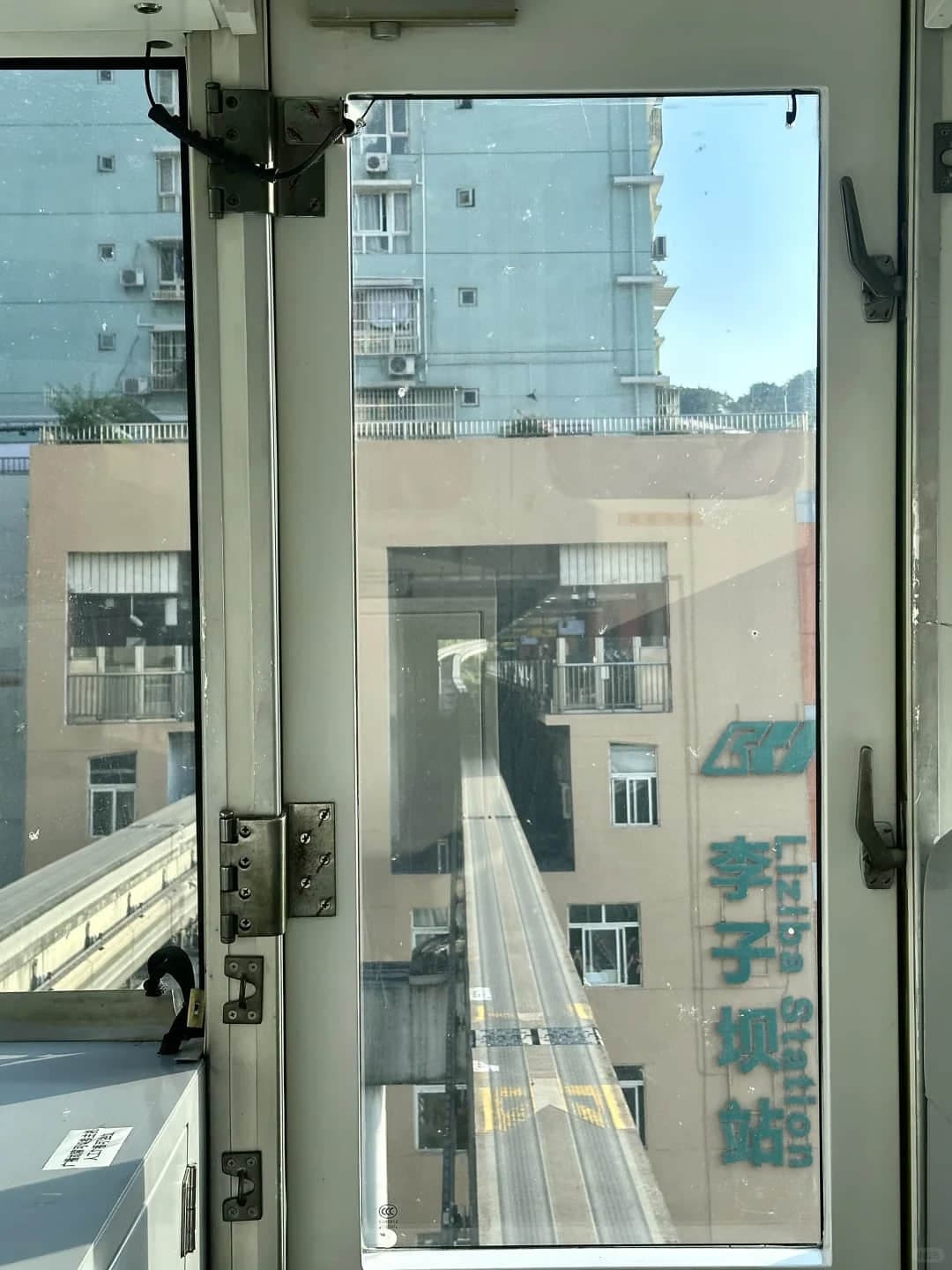
Riding towards Liziba from Niujiaotuo gives you a brief view of the Jialing River before the train enters the station. Enjoy it from your seat rather than counting on a photo through the window: reflections, other passengers and the short view make a clean shot difficult.
Pair it with Eling and walk downhill
Eling Park and Eling Factory are uphill from Liziba. If you want all three, start at Eling, continue to the factory and walk down to Liziba. Doing it the other way turns a short city outing into a long climb with stairs and confusing level changes.
Don't take an unofficial hillside shortcut just because it looks shorter in a social post. Construction, private passages and locked gates change. Follow the pedestrian signs or ask staff for the public route down. In summer, carry water and avoid the hottest part of the afternoon.
Photo checklist
- Visit around 07:00–09:00 for softer light and a better chance of space at the rail, as long as access and construction barriers allow.
- Keep the entire building in the first frame, then try tighter or playful versions.
- Use burst mode for the train and a normal lens for the forced-perspective shot.
- Bring a long lens only if the uphill pavilion composition justifies carrying it.
- Never use a laser pointer, climb a barrier, stand in traffic or enter residential space.
- After two or three trains, move on; seven other public viewpoints show different parts of the city.
Liziba is a short, focused stop. Aim for one complete shot of the landmark, one playful alignment if you want it, and perhaps one compressed city view, without hunting for a "secret" angle.